How to Determine Mulch Required: Simple Calculations & Cost Comparisons
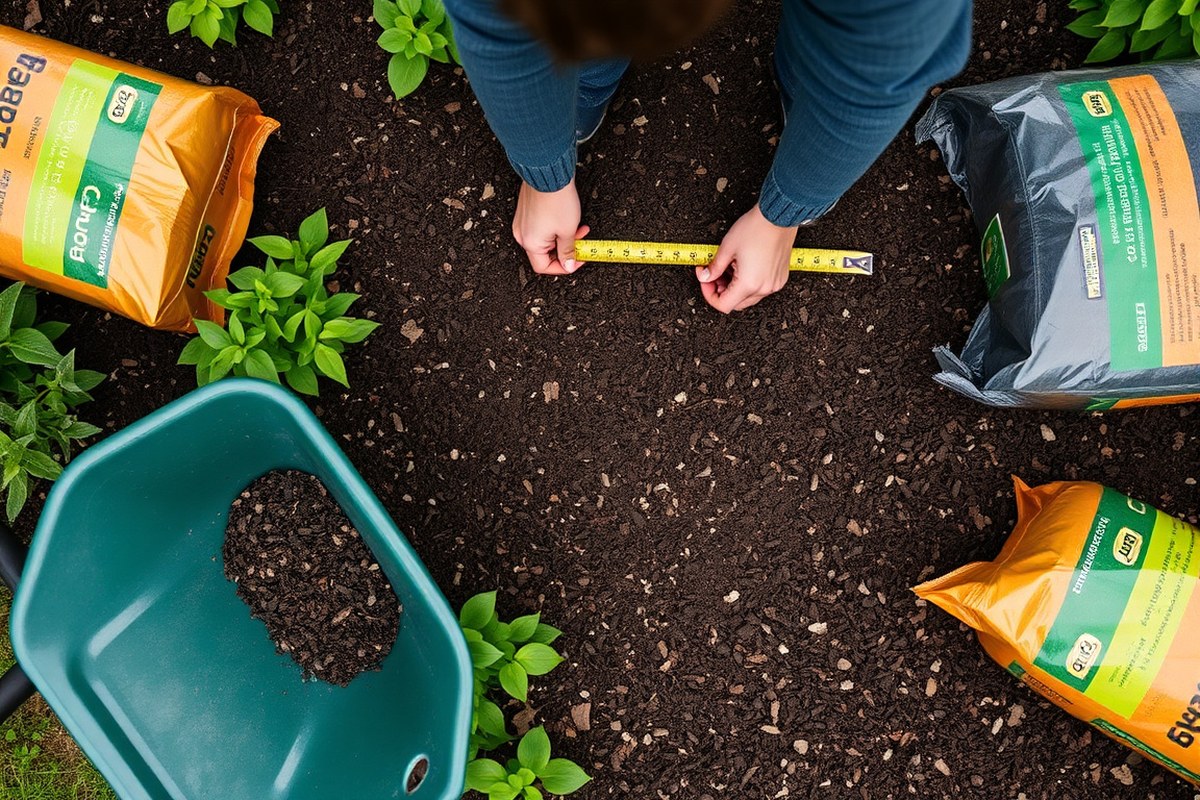
Knowing how to determine mulch required starts with measuring your planting area. You multiply the length by the width to find the square footage. Next, pick the mulch depth based on your plants’ needs.
Usually, it’s between 2 and 4 inches. This depth helps plants grow well.
Convert the depth from inches to feet by dividing by 12. Multiply the area by this depth to get the volume in cubic feet. Divide your mulch volume by 27 to convert cubic feet.
Mulch sells mostly in cubic yards. This helps you buy the right amount.
Calculating this way prevents ordering too much or too little mulch. It also helps you plan your budget better whether buying bags or bulk. Measure carefully for odd-shaped beds or slopes.
Add extra mulch to cover these areas. This avoids running short later.
Key Takeaways
- Measure planting bed length and width to calculate its square footage.
- Choose mulch depth, typically 2 to 4 inches for most gardens.
- Convert mulch depth to feet by dividing inches by 12.
- Multiply area by depth (in feet) for mulch volume in cubic feet.
- Divide volume in cubic feet by 27 to get cubic yards.
- Order slightly more mulch for uneven beds or slopes.
Calculate Planting Bed Area for Mulch Measurement
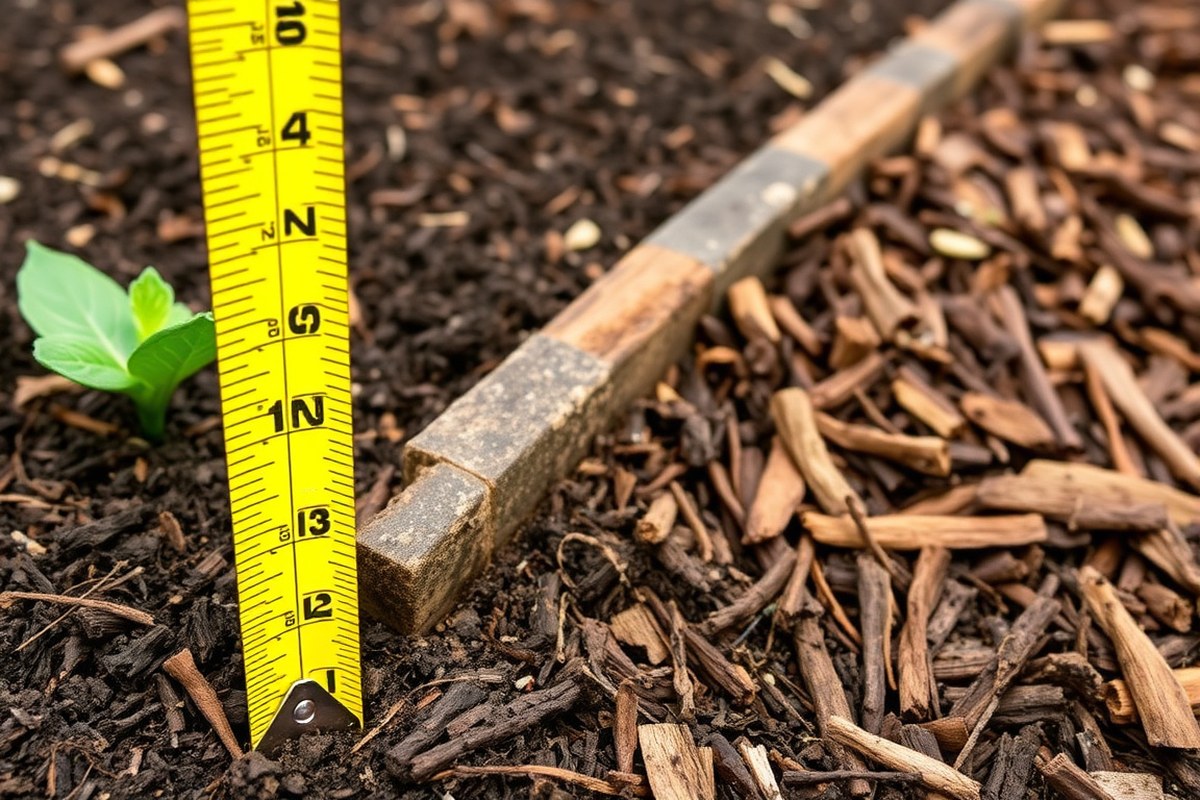
Measuring the planting bed area gives you the exact size to buy mulch. You take the length and width for rectangles, radius for circles, and sketch for irregular shapes. This helps you avoid buying too much or too little mulch and keeps your garden tidy.
Measuring Rectangular and Square Beds
Measure along the longest and widest points of your bed. Use a tape measure from end to end along straight edges. This gives the length and width, which you’ll multiply to find the area.
- Stretch the tape measure straight along the longest edge of the bed. Note this length in feet.
- Measure the width along the widest point perpendicular to length. Record this measurement in feet.
- Multiply length by width to find the total square footage (e.g., 10 ft × 5 ft = 50 sq. Ft.).
- Double check measurements to avoid buying too much mulch.
Using straight edges makes it easy. When the bed isn’t square, measure each section by itself. Then add the areas together.
Calculating Area of Circular and Curved Beds
Find the radius by measuring from the bed’s center to its outer edge. The radius is the key to calculating the circular area. You use the formula π times the radius squared.
- Place a stake or marker at the center of your round bed.
- Grab a tape measure or yardstick. Measure the distance from the center to the edge. This distance is the radius.
- Square that radius number (multiply radius by itself).
- Multiply the squared radius by π (about 3.14) to get square feet.
- For example, a 4-foot radius: 4 × 4 = 16. Then 16 × 3.14 = about 50.24 sq. Ft.
This method suits round beds or those with smooth, curved edges. Use the radius as your guide.
Approximating Irregular or Complex Beds
Break irregular beds into smaller rectangles, squares, or circles for easier calculation. Sketch the bed’s shape on graph paper to estimate each section’s size. Add these areas up for a total estimate.
- Draw the garden bed outline roughly on graph paper or use a smart app.
- Divide the shape mentally or with lines into simple shapes you know how to measure.
- Measure length and width of each smaller shape or use the radius for circular parts.
- Calculate area for each piece individually using formulas for rectangles or circles.
- Add all the small areas together to get your total square footage.
Smartphone apps can help measure tricky shapes by overlaying measurements on photos. This improves accuracy if your bed has many curves or angles.
Choose the Right Mulch Depth for Your Plants
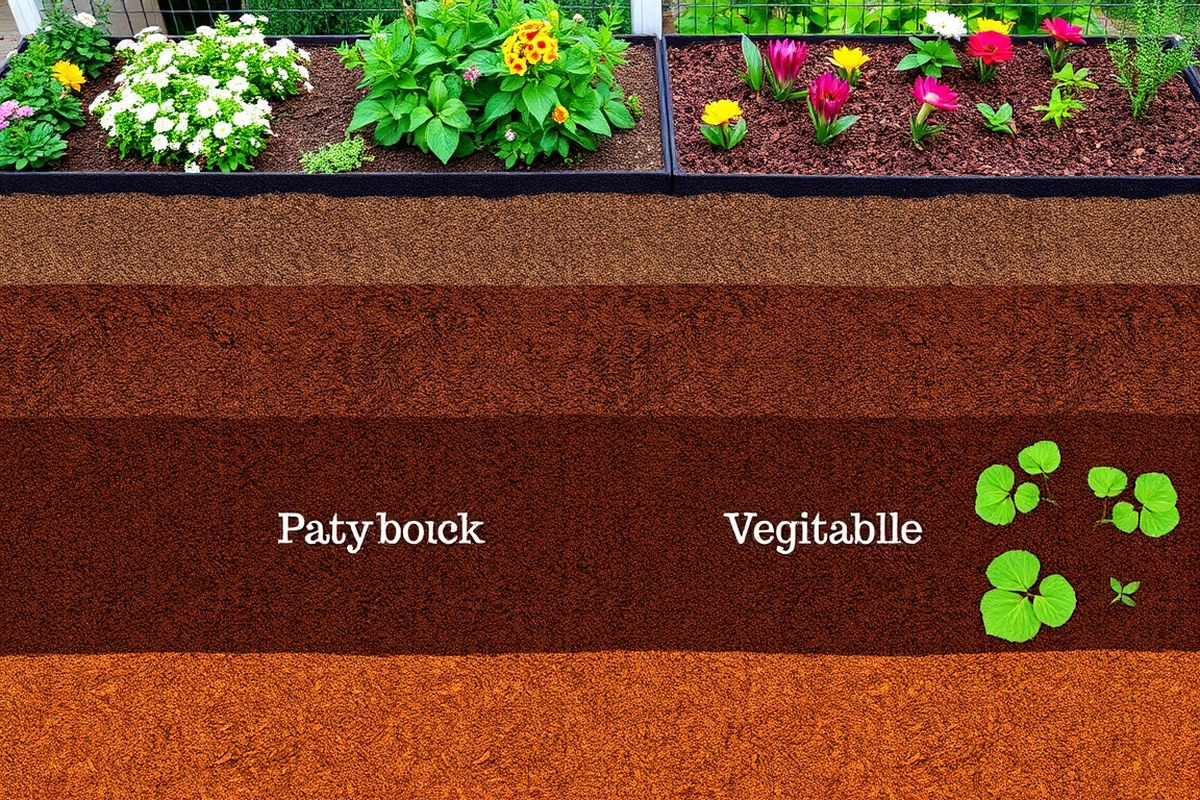
Most vegetable and flower beds do best with mulch 1 to 2 inches deep. This depth helps retain moisture and control weeds. It also keeps soil temperature stable.
This depth keeps the soil moist without blocking air or water from reaching roots. Mulch that’s too thin won’t stop weeds well. It can also let soil dry out faster.
Trees and shrubs need a thicker mulch, around 3 to 4 inches. This depth protects roots, conserves moisture, and insulates against temperature changes.
Avoid piling mulch deeper than 4 inches here. Too much can suffocate roots and invite pests or decay near the trunk.
Laying mulch properly matters. Spread it evenly but keep it a few inches away from plant stems or tree trunks. This prevents rot and keeps insects from making homes right by the base.
A good layer looks like a soft, loose blanket covering the soil. It should feel moist but not soggy underneath.
Avoid creating mulch volcanoes, tall, piled mulch around tree trunks can cause diseases and root issues.
When the mulch layer is too thin, weeds easily break through. Soil temperatures may also fluctuate more, stressing plants. A mulch layer that’s too thick holds water too long.
This can cause fungal issues and reduce oxygen for roots. Both problems slow plant growth. Adjust depth based on plant type and observe soil moisture to fine-tune your mulch application.
Calculate Mulch Volume Using Area and Depth
To find how much mulch you need, start with the bed’s area. Then multiply that by the mulch depth you want.
Use feet for area and feet for depth to get volume in cubic feet. Then convert cubic feet to cubic yards if you plan to buy mulch in bulk.
Converting Mulch Depth from Inches to Feet
Mulch depth usually starts as inches, but to calculate volume correctly, you need feet. One inch equals 0.083 feet, making it easy to turn inches into decimal feet by dividing by 12.
| Inches of Mulch | Decimal Feet |
|---|---|
| 1 inch | 0.083 feet |
| 2 inches | 0.167 feet |
| 3 inches | 0.25 feet |
| 4 inches | 0.33 feet |
Converting these units helps keep the math straightforward. Calculations with feet produce the correct volume in cubic feet. Keep this step in mind to avoid mistakes when measuring.
Calculating Volume in Cubic Feet
Find the area by multiplying the length and width in feet. This gives you the bed’s square feet. Next, use that area to find cubic feet.
Then multiply by the mulch depth in feet. Avoid mixing inches with feet to prevent wrong totals.
Here is a practical example and calculation steps to guide you through the process.
- Measure the length of your planting bed in feet (e.g., 50 feet).
- Measure the width of the bed in feet (e.g., 10 feet).
- Calculate the area: length × width (50 × 10 = 500 sq ft).
- Convert desired mulch depth from inches to feet (3 inches = 0.25 feet).
- Multiply area by depth to get volume in cubic feet (500 × 0.25 = 125 cu ft).
- Double-check all measurements are in feet before multiplying.
- Note this volume to compare with product packaging or bulk orders.
Converting Cubic Feet to Cubic Yards
Since many mulch suppliers sell mulch by the cubic yard, you need to convert your volume. One cubic yard equals 27 cubic feet. Divide your cubic feet total by 27 to get cubic yards.
This conversion helps you order the right bulk amount and compare prices more easily.
- Take the total mulch volume in cubic feet (e.g., 125 cu ft).
- Use the formula: cubic yards = cubic feet ÷ 27.
- Calculate: 125 ÷ 27 ≈ 4.63 cubic yards.
- Round up if needed to account for settling and uneven spreading.
- Contact your mulch supplier using cubic yard amounts to request bulk pricing.
- Remember that ordering slightly more prevents shortfalls.
Convert Mulch Volume to Number of Bags or Bulk Load
Start by dividing your total mulch volume in cubic feet by the bag size. Common bag sizes are 2 or 3 cubic feet. For example, if you need 83.You need 5 cubic feet of material.
Buy 42 bags of 2 cubic feet each. Or get 28 bags if they hold 3 cubic feet each.
Knowing bag sizes helps avoid surprises at the store. Most mulch bags you find hold either 2 or 3 cubic feet.
Some stores might carry other sizes, but these are the usual ones. Larger bags mean fewer you have to carry and pile up.
Buying mulch in bulk can be cheaper, especially for large areas. Bulk mulch is sold by cubic yard, which equals 27 cubic feet. Comparing bulk prices with bag prices helps you get the best deal and cut costs.
Here’s how to convert mulch volume to bags and compare costs. Use the formula:
- Number of bags = Total cubic feet needed ÷ Bag size in cubic feet
For bulk, divide your total cubic feet by 27 to get cubic yards. Then multiply by the bulk price per cubic yard.
| Purchase Method | Unit Size | Mulch Volume per Unit | Example Quantity Needed (83.5 ft³) | Example Cost (@$4/bag, $25/cubic yard) |
|---|---|---|---|---|
| Bag | 2 cubic feet | 2 ft³ | 42 bags | $168 |
| Bag | 3 cubic feet | 3 ft³ | 28 bags | $112 |
| Bulk | 1 cubic yard | 27 ft³ | 3.1 yards | $77.50 |
Calculating this way shows bulk mulch often saves money, as shown above. It’s worth comparing prices before shopping.
Bags are easier to handle but create more trash. Bulk works better for bigger jobs and can cut costs in half.
Account for Bed Shape, Terrain, and Application Variances
Sloped planting beds hold more mulch than flat ones because the surface area increases. A 5 to 15 percent slope might need about 10 to 15 percent more mulch. Steeper slopes often require up to 20 percent extra to keep a consistent depth.
Uneven beds with bumps or hollows also change mulch needs. Low spots can collect more mulch, while raised areas need less. Before you calculate, walk the bed and check the area.
Note any spots that dip or rise about 6 inches. Mark those spots for your estimate. Adding mulch at a 10 to 20 percent higher volume helps cover these irregularities better.
Wind exposure or beds near beaches often dry out mulch faster. You should increase mulch amounts to reduce gaps forming from blowing away. Add 10 to 15 percent more mulch in windy areas.
This keeps good coverage and protects your soil. Wind blows mulch away easily.
- Measure slopes by the angle or visually judge rise over run
- Estimate irregular shapes by dividing the bed into smaller sections
- Add 10 to 20 percent more mulch on slopes or uneven terrain
- Boost mulch quantity near windy areas or sandy soil
- Consider a thicker mulch layer for steep slopes to prevent washouts
- Use string or stakes to mark shape boundaries before measuring
Mulch application style matters. Spreading a looser layer needs more volume than a dense, pressed layer. Loose mulch lets air and water move through better.
But you need more of it to cover the same depth. The mulch is less dense this way.
For slopes, loose mulch tends to slide down. So a slightly thicker layer works best.
First, calculate the base mulch volume for your bed. Then add extra percent for slopes, uneven areas, and wind. This accounts for all tricky factors.
This way, you avoid extra store trips and patchy mulch. Proper coverage protects your plants better from damage. You get a smooth mulch layer.
Don’t forget to rake mulch evenly after spreading. It helps hold mulch in place on slopes and irregular areas.
Avoid Common Mulch Calculation Mistakes
One big mistake is mixing feet and inches during measurements. For example, a bed is 20 feet long and 24 inches wide. Using 24 as feet causes big overestimates.
Always match units properly when measuring. Double-check your units before calculating.
Use decimals for inches when multiplying by feet: 24 inches equals 2 feet. Confusing these can cause you to buy twice or half the mulch you need.
Another common error happens when assuming a fixed mulch depth without factoring plant type. Mulch spread 4 inches deep works for trees. Flowers need less, about 1 to 3 inches.
Too much mulch can smother them. Measuring your bed area correctly but multiplying by the wrong depth will overbuy or underbuy mulch. Always match depth to the plants’ needs.
- Measure twice, write down units both times
- Convert inches to feet before multiplying area and depth
- Use a calculator to avoid decimal slip-ups
- Choose mulch depth based on the specific plants
- Recheck area dimensions with a tape measure or string
- Remember irregular beds need careful average length/width
- Don’t assume rounded numbers are close enough
Many gardeners also estimate bed shape incorrectly by treating non-rectangular beds as rectangles. This creates volume errors that vary widely. A curved bed area might be 450 square feet, not 500.
This reduces mulch need by about 10%. Measure carefully to save mulch. These little errors add up when you convert volume to bags or yard loads.
Volume calculations often miss converting inches to feet for depth. You must divide depth in inches by 12. This changes total volume.
Ignoring this step quadruples or halves the final cubic feet. Spreading mulch 2 inches deep over 500 square feet equals 500 times 2 divided by 12.
That gives about 83 cubic feet of mulch. Skip that, and you could order 500 cubic feet by mistake.
Checking your measurements and math prevents you from buying too much mulch. Mulch costs around $30 to $50 per cubic yard. Saving money helps.
A small recheck might save you $20 or more on that first load. Use the checklist above every time you measure for mulch. You’ll avoid the frustrating surprises of excess or shortages.
Estimate Mulch Costs and Decide Between Bags or Bulk
You can figure out mulch cost by multiplying the volume needed by price per unit. Bulk mulch, sold by the cubic yard, usually costs less per volume than bagged mulch. Bags offer convenience for small jobs, but bulk saves money for bigger projects.
Typical Mulch Bag Sizes and Prices
Mulch bags often come in 2 to 3 cubic feet sizes. Prices usually range from $3 to $6 per bag, depending on the mulch type. Smaller bags suit small beds or touch-ups.
| Bag Size (cubic feet) | Typical Price Range | Common Mulch Types |
|---|---|---|
| 2 cu ft | $3 – $5 | Cedar, Pine Bark, Hardwood |
| 3 cu ft | $4 – $6 | Cedar, Pine Bark, Hardwood, Dyed Mulch |
| 1 cu ft | $2 – $4 | Fine Bark, Compost Blends |
Keep in mind, bag prices vary by brand and region. Bags cost more per cubic foot than bulk mulch, which adds up quickly for large areas.
Cost per Cubic Yard for Bulk Mulch
Bulk mulch is typically priced between $20 and $50 per cubic yard. The cost depends on mulch type and quality. Landscape suppliers often have different prices for hardwood, cedar, or colored mulch.
| Mulch Type | Average Cost per Cubic Yard |
|---|---|
| Hardwood Mulch | $25 – $35 |
| Cedar Mulch | $30 – $50 |
| Dyed or Colored Mulch | $35 – $50 |
| Organic Compost Blend | $20 – $30 |
You get more mulch for your money with bulk. Buying by the cubic yard is best for large planting beds or landscaping projects.
Choosing Between Bulk and Bagged Mulch
- Bulk mulch usually costs less per volume, good for over 5 cubic yards.
- Bags are easier to transport and store, better for under 2 cubic yards.
- Bulk orders may require renting a truck or paying delivery fees.
- Bags let you buy exactly the amount needed for small areas.
- Buying bulk is cost-effective for big projects but more work to handle.
- Bagged mulch often comes ready to spread, saving prep time.
Work out your needed volume first, then multiply by prices for each purchase method. Compare total price and convenience to decide what fits your project size and budget.
Step-by-Step Action Plan for Accurate Mulch Calculation
Follow these simple steps to measure and buy the right mulch amount for your garden beds.
- Before you start: Measure the planting bed’s length and width or diameter for round beds. Check your shape carefully.
- Right after: Calculate the bed’s area using your measurements. Use simple math or an online tool to get square feet.
- Same day: Choose mulch depth based on plant needs, generally 2 to 3 inches works well. Thicker for trees, thinner for flowers.
- Within 1 hour: Multiply area by depth to find mulch volume in cubic feet. Convert inches to feet first.
- Next: Decide if you’ll buy in bags or bulk. Check bag size or truck volume, then divide total volume accordingly.
- Later that day: Add 10% extra to cover uneven terrain and waste. Round up your purchase to this amount.
- Right before applying: Double-check calculations and bed conditions. A quick review avoids buying too little or too much mulch.
Frequently Asked Questions
How Do I Adjust Mulch Calculations for Slopes or Uneven Ground?
Measure the slope’s length and average width to get the surface area. Then, add 10-20% more mulch to cover uneven spots and prevent thin areas. This extra mulch helps maintain consistent coverage on hills or uneven terrain.
Can I Reuse Old Mulch When Calculating How Much New Mulch I Need?
You can reuse old mulch if it’s not moldy or decomposed. Cut the new mulch amount by half or more. This saves material and prevents too much layering.
Old mulch still occupies space, so less new mulch is needed. Check the old mulch’s condition before deciding how much to add.
How Does Mulch Particle Size Affect the Amount I Should Apply?
Finer mulch settles and compacts the most. You usually need less of it. Chunkier mulch weighs more and takes more space.
Coarse mulch covers more air space and needs more depth to be effective. Adjust depth recommendations based on the mulch’s texture for best results.
Should I Account for Plant Roots When Measuring Mulch Depth and Area?
Yes, avoid piling mulch close to plant stems to prevent rot and pest issues. Measure area excluding plant trunks or stems.
Keep mulch 2 to 3 inches from them. This practice keeps plants healthy and mulch effective.
How Often Should I Recalculate Mulch Needs for Garden Beds?
Recalculate every year or when you change bed shape or plant types. Mulch breaks down and compacts, so yearly refresh helps maintain the right depth. Changing plants or expanding beds also changes the amount needed.
Does Moisture Content in Mulch Affect How Much to Buy?
Wet mulch is heavier and takes up less room. You may buy less volume if the mulch is damp. Keep this in mind when purchasing mulch.
Always check cubic feet or yards, not weight, to avoid confusion. Dry mulch can seem bulky but covers more area per pound.
Before You Go
Knowing exactly how much mulch you need keeps your garden healthy and your budget on track. Start measuring your beds today to get the best fit and price. Buying the right amount saves trips and protects your plants.