How to Coconut Tree Planting and Care: A Complete Guide for Beginners
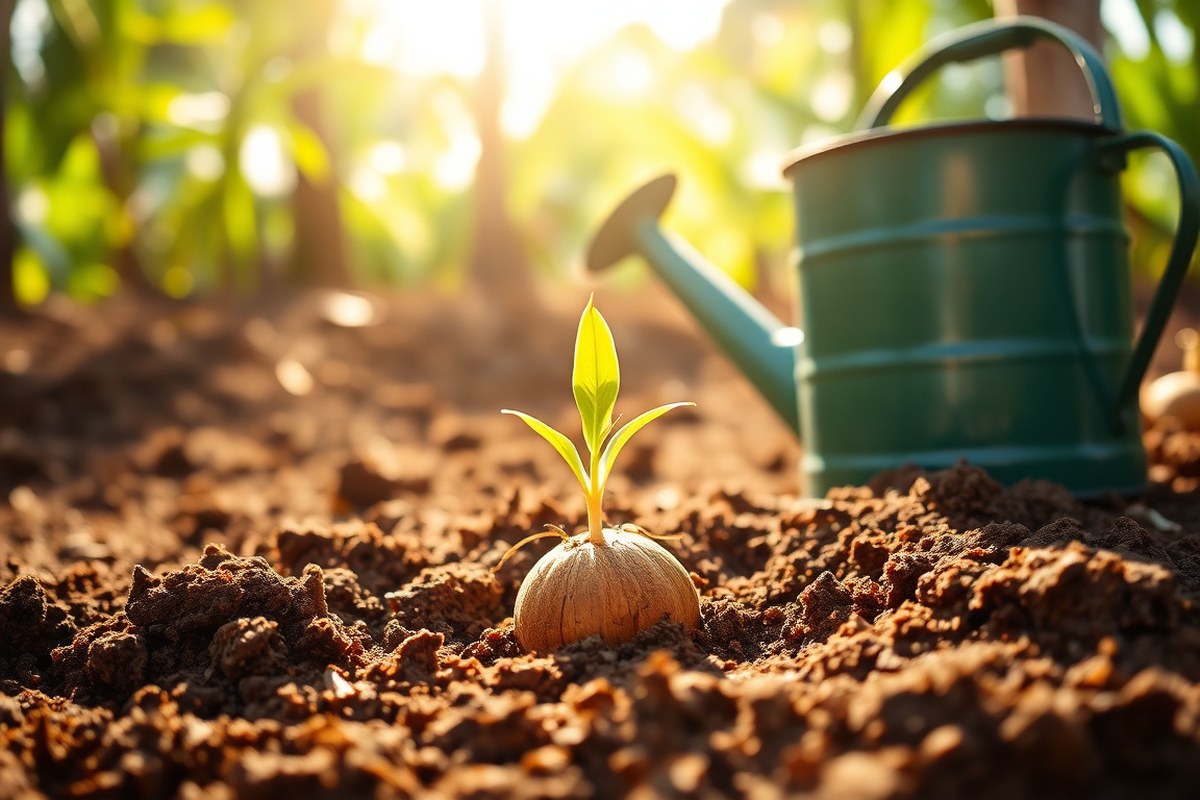
Knowing how to coconut tree properly starts with planting the right way. Use a seeded coconut soaked in warm water for 2-3 days. This softens the shell and helps the seed sprout faster.
Choose soil that’s sandy or loamy for the best drainage. Poor drainage can cause root rot.
So check soil depth to at least 2 feet. If needed, mix in sand or organic matter to improve it before planting.
Pick a spot with warm, stable temperatures between 85 and 95 degrees Fahrenheit. Avoid places that get below 60 degrees, as cold harms the tree. Full sun exposure is important for healthy growth and strong palms.
Space your tree wide enough since coconuts can grow up to 80 feet tall. Give it room to spread and stay clear of buildings or overhead wires. Mulching around the base also keeps weeds down and keeps moisture steady.
Key Takeaways
- Soak the coconut seed 2-3 days in warm water before planting.
- Plant in soil with good drainage, amend if it holds too much water.
- Choose a sunny spot with temperatures above 60°F and stable warmth.
- Allow 10 to 15 feet between coconut trees for proper growth.
- Apply mulch 3 inches deep, 8 inches away from the tree trunk.
- Water with warm water at 75-85°F, letting topsoil dry between waterings.
How to Plant a Coconut Tree from a Seeded Coconut
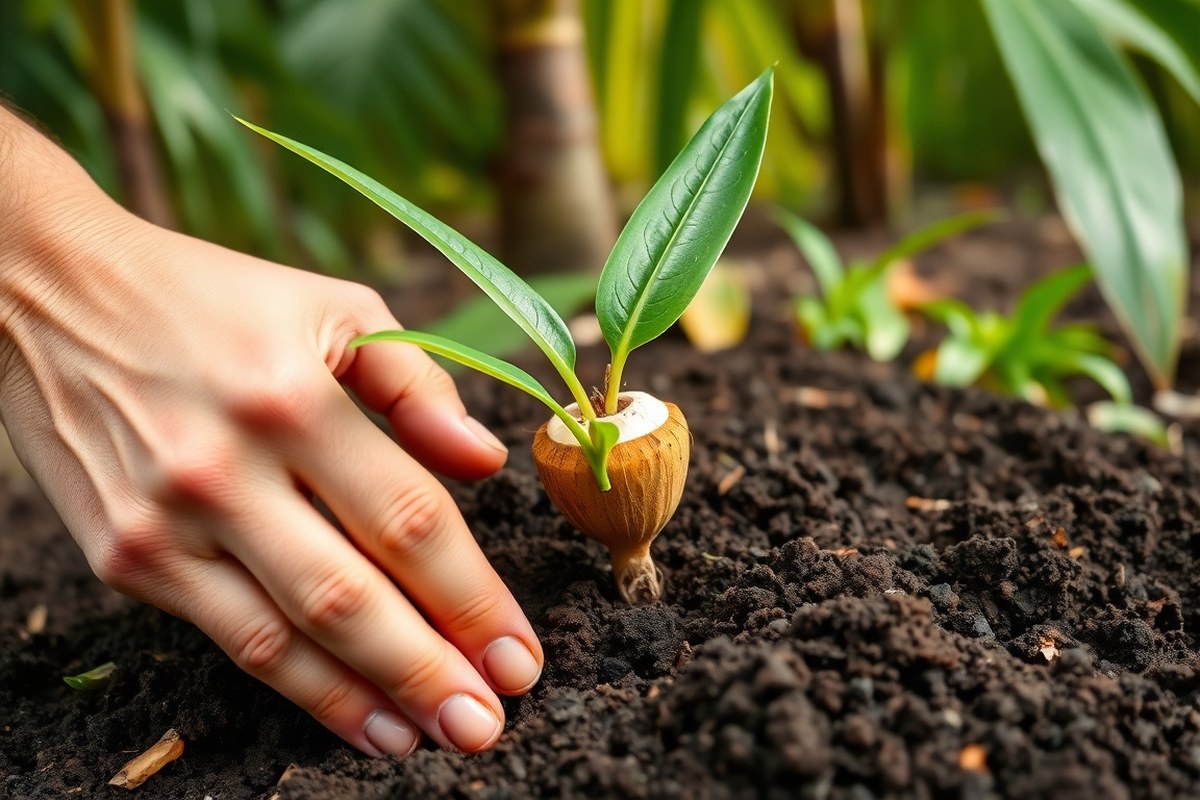
Start by picking a mature coconut that still has the husk. A mature coconut weighs around 2 to 3 pounds and should feel heavy when shaken. Avoid nuts with cracks or dried out husks, as they may not sprout well.
Next, you need to soak the coconut to help soften the shell. Soak it in warm water for 2 to 3 days. This hydrates the seed inside, speeding up the germination process.
Once soaked, inspect the coconut for a sprout. When the sprout’s roots reach about 6 inches long, it is ready to plant. Preparing your soil well ensures the seed will take root and grow strong.
- Choose a healthy, mature coconut with its husk still on.
- Soak the coconut in warm water for 48 to 72 hours to hydrate and soften it.
- Check daily for sprouting; wait until the sprout’s roots reach 6 inches long.
- Amend your soil up to 2 feet deep with sand or organic matter for good drainage.
- Dig a hole deep enough to cover part of the sprout but leave the top visible.
- Plant the coconut with the sprout root down and cover lightly with soil.
- Water the planting area thoroughly but avoid waterlogging to protect young roots.
Preparing the soil helps prevent water buildup, which could rot the coconut’s roots. It’s best to amend soil that doesn’t drain well with sand or compost. Planting the sprout partially covered lets sunlight hit the new shoot and helps it grow upright.
Following this process gives the coconut seed a strong start. Healthy roots after about a week mean the seed is taking well. If the sprout shrinks or dries out, it may indicate overwatering or poor soil quality.
Ideal Climate and Soil Conditions for Healthy Growth
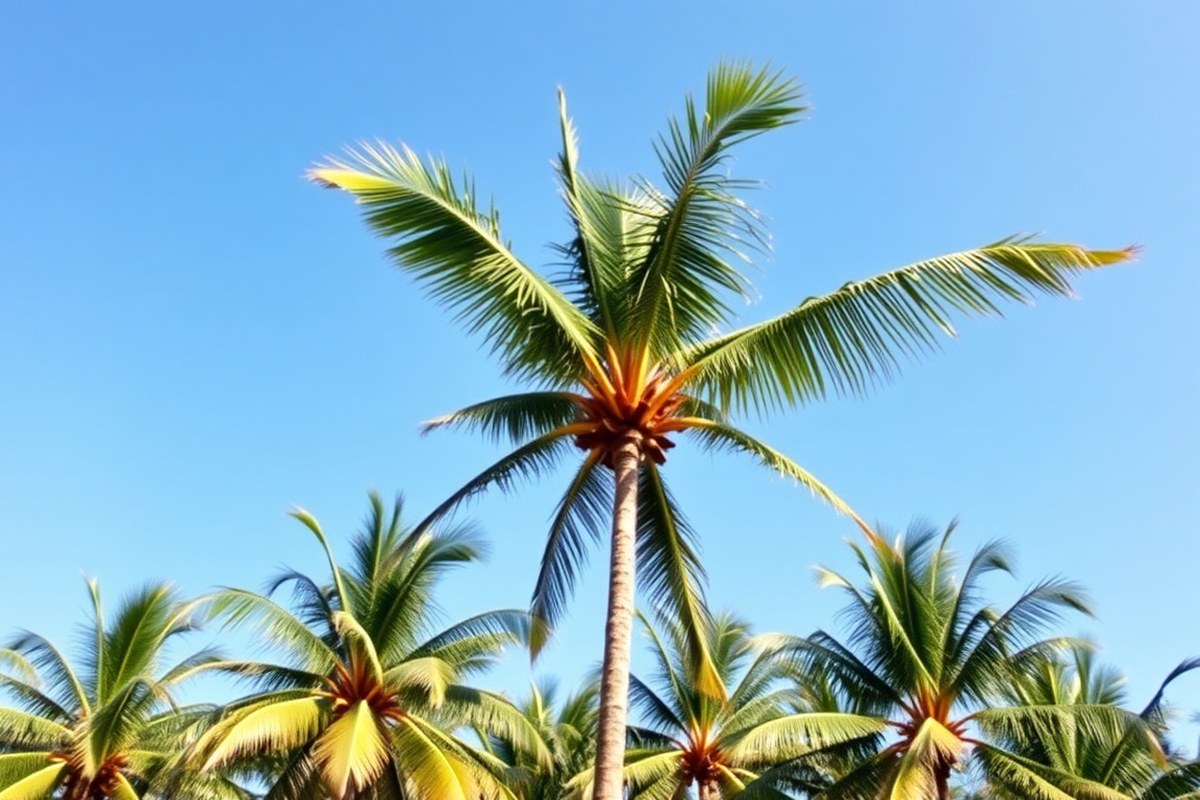
Coconut trees need warm temperatures between 75 and 85°F (24 to 29°C). They do not tolerate cold below 60°F (16 to 18°C).
Try planting where you get steady warmth year-round. High humidity from 60% to 80% keeps the leaves healthy and supports growth.
These trees demand full sun for at least 6 to 8 hours daily. Without enough sunlight, they won’t grow properly or produce many coconuts. Choose a spot that offers direct sun and avoids shade from buildings or taller trees.
The soil must drain well to prevent root rot. Sandy or loamy soil is best because it lets water pass quickly.
Clay soil can hold too much water. So mix in sand or organic matter to improve drainage before planting.
Good drainage also helps during rain or watering. Coconut trees like regular moisture but hate soggy roots. Water pooling harms roots and hurts the tree’s health and fruit yield.
Check soil temperature with a basic soil thermometer. Roots slow down growth when temperature drops below 70°F (21°C). Use raised beds or mounds to warm soil faster in cooler areas.
Young palms need 40 to 50 liters (10 to 13 gallons) of water weekly. This is especially important during dry spells.
Mature trees handle drought better but still grow best with plenty of water. Collect rainwater to water naturally and avoid cold tap water that shocks roots.
Before planting, prepare soil by:
- Testing for drainage, dig a hole and fill it with water. It should drain in 1, 2 hours.
- Mixing sandy soil or compost into heavy clay to improve texture.
- Ensuring soil pH is slightly acidic to neutral (5.5 to 7.5) for nutrient uptake.
Plant coconut trees where temperature stays above 60°F year-round to avoid cold stress.
Best Planting Locations and Spacing Recommendations
Choose your planting spot where the coconut tree gets full sun. Space dwarf trees 6-7 meters apart. Place tall trees 7-9 meters apart.
This gives enough room for each tree’s growth. Proper spacing helps sunlight reach all trees and avoids crowded roots.
Dwarf Versus Tall Variety Spacing
Dwarf coconut trees grow up to about 16 feet and use less space. They can be planted 6 to 7 meters apart.
Tall varieties grow much larger, reaching 80 to 100 feet. So they need more distance.
Planting closer than recommended can stunt growth and reduce fruit production. Giving each tree enough room improves air circulation, lowering disease risk.
| Variety | Mature Height | Recommended Spacing (meters) | Trees per Acre |
|---|---|---|---|
| Dwarf | ~16 feet | 6-7 | 100-120 |
| Tall | 80-100 feet | 7-9 | 70-80 |
Paying attention to differences in spacing helps you plan your garden efficiently. Dwarf trees fit well in smaller gardens or pots.
Sunlight and Wind Exposure
Coconuts need 6 to 8 hours of direct sun each day to thrive. Avoid spots shaded by large trees or buildings that block sunlight. Position trees where they get full sun most of the day.
Wind can damage young coconut trees but helps strengthen mature ones. Planting taller trees or dense shrubs nearby shields the coconut from strong winds. This natural windbreak lowers tree stress and breakage risk.
Soil Preparation and Drainage
Choose sandy, well-draining soil to prevent root rot and stagnant water. Poorly draining soil needs sand or organic matter. Mix them into the soil well.
This helps water drain better. Raised beds or mounds also help water drain away from roots.
Before planting, test soil drainage by digging a hole and filling with water. Water that drains in over 24 hours signals bad soil. Change the soil by adding sand or organic matter.
This improves drainage so roots don’t stay wet. Preparing soil this way promotes a strong root system and better tree health.
Watering and Fertilizing for Different Growth Stages
After planting your coconut tree, water it immediately with 1 to 2 gallons. Use water between 75 and 85 degrees F to avoid shocking the roots. Let the top inch of soil dry before watering again to prevent root rot.
For new seedlings, water about every 3 to 4 days, depending on temperature and humidity. Young trees need moist soil but not soggy conditions. Cooler weather or shaded spots need less frequent watering than hot, sunny areas.
You should apply liquid fertilizer once every four weeks year-round. Fertilizers high in potassium and magnesium support strong growth and fruit production. For young palms, foliar feeding works best as it delivers nutrients directly to the leaves.
- Water newly planted trees with 1-2 gallons at comfortable temperatures.
- Wait until the top 1 inch of soil dries before watering again.
- Water young coconut trees every 3 to 4 days, adjusting for weather.
- Use liquid fertilizer monthly, focusing on potassium and magnesium.
- Foliar fertilizer benefits young palms by feeding leaves directly.
You can add compost or slow-release fertilizer to soil before planting. This gives the young tree a good start with minerals and nutrients.
Don’t water with cold water below 75 degrees F. Cold water stresses roots. This can slow down your tree’s growth.
Mature coconut trees still appreciate monthly fertilizing to keep them productive. Maintain soil moisture without overwatering by checking soil dryness regularly. Water and fertilize your coconut tree at every stage.
Good care helps it thrive. It will produce fruit for many years.
Pruning and Regular Maintenance Practices
Pruning your coconut tree regularly helps keep it healthy and looking good. Remove dead or unhealthy leaves to stop disease and promote fresh growth. Maintain clean surroundings by clearing fallen fronds and checking your tree often.
Identifying Dead and Diseased Leaves
Look for brown or yellow fronds that don’t respond to watering. Leaves with irregular spots or holes may be affected by pests or disease. Dead or damaged leaves hang limp and dry, often near the base of the crown.
Check your tree every month to catch problems early. Remove these leaves quickly to stop pests like the rhinoceros beetle.
This also helps prevent diseases such as bud rot. Healthy leaves stay green with firm, smooth edges and no holes.
Proper Pruning Techniques
Use sharp pruning shears or a pole pruner to avoid tearing the leaf stems. Cut leaves close to the trunk but don’t damage the soft growing bud at the top. Always wear gloves and protective gear to avoid scrapes or cuts.
Prune only dead or severely damaged fronds. Avoid pruning healthy leaves as they produce food through photosynthesis.
Cut during dry weather to reduce the chance of fungal infections and do not over-prune. Keep about 15 to 20 green fronds.
- Wear protective gloves and eye protection.
- Choose a clean, sharp pole pruner or shears.
- Identify dead, yellow, or damaged fronds.
- Trim each frond close to the trunk base.
- Avoid cutting green and healthy fronds.
- Remove cut fronds from the ground promptly.
- Sanitize tools after pruning to prevent disease spread.
- Dispose of debris away from the tree.
Cut only the dead fronds to protect your tree’s food supply and avoid infections.
Regular Inspection and Clean-Up
Check your coconut tree every 4 to 6 weeks. Look for pests, damaged leaves, or disease signs.
Use a magnifying glass to spot small insects like mites early. Fallen fronds should be cleared regularly to prevent pest breeding grounds.
Spread a 3-inch layer of mulch around the tree. Keep it about 8 inches from the trunk. Mulch helps reduce weeds and hold moisture.
Clear away any decayed or moldy parts. This cuts down disease risks like deadly yellowing or bud rot. Regular checks and clean-ups keep your tree strong and fruiting well.
Common Pests, Diseases, and How to Protect Trees
Mealybugs and coconut scale insects commonly attack coconut trees. These pests suck sap from the leaves and stems, causing yellowing and leaf drop. Look for cottony or waxy patches on your tree’s trunk and leaves, which signal their presence.
Lethal yellowing disease is a major problem. Initial symptoms include yellowing leaves that quickly die and fall off.
Bud rot and root wilt also affect coconuts, causing softened crowns and wilting fronds. Early detection means checking your tree every few weeks during warm months for these signs.
Protect your tree using both organic and chemical options. Spray neem oil or insecticidal soap on mealybugs every 7 to 10 days. Repeat until no insects remain on your coconut tree.
Chemical insecticides like imidacloprid can be applied carefully if infestations are severe. But always follow label instructions.
To prevent lethal yellowing, remove and destroy infected trees quickly to stop its spread. Use a copper-based fungicide on wounds or cuts on your tree.
This helps cut down fungal infections like bud rot. Maintaining good drainage and avoiding overwatering keeps roots healthy and helps prevent root wilt.
Cover your coconut tree with frost cloth or burlap during cold winters. Do this when temperatures fall near 32°F to protect it. Young trees are especially vulnerable to freezing damage, which can make them prone to disease later.
Spot rats or rodents gnawing on nuts? Use traps or protective mesh to keep them away.
Feed your tree with compost or organic fertilizer high in potassium and magnesium. This helps keep it healthy and strong. A healthy coconut tree resists pests and diseases better.
Check your tree regularly and act quickly when you see symptoms. This gives your palm a better chance to grow well.
Harvesting and Using Mature Coconuts Effectively
Harvest mature coconuts when their husks turn brown or gray. You can climb the tree or wait for coconuts to drop naturally. After harvesting, coconuts serve many uses, from eating to household tasks.
Identifying Mature Coconuts
Look for coconuts with brown husks for maturity, signaling readiness for harvesting. Green coconuts are mostly filled with water and not fully mature. You can also shake the coconut; a heavy sloshing sound inside shows it’s ready.
Harvesting is flexible since trees produce coconuts year-round. Picking coconuts too early yields less meat and poorer quality water.
Mature coconuts often fall naturally in late stages. But picking them earlier prevents damage or loss.
Safe Harvesting Methods
Climbing the tree requires caution; use a harness or safety rope to avoid falls. Carry a sharp machete or pole pruner to cut coconuts carefully. Clear the ground area to avoid injury from falling coconuts.
- Wear gloves and non-slip shoes when climbing
- Use a sturdy ladder if climbing is too risky
- Cut stems slowly to prevent coconuts from dropping hard
- Have a helper clear coconuts safely from below
- Check tools for sharpness and secure grip
Waiting for natural falls is safer but risks damage and loss. Manual harvesting suits small gardens but needs strength and care. Always prioritize safety to prevent serious accidents.
Practical Coconut Uses
Fresh coconut water quenches thirst and provides electrolytes, great for hot weather. The white flesh can be eaten raw, grated, or dried for cooking. Oil extracted from coconut meat has health and beauty applications.
Coconut shells and husks are useful outside the kitchen. Coconut husks make good mulch or fire starters. Shells can be crafted into bowls, charcoal, or garden decorations.
Regular harvesting lets you enjoy fresh coconuts and homemade coconut products. You can also preserve coconut milk and oil for long-term use. The tree offers a steady supply of versatile coconuts if cared for properly.
Growing Coconut Trees in Containers and Cooler Climates
You can grow a coconut tree in a container if you select the right pot. Choose one at least 12 inches deep to allow room for root growth. Use well-draining soil mixed with sand or perlite to prevent root rot.
Coconut trees need warmth to thrive. Coconut trees do best in USDA zones 10 to 12. They need temperatures above 70°F for most of the year.
Below 50°F slows growth, and frost can kill the tree. So avoid outdoor planting in colder areas.
For cooler climates, keep your coconut tree in a large pot indoors or in a greenhouse. Place it where it gets bright, indirect sunlight for at least six hours daily. During winter, reduce watering but avoid letting the soil dry out completely.
Regular watering is important because coconuts like consistent moisture. Water your container coconut when the top inch of soil feels dry. Adjust watering depending on the season, more in summer, less in winter.
Fertilize your palm every two to three months with a balanced, slow-release fertilizer. Choose one high in potassium and magnesium, as coconuts need these nutrients for healthy growth. Avoid overfeeding since container plants can’t flush out excess nutrients well.
Because coconut trees can grow quite tall, you should plan to repot them every two years. Use a slightly bigger container each time. This prevents root crowding which can stunt the plant’s growth.
Don’t expose your coconut tree to temperatures below 50°F to avoid shock or death.
Step-by-Step Action Plan for Growing Your Coconut Tree
Follow these steps to start your coconut tree and keep it healthy as it grows.
- Day 1: Plant a seeded coconut in loose, sandy soil in a warm spot. Check for sprouting in 3 to 4 weeks.
- Week 1: Water the soil lightly every day to keep it moist, not soggy. Look for steady sprout growth as a sign of success.
- Week 3-4: Begin feeding the young tree with a balanced fertilizer. Notice darker, fuller leaves indicating good nutrition.
- Month 2: Space the tree at least 20 feet from structures or other plants. Observe no crowding and good air circulation.
- Month 6: Prune any dead or damaged leaves to help the tree focus on new growth. Healthy new fronds should appear soon after.
- Year 1: Watch for pests like mites or mealybugs. Treat early with safe insecticidal soap if you spot damage.
- Year 3 and beyond: Start harvesting mature coconuts carefully with a pole or ladder. Only pick fully brown coconuts for best use.
Frequently Asked Questions
How Soon Do Coconut Trees Start Producing Fruit?
Coconut trees usually start producing fruit at 6-10 years old under ideal tropical conditions. Growing coconuts in pots or cooler spots rarely leads to fruiting.
How Tall Can a Coconut Tree Grow in a Container?
A coconut tree in a pot generally grows up to 2-3 meters tall over several years. Pots limit how tall your coconut tree can grow.
Trees in open soil can reach over 20 meters. They have more space to spread out and grow higher.
What Is the Lifespan of a Productive Coconut Tree?
Coconut trees live 80-100 years but productivity declines after 60 years. After that, replanting is important to maintain a steady supply of coconuts.
How Should Soil Drainage Be Improved for Coconut Trees?
Poorly draining soil should be amended down to 2 feet with organic matter before planting. This helps ensure healthy root growth and prevents waterlogging.
How Can Mulch Help Young Coconut Trees?
Put down a 3-inch deep mulch ring around your coconut tree. Keep it about 8 inches away from the trunk.
The mulch stops weeds from growing near the tree. Mulch also helps keep soil moisture stable and cool around the roots.
What Temperature Range Is Best for Coconut Trees?
Coconut trees need constant temperatures between 85 and 95°F for ideal growth. Temperatures below 60°F (16-18°C) can harm the tree or stunt its growth.
The Bottom Line
Your coconut tree will thrive with regular care and patience. Start by planting a healthy seeded coconut in good soil today. Soon, you’ll enjoy fresh coconuts grown by your own hands.