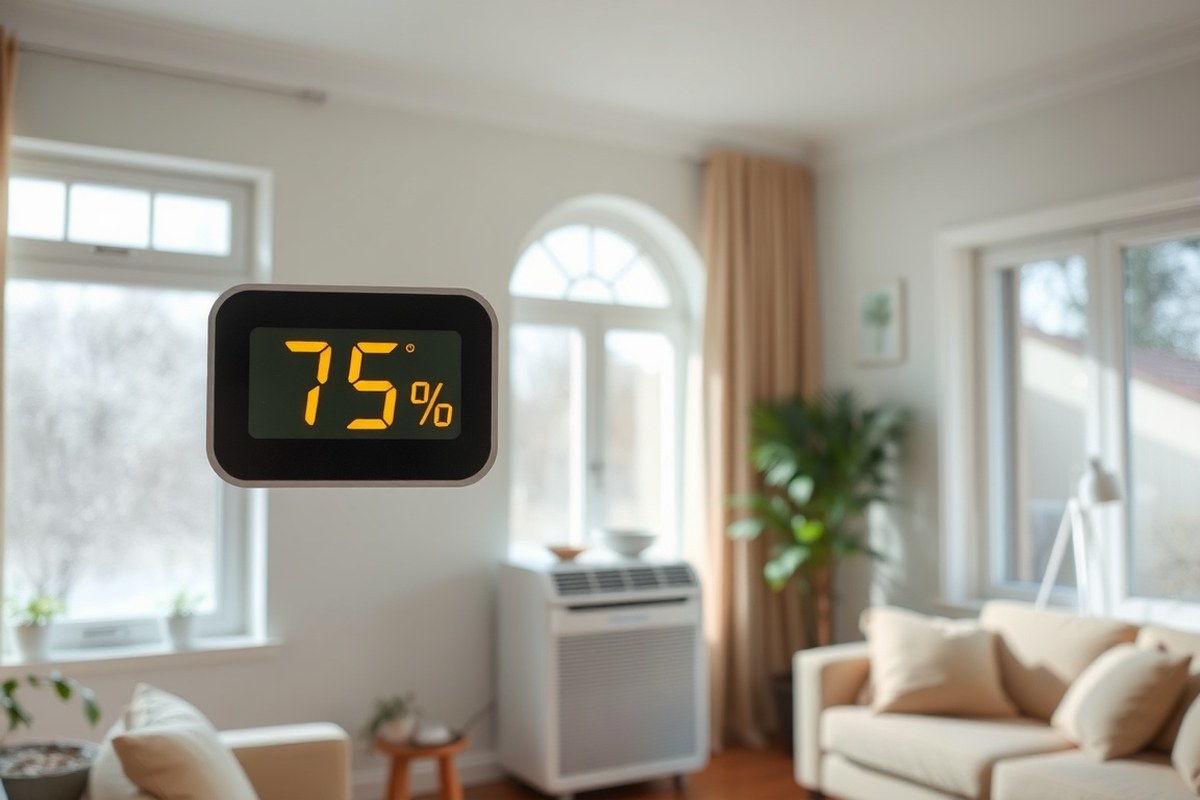
Is 75 Humidity High? What It Means and 8 Ways to Fix It Fast
Yes, 75 percent humidity is high and well above the safe indoor range of 30 to 50 percent. Keeping humidity that high for long shows a problem with ventilation or your dehumidifier.
You might need better airflow or a stronger dehumidifier to fix it. This level makes your home feel sticky and uncomfortable.
Humidity above 60 percent is considered high. At 75 percent, the air holds a lot of moisture, which makes it feel hotter than it is. You might sweat more and notice clothes take longer to dry indoors.
Start by checking your home’s airflow and dehumidifier settings if humidity is at 75 percent. Cut back on moisture sources like drying clothes inside. Watch for window condensation or a musty smell, which mean moisture sticks around too long.
Key Takeaways
- Indoor humidity above 60% is considered high and can cause discomfort.
- Sustained 75% humidity means poor ventilation or dehumidification in your home.
- High humidity makes the air feel hotter due to the heat index effect.
- Check for window condensation and musty smells to spot humidity problems early.
- Improve airflow and use a dehumidifier to lower indoor moisture quickly.
- Aim to keep indoor humidity in the 40 to 60 percent range for comfort.
1. Is 75% Humidity Actually Considered High Indoor?
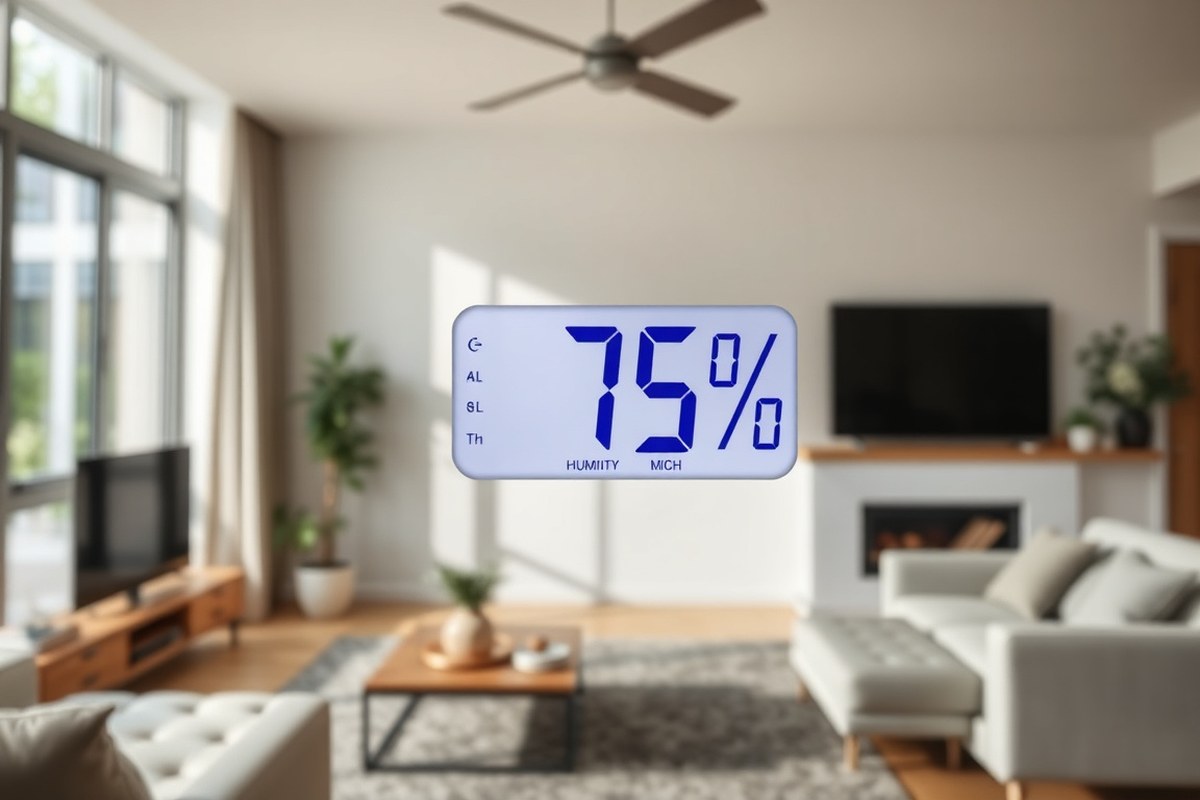
Indoor humidity levels between 30% and 50% are generally safe and comfortable. The U.S. The Environmental Protection Agency (EPA) recommends humidity below 60%.
ASHRAE also advises this to prevent health and building issues. At 75% relative humidity, your indoor air is well above what experts call “high humidity.”
Relative humidity above 60% signals too much moisture in the air. This increased moisture creates conditions that encourage mold growth and dust mite reproduction. Mold can grow on porous surfaces in 24 to 48 hours.
This happens at 75% humidity. It harms your home and health.
Things get worse the longer you stay at 75%. Wood in your home absorbs moisture, weakening its structure over time. To check humidity, use a hygrometer.
It costs about $10 to $30. It gives an accurate humidity reading. Keep indoor humidity below 60%.
The best range is 30% to 50%. This helps keep your home safe and comfy.
2. Why Does 75% Humidity Make You Feel Uncomfortable?

How 75% Humidity Feels Sticky and Oppressive
At 75% humidity, the air holds a lot of moisture. That moisture slows down sweat from evaporating off your skin.
Sweat evaporation usually cools your body. But when it can’t, your skin stays wet and sticky.
This trapped sweat creates a sticky feeling that makes the air seem heavy and uncomfortable. You often notice this even when the temperature isn’t very high. That’s because your body struggles to cool itself.
Impact on the Body’s Cooling System
Your body cools down by sweating, then sweat evaporates to remove heat. When humidity is 75%, sweat sits on your skin instead of evaporating. This means your body’s main cooling system stops working well.
As a result, you feel hotter than the actual air temperature. This extra heat stress can make you tired or dizzy. It can even raise your risk of overheating if you stay active too long.
Why 75% Humidity Feels Different by Season and Temperature
Warm air holds more moisture, so 75% humidity feels worse in summer. For example, at 85°F with 75% humidity, the heat index can feel like 95°F or higher. That “feels like” temperature explains why you sweat more and feel hotter.
In cooler seasons or temperatures, 75% humidity doesn’t feel as oppressive. For instance, at 60°F, the sweat evaporation is less critical.
So you might only notice mild stickiness. The body’s cooling needs shift with temperature.
Comparing Heat Index Across Humidity Levels
Heat index measures how hot it feels when you factor in humidity. At 75% humidity and 80°F, the heat index pushes above 85°F. This adds extra strain on your body because it can’t cool down fast.
Lower humidity levels around 40% make the same 80°F air feel closer to actual temperature. That means your sweat evaporates more easily. You’ll find it easier to stay comfortable with less stickiness and overheating.
Tips to Stay Comfortable at 75% Humidity
Try using fans or air conditioning to boost air movement indoors. Moving air helps sweat evaporate even with high humidity. Keep hydrated since your body loses more water trying to cool off.
Wear lightweight, breathable clothes that don’t trap heat and sweat. You can also avoid strenuous activities during hotter parts of the day. In cooler months, opening windows slightly can reduce moisture buildup without overcooling.
Running a dehumidifier helps remove extra moisture from the air.
3. Health Risks Associated with Sustained 75% Humidity Indoors
Indoor humidity consistently at 75% can cause health issues, especially for people with allergies or asthma. When humidity is this high, dust mites thrive. Their waste causes allergic reactions that can worsen asthma or trigger respiratory problems.
Mold grows easily above 60% humidity, so 75% is a perfect setting for it. Mold spores floating in the air can irritate your lungs and cause allergic symptoms. Even without visible mold, damp air may lead to coughing, sneezing, or difficulty breathing.
- Dust mites multiply quickly at 70% to 80% humidity.
- Mold spores grow on walls and furniture when moisture is excessive.
- High humidity encourages mildew, which smells musty and can irritate airways.
- People with asthma may experience more frequent and severe attacks.
- Respiratory infections are more likely with persistent dampness indoors.
To ease these health risks, start by improving air flow in your home. Open windows or use fans to circulate air, especially in bathrooms and kitchens. Running a dehumidifier can bring humidity below 60%, which limits mold and dust mite growth.
Costs for a basic dehumidifier range from $150 to $300. Keep it running in damp areas during humid months.
Also, fix leaks and dry wet fabrics quickly to reduce moisture. These steps help keep your indoor air healthier and reduce allergy flare-ups.
4. Common Causes of Indoor Humidity Reaching 75%
Indoor humidity often hits 75% because of everyday activities that release moisture into the air. Cooking and showering easily add 10-15% humidity spikes if exhaust fans aren’t used. Drying clothes indoors or keeping many houseplants can also boost moisture levels quickly.
Opening windows might help only if outdoor humidity is lower than inside. In places where humidity stays above 70-80%, open windows just bring more moist air inside.
Ventilation matters a lot. But it depends on outdoor conditions and how well your home circulates air.
- Running bathroom and kitchen fans during use
- Drying laundry indoors without ventilation
- Using humidifiers or housing many plants
- Cooking without exhaust fans or lids on pots
- Leaks, standing water, or damp basements
- Outdoor air entering on humid days
Temperature affects humidity because warmer air holds more moisture. If your home stays warm, the same amount of moisture feels heavier.
Poor ventilation lets humid air linger, pushing humidity near 75% or higher. Tracking these factors helps you spot hidden moisture sources.
Check areas where water gathers, like under sinks or by windows. Look for mold, peeling paint, or musty smells, which signal excess moisture.
Using a reliable hygrometer in different rooms shows where humidity builds up most. Fixing leaks, running fans, and controlling temperature are practical steps to prevent humidity spikes.
5. How to Measure and Understand Humidity: Key Differences and Tools
You can measure indoor humidity using a hygrometer. It shows how much moisture is in the air. This helps you know your home’s humidity level.
Relative humidity (RH) is a percentage. Absolute humidity tells you the actual amount of water vapor. Dew point is the temperature when air gets saturated.
Moisture starts to form water droplets. This happens more at high humidity like 75%.
Using Hygrometers Correctly Indoors
Hygrometers are simple devices that measure relative humidity indoors. Digital models cost around $10 to $30 and often include temperature readings. Put your hygrometer in a central room.
Avoid direct sunlight and vents. This gives you the most accurate humidity reading.
Check your hygrometer several times a day because humidity levels change with temperature and daily activities. Avoid placing it near kitchens or bathrooms, where steam can cause spikes. Calibrate your digital hygrometer if readings seem off.
Use a salt test or compare with a good indoor weather station. This keeps your measurement reliable.
- Buy a digital or analog hygrometer, costing $10-$30.
- Place it in the main living area, away from vents and sunlight.
- Check readings multiple times per day to spot trends.
- Calibrate by comparing with a known humidity source if needed.
- Record humidity levels alongside indoor temperature for context.
Check your hygrometer regularly to catch sudden humidity spikes early.
Relative vs Absolute Humidity Explained
Relative humidity shows how full the air is with moisture. It compares to the max moisture the air can hold. This max changes with temperature.
Absolute humidity tells you the actual mass of water vapor in a cubic meter of air. RH changes with temperature, but absolute humidity and dew point stay steady.
At 75°F and 75% RH, air holds about 13 grams of water per cubic meter. This shows how much moisture is in the air.
At a cooler 65°F and 75% RH, it holds only around 9 grams per cubic meter. This means the same RH percentage doesn’t mean the same moisture amount indoors and outdoors.
| Temperature | Relative Humidity | Absolute Humidity (g/m³) |
|---|---|---|
| 75°F | 75% | ~13 g/m³ |
| 65°F | 75% | ~9 g/m³ |
Use relative humidity for daily comfort checks. For exact moisture, use absolute humidity.
Both help you understand indoor air better. Absolute humidity helps explain why 75% RH can feel stickier or drier depending on air temperature.
Understanding Dew Point and Moisture Saturation
Dew point is the temperature when air can’t hold more moisture. Water then begins to form on surfaces. This helps spot condensation risks.
If dew point inside hits 60°F at 75% RH, moisture can form. Expect water to appear on cooler surfaces like windows or walls. This often causes mold, condensation, and damage inside homes.
To guess dew point, use this rule: Higher temperature and RH means a higher dew point. This tells you when condensation might start.
Commercial dew point calculators or free weather apps show this number directly. Dew points over 60°F usually mean you should manage moisture to avoid problems.
Condensation happens if surface temperatures drop below the dew point. When walls or windows get cool below 60°F dew point, expect droplets.
Condensation forms as moisture turns to water on cold surfaces. This makes dew point a practical tool to decide when to ventilate or use a dehumidifier.
- Read indoor temperature and relative humidity from your hygrometer.
- Use a dew point calculator or app to find the dew point temperature.
- Check cool surfaces inside your home for temperatures below this dew point.
- Cooler surfaces cause condensation. Take steps to control moisture in your home. This helps prevent mold and damage.
- Monitor dew point daily when indoor RH reaches 75% or higher.
Dew point tells you exactly when moisture will condense and cause problems.
6. Practical Methods to Lower 75% Indoor Humidity Effectively
To reduce indoor humidity at 75%, you need reliable methods like dehumidifiers, ventilation, and temperature control. Each method suits different situations, and combining some often works best. Knowing when and how to use each helps you get drier air fast.
Mechanical Dehumidifiers and Their Efficiency
Dehumidifiers pull moisture out of the air, lowering humidity quickly. Choose one sized for your room square footage for best results. A small unit might cost $150 to $300, while larger whole-house models run higher.
Running a dehumidifier in high humidity areas like basements or bathrooms gives fast relief. Keep doors closed to focus the effect, and empty the water tank regularly. Some models connect to drains for auto-empty, useful if you run it often.
Don’t expect a dehumidifier to work well if the home has many open windows or doors. Also, noisy models can be disruptive, so check decibel levels before buying. You’ll see humidity drop within hours if your unit is adequate and used right.
Natural Ventilation and Exhaust Fan Options
Opening windows helps if outdoor humidity is lower than indoors. Check a weather app before opening them to avoid pulling in more moisture. Using exhaust fans during showers and cooking sends humid air outside, cutting indoor moisture levels.
Bathroom and kitchen exhaust fans are affordable and easy to install. They cost $20 to $100 and work best when vented outside, not just circulating air indoors. Run fans during and 10, 15 minutes after these activities for better results.
Using ceiling fans or portable fans helps move air around and dry damp spots. Fans don’t remove moisture but promote evaporation. Avoid placing fans near humid sources unless vented outdoors.
Temperature Control for Humidity Management
Keeping your home between 62 and 78 degrees Fahrenheit stabilizes humidity. Cooler air holds less moisture, so setting your thermostat lower helps. Aim for about 68°F to manage moisture without you feeling cold.
Air conditioning units work as both coolers and dehumidifiers. Running your AC at a moderate setting reduces humidity by cooling air below its dew point. This condenses moisture on the coils and drains it away.
Don’t rely on heating alone to lower humidity. Warm air can hold more moisture but also encourages mold growth if you fail to ventilate. Use heating alongside ventilation or dehumidifiers for best comfort.
Here’s a quick comparison of methods suitable for 75% indoor humidity:
| Method | Effectiveness | Cost Range | Best Use | Limitations |
|---|---|---|---|---|
| Dehumidifier | High – Removes moisture directly | $150 – $500+ | Basements, bathrooms, whole rooms | Noise, requires power and maintenance |
| Exhaust Fans (bath/kitchen) | Medium – Removes moist air at source | $20 – $100+ | Cooking, showers | Doesn’t cool air, needs outdoor venting |
| Opening Windows | Variable – Depends on outdoor humidity | Free | When outdoor air is drier | Can backfire if outdoor air is humid |
| Air Conditioning | High – Cools and dehumidifies | Running cost varies | Whole home cooling | Energy use, needs AC system |
| Fans (Ceiling, Portable) | Low – Circulates air only | $20 – $150 | Promotes drying | No moisture removal |
Use a dehumidifier for quick, steady control if humidity stays at 75%. Vent fans help during moist activities and open the window only if it’s drier outside. Adjust your thermostat and run AC to keep levels stable.
7. Common Mistakes When Handling High Indoor Humidity
Opening windows won’t always lower 75% humidity indoors. Outdoor air can be very humid, especially near coasts or lakes. Sometimes, it might even be more humid than inside.
Bringing in that moist air keeps humidity high instead of lowering it. So you need to check outdoor conditions first.
Dehumidifiers can seem like a quick fix, but they often fail when used incorrectly. Running them in an open space or setting the humidity too high leads to poor results.
Cheap units may not cool your whole room well. This wastes your time and uses energy for little gain.
Maintenance and setup mistakes keep humidity levels stubbornly high. Dirty filters restrict airflow and reduce dehumidifier efficiency.
Improper placement, like near windows or heat sources, makes the device work harder. Not sealing leaks in walls or windows lets moisture sneak in and builds humidity faster.
- Don’t open windows if outside humidity is above 60%.
- Choose a dehumidifier sized for your room’s size.
- Clean or replace dehumidifier filters every 1 to 3 months.
- Place the dehumidifier away from windows and heaters.
- Seal leaks and cracks to prevent outside moisture from entering.
- Close bathroom and kitchen doors when using exhaust fans.
- Run dehumidifiers with doors and windows closed for best effect.
Check the label on your dehumidifier to see its capacity for pints per day. A 30-pint unit suits a typical 300-square-foot room.
But bigger rooms need 50 pints or more. Cleaning your device regularly keeps it running well and avoids mold buildup inside.
Reducing humidity inside also means controlling moisture sources like cooking and showers. Use exhaust fans properly and keep them running for 15 to 30 minutes after you finish.
Fixing leaks and improving insulation can cost a few hundred dollars but cuts humidity long-term. Without these steps, equipment alone won’t solve the problem.
8. When to Call a Professional for Persistent 75% Humidity Problems
Condensation on windows, musty smells, or visible mold means it’s time for a pro. If high humidity sticks around above 70%, especially near walls or ceiling corners, mold could be growing. Persistent problems or worsening health issues like coughing might also need expert help.
Start by noting patterns of moisture or mold spots before calling someone. Take photos and record when issues get worse or better.
This info helps inspectors know where to focus and speeds up diagnosis. Also, list any recent changes like new water leaks or renovations.
Professionals who handle humidity problems include HVAC technicians, mold inspectors, and building contractors. HVAC pros adjust ventilation or install dehumidifiers to bring humidity below 50%.
Mold inspectors test affected areas to identify species and contamination level. Contractors fix leaks, improve insulation, or repair damaged drywall.
Expect an inspection to cost between $200 and $600 depending on home size and scope. Repairs vary but can run from a few hundred to several thousand dollars.
Always get several quotes and check reviews before hiring. Ask if they provide a written estimate and explain the steps they plan to take.
Don’t ignore musty odors; mold spores can spread quickly and cause health issues.
During the visit, ask pros about prevention tips to stop moisture buildup. Follow their advice on ventilation, fixing leaks, and regular maintenance. After repairs, monitor humidity levels with a reliable hygrometer to keep your home healthy.
Step-by-Step Action Plan to Lower 75% Indoor Humidity
Take action now to reduce high indoor humidity and improve your comfort. Follow these clear steps over the coming weeks.
- Day 1: Use a reliable hygrometer to measure your home’s humidity. Confirm it reads around 75% or higher before starting changes.
- Day 2: Ventilate your home by opening windows or using exhaust fans in kitchens and bathrooms. Check if humidity drops after a few hours.
- Week 1: Run a dehumidifier in the most humid rooms for several hours daily. Notice if surfaces feel less damp and air smells fresher.
- Week 2: Fix or report any leaks or plumbing issues you find. A dry surface on walls or ceilings signals better moisture control.
- Week 3: Use moisture absorbers like silica gel or charcoal bags in closets and cupboards. Watch for a drop in musty odors as a sign of success.
- Week 4: Check and clean your HVAC system’s filters and drainage. Improved airflow and lower humidity readings indicate progress.
- After 1 Month: Re-measure humidity with the hygrometer during different times of day. Aim for a steady 30% to 50% range for comfort and health.
Frequently Asked Questions
Is 75% Indoor Humidity Bad for Wood Furniture?
Yes, 75% humidity can cause wood to swell or warp. Keep humidity below 50% to protect wood items.
Can 75% Humidity Cause Mold Growth Quickly?
Yes, mold thrives above 60% humidity. At 75%, mold can form within 24 to 48 hours on damp surfaces.
Does 75% Humidity Reduce Cooling System Efficiency?
High humidity makes air conditioning work harder. This raises energy costs and lowers comfort.
Are Some Rooms More Prone to 75% Humidity?
Yes, basements and ground floors often reach 75% due to soil moisture. Good ventilation helps reduce it.
Can 75% Humidity Damage Electronics Indoors?
Yes, excess moisture can cause corrosion in electronic devices. Use airtight storage or dehumidifiers for protection.
Is 75% Humidity Unsafe for Pets Indoors?
High humidity may stress some pets, causing respiratory or skin issues. Keep rooms well-ventilated for pet comfort.
Key Points to Remember
Seventy-five percent humidity indoors is definitely high and can cause problems. Start by measuring your humidity levels today. Taking steps to lower it will make your home safer and more comfortable fast.