What Is Humidity in Weather? A Complete Guide with Clear Examples
What is humidity in weather? It’s the amount of water vapor in the air. Humidity affects how warm or sticky the air feels outside.
When the weather report says 80 percent humidity, the air holds a lot of moisture. That makes it feel sticky and uncomfortable outside. High humidity like this usually makes you sweat more.
Humidity changes with temperature and location. Hot air can hold more moisture than cold air. This means humidity levels swing widely depending on the weather and place you live or visit.
You can notice humidity when air feels damp or dry on your skin. Watch the humidity if you plan outdoor activities since it influences comfort and health. High humidity can make warm days feel hotter and can affect how much you sweat.
Key Takeaways
- Relative humidity shows the percent of moisture air holds compared to its capacity.
- Absolute humidity measures the actual grams of water vapor per cubic meter of air.
- Dew point is the temperature where air reaches 100% humidity without losing moisture.
- 100% relative humidity means air can’t hold any more water vapor.
- Indoors, keep humidity between 30% and 50% for comfort and safety.
- High humidity affects how hot it feels by limiting sweat evaporation.
What Is Humidity in Weather and Why It Matters
Humidity tells how much water vapor is in the air around you. Relative humidity is a percentage that compares current moisture to the air’s max moisture at that temperature. For instance, 80 percent means the air holds 80 percent of all the water vapor it can hold before saturation.
Humidity changes how your body cools off outdoors. Moist air slows down sweat evaporation. That affects how hot or comfortable you feel.
High humidity slows sweat evaporation, making hot days feel hotter and sticky. That’s why 85°F with 70 percent humidity feels much worse than 85°F with 30 percent humidity.
Humidity also shapes the weather itself. Humidity helps make clouds in the sky. It controls how much moisture is in the air.
That changes the chance of rain. Wetter places or times usually have more humidity.
That means the air has more moisture. More moisture often brings more rain.
Dew point is the temperature when air holds all it can. Checking this number tells you how comfortable it feels better. It explains humidity effects more clearly than just percentages.
Dew points below 55°F feel comfortable, while above 65°F feel muggy or oppressive. This is because the dew point measures actual water vapor, not just relative percentages.
Understanding humidity helps you prepare for weather changes and plan activities. Knowing when humidity is high can keep you safer. It warns about heat stress during outdoor work or exercise.
You can prepare better and avoid problems. It also signals when indoor air might need dehumidifying to prevent mold or damage.
Key Types of Humidity: Relative, Absolute, and Dew Point
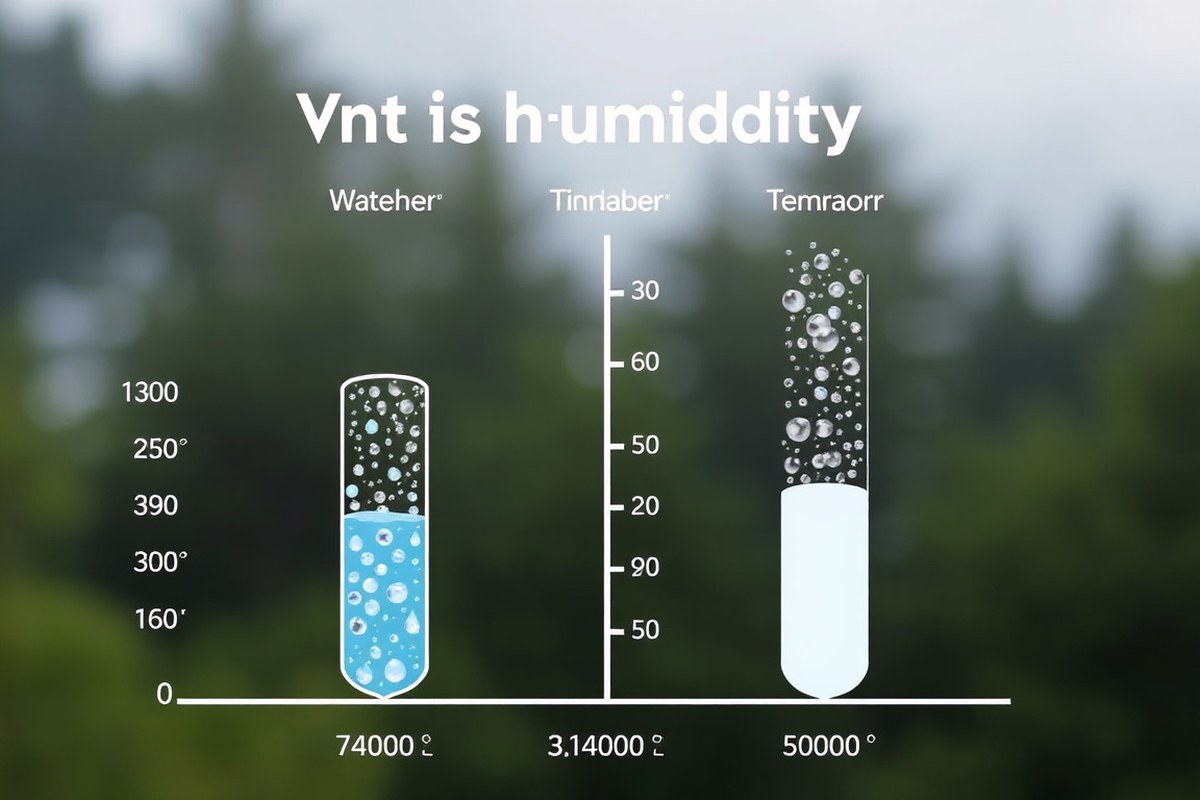
Humidity in weather is measured mainly by three types: relative humidity, absolute humidity, and dew point. Each type describes moisture in the air differently, helping you understand how humid it really feels. Knowing all three gives a clearer picture of the air’s moisture.
Understanding Relative Humidity
Relative humidity shows how much moisture air holds at a temperature. It compares that to the max moisture air can hold then. It’s a percentage measuring how “full” the air is with water vapor.
The relative humidity at 100% means the air is fully saturated. It can’t hold more moisture without condensation.
Relative humidity changes with air temperature. As temperature rises, air can hold more moisture. So relative humidity might drop even if moisture stays the same.
For example, 1.At 30°F, 9 grains per cubic foot equals 100% humidity. But the same amount at higher temperatures means less humidity.6% at 100°F.
What Is Absolute Humidity?
Absolute humidity measures the actual amount of moisture in the air. It is often expressed as grams per cubic meter or grains per cubic foot.
Absolute humidity measures the total water vapor in the air, not temperature. It doesn’t change with air temperature like relative humidity does.
Absolute humidity is useful for comparing moisture content without temperature muddying the picture. This value stays constant if no moisture enters or leaves the air.
Absolute humidity tells you the exact amount of water vapor in air. It gives a number rather than a percentage.
Explaining Dew Point Temperature
The dew point is the temperature when air reaches full moisture saturation. At this point, water vapor starts to condense into dew, fog, or frost. It directly shows moisture in the air, unlike relative humidity.
Dew point doesn’t change when air temperature changes, making it a steady number to describe humidity. Higher dew points mean more moisture.
For example, a dew point above 65°F feels very humid and uncomfortable. Below 55°F feels dry and comfortable.
The dew point helps you quickly know how muggy or dry it feels outside. Higher dew points mean more moisture and stickier conditions.
This table shows how relative humidity changes with temperature, given a fixed absolute humidity of 1.9 grains per cubic foot:
| Temperature (°F) | Humidity Capacity (grain/ft³) | Absolute Humidity (grain/ft³) | Relative Humidity (%) |
|---|---|---|---|
| 30 | 1.9 | 1.9 | 100 |
| 40 | 2.9 | 1.9 | 65.5 |
| 50 | 4.1 | 1.9 | 46.3 |
| 60 | 5.7 | 1.9 | 33.3 |
| 70 | 8.0 | 1.9 | 23.7 |
| 80 | 10.9 | 1.9 | 17.4 |
| 90 | 14.7 | 1.9 | 12.9 |
| 100 | 19.7 | 1.9 | 9.6 |
This table shows how the same moisture can feel different at various temperatures. Warm air makes moisture feel heavier than cold air does.
When the air gets warmer, the relative humidity drops quickly even if absolute humidity stays steady. That’s why hot days can feel dry or humid depending on water vapor.
How Temperature and Air Affect Humidity Levels
Warm air can hold much more moisture than cold air. This happens because heat gives water molecules more energy to stay in the air as vapor. Tropical regions near oceans have high humidity.
Warm air holds moisture from the water. This keeps the air moist.
Relative humidity (RH) shows water vapor percentage in the air. It compares actual moisture to maximum capacity. This depends on temperature.
When air warms, its total moisture capacity rises. So relative humidity usually falls if no extra moisture enters. You see RH change as temperatures rise through the day.
RH usually drops when temperatures climb. Moisture can stay the same even then.
Cooler temperatures reduce air’s moisture capacity, lifting relative humidity if moisture remains steady. Picture a cold 30°F morning with 100% RH. The air is saturated but holds less water.
Warm air would hold more moisture. At 80°F and 50% RH, the air holds half the moisture it can. This shows relative moisture capacity at that temperature.
Humidity rises or falls mainly depending on temperature and moisture added or removed. Rain can boost humidity by releasing moisture into the air. Dry, hot winds pull moisture from the air.
This lowers humidity. The air feels less sticky or muggy then.
Warm weather with high moisture affects how heat feels. A 90°F day in Florida feels different from Phoenix. The difference comes from humidity.
Florida’s warm air holds more moisture from nearby water. This raises relative humidity.
The heat feels heavier because of this. Meanwhile, Phoenix stays dry because the air holds little moisture despite the heat.
Relative humidity changes throughout the day because temperatures shift while moisture content often stays constant. Morning often has higher RH since the air is cooler and can’t hold as much water. The sun heats the air, increasing its moisture capacity.
Unless moisture rises, relative humidity drops. This happens as the day warms.
How Meteorologists Measure Humidity and What Instruments Are Used
Humidity is measured using tools like hygrometers and psychrometers. These instruments track moisture in the air with different methods. Weather stations report humidity data often based on these measurements.
Using a Sling Psychrometer
A sling psychrometer has two thermometers: a dry bulb and a wet bulb. The wet bulb is covered in a damp cloth to measure evaporation cooling. Swinging the device in the air makes the water evaporate, showing humidity levels.
Follow these steps to measure humidity with a sling psychrometer:
- Moisten the wet bulb’s cloth fully with clean water.
- Hold the psychrometer by its handle.
- Swing it gently in the air for 2 to 3 minutes.
- Watch the wet bulb temperature drop during swinging.
- Stop swinging when the wet bulb temperature stops falling.
- Read both the dry bulb and wet bulb temperatures.
- Use a humidity chart or calculator to find relative humidity.
The wet bulb must get air flow to cool down properly. If air is still, results won’t be accurate. Good results show a stable wet-bulb reading after swinging.
Electronic Hygrometers and Sensors
Electronic devices often use capacitive or resistive sensors to measure humidity. These sensors detect changes in electrical properties caused by moisture. They give digital readings that update constantly.
Digital hygrometers are common in homes and weather stations. They cost from $10 for simple models to over $100 for accurate, professional ones. Chilled-mirror dew-point hygrometers provide very precise readings but are pricier and used in labs.
Weather Station Humidity Reporting
Weather stations report relative humidity as a percentage. This data comes from electronic sensors or psychrometers on site. The relative humidity tells how close the air is to saturation.
These stations also measure temperature and dew point, which help predict fog and rain. Data from multiple stations creates humidity charts for forecasts. Satellite instruments add details for humidity high in the atmosphere.
Why Humidity Feels Different: Heat Index and Human Comfort
Humidity makes it feel hotter because it slows the evaporation of sweat from your skin. Evaporation cools the body.
So when air contains a lot of moisture, sweat does not dry quickly. This means your body cannot cool down efficiently, making hot air feel even warmer.
The heat index shows how hot it feels outside. It combines air temperature and humidity. This helps you understand the real feel of the weather.
A 90-degree day with 70% humidity feels hotter. The heat index says it feels like 106 degrees.
This number shows how much humidity heats you up. This “feels like” temperature helps you understand the real risk of heat stress on your body.
To calculate the heat index, you can use NOAA’s heat index chart or an online calculator. Start with the actual air temperature and then add the relative humidity percentage. You can use a chart or a calculator.
It shows the temperature your body actually feels. This is called the apparent temperature.
If it’s 85°F with 60% humidity, it feels hotter. The heat index might say around 91°F. This tells you how your body experiences the heat.
As both numbers rise, the heat index climbs sharply. This is why on humid summer days, the air feels much hotter than the thermometer shows.
High humidity affects how well your body cools by reducing evaporation. Sweating is your natural air conditioning system. When the air has too much moisture, sweat can’t dry.
Sweat stays on your skin longer. This makes your body overheat faster.
Check the heat index before going outside on hot, humid days to avoid heat-related illnesses.
How Humidity Influences Weather Phenomena Like Rain and Fog
Humidity plays a key role in forming clouds, dew, fog, and precipitation. When air cools to its dew point, it reaches 100% relative humidity. Water vapor begins to turn into tiny water droplets.
These droplets form clouds or fog near the ground. This happens when air cools down or becomes saturated.
An air parcel lifts and cools, often reaching its dew point. This cooling causes water vapor to condense around particles, forming clouds. These droplets can join together and get bigger.
When heavy enough, they fall as rain or snow. This causes precipitation in the area.
People often think 100% relative humidity means it will always rain. That isn’t true. 100% relative humidity means air is saturated but doesn’t guarantee rain or snow.
Droplets must grow large enough to fall as rain or snow. Air flow and temperature also affect this growth. These factors help turn small drops into precipitation.
The dew point temperature shows when air can hold no more moisture. When air cools to this temperature, condensation begins. Dew forms on grass or fog appears in the morning.
This happens when overnight temperatures drop to the dew point. The air cools enough for water vapor to condense.
Fog forms when near-ground humidity hits 100% and air cools to the dew point. Fog looks like a cloud sitting on the ground. It forms by the same process of condensation.
Water vapor turns into tiny droplets near the surface. This form of condensation depends much on calm, cool air near the ground.
Precipitation may happen even if surface humidity isn’t at 100%. Air higher up can be saturated, causing clouds and rain while the ground-level humidity remains lower. Weather conditions like storms or strong vertical air motion also help droplets combine and fall.
Understanding how humidity causes clouds and fog helps explain everyday weather changes. Dew point and relative humidity are decision rules meteorologists use to predict when moisture will condense. Tracking these helps forecast dew, fog, or rain chances accurately.
Comfort and Safety: Healthy Indoor and Outdoor Humidity Levels
Indoor humidity between 30% and 50% keeps air comfortable and safe. Too high or low humidity can cause health problems and damage your home. You can adjust indoor humidity with simple habits and devices.
Ideal Indoor Humidity Targets
Keeping indoor humidity in the 30% to 50% range avoids discomfort and mold. The EPA and ASHRAE recommend this range to limit bacteria growth and respiratory irritation. Around 45% relative humidity is often the most comfortable level.
This range works well at moderate temperatures, helping you feel less sticky or dry. Humidity above 60% can make the air feel muggy and encourage mold or dust mites. On the other hand, humidity below 30% may cause dry skin and static shocks.
Health Risks of Improper Humidity
Low humidity often leads to dry skin, sore throats, and static electricity. It can worsen respiratory issues like asthma or colds. Very low levels under 20% make it easier for viruses to spread and irritate airways.
High humidity above 60% increases bacteria and mold growth risks indoors. It also boosts dust mites, which can worsen allergies and asthma symptoms. Combined with heat, high humidity raises the risk of heat stress and exhaustion.
Practical Tips to Adjust Indoor Humidity
Use a humidifier to add moisture if indoor air feels dry, especially in winter. A dehumidifier works well if air stays damp and sticky. Both devices vary from $30 for small models to $300 for larger ones.
These simple steps help keep humidity comfortable indoors:
- Open your windows when the air outside feels drier than inside.
- Run exhaust fans during showers and cooking to remove moisture
- Make sure clothes dryers vent outside, not indoors
- Fix leaks and seal drafts to prevent unwanted humidity changes
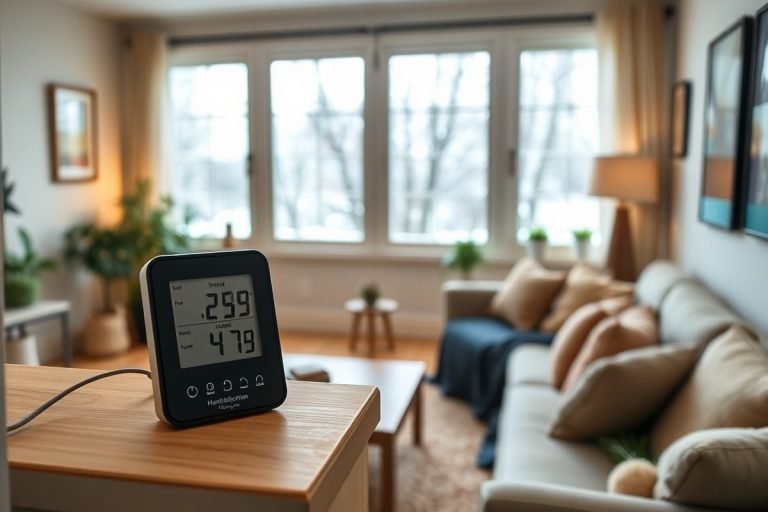
- Monitor humidity with an inexpensive hygrometer ($10 to $20)
- Use plants that absorb moisture to balance humidity naturally
Adjusting humidity improves comfort and protects your health and home. It usually takes minutes to hours for devices to show results. Watch the hygrometer to keep humidity in the ideal 30%-50% range.
Geographical and Seasonal Humidity Patterns Explained
Humidity is higher in the tropics because warm air holds more water vapor. The sun heats tropical oceans, causing more evaporation. This leads to constant high humidity near the equator.
Humidity also shifts with the seasons. Summer generally brings higher humidity due to warmer temperatures. Colder months have lower humidity since cold air can hold less moisture.
Local weather patterns link tightly to humidity changes. High humidity often signals rain and storms, especially in tropical regions. Dry seasons tend to have much lower humidity, affecting climate and vegetation.
Here’s a simple comparison of humidity patterns in different regions and seasons:
| Region | Season | Typical Relative Humidity | Common Weather Effects |
|---|---|---|---|
| Tropics | Year-round | 70% – 90% | Frequent rain, thunderstorms, high heat index |
| Temperate Zones | Summer | 50% – 70% | Warm, muggy days, occasional afternoon storms |
| Temperate Zones | Winter | 30% – 50% | Cool, dry air, less precipitation |
| Deserts | Year-round | 10% – 30% | Dry conditions, high temperature swings |
| Coastal Areas | Varies | 60% – 80% | Moderate humidity, frequent fog |
Tracking seasonal humidity helps predict local weather trends. For example, rising humidity in spring signals increasing rain chances in many places. Coastal areas often experience fog linked to higher evening humidity.
The higher the absolute humidity, the denser the water vapor in the air. Warmer climates naturally have more moisture in the air, influencing the whole environment. This also explains why heat feels worse with high humidity.
Keep indoor humidity between 30% and 50% to avoid discomfort and mold growth, says the EPA.
Changing climates can increase average humidity worldwide. Warmer air holds more moisture, making some regions wetter. Watching these patterns can help you prepare for shifts in your local weather.
Step-by-Step Action Plan to Understand and Track Humidity
Use these steps to learn about humidity and notice its effects around you. Track changes and see how humidity affects comfort and weather.
- Today: Check the current relative humidity on a weather app. You’ll see a percentage that shows how much moisture the air holds.
- This week: Note how humid it feels on dry vs. Rainy days. Write down whether you feel sticky, dry, or comfortable.
- Next week: Use a simple hygrometer at home to measure indoor humidity. Aim for 30% to 50% for comfort and health.
- After 2 weeks: Compare outdoor humidity with temperature changes. See how heat and moisture change how the air feels.
- Within a month: Watch for fog or rain when humidity is high near the dew point. This shows moisture turning to water drops.
- Ongoing: Adjust your home’s humidity using a humidifier or dehumidifier as needed. Check if symptoms like dry skin or mold appear.
- Seasonal check: Observe how humidity shifts with seasons in your area. Notice how winter air feels dryer and summer air more humid.
Frequently Asked Questions
Why Does Humidity Make You Feel Hotter Than the Actual Temperature?
Humidity slows sweat evaporation, so your body feels warmer. This makes hot days feel even hotter when humidity is high.
How Does Humidity Affect Outdoor Exercise Performance?
High humidity can make breathing harder and cause quicker exhaustion. Stay hydrated and reduce exercise intensity in humid weather.
Can Humidity Inside Your Home Cause Health Problems?
Yes, excessive indoor humidity can cause mold growth and allergies. Keep indoor humidity between 30% and 50% to stay safe.
Does Humidity Affect How Fast You Dry Clothes Outside?
Yes, low humidity helps clothes dry faster because the air absorbs more moisture. High humidity slows drying time outdoors.
How Does Humidity Influence Insect Activity and Presence?
Many insects thrive in high humidity because it supports their survival. Mosquitoes, for example, are more active and breed faster.
Is Humidity Measurement Important for Industries Beyond Weather Forecasting?
Yes, sectors like agriculture and construction rely on humidity data for operations. Proper humidity control improves product quality and safety.
Final Thoughts
Humidity shapes weather and your comfort every day. Watch how it changes and affects heat and moisture around you. Try measuring indoor humidity today to feel the difference it makes.