How Do You Plant Tomatoes in Containers: A Complete Guide with Proven Tips
How do you plant tomatoes in containers? Start with a pot that drains well and holds at least 5 gallons of soil.
Use quality potting mix and choose seedlings about 9 to 12 inches tall. Plant the seedlings deep enough so their lower stems are covered with soil.
Choose a sunny spot outdoors that gets 6 to 8 hours of sunlight daily. Wait until after your area’s last frost date and when nights stay above 50°F. Keep your container plants watered but avoid waterlogging their roots.
Tomatoes grow best if you bring containers indoors when temperatures drop below 55°F at night. Look for compact tomato varieties if you want smaller plants and pots. Enjoy fresh, homegrown tomatoes even with limited garden space by following these steps.
Key Takeaways
- Pick containers with drainage holes and at least 5 gallons capacity for tomatoes.
- Plant seedlings 9 to 12 inches tall, covering lower stems with soil deeply.
- Place containers in sunny spots getting 6 to 8 hours of light daily.
- Wait until after the last frost and when nighttime temps stay above 50°F.
- Water tomatoes evenly, keeping soil moist but not soggy to protect roots.
- Bring containers indoors when night temperatures drop below 55°F to protect plants.
How to Plant Tomato Seedlings in Containers Step-by-Step
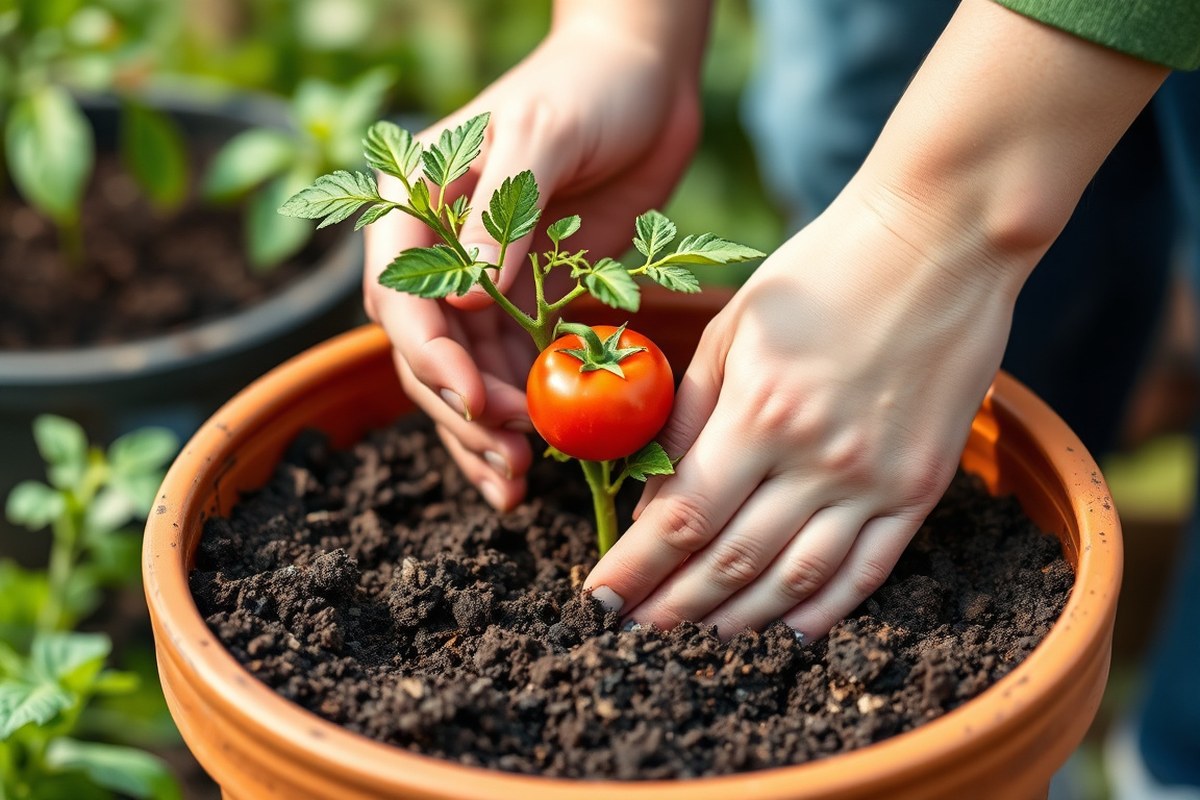
Planting tomato seedlings in containers needs a good plan and careful steps. Start with healthy seedlings about 9 to 12 inches tall. Prepare your container and soil before planting to help roots settle well and avoid water problems.
Use container soil that drains well and holds moisture. A poor soil mix can cause root rot or dry plants quickly.
Make sure the container is clean and has drainage holes. This keeps water from pooling and hurting your plant.
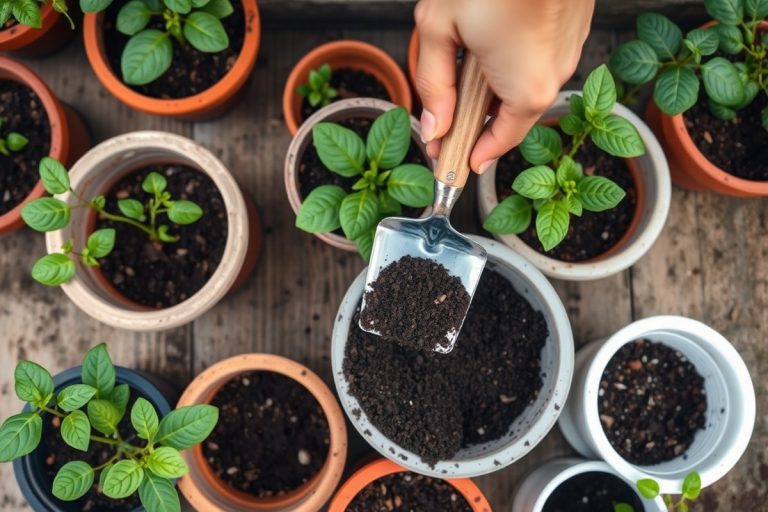
- Fill the container about two-thirds full with potting soil. Use a soil mix made for containers with good air and water flow.
- Remove the seedling gently from its nursery pot. Avoid pulling on the stem. Loosen some roots if they look crowded.
- Plant deeply so the stem is buried up to the first set of leaves. This root-friendly trick helps the plant grow strong.
- Fill around the seedling with more soil. Pat it lightly to remove big air pockets but do not press hard.
- Water the plant thoroughly right after planting. Use enough water to soak the soil evenly but not flood the pot.
- Place the container in a spot with plenty of sunlight. The seedling needs six to eight hours of sun daily. Make sure this spot gets direct sun each day.
- Check moisture daily at first. Keep the soil moist but not soggy to help roots grow fast.
Planting depth matters because tomatoes can grow roots on buried stems. Putting the seedling deeper encourages a stronger root system. Watering immediately settles the soil and removes air pockets.
Using too little water right away leaves roots dry. Too much water can drown the plant.
Sometimes container seedlings have compacted roots. Gently teasing them loose give roots room to spread out. Avoid planting seedlings that look wilted or yellowed as they may struggle to settle.
Choosing the Right Container Size and Type for Tomatoes
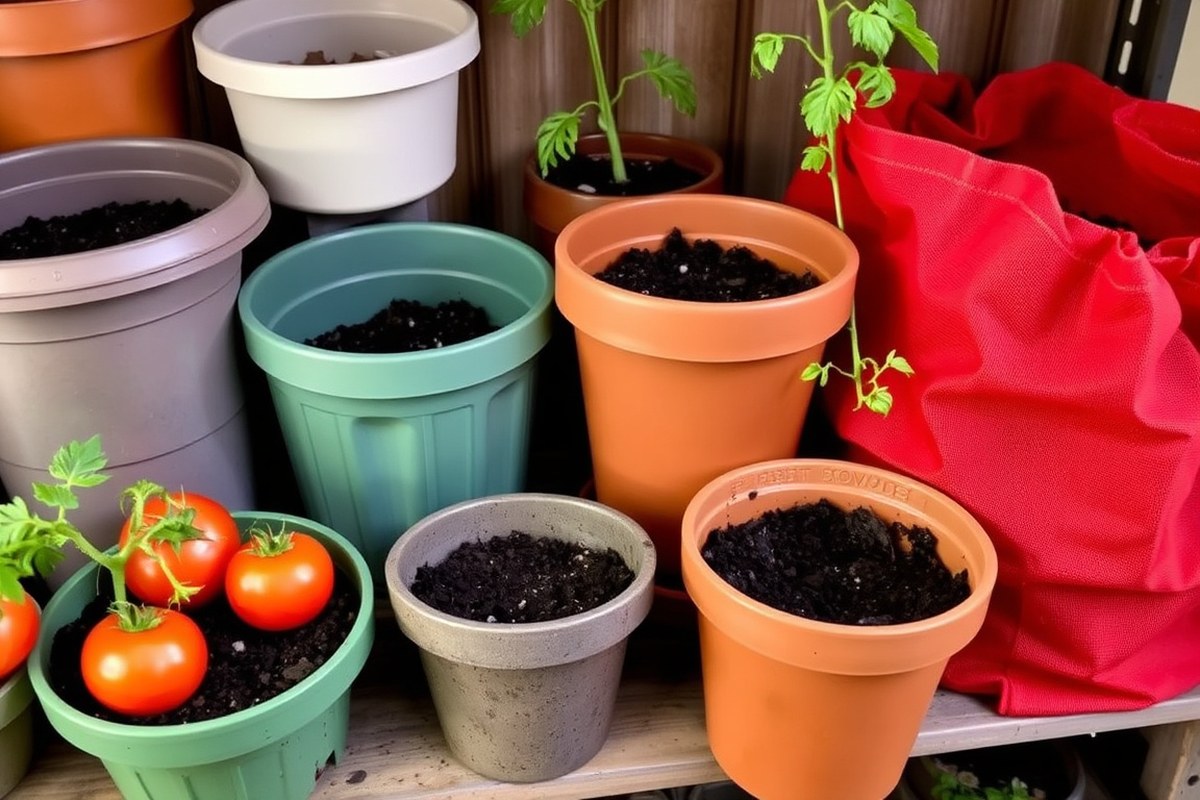
Containers for tomatoes need enough size and depth to hold roots well. Determinate tomatoes grow smaller, so they fit in 18-inch diameter pots.
Indeterminate tomatoes spread more and need at least 24 inches across. Depth of 12 inches or more is key for strong root growth and plant health.
Some cherry tomatoes like Tumbling Tom grow well in hanging baskets. Use baskets about 18 inches wide. They should hold 5 gallons of soil.
Small pots about 6 inches wide also work for Tumbling Tom. This tomato stays compact, so small pots fit well. Plant only one tomato per container to avoid crowding.
Crowding can stunt growth. It also reduces your harvest.
Container material changes how tomatoes grow. Clay pots dry out faster. So you must water more often but avoid root rot.
Plastic pots hold moisture better and warm soil well but sometimes cause overheating. Choose containers with drainage holes and raise pots off hard surfaces to improve drainage.
| Tomato Type | Growth Habit | Ideal Container Diameter | Minimum Depth | Plants per Container | Example Variety or Type |
|---|---|---|---|---|---|
| Determinate | Compact, limited growth | 18 inches | 12 inches | 1 | Patio V |
| Indeterminate | Vigorous, continual growth | 24 inches | 12 inches | 1 | Most common types |
| Cherry (Trailing) | Trailing, small fruit | 6 to 18 inches (pots or baskets) | 6 to 12 inches | 1 | Tumbling Tom |
Plastic or resin containers are easier to move and don’t crack in cold. Clay is heavier and cooler, but it needs more watering. Mixing pot types can help you find what suits your garden space and climate best.
Make sure to keep containers off a solid surface using bricks or pot feet. This stops water from sitting and roots from rotting.
Make sure your container has good drainage holes. Drainage stops root rot. This is important for heavy clay pots.
Best Tomato Varieties for Container Gardening
Tomato varieties suited for container gardening differ mainly in size, growth habit, and fruit type. Compact determinate and dwarf varieties fit well in smaller pots.
Indeterminate types require bigger containers and more space. Choosing the right variety affects how much you need to water, support, and prune.
Compact Determinate Varieties for Small Containers
Determinate tomatoes grow to a fixed size, usually under 3 feet. They produce all their fruit at once. This makes harvesting quick and easy.
They work best in containers of 5 to 7 gallons. These varieties often have “bush,” “patio,” or “compact” on their labels, signaling good container performance.
For example, the 506 Bush variety reaches about 18 inches tall. It produces medium-sized red tomatoes with mild, slightly sweet flavor.
This type handles drought better than many others. So you won’t need to water as often.
- Patio: grows 2 to 3 feet tall; good for 5-gallon pots; red, round fruit
- Roma VF: determinate plum tomato; great for sauces; needs 7-gallon pot
- Celebrity: semi-determinate; disease-resistant; fruit all at once; 5-7 gallon pot
- 506 Bush: small size, drought tolerant, mild taste
- Husky Red: bush type bred for containers; produces medium-sized fruit
Compact determinates need less space and support. They give a big harvest in a short time. However, they stop fruiting after the first crop finishes.
Indeterminate Varieties for Larger Pots
Indeterminate tomatoes keep growing and fruiting throughout the season. These need large containers holding 10 to 15 gallons.
Their vines can get 6 feet or more. So you’ll need sturdy cages or trellises.
They produce fruit gradually, giving you fresh tomatoes for months. This suits gardens with plenty of space and time to tend. Their heat tolerance varies by variety, so check labels or seed info before buying.
- Beefsteak: large fruit; needs a 15-gallon pot or bigger
- Brandywine: popular heirloom; large, flavorful fruit; large container required
- Big Boy: classic hybrid; big yields; 10-gallon minimum
- Sweet 100: cherry type; heavy producer; 10-15 gallon pots
- Indigo Rose: red-purple fruit; good hot weather tolerance; large pots
Indeterminate plants require more watering and space. They also need support and pruning to keep them manageable. Their steady fruiting suits long growing seasons.
Dwarf and Cherry Tomatoes Perfect for Balconies
Dwarf and cherry tomato plants fit well on balconies or small patios. They grow well in pots that are 2 to 3 gallons. This size is perfect for very small spaces.
You can easily place these pots on balconies or patios. Many are bred to stay short and bushy.
Cherry tomatoes like “Totem” and “Tiny Tim” ripen fast and handle cooler temps better. These varieties give you bite-sized tomatoes and can fruit multiple times in a season. Cold tolerance from varieties like Tiny Tim helps extend your growing time.
- Totem: dwarf cherry; compact; produces small, round fruit
- Tiny Tim: cold-tolerant; matures in 60 days; good for cool climates
- Red Robin: truly dwarf; 12-inch tall; good for 3-gallon pots
- Cherry Cascade: trailing habit; good for hanging baskets
- Sweet Million: high yield cherry; needs at least 5-gallon container
This group requires less care but still needs full sun and regular watering. Their smaller fruit size makes them ideal for snacking and salads.
Choosing Varieties Based on Climate and Growing Season
Tomatoes grow best when temps stay between 55 and 85 degrees Fahrenheit. In very hot areas above 90 degrees, pick heat-tolerant types. Look for varieties like Indigo Rose or those made for hot climates.
These handle the heat better and keep producing fruit. Cooler areas benefit from early maturing types such as Tiny Tim.
The length of your growing season also matters. Short seasons call for fast-maturing tomatoes that produce in 50 to 70 days. Long seasons let you try indeterminate types that fruit all summer and fall.
- Quick-maturing varieties: Tiny Tim, Patio, Roma VF (50-70 days)
- Heat-tolerant varieties: Indigo Rose, Heatmaster
- Cold-tolerant types: Tiny Tim, Glacier
- Long-season types: Beefsteak, Brandywine, Sweet 100
- Choose pot size to match mature plant, small pots for dwarf types
Select varieties listed for container success at your local nursery or seed supplier. Match pot size, climate, and space to get the best harvest.
When and Where to Plant Tomatoes in Containers Outdoors
Move your tomato containers outdoors only after the last frost. Make sure night temperatures stay above 55°F consistently. Place them where they get six to eight hours of sun daily.
This helps them grow their best. Direct sun is important for good tomato growth.
Understanding Frost Dates and Night Temperature Requirements
Tomatoes die if exposed to frost, so transplant after the last frost date. This date varies by region, so check your local frost calendar online. Night temperatures should stay above 55°F for healthy tomato growth.
Nights below 55°F stop tomatoes from setting fruit well. Cooler nights make fruit development difficult. Watch the temperature to protect your plants.
Wait until daytime highs are around 70-82°F for optimal growth. Use a plant caddy on wheels to bring pots inside during cold snaps.
Ideal Sunlight Hours and Positioning
Tomatoes need at least six to eight hours of full sun every day. Morning sunlight for four hours and afternoon sun for four hours works best. Sunlight helps your tomatoes grow strong and develop better flavor.
Place containers in a spot where the sun shines directly on them. Avoid shaded areas or spots blocked by trees and buildings. You can move pots during the day to follow the sun if needed.
Protecting Container Plants from Wind and Heat Stress
Strong wind can damage tomato plants and dry out the soil quickly. Set containers near a wall or fence to shield from wind but don’t block sunlight.
Heat can stress tomatoes. So avoid spots that get blazing afternoon heat without air movement.
Moving pots closer to your house can increase warmth and block the wind. Move them to shade in the afternoon if it gets too hot. Too much heat harms tomato plants.
Shade helps keep them cooler. Keep an eye on soil moisture, as container soil dries faster in heat.
Container Tomatoes Indoors or on Balconies
You can grow tomatoes on balconies or indoors with enough light and warmth. Use south-facing windows or supplement with grow lights to provide at least six hours of sun. Pots on wheels let you move plants between indoors and outdoors as needed.
Balconies often get good sunlight but watch for strong wind or heat buildup. Bring your containers inside if nights get cold or temperatures fall below 55°F. This flexibility helps tomatoes grow year-round in cooler climates.
How to Water and Fertilize Tomato Plants in Containers
Tomato plants in containers need water more often than those in the ground. Water them deeply in the morning to help roots absorb moisture before heat sets in.
During hot weather, watering every day might be necessary. But cooler days may require watering every two or three days.
Check soil moisture by sticking your finger about an inch deep. If it feels dry, water thoroughly.
Signs of underwatering include wilting leaves and dry soil. Overwatering causes yellowing leaves and soggy soil, which can lead to root rot.
Container tomatoes start with enough nutrients from commercial potting mix for about six weeks. After that, use a water-soluble fertilizer every 10 to 14 days. Choose balanced blends like 10-10-10 or specialized tomato blends such as 18-18-21 to support fruit development.
- Water the soil until it’s moist, not flooded.
- Feed tomatoes every two weeks with liquid fertilizer once fruits appear.
- Slow-release fertilizers can be used at planting and need no reapplication for 6 to 8 weeks.
- Use a watering can or drip irrigation close to your container for easy watering.
- Adjust watering frequency with weather changes and container size or material.
Slow-release fertilizers provide nutrients gradually and reduce feeding chores. Liquid fertilizers work faster. So you can adjust feeding based on how your plants look or grow.
Combining both gives constant feeding with occasional boosts. But always follow package directions to avoid overfeeding.
Water deeply and regularly to avoid root stress. But don’t let plants sit in standing water.
Supporting and Pruning Tomatoes Growing in Containers
Supporting tomato plants in containers keeps them healthy and productive. You can use stakes, cages, or trellises depending on the tomato type. Proper pruning and support prevent breakage and improve air flow around the plant.
Choosing Between Stakes, Cages, and Trellises
Determinate tomato plants grow compact, usually 2 to 3 feet tall. They often don’t need a large cage or trellis but can benefit from a single stake.
Indeterminate tomatoes grow taller, 3 to 5 feet or more. So they need stronger supports.
Insert stakes or cages at planting time to avoid disturbing roots later. Stakes work well for smaller types.
Tomato cages hold the plant upright and catch spreading branches. Trellises or netting are great for indeterminate plants that climb or sprawl.
Pruning Techniques for Indeterminate Tomatoes
Prune indeterminate tomatoes by removing suckers that grow between the main stem and branches. This helps the plant focus energy on fruit production. Prune throughout the season, especially as the plant grows taller.
Use clean, sharp scissors or pinch suckers off by hand. Avoid over-pruning, as leaves protect fruit from sunburn.
Stop pruning about a month before the first expected frost. This encourages ripening without risking plant health.
Minimal Pruning for Determinate Varieties
Determinate tomatoes grow in a bush shape. They set fruit all at once. They don’t need much pruning.
You can remove dead or yellow leaves to keep the plant tidy. Avoid cutting healthy branches, or it can reduce your harvest.
Support determinate types with small cages or stakes just enough to keep fruit off the soil. This cuts down on disease and makes harvesting easier. They usually don’t need pruning if they fit well in their container.
Materials and DIY Support Structures
Wooden stakes, bamboo poles, or metal tomato cages are easy and affordable options. Bamboo stakes cost around $1 to $3 each and last multiple seasons. Metal cages can be reused yearly and provide solid support.
For DIY trellises, use sturdy garden netting or wire fencing tied to a frame. Drill holes in the container or use clips to anchor supports safely. Make sure all materials stand strong enough for the plant’s full height and weight.
Follow these steps for staking and pruning your container tomatoes:
- Choose the right support based on your tomato variety and pot size.
- Insert stakes or cages at planting time to avoid root damage.
- For indeterminate tomatoes, remove suckers regularly to focus growth on fruits.
- Leave enough leaves to shade and protect fruit from sunburn.
- Prune indeterminate plants until about one month before the first frost.
- Remove dead or yellow leaves on determinate plants but don’t over-prune.
- Use strong, weather-resistant materials like bamboo, wood, or metal.
- Secure supports firmly to prevent tipping as tomatoes grow heavy with fruit.
Common Problems with Container Tomatoes and How to Fix Them
Blossom end rot looks like a dark, sunken spot on the tomato’s bottom. It happens when watering is uneven, causing calcium to not reach the fruit. Keep your soil moist but not soggy, watering deeply to prevent this problem.
Yellow leaves and wilting often mean your tomato needs water or nutrients. Dry soil stresses tomatoes, causing leaves to yellow or curl up. Water your tomato plants regularly to keep the soil moist.
Add bone meal to support root growth. Epsom salt can also boost healthy plant growth.
Common pests include aphids, whiteflies, and spider mites. These bugs suck plant juices and can weaken your tomato. Spray leaves with insecticidal soap or wipe with a damp cloth to remove pests safely.
Tomato plants in containers run the risk of drying out too fast or sitting in water. Dry soil stresses roots.
Overwatering causes root rot and weak plants. Water until it drains from the bottom, allowing the soil to dry slightly between watering.
Here’s a simple table showing common problems, what causes them, and how to fix them:
| Symptom | Cause | How to Fix |
|---|---|---|
| Blossom end rot (dark spot on fruit base) | Irregular watering causing calcium shortage | Water evenly, keep soil moist, use Epsom salt |
| Yellow leaves | Underwatering or nutrient deficiency | Water regularly, add bone meal for roots |
| Wilting or drying plants | Dry soil or root damage | Check soil moisture daily, water deeply |
| Pests (aphids, whiteflies, spider mites) | Plant stress or nearby infested plants | Use insecticidal soap or wipe leaves |
| Cracked fruit | Uneven watering | Keep watering consistent, avoid dry spells |
Try to water your container tomatoes in the morning for best results. This drying time helps prevent diseases. Always use fresh potting soil and pick disease-resistant tomato varieties to lower risks.
Inspect your plants closely while watering. Checking daily lets you catch pests or issues early. Keeping containers clean and soil covered with mulch also helps keep moisture steady and pests away.
How to Know When and How to Harvest Container Tomatoes
Tomatoes in containers are ready to pick when they show full color. Check for a deep red or the shade matching your variety. They should feel slightly soft when you squeeze gently.
Picking at the right time helps you get the best taste and keeps the plant healthy. If a cold snap is coming, pick all the fruit, even the green ones. You can ripen green tomatoes indoors later in a paper bag.
Harvesting often encourages more fruit to grow. Look at your plants every two or three days.
Remove any ripe fruit with a gentle twist. This prevents damage to the stem or the plant.
- Pick tomatoes when color is uniform and bright.
- Twist or tug fruits gently from the stem.
- Harvest every two to three days to boost production.
- Pick some fruits early (half green/half pink) to ripen inside.
- Remove all fruit before cold weather.
- Handle fruit carefully to avoid bruising.
- Keep an eye on heat; over 90°F, fruit set slows down.
Picking early can keep your plant healthier and protect against pests or weather. Even half-ripe tomatoes finish ripening without losing flavor or quality. This method suits container growers who want a longer harvest season.
Handle tomatoes gently when picking to avoid bruises that cause rot.
Check your container plants closely as the harvest season nears 65 to 85 days after planting. Plants like Better Bush and Early Wonder produce nicely within this time.
Warming day temperatures above 90 degrees can slow color formation and fruit setting. So plan your harvest accordingly.
Step-by-Step Action Plan for Growing Tomatoes in Containers
Here’s a simple plan to get your container tomatoes growing well. Follow each step carefully and watch your plants thrive.
- Before planting: Choose a container that holds at least 5 gallons of soil. Make sure it drains well to prevent root rot.
- Day 1: Fill the container with high-quality potting mix. Plant your tomato seedling deep enough to cover most of the stem. It should stay firm without wobbling.
- Week 1: Water the plant daily, keeping soil moist but not soaked. Check the soil moisture by sticking your finger about 2 inches deep, it should feel damp.
- Week 2: Start a regular feeding routine with a balanced liquid fertilizer every two weeks. Look for new leaf growth as a sign plants are absorbing nutrients.
- Week 4: Add a tomato cage or stakes to support growing plants. Adjust ties to avoid cutting into stems and watch for healthy upright growth.
- Week 6: Prune side shoots to keep energy focused on fruit production. Leaves should look full and green without yellowing.
- Week 8 and beyond: Pick tomatoes when they turn fully red. This applies to your chosen variety’s color. Harvest only ripe tomatoes for the best taste. Check fruits daily to pick ripe ones before they over-ripen or crack.
Frequently Asked Questions
Can I Reuse Old Potting Soil for Planting Tomatoes in Containers?
Reusing old potting soil is not recommended due to disease risk. Fresh soil provides better nutrients and drainage for your tomato plants.
What Type of Soil Should You Use in Tomato Containers?
Use a high-quality, well-draining potting mix with organic matter. Avoid garden soil, which can compact and retain too much water.
How Deep Should I Plant Tomato Seedlings in Containers?
Plant seedlings deep, covering up to two-thirds of the stem. This encourages strong root development along the buried stem.
Can I Grow Tomatoes in Self-Watering Containers?
Yes, self-watering containers help maintain steady moisture levels. Just ensure the reservoir is checked regularly to avoid overwatering.
Do I Need to Rotate Tomato Containers During the Growing Season?
Rotating containers helps ensure even sunlight and growth. It prevents plant leaning and supports balanced fruit development.
Is It Necessary to Mulch Tomato Plants in Containers?
Mulching helps retain moisture and regulate soil temperature. Use straw or shredded leaves lightly on the soil surface.
Wrapping Up
Container tomatoes take clear steps and attention, but they’re rewarding to grow. Start with good soil, enough water, and proper support. Watch your plants and enjoy fresh tomatoes soon.