Is Soil a Mixture? Clear Proof & Complete Guide to Soil Composition
Is soil a mixture? Yes, soil is definitely a mixture, and not a pure substance. It contains several components like minerals, organic matter, air, and water all mixed together.
These components combine but stay physically separate. So soil shows all signs of a mixture.
Soil is a special type called a heterogeneous mixture. This means you can find different particles and matter unevenly spread throughout the soil. Different spots in soil can have widely different amounts of water, minerals, and organic bits.
Soil has parts you can see: 45% minerals, 5% organic matter. Nearly half the soil is pore space filled with air and water. These parts mix together to form soil.
These pieces don’t chemically bond but hold together loosely. This mix lets soil support plants by holding nutrients and water.
Key Takeaways
- Soil combines different materials rather than being just one pure thing. It contains various particles and substances unevenly spread. This mix gives soil its unique texture and traits.
- Its main parts are minerals, organic matter, air, and water.
- Minerals make up about 45% of soil by volume.
- Organic matter totals roughly 5%, supplying nutrients for plants.
- About 50% of soil volume is pore space filled with air and water.
- Uneven distribution of components varies soil composition in spots.
Is Soil a Mixture or a Pure Substance?
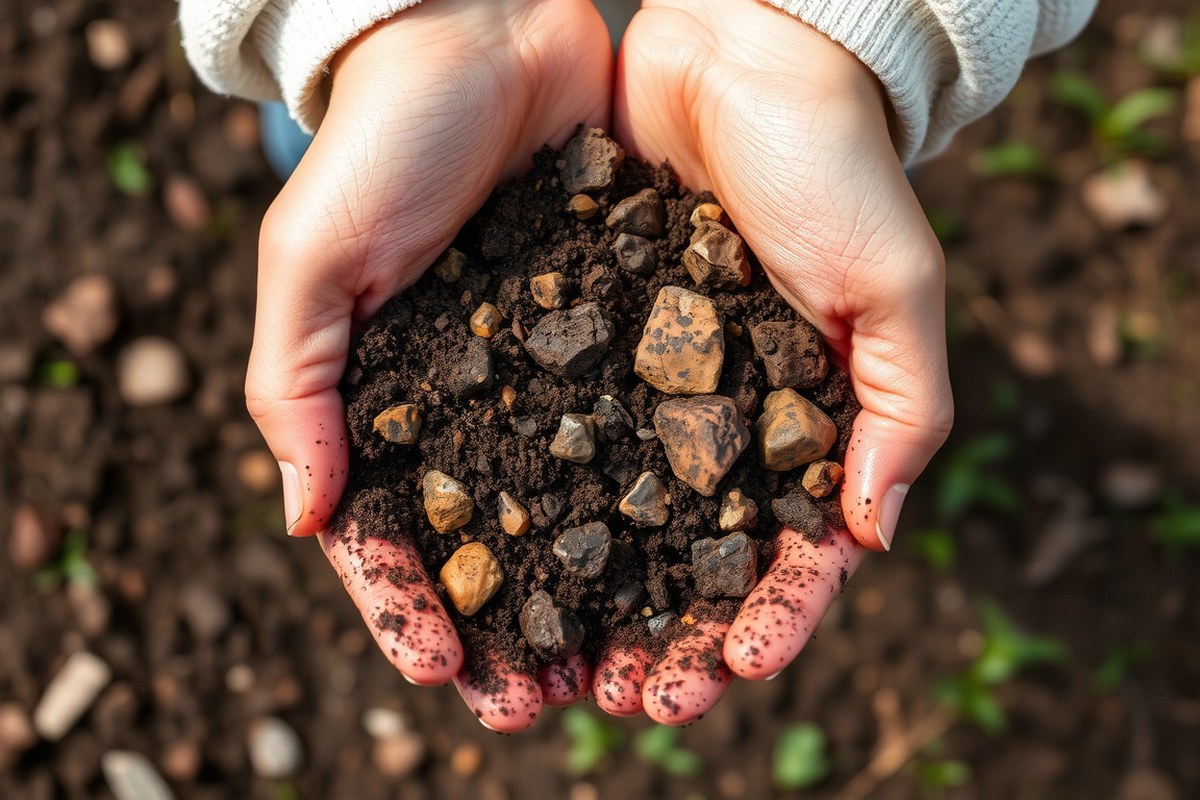
Soil is made of different materials like minerals, water, and air. These parts mix physically but stay separate in properties. So, soil does not have one fixed chemical makeup.
A pure substance has a uniform makeup and definite chemical formula. For instance, pure quartz is a compound with a set chemical formula, silicon dioxide (SiO₂). Soil does not have a set makeup because parts differ.
These parts can vary in type or amount in samples. This uneven mix changes from place to place.
Unlike compounds, soil’s components are not chemically bonded. Compounds form when elements join in certain numbers. For instance, water’s elements combine into H₂O.
Their atoms lose their old traits in this. Soil particles simply mix without chemical reactions. So it cannot be classified as a compound.
You can decide whether a material is a mixture or pure substance by checking its composition. When parts keep their traits and can be picked apart, it is a mixture. You can separate sand, clay, or organic matter from soil.
Tools or water can help with this process. Soil clearly fits this rule as a mixture.
Soil’s irregular distribution of solids, liquids, and gases across small areas confirms its heterogeneous mixture nature. Soil has many parts, so it is not even or uniform.
A homogeneous mix like saltwater spreads components everywhere evenly. Soil does not act this way.
Knowing soil is a mixture helps you understand its behavior. This knowledge is useful for gardening and environmental study. It tells you how soil reacts in different cases.
Soil changes based on what it contains and their amounts. Pure substances act the same no matter the sample.
Soil’s mix makes its behavior less predictable. Testing or analyzing soil needs to account for this complexity to get reliable results.
Why Is Soil Considered a Heterogeneous Mixture?
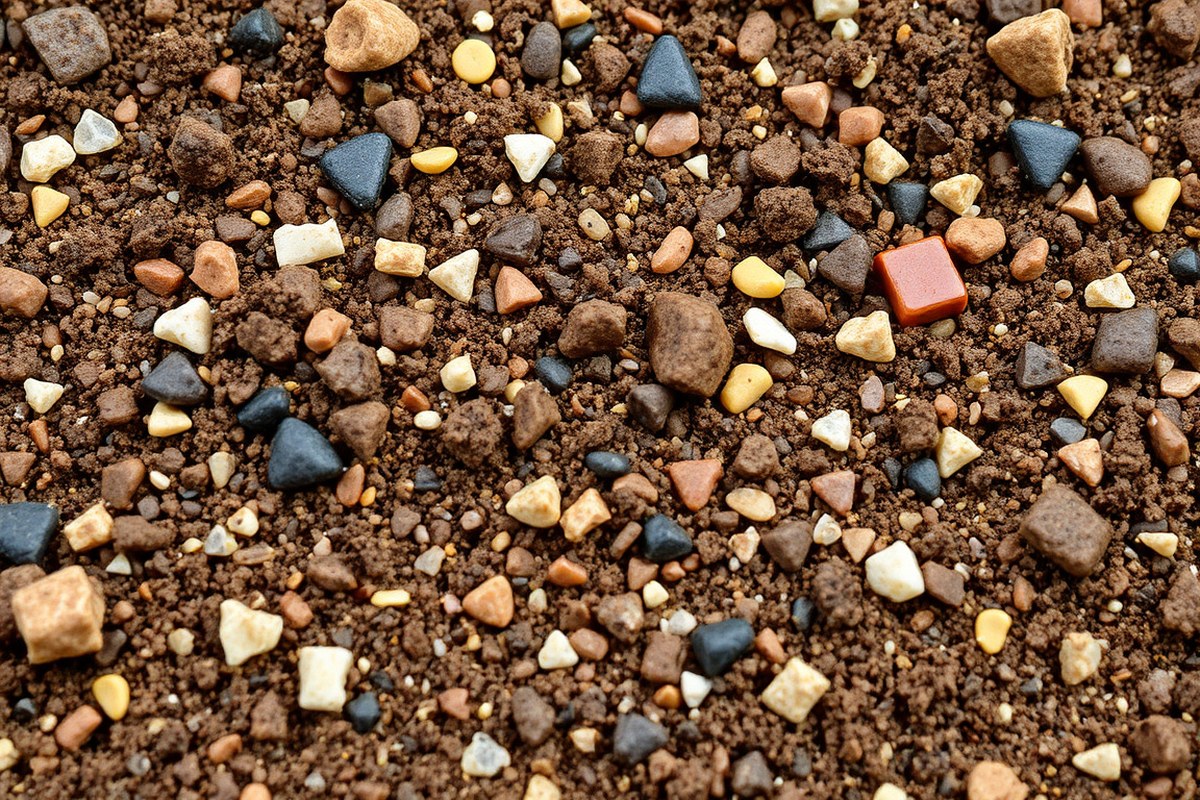
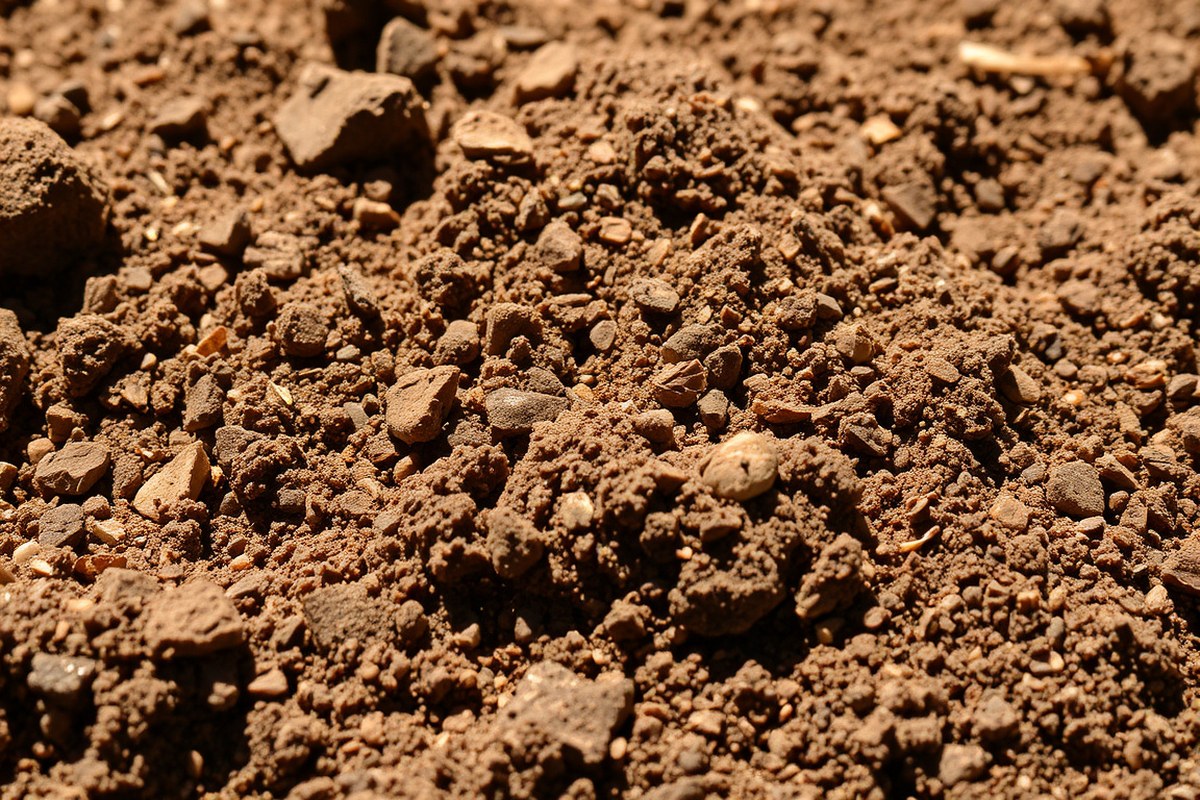
Heterogeneous mixtures have parts you can easily see or separate. Soil shows this clearly. You can spot clay, sand, dead leaves, and stones.
They are all mixed inside it. These pieces don’t blend into one uniform material like sugar dissolved in water does.
In contrast, homogeneous mixtures look the same all through. You can’t tell where one part ends and another begins. Soil fails this test.
It looks patchy or grainy when you look closely. Or when you sift it through your fingers.
Soil’s uneven mix stays visible because those particles vary a lot in size, shape, and type. For example, use a magnifying glass to see clay grains. You’ll see sandy bits and organic matter mixed loosely.
No matter how much you stir soil, it won’t turn smooth. It won’t look uniform like broth or air.
This difference matters if you want to test soil or grow plants. You can separate soil by passing it through sieves or settling it in water.
The parts settle at different speeds or sizes, proving soil holds different ingredients. This physical separation is a hallmark of heterogeneous mixtures.
Only in very specific, controlled conditions might soil act more like a homogeneous mixture. When soil is finely crushed and mixed with water, it may look uniform. But this only lasts for a short time.
As soon as it dries or settles, its parts separate again. Soil rarely stays fully mixed for long.
Avoid mixing soil samples too much before testing. This helps keep their natural variation clear.
What Are the Main Components of Soil and Their Percentages?
Soil has four main parts. These parts are minerals, organic matter, water, and air. Together, they form the mix you see and feel when you handle soil.
Minerals make up almost half the soil volume. They give soil its structure and provide important nutrients to plants.
Organic matter only makes a small part, about 5%. But it plays a big role in feeding plants and helping soil hold moisture.
The spaces not filled by solids are taken up by air and water. These two change, depending on climate and soil type.
Air usually fills about a quarter of the soil volume. The same goes for water, which plants need to grow.
| Component | Percentage of Soil Volume | Role in Soil |
|---|---|---|
| Mineral Matter | About 45% | Gives soil structure and nutrients |
| Organic Matter | About 5% | Feeds plants and holds moisture |
| Water | About 25% | Supplies moisture needed for life |
| Air | About 25% | Provides oxygen for roots and microbes |
The portion of water and air varies a lot. Wet soils have higher water and less air. Dry soils have more air and less water.
Soil changes around plant roots, too. Roots push air out and absorb water, changing the balance.
Minimizing organic matter or minerals can harm soil quality. Low organic matter makes soil brittle and less fertile.
Soils with poor air supply can suffocate plant roots and slow growth. Checking these percentages helps you understand soil health and its ability to support plant life.
How Are Soil Particles Classified by Size and Type?
Soil particles are sorted by size into sand, silt, and clay. Sand particles are the largest, followed by silt, and clay has the smallest particles. These size differences affect how soil holds water and nutrients.
Sand feels gritty and drains water quickly. It does not hold nutrients well because water passes through fast. Silt feels smooth and holds more water than sand, but drains better than clay.
Clay particles are tiny and stick closely together. Clay retains water and nutrients but can become hard when dry.
| Particle Type | Size Range (mm) | Physical Feel | Water Retention |
|---|---|---|---|
| Sand | 0.05 to 2.0 | Gritty texture | Low |
| Silt | 0.002 to 0.05 | Smooth texture | Medium |
| Clay | Less than 0.002 | Sticky when wet, hard when dry | High |
Knowing these properties helps explain soil behavior. Soils with more sand drain fast and dry out quickly.
Soils with lots of clay hold water but may become heavy and hard to work. Silt lies between those extremes, making the soil feel fine and moist.
Most soils are mixes of sand, silt, and clay. This mix determines soil texture and its ability to support plants.
You can estimate soil texture using the feel test. Rub moist soil between your fingers to sense grittiness, smoothness, or stickiness.
What Role Do Organic Matter and Living Organisms Play in Soil?
Organic matter and living organisms make soil a rich chemical and biological mixture. Typically, soil contains 1 to 6 percent organic matter.
But this number changes with climate and soil type. These components improve the soil’s fertility, texture, and water-holding ability.
Types of Organic Matter in Soil
Soil organic matter includes both living and dead materials. Dead plant roots, fallen leaves, and decomposed animals add to the organic content. Living parts include roots, fungi, bacteria, and microscopic algae.
Here are common types of organic matter found in soil:
- Humus, a dark, nutrient-rich residue from decomposed plants
- Partially decomposed plant residues such as leaf litter
- Soil microbes like bacteria and fungi
- Roots of living plants
- Small animals and insects that live in soil
These organic components mix intimately with minerals and water, shaping the soil’s complexity.
Common Soil Organisms and Their Functions
Soil organisms break down organic matter, cycling nutrients essential for plants. Bacteria and fungi decompose dead material, releasing nitrogen, phosphorus, and other nutrients. Earthworms and insects mix soil layers, improving aeration and drainage.
Plant roots also influence the soil chemistry by exchanging gases and nutrients. This activity changes soil conditions close to roots, called the rhizosphere, boosting soil diversity.
Organisms vary greatly by climate, moisture, and soil type. So their role shifts across regions.
Effects of Organic Matter on Soil Properties
Adding organic matter raises soil fertility by providing nutrients for plants. It improves soil structure, making it crumbly and easier to work with. Organic matter also boosts water retention, helping soil hold moisture during dry periods.
Soil color often reflects organic content. Darker soils usually have more organic matter and better nutrient availability. A change to red, orange, or yellow can mean depleted nutrients and poor organic content.
Keep organic matter moist but not waterlogged to support healthy soil organisms.
How Can You Identify Soil as a Mixture Practically?
Look for Visible Particles of Different Types
Soil shows it’s a mixture when you can see different particles. These might be sand, tiny stones, bits of dead leaves, or small roots. The particles usually vary in size and color within the same sample.
You can examine soil closely or use a magnifying glass to spot these pieces. You might notice that sandy soil has pale, rough grains.
Clay soil looks smooth and sticky. These visual clues show soil contains more than one kind of material.
Perform Physical Separation of Soil Components
You can prove soil is a mixture by separating its parts physically. Doing this at home needs only simple tools like water, a clear container, and a sieve. This experiment shows soil particles don’t combine chemically but stay separate.
Follow these steps to split soil components:
- Collect about one cup of soil from your garden or a local park.
- Place the soil in a clear glass jar and add two cups of clean water.
- Seal the jar tightly and shake it vigorously for two minutes.
- Set the jar on a flat surface. Wait 12 to 24 hours. Let it settle completely before checking.
- Observe the layers that form: sand settles first, silt next, and clay last on top.
- Pour the water through a fine mesh sieve to catch organic bits like leaves or roots.
- Look closely at what remains in the sieve and jar to see varied particles.
This process costs almost nothing and takes only a day to complete. The soil wouldn’t split into layers if it was pure. Instead, you’d see a single uniform mixture that looks the same throughout.
Observe Variation in Soil Texture and Color
Soil’s color and texture highlight its mixed nature. You see dark spots from organic matter. Light grains of sand.
There are sticky clay clumps too. This shows particles are not the same size or type.
Rub some soil between your fingers to feel differences. Sandy soil feels gritty, while clay feels smooth and sticky. Soil texture can change in small areas.
This shows it’s a mix. It’s not pure or uniform.
How Does Soil Formation Ensure It Remains a Mixture?
Soil forms through natural processes that break down rocks and organic matter. Weathering is a key process. It physically cracks rocks and chemically changes minerals over time, creating new particles.
This weathering can take hundreds to thousands of years. Physical weathering happens from wind, water, and temperature changes. Chemical weathering involves acids from rain and plant roots reacting with minerals.
Biological activity also adds to soil’s mixture. Microbes, fungi, and plant roots decompose organic material. This produces humus, a dark, rich component that mixes with mineral particles.
Soil layers develop as these processes continue. The top A horizon is rich in organic and weathered materials. Deeper layers contain more broken-down rock pieces and fewer organics.
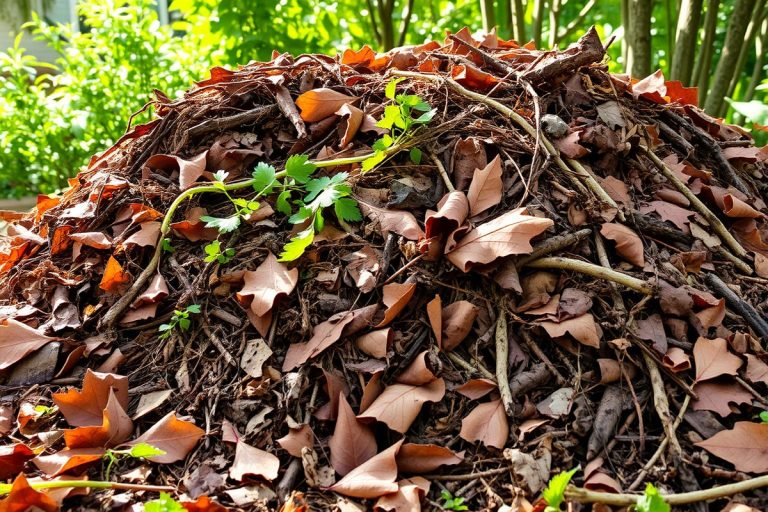
The constant input of new organic and mineral matter means soil is never uniform. Rain, temperature shifts, and living organisms continuously alter its makeup. Air pockets remain trapped between particles, adding another component.
This ongoing change keeps soil’s mixture status. Different regions have different rates of weathering and organic buildup. For example, arid lands slow weathering and organic decay more than wet climates.
Your local soil will reflect these natural forces. It may have fine clay, sand grains, bits of leaf matter, and more. Every handful contains many different substances in changing amounts and arrangements.
How Do Human Activities Affect Soil’s Composition?
Human activities change the soil mixture by adding materials and mixing layers. Fertilizers, compost, pollution, and construction all alter soil’s natural composition. These changes can improve soil or cause problems, depending on what you add or disturb.
Adding Organic Fertilizers and Compost
Adding organic compost enriches soil by boosting its organic matter and nutrients. For example, sandy soil becomes better at holding water and nutrients when you mix in compost. Fertilizers supply specific nutrients like nitrogen, phosphorus, and potassium to help plants grow.
Applying compost or fertilizer requires careful timing and amount. Too much fertilizer can harm soil life or cause nutrient runoff.
Usually, mix 2 to 3 inches of compost into the soil yearly. Fertilizers usually come with application rates on the label.
- Use compost to increase organic material in poor soils.
- Apply fertilizers following package instructions to avoid overuse.
- Mix materials well into the soil to prevent layering.
- Avoid spreading fertilizer before heavy rain to reduce runoff.
- Repeat compost applications yearly for gradual improvement.
Adding organic matter creates more variation in soil texture and nutrients. This keeps soil a heterogeneous mixture and supports diverse soil organisms.
Soil Contamination and Microplastics
Pollutants like heavy metals, pesticides, and microplastics change soil’s natural makeup too. These can poison the soil ecosystem and reduce its ability to support plants and animals. Urban soils often have higher contamination because of pollution sources.
Microplastics enter soil through compost or runoff from roads. They mix into the soil, changing its physical properties and potentially harming microbes. Contaminated soil may become denser or less porous, harming root growth.
- Heavy metals from industry or mining alter soil chemistry.
- Pesticides can kill beneficial soil organisms.
- Microplastics come from plastic waste and synthetic compost.
- Oil spills and chemical leaks cause serious soil damage.
- Salt buildup from irrigation can increase soil salinity.
Test your soil regularly for contamination before adding amendments outdoors.
These pollutants often increase soil heterogeneity in harmful ways. Some patches may have toxic buildup while others remain cleaner.
Soil Mixing Through Agriculture and Construction
Human activities like farming and building mix soil layers by tilling, digging, or moving earth. Tilling breaks apart soil clumps and blends organic matter through top layers. Construction disturbs soil deeper by adding fill, compacting, or removing topsoil.
This mixing can make soil more uniform temporarily by blending textures and components. However, repeated disturbances cause compaction, reducing pore space and harming drainage. Compacted soil resists mixing and becomes denser over time.
- Tilling farms the soil but can reduce long-term structure.
- Construction moves large soil volumes, changing profiles.
- Landscaping often mixes soil to improve garden beds.
- Heavy machinery compacts soil, reducing oxygen and water flow.
- Repeated mixing may destroy soil layers that support microbes.
Human mixing impacts soil heterogeneity by rearranging particles and organic matter. It can either even out or fragment soil parts, depending on the activity and frequency.
Step-by-Step Action Plan to See Soil as a Mixture
Try this plan to observe soil’s mix of parts at home or school. You’ll spot its variety and understand its nature better.
- Day 1: Collect soil from different spots in your yard or park. Notice the color and texture differences.
- Day 2: Spread soil on a paper towel. Look closely for sand, clay, or leaf bits. Check for visible particles that stand out. This shows its parts.
- Day 3: Put some soil in a glass jar, add water, and shake well. Watch layers form as particles settle differently.
- Day 5: Examine the liquid and sediment. Gravel settles first, then sand, then silt and clay. This separation shows soil’s mix.
- Day 7: Add a piece of bread or vegetable scraps to a soil sample. Observe changes over days to see organisms at work.
- Week 2: Note any smell or color changes indicating organic matter breaking down. This proves living parts affect soil.
- After 3 weeks: Compare your samples with nearby soil types. You’ll see how soil’s makeup varies by location and use.
Frequently Asked Questions
Is Soil a Mixture of Minerals and Organic Matter?
Yes, soil mixes minerals with organic matter, air, and water. This mix creates a complex environment supporting plant life.
Can Soil’s Air and Water Content Change Its Mixture Type?
Soil always remains a heterogeneous mixture, even with changing air and water. These components vary and affect soil properties continuously.
Does Soil Composition Affect Its Fertility?
Yes, the mixture’s components directly impact soil fertility. More organic matter usually means better nutrient availability for plants.
How Does Soil Texture Relate to Its Mixture Components?
Soil texture depends on the proportion of sand, silt, and clay particles. This ratio influences water retention and drainage in soil.
Can Soil Be Separated into Pure Substances?
Soil can be separated into particles, but these are still mixtures, not pure substances. Each particle contains different compounds and elements.
Does Soil Uniformity Affect Plant Growth?
Uneven soil mixtures create pockets differing in nutrients and moisture. Plants may grow unevenly depending on these variations.
Key Points to Remember
Soil is made of many parts. These parts do not fully blend. This is called a heterogeneous mixture.
You can see this by watching how particles separate and studying soil closely. Try your soil jar experiment next to understand its layers and particles better.