How Far Apart Should Strawberries Be Planted: Complete Spacing Guide for Best Growth
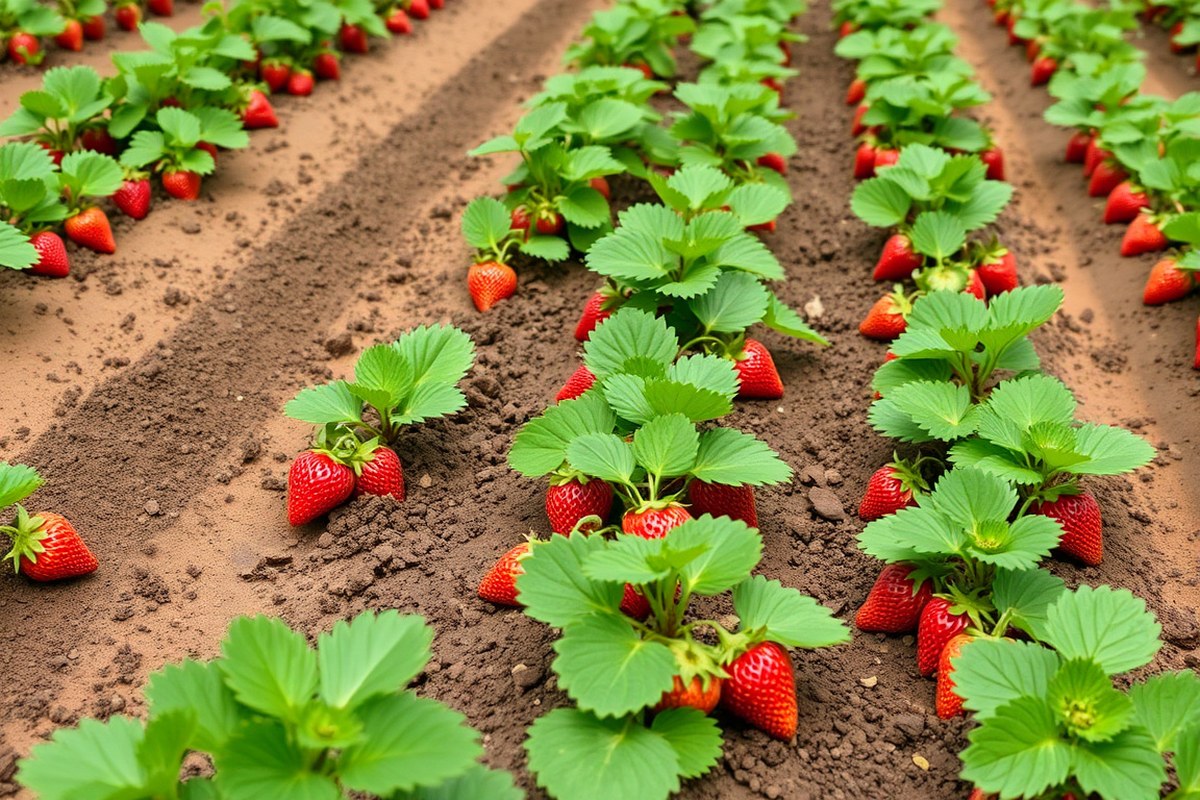
How far apart should strawberries be planted depends on the variety you choose. For best results, plant June-bearing strawberries 18 to 24 inches apart.
Everbearing and day-neutral strawberries do well at 10 to 18 inches apart. This spacing gives enough room for the plants to grow strong and healthy.
Spacing plants correctly helps runners spread and fruit develop without crowding. Crowded plants lead to poor air flow and lower yields. Good spacing reduces the risk of disease by letting leaves dry faster after rain or watering.
Raised beds and containers allow slightly closer spacing because of better soil and drainage. Always leave room to reach plants comfortably for picking and care. This makes maintenance easier and keeps plants healthy throughout the season.
Key Takeaways
- Plant June-bearing strawberries 18 to 24 inches apart within rows.
- Space everbearing and day-neutral strawberries 10 to 18 inches apart.
- Keep rows 3 to 4 feet apart to allow for walking paths.
- Space plants 12 to 18 inches apart from each other in raised beds.
- Give strawberry runners some space to spread for better fruit production.
- Avoid crowding plants to reduce disease risk and improve air flow.
How Far Apart Should Strawberry Plants Be Spaced for Best Results?
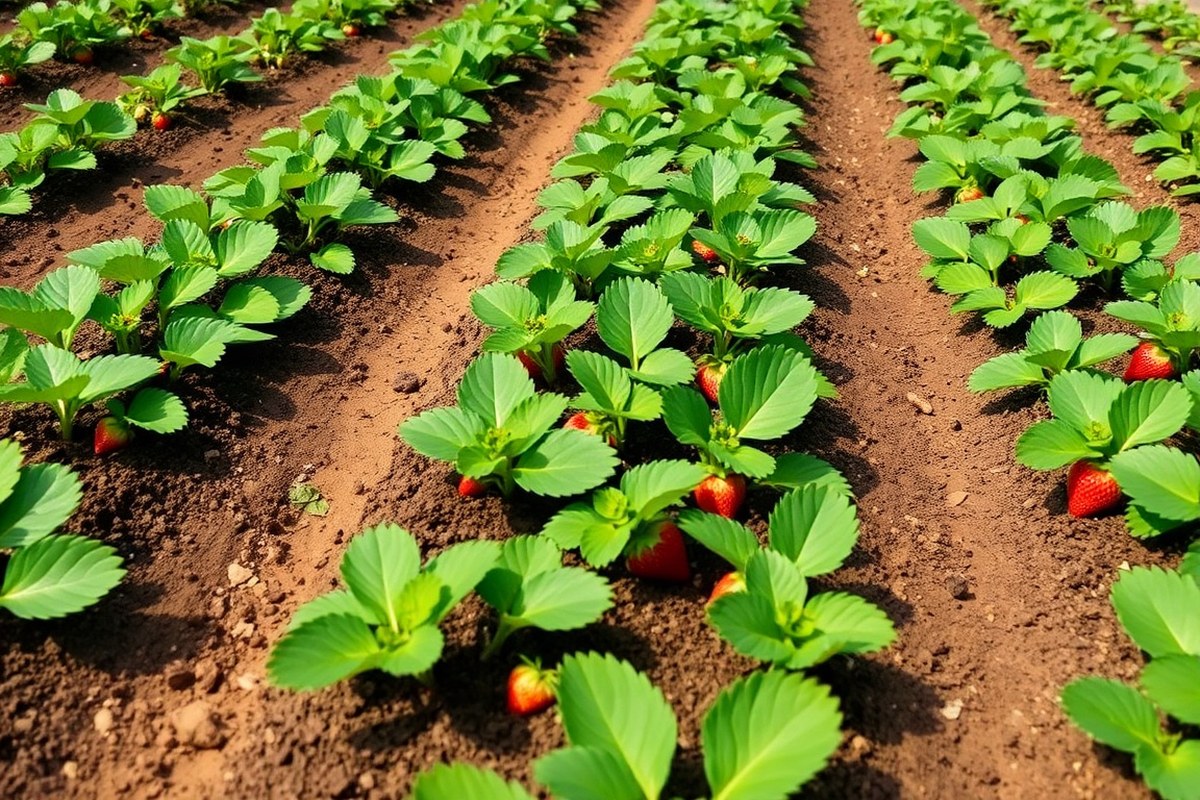
Spacing strawberry plants right helps them grow strong and produce well. Different varieties and planting systems need different distances between plants. Closer spacing can mean more fruit but also more competition for nutrients.
| Strawberry Variety | Plant Spacing (inches) | Row Spacing (feet) | Growing System Notes |
|---|---|---|---|
| June-bearing | 18 | 4 | Best in traditional gardens; larger spacing |
| Everbearing | 12 | 3 | Closer than June-bearing due to fewer runners |
| Day-neutral | 10, 12 | 3 | Can be spaced closer; often better yields |
| Alpine | 6, 8 | 2, 3 | Used in hill systems or close row setups |
| Hill system | 12, 18 | Varies, typically 2, 3 feet | Plants in mounds, closer within rows |
Use these ranges as a starting point and adjust by your garden space. Choose everbearing or day-neutral types for smaller garden areas.
Plant them 10 to 12 inches apart with rows about 3 feet apart. This helps keep plants healthy and easier to harvest.
Planting June-bearing strawberries 18 inches apart with 4-foot row spacing works well in larger gardens. This gives their bigger runners room. Keep rows 3 to 4 feet apart to allow for tools and runner growth.
Alpine strawberries produce few runners. Plant them 6 inches apart in a row. They can grow close because of this.
Understanding Different Strawberry Planting Systems and Their Spacing
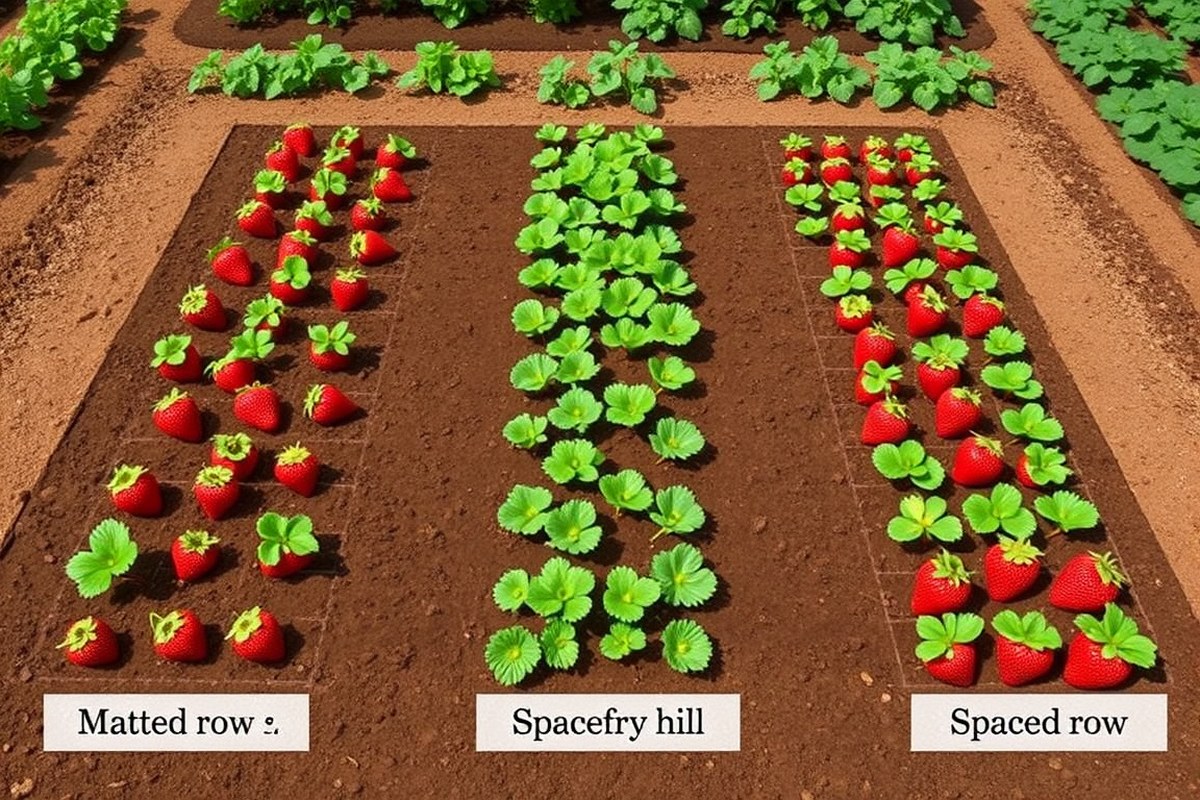
Strawberries can be planted in three main systems: matted row, hill, and spaced row. Each system affects how far apart you plant the strawberries.
It suits different garden sizes and goals. Choosing the right system helps balance runner growth, plant health, and yield.
Matted Row System: Spacing and Uses
The matted row system lets runners grow naturally and fill the space between plants. Set the main plants about 16 to 18 inches apart down the row. Rows should be 18 to 24 inches apart to give runners plenty of room to spread.
This system works well for June-bearing strawberries that produce many runners. Runners space themselves roughly 6 to 9 inches apart. You get a denser planting over time without extra effort.
Matted rows need more space and time to fill out but reduce planting costs. They suit larger gardens where you want a natural patch. Be careful to thin out runners in crowded spots to keep plants healthy.
Hill System: Spacing and Plant Management
The hill system involves planting individual strawberry plants further apart. Space them 8 to 12 inches apart in all directions. This system keeps runners trimmed or removed to focus energy on fruiting plants.
It fits well for day-neutral and everbearing strawberries because they produce fewer runners. Each hill acts like a small planting clump. You get better airflow and less disease risk with wider spacing.
This system is ideal if you want tidy rows and easy picking in small gardens. It requires more maintenance to control runners. You’ll also use more plants initially for full coverage.
Spaced Row System: Layout and Advantages
In the spaced row system, plants stand 12 to 18 inches apart within rows. Rows themselves need about 36 to 48 inches between them depending on variety. This spacing makes weeding and maintenance simpler.
This method suits many strawberry types by controlling runner growth while allowing some spread. It balances good yield and plant health with easier garden access. You can also replace plants easily without overcrowding.
The spaced row system fits moderate-sized gardens and gardeners wanting order and easy care. Although it costs more in plants, you get consistent fruit production and fewer problems from crowding.
Below is a helpful comparison of strawberry types. It shows typical plant and row spacing. This is based on common garden practice.
| Strawberry Type | Plant Spacing (inches) | Row Spacing (inches) | Yield per Plant (lbs/year) | Runner Production |
|---|---|---|---|---|
| June-bearing | 18 | 48 | 0.5, 1.0 | High |
| Everbearing | 12 | 36 | 0.75, 1.0 | Low |
| Day-neutral | 12 | 36 | 0.75, 1.0 | Low |
| Alpine | 6, 8 | 12, 18 | 0.1, 0.2 | None |
Match your planting system to your strawberry type and garden size. June-bearing varieties thrive in matted rows.
Everbearing and day-neutral types do best in spaced or hill systems. Alpine strawberries like tight spaces but yield less.
Watch runner growth in matted rows closely to prevent overcrowding and disease.
How to Space Strawberry Plants in Raised Beds and Containers
Strawberries in raised beds should be spaced 12 to 18 inches apart. Containers and grow bags need about 10 to 12 inches between plants. Closer spacing works in these setups because soil drains well and plants get enough light.
Raised Bed Spacing Guidelines
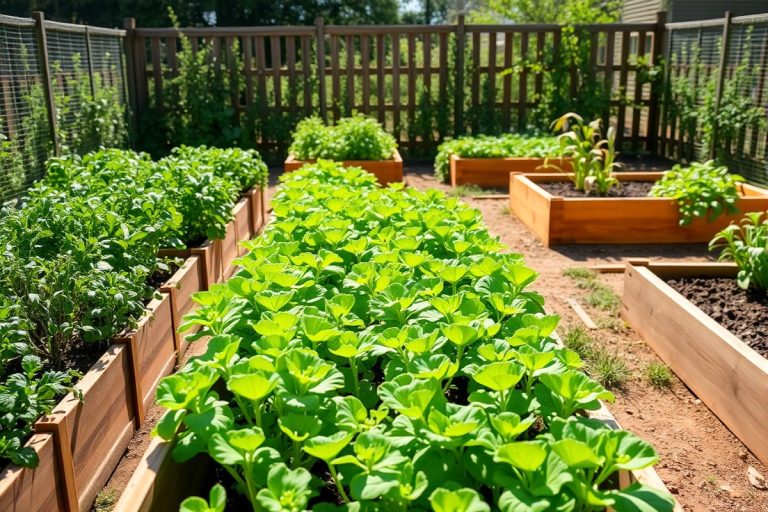
Raised beds let you plant strawberries closer than in regular ground. Space each plant 12 to 18 inches apart to give runners room to grow. Rows can be 2 to 3 feet apart, allowing better air flow and easy picking.
In a typical 4×8 raised bed, you can fit 12 to 18 plants spaced this way. Make small mounds for each plant to keep soil from pooling. This promotes healthy roots and stops rot, especially in wet weather.
Container and Grow Bag Spacing Recommendations
Containers need at least 10 to 12 inches between strawberry plants. Large pots or planter boxes give each plant enough soil and water. Pick strawberry varieties that match container size for best growth.
You can plant a little closer, about 8 inches apart, for quick coverage in small containers. Watch for overcrowding, which reduces airflow and can invite diseases. Use containers with good drainage to keep roots dry.
Adjusting Spacing Based on Soil Quality and Container Size
Better soil and drainage let you space strawberries closer. Poor soil means spacing them wider to avoid competition for nutrients. In smaller containers, give plants 6 to 8 inches apart to prevent crowding.
Here’s what to consider when setting strawberry spacing in raised beds or containers:
- Plant type: everbearing plants can be closer than June-bearers
- Container size: bigger pots allow wider spacing
- Soil drainage quality affects root health and spacing
- Light availability: space to reduce shading between plants
- Air circulation to prevent mildew and other diseases
Adjust spacing based on these factors to get healthy growth. Proper spacing lets each strawberry plant produce more fruit and stay disease-free.
How Spacing Affects Strawberry Runner Growth and Fruit Production
Strawberry runners are long stems that grow out from the main plant. They spread across the soil and form new plants at their tips. Managing runners is key to spacing your strawberry plants well.
Runners use space and pull nutrients from the mother plant. Keep this in mind when planning your garden bed.
Plant strawberries too close, and runners will crowd the bed. This causes overlapping and less room for each plant. This can reduce airflow and raise the chance of diseases like mold.
You also get smaller fruits because runners compete for water and nutrients. On the other hand, wider spacing lets runners spread naturally. This creates healthy new plants without choking the original ones.
For example, give June-bearing strawberries about 18 to 24 inches between plants. It gives runners enough space to fill gaps, which boosts overall plant size and fruit yield. To grow bigger berries, space plants 12 to 15 inches apart.
Remove runners often to keep their numbers low. This method focuses energy on the fruit instead of new plants.
Deciding how far apart to plant depends on your goal. Plant strawberries 8 to 12 inches apart for fresh eating and a stronger patch of runners.
For preserves or more daughter plants, go 12 to 18 inches. Keep rows 3 to 4 feet apart to allow easy care and airflow.
To manage runners well, watch your patch during growing season. Trim excess runners if they start crowding plants or falling outside row spacing.
Runner control takes just a few minutes every week during the active growing months. It keeps plants strong and fruit size consistent.
Common Mistakes in Strawberry Plant Spacing and How to Fix Them
Plants spaced too close often compete for sunlight, water, and nutrients. This causes weaker growth, smaller fruit, and higher disease risk. Overcrowded strawberry beds tend to develop mold and mildew because air does not circulate well.
Spacing plants too far apart wastes garden space. It also lets weeds grow in those gaps. It also lowers total yield since fewer plants fit in the same area.
You might see lots of bare soil. The plants won’t create a full patch quickly.
You can tell wrong spacing by how the plants look or how many berries you get. Crowded rows look thin and sickly with smaller leaves and fewer flowers.
Plants that sit too far apart take longer to fill in and produce less fruit overall. Both problems hurt your harvest.
Fix overcrowding by pruning runners early and removing excess plants. You can transplant some daughters to empty spots or another bed rather than throwing them away.
If rows are too far apart, add more plants. Use runner offshoots in spring or fall to fill gaps.
- Check plant health every 4 weeks for tight clusters or sparse patches.
- Trim runners to keep plants evenly spaced and stronger.
- Move extra daughter plants to open spots or new beds.
- Use mulch to suppress weeds that grow in wide gaps.
- Follow spacing of about 12 inches between plants and 2-foot paths.
Thin crowded plants or add soil and compost around isolated ones to support growth. For best results, maintain good airflow and sunlight for each plant’s leaves. This reduces fungal problems and helps strawberries ripen evenly.
Keep strawberry plants at least 12 inches apart to prevent disease and boost yield.
Soil Quality and Site Factors That Influence Strawberry Spacing Choices
Soil quality directly affects strawberry plant spacing because plants need enough nutrients and water. In nutrient-rich soil, you can plant strawberries closer, around 12 inches apart. This lets plants grow well without competing too much for resources.
In poorer or sandy soils, space plants wider, about 15 to 18 inches apart. Wider spacing helps each strawberry get more access to what it needs. Otherwise, plants may become weak and produce fewer berries.
Drainage also changes how far apart to plant strawberries. Well-drained soil dries quickly and reduces root problems. With good drainage, you can space plants a bit closer, about 12 inches apart.
Poor drainage holds water and can cause root rot. So leave 18 inches between plants.
Sunlight availability affects spacing too. Strawberries need full sun for best fruit.
When your site has partial shade, space plants farther to improve airflow. This means increasing spacing to 15 to 18 inches.
Raised beds usually have better soil and drainage. They let you plant strawberries closer, closer to 12 inches apart. Soil in traditional beds that’s heavy or wet calls for wider 18-inch spacing.
One way to decide spacing is to check soil fertility and drainage first. When soil tests high in nutrients and drains well, space 12 to 15 inches.
When soil is poor or wet, space 15 to 18 inches apart. For spots that get partial sun, pick the wider spacing, too.
Planning Your Strawberry Garden Layout for Best Spacing and Maintenance
Plan strawberry planting with rows spaced 3 to 4 feet apart. This lets you easily reach plants for watering and picking fruit. Space plants 18 to 24 inches in each row to keep beds tidy and manageable.
Measuring and Marking Strawberry Rows
Start by measuring your garden space to fit rows comfortably. Use a tape measure to mark where each row will go. Mark each row line with stakes or string for clear guides.
Keep enough space between rows to move and work without stepping on plants. Four feet between rows gives room for a 2-foot path plus plant spread. Mark the first and last rows carefully to fit your garden width.
Deciding Row and Plant Spacing Based on System
Choose your planting method before spacing: rows, hills, or beds each differ. For row planting, put plants 18 to 24 inches apart in each row. Keep the rows 3 to 4 feet apart.
Hills require slightly more space between clumps for airflow. Raised beds also use 3 feet between rows and 18-24 inches between plants inside each bed. Adjust spacing if you grow everbearing or day-neutral varieties, which spread more.
Including Paths and Access Points in Layout
Design paths between rows 2 feet wide for easy walking and tool use. Paths let you water, weed, and harvest without damaging plants. Make access points at row ends for wheelbarrows or larger tools.
Consider leaving some space at corners or ends for a small work area. This helps carry trays of harvested berries or store tools temporarily. Clear paths reduce soil compaction and protect roots.
Here are simple steps to map out your strawberry garden layout:
- Measure your garden area length and width using a tape.
- Mark where each row will lie, spacing rows 3, 4 feet apart.
- Arrange paths 2 feet wide between rows to prevent foot traffic damage.
- Mark plant spots in rows every 18 to 24 inches depending on strawberry type.
- Check for access at row ends and add spacing for work zones if needed.
- Adjust spacing slightly if using raised beds or hill planting systems.
- Confirm all markings are visible with stakes or string before planting.
- Prepare soil in marked rows and bed areas to finish layout.
Adjusting Strawberry Plant Spacing for Budget, Yield, and Available Space
Planting strawberries closer than the recommended spacing can save space and reduce upfront costs. You can plant everbearing or day-neutral types 8 to 10 inches apart. This spacing is less than the usual 12 inches.
It works well for many gardeners. For June-bearing varieties, spacing as close as 14 to 16 inches can work. But expect less airflow and more competition for nutrients.
Tighter spacing means you get more plants per square foot. So the yield may rise early on.
However, this can lead to smaller fruits and lower total yield over time. Crowded plants often produce fewer runners, which limits how your patch expands in future years.
On the other hand, wider spacing costs more. You’ll plant fewer strawberries per bed, but plants grow bigger and healthier. Better airflow helps reduce disease risk, and fruit size usually improves.
Have enough space and want the best harvest quality? Plant everbearing strawberries 12 inches apart. For June-bearing types, leave 18 inches between plants.
Got a tight budget or small containers? Use denser spacing. Space depends on the strawberry type you grow.
Everbearing strawberries can handle closer planting in containers. But June-bearing types need more room to avoid stress. Monitor plants closely for leaf crowding or signs of disease.
Want a bigger harvest in limited space? Plant everbearing strawberries 10 inches apart. This balances quantity with fruit quality.
This spacing gives you good production without pushing plants too hard. To encourage healthy growth, prune runners regularly if your plants start to crowd each other.
Try spacing everbearing strawberries 10 inches apart to get more fruit with manageable plant health.
Adjusting your spacing depends on your priorities. Closer spacing saves money and fits small areas. But it needs more care.
You risk disease and fruit loss. Wider spacing demands more room and money but supports better growth and larger berries. Choose based on your budget, available space, and how much fruit you want to harvest.
Step-by-Step Action Plan for Spacing Strawberry Plants
Follow this plan to space your strawberry plants right. Proper spacing helps them grow healthier. It also leads to better fruit production.
- Before planting: Measure your garden or container area to plan spacing. Mark rows or spots about 12 inches apart.
- Planting day: Place strawberry plants 12 inches apart in all directions. Check roots sit flat and soil covers them well.
- First week: Water plants gently to help roots settle. Watch for any signs of wilting or uneven soil contact.
- After 3 weeks: Look for runners starting to grow. Space new runner plants 18 inches apart by trimming or relocating them.
- Mid-season: Thin overcrowded plants to keep airflow and light reaching leaves. Healthy leaves should look bright green.
- End of season: Remove dead leaves and old runners. Prepare the soil for next year and check spacing again before winter.
Frequently Asked Questions
Can Strawberry Plants Be Planted Closer If Grown in Containers?
Yes, strawberries in containers can be spaced about 8 to 10 inches apart. This tighter spacing fits limited space while still allowing growth and harvest.
Does Soil Fertility Affect How Closely I Plant My Strawberries?
High soil fertility can support closer planting because plants get enough nutrients. Poor soil might need wider spacing to prevent competition and stress.
How Soon After Planting Can I Expect Strawberry Runners to Form?
Runners usually start forming within the first growing season. Proper spacing lets runners spread without crowding young plants.
Can I Mix Different Strawberry Types Together in One Bed?
You can mix types but space for the widest mature plant size. Different types vary in spread and growth rate, which affects spacing needs.
What’s the Impact of Strawberry Spacing on Disease Spread?
Closer spacing can raise risks of fungal diseases due to poor air flow. Leaving room between plants helps keep leaves dry and healthy.
Is It Better to Plant Strawberries on Mounds or Flat Ground Regarding Spacing?
Strawberries on mounds usually need similar spacing, but mounds improve drainage. Good drainage reduces root problems and supports healthy growth.
Final Thoughts
Correct spacing helps strawberries produce more fruit and stay healthy. Choose 12 inches between plants for balance. Start spacing your plants carefully today for better results tomorrow.