How Are Plant Pots Measured? A Complete Guide with Practical Tips
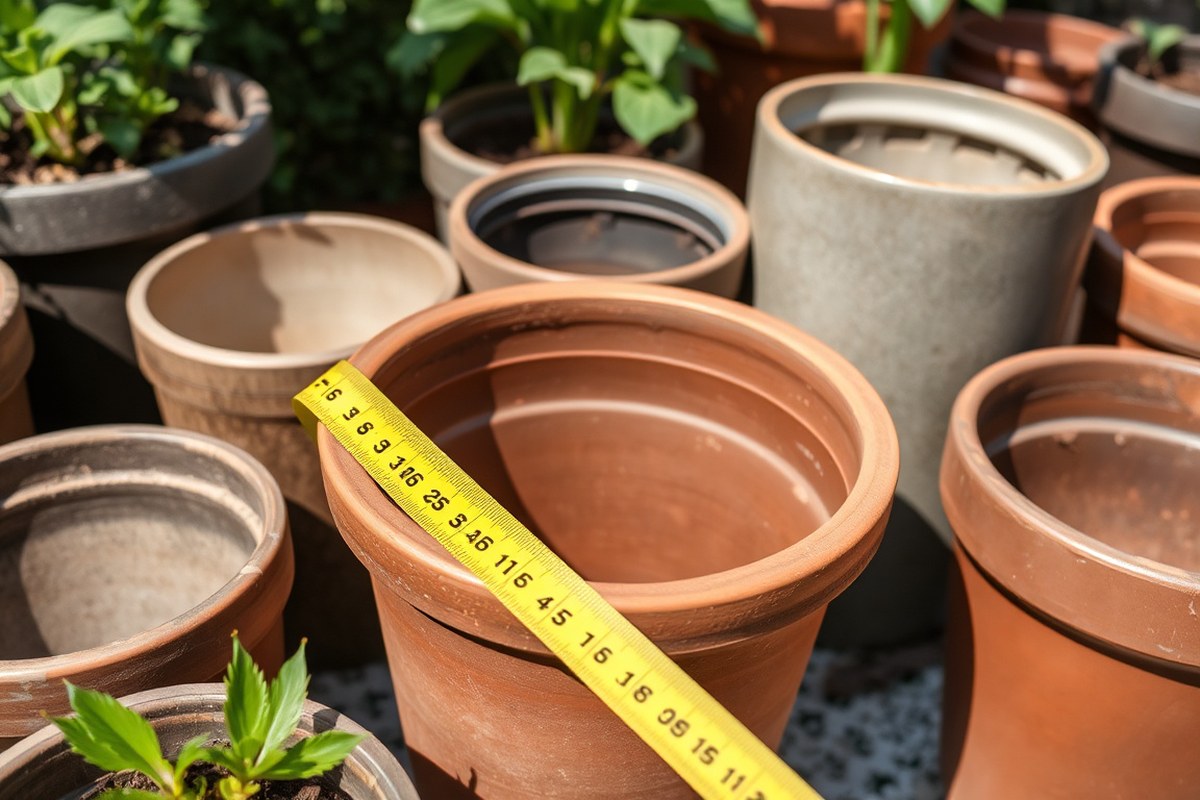
How are plant pots measured is a common question with a simple answer. Most pots are measured by their top diameter.
This means the distance across the widest opening of the pot. This gives you a quick idea of how much space the plant has for roots.
Besides diameter, depth is another key measurement that affects how much soil fits inside. Depth tells you how deep the roots can grow and impacts watering needs. Always check both diameter and depth before choosing a pot.
Volume is a third way to measure pots. But it can be tricky because manufacturers often use trade gallons.
These trade sizes don’t always match the actual volume of soil the pot can hold. For an accurate fit for your plant, it’s best to know what each measurement means exactly.
Key Takeaways
- Measure plant pots by the top rim diameter, not the base or soil line.
- Depth measurement helps determine root space and watering frequency.
- Trade gallons often differ from actual pot volume; check specs carefully.
- Small pots (4-6 inches) suit herbs and houseplants with shallow roots.
- Medium pots (7-10 inches) fit larger herbs or small shrubs well.
- Large pots need at least 12-24 inches diameter for big plants or trees.
How Are Plant Pots Measured: Diameter, Depth, and Volume Explained
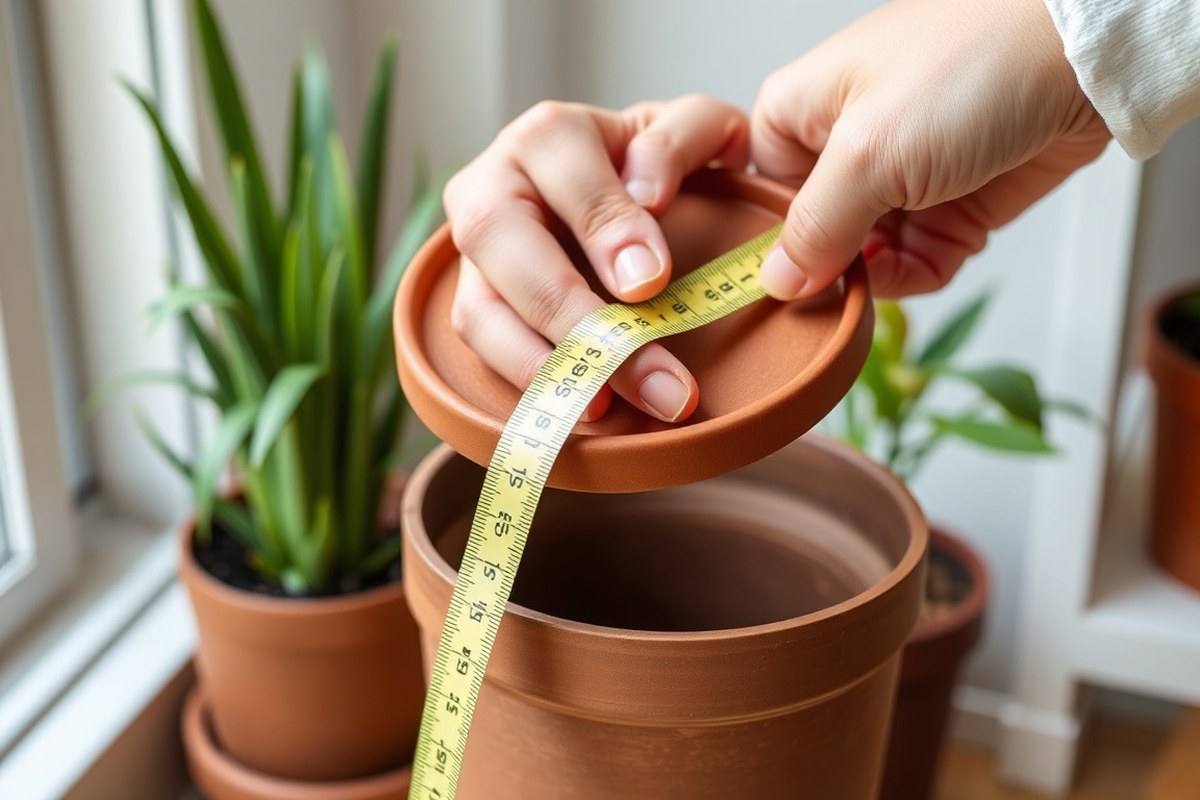
Plant pots are mainly measured by their diameter and depth. The diameter is the widest part across the pot’s top. Measure it from inside rim to inside rim.
This gives the true size of the pot opening. Measuring from the outside edge can make the pot look bigger.
Many pots have a rolled lip. That lip doesn’t hold any soil.
Depth means the distance from the top rim down to the pot’s bottom. Measure straight down inside the pot. This shows how much soil fits inside.
Don’t include any feet or stands under the pot in measurements. They don’t add space for soil.
Measure only the pot itself. This depth measurement shows how much soil space is available vertically for the roots.
Both diameter and depth shape how much soil a pot can hold. Volume depends on diameter and depth. Think of the pot like a cylinder shape to estimate volume.
This gives a rough idea of soil capacity. A pot with a 10-inch diameter and 12 inches deep holds about 5 gallons.
This volume fits many indoor and outdoor plants well. But small changes in depth or shape can affect this volume significantly.
Pot size labels mainly reflect the diameter at the rim, often in inches or centimeters. A “10-inch” pot usually means the width across the rim is 10 inches. It doesn’t mean the pot’s height or soil volume is 10 inches.
Depth usually appears separately in product details. It affects soil space but is not in the common size label. Always check depth when buying pots.
To measure diameter, lay a tape or ruler across the top opening. Measure from inside rim to inside rim. This shows the actual pot opening size.
Make sure the tape is straight and tight but not bending over the rim curves. Measure depth by placing the tape vertically inside the pot. Start at the top rim and go down to the soil or bottom surface.
Measuring depth carefully matters because it helps pick the right pot for your plant’s roots. Shallow pots suit succulents with spreading roots. Deeper pots fit plants with long taproots.
Measuring depth helps avoid pots that look tall but hold little soil. Narrow soil space can stress plant roots over time.
Where Exactly to Measure: Top Rim, Base, or Soil Line?
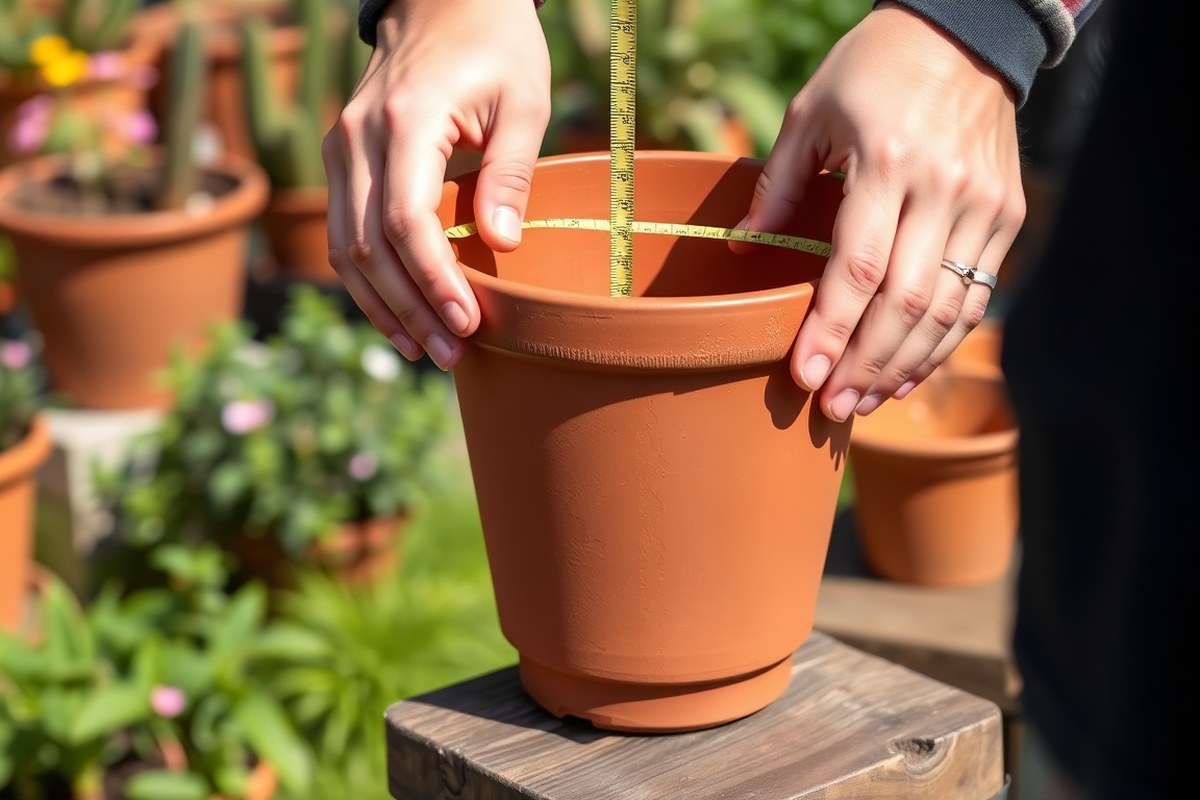
Measure the distance straight across the top from one rim edge to the other. This works best for tapered pots, where the bottom is smaller than the top. The top rim size usually matches the pot’s label, such as a “6-inch pot” meaning the top inside width.
For pots with flared rims, measure the widest point along the top edge. Avoid measuring right at the soil line because soil depth and pot shape vary. Measure the inside width of your decorative outer pot.
It should be 2 to 4 inches bigger than the inner growing pot. This space gives the plant room and lets you fit the smaller pot inside easily.
- Diameter means inside width at the top rim, not base or soil line
- Base diameter matters little for pot sizing but affects stability
- Height or depth is from base to rim edge, straight vertical
- Nursery pots use top diameter to indicate size; decorative pots may list outer measurements
- Depth varies by pot type. Standard nursery pots are about as tall as their diameter
Depth matters for root growth and soil volume. Measure from the pot bottom straight to the top rim edge. Use a ruler or tape measure positioned inside the pot.
This tells you how deep roots can grow and helps calculate soil needed. A shallow pot limits roots, causing plant stress or crowding.
Nursery pots usually have about the same height as their width. For example, a 6-inch pot is roughly 6 to 7 inches tall. This shape helps roots grow without crowding.
Decorative pots can be deeper or shallower, so check height if changing containers. Base diameter doesn’t affect matching plants to pots but is useful for fitting saucers or racks. Always measure top rim diameter to compare sizes effectively.
Measuring only the outside of a pot can mislead you about its actual growing space.
Understanding Trade Gallons Versus Actual Pot Volume
Pots labeled with gallon sizes use “trade gallons,” not true liquid gallons. Trade gallons give a rough soil volume. But exact capacity varies by pot shape and maker.
ANSI Z60.2 standards define volume ranges for these sizes. So sizes like “#5 True” provide a better volume estimate.
Trade Gallon Definitions
A trade gallon is a nursery term describing approximate soil volume. For example, a “1-gallon” pot usually holds about 0.75 actual gallons of soil. This system classifies pots by volume ranges, not exact measurements.
Most pots cite diameter in inches and soil volume in gallons or liters. Nursery trade gallons were created for consistency, but vary across manufacturers and shapes. They help growers and gardeners pick pots matching plant needs without exact volumes.
Trade gallons do not convert directly to liquid gallons. They reflect the soil volume the pot can hold, which depends on thickness and shape. So, a “5-gallon” trade size might actually hold between 3.4 to 5.4 true gallons, per ANSI standards.
Volume Calculation Methods
To find pot volume, first measure diameter and height. Use the formula V = πr²h for cylinders. This gives you the real volume of the pot.
Convert cubic inches to gallons by dividing the number by 231. That’s because 231 cubic inches make one gallon. This helps with standard volume units.
For odd-shaped pots, fill them with water or soil to estimate volume. Measure that volume, then convert it to gallons or liters.
This method works when pots aren’t regular cylinders. Porous pots lose volume to evaporation, affecting effective soil space by 15, 25%.
Keep in mind that soil compaction varies, so volume estimates are approximate. Using trade gallons suits repotting and plant size planning. But the exact volume is key for irrigation and soil needs.
Labeling Standards Explained
ANSI Z60.2-2025 defines volume ranges for container sizes. For example, a #5 pot must hold between 785 and 1,242 cubic inches (3.4 to 5.4 gallons). This gives a volume range, not an exact number.
A label like “#5 True” means the pot fully meets ANSI size rules. It matches the standard range for a #5 sized pot. This helps ensure pot size accuracy.
Often, the number alone doesn’t guarantee exact volume. Look for “true” when precise volume matters.
Different pot sizes roughly correspond to typical diameters and volumes, as shown in this table. These guide choosing the right pot for your plant based on size and soil needs.
| Pot Label | Top Diameter (Approx.) | Typical Soil Volume |
|---|---|---|
| 4-inch | 4 in | 0.125 gallons |
| #1 container | 7 in | 3 quarts (0.75 gal) |
| #2 container | 8.75 in | ~0.75 gallons |
| #3 container | 11 in | ~3 gallons |
| #5 container | 10.75 in | ~5 gallons |
| #7 container | 14 in | 7 gallons |
| #15 container | ~18 in | 15 gallons |
Use pot labels and the ANSI ranges as starting points. Double-check volume, especially if plant size or soil quantity matters a lot. Remember that pot shape and material shift the real soil volume available for roots.
Tools and Techniques for Accurate Pot Measurement
Measuring plant pots accurately means using the right tools and knowing where to measure. You want a tape measure or ruler for most pots. For irregular shapes, you may need a caliper or a flexible tape.
Choosing Measurement Tools
Choose a tape measure for flexible measuring on odd shapes. A rigid ruler works well for straight edges on square or rectangular pots. For round pots, use a caliper or a tape with clear markings for precise diameter measurements.
Tape measures usually come in 6 to 12 feet lengths and cost $5 to $15. Rulers can be cheap and handy for small pots or quick checks. Calipers, costing $15 to $30, offer the most precision for inside diameters and narrow spots.
Measuring Diameter and Depth
Diameter measures the widest inside distance of the pot opening. Depth is the vertical space from the inside lip to the pot’s bottom. Depth matters because shallow pots can’t hold enough soil for deeper roots.
Start by placing the tape inside the pot at the widest point for diameter. To check depth, push the tape straight down to the bottom.
Avoid touching the feet or ridges that raise the pot. These parts keep the pot off the ground.
Check twice in different spots to avoid errors. Round your diameter to the nearest 0.1 inch for plant sizing. Depth should be measured from the soil line if you already have soil inside.
- Place your measuring tape or caliper inside the pot at the top rim.
- Stretch it straight across the widest point to find the inside diameter.
- Record this number, ignoring outer edges or rims thicker than 0.5 inches.
- Insert the tape vertically inside the pot until it touches the bottom surface.
- Avoid measuring over feet or ridges; measure only from inside lip to pot base.
- Note the depth measurement and double-check by measuring again.
Handling Irregular Shapes
Square and rectangular pots require both width and length measurements. Measure the widest points inside the pot for each side. Use a ruler or tape measure held firmly to get straight lines.
Odd-shaped pots like oval or tapered need a flexible tape you can bend around curves. Measure the longest and shortest widths inside to estimate average size. For very irregular pots, break them into sections and measure each.
Write down all measurements clearly. This helps match the pot to plants needing specific root space and soil volume.
Common Mistakes to Avoid
Don’t measure the outside diameter, which overestimates useful space by 0.5 to 1.5 inches. Always measure inside to get usable room for roots and soil. Forgetting to exclude raised feet or ridges causes a false depth reading.
Measure twice in different spots for accuracy. Avoid measuring at an angle, which skews numbers. Measure depth straight down from the inside lip every time to avoid inconsistent readings.
Also, don’t guess pot size by comparing it to other pots. Use actual measurements. This prevents buying pots too small or too big for your plants.
How Pot Shape and Material Affect Measured Size and Soil Volume
Pot shape changes the actual soil space you get. Round pots with a 6-inch diameter hold less soil than square pots with a 6-inch side. Tapered pots appear larger at the top.
But the space narrows below, reducing usable volume. You need to consider pot shape, not just top size.
Some plants need more soil volume. That can affect growth and watering needs.
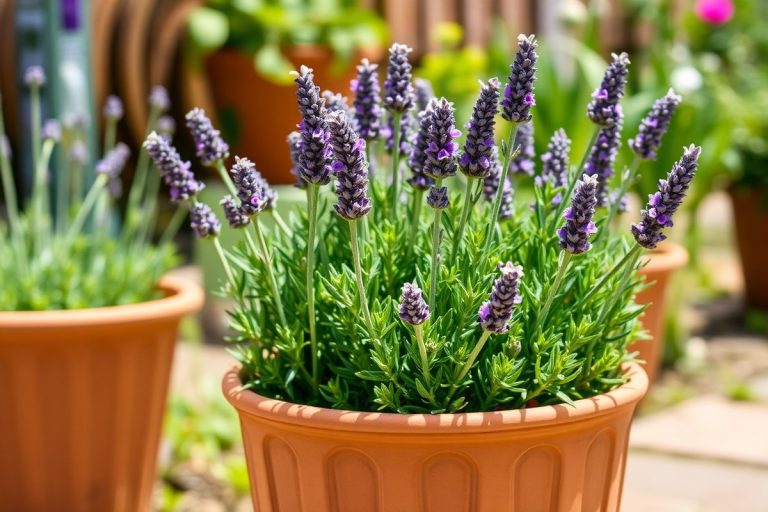
Terracotta pots usually hold less effective soil volume because they are porous. They lose moisture through evaporation faster than plastic or glazed ceramic pots do. This drying effect means watering more often might be needed.
Use soil that holds moisture well. It helps keep plants healthy. Unglazed terracotta suits plants that prefer drier roots but might stress those needing constant moisture.
Drainage changes with pot material too. Plastic pots hold water longer since they don’t breathe, so watch for overwatering risks. Ceramic pots with glaze keep water inside.
If drainage holes get blocked, soil can stay soggy. That risks root problems.
Terracotta pots allow air through their walls, improving root oxygen but increasing water needs. Match your watering routine to the pot’s material for best growth.
Square pots give more root space than round pots labeled with the same diameter. Their corners add extra soil volume that plants’ roots can use. This makes them good for growing plants that spread roots horizontally.
But square pots might drain slower if filled with dense soil. So check drainage holes and soil mix carefully.
Check the inside soil space, not just the pot’s outside measurements, before buying for root-bound plants.
Deciding When and How Much to Size Up Your Pot
Choose a pot about 1 to 2 inches wider than your root ball. Small, slow-growing plants like succulents do better with smaller size jumps. This size helps roots stay healthy without too much wet soil.
Fast-growing plants or ones in pots already 10 inches or bigger need more room. Add 3 to 4 inches to the current pot diameter. This gives roots room to spread out nicely.
It helps your plant grow stronger over time. Using a pot that’s too big can hold too much water.
This leads to roots sitting in water and rotting. Smaller size increases prevent this problem.
Bigger jumps in pot size sometimes work best for fast-growing plants. Edibles and annual veggies quickly need more room. Upsizing directly to a larger pot can help.
These plants can handle jumps of 2 to 3 inches easily. Some can go straight to their mature pot size.
This helps avoid frequent repotting. This jump avoids frequent repotting and gives roots good room to grow quickly.
Pot depth is another key factor. Pick a pot at least 1 inch deeper than the root ball. This space stops roots from bunching up or circling the pot.
It keeps roots healthier. Deep pots help stabilize the plant and allow proper drainage, reducing root diseases. Avoid shallow pots with deep-rooted plants to prevent water buildup at the bottom.
- Slow growers: increase pot diameter by 1, 2 inches
- Fast growers: increase diameter by 3, 4 inches if pot is 10 inches or larger
- Annual veggies: can jump directly to mature pot size
- Pot depth should be 1, 2 inches deeper than root ball
- Repot when root ball fills current container or water drains too fast
- Consider the growing space available for larger pots
Size up if the root ball fills the pot or water drains too fast. This signals less room for roots or drying soil requiring more moisture retention. Avoid jumping too big for slow growers; they adjust better by upsizing gradually.
To check root growth, gently slide the plant out of its pot. You can also use a clear pot to watch roots grow. This method causes little stress to the plant.
This shows if roots are crowded or circling inside. Clear pots let you see soil moisture and root health clearly.
You don’t need to disturb the soil to check your plant. This helps you know exactly when to repot.
Common Measuring Mistakes: How to Avoid and Fix Them
Beginners often measure plant pots by their outer rim. This mistake makes a pot seem bigger than it really is inside. The space available for roots and soil is smaller, which can hurt plant health and growth.
Another common problem is ignoring the pot shape. Round pots differ from square or tapered ones.
Measuring only the top diameter can mislead you about the actual volume inside. This risks over-potting or under-potting your plant.
Mixing units, like inches one time and centimeters the next, also causes errors. It confuses comparisons and makes it hard to match pots properly. Using one consistent unit is easier and safer.
- Measure across the inside of the rim, not the outer edge
- Use a tape measure or ruler held straight, not tilted
- Measure depth from soil line to the pot bottom for accuracy
- Pick one unit system and stick with it: inches or centimeters
- Note the pot shape and measure width at the widest part
- Double-check measurements to avoid misreading or slipping
- Write your measurements down to avoid confusion later
Wrong measurements often lead to pots that don’t fit your plant roots well. A too-tight pot stops roots from growing.
One too big holds excess soil, causing overwatering. The plant may suffer stress, root rot, or stunted growth.
To fix common issues, measure inside the rim and include depth too. Always check twice to make sure you get the same number both times.
Use a tape measure laid flat across the pot’s widest points. Avoid guessing by just holding a ruler at an angle.
For comparing pots, use consistent measuring spots and units. Measuring across the inside rim and the depth gives the truest size estimate. This helps you choose the right pot size each time.
It matches your plant’s type and growth stage. Use it when shopping or repotting.
Calculating Soil Volume from Measurements: A Step-by-Step Example
To calculate the soil volume in a plant pot, you first measure the diameter and depth. You use a simple formula for round pots or adjust it for tapered shapes. Then, convert the volume to liters or gallons to estimate how much soil to buy.
Calculating Volume of Cylindrical Pots
Round pots often have a cylindrical shape. You can calculate their soil volume using the cylinder volume formula.
Use the formula V = π × r² × h. The radius, r, is half the diameter.
The height, h, is the pot depth. Make sure radius and height use the same units.
For example, a pot’s diameter is 12 inches. That means its radius is 6 inches.
The pot depth is 10 inches. The volume is 3.14 × 6² × 10 = 1,130.4 cubic inches.
Adjusting for Tapered Shapes
Tapered pots have slanted sides, not straight like cylinders. This reduces the soil volume slightly compared to a full cylinder.
Measure the shortest and tallest depth sides and find their average. Use the average depth in the cylinder volume formula for a closer estimate. You can also use online calculators designed for tapered pots for more accurate volume numbers.
Converting Volume to Liters and Gallons
Soil suppliers often list soil in liters or gallons. Convert cubic inches or centimeters to these units for easy shopping.
For conversion, 1 cubic inch equals 0.0164 liters and 0.0043 gallons. To convert cubic centimeters, 1 cm³ equals 0.001 liters.
| Cubic Inches | Liters | Gallons |
|---|---|---|
| 1000 | 16.4 | 4.3 |
| 1130 | 18.5 | 4.85 |
Estimating Soil Amount Needed
Your calculated volume is for the entire pot. Remember, fill soil usually occupies around 90% due to air pockets and drainage layers.
To estimate soil buy, multiply your volume by 0.9. For a 1,130 cubic inch pot, use about 1,130 × 0.9 = 1,017 cubic inches of soil. Convert that to liters if needed.
Use this process also for square or irregular pots by measuring length, width, and depth. Multiply these for volume in cubic inches or centimeters before converting.
- Measure across the top for round pots. For square pots, measure both length and width. Use the longest sides for square shapes.
- Measure pot depth from the rim down to the base. Check both shortest and tallest sides for tapered pots. Use the shortest measurement if unsure.
- Calculate volume using the cylinder formula or length × width × depth for square pots.
- Adjust the calculated volume to about 90% to allow for soil settling and drainage space.
- Use the conversion factor to change cubic inches or centimeters into liters or gallons.
- Buy soil in a volume matching or slightly exceeding this calculated number.
Double-check which measuring units your soil supplier uses to avoid buying too little or too much.
Step-by-Step Action Plan for Measuring and Choosing Plant Pots
Start by measuring your plant pots carefully. Use this to find the best size for your plants. This helps avoid problems like root crowding or water issues.
- Before you buy: Use a tape measure to check the pot’s top rim diameter and depth. Confirm it matches your plant’s root ball size to avoid tight fits.
- Day 1: Check the pot’s base diameter first. This size matters for drainage and space. Make sure it fits your growing area well.
- After potting: Calculate soil volume by multiplying diameter by diameter by depth times 0.8. This helps you estimate how much soil to buy.
- Week 2: Watch your plant’s growth closely. Check if roots are crowded or soil dries too fast. Adjust pot size if needed. Measure soil line to check changes.
- Month 1: Decide if you need to size up based on root health and soil moisture. Choose a pot about 2 inches larger in diameter if needed.
- Every 3 months: Re-measure pot size and soil volume if you repot or change container shape. Adjust care accordingly.
- Ongoing: Avoid common measuring mistakes like ignoring the pot’s shape or mixing inside and outside measurements. Double-check with your tape measure.
Frequently Asked Questions
What Does “Trade Gallon” Mean in Plant Pot Sizing?
A trade gallon is a pot size used in the nursery industry. It doesn’t equal a real gallon but is a standard volume for pots. This helps nurseries keep pot sizes consistent for sales and shipping.
Can Pot Size Affect Indoor Plant Watering Needs?
Yes, larger pots hold more soil, so plants need less frequent watering. Smaller pots dry out faster. Knowing pot size helps you water plants properly and avoid root rot or dryness.
Why Are Pot Depths Different from Pot Diameters?
Depth affects root growth while diameter controls surface area. Some plants need deep pots for roots, others spread out more. Matching both measurements to your plant helps it grow well.
Can Irregular Pot Shapes Alter How I Measure Them?
Yes, square or rectangular pots require measuring length and width too. Multiply these for soil volume instead of just diameter. Be sure you consider shape to avoid buying the wrong pot size.
How Do Pot Materials Impact Plant Growth Aside from Size?
Materials like ceramic or plastic change water retention and heat levels. Clay pots dry out faster. This matters when sizing because soil moisture affects root health along with pot size.
Is There a Quick Way to Check Pot Size Without Tools?
You can use a tape measure or ruler for simple size checks. Avoid guessing by eye since it often leads to errors. A quick measurement helps pick the right pot for your plant.
Before You Go
Measuring plant pots right helps your plants grow healthy and fit their space well. Try measuring your current pots today to see if they match your plants’ needs. Keep a tape measure handy for checking new pots before you buy.