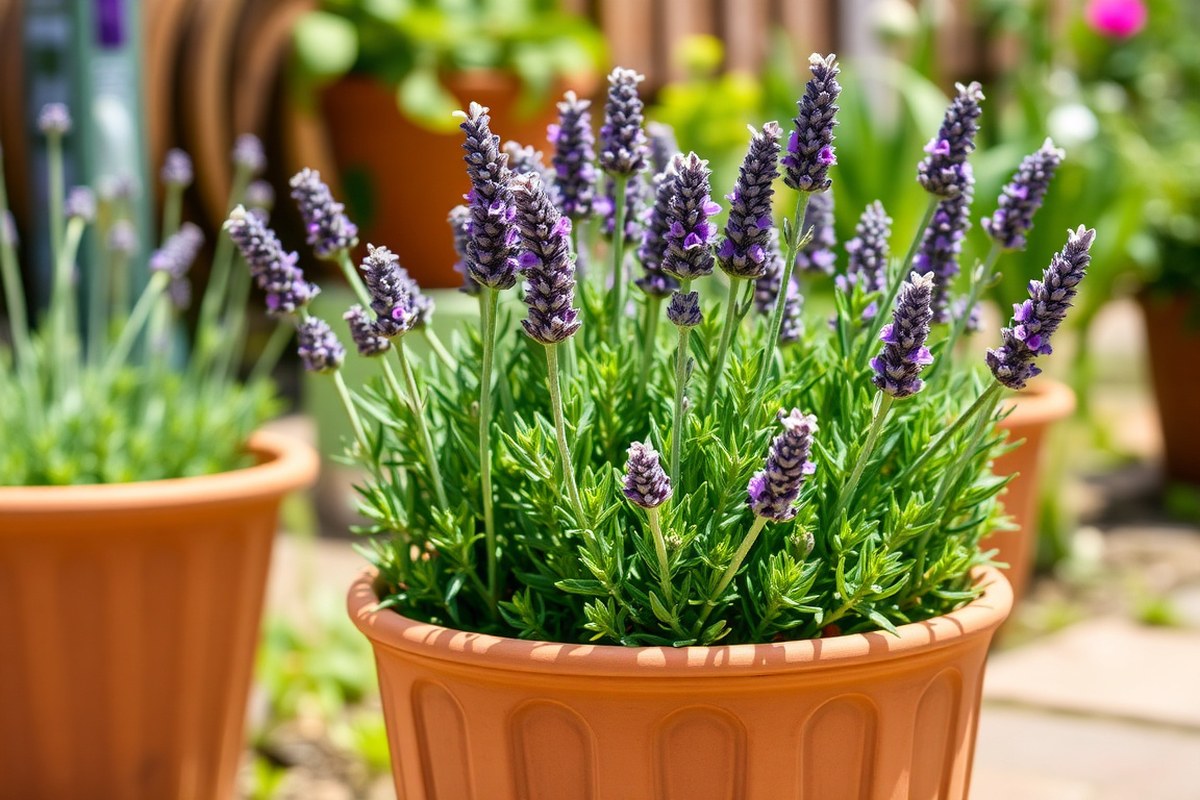
How to Pot Lavender: A Complete Guide for Healthy, Blooming Plants
How to pot lavender starts with choosing the right container and soil. Pick a pot at least 12 inches wide to give roots room to grow. Use a potting mix with compost and sand for good drainage and nutrition.
Put your lavender pot in full sun. It needs six hours of direct light every day. This helps it grow strong and healthy.
Water thoroughly every two weeks, making sure excess water drains out. This helps prevent root rot and keeps the plant healthy.
Check your lavender’s pot size yearly and repot every two to three years. Choose a pot just a little bigger than the root ball for steady growth. Too large a pot may hold too much moisture.
Key Takeaways
- Choose a pot at least 12 inches across for healthy lavender roots.
- Use a potting mix made of 70% compost and 30% sand for drainage.
- Place lavender pots in full sun with at least six hours of light daily.
- Water lavender every 14 days until excess water drains from the pot.
- Repot lavender every 2 to 3 years in spring into a slightly larger pot.
- Keep the pot diameter just 1 to 2 inches larger than the root ball.
How to Pot Lavender: Step-by-Step Instructions
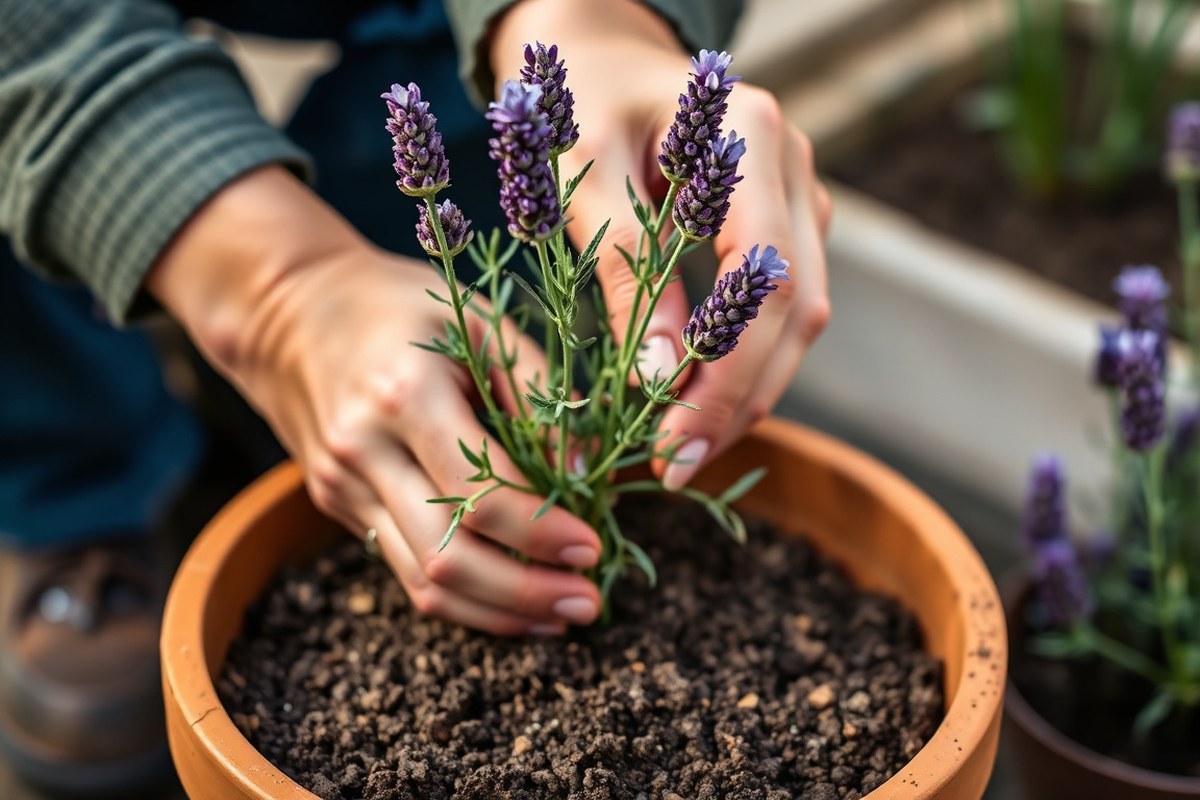
- Pick a pot that has drainage holes. Make sure it is 12 inches wide or bigger. This size helps your lavender grow well.
- Prepare potting mix with 70% compost and 30% horticultural sand or grit.
- Fill the pot about two-thirds full with the potting mix to start.
- Gently tease out lavender roots from the nursery pot, loosening any tight roots.
- Put the lavender in the pot’s center. Match the soil line with the pot’s rim. This helps the plant set up right.
- Fill around the root ball with potting mix, firming it gently to avoid air pockets.
- Sprinkle 1/2 cup of alfalfa meal fertilizer on top and scratch it into the soil.
- Water the lavender lightly to settle the soil, but avoid soaking it.
Start with a sturdy pot that has good drainage. Clay or terracotta pots work well because they let moisture escape, preventing root rot.
Choose one that’s at least 12 inches across. This size gives your lavender room to spread its roots and keeps them well insulated.
Mix your soil before planting. Combine compost with coarse sand or horticultural grit to create a light, draining soil.
Lavender hates soggy roots. So this mix stops water from pooling at the bottom and suffocating the plant.
Handle the lavender carefully. When you take it out of its nursery pot, gently loosen the roots with your fingers. This helps them grow into the new soil instead of staying tangled.
Set the plant so its root ball top sits low. Keep it about 0.5 centimeters below the pot’s edge.
This stops soil from spilling out. This prevents overpacking the soil and gives the leaves room to breathe.
Choosing the Right Pot and Lavender Variety for Containers
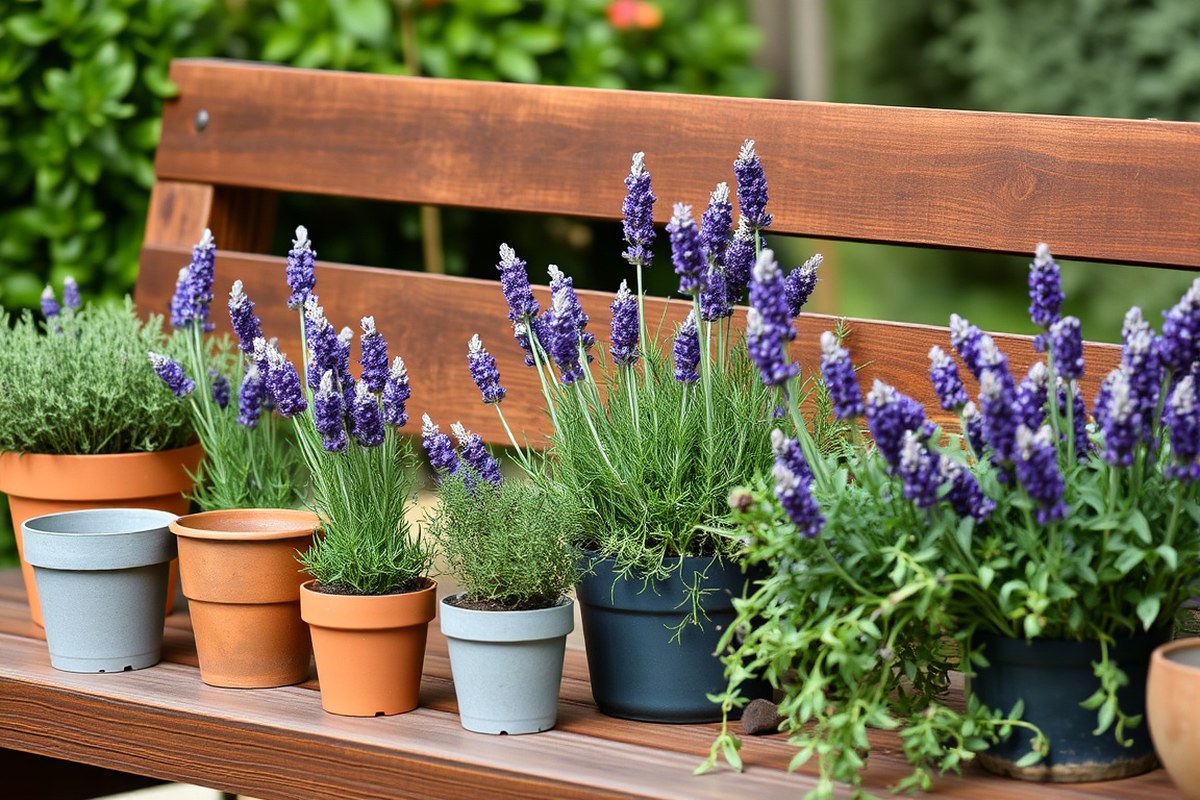
Choosing the right pot size depends mostly on how large your lavender plant will grow. A pot about 12 inches wide and equally deep works well for many types. This size gives roots enough room without holding too much water, which lavender dislikes.
Small lavender varieties fit comfortably in pots around 12 inches across. Larger types or those that grow wider need containers 14 to 16 inches wide. Going bigger than 16 inches can make the soil stay too wet, leading to root problems.
Picking the right lavender variety is just as important. Dwarf cultivars like ‘Hidcote’ English lavender are perfect for containers. They stay compact and bloom well without crowding their pots.
| Lavender Type | Typical Mature Size | Recommended Pot Size | Notes |
|---|---|---|---|
| Spanish Lavender | Up to 9 inches tall | 12 inches across | Small size fits well in standard pots |
| ‘Hidcote’ English Lavender | Compact dwarf, 12-18 inches | 12-14 inches across | Great for small to medium pots |
| Lavandin hybrids | 18-24 inches tall | 16-24 inches across | Needs larger container for root space |
| Cold-hardy English Lavender | 12-24 inches tall | 14-16 inches across | Survives winter in protected pots in zone 5+ |
Think about where you’ll keep the pot too. Bigger pots are heavier and harder to move, especially when filled with soil. If you plan on bringing plants indoors for winter, choose something portable.
Choose a pot with good drainage holes to prevent root rot and water stress.
Lavender likes lots of sunlight. So place your pot where it gets at least 6 hours of direct sun.
Smaller pots might dry out faster, so check soil moisture often. Correct pot size helps your lavender grow well and look attractive.
Best Soil Mix and Drainage Practices for Potted Lavender
Lavender needs loose, well-draining soil to thrive in pots. Use a mix with coarse sand or grit to avoid soggy soil and root rot. Always pick containers with good drainage holes to keep roots healthy.
Recommended Soil Mix Ratios
Use about 70% good potting soil in your mix. Add 30% coarse river sand or perlite. This balance helps drainage and growth.
This ratio keeps the soil light and well-drained, which lavender prefers. Avoid heavy or clayey soil because it holds too much water.
Mix equal parts of coarse garden sand, pumice or perlite. Add clay pebbles and potting soil. This creates a very gritty soil mix.
Adding a tablespoon of dolomitic lime helps keep the soil slightly alkaline. This soil mix mimics lavender’s natural dry, low-fertility environment.
Importance of Drainage Holes and Methods
Choose pots with several drainage holes at the bottom to stop water from pooling. Without proper drainage, lavender roots sit in wet soil and can quickly rot. Terracotta pots are a good choice since they also let moisture evaporate through the pot’s walls.
Place your pot on pot feet or small stones to keep the drainage holes clear. Avoid putting pots directly on flat surfaces like patios because they can block drainage. You can also add a layer of gravel under the soil to improve water flow.
Improving Aeration for Root Health
Adding coarse sand, perlite, or horticultural grit increases air space in the soil. Roots need oxygen to grow, so this mix prevents soil from becoming compacted. Aeration stops fungal diseases like root rot.
Gently loosen roots when lavender is root bound before planting. This helps the plant adjust to its new pot.
Spread them out to give new roots room to grow into the soil. Also, leave at least 12 inches between plants in a shared pot to avoid crowding roots.
Sunlight and Watering Needs for Healthy Potted Lavender
Potted lavender needs 6 to 8 hours of direct sunlight each day. Put your pot in a spot with full sun, such as a balcony or a south-facing window. Use a grow light indoors or in low-light areas to provide enough sunlight.
Watering depends on the plant’s age and the season. Newly planted lavender in pots needs watering once a week in spring and summer. Established plants require watering once every two weeks if you haven’t had rain or hot weather.
Always check the soil before watering. Water only when the top 2 inches of soil feel dry. Water thoroughly until excess drains from the pot’s bottom to prevent root rot.
Warm temperatures and intense sunlight increase lavender’s watering needs. Water your lavender pot more during hot summer months. Do this about once a week or when the soil feels dry.
Check soil moisture often to avoid over- or under-watering. Cooler fall and winter months reduce watering needs dramatically.
Lavender rarely needs watering in fall and winter. Overwatering in these seasons can cause root rot. Keep indoor lavender watered lightly in winter.
Water just enough to stop the soil from drying out completely. Avoid giving too much water during colder months.
Improve your pot slightly using bricks or pot feet. This helps water drain freely and prevents standing water, which harms lavender roots. Remember that good drainage and dry soil between watering keep lavender healthy and thriving.
Fertilizing, Pruning, and Encouraging Lavender Blooms
Feed your potted lavender twice a year to keep it healthy and flowering. Prune in early spring by cutting back the top one-third of growth to encourage strong blooms. Deadhead faded flowers throughout summer to help your plant produce more blossoms.
Type and Frequency of Fertilization
Lavender in containers needs feeding more often than ground-planted lavender. Give your plant fertilizer twice a year, ideally in early spring and mid-summer. Use a balanced, low-nitrogen fertilizer to avoid excess leaf growth at the expense of flowers.
Fertilizer with a ratio like 10-10-10 or 5-10-10 works well. Slow-release pellets save you the trouble of frequent feeding.
Avoid overfertilizing, which causes weak stems and fewer blooms. Many gardeners spend around $10 to $15 on fertilizer per season, which lasts for several feeds.
- Feed container lavender twice yearly: early spring and mid-summer
- Choose balanced low-nitrogen fertilizer (e.g., 10-10-10)
- Consider slow-release pellets for convenience
- Never overfertilize to prevent weak, leggy growth
- Skip fertilizer while lavender is dormant indoors
Don’t fertilize during winter dormancy. Wait until you see new spring growth.
Pruning Techniques for Shape and Health
Prune your lavender in early spring to boost new growth and flowers. Cut back about the top one-third of the plant’s growth to create a neat, rounded shape. This encourages the plant to grow vigorously and produce abundant blooms.
Regular pruning keeps lavender compact and prevents it from getting woody and leggy. Avoid cutting into old woody stems, which may not regrow. For a typical potted lavender, spring pruning means trimming in March or April before flowering starts.
- Prune once a year in early spring (March or April)
- Cut back the top one-third of growth, shaping it rounded
- Avoid cutting into old woody branches
- Use sharp pruning scissors to make clean cuts
- Remove any dead or damaged stems as needed
Be gentle with pruning. Cut above the woody base to keep the plant alive.
Deadheading to Boost Flower Longevity
Remove spent flower stalks as soon as their flowers fade to encourage more blooms. Pinch or snip off flower heads along with about 1 inch of leaf growth below. This redirects the plant’s energy into producing new flowers.
Deadheading throughout summer extends the bloom period, sometimes by several weeks. For potted lavender, check weekly during peak flowering months. Keep deadheading even if you want to harvest dried flowers for crafts or scent.
- Remove faded flower stalks promptly
- Cut about 1 inch of leafy growth below dead flowers
- Deadhead once a week during bloom season
- Use scissors to avoid harming leaves
- Keep deadheading even when planning flower harvests
Don’t leave dead flowers on the plant. They waste energy better used on new blooms.
How to Overwinter Lavender in Pots Safely
Lavender in pots is more vulnerable to cold than ground-planted lavender. Roots in containers can freeze faster. So moving the pot indoors or to a protected spot is often necessary.
English lavender grows well in USDA Zones 5 to 9. It needs extra care when potted in winter. Protect it from cold and drafts indoors.
Move your lavender inside before the first hard frost. This usually happens when night temps drop under 32°F. Don’t wait until after frost hits. A garage, shed, or unheated room with good light works well.
Keep your lavender away from heat vents and cold drafts. Try daytime temps between 60 and 70°F. At night, slightly cooler temps are best.
For outdoor overwintering, place pots near a house foundation to use residual warmth from the building. Wrap pots with bubble wrap or burlap to insulate roots against freezing. You can also pile mulch or straw around the base of the pot for extra protection.
Choose a pot at least 10 to 12 inches wide for enough root space. Smaller pots dry out and freeze faster. Make sure your pot has good drainage to avoid water sitting and freezing around roots.
Check soil moisture weekly. Water sparingly during winter to keep soil barely moist. Too much water encourages root rot, especially in cold conditions.
Avoid watering if leaves look wilted. Dry is better than wet for potted lavender in winter.
Spanish and French lavender are less hardy than English types. Move them indoors for winter every year. They can’t tolerate cold well outside.
You may keep hardy English lavender outside in milder zones. Use insulation to protect it during winter. Check local weather to decide.
Failure to protect the roots can cause browning, leaf drop, and dieback. Pots left outside without shelter in harsh winters often lose all growth. Starting early with protection or moving indoors helps your lavender bounce back fast come spring.
When and How to Repot Your Lavender Plant
Repot your lavender when roots crowd the pot or growth slows. Every 2 to 3 years usually works well to keep the plant healthy. Pick a pot about 2 to 4 inches wider each time you move it up.
Signs Your Lavender Needs a New Pot
Look for roots growing out of the drainage holes or circling the soil surface. Lavender might stop growing or wilt easily even when watered well.
Soil may dry out faster than before. The plant uses more space than the pot allows.
The plant may lean or become top-heavy as roots lose room to hold it upright. Yellowing leaves and fewer flowers also hint the lavender needs room to grow. These signs appear because the roots have no more space in the pot.
Choosing the Right Size for Repotting
Select a pot 2 to 4 inches wider in diameter than the current one. Lavender usually fits well in pots at least 12 inches wide to support their shrubs. Bigger pots hold more soil, which stays moist longer but weighs more.
You should avoid going too big at once. Large pots can hold extra water. This can cause root rot.
When repotting, pick a container with good drainage holes. Plan to use pots about 16 inches wide. This works if you keep lavender longer than two years.
Step-by-Step Repotting Process
Repotting lavender calls for gentle steps to protect tender roots and reduce plant shock. Make sure the plant is watered 1 to 3 days before repotting to ease stress. You want fresh, well-draining soil ready before starting.
- Choose a pot with drainage holes. Add a layer of gravel or stones at the bottom. This helps prevent water from pooling under roots.
- Fill the pot about one-third full with fresh, sandy soil mix made for lavender or succulents.
- Carefully remove lavender from its old pot by squeezing the sides or tapping gently. Avoid pulling on stems.
- Loosen the root ball with your fingers. Untangle circling roots and trim dead ones with scissors.
- Set lavender in the new pot and center it. Adjust height so the soil line stays the same.
- Fill in around roots with more soil, pressing gently to hold the plant firmly upright.
- Water lightly to settle soil but avoid soaking. Place the pot in bright, indirect light for a few days.
- After a week, move plant back to full sun and resume normal watering. Avoid fertilizer for 4 to 6 weeks.
Common Problems and Troubleshooting Potted Lavender
Root rot is the biggest threat to lavender in pots. It happens when the soil stays too wet and the roots sit in water. Make sure your pot has several drainage holes.
This lets extra water escape. It helps keep the roots from getting soggy.
Check for signs like yellow or drooping leaves and a musty smell in the soil. Spot root rot early? Take the lavender out gently.
Trim damaged roots with clean scissors. Then repot in fresh, dry soil. Cut back on watering and let the soil dry out between watering sessions.
Lavender usually avoids pests. But occasional leaf damage can occur from tiny insects like aphids or whiteflies. These pests rarely harm the plant much.
Spray the leaves with water gently to clean them. Use insecticidal soap if you see many bugs. This keeps your lavender healthy.
Failing blooms or leggy stems often mean your lavender needs more sunlight or pruning. Lavender needs at least six hours of direct sun daily to flower well. Move your pot to a sunnier spot for better light.
Prune long stems after blooming to shape the plant. This helps new growth start.
Overwatering and poor drainage also cause wilting and no flowers. Lavender likes soil that dries quickly but never bone dry all the time.
Water deeply only when the top inch of soil feels dry. Using a soil mix with sand or small gravel improves drainage and keeps the roots happy.
Never let water sit in the tray under your lavender pot. Empty it after watering to avoid root rot.
Leggy growth can also show if your lavender is crowded in a small pot. Repot every two years to a slightly bigger pot. This stops the roots from binding.
It also improves airflow around the roots. This step helps the plant stay strong and bloom better through the season.
Step-by-Step Action Plan for Potting Lavender
Follow this plan to start your potted lavender and keep it growing strong. Check each step to see you are on track.
- Day 1: Choose a container with drainage holes at least 12 inches wide. This size fits most lavender and drainage prevents root rot.
- Day 1: Use a well-draining soil mix with sand or perlite added. Test by watering lightly; water should drain quickly.
- Week 1: Place your pot in full sun, ideally 6 to 8 hours daily. You’ll see healthy green leaves forming after a week.
- Week 2: Water only when the top 1 inch of soil is dry. Avoid soggy soil; let the leaves stay dry to prevent disease.
- Month 1: Start feeding with a low-nitrogen fertilizer once a month. Look for new growth that means the lavender likes the feed.
- Every 6 weeks: Prune dead or brown growth lightly. It helps keep your plant bushy and encourages more blooms.
- End of Season: Move your pot indoors or to a sheltered spot before frost. Keep watering less but don’t let it dry out.
- Year 1 or 2: Repot lavender when roots crowd the pot or soil looks depleted. Fresh soil and slightly larger pot help it thrive.
Frequently Asked Questions
What Size Pot Is Best for Growing Lavender in Containers?
A pot at least 12 inches across works well for lavender. It gives enough room for roots and protects them during winter.
How Often Should I Water Lavender When It’s Grown in Pots?
Water thoroughly every 14 days when lavender is grown in pots. Make sure excess water drains out to avoid soggy soil.
Where Should I Place My Potted Lavender Indoors for Best Light?
Place lavender in a south-facing window or under grow lights. Lavender needs 10 to 12 hours of bright light daily indoors.
How Do I Prevent Waterlogging in Potted Lavender Plants?
Use pots with several drainage holes at the base. Lavender roots don’t like sitting in excess moisture.
When Is the Best Time to Repot Lavender in a Container?
Repot your lavender every 2 to 3 years in spring. It keeps roots healthy and allows room for growth.
Can I Keep Small Lavender Seedlings in Pots Before Transplanting?
Yes, but prune seedlings in containers of 6 inches or larger first. This encourages better root and shoot growth.
Before You Go
Growing lavender in pots needs good light, well-draining soil, and careful watering. Start with the right pot and soil mix to avoid problems. Check your plant weekly to catch any issues early and keep it healthy.