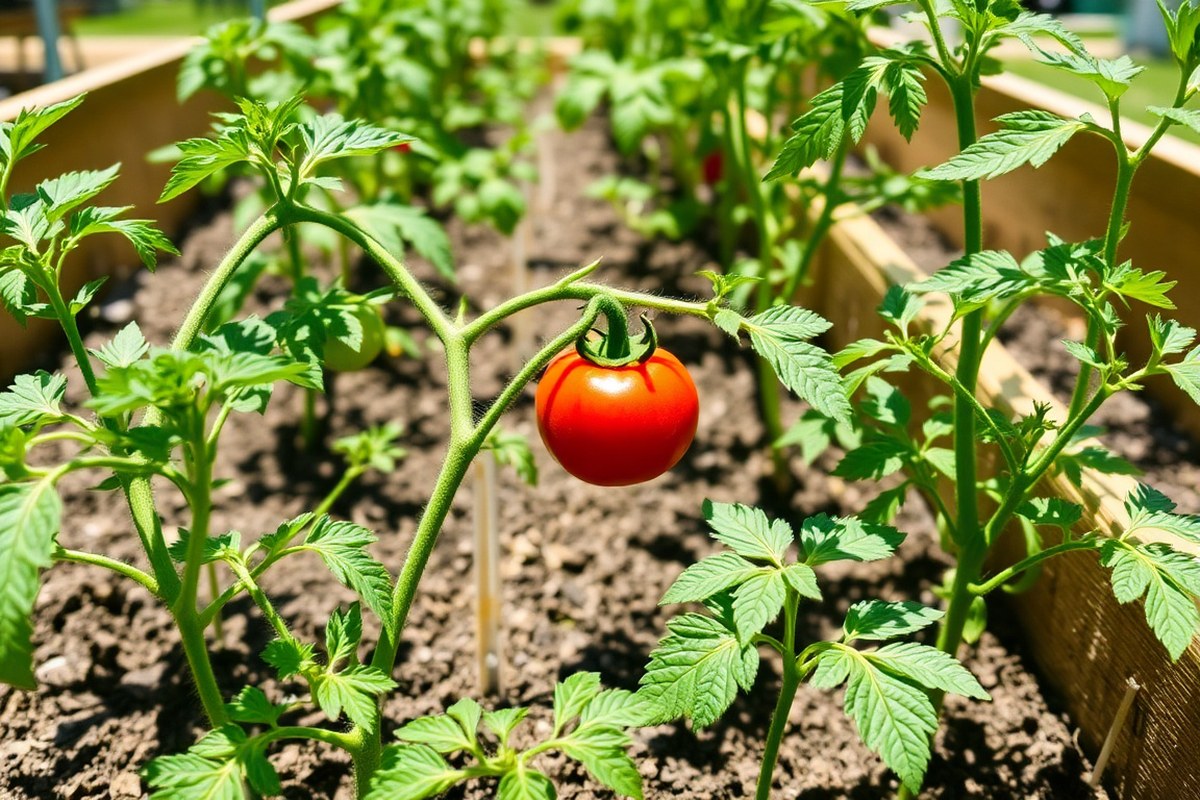
How Far Apart to Plant Tomatoes in a Raised Bed: Complete Spacing Guide
Wondering how far apart to space tomatoes in raised beds? Leave 18 to 24 inches between each tomato plant. This space gives room to grow and air to flow, which cuts disease risks.
Determinate tomatoes do well 18 to 24 inches apart. Plant them in one row down the center of a 4-foot bed. This keeps plants easy to reach and well spaced.
You can plant two rows of compact tomatoes in a zigzag. This saves space without squeezing plants together. The pattern helps keep good airflow and sun.
Raised beds are narrower. Tomato plants can go closer, between 12 and 16 inches apart. This works well for smaller, compact types.
Closer spacing saves space but watch airflow. Start by planning your raised bed layout carefully.
Think about plant supports and airflow for healthy plants. This also makes harvesting easier later on.
Key Takeaways
- Plant determinate tomatoes 18 to 24 inches apart in a 4-foot-wide raised bed.
- Stagger two rows of compact tomatoes in a zigzag to maximize raised bed space.
- Use 12 to 16-inch spacing for smaller or compact tomato varieties in raised beds.
- Proper spacing improves airflow, reducing disease risk among your tomato plants.
- Start with a raised bed at least 12 inches deep to support healthy root growth.
- Support methods like staking can affect how close tomatoes can be planted.
Ideal Tomato Plant Spacing in Raised Beds
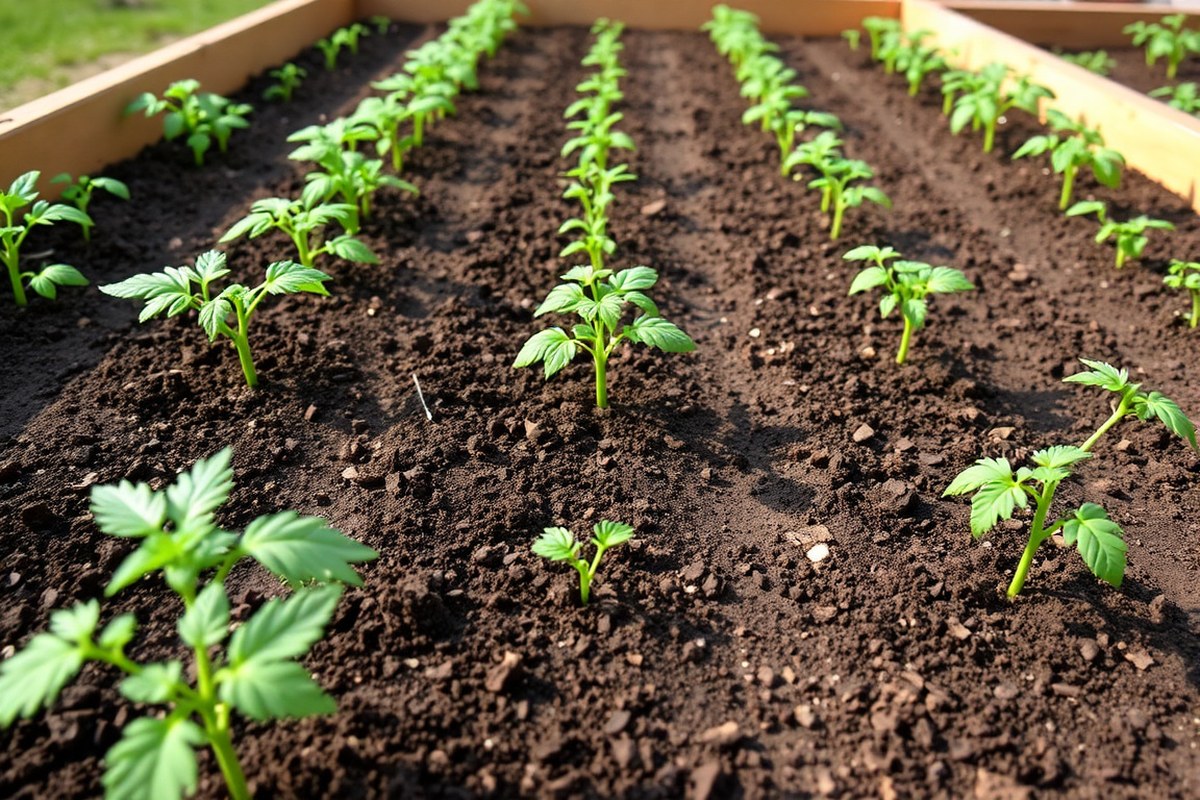
Tomato plants in raised beds should be spaced 18 to 24 inches apart. This distance works well for determinate tomatoes, which don’t grow as tall or wide. Planting them close helps plants grow well.
It also keeps air moving. This airflow helps prevent diseases.
Indeterminate tomatoes need more space because they keep growing taller and wider. Space these plants about 24 inches apart when planting single rows. For two rows, use a zigzag pattern.
Stagger the plants. Keep at least 24 inches between each. This method fits more plants without crowding.
Rows in raised beds sit 24 to 30 inches apart. This is closer than normal garden rows. Traditional rows often need 36 inches.
Raised beds dry out quicker and have better drainage. So closer spacing is okay when you keep soil moist. For a 4-foot-wide bed, plant one centered row.
Or plant two staggered rows. Use spacing for compact tomato types.
Spacing Differences Between Determinate and Indeterminate Tomatoes
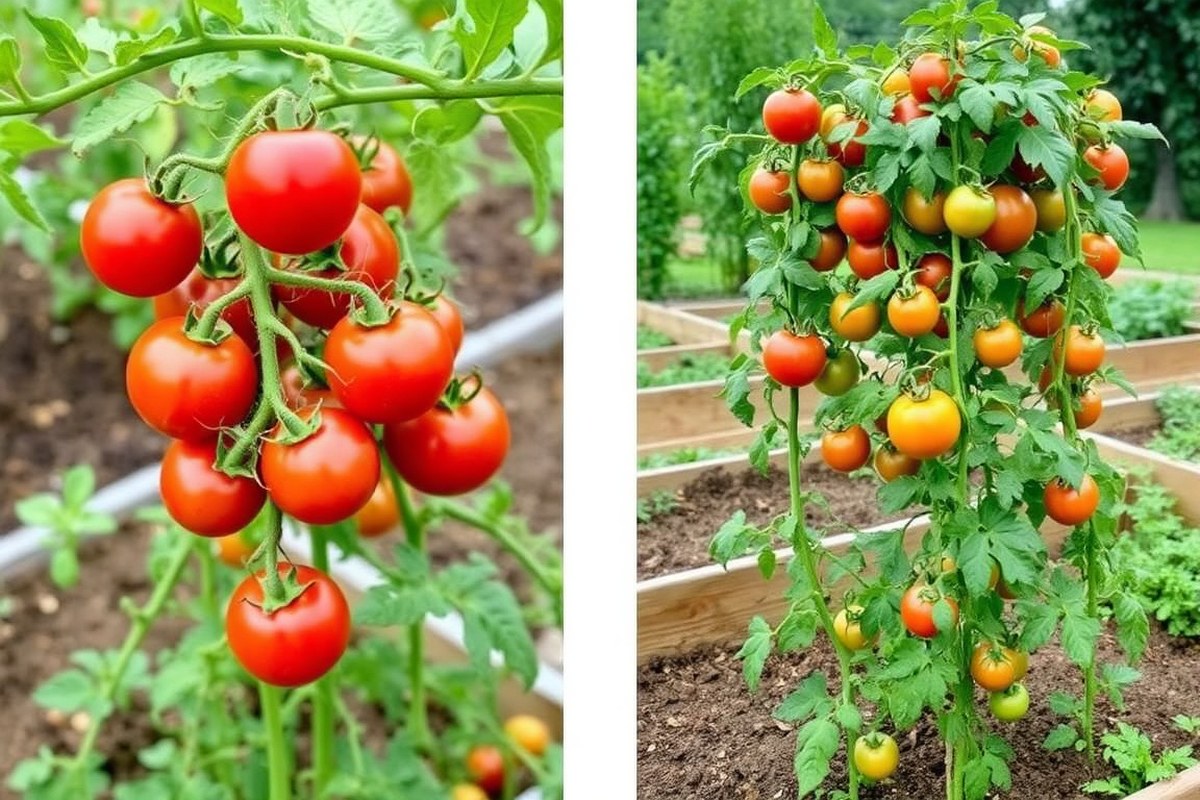
Spacing depends mainly on whether your tomato plants are determinate or indeterminate. Determinate tomatoes need less space because they grow to a fixed size and fruit at once.
Indeterminate types grow taller and wider. So they require more room to stay healthy and produce well.
Determinate Tomato Spacing Guidelines
Determinate tomatoes grow to a set height and stop once they fruit. They do well with 12 to 18 inches between plants in a raised bed. This closer spacing lets you grow more plants in the bed.
Each plant still gets enough air and root space. This helps keep plants healthy and productive.
These plants don’t spread as much, so crowding is less of a risk. Space rows about 24 to 36 inches apart if you’re planting multiple rows. That gap lets you access plants for harvesting and maintenance without damage.
Indeterminate Tomato Spacing Recommendations
Indeterminate tomatoes keep growing and producing fruit all season. They get taller and wider than determinate types. That’s why spacing them 24 to 36 inches apart works best to prevent crowding and disease.
Space indeterminate tomatoes 18 to 24 inches apart to stake or cage them. This distance supports their vertical growth and air flow.
Rows should be 24 to 36 inches apart or wider if plants sprawl. This spacing helps airflow and reduces leaf diseases.
| Tomato Type | Plant-to-Plant Spacing (inches) | Row-to-Row Spacing (inches) |
|---|---|---|
| Determinate (garden bed) | 18, 24 | 24, 36 |
| Indeterminate, staked | 18, 24 | 24, 36 |
| Indeterminate, caged | 24, 36 | 48, 60 |
| Indeterminate, sprawling | 36, 48 | 48, 60 |
| Raised bed (compact varieties) | 18, 24 | Single or staggered rows |
This table shows spacing based on common tomato types and growing styles. Use it to plan your raised bed layout for space and air circulation.
Special Cases: Dwarf and Cherry Tomato Spacing
Dwarf tomato varieties, like ‘Patio,’ stay 12 to 18 inches tall. They need only 8 to 12 inches between plants. You can grow these closer together and still avoid crowding issues.
Cherry tomatoes vary by type. Indeterminate cherry tomatoes need space like other indeterminate varieties.
Compact cherry varieties fit well in raised beds around 18 to 24 inches apart. Staking helps keep their growth vertical and manageable.
Keep dwarf tomatoes spaced tight but don’t crowd, poor airflow boosts diseases.
How Raised Bed Size and Depth Affect Tomato Spacing
Raised bed width and depth directly affect how closely you can space tomato plants. Wider beds let you plant tomatoes in double rows, increasing yield. Deeper beds support stronger roots, which allows plants to thrive even when spaced a bit closer.
Recommended Raised Bed Width and Depth
Raised beds for tomatoes should be at least 12 inches deep. This depth gives enough soil for roots to grow strong. Roots need space to spread and absorb nutrients well.
Deeper beds, around 18 to 24 inches, improve drainage and nutrient availability. Common bed widths are 4 feet or 8 feet, shaping your planting layout.
Four feet wide beds usually hold one row of tomato plants. Eight-foot wide beds can hold two rows spaced properly. This width rule prevents crowding and helps air circulation, reducing disease risk.
Calculating Plant Capacity by Bed Size
Each mature tomato plant needs about 4 square feet to grow well. Use this to estimate how many plants fit in your bed size. For example, a 4×4 foot bed has 16 square feet, enough for 4 plants.
A 4×8 foot bed offers 32 square feet, fitting roughly 8 tomato plants with proper spacing. The number of plants depends on the type and support method. This rule of thumb works well for most tomato setups.
Adjust if needed for your specific tomato variety and trellis. Measuring your bed and using 4 square feet per plant simplifies planning.
Adjusting Planting Layout for Bed Dimensions
For beds narrower than 4 feet, plant one tomato row only. Space plants 2 to 3 feet apart to allow air flow. Crowding can hurt growth and increase disease risk.
Beds 8 feet wide can hold two tomato rows about 18 inches apart. Space plants with 2 feet between each one in a row.
This setup fits well without crowding the plants. This layout makes watering and pruning easier.
Deeper beds of at least 18 inches support closer tomato spacing. Space plants 18 to 24 inches apart because roots spread better. This gives plants enough room to grow healthy roots.
Shallower beds need wider spacing to avoid root stress. Keep rows at least 18 inches apart to maintain good air flow.
These spacing choices balance maximizing plant numbers and keeping each tomato healthy. Follow these steps to plan tomato planting in your raised bed:
- Measure your raised bed’s length, width, and depth accurately.
- Calculate total bed area by multiplying length and width in feet.
- Divide total square footage by 4 square feet per plant to find max plants.
- Check bed width: use one row if under 4 feet, two rows if 8 feet wide.
- Space single row plants 24 to 36 inches apart for determinate types.
- For double rows, space rows 18 inches apart with 24 inches between plants.
- Adjust plant spacing slightly closer in beds deeper than 18 inches.
- Use a tape measure to lay out planting spots before transplanting.
Influence of Support Methods on Tomato Spacing
Support methods like staking, caging, and trellising change the space tomatoes need. Staked tomatoes grow upright with less spread. That means you can plant them closer together without hurting airflow or growth.
Caged tomatoes grow denser and wider. They usually need more space than staked ones.
Trellised tomatoes climb vertically, giving roots room but needing good air circulation around the foliage. That prevents diseases like blight.
Check the table for common spacing by support type. It shows how much room to give your plants for healthy growth.
| Support Method | Recommended Spacing | Why It Matters |
|---|---|---|
| Staking | 18 to 24 inches | Upright growth needs less horizontal room |
| Caging | 24 to 36 inches | Wide, bushy growth requires more space |
| Trellising | 24 to 30 inches | Tall vines need room for air circulation |
| Unsupported (No Support) | 36 inches or more | Vines sprawl and crowd easily |
Staking usually costs less. You can use a few wooden or metal stakes that run $1 to $3 each. It takes little time to tie plants as they grow.
Cages cost more, around $10 to $20 each. But hold the plant firmly without constant tying.
Trellising needs a strong frame or wires. It requires setup time but keeps plants tidy. Good airflow is key with trellising.
Space plants far enough so leaves don’t touch much. That cuts fungal risks, especially in humid weather.
Unsupported tomatoes spread wide and block air. This raises disease chances.
They need the most space, at least 3 feet apart. Leaf clusters sitting tight trap moisture and slow drying really fast, especially after watering or rain.
Keep plants spaced so air flows freely between. This helps avoid common problems like powdery mildew or blight.
Prune lower leaves and avoid overcrowding. For best results, pick support and spacing to suit your tomato type and bed size.
Maximizing Tomato Plants in Limited Raised Bed Space
You can plant tomatoes in staggered rows or zigzag patterns to save space. This layout allows plants to fill gaps and get better air circulation. For small raised beds, space plants 12 to 18 inches apart.
This distance suits single-stem string trellises. It helps keep plants healthy and manageable.
Keeping plants closer than 12 inches usually reduces yield and increases disease risk. Determinate, bush-type tomatoes need about 2 feet between plants to avoid overcrowding. Indeterminate types need 3 to 4 feet between plants unless staked tightly.
Choosing compact varieties makes dense planting easier. Small types like Tiny Tim grow well with plants only 1 foot apart. These compact tomatoes stay manageable without sacrificing fruit size or number.
- Use staggered rows by planting one tomato midway between two in the row ahead.
- Support indeterminate plants with single-stem trellises to allow 12 to 18 inches spacing.
- Plant determinate bushes 24 inches apart for easy growth and harvesting.
- Try cherry or patio varieties, which tolerate tight spaces.
- Plan rows at least 3 feet apart for good airflow and access.
Raised bed soil quality impacts how well tomatoes grow close together. Use rich, well-draining soil and add mulch to keep moisture steady. Regular pruning helps plants handle dense spacing by removing extra shoots.
Overcrowding tomato plants invites pests and fungal diseases, so stick to spacing guidelines.
Common Spacing Mistakes and How to Fix Them
Planting tomato plants too close causes poor air flow and crowded roots. This makes them prone to disease, less productive, and harder to harvest. Leaves often turn yellow, and fruits might ripen unevenly or stay small.
Look for wilting stems, tangled branches, and slow growth as signs of overcrowding. Spotting mold or leaf spots means you should watch your plants closely. Pay attention to how hard it is to move around the plants without breaking them.
- Plants spaced less than 18 inches apart
- Leaves blocking sunlight from lower branches
- Dark, damp soil surface with poor drying
- Clusters of yellow or curling leaves
- Difficulty fitting cages or trellises properly
Fix overcrowding by pruning crowded leaves and suckers to free up airflow. Thin out the smallest or weakest plants early in the season. Plants that are too dense need gentle digging and moving elsewhere.
Move plants during cooler parts of the day, like early morning or late afternoon. Use a small trowel to loosen soil around roots.
Water thoroughly after transplanting to help plants settle. Space transplanted tomatoes at least 2½ feet apart when using cages or supports.
Regular pruning also prevents the canopy from becoming a tangled mess. Removing extra growth helps fruit get more sunlight and reduces humidity around plants. Keep stakes or cages sturdy to avoid damage when working inside the raised bed.
Transplanting and Planting Steps for Proper Tomato Spacing
Start by preparing your raised bed and marking where each tomato plant will go. This helps keep the right distance and promotes healthy growth. Transplant seedlings carefully with adjustments based on how big they are.
Preparing the Raised Bed Surface
Clear the raised bed of weeds and debris before planting tomatoes. Smooth the soil surface with a rake for easy planting. Check soil moisture, moist but not soggy is best for tomato roots.
Loosen soil to about 8 inches deep to help roots grow freely. Add compost or balanced fertilizer and mix evenly for nutrients. Avoid packing soil too tightly to prevent poor drainage and root problems.
Measuring and Marking Plant Locations
Use a tape measure or garden ruler to keep the right spacing for tomatoes. Mark plant spots with small stakes or popsicle sticks for reference. This visual guide saves time and prevents crowding.
Space determinate tomato plants about 18 to 24 inches apart. Indeterminate types need 24 to 36 inches for best airflow and growth. Use string or garden twine tied between stakes as a straight guide line.
Planting or Transplanting Seedlings Correctly
Follow these steps for transplanting tomatoes from indoors or starter pots into the raised bed. Adjust spacing if seedlings are larger or need more room. Handling roots gently protects the plant and encourages quick growth.
- Water seedlings a few hours before transplanting to reduce stress.
- Dig holes at each marked spot, slightly larger than root balls.
- Remove seedlings from pots, teasing roots gently if tangled.
- Place seedlings deep so the lowest leaves are just above soil.
- Fill holes with soil, pressing lightly to avoid air pockets.
- Water each plant well after transplanting to settle soil.
- Mulch the bed surface to retain moisture and block weeds.
- Space seedlings wider if plants look large or roots are spread.
Companion Planting and Disease Management Related to Spacing
Choosing companion plants like basil, radishes, or green onions can improve tomato health in raised beds. These plants grow quickly or stay low, so they don’t compete for light. Their presence can help reduce pests and diseases, making tighter spacing work better.
Spacing affects disease risk by improving air flow around the plants. Crowded tomatoes trap moisture, which encourages fungal infections like blight. Leaving enough room between plants helps dry leaves faster, cutting down disease chances.
Adjusting watering practices supports healthy plants in denser beds. Use drip irrigation or water only at the soil level to keep leaves dry. Feeding tomatoes with balanced fertilizer every few weeks helps them stay strong and resist infections.
Space tomatoes 18 to 24 inches apart for proper planting. Fill the gaps with companions that grow fast. This helps plants grow well together.
Basil soothes tomato diseases and helps repel whiteflies. Radishes and green onions take up little room but keep pests at bay.
Disease prevention linked to spacing means removing any dead or yellow leaves quickly. Check plants weekly and water early in the day so moisture dries fast. Mulch can keep soil dry and prevent soil bacteria splash onto leaves.
Dense tomato beds need careful watering to avoid overdoing it. Water deeply about twice a week, or more in hot weather. Avoid overhead sprinklers; they spread diseases and waste water.
Keep a few inches between tomato leaves and companions to prevent leaf crowding and allow airflow.
Step-by-Step Action Plan for Planting Tomatoes in Raised Beds
Use this plan to space your tomato plants well and help them grow strong. Follow each step to avoid crowding and diseases.
- Before planting: Choose a raised bed at least 12 inches deep and 4 feet wide. This gives roots enough space and good air flow.
- One week before planting: Prepare the soil with compost and balanced fertilizer. Healthy soil helps tomatoes grow better and resist disease.
- Planting day: Space determinate tomatoes 18 inches apart and indeterminate ones 24 inches apart. Check labels to be sure of your variety.
- At planting: Insert supports or cages next to each plant. Supports prevent crowding and make pruning easier.
- Two weeks after planting: Make sure plants have about 12 inches of space. This space should be clear around the stems. Thin or prune if they look tight and crowded.
- Four weeks after planting: Mulch between plants to keep soil moist and limit weeds. This helps keep leaves dry and disease-free.
- Every week: Inspect plants for signs of disease or pests. Good spacing makes spotting problems easier.
- Mid-season: Trim suckers from indeterminate tomatoes to keep airflow open. Skip this if you want bushier plants with fewer but bigger tomatoes.
Frequently Asked Questions
Can I Plant Tomatoes Closer Than 12 Inches in a Raised Bed?
Planting tomatoes closer than 12 inches can cause poor airflow and promote disease. Keep tomato plants at least 12 inches apart in raised beds.
This gives their roots enough space. It also helps air circulate for healthy growth.
How Does Soil Type Affect Tomato Spacing in Raised Beds?
Soil type doesn’t change spacing much, but sandy soil drains quickly. You might water more often.
Denser soils hold water longer. So spacing can help prevent root rot by improving airflow.
Should I Thin Out Tomato Seedlings If They Grow Too Close?
Yes, thinning saves resources and improves airflow, reducing disease risk. Remove weaker seedlings to keep the strongest plants spaced properly. This helps tomatoes grow bigger and healthier.
Does the Type of Tomato Cage or Stake Change Spacing Needs?
Yes, sturdy cages or stakes let you grow tomatoes closer. They keep plants upright, improving airflow and sun exposure. Without support, plants need more space to spread out safely.
How Does Mulch Affect Spacing Decisions for Tomatoes in Raised Beds?
Mulch doesn’t change spacing but helps conserve moisture and control weeds between plants. It also reduces soil splash, lowering disease chances. Keep mulch a few inches from stems to avoid rot.
Can Temperature or Climate Affect How Far Apart I Should Plant Tomatoes?
Warmer climates may benefit from wider spacing to improve airflow and reduce heat stress. Cooler climates can tolerate slightly closer planting since airflow needs are lower. Adjust spacing based on your local conditions.
The Bottom Line
Spacing tomatoes properly in raised beds helps you get bigger harvests and fewer problems. Start by planting with the right gap based on tomato type. Give your tomatoes room to grow, and you’ll enjoy better fruit all season.



One Comment