How Much Is 3 Yards of Mulch? Exact Costs and Coverage Explained
Wondering how much is 3 yards of mulch? It usually costs between $90 and $120 for bulk pine mulch.
Colored mulches or premium types will raise that cost significantly. Prices depend on mulch type, color, and your local supplier’s rates.
Three yards of mulch typically covers about 324 square feet at a 3-inch depth. This amount suits a moderate garden bed or several small planting spots. Buying in bulk and picking the right mulch type can cut your costs.
Expect additional costs like delivery or installation fees in mulch pricing. Delivery alone can add $50 to $100 more to the total. Knowing exactly how much area you need to cover prevents unexpected expenses.
Choosing the right mulch affects both cost and garden health. Pine mulch is popular and affordable, but colored or hardwood mulches will cost extra. Plan your purchase to balance quality, price, and coverage efficiently.
Key Takeaways
- Three cubic yards of mulch covers roughly 324 square feet at 3 inches deep.
- Bulk pine mulch typically costs about $30 per yard, the cheapest option.
- Colored or premium mulches can cost between $40 and $100 per yard.
- Delivery fees may add $50 to $100 to your mulch purchase total.
- Buying more yards at once can earn you a 15% to 30% discount.
- Most landscaping companies charge around $75 per yard to deliver and install mulch.
How Much Does 3 Yards of Mulch Typically Cost?
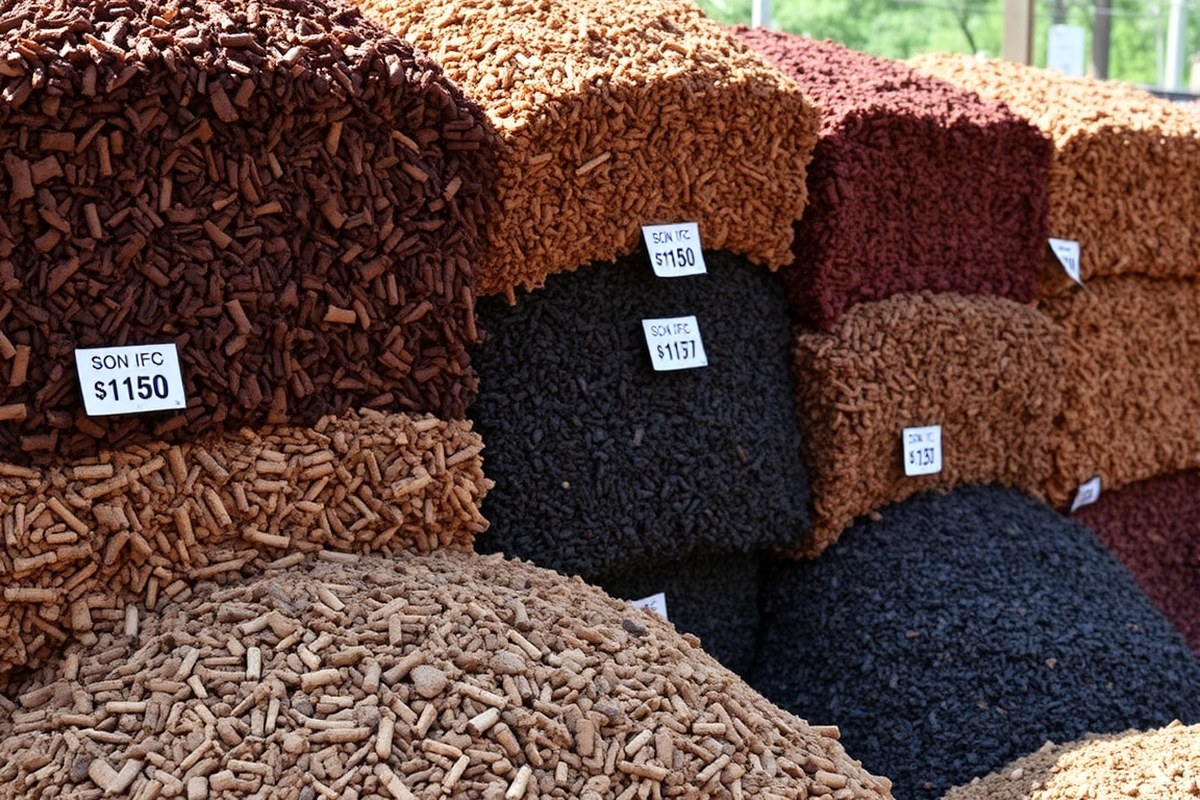
Three yards of mulch usually costs $70 to $150 per yard. This price includes professional installation. The total price depends on your location and supplier.
This price includes material, delivery, and spreading. Buying bulk mulch and spreading it yourself can save money. But delivery fees usually add another $40 to $100 to your total.
Mulch cost varies by material type and whether you buy bulk or bagged mulch. Bagged mulch runs higher since you pay for packaging and convenience. Buying bagged mulch for three yards costs $120 to $330.
Price varies by the mulch type and how many bags you buy. Higher quality mulch usually costs more. Bulk mulch ranges from about $25 to $75 per yard for materials before delivery and installation.
| Mulch Type | Bulk Cost (Per Cubic Yard) | Bagged Equivalent (Per 2 cu ft bag) | Best Use |
|---|---|---|---|
| Shredded Hardwood (Natural) | $30, $45 | $3.50, $4.50 | General garden beds, slopes |
| Dyed Mulch (Black/Brown/Red) | $35, $55 | $4.00, $5.50 | High-visibility curb appeal |
| Pine Bark Nuggets | $40, $60 | $4.50, $6.00 | Flat beds, acid-loving plants |
| Cedar Mulch | $50, $75 | $5.50, $7.50 | Pest deterrent, long-lasting |
Shredded hardwood bulk mulch costs about $35 per yard. For three yards, expect to pay around $105 for the material. This is a common affordable choice.
Add delivery of $60. The total rises to $165 if you spread it yourself. Hiring a pro to deliver and install mulch costs between $300 and $450.
This price includes both the mulch and the installation. Prices can vary depending on location.
Delivery costs stay flat for loads up to about 10 yards. So ordering 3 yards means the fee spreads over fewer units. Installation charges commonly run from $70 to $150 each yard.
Your final cost depends on the mulch type and transport distance. It also matters if you pay for professional spreading. Each factor can change the total price.
How Much Area Does 3 Yards of Mulch Cover at Standard Depths?
Three cubic yards of mulch covers 486 to 324 square feet. Coverage depends on how deep you spread the mulch. Thicker layers cover less area.
Mulching at 2 inches deep covers more ground but may need topping up sooner. A 3-inch mulch layer controls weeds well and helps soil health.
It covers less space but provides more protection. This depth is ideal for long-lasting coverage.
Calculating Coverage at 2 Inches Deep
One cubic yard of mulch at 2 inches deep covers around 162 square feet. Using 3 cubic yards covers about 486 square feet. This depth refreshes beds without harming plants.
You can double-check this by using a simple formula. Multiply your bed’s square footage by the mulch depth in inches. Then divide that number by 324 to find cubic yards needed.
Remember, thicker mulch layers reduce coverage area but improve weed control.
Measuring Your Garden Beds Accurately
Start by measuring your bed’s length and width in feet. Multiply these numbers to get the square footage. For circle beds, measure the diameter and divide by 2 for radius.
Then square the radius and multiply by pi (around 3.14). This gives the area size.14).
Here is a step-by-step guide to measure your garden beds for mulch:
- Use a tape measure for length and width in feet
- Calculate area: length × width for rectangles or radius² × 3.14 for circles
- Add areas if your bed has multiple sections
- Convert total area to square feet, if needed
- Decide your mulch depth in inches
- Use the formula: cubic yards = (square feet × depth) ÷ 324
Recommended Mulch Depths for Different Applications
For new beds, 3 inches of mulch is the usual recommendation. It helps block weeds and retains moisture. This depth covers about 108 square feet per cubic yard.
For a light refresh, apply mulch at 1 to 2 inches deep. This extends coverage but offers less weed control. Paths and heavy-duty beds may need layers up to 4 or 6 inches deep.
Remember, too thick a layer (more than 6 inches) can suffocate roots and cause decay. Keep mulch thin near tree trunks or sensitive plants. Adjust depth based on your garden’s needs for best results.
Types of Mulch and How They Affect Cost and Coverage
Mulch types differ in price. They also last different amounts of time. Coverage area changes by type too.
Knowing these differences helps you pick the best one for your garden needs and budget. Organic mulches like shredded hardwood break down faster but improve soil health. Inorganic mulches last longer but usually cost more.
Here’s a table listing common mulch options. It shows price range, lifespan, and coverage depth.
It also lists pros and cons. This helps you compare what fits your garden best and your wallet.
| Mulch Type | Price per Cubic Yard | Typical Lifespan | Best Coverage Depth | Pros | Cons |
|---|---|---|---|---|---|
| Shredded Hardwood | $30, $45 | 1, 2 years | 2, 3 inches | Looks neat, stays put | Can tie up nitrogen if mixed into soil |
| Pine Bark Nuggets | $40, $60 | 2, 3 years | 2, 3 inches | Slow to break down | Can float in heavy rain or on slopes |
| Cedar or Cypress | $50, $80 | 2, 4 years | 2, 3 inches | Long-lasting, natural scent | More expensive |
| Dyed Mulch (black, red, brown) | $35, $55 | 1, 2 years | 2, 3 inches | Color adds appeal | Color fades faster than organic mulches |
| Wood Chips/Arborist Chips | $15, $30 (often free) | 1 year | 2 inches or more | Cheap, good for natural areas | Rough look, not great for flower beds |
| Straw or Pine Needles | $30, $40 | Short | 2, 3 inches | Feeds soil, good for veggie beds | Lighter mulch, blows away easily |
Organic mulches like shredded hardwood break down in one to three years. They also help improve the soil. They usually cover well at about 2 to 3 inches depth.
Inorganic options or dyed mulches cost more and last longer but don’t add nutrients. Mulches with bigger chunks cover the area less tightly. They can wash away more easily on slopes.
Consider how long you want your mulch to last before you buy. Choose mulch that lasts 3 to 4 years, like cedar, to cut down on work. For quick soil improvement, shredded leaves or straw work but need replacing faster.
Depth matters too: deeper layers weigh more and cover better but cost more. Plan for your landscape’s slope, rainfall, and plant needs when picking type and amount.
- Shredded hardwood: neat look, mid-price, medium lifespan
- Bark nuggets: long-lasting, can wash off slopes
- Cedar/cypress: pricey, insect-repellent, long-lasting
- Dyed mulches: good color, fades over 1, 2 years
- Wood chips: very cheap or free, rough, short term
- Straw/pine needles: light, feeds soil, quick to decompose
Bulk Mulch vs Bagged Mulch: Which Is Better for 3 Yards?
Bulk mulch usually costs less per volume and reduces waste compared to bagged mulch. Three cubic yards equals about 40 bags of 2-cubic-foot mulch.
Bulk works best for larger projects, while bags fit smaller jobs or tight spots. Knowing these differences helps you pick the right option for your 3-yard mulch project.
Calculating Bag Count for 3 Yards
One cubic yard equals 27 cubic feet. Since mulch bags typically hold 2 cubic feet, 3 yards equal 81 cubic feet.
Dividing 81 by 2 gives you 40.5. So you need about 41 bags for 3 cubic yards of mulch.
Some mulch bags hold less or more than 2 cubic feet. Always check the bag size on the package before buying. Use this quick formula:
- Multiply yards by 27 (to get cubic feet)
- Divide cubic feet by bag size
- Round up to the nearest full bag
Ordering a few extra bags can cover settling or uneven spreading.
Cost and Volume Comparison
Bagged mulch typically costs $3 to $8 per 2-cubic-foot bag. For 3 yards, you pay roughly 40 bags times that price. Bulk mulch averages 35% to 40% cheaper per cubic yard than bagged mulch.
Keep in mind delivery fees for bulk mulch can add $40 to $100. Divide this fee by your total cubic yards first. Add the result to the bulk price.
This way, you can fairly compare it with bag prices. Bulk mulch usually saves you money and cuts down on plastic waste.
Labor and Application Considerations
Moving 40 bags to your planting beds takes time and effort. You may make multiple trips to carry all the bags. Bulk mulch delivery drops the material near your garden, saving physical labor.
Spreading mulch yourself takes longer with bagged mulch. You have to handle each bag one by one.
Bulk mulch requires tools like a wheelbarrow and rake but is faster overall. Hiring professionals to spread three cubic yards adds $75, $150 to your cost.
When to Choose Bulk over Bagged
Buy bulk mulch for 3 yards or more to save money and reduce waste. Bulk is best if your beds cover a wide area and you want fewer trips. Bagged mulch works better in small, tight spaces or for minor touch-ups.
Consider these points to decide:
- Order size of 3 yards or more favors bulk to save money
- Delivery fees make bulk less attractive for smaller orders
- Limited access or small garden beds suit bagged mulch
- Bulk reduces plastic waste and handling time
- Buy extra bags if using bagged mulch to cover uneven spots
Choose bulk mulch for big projects and bagged mulch for small, quick jobs.
Delivery and Installation Costs Impacting Your Mulch Budget
Delivery fees for 3 yards of mulch usually fall between $70 and $140 per trip. This flat fee stays pretty steady whether you order 1 or 10 yards. For 3 yards, expect a delivery charge around $80 to $100.
Professional installation covers spreading mulch evenly around your plants. This service costs roughly $70 to $150 per cubic yard, including material and delivery. For 3 yards, expect to pay about $210 to $450 total.
This includes delivery and spreading by pros. Prices vary by location and mulch type.
Here’s a quick pricing snapshot: ordering 3 yards at $40 per yard costs $120. Add a delivery fee of $90 and professional installation at $100 per yard, or $300. The total delivered and installed cost runs approximately $510.
Some yards waive delivery fees when you buy over 10 yards. But that often comes with a higher price per yard. This means ordering just 3 yards won’t qualify for free delivery.
You can save money by picking up the mulch yourself. Make sure you have a strong truck and trailer. This avoids delivery fees.
Hiring pros saves you heavy lifting and ensures mulch spreads correctly. This is good if you want uniform coverage and proper plant protection. DIY installation costs less but takes several hours and needs a wheelbarrow, rake, and physical effort.
Delivery surcharges vary by distance and supplier. To cut delivery costs, group your mulch order with neighbors or local projects. Also, ordering from yards close to your home keeps the delivery fee on the lower side.
Check any free delivery offers closely. Sometimes higher per-yard prices mean more total cost. Don’t get fooled by the fine print.
How to Calculate Exactly How Much Mulch You Need
- Measure the length and width of your planting bed in feet.
- Multiply length by width to find the square footage (ft²) of the bed.
- Decide the mulch depth in inches, usually 2 to 3 inches for best plant health.
- Convert the depth into feet by dividing the inches by 12 (e.g., 3 inches ÷ 12 = 0.25 feet).
- Multiply the bed’s square feet by the mulch depth in feet. This gives you cubic feet of mulch.
- Divide the cubic feet by 27. One cubic yard equals 27 cubic feet.
- Round up if you want extra mulch for settling or slight miscalculations.
- For irregular shapes, break the bed into rectangles or circles. Find each area, then add them up.
Start by measuring your bed’s length and width in feet. Multiplying gives you the total square footage. For instance, a bed 10 feet long and 5 feet wide covers 50 square feet.
Next, pick your mulch depth; 3 inches is a common choice. This depth protects roots and retains moisture well. Convert those 3 inches to feet by dividing by 12, which equals 0.25 feet.
Now multiply the 50 square feet by 0.25 feet depth. You get 12.5 cubic feet of mulch needed.
Divide this by 27 to convert to cubic yards. So, 12.5 ÷ 27 = about 0.46 cubic yards.
Use this method for any bed size. Break complex shapes into smaller ones: rectangles, circles, or triangles.
Calculate each part’s volume, then add them together. This approach avoids underbuying or wasting mulch.
Picking the right depth matters. Too thin, and weeds grow through.
Too thick, and plants suffocate or water won’t soak in. Most homeowners stick to 2 to 3 inches, which balances protection with airflow.
Rounding up by about 10-15% covers settling and spreading after delivery. For example, if your calculation says 0.46 cubic yards, buying 0.5 or 0.6 is safer than ordering exactly 0.46.
A standard pickup truck holds about 2 to 3 cubic yards of mulch when loaded evenly. This lets you figure out how much mulch you can carry yourself. Delivery is an option if you prefer.
Applying 3 Yards of Mulch Correctly to Protect Plants
Spread mulch about 3 inches deep to protect plants and soil well. Keep mulch 3 to 6 inches away from tree trunks to avoid damage. Use proper tools and water timing to make applying 3 yards of mulch smooth and safe.
Recommended Mulch Depths
A 3-inch mulch layer works best for garden beds. It helps stop weeds and hold water. This thickness is ideal for plants to thrive.
Fine mulch needs 1 to 2 inches. Coarse mulch is better at 3 to 4 inches deep.
Too much mulch can stop water from reaching roots. So keep an eye on the depth.
Young seedlings and small plants need less, about 1 inch of mulch around them. Add 1 to 2 inches of fresh mulch each year to keep the layer healthy. Check mulch depth regularly so it doesn’t get too thick near plants.
Avoiding Volcano Mulching
Keep mulch several inches away from tree trunks and plant stems to prevent rot and pests. Mulch piled against trunks traps moisture, which can hurt the tree’s health. Maintaining a 3 to 6 inch gap helps roots breathe and avoids bark damage.
Don’t pile mulch higher around stems to form a “volcano” shape. This mistake can kill trees over time. Spread mulch flat and smooth to protect plants without causing harm.
Tools for Efficient Application
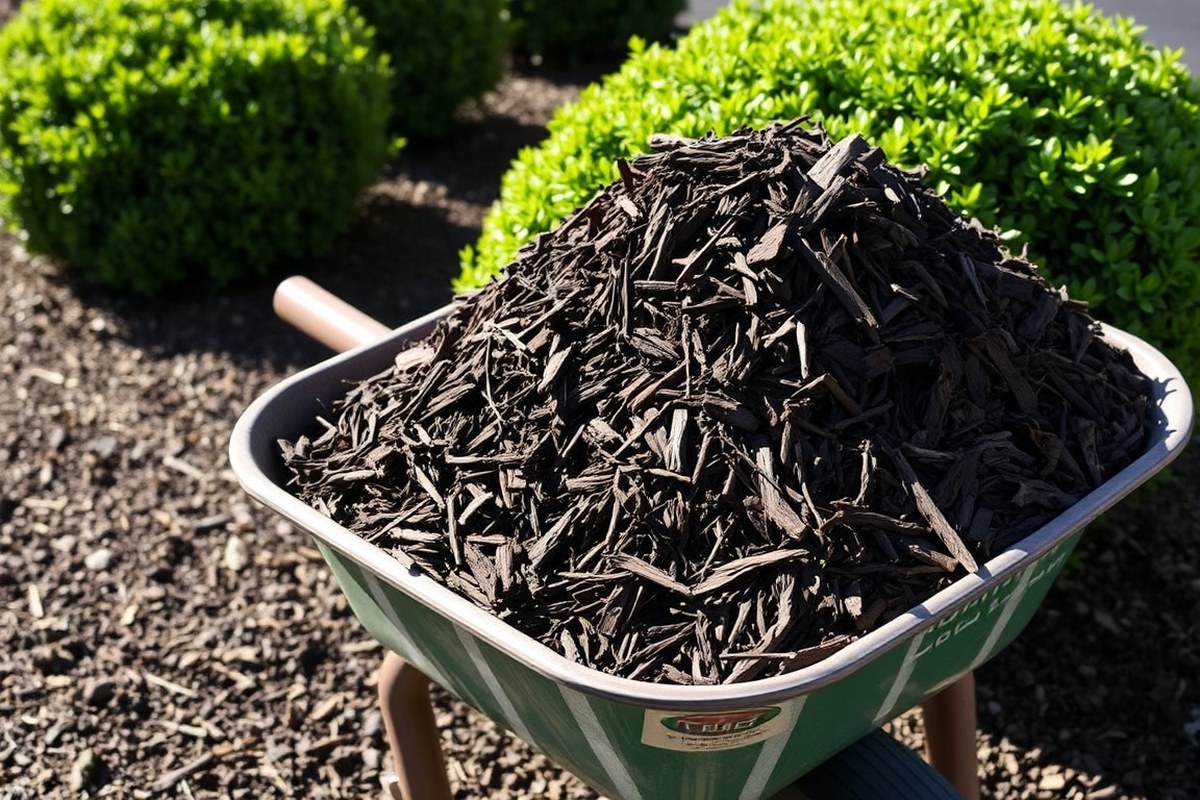
Having the right tools makes spreading mulch easier and neater. Use a wheelbarrow to carry mulch close to planting areas. A garden rake helps spread mulch evenly and taper it near stems.
A shovel or pitchfork works well for moving mulch from piles or bags to beds. Gloves protect your hands from splinters and dirt.
- Wheelbarrow for transporting mulch
- Garden rake to spread mulch evenly
- Shovel or pitchfork for moving mulch
- Gardening gloves for hand protection
- Measuring tape to check mulch depth
Applying 2 to 3 cubic yards of mulch usually takes about one hour. Gardeners use these tools to spread it effectively. This amount covers most home garden beds well.
Watering Tips Before and After
Water the soil before mulching if it’s dry. This helps mulch settle and roots get moisture early. Avoid watering mulch directly as it can wash it away or cause mold.
After spreading, wait a few days before watering again unless plants look dry. Mulch holds moisture well, reducing watering needs. Check soil moisture under mulch weekly to keep plants healthy.
When to Call a Professional for Mulch Installation
Use a pro for about 3 yards of mulch in tough spots. Areas over 800 square feet at 3-inch depth also need help. This can save you time and hassle.
Professionals usually charge between $25 and $50 per cubic yard just for spreading. Slopes, lots of plants, or tight spots slow you down. Experts handle these faster and avoid common mistakes.
DIY mulch can cost about $55, mainly for materials. Inorganic mulch types usually cost less. This option can save you money upfront.
Renting tools and your time add to the cost. Pros charge $70 to $150 per yard with installation included. This price covers the full service easy.
For 3 yards, you might pay $210 to $450 to hire someone, plus any delivery fees. Doing it yourself saves money but can take many hours.
Terrain and your skill level affect how long it takes. Some jobs may last a full day.
| DIY | Professional | |
|---|---|---|
| Cost | About $55+ materials | $70 to $150 per yard installed |
| Time | Several hours or more | 1 to 3 hours for 3 yards |
| Quality | Depends on skill | More even coverage, less plant damage |
| Tools needed | Wheelbarrow, rake | Specialized spreaders, blowers |
Professionals often include extra services like debris clearing, weed control, or soil preparation. These can improve mulch performance and plant health. Mulch blowing costs between $38 and $60 per cubic yard.
It’s great for spreading mulch in hard-to-reach spots. Many pros offer this service for tough jobs.
To find good installers, check reviews on local landscaping sites and ask neighbors for recommendations. Get clear quotes with all fees listed before agreeing.
Cheap mulch job may cost more later on. You might redo it due to uneven mulch or harming plants. Poor work can mean more expenses and time.
Step-by-Step Action Plan for Using 3 Yards of Mulch
Follow this plan to buy, apply, and care for mulch efficiently. It helps you get the best value and protects your plants well.
- Before You Buy: Measure your planting area carefully to match about 3 yards of mulch. Use a tape measure to get length, width, and depth for accuracy.
- Day 1: Choose the right mulch type based on your budget and garden needs. Check prices for bulk and bagged options near you.
- Day 2: Arrange delivery or pickup. Confirm costs and timing to avoid delays on mulch day.
- Day 3: Prepare the area by clearing debris and weeds. This helps mulch lay smoothly and last longer.
- Day 4: Spread mulch evenly at 2 to 3 inches depth. Use a rake to avoid piles that block water or air to roots.
- After 1 Week: Check mulch for signs of settling or bare spots. Add more if plant roots show through.
- After 1 Month: Water the mulch lightly to help it settle and support plant health.
- After 3 Months: Inspect mulch for decomposition or compaction. Plan to refresh or replace as needed to maintain benefits.
Frequently Asked Questions
How Much Mulch Fits in a Standard Pickup Truck Bed?
A pickup truck bed usually holds about 2 to 3 cubic yards of mulch. This amount fits well with a typical garden mulch job size or small landscaping project.
Can Mulching Too Thick Harm Plants?
Yes, mulch that’s too thick can cause moisture buildup and rot roots. Aim for about 2 to 3 inches thick to protect plants and soil.
What Is the Best Mulch Depth for Weed Control?
A 3-inch mulch layer is generally best for controlling most weeds. This depth stops sunlight, reducing weed germination effectively.
How Long Does 3 Yards of Mulch Last?
Mulch lasts about 1 to 2 years depending on the type and conditions. Organic mulches break down faster, requiring more frequent replenishment.
Can You Return Leftover Mulch?
Some suppliers accept returns, but many don’t due to contamination risks. Check your supplier’s return policy before buying extra mulch.
Is Dyed Mulch Safe for Edible Gardens?
Dyed mulches with non-toxic colorants are generally safe around vegetables. Still, confirm product specifics before use in edible areas.
Wrapping Up
Three yards of mulch covers a good garden space at a standard layer. The cost depends on the mulch type and delivery option.
Calculate your area well before buying to avoid waste or shortage. Buy your mulch soon and start your garden project with confidence.