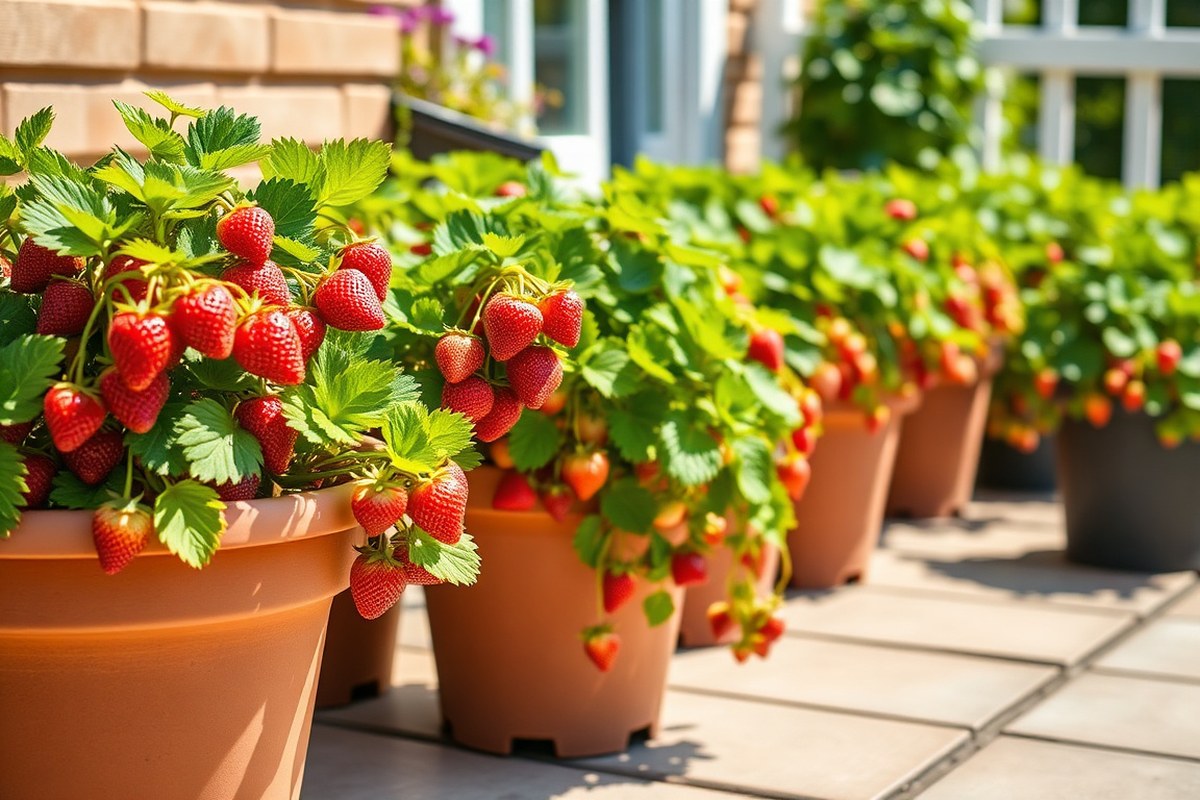
How to Plant Strawberry Plants in Pots with Simple Steps for Better Harvests
Knowing how to plant strawberry plants in pots starts with picking the right container and soil. You want a pot that’s at least 8 inches deep with good drainage holes. Use quality potting soil mixed with compost to keep roots healthy and moist.
Plant your strawberries about 12 to 18 inches apart in the pot to give runners room. Place the pot where it gets six to ten hours of sunlight every day. Water right after planting.
Let roots settle for two weeks. Don’t move or hang the pot until then.
Plant strawberry pots between late March and April for the best start. Avoid overwatering, which can cause root rot. Healthy roots mean better berry harvests in your container garden.
Key Takeaways
- Choose pots at least 8 inches deep with drainage holes for healthy roots.
- Use potting soil mixed with compost to maintain moisture and nutrients.
- Space strawberry plants 12 to 18 inches apart for proper runner growth.
- Place pots where they receive 6 to 10 hours of sunlight daily.
- Water plants immediately after planting, then let roots settle for two weeks.
- Plant strawberries in containers between late March and early April.
How to Plant Strawberry Plants Correctly in Pots
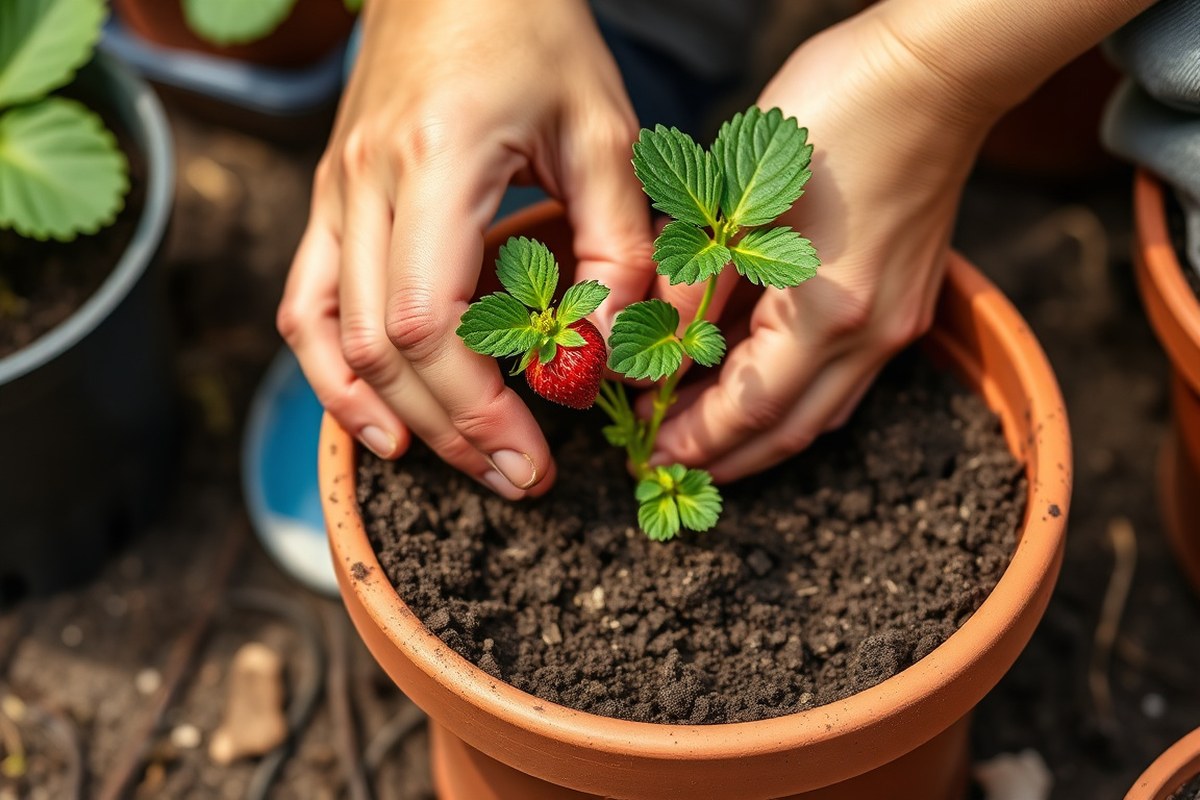
- Choose young, healthy strawberry plants with strong roots and green leaves. Pick one or two plants per pot to avoid overcrowding and ensure good airflow.
- Fill your pot with a well-draining soil mix rich in organic compost. Aim for a mix that stays moist but does not stay soggy to prevent root rot.
- Make a small hole in the soil deep enough for the roots. Keep the crown above the soil level. Cover the roots gently with soil. Avoid burying the crown to stop rotting.
- Place the strawberry plant gently in the hole, spreading out the roots carefully. Position plants evenly to allow space for runners and air circulation.
- Fill in soil around the roots, pressing lightly to remove air pockets without compacting too much. Healthy roots need loose soil to grow well.
- Water the pot thoroughly right after planting, aiming to wet the soil but not flood it. This settles the soil and helps plants start growing.
- Set the pot where strawberries get at least 6 hours of sunlight daily. Bright, warm spots will boost flowering and fruit production.
- Watch the soil moisture, especially near the surface. Keep the soil evenly damp through the growing season. Check often to avoid drying out. Too dry or soggy soil slows growth.
Strawberries prefer soil that drains well but holds some moisture. A compost-rich mix helps feed them as they grow. Avoid heavy soils that trap water and harm roots.
One or two plants fit best in small to medium pots. Crowding stops good airflow and increases disease risks. Position them spaced evenly, not too close to the pot’s edge.
After planting, watering well starts root growth quickly. Don’t overwater; soggy soil can cause root diseases. Check the soil daily, especially when pots are sunny and warm.
Choosing the Best Pots and Soil for Strawberries
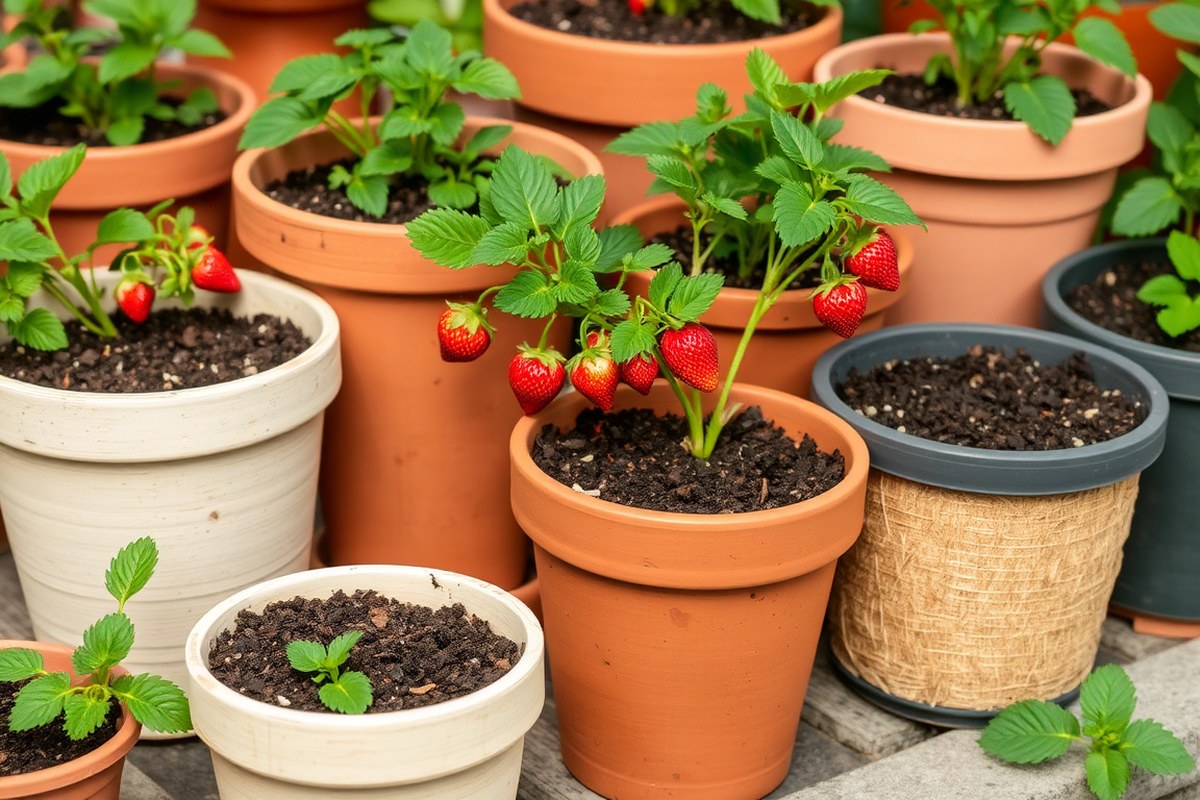
Strawberries do best in pots that hold at least 12 inches wide and deep. This size lets roots spread without crowding, which keeps berries healthy and sweet.
You can fit about 3 plants safely in one 12-inch pot. Smaller pots tend to dry out fast and limit root growth.
Pot material affects soil moisture and root temperature. Plastic pots hold moisture longer but may trap heat, which can stress roots on hot days. Clay or terracotta pots breathe better but dry out quickly and need more watering.
Coir pots are a natural option that balances airflow and moisture well. They’re handy for strawberries because they keep roots cooler without drying too fast.
| Pot Type | Material Traits | Drainage | Moisture Retention | Root Temperature Impact | Ideal Use |
|---|---|---|---|---|---|
| Plastic | Lightweight, heat-retentive | Good | High | Can get too warm in dark colors | Larger pots in cooler areas |
| Clay/Terracotta | Porous, heavy | Excellent | Low | Keeps roots cool but dries fast | Dry climates, experienced gardeners |
| Coir Pots | Organic, breathable | Good, natural drainage | Moderate | Keeps roots stable temperature | Seedlings, small plants, organic gardens |
| Hanging Bags | Fabric/plastic mix | Good | Moderate | Potential heat if exposed | Small spaces, patios |
The right soil balances drainage and moisture. Choose a mix with peat or coconut coir. It keeps water near roots.
It also drains well. Avoid soil that stays soggy; it invites root rot. Adding perlite or vermiculite improves drainage without drying out soil too fast.
Space out plants about 12 to 18 inches apart in the pot. Overcrowding reduces berry size and quantity.
Keep no more than 3 strawberry plants per square foot of soil. This gives roots enough air and room for nutrients.
Don’t use dark-colored pots in full sun; roots can overheat and damage strawberries.
Coir pots come in various sizes, great for starting seeds or moving small plants. As young strawberries grow, move them to larger pots with better soil.
This way, roots stay healthy and plants produce more fruit. Remember, raised beds or containers with good drainage also help when space is tight.
Watering and Feeding Strawberry Plants in Containers
Water your strawberry plants at their base, using a soaker hose or drip irrigation. This keeps the leaves dry and helps prevent diseases.
Water enough to soak the soil about 1 to 2 inches deep. But avoid letting the soil sit soggy.
Check the soil every day, especially when it’s hot or dry. Container soil dries faster than garden soil. So you might need to water daily in summer.
Water when the top inch of soil feels dry. But don’t let your pots stay dry for too long.
Strawberries need a balanced fertilizer with equal parts nitrogen, phosphorus, and potassium, such as 10-10-10. Fertilize once in early spring, before new growth starts. Then, feed again after you harvest the first batch to help your plants produce more berries.
Slow-release fertilizers mixed into the soil before planting work well. For feeding later, dilute liquid fertilizer to half strength. Use it every three weeks during the growing season.
This helps avoid overfeeding your strawberries. Too much fertilizer can cause lots of leaves but fewer fruits.
After harvesting, give your plants another dose of fertilizer to encourage a second crop. Use the same balanced formula and water it in well. Feeding now helps the plants store energy for the next season and keeps them healthy.
Overwatering is a common problem in containers. It leads to root rot and wilted leaves. Make sure your pots have good drainage holes.
Remove extra water from saucers under the pots. This prevents water from sitting too long.
Underwatering shows up as drooping leaves and slow growth. When the leaves look dry and soil is dry past one inch, water thoroughly. This helps your plants get enough moisture.
Check your pots mid-afternoon. When the soil feels dry, water your plant with about half a gallon. This amount fits a 6-inch pot well.
During hot weather, lightly mist the leaves to cool the plants. But only after you’ve watered the soil well.
This helps prevent heat stress. Remember, keeping soil moisture steady is key to healthy, fruitful container strawberries.
Managing Runners, Pruning, and Plant Health in Pots
You need to keep runners under control in pots because space is limited. Pruning dead leaves helps the strawberry plant focus on healthier growth. Watching for stress signs lets you fix problems early and avoid diseases.
Identifying Runners and When to Remove Them
Runners are the long stems strawberries send out to produce new plants. In pots, runners compete for space and nutrients, which can reduce berry size and yield. Removing runners keeps the plant’s energy focused on fruiting instead of spreading.
Cut off runners as soon as you see them stretching toward the pot edge. This stops the plant from sending resources to new plants. It can’t support those new plants in small spaces.
Limited space means focusing energy on the main plant. You can let one runner grow if you want a new plant.
Use another container to root the new runner plant. This helps you start a fresh strawberry plant.
- Check your pots every week for runner growth during the growing season.
- Snip runners with clean scissors when they grow longer than 2 inches.
- Remove all runners unless you want to start a new plant.
- Plant any desired runners in separate pots about 6 inches deep.
- Discard runners you don’t want to keep to prevent crowding.
Pruning Dead or Excess Leaves
Pruning helps the plant grow better by removing dead or too many leaves. Dead leaves block light and reduce airflow, which increases mold and disease risk. Proper pruning lets air circulate and lets you spot problems faster.
Use clean scissors or your fingers to prune leaves that are brown, yellow, or wilted. Also, thin out dense leaf clusters to improve airflow, especially in humid conditions. Avoid removing too many leaves since the plant needs leaves to produce energy.
Monitoring Health and Signs of Stress
Look for wilting, discoloration, or leaf spots to catch stress or illness early. Mold or powdery patches warn of fungal diseases. Poor airflow or too much moisture cause these problems.
Watch for these signs to protect your plants early. Brown edges on leaves can mean the plant is drying out or getting too much sun.
Adjust watering if the soil feels soggy or dry. Move pots to a spot with better air circulation or morning sun to reduce humidity. Remove any pest-infested or diseased leaves immediately to stop spread within the container.
Protecting Potted Strawberries from Pests and Diseases
Slugs, vine weevils, and birds often cause problems for strawberries in pots. Slugs chew holes in leaves and fruit, while vine weevils target roots and stems. Birds love to peck at ripe berries, sometimes ruining your harvest before you pick.
Use nematode treatments like Nemaslug Slug Killer to control slugs. Nemasys Vine Weevil Killer works well for vine weevils, too. These treatments target pests effectively.
These are safe for edible plants and work by infecting the pests underground. Apply nematodes when soil temperature is above 50°F. Keep the soil moist for a week after. This helps the treatment work better.
This treatment usually costs about $15 to $25 each time. Repeat it every six weeks during wet weather. That keeps pests under control.
Birds can be stopped using lightweight netting secured firmly around the pot. Make sure the netting has small enough holes so birds can’t get through. Put your strawberry pots in a sheltered spot to protect them.
This reduces bird visits but still lets sunlight in. It’s a simple way to keep birds away.
Fungal diseases like powdery mildew and gray mold often develop in humid, poorly ventilated areas. Water your strawberries early in the day at the base. This lets leaves dry before night comes.
Wet leaves overnight can cause problems. Good air flow around the pots lowers humidity and helps prevent these fungal problems.
Organic pest control methods include handpicking slugs and eggs early in the morning. You can also spread crushed eggshells or coffee grounds around pots to deter slugs. Using insecticidal soap sprays helps control aphids and small pests without harming your fruit.
Slug and weevil killers work best when applied before you see obvious damage. Start early in spring as the pests become active.
Monitor plants closely during damp periods since these pests thrive then. Repeat treatments may be needed depending on weather and pest pressure.
Keep an eye out for black spots or fuzzy gray patches on leaves. These signs mean fungal disease is setting in. Removing affected leaves quickly reduces spread.
Use diluted neem oil as a natural fungicide every 7 to 10 days. This helps to stop mold from growing on your plants. It’s a safe treatment method.
Check under leaves every few days for tiny pest eggs or damage to catch problems early.
How to Harvest and Extend the Life of Strawberry Pots
Strawberries need to be picked at the right time to taste their best. Handle them gently to avoid hurting the plants or fruit. After peak harvest, giving plants some care can help them produce more next year.
Recognizing Ripe Strawberries
Strawberries are ready to pick when they turn fully red and give off a sweet smell. Look closely to spot berries that are deep red all over, not just on one side. Touch them lightly to check if they feel firm but not hard.
Often, strawberries that are partially white or green aren’t ripe yet. Picking too early stops them from reaching full flavour. Wait for the strong fragrance as a final sign of ripeness.
Harvesting Techniques to Protect Plants
Picking strawberries with care stops any harm to your plants. Always hold the berry gently and pinch the stem right above the fruit. Avoid pulling or tugging on the plant itself.
Grab berries with your thumb and forefinger. Twist gently to detach the fruit without damaging leaves or stems. Place harvested berries in a shallow container to keep them from squishing.
Here are simple steps to pick strawberries without hurting your plants:
- Look for fully red, fragrant strawberries.
- Hold the berry softly between thumb and forefinger.
- Pinch the stem just above the berry.
- Twist the fruit gently to remove it.
- Drop berries into a shallow basket or tray.
- Skip any green or white berries.
- Check plants regularly, ideally every 2 or 3 days.
Rejuvenation and Seasonal Care
Strawberries in pots usually produce well for about 2 to 3 years. After the main harvest, feed them with a balanced fertilizer to help recovery. This encourages new leaves and flower bud formation for next season.
Cut back old, tired leaves after fruiting stops. This clears space for fresh growth and keeps plants healthy. Also, remove runners if you want to focus energy on fruit production.
At season’s end, you can separate new baby plants from the main clump. Pot them on individually for next year. Keep pots in a cool, sheltered spot during winter.
Fertilize them lightly in fall to support growth. This helps the plants stay healthy through the cold months.
Winter Care and Preparing Strawberry Pots for Dormancy
Strawberries in pots can survive winter if you protect their roots properly. In mild climates, put pots near a house wall. The wall’s heat helps keep roots warm.
It stops roots from freezing when it’s cold. For colder areas, you need extra steps like mulching to prevent root freeze and soggy soil.
After the last harvest, cut back old and yellow leaves to prepare plants for dormancy. This keeps your strawberry pots neat and healthy before winter. Avoid heavy feeding this late season, since the plants slow down naturally as temperatures drop.
Move your pots to a sheltered spot in freezing weather. This is important when temperatures drop below 28°F (-2°C). A garage, unheated basement, or covered porch works well.
Make sure the area has some light and does not stay too damp. Keeping drainage holes clear prevents waterlogged roots from rotting.
Mulching outside each pot helps if you can’t bring them indoors. Use straw, pine needles, or a copper-impregnated strawberry mulch mat around the base.
This blocks weeds, keeps soil temperature stable, and repels slugs. A 2 to 3 inch layer of mulch is best to protect roots without suffocating.
Keep watering minimal through winter. Roots still need some moisture but avoid soggy soil by letting pots dry slightly between checks.
Frozen soaked soil damages roots faster than dry freeze. Check pots every two weeks and add just enough water to slightly moisten the surface.
Spring care starts once daytime temps are consistently above 50°F (10°C). Remove any mulch and old leaves to encourage fresh growth.
Gradually increase watering and begin feeding with a balanced fertilizer to help plants wake from dormancy. This routine supports a healthy season with good fruit.
Growing Strawberries Indoors and Handling New Plants
Strawberries can grow well indoors if you give them enough light and proper care. Position pots where sunlight lasts at least six hours daily. Handle new plants gently and adjust soil and watering to avoid indoor problems.
Setting Up Indoor Strawberry Pots
Place your strawberry pots near a south- or west-facing window for the best light. These spots give the plants bright, indirect sunlight for six to eight hours a day. Avoid dark corners or spots where heat from radiators dries the soil too fast.
Use lightweight pots with good drainage holes to stop water buildup. Make sure drainage trays catch extra water to protect surfaces indoors. Fresh potting soil with added perlite or sand improves drainage and helps roots breathe.
Caring for Newly Arrived Strawberry Plants
Unpack plants carefully to prevent root damage and check soil moisture right away. Water lightly if the soil feels dry, but don’t soak the roots at first.
Keep the plant in shade for one or two days. This helps it adjust before moving to full light.
Trim any yellow or dead leaves to encourage healthy growth. Avoid fertilizing immediately; wait about two weeks to let roots settle in.
Raise humidity nearby by misting or placing a water tray under the pot. Do this when the plant looks weak.
Don’t plant strawberries directly into dry soil, moistening first helps roots take hold.
Managing Indoor Watering and Humidity
Water strawberries just enough to keep the soil moist, not soggy. Indoor air dries soil slower than outdoors, so check soil moisture every few days. Stick your finger about an inch deep to see if watering is needed.
Raise humidity with a small humidifier or water-filled tray near plants. This reduces leaf dry-out and prevents fungal diseases that thrive on stagnant air. Good air circulation helps but avoid drafty areas that stress strawberry leaves.
Watch for mold or gray spots; they indicate too much moisture or poor airflow. Cut back watering frequency if you spot these issues. Adjustments depend on indoor temperature, usually between 65 and 75 degrees Fahrenheit for strawberries.
Step-by-Step Action Plan for Your Strawberry Pots
Follow these steps to get your strawberry plants growing strong in pots. Each step helps you check success before moving on.
- Before you start: Choose a pot with good drainage and use fresh, well-draining potting soil. The soil should stay moist but not soggy.
- Day 1: Plant your strawberry plants so the crown is just above soil level. Check the plants sit firmly and roots are spread out.
- Day 2 to 7: Water daily to keep the soil lightly moist. Leaves should stay fresh, and soil should not dry out.
- Week 2: Begin feeding your plants with a balanced liquid fertilizer every two weeks. Watch for healthy green leaves and new growth.
- Week 3 to 4: Remove any runners you see to focus the plant’s energy on fruit. The plant will put energy into berry development instead.
- After 6 weeks: Check for signs of pests or disease such as spots or holes. Treat early with mild insecticidal soap if needed.
- First harvest: Pick ripe strawberries gently as they turn fully red. Harvest in the morning for the best flavor and freshness.
- After harvest season: Cut off all dead leaves from your plants. Move pots indoors or wrap them outside to protect in winter. Your plants will rest and prepare for next year.
Frequently Asked Questions
What Is the Trick to Growing Strawberries?
The trick is keeping strawberry plants well-watered and in good soil. You also need to prune runners and protect the plants from pests regularly.
Do Strawberries Do Better in the Ground or in Pots?
Strawberries can do just as well in pots if cared for properly. Container roots get warmer, so watch moisture and feed them well for good growth.
Will Strawberries Planted in Pots Come Back Every Year?
Yes, strawberry plants are perennials and come back yearly with the right care. Make sure to provide winter protection and refresh soil every few years.
How Many Strawberry Plants Can I Plant in One Container?
Plant about three to four strawberry plants in a 12-inch pot. Crowding too many hurts growth and fruit size, so give them some space.
How to Plant Strawberry Plants in Pots?
Fill your pot with rich, well-draining soil and plant strawberries shallowly. Space plants evenly, water immediately, and place pots in full sun for best berries.
Can I Grow Strawberries from Runners in Pots?
Yes, you can root runners in pots to start new plants. Pin down runner tips in soil.
Wait until roots form. Then cut and move the new plant to its own pot.
Final Thoughts
Strawberries in pots grow best with steady care and the right container setup. Keep an eye on moisture and plant health to enjoy fresh fruit. Start your first pot today and watch your strawberry plants thrive.