Do Worms Have Organs? Clear Answers and Organ System Breakdown
Do worms have organs? Yes, they do, though their organs differ a lot from ours.
Worms have simple but important organs that handle basic life functions like movement, digestion, and breathing. These organs allow worms to live and thrive in soil, even without complex body structures.
Worm organs aren’t grouped into big, obvious parts like in humans. Instead, many organs or functions spread throughout their bodies in segments. This lets worms keep working if one part gets hurt or cut.
Most earthworms have multiple organ systems, including a circulatory system with several hearts. They use special sensory cells in their skin. These cells help them sense their surroundings.
They don’t need big eyes or ears to do this. Keeping track of these basics helps you understand worm biology better.
Key Takeaways
- Earthworms have several simple organs managing digestion, circulation, and movement.
- Worms don’t have one big heart but several blood-pumping organs along their bodies.
- Sensory cells are spread through worm skin for detecting smells and vibrations.
- Earthworm organ systems are segmented, which helps them recover from injuries.
- Worms have a clitellum, a special reproductive organ near the head.
- Regeneration lets worms regrow some body parts but not the whole worm.
Do Worms Have Organs and How Are They Defined?
Worms do have organs, but their organs are simpler than those in vertebrates. An organ is a part of an animal’s body that performs a specific task using tissues. Worm organs usually have fewer cell types than mammals’ organs.
They also have simpler structures. This happens in many worm species.
To tell if worms have an organ, check for tissues. These tissues should work together. They must perform a specific job.
Earthworms have several organs, such as hearts and a digestive tract. They also have a swollen gland called the clitellum.
These organs have different jobs. These organs have clear roles, such as pumping blood or aiding reproduction.
Unlike vertebrate organs, worm organs tend to be small and less specialized. Worm hearts, for instance, are simpler in form and function compared to human hearts. Worms have sensory cells mostly in their skin.
These cells are spread out. They don’t have big organs like eyes or ears. Some worms have small head structures called nuchal organs, which help detect chemicals in the environment.
Worm organs often form repeating units along their segmented bodies. This setup matches how their bodies are built, allowing them to survive injury better than vertebrates.
Worms can regrow lost parts because their organs and tissues are arranged in simpler segments. This health strategy suits their lifestyles but limits the complexity of their organs.
What Are the Main Organ Systems in Earthworms?
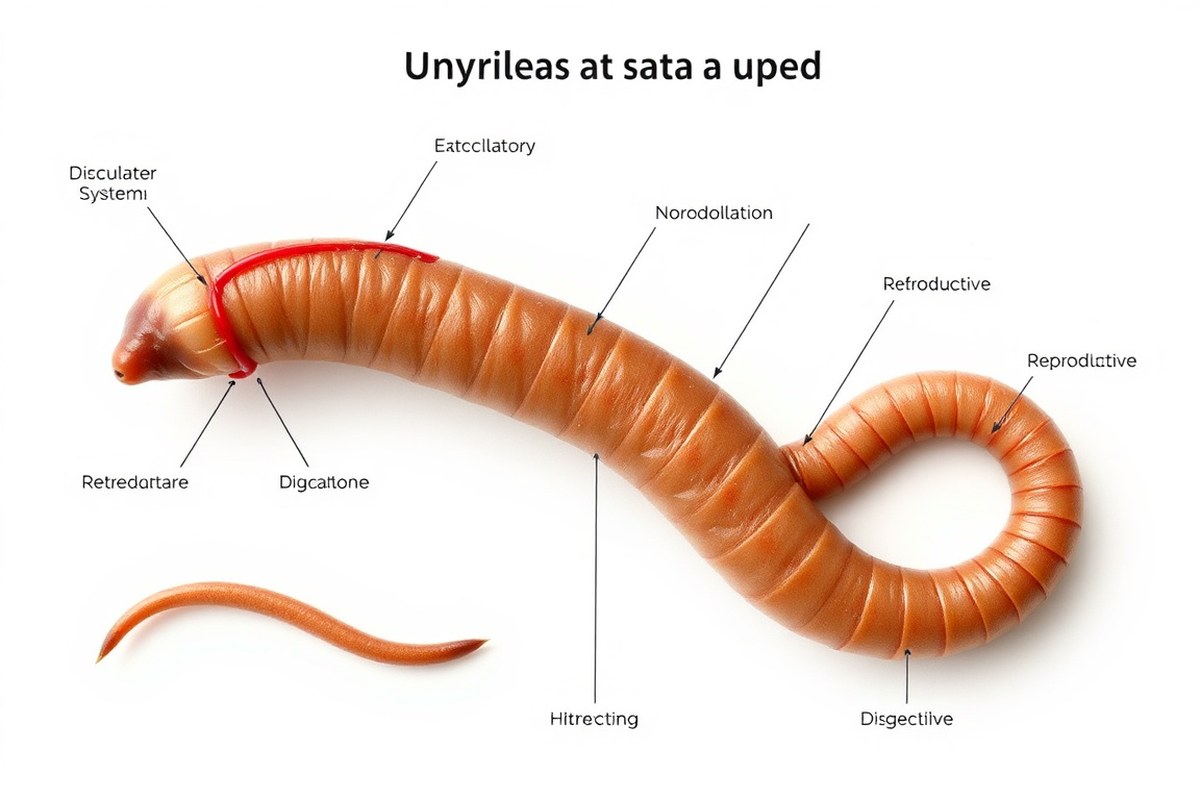
Earthworms have several key organ systems that keep them alive and active. Their circulatory system has five simple hearts called aortic arches. These hearts pump blood through vessels.
The blood moves in a closed loop. This setup helps deliver oxygen and nutrients efficiently in their long, thin bodies.
The digestive system runs straight through the middle of the earthworm from mouth to anus. Food enters the mouth first. It passes through the muscular pharynx and esophagus.
The gizzard then grinds the food. Nutrients get absorbed in the intestines while waste moves out the other end.
The clitellum is a thickened band near the front. It plays an important role in reproduction by producing mucus to form cocoons for eggs.
Earthworms have a nervous system with a simple brain. They also have nerve cords. These control movement and respond to touch.
Their muscular system has circular and longitudinal muscles. These muscles help them move.
Movement happens by contracting body segments. The excretory system uses tiny nephridia organs in each segment to remove liquid wastes.
- Five aortic arches (hearts) pump blood through vessels
- Long digestive tract runs through most body segments
- Clitellum produces mucus for egg cocoons
- Simple brain and nerve cords manage sense and movement
- Muscles contract to help crawling
- Nephridia filter wastes out of the blood
Reproductive organs are complex since earthworms are hermaphrodites. They have both male and female reproductive parts. This lets them exchange sperm with another worm.
This occurs during mating. This increases their chances of reproduction compared to asexual methods like splitting.
Handle earthworms gently, their organs are delicate and damage can be fatal.
How Does the Earthworm Circulatory System Function?
Earthworms have five pairs of simple hearts that pump blood through their bodies. Their blood circulates from the back to the front and back again in two main vessels. Oxygen moves through their moist skin into the blood, supplying their tissues without lungs.
Number and Location of Hearts
Earthworms have five pairs of hearts that appear as thickened blood vessels. These hearts are located in the worm’s first few body segments near the head. Each pair of hearts contracts in waves to push blood forward.
These simple hearts do not look like human hearts but work well. They ensure blood moves continuously so muscles and organs get oxygen and nutrients. The wave-like contractions keep blood flowing steadily along the body.
Blood Vessel Types and Circulation Path
Earthworms have two major blood vessels: a dorsal (top) vessel and a ventral (bottom) vessel. The dorsal vessel carries blood from the back to the front. The ventral vessel moves blood forward to the rear.
Smaller capillaries branch off these vessels to reach all body parts. Blood picks up oxygen and nutrients and drops off waste in these tiny vessels. This system helps the worm stay healthy and active.
Oxygen Transport Without Lungs or Gills
Earthworms absorb oxygen directly through their skin, which must stay moist. Blood in their vessels picks up oxygen from the skin and carries it to tissues. Carbon dioxide travels back to the skin to be released into the air.
Worms slow their activity when oxygen levels drop. They stay near moist soil surfaces. This helps them survive in low-oxygen environments.
They can live longer by absorbing enough oxygen through their skin. But only for a limited time. Eating and moving require higher oxygen levels, so low oxygen can limit their survival.
Here’s how blood circulates and oxygen moves through an earthworm step-by-step:
- Hearts contract in sequence to push blood forward through vessels.
- Dorsal vessel carries blood from the rear toward the front.
- Blood moves into smaller capillaries that reach muscles and organs.
- Oxygen absorbed through the moist skin enters the blood in capillaries.
- Blood delivers oxygen and nutrients to body tissues.
- Blood collects carbon dioxide and waste from the tissues.
- Ventral vessel carries blood back toward the rear of the worm.
- Carbon dioxide exits the body through the skin into the environment.
What Sensory Organs and Mechanisms Do Worms Use to Interact with Their Environment?
Worms do not have eyes or antennae like many other animals. Instead, they rely on sensory cells spread over their bodies, mainly near the head. These cells detect light intensity.
They also sense the direction of light. This helps worms avoid bright areas that could expose them.
Some marine worms, such as rag-worm larvae, have simple proto-eyes. These tiny eyes consist of just a few cells that can tell light from dark. This helps larvae find the right depth in the water.
Earthworms don’t have proto-eyes. They have light-sensitive cells spread on their skin. These cells are called “light cells of Hess.””
Touch and vibrations are very important for worms. Their whole body surface is covered with nerve endings that detect movement and pressure.
Small bristles called setae also give tactile feedback by sensing the soil’s texture and vibrations. This helps worms navigate underground and escape dangers.
Nuchal organs are unique chemoreceptors found in some marine worms. These paired structures are located near the head and detect chemical signals in the water. These cells work like a nose in other animals.
They help worms find food or mates. They detect chemicals mixed in water or soil.
Even microscopic worms, like the nematode Caenorhabditis elegans, have complex chemosensory cells. These cells quickly respond to chemicals dissolved in water or fat.
This lets worms move toward or away from some substances. This chemical sensing is essential for survival, helping worms avoid toxins or locate food.
Worms lack ears, so they do not hear sounds the way humans do. Instead, they detect vibrations through their skin and setae as mechanical signals. Earthworms, for example, are extremely sensitive to vibrations.
This sensitivity helps worms sense nearby predators. They hide fast by burrowing deeper into the soil.
How Do Worms Reproduce and What Organs Are Involved?
Worms have specialized reproductive organs that allow sexual reproduction. Each worm has both male and female parts, making them hermaphrodites. This means every worm carries testes, seminal vesicles, ovaries, and oviducts.
The clitellum is a thick, visible band near the worm’s front end. It plays a key role by secreting a mucus ring where fertilized eggs develop. This mucus will later harden into a protective cocoon for the worm’s eggs.
Instead of self-fertilizing, worms must mate to exchange sperm. During mating, two worms align ventrally and swap sperm packets stored in sacs called seminal receptacles. Fertilization takes place later inside the mucus ring made by the clitellum.
- Testes and seminal vesicles produce and store sperm.
- Ovaries and oviducts produce eggs and release them.
- Seminal receptacles store sperm from a mating partner.
- The clitellum secretes mucus to form the egg cocoon.
- Worms exchange sperm during mating before egg fertilization.
The reproductive process starts after worms meet and align their bodies. Both worms release sperm and eggs into the mucus ring.
This ring slides forward, collecting eggs and sperm, then seals to form a cocoon. The entire process lasts several hours and happens in moist soil.
Keep the soil moist during worm breeding; dry conditions can stop cocoon formation.
Fertilized cocoons incubate underground for 2 to 3 weeks before young worms hatch. This system helps worms reproduce efficiently in their environment. Problems happen if the soil is too dry.
It can lower mating chances. Lacking organic matter also reduces survival.
How Do Worms Digest Food and Excrete Waste?
Worms digest food using a simple but effective system of organs. Food passes through the pharynx, crop, gizzard, and intestine. Waste leaves the worm through excretory cells that move it to the skin.
Structure of Digestive Tract
The digestive tract starts with the pharynx. It is a muscular tube. It pulls in soil and organic matter.
Next is the crop, a storage pouch where food waits before digestion. The gizzard follows, grinding food with tiny stones inside the worm’s body.
The intestine is the longest part, where enzymes break down food into nutrients. Absorbed nutrients feed the worm’s cells. The waste continues to the end of the intestine and exits the body.
Role of the Crop and Gizzard
The crop acts like a holding area, letting the worm control how fast food moves through. This way, the worm can digest steadily without overloading the next parts.
In the gizzard, muscles squeeze the food against small stones, grinding it thoroughly. This mechanical breakdown is important since worms lack teeth. It allows enzymes in the intestine to work better on the food.
Excretory Organs and Function
Worms use excretory cells to remove waste from the body. These cells collect nitrogenous waste and other substances from blood-like fluids. Then they transport it to the worm’s skin surface.
Mucus helps carry the waste out through tiny pores in the skin. This mucus also keeps the skin moist, which is important for the worm’s breathing and movement. This method saves water and energy compared to more complex systems.
Worm digestion happens in ordered steps. Here is how food travels through the digestive system:
- Swallow soil and organic matter through the mouth using the pharynx.
- Store food briefly in the crop to regulate flow.
- Grind food inside the gizzard with the help of swallowed stones.
- Pass ground food to the intestine for enzyme digestion.
- Absorb nutrients through the intestinal walls into the body.
- Move leftover waste along the intestine to the worm’s rear.
- Collect nitrogenous waste with excretory cells from body fluids.
- Transport waste to the skin surface, where mucus helps excrete it.
Can Worms Regenerate Organs and How Does Regeneration Work?
Worms can regrow some of their lost body parts through regeneration. This ability helps earthworms survive injuries that would kill many other animals. They can regrow tissue if cut below a special gland.
This gland is near the front of their body. Regeneration happens only when the cut is below this gland.
The parts they can regenerate include segments of their body and some internal organs. However, the extent of regeneration depends on where the body is severed. Cuts too close to the head or tail may prevent proper regrowth or harm important organs.
Regeneration begins when the worm forms a blastema. The blastema is a mass of new cells. It appears at the injury site on the worm.
These cells then divide and grow to rebuild the missing tissues and organs. This process can take several weeks, usually about two to three weeks for noticeable recovery.
The worm’s body must stay moist and free from infection during regeneration. Any stress or damage to the remaining body parts can slow or stop this repair. Good regeneration means the worm regains normal movement and body shape within a month.
Not all organs regrow perfectly after injury. Some functions may weaken if critical parts like the brain or digestive organs are damaged. Still, earthworms can often survive and function despite partial losses and regrowth.
Regeneration varies among worm species, but earthworms are known for strong regrowth ability. This repair process is important for their survival in environments where predators and accidents cause injuries. It allows them to recover and continue their roles in soil health.
How Do Organ Systems Differ Among Major Worm Types?
Different worm types have varied organs and systems depending on their habitat and biology. Earthworms, marine worms, nematodes, and flatworms show increasing simplicity of organ systems. These differences help you identify worms by their organs and understand how they survive.
Annelids (Earthworms and Polychaetes)
Annelids like earthworms have segmented bodies with well-developed organ systems. Earthworms have ganglia linked to a ventral nerve cord. These help them sense their environment.
They respond to changes effectively. Marine polychaetes add specialized chemosensory organs to detect chemicals underwater, a key adaptation for aquatic life.
Both types of annelids have separate circulatory, digestive, and excretory systems. Polychaetes often display more complex sensory appendages, aiding their movement and feeding in marine habitats. This complexity helps them adapt to different conditions compared to earthworms, which live in soil.
Nematodes (Roundworms)
Nematodes possess thinner, unsegmented bodies with simpler organ systems than annelids. Their nervous system is less complex, lacking ganglia like earthworms have. They don’t have complex brains.
Instead, a basic nerve ring controls them. Several nerve cords help with movement and feeling.
Their digestive system is a simple tube. It has a mouth and anus. They don’t have hearts or blood vessels.
This limits their movement and places they can live. Still, they survive in many spots. This includes soil and host animals.
Platyhelminthes (Flatworms)
Flatworms have the simplest organ systems among major worms. They lack circulatory and breathing systems. They rely on diffusion through flat bodies.
This helps exchange gases and waste. Their nervous system consists of paired nerve cords and simple ganglia, which only process basic stimuli.
Their digestive system is incomplete. It often has a single opening serving as mouth and anus. Many flatworms are parasites or live in water.
Simple diffusion supports their low activity. They don’t need complex organs. This simplicity keeps them small and flat to facilitate diffusion.
The following table compares organ system features across these worm types. Use it to quickly spot their organ complexity.
It shows what makes each group unique. This helps understand their biology.
| Feature | Annelids (Earthworms, Polychaetes) | Nematodes (Roundworms) | Flatworms (Platyhelminthes) |
|---|---|---|---|
| Body Segmentation | Segmented | Unsegmented | Unsegmented |
| Nervous System | Ganglia + nerve cord | Nerve ring + cords | Paired nerve cords, simple ganglia |
| Circulatory System | Closed system with vessels | Absent | Absent |
| Respiratory System | Present (skin, gills in polychaetes) | Absent | Absent (diffusion only) |
| Digestive System | Complete (mouth, anus) | Complete but simple tube | Incomplete (single opening) |
| Sensory Organs | Advanced; chemosensory in polychaetes | Basic touch and chemical receptors | Simple light-sensitive and touch organs |
Recognizing these organ system traits helps identify worm types quickly in the field or lab. Look for segmentation and sensory organs first to separate annelids from nematodes or flatworms.
Pay close attention to the presence or absence of segmentation. It’s a quick way to identify worm groups.
How to Explore Worm Organs and Their Functions
Use this plan to see worm organs and learn how they work. You’ll get hands-on experience and spot differences between worm types.
- Day 1: Find earthworms outside after rain or in moist soil. Check they move and look healthy.
- Day 2: Carefully observe an earthworm’s body with a magnifier. Look for segments and mouth parts to identify organs.
- Week 1: Read about earthworm’s digestive and circulatory systems. Use diagrams to match what you saw.
- Week 2: Watch videos or use a microscope to see how worms sense light and vibrations. Note sensory organ use.
- Week 3: Study how worms reproduce by noting the clitellum and mating behavior. Draw or write what you find.
- Week 4: Examine differences among worm types, like flatworms and roundworms, focusing on organ structure.
- Ongoing: Observe earthworms after minor injury to learn about their regeneration skills. Record any changes.
Frequently Asked Questions
How Many Hearts Do Worms Have Compared to Other Organs?
Worms have five hearts, which is unusual for their size. This highlights their unique circulatory system among their organ setups.
What Type of Sensory Cells Help Worms Sense Their Surroundings?
Worms use sensory cells in their skin and special head structures. These cells detect chemicals and light, aiding in food and danger awareness.
Can Worms Regenerate Both Head and Tail Parts?
Many worms can regrow tail sections and some head segments too. However, recovery depends partly on how many segments are lost.
Do All Worms Have the Same Organ Systems?
No, organ systems vary significantly across worm types like earthworms and marine Polychaetes. Each adapts to different environments and lifestyles.
What Role Does the Clitellum Play in Worm Organs?
The clitellum is a thickened gland near the worm’s head used in reproduction. It secretes mucus to help form egg cocoons.
How Do Worms’ Organs Help Them Survive Underground?
Their organs work together to move soil, breathe through skin, and digest organic matter. This makes them critical for soil health.
Before You Go
Worms do have organs that help them live and interact with their surroundings. Focus your next step on watching earthworms move and respond to light. This simple act will show how their organs work in daily life.