What Do Tomato Worms Turn into? A Complete Guide to Their Life Cycle and Identification
What do tomato worms turn into? These worms grow into large moths called five-spotted hawk moths.
The tomato hornworm is actually the larva of this moth, not a worm at all. After feeding on tomato plants, the worm transforms through several stages before gaining wings.
The adult moth has a wingspan of about 4 inches and brown wings with white spots. It looks different from the green caterpillars on your tomatoes. You might notice the size or shape is not the same.
This difference helps you spot it easily. Once the worm pupates, it enters a resting stage before emerging as a moth.
You’ll want to watch for tomato hornworms early, since they can quickly damage leaves. Knowing what they turn into helps you understand their life cycle better. Check your plant leaves regularly for big green larvae.
Spotting them early protects your plants. These larvae turn into moths later.
Key Takeaways
- Tomato worms are larvae of the five-spotted hawk moth.
- The adult moth has a wingspan around 4 inches with spotted brown wings.
- Tomato hornworms grow 3 to 4 inches long and mainly eat tomato foliage.
- Worms pupate and rest before becoming moths, shifting to winged adults.
- Monitor tomato plants closely to catch hornworms early and reduce damage.
- Adult moths lay hundreds to thousands of eggs, continuing the cycle.
What Do Tomato Worms Turn Into?

The tomato hornworm transforms into the five-spotted hawk moth, also called the sphinx moth. This adult moth has a wingspan between four and six inches. Its wings show a mix of brown, gold, pink, and grey shades.
Unlike the caterpillar stage, the adult moth primarily feeds on nectar instead of tomato leaves. It plays a helpful role as a pollinator, especially active when few other insects are out. The moth’s lifespan lasts about two to three weeks.
The tomato hornworm moth lays hundreds of eggs during its short life. This ensures new generations of hornworms. Although the caterpillar damages plants, the adult moth benefits garden ecology by supporting pollination.
How to Identify Tomato Hornworms and Their Close Relatives
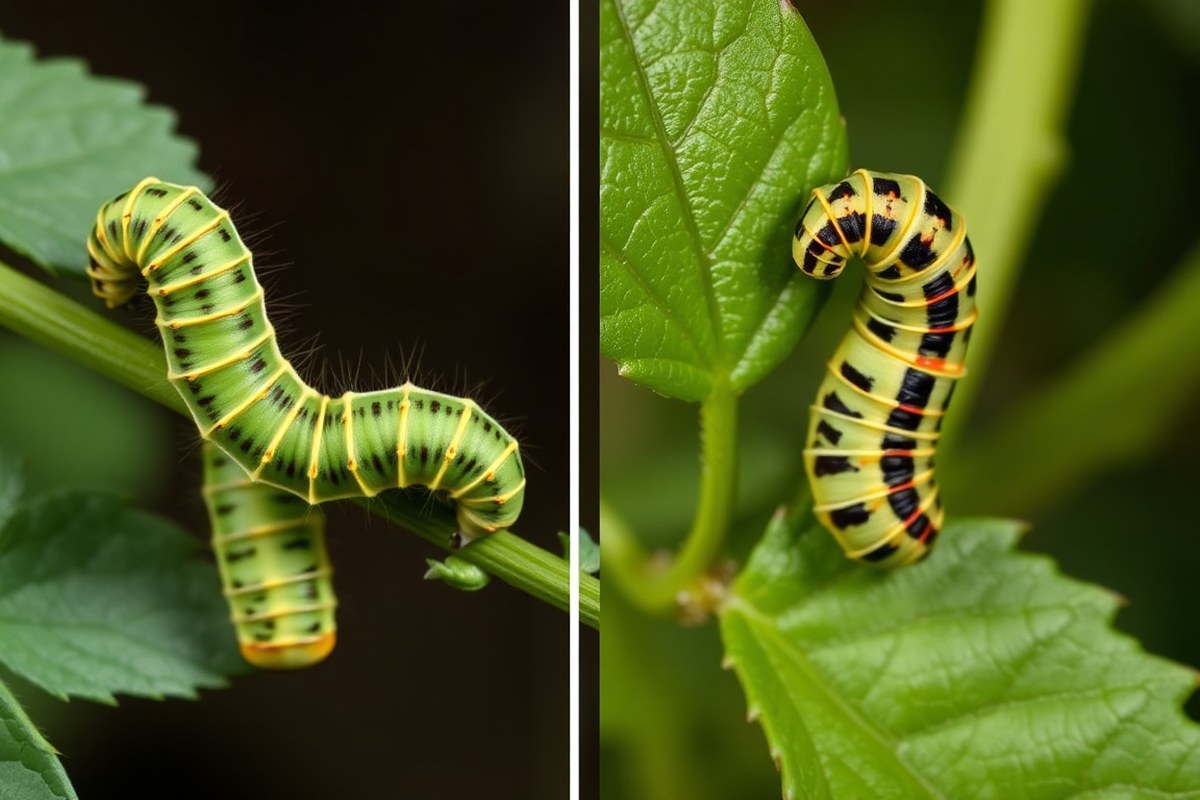
Tomato hornworms stand out by their distinctive markings and color patterns. Knowing the differences between these and tobacco hornworms helps a lot. You’ll know the right caterpillar on your tomato plants for sure.
This makes caring for your garden easier. Adult moths also show unique features that separate the two species clearly.
Markings and Colors on Caterpillars
Tomato hornworms have V-shaped white markings along their sides. Their bodies are bright green, blending with the tomato leaves. You’ll notice a dark, almost black horn sticking out from the rear end.
In contrast, tobacco hornworms have diagonal white stripes on their sides. Their rear horn is bright red or orange, which is quite easy to spot.
The green color is similar to tomato hornworms. So focus on these horn and stripe differences.
Differences Between Tomato and Tobacco Hornworms
Tomato hornworms are more common in northern regions. Tobacco hornworms show up mostly in the South. Both species feed on tomato and tobacco plants.
But tobacco hornworms handle nicotine-based plant defenses better. Recognizing the orange spots on tobacco hornworms’ sides also helps. Tomato hornworms lack these bright dots.
Check the markings carefully if your garden has both species. The tobacco hornworm has six distinct orange spots on each side of its body.
Tomato hornworms only have five yellowish-orange spots along their abdomen. Their white patterns form Vs rather than diagonals.
Adult Moth Appearance and Wing Patterns
The adult tomato hornworm turns into the five-spotted hawk moth. This moth has brownish-gray wings and about a 4-inch wingspan. You’ll see five orange-yellow spots in a neat row on each side of its abdomen.
Tobacco hornworms give rise to Carolina sphinx moths. Their wings also span about 4 inches but feature six orange spots and different wing patterns. The markings help you figure out which caterpillar was there before.
Once the moth comes out, spotting it gets easier in your garden. This way, you can tell them apart quickly.
Careful observation of caterpillar markings can save your tomato crop by guiding targeted control.
The Complete Life Cycle from Egg to Adult Moth
The tomato hornworm grows through four main stages: egg, larva, pupa, and adult moth. Each phase lasts a specific time and involves different behaviors. Knowing this timeline helps you catch the worms before they damage your tomato plants.
Egg Stage and Hatching
The adult moth lays tiny eggs on the underside of tomato leaves. These eggs measure about 1 millimeter and start pale green. They get darker just before hatching.
Eggs usually hatch within 6 to 8 days. A female moth lays between one and five eggs each time she visits different plants. In total, a single moth can lay about 2,000 eggs during her life.
Larval Growth and Feeding Period
After hatching, the tiny larva, or tomato hornworm, starts feeding on leaves right away. This stage lasts up to four weeks. The caterpillar climbs the plants, eating constantly to grow fast.
During this time, the larva goes through five growth stages called instars. By the last instar, it looks large and develops its classic horn-shaped tail. It then stops eating and looks for a safe place to pupate.
Pupation Underground
The full-grown hornworm drops off the plant and burrows several inches into the soil. There, it forms a pupal chrysalis. This stage typically lasts about two weeks as the larva changes into a moth.
Inside the chrysalis, tissues rearrange into adult moth parts. A hornworm with white cocoons won’t reach this stage. Parasites have taken over the hornworm.
They stop it from developing further. Healthy pupae remain underground until the adult emerges.
Emergence of the Adult Moth
The adult moth breaks free from the chrysalis after about two weeks underground. Its wings are soft at first but become strong enough for flying after a few hours. The adult moth then starts flying to find mates and lay eggs.
This reproductive phase completes the cycle. Female moths return to tomato plants and lay eggs on the undersides of leaves. This restarts the entire life cycle, continuing the family line.
How Environmental Conditions Affect Tomato Worm Development
Temperature changes affect how fast tomato worms grow. Caterpillars can finish their larval stage in three to four weeks. This happens when daytime temps reach 31°C (88°F).
Nighttime temps near 21°C (70°F) help speed this up. Cooler conditions slow their growth and delay the time it takes to reach pupation.
Light also matters for tomato worm development. The length of daylight, called photoperiod, influences whether pupae enter diapause. Diapause is a form of dormancy that helps them survive cold months by pausing development.
Shorter day lengths in late summer or fall trigger diapause. This is especially true for strains from cooler places.
Different populations respond to temperature and light in varied ways. A Kentucky Manduca sexta strain enters diapause almost 100% of the time. This happens at 31°C daytime temps with 12 hours of daylight.
In contrast, a California strain enters diapause roughly 81% of the time under the same conditions. This difference shows how local climates affect tomato worm lifecycles.
Seasonality shapes how many generations you see each year. In northern areas, the first adult generation appears from early August to early October.
A second generation may develop, but it often enters diapause to survive winters. In warmer southern climates, tomato worms can have multiple generations without long breaks.
Gardeners seeing fast tomato worm growth likely have warm conditions. Long days during summer speed caterpillar development outdoors. When fall days get shorter and temps fall below 21°C (70°F), pupae stop developing.
This delays moths from emerging until spring. This cycle helps tomato worms survive seasonal changes across regions.
What Happens Inside the Pupal Chrysalis?
Inside the pupal chrysalis, the tomato worm transforms completely into a moth through metamorphosis. This process takes about two to three weeks, depending on temperature. The caterpillar’s body reorganizes, forming the wings, antennae, and mouthparts of the adult moth.
Formation of the Chrysalis
After the tomato worm finishes feeding, it digs into the soil. It builds a small chamber underground for pupating. Inside the chamber, it sheds its last caterpillar skin.
Then it forms a hard, dark brown chrysalis. This cocoon protects the developing pupa through the transition.
The chrysalis includes a unique jug-handle loop at one end. This houses the growing proboscis, or mouthpart, of the future moth. The protective case shields the insect from soil pressure and predators until it matures.
Cellular Changes and Growth
Inside the chrysalis, cells break down and rebuild organs in a carefully timed sequence. Hormonal signals trigger the breakdown of larval tissues and the creation of adult structures. Muscles, wings, and antennae start to form from specialized groups of cells.
These changes take about two to three weeks at warm temperatures. Cooler conditions slow the transformation and extend the pupal stage.
The chrysalis gets darker and harder as the moth grows. You can see wing outlines and other adult features.
Emergence Process of the Adult Moth
Once the moth is fully formed, it starts to move and stretch. It breaks open the chrysalis shell using its legs.
It takes about an hour for the moth to fully emerge and unfold its wings carefully. The wings remain soft at first and need time to dry and stiffen before flight.
This emergence signals the end of metamorphosis and the start of the moth’s adult life. The moth will soon search for mates and begin the cycle over again. Watching a moth emerge requires patience, as even small disturbances can delay the process.
Check the soil moisture if disturbing pupae. Dry soil helps prevent damage to the chrysalis.
Role and Behavior of Adult Tomato Hornworm Moths
Adult tomato hornworm moths feed mainly at night. They sip nectar from flowers, including tomato, pepper, and eggplant blooms. This feeding habit helps them gain energy for flying and mating.
While feeding, these moths also carry pollen from one flower to another. This makes them accidental pollinators, which benefits your garden’s crops.
Their role helps fruit set in nightshade plants. They are not as good at it as bees.
The moths live for about two weeks after emerging. During this time, they mate and lay eggs.
They pick host plants like tomato leaves. Females may lay hundreds of eggs, increasing the chance of more hornworms.
The moths are mostly active at dusk and during the night. They avoid bright daylight, resting under leaves or other cover. Their activity patterns help them avoid predators like birds and maintain energy for reproduction.
Grow nightshade flowers that bloom in the evening to encourage natural pollination. This attracts moths to your garden, even if you don’t like hornworms. But be prepared for more larvae in summer, which means more eating of your plants.
In cooler climates or short seasons, moths might live shorter than two weeks. High heat speeds up their life cycle but can reduce adult lifespan. Noticing fewer moths might mean your garden environment is less friendly.
Understanding adult moth habits helps balance control versus conservation in your garden. Let moths pollinate at night but watch plants more closely afterward. This way, you can manage hornworms without harming helpful insects.
Natural Controls and Safe Management of Tomato Hornworms
Natural predators like parasitic wasps and big-eyed bugs help control tomato hornworms. These insects lay eggs on or near the caterpillars, slowly weakening them without harming moth populations. Birds like robins eat hornworms.
Predatory beetles hunt them too. This helps keep hornworm numbers balanced.
You can protect these beneficial insects by avoiding harsh chemical sprays. Instead, use targeted options like Bacillus thuringiensis (BT), a natural bacterium safe for most other wildlife. BT works best when applied to young caterpillars before they grow large and damage your plants.
Here’s a simple checklist before managing tomato hornworms:
- Inspect plants weekly for eggs, larvae, or feeding damage.
- Hand-pick large hornworms early in the morning or evening.
- Release or encourage parasitic wasps and ladybugs nearby.
- Apply BT only on young caterpillars, following product instructions.
- Add vermicompost to improve garden soil without harming moths.
- Avoid using broad-spectrum insecticides that kill beneficial insects.
For BT, timing and coverage matter. Spray when caterpillars are small and feeding actively.
Usually, every 7 to 10 days during worm-active months is enough. BT costs vary but expect around $15 to $25 per bottle, treating several hundred square feet.
Good results show less leaf damage and gradual hornworm disappearance, thanks to natural enemies and BT. Caterpillars that grow large can resist BT. Catching them early helps control them better.
Overusing chemicals can kill helpful insects, leading to more pest problems later. Using vermicompost adds nutrients and supports a healthy soil ecosystem, which benefits beneficial insects naturally.
Balancing pest control with preserving moth populations keeps your garden thriving. You support moths that pollinate plants. They add to the ecosystem.
At the same time, you protect your tomato plants. Keep checking your plants, apply BT wisely, and welcome the helpful predators sharing your garden.
Common Myths and Mistakes About Tomato Hornworms and Their Moths
Not all hornworms are always harmful to your garden. Tomato hornworm larvae do lots of damage by eating leaves and stems. Their adult form is the hawk moth.
It does not harm plants. It helps pollinate flowers at dusk and night.
Killing larvae won’t kill pollinators like honeybees or butterflies. The moths pollinate tubular flowers other bugs might skip. The moths lay eggs on your plants.
The eggs hatch into hornworms. This continues the cycle of damage.
Moths don’t eat or damage tomato plants. But their egg-laying leads to larvae that do. Removing the larvae early helps protect your tomatoes.
Use safe sprays when you see larvae on your plants. This stops them from growing. It also prevents them from eating your tomatoes.
- Check undersides of tomato leaves for eggs or small larvae every few days.
- Remove larvae by hand if you spot them early. Wear gloves to avoid irritation.
- Use a biological spray that attacks hornworms, but is safe for bees and butterflies.
- Avoid broad insecticides that kill all insects, which harms pollinators too.
- Encourage birds and predatory bugs that naturally eat hornworms.
- Dig soil under plants after harvesting to disrupt pupae in the ground.
Removing hornworms early lets you avoid needing harsher pesticides later on.
Larvae feeding lasts two to four weeks, then they burrow into the ground to pupate. Cooler temperatures slow their molting and development stages.
At around 20 degrees Celsius, larvae spend nine percent more time molting. At 30 degrees, they molt faster.
Slower growth means hornworms stay vulnerable longer. You have more chances to find and remove them.
Watching for moths at dusk helps you know when eggs might be laid. This way, you can spot larvae early and protect your tomatoes without harming handy pollinators.
Step-by-Step Action Plan for Managing Tomato Hornworms
Use this plan to spot tomato hornworms early and keep your plants safe. Follow the steps to track and reduce their damage.
- Before planting: Inspect your garden for leftover hornworm pupae. Removing them cuts future moths and worms.
- Week 1: Check tomato leaves daily for green worms and white eggs. Catching worms young prevents heavy feeding.
- Week 2: Remove hornworms by hand or use natural predators like ladybugs. Watching smaller worms die shows success.
- After 3 weeks: Spray plants with safe neem oil or Bacillus thuringiensis (Bt). Look for less leaf damage afterward.
- Week 4: Look for white cocoons on or near plants. Spotting these means natural parasites are active.
- Late season: Clear garden debris and soil to destroy pupae hiding spots. This helps stop next season’s bugs.
- Each week: Keep monitoring plants and soil for signs of eggs or worms. Early action limits damage.
- Harvest time: Check fruits for worm holes before picking. Removing infested tomatoes prevents spreading.
Frequently Asked Questions
What Do Tomato Worms Turn Into?
Tomato worms turn into five-spotted hawk moths, also called sphinx moths. These moths have wingspans of four to six inches and live a few weeks.
Do Tomato Worms and Tobacco Hornworms Become Different Moths?
No, both tomato worms and tobacco hornworms turn into large hawk moths. They look similar but have different markings and colors.
How Long Does It Take for Tomato Worms to Pupate?
Tomato worms usually pupate after about three to four weeks of feeding. This depends on temperature and food availability.
Can Adult Hawk Moths Damage Tomato Plants?
No, hawk moths do not harm tomato plants. The larvae, or caterpillars, do most of the feeding damage.
Are Tomato Worm Moths Active During the Day or Night?
Adult tomato hornworm moths are mostly active at night. They feed on nectar and lay eggs for the next generation.
What Should I Do When I See a Tomato Worm on My Plants?
Remove tomato worms by hand or use natural predators like braconid wasps. This helps cut down on leaf damage.
Key Points to Remember
Tomato worms turn into large moths that lay eggs for the next generation. Watching for caterpillars and pupae protects your tomatoes. Start inspecting your plants now to keep hornworms under control.