What Is Flower Food: A Complete Guide to Keeping Flowers Fresh Longer
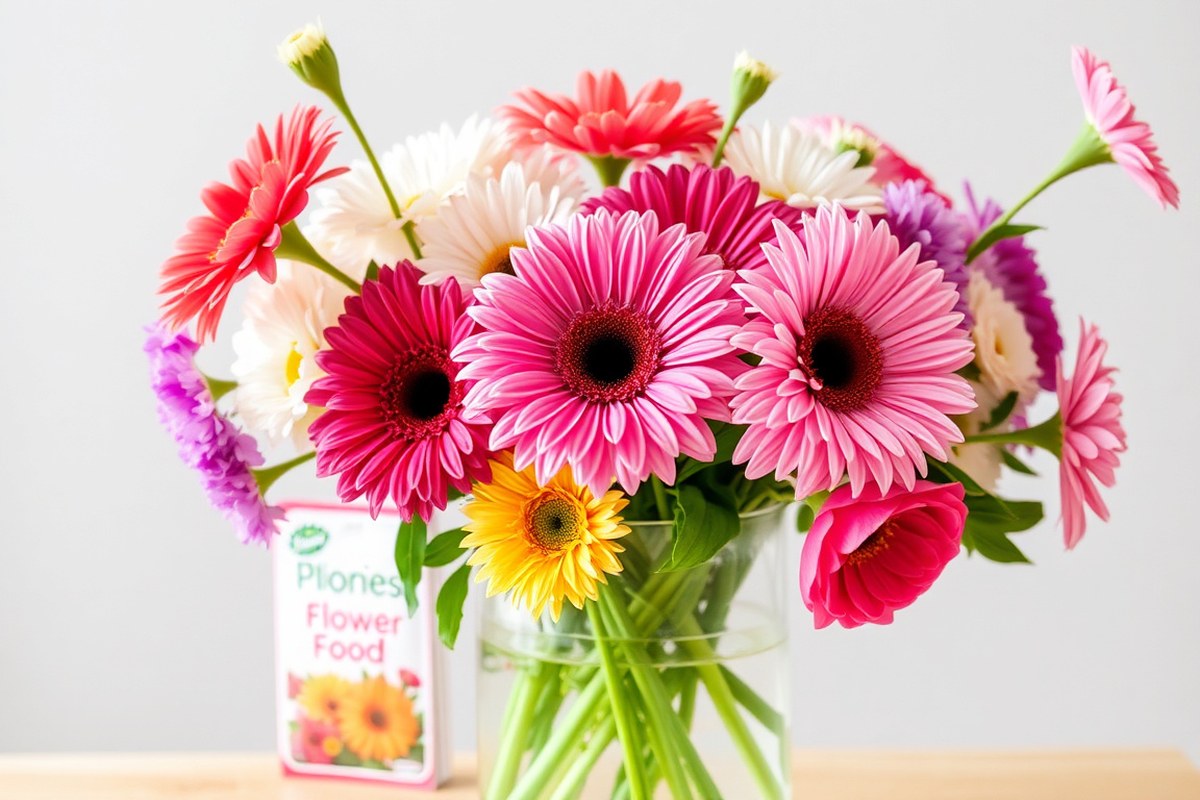
Flower food is a special mix added to water for cut flowers. It helps flowers drink better, stay fresher, and last longer in the vase. The mix feeds flowers sugar and stops bacteria from growing in the water.
Most flower food has sugar, acid, and a mild bleach to clean the water. Use a clean vase and cut flower stems at a 45° angle before placing them in water. This helps flowers drink better and avoids stem rot.
Using flower food can extend your bouquet’s life by 30 to 70 percent. It works better than plain water by giving flowers extra nutrients.
Keep packets sealed until use. They last 3 to 5 years unopened, but opened ones spoil faster.
Key Takeaways
- Flower food contains sugar for energy, acid to boost water uptake, and bleach to kill bacteria.
- Always clean your vase and tools to avoid reducing flower life by up to 20%.
- Cut stems on a 45° angle to increase water absorption.
- Flower food packets stay good unopened for 3 to 5 years.
- Adding flower food can extend cut flowers’ vase life by 30 to 70%.
- Use flower food right after cutting to keep flowers fresh longer.
What Is Flower Food and How Does It Work?
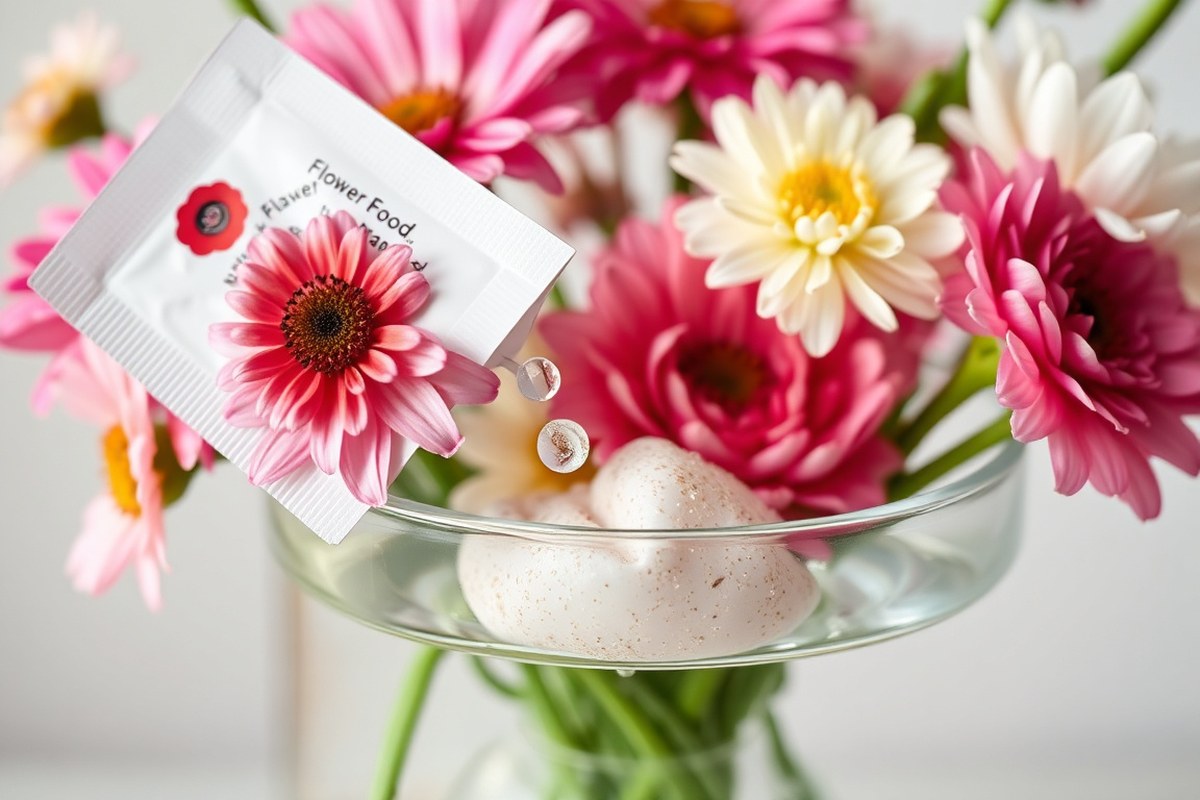
Flower food is a special powder or liquid mix added to vase water. It contains nutrients and chemicals designed to keep cut flowers fresh longer.
Flower food usually comes in small packets with purchased flowers. You can also buy it separately at garden stores.
This mix feeds the flowers sugar, which acts like energy for them. It also contains acidifiers like citric acid that balance the water’s pH. This makes it easier for flowers to take up water through their stems.
Another key part of flower food is a biocide that kills bacteria in the water. These microbes otherwise grow fast and block the stems, causing flowers to droop.
Using flower food slows the rapid wilting that happens after flowers are cut. Flower food can extend vase life by 30 to 70 percent. This works well for common flowers like roses and lilies.
Sprinkle one packet into about a quart of lukewarm water. Stir it well until it dissolves fully. Then place your flowers in the vase.
Avoid cold water since it slows absorption. Following the packet instructions matters most to get the best results.
Without flower food, cut flowers run out of sugars and water more quickly. They can also get clogged with bacteria, which shortens their life. When you use the food packet as directed, your flowers stay vibrant and hydrated.
The stems stay clear as the food prevents bacteria buildup. You’ll see your arrangement hold lively colors and fresh petals several days longer than normal.
Key Ingredients in Commercial Flower Food
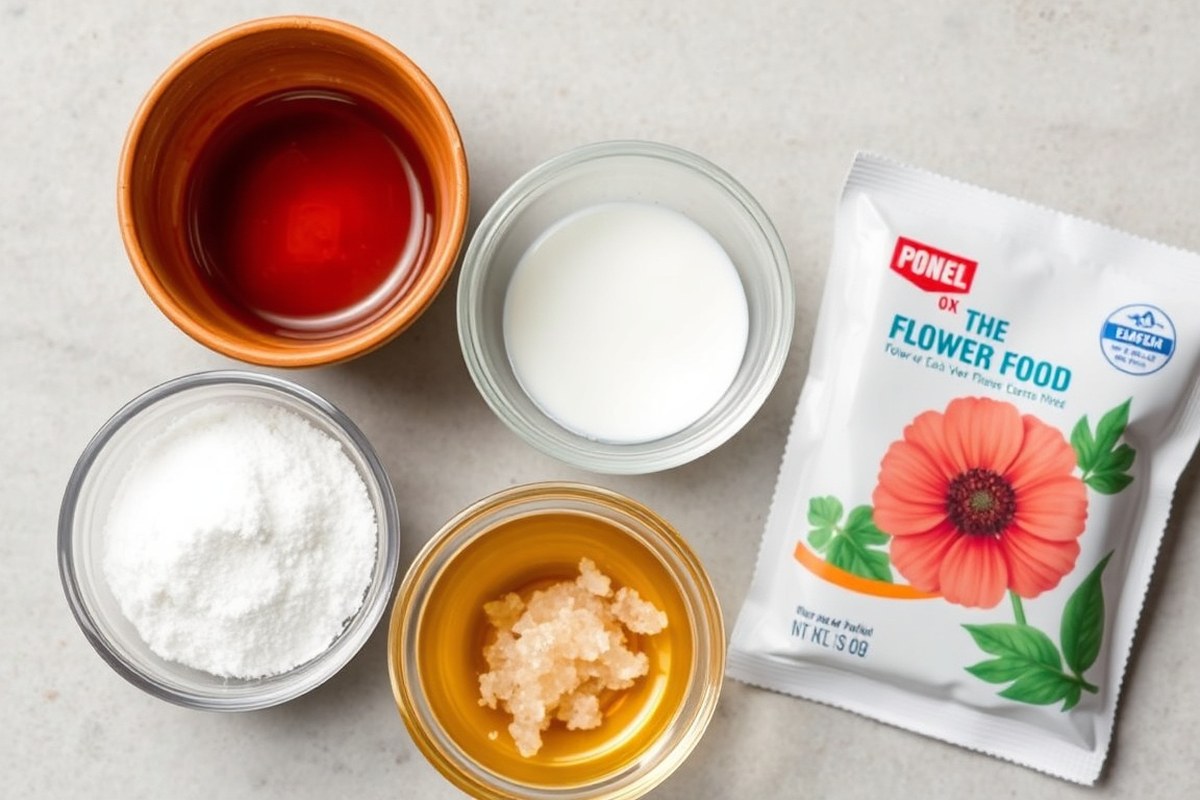
Flower food usually has three main ingredients: sugar, an acidifier, and a biocide. Sugar provides energy for the flowers, helping them stay vibrant and alive longer. The acidifier helps the flowers take up water better by lowering the water’s pH.
The biocide kills bacteria and fungi in the water. These microbes can block the flower stems and shorten their life span. Commercial flower food blends these carefully to keep water clean and flowers nourished.
Most packets have 96 to 99 percent natural ingredients. These include sucrose, a type of sugar, and citric acid, an acid found in lemons.
The biocide often comes as a small amount of bleach or a similar chemical. This mix balances natural and synthetic components to work well with different flower types.
Flower food usually contains about 1 to 2 percent sugar. This feeds the flowers without helping bacteria grow too fast.
The acidifier usually keeps the water pH between 3.5 and 4.5, which improves water flow into the stems. This exact pH range is why commercial flower food often works better than DIY mixes.
Some flower foods also include a stem unblocker chemical. It stops the flower stems from sealing shut, which lets them absorb water and nutrients freely.
This chemical mix costs about 10 to 25 cents per liter. It makes flower food affordable for most people.
Never skip the biocide ingredient because bacteria can quickly clog flower stems and ruin fresh blooms.
Flower food with these three ingredients can extend vase life. It lasts 30 to 70 percent longer than plain water. Without these, flowers wilt faster or develop slimy stems.
Sugar, acidifier, and biocide work together in flower food. They keep flowers fresh and colorful for several days.
How to Make Effective Homemade Flower Food
Homemade flower food can work well when you get the balance right. It must include sugar, an acidifier, and a small amount of bleach to slow bacteria growth. These ingredients feed the flowers, maintain acidity, and keep stems clear for water uptake.
Basic Homemade Recipe with Sugar and Bleach
Making flower food at home is simple and cost-effective. It costs about $2 to $4 per batch and can extend your flowers’ life by 20-50%. The key is mixing the ingredients in the correct order and amounts.
- Measure 1 liter of cool tap water and pour it into a clean vase or container.
- Add 2 teaspoons of sugar to feed the cut flowers.
- Mix in 2 teaspoons of lemon juice or white vinegar to acidify the water.
- Stir until the sugar dissolves completely.
- Add 1/4 teaspoon of household bleach to control bacteria and fungi.
- Stir gently to combine, avoiding bubbles or froth.
- Place your freshly cut flowers into the homemade flower food immediately.
Using this recipe helps keep the water clean and nourishes flowers for several days. Do not skip the bleach, as bacterial growth can quickly clog stems and shorten vase life.
Using Lemon or Lime Juice as Acidifier
Citric acid from lemon or lime juice creates the right pH balance for flower stems. It prevents the water from becoming alkaline, which stops flowers from closing their tubes.
When lemon juice isn’t on hand, use 1/2 teaspoon citric acid. Dissolve it in 2 tablespoons of water before adding.
Mix the acidifier into the water before adding bleach. This sequence helps avoid chemical reactions that can reduce the bleach’s effectiveness. For example, if you use lemon juice, stir it in first, then add bleach last.
You can use white vinegar instead of citrus juice. Lemon juice is often better for its natural taste. It also gives more consistent results.
Avoid using soda or sugary drinks as acidifiers. They do not provide the same antimicrobial effect.
Common Homemade Recipe Mistakes to Avoid
One frequent mistake is leaving out bleach or using too much. No bleach allows bacteria and fungi to grow fast, causing stem blockages. Too much bleach can damage flowers, so stick to 1/4 teaspoon per liter.
Another problem is adding sugar without acidifier and bleach. Sugar feeds bacteria as well as flowers.
So always include an acid and bleach for balance. Also, don’t use hot water; it breaks down ingredients and can stress flowers.
Finally, some people add the bleach before acidifier or sugar, which reduces its effectiveness. Add sugar and acid first, then bleach last, and stir gently. This order extends flowers’ freshness better and prevents quick wilting.
Which Flowers Benefit Most from Flower Food
Flower food extends the life of some flowers much more than others. Roses, for example, can last 40-70% longer with flower food.
Other delicate blooms like carnations and chrysanthemums also respond well. These flowers take in nutrients better and resist bacteria longer when given flower food.
Some flowers don’t benefit much from flower food. Hardy blooms such as sunflowers and daffodils tend to last well on plain water alone.
Some bulbs and woody stems absorb nutrients differently, so flower food shows limited gains. You may not see any extra vase time for these.
Avoid using flower food with certain flowers, such as bulbs that produce milky sap. This sap clogs the stems and blocks water uptake.
For these, using plain water and changing it frequently is safer. Knowing which flower types respond well lets you decide when flower food is worth it.
Check the table to see how common flowers respond to flower food:
| Flower Type | Response to Flower Food | Vase Life Extension | Special Care Notes |
|---|---|---|---|
| Roses | Strong positive | 40-70% longer | Keep stems clean and recut regularly |
| Carnations | Positive | Up to 50% longer | Remove lower leaves in water |
| Chrysanthemums | Positive | Up to 40% longer | Use fresh water mix with flower food |
| Sunflowers | Neutral | Little to no extension | Plain water often enough to keep fresh |
| Daffodils | Neutral | No notable benefit | Change water frequently to avoid clogging |
| Bulb flowers (tulips, lilies) | Poor | Possible decline | Avoid flower food; use plain water instead |
This table helps you decide when to add flower food. Use it mainly for roses, carnations, and mums, which clearly gain longer life.
For hardy or bulb-bearing flowers, skip the food or handle with care. Keeping the water clean and fresh matters more for those than adding nutrients.
Flower food works best when mixed to the package directions. This keeps the pH balanced and adds disinfectants that fight bacteria. With flowers that respond well, this stops stem blockages and keeps water moving for days.
You don’t want to overdose the flowers with water. Skipping fresh water changes can harm them too. Changing the water regularly keeps the flowers healthy.
Preparing and Caring for Cut Flowers with Flower Food
Preparing cut flowers properly and using flower food the right way helps them stay fresh longer. Cutting stems at an angle lets flowers absorb water better. Changing water daily keeps the solution clean and flowers thriving.
Trimming Stems and Removing Leaves
Cut the stems at a 45-degree angle right before putting flowers in water. This angle creates more surface area for water intake. Remove leaves that would sit below the water line to prevent rotting and bacteria growth.
Keep trimming the stems every few days for best water absorption. Check for any wilted flowers or leaves and remove them to keep the bouquet healthy. Some flowers, like daffodils, need plain water first.
Let them sit for 24 hours. This helps because their sap can spoil flower food.
Mixing and Pouring Flower Food Solution
Mix the flower food packet with fresh water. Use the exact amount the label says. Be sure to measure carefully for best results.
Proper mixing ensures flowers get the right nutrients and keeps bacteria in check. Choose a clean vase to hold your flowers.
Wash it with soap or a bleach solution. This keeps the flowers fresh longer.
While flower food dissolves, give stems a quick fresh cut and strip low leaves. Pour the flower food solution into the vase and arrange the stems immediately. Hardy flowers like tulips prefer cold plain water.
Sometimes a weaker flower food mix works best. This helps avoid damage to the flowers.
Daily Care Routine and Water Changes
Check the water level every day to keep stems submerged and hydrated. Change water every 2 to 3 days to keep flowers fresh. Make a new flower food mix each time.
This stops bacteria buildup in the vase. Always recut stems when changing water to boost water uptake.
Remove any wilted or dead leaves and flowers daily to avoid contamination. Keep flowers away from direct sunlight, heat, and drafts for longer freshness. Keep flowers in cold spots inside your house.
Try near an air conditioner or cool hallway. This helps flowers last longer and stay fresh.
- Wash your vase with soap or with a bleach solution and rinse well.
- Mix flower food with the water amount listed on the packet.
- Remove leaves below the water line from each flower stem.
- Cut stems diagonally at a 45-degree angle before placing them in water.
- Place flowers in the vase filled with the flower food solution.
- Check water daily and keep stems submerged at all times.
- Remove wilted leaves and flowers every day to stop bacteria growth.
- Replace water and flower food solution every 2 to 3 days with fresh water.
Tip: Don’t overfill the vase with water. Change water before it smells or looks cloudy. This reduces the growth of bacteria.
Common Mistakes When Using Flower Food and How to Fix Them
Many people use flower food wrong and get shorter flower life. Simple mistakes like old food or dirty vases spoil the solution. Fixing these helps flowers stay fresh longer and look better.
Using Old or Excessive Flower Food
Flower food loses its power when it’s too old or past the expiration date. Using old flower food may not nourish your flowers or stop bacteria. Also, adding too much flower food can harm stems and leaves instead of helping.
Use the recommended amount on the packet, usually one packet per quart of water. Make a fresh batch every time you change the water, generally every two days.
Don’t top off old water. Replace it fully to avoid buildup of bacteria or sugar that goes bad.
Not Cleaning Vases and Tools
Dirty vases and cutting tools reduce your flower’s vase life by up to 20%. Old plant material and bacteria can grow inside the container. They clog the stems so flowers can’t take up water well.
Clean vases and scissors before use with hot, soapy water. Rinse well and dry before filling with fresh water and flower food. Keep these tips in mind:
- Use a clean bucket or sink for cutting flowers
- Sanitize scissors with rubbing alcohol before cutting stems
- Wash vases with vinegar or bleach diluted in water every time
- Remove any plant debris or old leaves from the water promptly
These steps keep bacteria low and help flowers absorb water and nutrients fully. Avoid reusing old water or dirty vases to keep flowers healthy longer.
Wrong Water Temperature or pH
Water that’s too warm or cold can shock cut flowers and reduce their vase life. Cool water around 65°F is best, as it slows bacterial growth but keeps stems hydrated. Daffodils are an exception, they leak sap for the first 24 hours and need extra care.
Tap water pH may vary and affect flower food effectiveness. Use water at room temperature or slightly cooler.
Change the water and add fresh flower food every two days to prevent bacteria buildup. These actions help flowers open properly and last longer.
Homemade vs Commercial Flower Food: Pros and Cons
Commercial flower food usually works better than homemade options. It has balanced ingredients like citric acid and sugars. These feed flowers and keep the water clean.
Homemade flower food can still keep flowers fresh. You need the right recipe and prep. This helps match store-bought results.
Both options have pros and cons in cost, ease, and performance. Commercial food costs about $0.15 per packet and is easy to use, just add to water. Homemade mixes usually use sugar, vinegar, and sometimes bleach or lemon juice.
These ingredients cost less but take time to measure and mix properly. Results depend on following directions exactly and trimming stems before placing them in water.
| Feature | Commercial Flower Food | Homemade Flower Food |
|---|---|---|
| Cost per use | About $0.15 per sachet | Less than $0.05 with common kitchen items |
| Main ingredients | Citric/tartaric acid, sugar, biocide | Sugar, vinegar or lemon juice, bleach or salt |
| Ease of use | Just pour into water | Needs mixing and measuring |
| Effectiveness | Balances pH, reduces bacteria | Depends on recipe and accuracy |
| Availability | Comes with bouquets or sold in stores | Made at home from kitchen staples |
| Recommended when | Long-lasting freshness is needed | No store packets or ready to customize |
Using homemade flower food is a good alternative when you don’t have commercial packets. It lets you refresh the water easily. You add nutrients using sugar and acid.
Acid comes from vinegar or lemon juice. The main challenge is copying commercial acids exactly. Too much bleach or salt can harm flowers.
You need to be careful. Always trim stems about a half inch before placing in homemade solution.
For quick use, commercial flower food is simplest and most balanced. Homemade food suits those who want to save money or make a larger batch. Both help extend flower life if you follow instructions carefully and keep stems trimmed.
When Not to Use Flower Food and Alternative Tips
Flower food can harm some flowers if used the wrong way. Daffodils release a sticky sap that can block water uptake in mixed bouquets. To protect other flowers, keep daffodils separate for 24 hours.
After that, rinse their stems before putting them with other flowers. This helps stop chemicals from spreading. This step prevents the sap from clogging the water pathways of other flowers.
Skipping flower food works well if your cut flowers are very fresh and well hydrated. Use clean, room-temperature water and trim stems at a 45-degree angle every two days.
Change the water often, at least every other day, to keep bacteria from growing. This simple care helps flowers last without extra chemicals or additives.
Another time to avoid flower food is if you don’t have fresh flowers quickly available. Older blooms may react poorly to flower food. Plain water helps keep flowers fresh when changed often.
Cooler temperatures between 65 and 72°F slow down wilting. These simple steps make your flowers last longer. Keeping flowers away from direct sunlight and heat sources makes a big difference too.
Use a natural mix without flower food: add one teaspoon sugar per quart. Add a few drops of household bleach to the water too. This mix helps flowers stay fresh longer.
Sugar provides energy, and bleach reduces bacteria growth. You won’t get the same nutrient mix as commercial mixes. But this formula usually helps flowers last 3 to 5 days longer than plain water alone.
Always separate daffodils from other flowers first to avoid sap issues and clogging.
Keep in mind some flowers need less feeding than others. Hardy flowers like chrysanthemums and carnations often last well without flower food. You can save money and avoid extra work by just hydrating and keeping them cool.
Delicate flowers like roses and tulips often respond quickly to flower food. They show faster benefits compared to hardier flowers. Using flower food helps keep them fresh.
Flower food isn’t mandatory but acts as insurance for longer-lasting blooms. Proper hydration and clean conditions mean skipped flower food won’t ruin your bouquet.
When you do use flower food, follow the package instructions exactly. Too much or too little concentrate can harm your flowers instead of helping them.
Flower care depends on the type of flower, water quality, and room conditions. Watch your flowers closely for drooping or discoloration to adjust care quickly. Test plain water and flower food on small flower bunches first.
This helps you see what lasts longer in your home. Your local climate may change how flowers react.
Step-by-Step Action Plan for Using Flower Food
Follow these simple steps to keep your cut flowers fresh and looking great. Check the flowers daily to spot any changes.
- Before you start: Trim flower stems at a 45-degree angle. It helps the flowers drink water better.
- Day 1: Fill a clean vase with water and mix in flower food. The flowers should look lively by evening.
- Every 2 days: Change the water and add fresh flower food. Watch for any wilting or dullness.
- Daily: Remove dead leaves or petals from the water. This keeps the water clean and extends flower life.
- After 1 week: Re-trim stems to boost water uptake. Your flowers should last longer this way.
- If water gets cloudy: Clean the vase well, then refill with fresh water and flower food. Cloudiness signals bacteria growth.
- Keep flowers cool: Place the vase away from direct sunlight and heat sources. This slows down wilting.
Frequently Asked Questions
How Do I Store Flower Food Packets to Keep Them Fresh?
Store flower food packets in a cool, dry place away from sunlight. This keeps their ingredients effective for 3 to 5 years unopened.
Can Expired Flower Food Harm My Cut Flowers?
Expired flower food is less effective but usually won’t harm flowers. It’s best to use fresh packets for optimal results.
Why Do Some Flower Foods Contain Bleach or Chlorine Compounds?
Those ingredients kill bacteria in the water to keep it clean. Cleaner water helps flowers absorb nutrients better.
Can I Mix Flower Food with Tap Water Straight from the Faucet?
You can, but let tap water sit for a few hours to reduce chlorine. Cooler water between 65-72°F is best for flowers.
Does Flower Food Work Differently on Tropical Versus Common Garden Flowers?
Tropical flowers may need specific nutrients, while common flowers benefit from standard mixes. Use flower food tailored to the flower type when possible.
Is Flower Food Safe Around Pets and Children?
Flower food usually contains chemicals that can be harmful if ingested. Keep packets and flower water out of reach of pets and kids.
Key Points to Remember
Flower food helps your cut flowers stay fresh longer by feeding and protecting them. Try trimming stems and adding food when you bring flowers home. You’ll see your flowers last and look better every day.