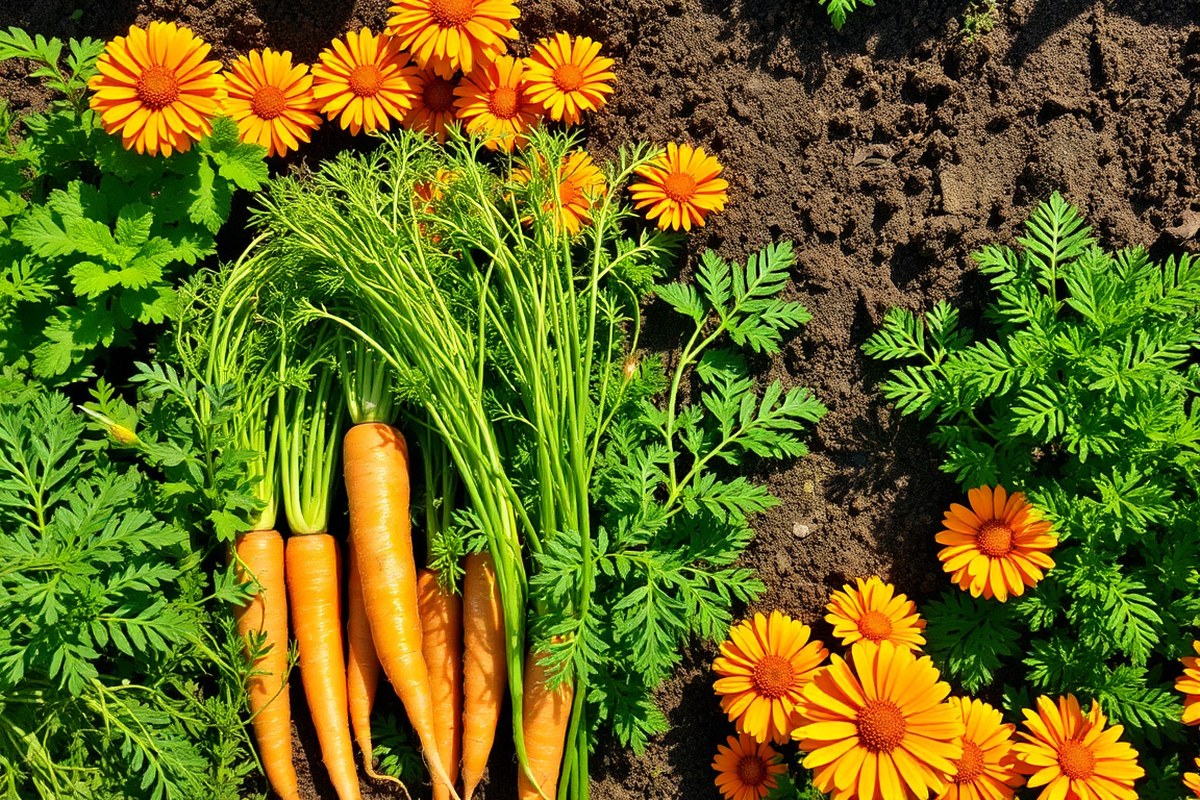
What to Plant with Carrots: Best Companions for Healthy Growth
You’re wondering what to plant with carrots to keep them healthy and productive. The best companions improve growth, stop pests, and save space. Plants like onions and bush beans work well.
They don’t block carrot roots. They also don’t steal nutrients from carrots.
Start by planting carrots in rows spaced 4 to 6 inches apart. Avoid tall plants like rosemary right next to carrots since they can block sunlight. Carrots need plenty of sun.
They need room for their roots to grow deep. Their roots grow about 8 to 12 inches down.
Plant companions that help carrots by repelling pests or improving soil. Herbs like rosemary repel carrot flies.
But place them away so they don’t cast shade. Growing bush beans on the south side lets carrots soak up full sun all day.
Key Takeaways
- Space carrot rows 4 to 6 inches apart for good air and root growth.
- Plant bush beans south of carrots to avoid blocking sunlight.
- Keep tall herbs like rosemary far from carrots to prevent shading.
- Choose companions that repel pests but don’t compete for nutrients.
- Carrots dig deep roots, so pair them with shallow-rooted plants.
- Sow carrots 2 to 3 weeks before the last frost for early harvest.
Best Plants to Grow with Carrots for Healthy Growth
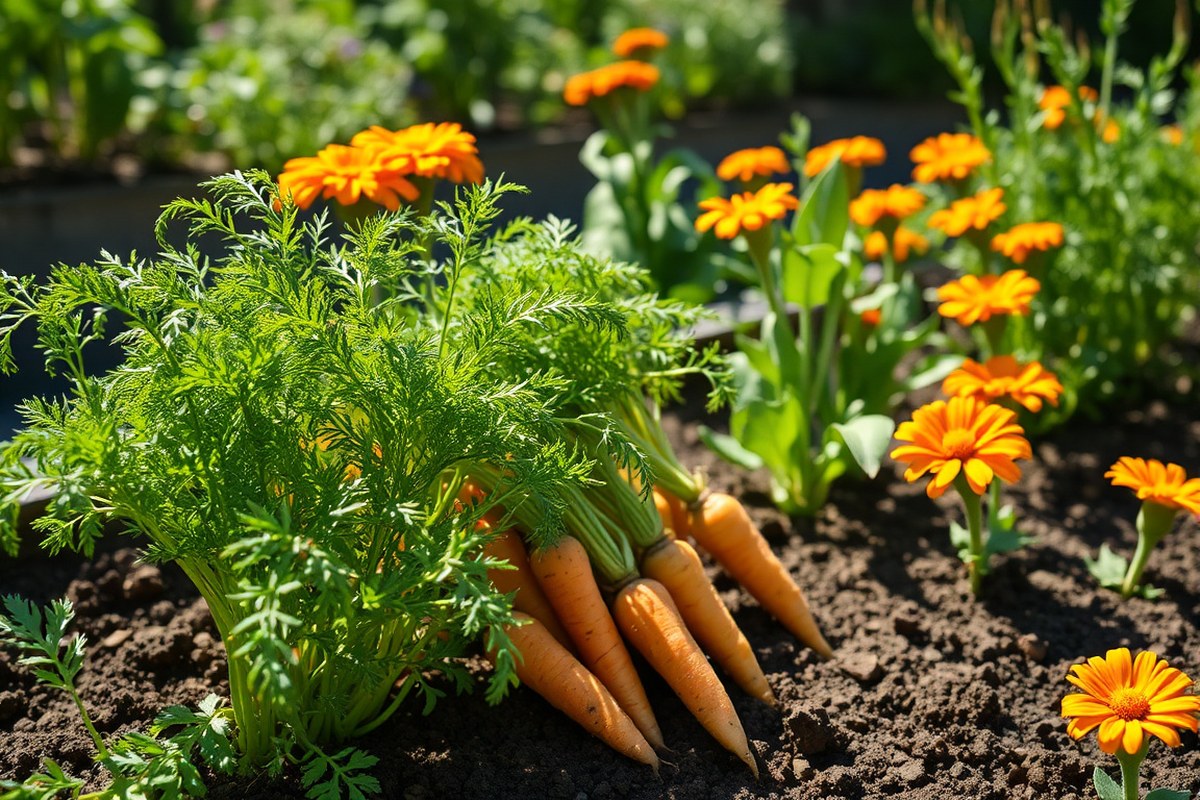
Carrots grow best alongside plants that protect them from pests or improve soil health. Strong-smelling herbs and allium family members keep carrot flies away. Growing these companions near carrots reduces pest damage and helps roots develop without stress.
Companion plants help carrots by improving soil nutrients. They also cover soil to keep moisture in place. This keeps the ground from drying out too fast.
Shallow-rooted vegetables create space for the deep carrot roots to grow freely. Some quick-growing greens shade the soil, lowering evaporation and keeping carrots hydrated longer.
- Alliums like garlic, onions, chives, leeks, and shallots repel carrot flies
- Sage and rosemary offer aromatic pest protection and improve flavor
- Nasturtiums attract beneficial insects and repel common garden pests
- Marigolds deter many pests and encourage helpful pollinators
- Lettuce, kale, and other leafy greens have shallow roots complementary to carrots
- Broccoli benefits from nutrients moved up by carrot roots nearby
Plant alliums directly beside carrots but avoid leeks on the north side. Leeks can overshadow carrot tops due to size. Put bush beans or taller plants on the south side.
This stops them from shading carrots in the north. It helps carrots get enough sunlight all day.
Use herbs like oregano and cilantro near carrots to attract ladybugs and lacewings. These insects control aphids and other pests that harm carrots.
Space plants 4 to 6 inches apart so roots have room without crowding. Water each properly to avoid competition.
Which Plants to Avoid Planting Near Carrots and Why
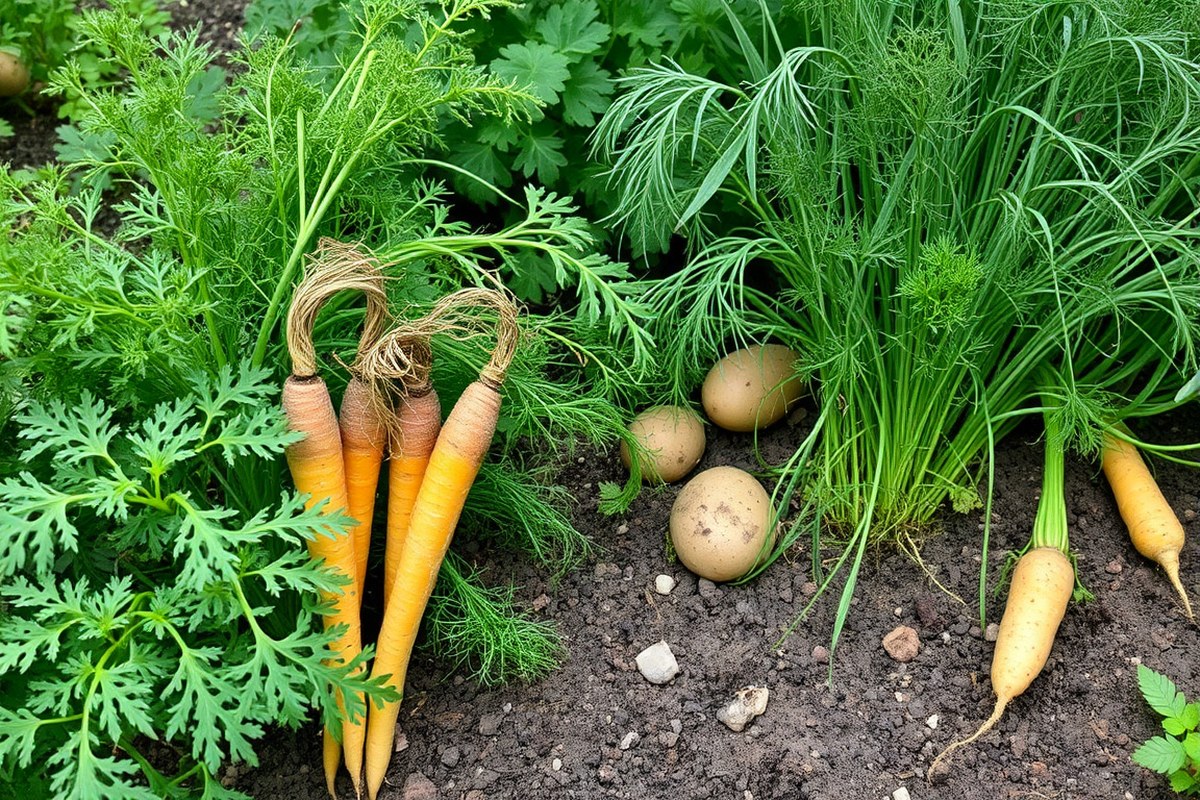
Plants Competing for Nutrients and Space
Root vegetables like parsnips, potatoes, and beets compete with carrots. They use the same soil nutrients and take root space. This can slow carrot growth and reduce yields.
When they grow too close, carrots get crowded and smaller. Celery also uses the same water and nutrients, making it a poor neighbour for carrots.
Plant your carrots away from these heavy feeders to let them spread and grow deep. For example, keep at least 12 inches between carrots and parsnips or potatoes to reduce competition. This space helps carrots develop their long, straight roots.
Plants Attracting Carrot Pests
Dill and parsley attract many of the same pests that target carrots. These include root maggots and carrot flies, which can damage or destroy your carrots’ roots. Planting them too close increases the chance of pest infestations.
Plant these herbs far from your carrots. You may want to avoid them in the same garden bed. This keeps carrots from any nutrient competition.
Cilantro, a parsley family member, is an exception since it attracts fewer carrot pests. Use pest-friendly herbs elsewhere to reduce the risk.
Allium Family Plants and Carrots
Onions, leeks, and garlic compete for space with carrots in your garden bed. These alliums also attract some of the same pests. Planting them too near your carrots can lead to smaller carrot roots and stressed plants.
Give carrots a wide berth from these plants, especially when spacing your rows. A 12 to 18-inch distance is smart. This space cuts competition and lowers the chance that pests spread from one crop to another.
Big, Tall Herbs That Overshade
Rosemary and sage grow tall and wide, which can shade carrots and stunt their growth. Carrots need full sun to grow well. Large herbs nearby block sunlight and take up space that carrots require.
Plant rosemary and sage at least 3 to 5 feet away from your carrots. This keeps your carrots sunny and free to spread. Watch for plant sizes before deciding on placement to avoid accidental shading.
Checklist to Avoid Problematic Plants Near Carrots
Use this practical checklist to keep your carrots safe from competition and pests.
- Don’t plant parsnips, potatoes, or beets directly beside carrots
- Avoid parsley and dill near carrots due to shared pests
- Space onions, leeks, and garlic at least 12 inches from carrots
- Keep rosemary and sage far enough to prevent shading and crowding
- Don’t plant celery close to carrots; it competes for water and nutrients
- Place cilantro away from carrot beds to reduce pest attraction (optional)
- Maintain good row spacing and loose soil for root growth
Following this checklist reduces root damage, pest risks, and poor growth. It helps your carrots get the nutrients, space, and sun they need to thrive.
Give your carrots lots of room to grow. Avoid planting them near plants sharing the same pests. This helps keep carrots healthy and strong.
Herbs That Improve Carrot Flavor and Control Pests
Planting certain herbs with carrots can improve carrot flavor and keep pests away. Strong scents from herbs confuse pests like carrot flies. Some herbs also attract helpful insects that protect your carrots naturally.
Chives and Onions: Natural Pest Barriers
Chives and onions emit a strong scent that repels carrot flies and aphids. These pests rely on smell to locate carrots.
So planting chives nearby helps keep carrots safe. Space chives about 6 to 8 inches from carrots to avoid competition.
Onions work similarly, creating a barrier that stops many pests. Plant onions between rows of carrots or around the garden edges. Just avoid planting chives near legumes, as they don’t grow well together.
Rosemary and Sage: Aromatic Companions
Rosemary and sage have tough, fragrant leaves that deter carrot flies and rodents naturally. When they bloom, these herbs also attract beneficial insects that eat carrot pests. Plant rosemary and sage around carrot beds, keeping about 12 inches away from carrot rows.
Both herbs thrive in well-drained soil and full sun. So place them in sunny spots near your carrots. Be careful not to overcrowd.
Too close means less airflow, which can hurt carrot growth. These herbs require little water, so don’t overwater your carrots when nearby.
Other Beneficial Herbs: Oregano, Cilantro, and Dill
Oregano produces a strong smell that repels various carrot pests, including carrot flies and nematode worms. It can also improve carrot flavor by reducing stress on the roots. Plant oregano on the garden edge or between carrots, spacing 8 to 10 inches apart.
Cilantro attracts helpful insects such as ladybugs and parasitic wasps that control pests like aphids. It grows quickly and can be interplanted with carrots.
However, avoid planting dill close to carrots since both attract the same pests. If you want dill, give it at least 12 inches distance.
How Root Depth and Sunlight Affect Companion Choices
Carrots have relatively shallow roots, usually about 6 to 12 inches deep. Picking companion plants with deep roots or similar shallow roots helps. These plants don’t compete much for water or nutrients.
This keeps your garden healthier and growing strong. Deep-rooted plants like tomatoes let carrots fill the topsoil and use resources well without crowding below.
Sunlight needs also shape which companions thrive beside carrots. Carrots like full sun but can tolerate some shade. Tall, bushy plants can block sunlight, stunting carrot growth.
For example, beet greens grow large and dense, casting heavy shade if planted too close. Keep these bigger plants at least 12 inches away to prevent unwanted shadow.
Carrot companions with low or upright growth fit best. Herbs like chives stay low and won’t shade carrots, supporting healthy root growth. Peas and beans fix nitrogen, also helping carrots thrive.
Space carrots in rows about 4 to 6 inches apart. Plant companions 8 to 12 inches from carrot edges. This spacing balances root and sunlight needs for both plants.
Fruiting Vegetables and Flowers That Support Carrot Growth
Tomatoes and peas both make good companions for carrots, but for different reasons. Tomatoes act as a natural pest deterrent, keeping carrot pests like leafminers and aphids away. Peas fix nitrogen in the soil.
This helps carrot roots grow better. It can increase your carrot harvest.
Flowers in your vegetable beds also play a big role in protecting carrots. Nasturtiums, calendula, and sweet alyssum attract beneficial insects like ladybugs and hoverflies. These insects prey on common carrot pests such as aphids, carrot flies, and whiteflies.
Marigolds can suppress soil nematodes that harm carrot roots. They also help pollinate other veggies.
To keep all these plants happy, avoid letting taller fruiting vegetables shade your carrots. Position tomatoes or cucumbers on the north side of your carrot rows. So sunlight reaches carrot tops.
Space fruiting plants 12 inches or more from carrots. This keeps airflow and light good. Both crops benefit from this.
- Plant peas early in the cool season alongside carrots for shared temperature needs.
- Place tomatoes near carrots to reduce tomato hornworm and carrot fly pests.
- Mix flowers like nasturtiums and sweet alyssum around carrots to draw helpful insects.
- Keep taller vegetables north or west of carrots to avoid afternoon shade.
- Use onions or garlic nearby to repel carrot flies further.
Place flowers and pest-repellent vegetables among carrots to reduce chemical use and improve yields.
Combining peas and carrots works well because peas grow quickly in spring and improve the soil. Tomatoes offer protection but need space so carrots don’t get crowded or shaded. Plant flowers near carrots all season long.
They attract predatory insects that eat pests. This protects your carrot crop early on.
Timing and Spacing for Planting Carrots with Companions
Plant companion crops with carrots at the same time for best results. Sow faster-growing companions shortly after if needed. This helps both plants thrive together.
Space companion plants about 6 inches away from carrot rows. Keep carrot seeds 1 to 2 inches apart in rows. This spacing allows room for growth.
Adjust your sowing based on the season. Plant early in spring when it’s cool, or late summer for warm-weather plants. Match timing to each plant’s needs.
Preparing Rows and Furrows for Carrot and Companion Seeds
Arrange your garden into rows or square-foot beds for efficient planting. Carrots should be spaced about 2 inches apart within these rows. Space rows 12 to 18 inches apart to let carrots grow fully without crowding.
Plant onions, scallions, or chives in rows roughly 6 inches away from carrot rows. This distance helps both crops grow well without competition. You can also surround carrot beds with chives spaced 6 inches apart for pest control.
- Loosen soil deeply to about 8 inches, removing stones that block carrot roots.
- Make furrows in your bed to fit plant spacing. Space carrot rows 2 inches apart. Place companion alliums 6 inches apart in their rows.
- Sow carrot seeds thinly in the furrow, spacing them 1 to 2 inches apart.
- Plant companion seeds or sets in their furrows beside the carrots, keeping the 6-inch gap.
- Cover seeds lightly with loose soil to avoid hard crusting that blocks shoots.
- Water gently but thoroughly to settle soil and kickstart germination.
Staggered Sowing for Succession Harvests
Plant radishes 6 inches away from carrots soon after sowing carrots. Radishes mature faster and loosen soil for carrot roots. This staggered sowing also extends your harvest by mixing early and late crops.
For longer harvests, sow carrots in batches spaced two to three weeks apart. Companion plants such as onions or scallions can follow this pattern too. This method avoids having all crops ready at once, easing your garden work.
Managing Sunlight and Shading Between Plants
Carrots need full sun. So plant taller companions like onions on the north side to avoid shading.
Lettuce or other low-growing companions can fit in between carrots, benefiting from some warm shade. Monitor sunlight through the season to adjust companion placement and avoid crowding.
In hotter months, slight shading can protect carrots from heat stress. In cooler times, give carrots more direct sun by spacing companions a little wider. Testing how your garden layout works is key to balancing growth and sunlight for all plants.
Crop Rotation and Soil Health When Planting Carrot Companions
Rotating crops helps prevent carrot pests and soil nutrient loss. Avoid planting carrots in the same spot year after year. Instead, switch to legumes or alliums after carrots to keep soil balanced.
Legumes add nitrogen to the soil, which carrots need in moderate amounts. Plant peas or beans near carrots or in rotation beds to naturally enrich the soil. Alliums like onions reduce carrot fly problems and improve soil health by disrupting pest cycles.
To use crop rotation well, divide your garden into sections. In spring, plant carrots in one bed.
The following season, grow peas or onions in that bed instead. This breaks pest life cycles and helps replenish nutrients.
Carrots grow best with moderate fertility, so avoid heavy feeders right after them. A good rotation cycle starts with carrots. Next, plant peas or beans.
Then grow leafy greens that use less nitrogen. This sequence supports soil fertility and keeps pests low.
Using companions like marigolds alongside carrots can also reduce pests and attract beneficial insects. Planting daffodils around raised beds keeps rodents away. The extra work pays off by reducing pest damage and limiting the need for chemicals.
Watch your plants for signs of nutrient issues, like yellowing leaves. Your carrots look pale.
Add legumes next time to boost nitrogen naturally. Avoid adding too much nitrogen, which can cause forked or hairy carrots.
This approach needs some planning. It saves time and money. You reduce pest control and fertilizer costs.
Rotate every year or every other year, depending on your garden size and soil test results. This keeps your carrot harvest healthy and reliable.
Common Companion Planting Mistakes and How to Fix Them
Poor spacing is a common mistake when planting companions with carrots. Too close, and the roots compete for space and nutrients. Leave around 12 inches between plants to give carrots room to grow without crowding.
Timing errors also cause struggles. Carrots can be planted mid-fall in zone 9 for a winter harvest. But companions must match this schedule.
When one plant grows faster or slower, it may shade carrots. This can reduce sunlight or leave pests unchecked for carrots.
Shading is another problem. Taller companions like beans can block sunlight, stunting carrot growth. Choose plants with similar height or that mature earlier.
Plant carrots in a spot with 6 to 8 hours of sun. Avoid areas shaded by tall neighboring plants or buildings. This helps carrots grow better.
Sometimes pest problems persist despite companion planting. This means your pest-friendly plants are either missing or not enough.
Check for pests early and remove affected leaves. Use organic pest controls like neem oil or insecticidal soap as a backup.
Space your companions properly and keep an eye on sunlight to prevent competition.
- Plant carrots and companions 12 inches apart to avoid root competition
- Match companion planting times to avoid shading or growth mismatches
- Choose companions under 12 inches tall or that mature earlier than carrots
- Check for pest damage weekly and use organic controls if needed
- Mulch carrots in fall for overwintering, especially in zones 9 or warmer
Carrots grow best when companions don’t steal their space or light. Avoid packing plants tightly, which causes weak roots and fewer carrots. A simple planting plan with matched timing and spacing helps prevent most growth problems.
Having allies in the garden is great, but remember to adjust if pests return. Using more pest-repelling herbs or a licensed professional’s advice keeps your carrots safe and healthy. Companion planting works best as part of an overall care routine.
Step-by-Step Action Plan for Planting Carrots with Companions
Use this plan to plant carrots with companions that boost growth and block pests. Follow each step to see how well your garden supports healthy carrots.
- Before You Plant: Pick companion plants like onions, chives, or marigolds. Think about carrot root depth and sunlight needs when choosing. Check that they fit your garden’s light and soil conditions.
- Day 1: Prepare your soil by loosening it and removing stones or clumps. This helps carrots grow long roots without obstruction.
- Week 1: Sow carrot seeds in an even pattern. Plant companion herbs or flowers nearby but leave some space. Don’t crowd the carrots. Leave space as indicated on seed packets to avoid competition.
- Week 2: Thin carrot seedlings to avoid overcrowding. Make sure companion plants have room to spread without blocking carrot sunlight.
- Month 1: Monitor for pests like carrot flies or aphids. Companion plants such as dill or sage can help repel these. Note if pest numbers drop.
- After 6 Weeks: Check soil moisture and nutrient levels. Rotate companions yearly to maintain soil health and prevent disease buildup.
- Mid-Season: Harvest early companion herbs to make room for carrot taproots to grow deeper. Use fresh herbs to boost carrot flavor when serving.
- End of Season: Pull out the old plants once they are done. Add organic matter to your soil. Prepare soil for the next crop cycle.
Frequently Asked Questions
What Plants Help Improve Carrot Growth Besides Herbs?
Alliums like garlic, onions, and chives repel carrot flies. Planting broccoli nearby helps because carrots bring up nutrients broccoli uses. These plants create a friendlier environment for carrots by reducing pests and improving soil use.
Can Carrots Be Grown Successfully in Containers?
Yes, carrots grow well in deep containers at least 12 inches deep. Five-gallon buckets or grow bags with holes work great. Keep containers indoors under grow lights until it’s warm enough outside to move them.
How Should Carrots Be Spaced When Planting in Rows?
Space row lines about 4 to 6 inches apart to allow root room. Maintain consistent spacing to help carrot roots grow straight and healthy. Marking shallow furrows in the soil is an easy way to keep rows straight.
Where Is the Best Spot to Plant Bush Beans Near Carrots?
Plant bush beans on the south side of carrots in the northern hemisphere. They grow about 2 feet tall and could shade carrots if placed elsewhere. This position prevents blocking sunlight needed by your carrots.
How Far Away Should Tall Herbs Like Rosemary Be from Carrots?
Plant rosemary far enough so it doesn’t block sunlight or take space. Rosemary can reach 6 feet tall and 5 feet wide.
So give plenty of room. Avoid crowding to keep both plants healthy with good air flow.
How Do Timing and Climate Affect Planting Carrots for Winter Harvest?
In zone 9, plant carrots in mid-fall to harvest through winter. Cooler weather helps carrots develop sweeter flavors and better texture. Adjust planting times depending on your local frost dates and climate zone.
Final Thoughts
Growing carrots with the right companions improves growth and cuts down pests. Start by picking a few herbs or flowers that suit your garden’s light. Watch how your carrots respond, then adjust your plan next season for better results.
2 Comments