What Do Wheat Plants Look Like: A Complete Guide to Their Appearance and Growth
What do wheat plants look like? They start as short, grassy shoots.
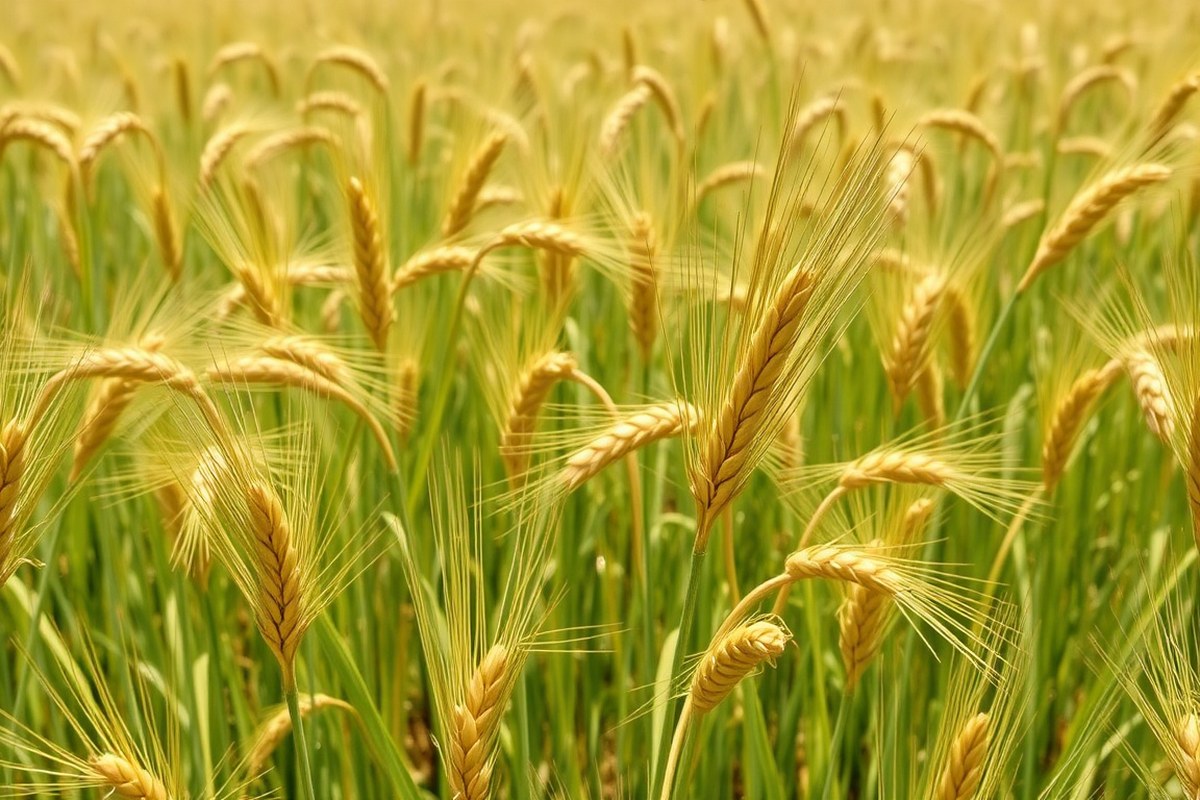
Then they grow tall stalks topped with grain heads that turn golden as they ripen. Expect plants reaching about 2 to 3 feet tall, with slender stems holding these heads steadily.
Leaves come in long, narrow shapes growing along the stem. The wheat plant changes color when it matures. It turns from bright green to pale yellow or gold.
You can easily see this color change. These shifts signal key growth stages, like heading and kernel development, important for timing harvest.
Wheat heads look like compact clusters with many kernels. Each kernel hides inside layers that protect it until it’s ready to sprout. The flag leaf is just below the head of the wheat plant.
It feeds the grain as it ripens. This makes the flag leaf stand out from the others.
Key Takeaways
- Wheat plants typically grow 2 to 3 feet tall, with thin, upright stems.
- Leaves are long and narrow, growing along the stem’s length.
- Wheat changes from green to yellow or gold as it matures.
- Grain heads are compact clusters that appear at the top of the stems.
- The flag leaf below the head plays a important role in grain filling.
- Kernel protection layers include the bran and germ, important for nutrition.
What Do Wheat Plants Look Like Throughout Their Growth?
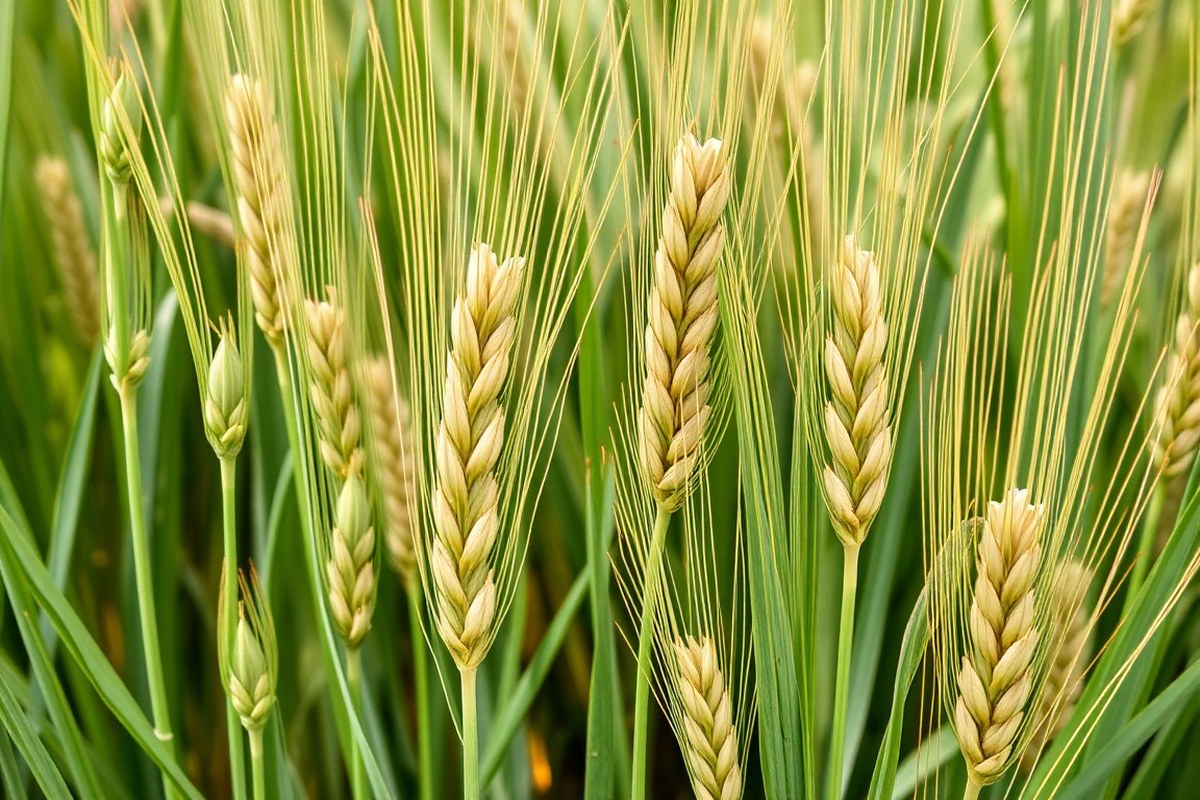
The wheat plant starts as a narrow spear pushing through the soil. This stage is called emergence or Feekes 1. At this point, you see just one leaf blade per seed without any shoots around it.
During tillering, Feekes 2 to 3, the plant sends out several shoots from the base. It forms a low clump of green stems that may spread out flat. These shoots grow sturdier as leaf sheaths begin to stand upright at Feekes 4 to 5.
| Stage | What the Plant Looks Like |
|---|---|
| Emergence (Feekes 1) | One narrow spear per seed |
| Tillering (Feekes 2, 3) | Low clump of shoots, often sprawling |
| Erect Growth (Feekes 4, 5) | Clump stands upright, sheaths thicken |
| Jointing (Feekes 6, 7) | Nodes appear as bumps, plant elongates fast |
| Flag Leaf (Feekes 8, 9) | Top leaf unrolls, collar becomes visible |
| Boot (Feekes 10) | Head swells inside flag leaf sheath |
| Heading (Feekes 10.1, 10.5) | Awns appear as head emerges |
The stem elongates during the jointing stage, Feekes 6 to 7. Wheat plants typically reach 2 to 3 feet tall here.
But some varieties grow up to 5 feet. Nodes or joints become visible just above the soil.
You see the flag leaf unroll between Feekes 8 and 9. It’s the last leaf, usually the largest, and helps the plant make grain. At Feekes 10, the head grows inside the flag leaf sheath before it emerges.
As the head pushes out (Feekes 10.1 to 10.5), awns or bristle-like structures appear. The color changes during growth. Seedlings show bright neon green, deepening to emerald green during vegetative stages.
When the plant flowers, colors shift to pale green or yellow-green. By harvest, wheat turns golden amber or straw brown. This color shows the plant has dried and is ready for harvest.
How to Recognize Key Wheat Plant Structures: Roots, Stem, and Leaves
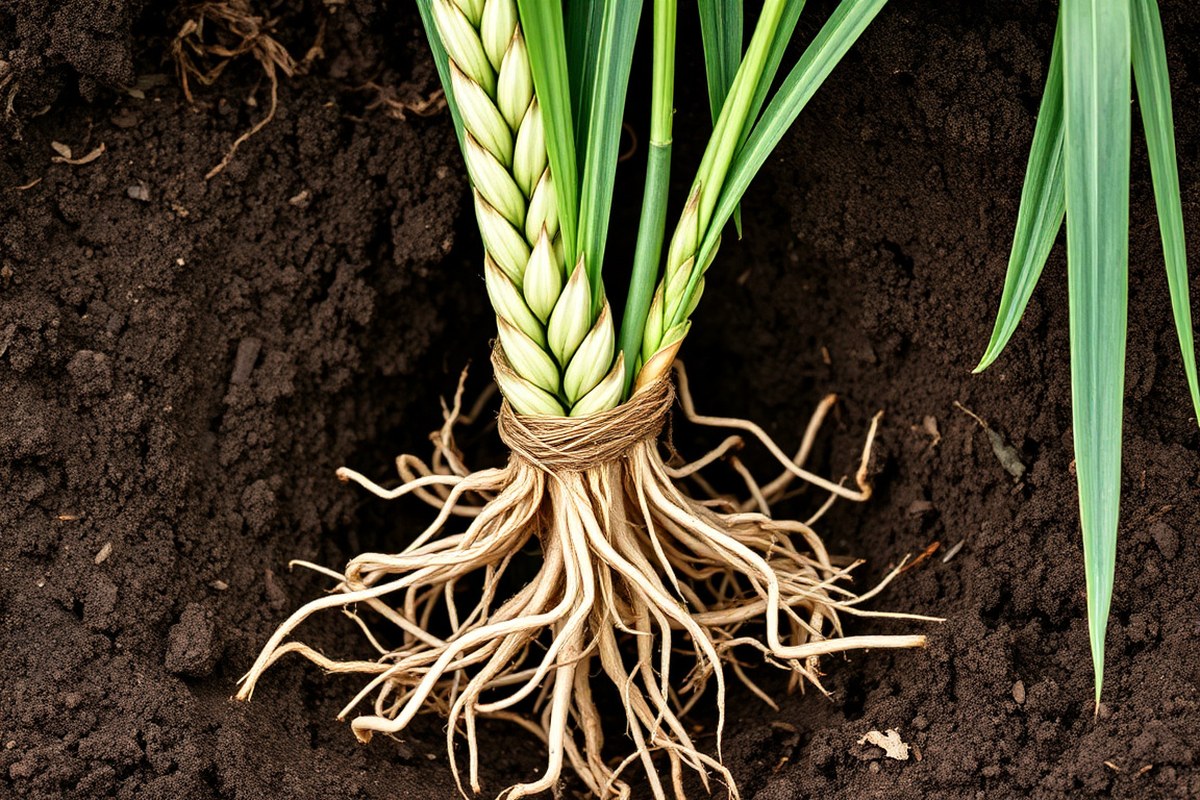
The wheat plant has a fibrous root system underground. It also has a hollow stem called a culm. The leaves are flat with ligules and auricles.
Each part has unique details you can spot in the field or garden. Learning to recognize these features helps you identify wheat correctly and understand its growth.
Wheat Root System: Structure and Function
The wheat root system starts with seminal roots that grow from the seed after planting. These roots branch out to anchor the plant and absorb water and nutrients. Crown roots grow near the soil surface as the plant grows.
They form a thick fibrous network. This supports many shoots or tillers.
This fibrous system allows wheat to efficiently capture soil resources. The roots don’t go very deep like some crops. But their spread near the surface makes it easier to access nutrients.
Check roots for a dense cluster of thin thread-like roots. These come from the stem base just below the soil.
The Hollow Stem or Culm and Its Nodes
The culm is the wheat plant’s stem. It’s round, pale green, and hollow inside. Solid joints called nodes separate hollow sections.
These nodes are firm swollen areas spaced along the stem. The hollow sections, called internodes, create a lightweight but sturdy support structure.
Wheat stems are typically between 0.7 and 1.2 meters tall, varying by variety and growing conditions. You can easily feel the nodes by gently squeezing the stem.
These nodes are important points where leaves and tillers develop. Where nutrients flow through the stem.
Flat Leaves and Their Key Identifiers
Wheat leaves are narrow, flat, and smooth, usually measuring 6 to 12 inches long. Leaves grow from the nodes of the stem. They wrap around the stem with a sheath at the base.
Then they extend into flat leaf blades. The leaves’ arrangement captures sunlight efficiently for photosynthesis.
Near the base of each leaf blade, you’ll find a thin papery flap called the ligule. Just below this, the auricles appear as small hairy claws that clasp the stem tightly.
Auricles help identify wheat from other grasses. Some grasses don’t have auricles or have different shapes.
How to Examine Wheat Plant Parts in the Field
Observe a wheat plant starting from the base upward. Gently brush soil away to see the fibrous roots spreading from the crown.
Feel the hollow stem, noting how nodes are spaced along it. Look closely at leaves to spot ligules and auricles near where leaves meet the stem.
Use a magnifying glass or hand lens to see the ligules. These tools also reveal hairs on the auricles.
Identify each leaf by its position on the stem, counting from the base for precise study. This method also helps detect early growth stages and overall plant health.
Check if the stem is hollow. Solid or damaged stems may show plant stress or disease.
Understanding these parts and their details gives you a solid base to recognize wheat accurately. This knowledge also helps in spotting problems or differences from other cereal crops in the field. Keeping a photo of labeled parts nearby can make learning easier.
What Are the Parts of a Wheat Head and How Do They Affect Grain Formation?
The wheat head, or spike, holds the key parts where grain forms. It consists of spikelets, florets, glumes, and sometimes awns. These parts work together to protect the developing kernels and support their growth.
Spikelet and Floret Structure
The spike is made of many spikelets arranged along a central stem called the rachis. Each spikelet acts like a small unit that holds several florets. These florets are the tiny flowers where kernels eventually develop.
Each floret contains the reproductive organs. When pollinated, the ovary inside the floret develops into a wheat kernel. The number of florets per spikelet can vary, which influences the number of grains per head.
Awned vs Awnless Wheat Heads
Some wheat types have awns, which are long, thin bristles extending from spikelets. These give the wheat head a “bearded” look. They help protect the grains from birds.
They also keep pests away from the grain. Awnless varieties lack these bristles and appear smoother.
Awns do not directly affect grain quality but can impact harvesting and field conditions. Awned heads may trap more moisture, which could encourage disease in wet climates.
- Awned wheat heads have long, thin bristles (awns).
- Awnless heads lack visible bristles and look smooth.
- Awns offer minor protection against pests and birds.
- Awned heads may retain moisture longer after rain.
- Harvesting equipment may require adjustments for awned wheat.
- Varieties chosen depend on climate and grower preference.
Layers and Anatomy of Wheat Kernels
Each wheat kernel grows inside a spikelet, protected by outer layers called glumes. These glumes form a tough hull that shields the developing grain from damage. You can think of glumes as a security fence around the grain.
Inside the glumes, the kernel has its own layers: the bran, germ, and endosperm. The bran is fibrous and tough.
The germ holds essential oils inside. The endosperm stores starch that feeds the seedling.
When mature, wheat kernels become oval-shaped with a crease down one side. Moisture levels around 35 to 45 percent are needed to start germination. So the protective layers help regulate this.
How to Identify the Flag Leaf and Its Role in Wheat Growth
The flag leaf is the topmost leaf on a wheat plant, just below the grain head. It stands out because it is larger and straighter than the lower leaves. This leaf grows during the heading stage before wheat flowers appear.
It usually happens in late spring. The timing depends on your local climate.
You can recognize the flag leaf by its position and shape. It is typically longer and narrower than the leaves lower on the stem. The flag leaf points upward or slightly outward.
This makes it easier to spot than other leaves. More stomata are on its upper surface. This helps it absorb more sunlight than most leaves.
The flag leaf plays a key role in photosynthesis during grain filling. It supplies most of the energy the plant needs to develop healthy kernels. All leaves do photosynthesis.
The flag leaf catches the most light when the wheat head matures. A healthy flag leaf is key for good grain yields. Without it, the plant loses energy at a important time.
The flag leaf grows after the boot stage. At that time, the wheat head is still inside the stem. During this time, the flag leaf unfolds fully.
Watch a wheat plant for a few days. Lower leaves dry out while the flag leaf stays green. This difference is a sign that the flag leaf is becoming the primary energy provider.
Look for the leaf closest to the wheat head. That leaf supports the head and is the flag leaf. It is usually the last leaf to fully expand.
Sometimes it can be tricky if you catch the plant early. So checking images of the flag leaf at various stages can help. Photos showing the leaf unfolding near the grain head give a clear visual clue.
The flag leaf’s health depends on proper care during late growth stages. Applying fertilizers too early can reduce its impact because the leaf hasn’t developed yet. Fertilize just before the boot or heading stages.
This boosts the flag leaf’s photosynthesis. That timing supports better grain development and overall yield without wasting resources.
How to Tell Wheat Plants Apart from Similar Grains in the Field
Wheat plants can look like barley, rye, oats, or triticale at first glance. Use specific details like auricles, spike shape, and awns to tell them apart. These features help you quickly identify wheat, even in mixed fields.
Auricles and Leaf Sheath Differences
Look where the leaf blade meets the stem. Check for auricles. These help tell wheat from similar grains.
Wheat has short, hairy auricles that barely clasp the stem. Barley has larger, hairless auricles that wrap tightly around the stem.
Rye also has auricles, but they’re usually longer and harder to see than barley’s. Oats lack auricles altogether. So no small ear-like projections at the leaf base mean you’re likely seeing oats.
The ligule is a thin membrane above the auricles. All these grains have it. It is less useful for identification.
| Feature | Wheat | Barley | Rye | Oats | Triticale |
|---|---|---|---|---|---|
| Auricle Size | Short, hairy | Large, hairless | Medium, hairy | Absent | Intermediate, hairy |
| Auricle Clasp | Lightly clasping | Tightly clasping | Moderate | None | Similar to wheat |
| Ligule | Present | Present | Present | Present | Present |
Check auricles to rule out oats immediately. Hard to spot auricles point to rye rather than wheat or barley. This step saves time before looking at spike details.
Spike Shape and Awn Presence
The wheat spike is generally shorter and plumper than barley’s slender spikes. Wheat spikes have a mix of bearded and beardless types.
Bearded wheat has long, fuzzy awns that catch light and give a soft look. Beardless wheat has very short or no awns, making spikes appear smooth.
Barley almost always has long awns, making its spikes look brush-like and less compact. Rye spikes are noticeably longer and thinner, with long awns as well.
Oats don’t have spikes; they have loose panicles with individual oat grains spreading outward. Triticale, a wheat-rye hybrid, has spikes similar to wheat but usually with longer awns like rye.
Don’t expect all wheat to have visible awns; awnless varieties are common.
Stem and Plant Height Variations
Wheat stems are rigid and stand upright well. They tend to be shorter than rye but taller than oats. Barley stems have a slightly rough feel and are usually similar in height to wheat.
Rye can grow taller than wheat. It often reaches 3 to 4 feet. Wheat grows 2 to 3 feet tall.
Oats have thinner stems and usually droop more, making plants look less stiff. Triticale stems are tougher but vary in height depending on the cross. Look for a stiff, strong stem with upright leaves to narrow down wheat.
What Do Wheat Kernels Look Like and How Do Varieties Differ?
Wheat kernels vary in shape, size, and color depending on the variety. Hard red wheats usually show a reddish brown, medium-sized oval kernel. Soft white wheat has cream-colored, smaller, slender kernels that feel softer to the touch.
Durum wheat stands out with large, plump amber kernels. They look rounder and much harder than other types. These differences matter because they show what the wheat is best for.
Some wheat is good for bread. Others work better for pasta or pastries.
A mature wheat kernel is oval with pointed tips and loses its green tint. When ripe, kernels turn firm and dry, ranging in color from white to red or yellow. This change shows the kernel stopped gaining weight and is ready for harvest.
- Hard red winter and spring wheats have reddish brown to dark reddish kernels
- Soft white wheat kernels are cream-colored and feel soft
- Durum kernels are large, amber, plump, and very hard
- The typical shape of kernels ranges from oval to round, depending on type
- Kernel size varies from small in soft white to large in durum wheat
- Mature kernels are hard and lose any green color they had earlier
- A head usually holds about 30 to 50 kernels, depending on the variety
You can identify kernel maturity by checking its color and hardness. A firm feel and golden yellow or amber shade often mean full maturity. Also, the flag leaf and the wheat head often turn yellow or tan when kernels ripen.
The number of kernels on one wheat head differs by variety. Most wheat heads bear between 30 and 50 kernels. Varieties with long beards have more bristle-like awns around the kernels, giving heads a spiky look.
| Variety | Kernel Color | Kernel Size | Shape |
|---|---|---|---|
| Hard Red Winter | Reddish Brown | Medium | Oval/Elongated |
| Soft White | Cream | Small | Slender |
| Durum | Amber | Large | Plump/Round |
What Color Changes Occur in Wheat Plants During Their Lifecycle?
Wheat plants start life as bright green seedlings. This green comes from chlorophyll, the pigment plants use for photosynthesis. Young plants keep a vibrant green color as they grow and develop leaves.
As wheat matures, its color slowly shifts. Leaf tips and stems may change from bright green to lighter green or pale yellow. This shift signals the plant using up stored nutrients and preparing for its next stage.
Near harvest, wheat stalks turn yellow or golden. The seed heads droop, heavy with grain. This golden color shows the plant stopped growing.
It is drying down now. The plant is ready for harvest.
- Bright green: Healthy seedlings and active growth
- Light green/pale yellow tips: Early signs of maturing or mild nutrient stress
- Yellowing leaves: Normal aging or water stress
- Golden stalks and heads: Harvest readiness
- Browning or spotted leaves: Possible disease or severe nutrient deficiency
Color changes in wheat often reflect its health and growth stage. Yellowing not caused by natural aging can mean drought or nutrient problems. Dark spots or uneven coloring might point to disease or insects.
Watching color progression helps you time decisions like irrigation or fertilizer. Taking photos at different growth stages makes it easier to track changes. Remember that wheat’s genetics also affect its shade of green or gold.
At typical US farms, seedlings grow bright green fast. They appear in 7 to 14 days. That happens early in the season.
Yellowing can begin 60 to 90 days later, depending on weather and soil. Wheat’s final golden harvest color often appears 120 to 140 days after sowing.
Common Mistakes and Tips for Accurately Identifying Wheat Plants
Many confuse wheat with other grasses like barley or rye. These plants share similar green heads and blade-like leaves, making quick ID tricky. Focus on the collar area, which reveals telling features unique to wheat.
Wheat stems stand straight and have hollow centers inside. This characteristic helps distinguish wheat in early growth stages, especially before heads form. Taking multiple plant samples is smart to catch variations and avoid errors.
Another common mistake is identifying wheat too early or too late in the season. Wheat changes with its growth cycle.
So checking at the seedling or post-flowering stage gives the best cues. You want to avoid confusing immature wheat leaves with grass seedlings that may appear similar.
- Check the hollow, upright stems to separate wheat from solid-stemmed grasses.
- Observe the collar area below the leaf blade for unique wheat features.
- Sample several plants around the field for consistent traits.
- Identify wheat during active growth phases, not when the plants are overly dry or cut down.
- Look for leaf sheath texture; wheat sheaths tend to be smoother than others.
- Remember that wheat can regrow after cutting. So don’t rely on cut plants for ID.
Improving accuracy means a good look and feel, not just a glance. Touch the plant to confirm the hollow stem.
Compare multiple plants to spot consistent features rather than anomalies. Color alone can mislead since many grass species share similar green tones.
Always check the stem’s hollowness and collar details when in doubt to confirm wheat correctly.
Step-by-Step Action Plan to Identify and Manage Wheat Plants
Follow these steps to spot wheat plants at different stages and manage your crop well.
- Early Growth (Week 1 to 3): Look for narrow, flat leaves and thin stems. Confirm roots are spreading in loose soil.
- Tillering Stage (Week 4 to 6): Count stems growing from the base. More tillers mean better yield potential.
- Flag Leaf Appearance (Week 7 to 8): Identify the tallest, last leaf. A healthy flag leaf supports grain filling.
- Heading Stage (Week 9 to 10): Check wheat heads emerging from the stem. Look for developing grain structures.
- Grain Filling (Week 11 to 14): Examine the wheat head’s kernels. Kernels should start firming and changing color.
- Maturity (Week 15 and beyond): Notice golden, dry heads and hard kernels. This shows wheat is ready to harvest.
- Compare Fields: Spot differences from barley or rye by leaf shape and head arrangements. This helps avoid crop mix-ups.
- Regular Checks: Walk fields weekly and note color changes. Early spotting of problems helps protect your yield.
Frequently Asked Questions
Can You Describe the Wheat Crop?
A wheat crop looks like dense grass growing knee high to waist high. Plants have narrow leaves and develop golden seed heads at maturity, ready for harvest. The color changes from green to a golden glow as kernels ripen.
How to Harvest Wheat Berries?
Harvest wheat berries when the plant is fully golden and dry. Use a combine or manual methods to cut seed heads and separate kernels. Timing is key to avoid moisture damage and ensure good grain quality.
What Type of Plant Looks Like Wheat?
Rye and barley are common plants that look similar to wheat. Rye leaves feel rougher to touch. Barley seed heads have long awns.
The awns stick out clearly from the heads. Checking the seed head shape helps tell them apart.
When Should You Plant Wheat?
Plant wheat in early fall or spring depending on your region. Fall planting suits winter wheat varieties for cold tolerance. Spring planting fits spring wheat but needs good soil moisture.
Why Do Wheat Flowers Bloom Only a Few Days?
Wheat flowers bloom briefly to allow effective pollination and seed setting. The short bloom reduces water loss and exposure to pests. Flower timing depends on temperature and day length.
How Tall Do Wheat Plants Usually Grow?
Wheat plants typically grow between 2 and 4 feet tall. Height depends on variety, soil quality, and weather conditions. Taller plants may need support to avoid lodging before harvest.
Wrapping Up
Wheat plants change a lot from sprout to harvest. Knowing what to look for at each phase helps you care for them right. Check your field this week for the flag leaf.
This shows how your wheat is growing. Watch closely to track its progress.