Do Jade Plants Like to Be Root Bound? What Actually Works for Healthy Growth
Do jade plants like to be root bound? They do, but only to a certain extent.
When roots fill 70 to 80 percent of the pot, it helps. This growth encourages plants to stay compact and bushy.
This tight root space also improves water use, lowering waste. But if the plant gets too crowded, it can stop growing well or develop root problems.
Checking your jade plant’s roots lets you know when it needs more space. Usually, repotting every 2 to 3 years keeps them healthy and happy without losing benefits.
Start by choosing a pot just 1 to 2 inches wider in diameter. This small increase prevents overpotting, which can trap moisture and harm roots.
Key Takeaways
- Slightly root bound jade plants grow more compact and use water efficiently.
- Root bound means roots take up 70 to 80 percent of the pot volume.
- Repot young jade plants every 2 to 3 years to maintain good health.
- Choose a new pot just 1 to 2 inches wider to avoid overpotting.
- Overly large pots can trap water and cause root rot issues.
- Watch for circling roots inside the pot as a sign to repot.
Do Jade Plants Like to Be Root Bound?
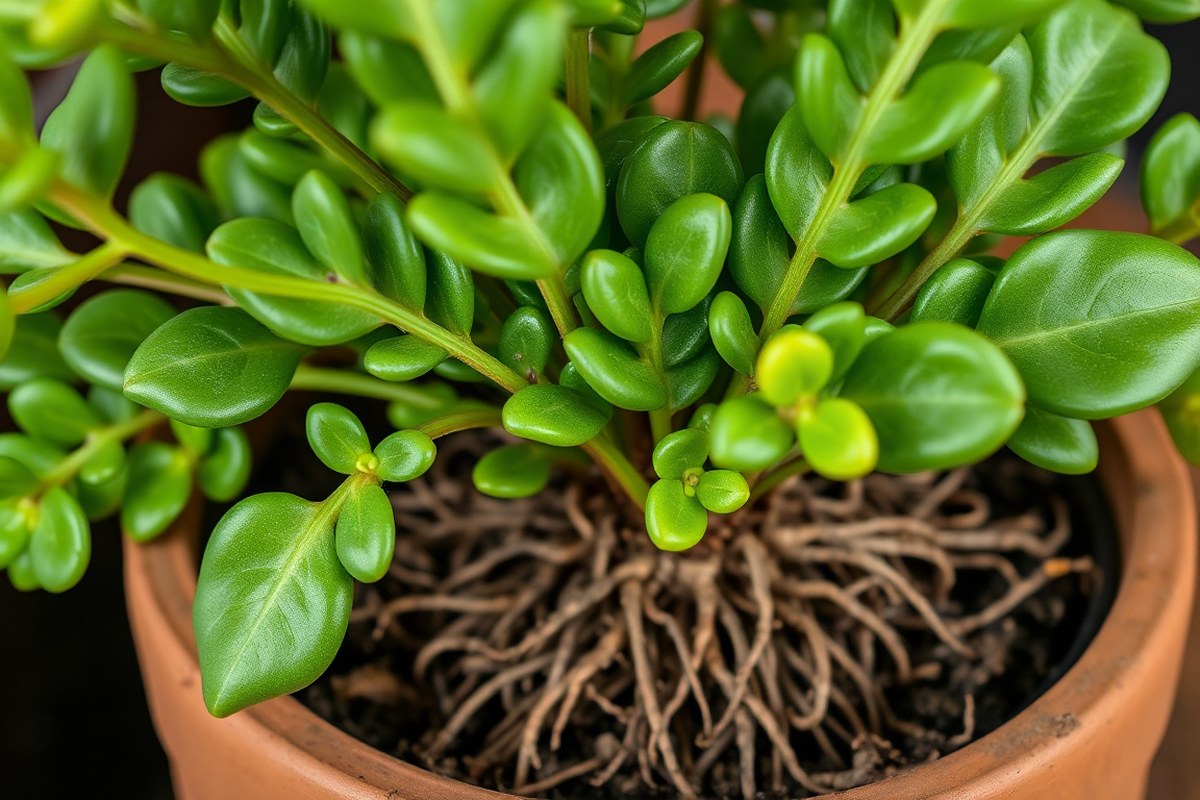
Jade plants do not like to be severely root bound. But they can tolerate slight confinement. When roots fill 70 to 80 percent of the pot, the plant changes.
It often grows more compact and bushy from this. This mild root crowding helps the plant use water more efficiently and can even encourage blooming.
Too much root crowding causes problems like stunted growth and droopy, yellowing leaves. Roots competing for space reduce the plant’s water and oxygen supply, stressing it out.
You see roots poking through drainage holes or the plant wilting. These signs show the plant is too root bound.
Young jade plants like slight root bound conditions. A tighter root ball helps roots grow stronger before expanding. Your plant has many branches and is root bound.
You can divide it by cutting through the root ball. This eases root crowding and encourages healthy growth without forcing a bigger pot.
What Does Being Root Bound Mean for a Jade Plant?
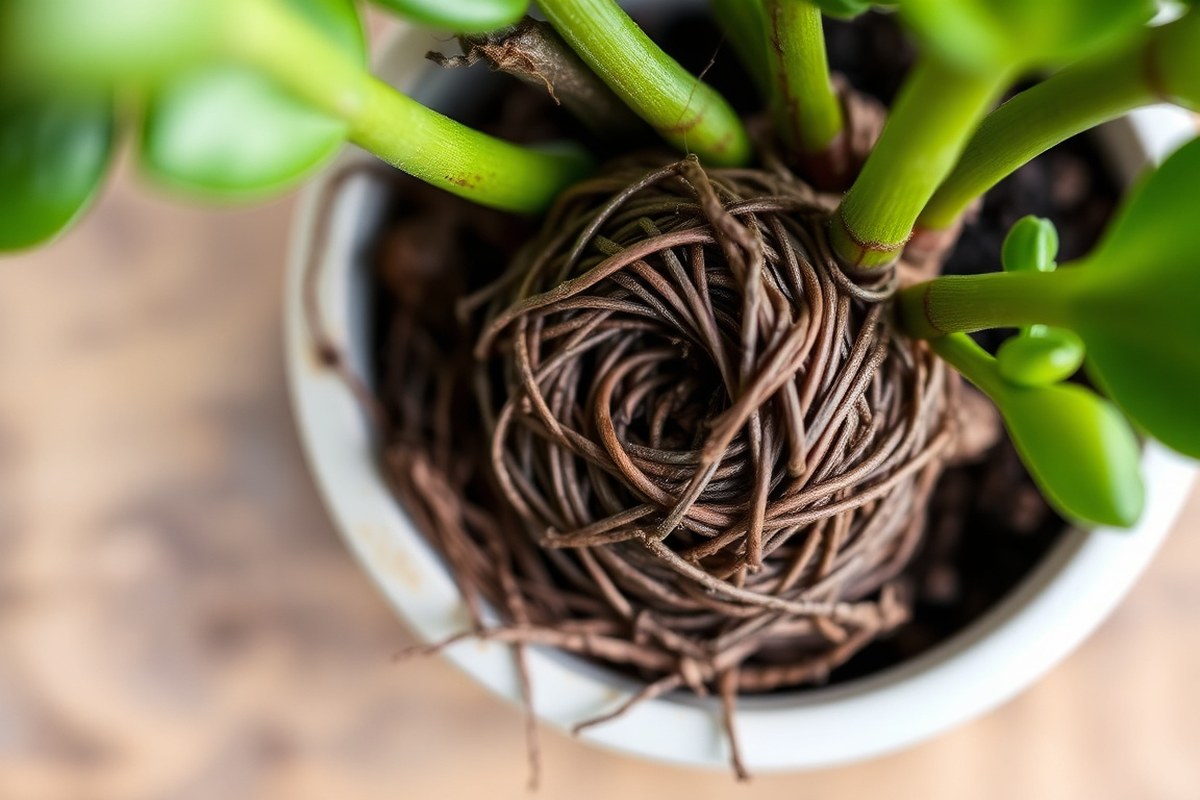
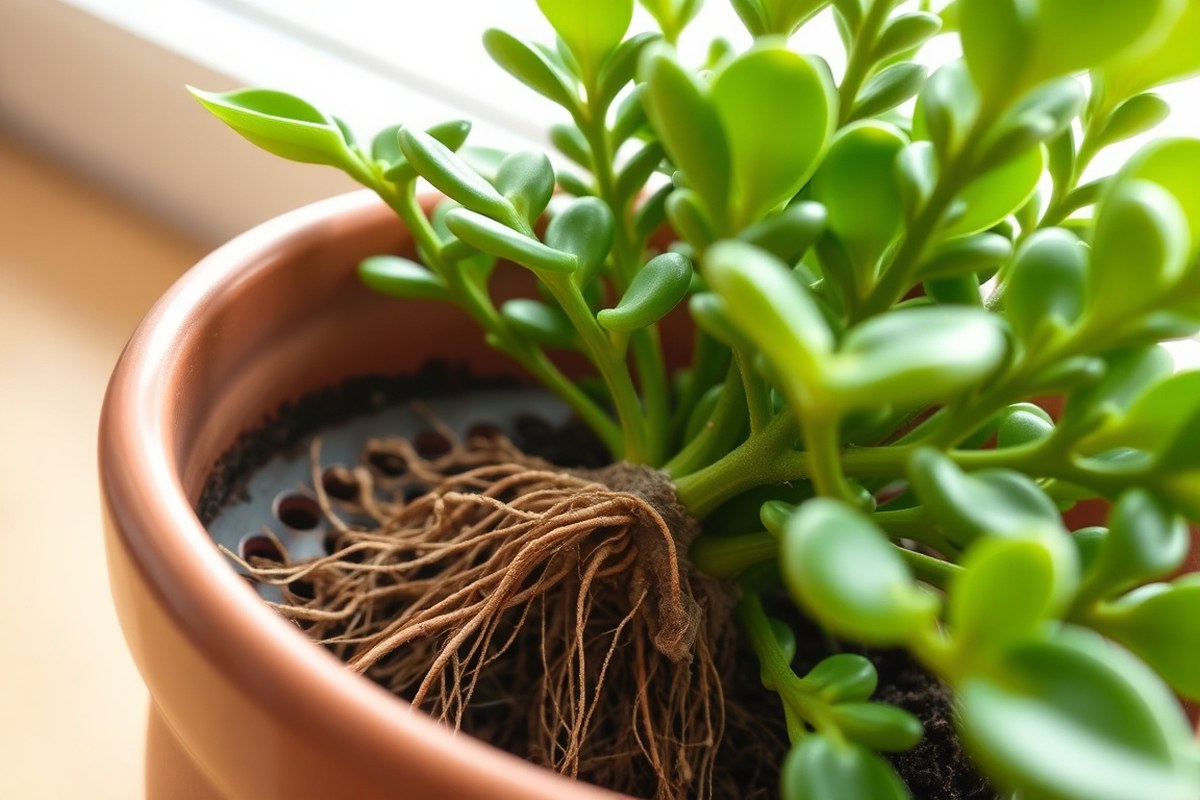
Being root bound means your jade plant’s roots have outgrown their pot. The roots become tightly packed, circling the inside or growing out of drainage holes. This happens when the root growth exceeds the space the container provides.
How Jade Plant Roots Grow over Time
Jade plants develop thick, fleshy roots that spread slowly but steadily. As the roots grow, they fill the soil volume and seek new space. In a small pot, the roots soon reach the container edges and start circling.
This circling happens because roots continue growing until stopped by the pot walls. Instead of growing outward, the roots wind around inside the pot. This compact growth can limit how much nutrient and water the roots absorb.
Why Roots Circle and Fill the Pot
The pot confines root space, causing roots to bend and twist inside it. With nowhere else to go, roots press against pot sides and through drainage holes. This leads to a dense, tangled root ball that fills the container.
Root circling also happens because jade plants conserve energy. Confined roots reduce excessive root growth and redirect energy to the plant’s stem and leaves. This snug environment can keep the plant stable but eventually limits growth.
What Happens When Jade Roots Are Root Bound
A root bound jade plant suffers less nutrient and water uptake due to root crowding. Growth slows, and you might see smaller new leaves or halted growth. Continued root crowding stresses the plant and may cause leaf yellowing or dropping.
Roots pressing tightly together reduce soil moisture retention. Water drains quickly, making it hard for roots to stay hydrated. This risk of root rot increases if you overwater or use poor-draining soil.
Understanding Root Bound Stages for Jade Plants
Root systems go through mild to severe root bound stages. At mild stages, roots fill about 60% to 70% of the pot but don’t cause stress. When they fill 80% or more, water absorption slows and growth declines.
Severe root bounding means roots occupy over 90% of the pot. At this point, the plant faces significant stress and nutrient issues. Waiting too long to repot can damage roots and harm your jade plant.
When and Why Being Root Bound Matters
Jade plants tolerate being slightly root bound better than many plants. A snug root fit mimics their natural environment and limits overly fast growth. However, roots that become too crowded reduce your plant’s health and vigor.
Regularly checking root space and repotting prevents problems. Providing just enough room avoids excess moisture, reducing root rot risk. Matching pot size with root growth keeps your jade plant thriving without unnecessary stress.
Watering a root bound jade plant needs care. Too much water can quickly cause root rot.
How to Tell If Your Jade Plant Is Root Bound
Spotting Above-Soil Signs of Root Binding
Your jade plant shows visible signs if roots outgrow the pot. Watch for leaves turning yellow or dropping prematurely. The plant may look stunted or fail to grow new leaves as usual.
Leaves shrinking or becoming brittle can also signal root crowding. Sometimes you notice the jade leaning or top-heavy because roots limit stability. These clues above the soil mean the roots need more room.
Checking Below the Soil Without Disturbing Roots
Gently slide out the whole plant if unsure about root crowding. Roots wrapping tightly around the soil ball means the plant is root bound. Roots circling the pot edges or growing from drainage holes are definite signs.
Use a chopstick or finger to test soil moisture deeply. Dry soil with wilted leaves shows roots may be stressed from limited space. This method helps avoid damaging roots while checking their condition.
Visual and Physical Signs in Root Bound Jade Plants
Look for certain signs both visible and touchable to confirm root binding:
- Roots growing through drainage holes or circling inside the pot
- Soil drying out very quickly after watering
- Plant wilting even when soil feels moist
- Potting soil compacted or pulling away from pot edges
- Plant top-heavy or leaning with sparse, small leaves
- Slow growth despite adequate light and care
These symptoms combined often point to a cramped root system limiting the jade plant.
When Root Bound Becomes a Concern
Moderate root crowding supports the plant’s structure and flowering. However, severe root binding means roots lack nutrients and water. It can cause stress, poor growth, and leaf drop over weeks or months.
Repotting is best planned once you see definite signs during spring or early summer. Avoid waiting too long, which risks harming your plant’s health and stability. Acting early helps restore proper root space and vitality.
How Often Should You Repot a Root Bound Jade Plant?
Repot jade plants every two to three years under normal conditions. Younger plants need repotting more often because their roots grow faster. Mature plants grow slowly and tolerate being root bound longer.
Urgent repotting happens when signs like yellowing leaves or slow growth appear. These signs mean the plant’s roots can’t get enough water or nutrients. Move your jade plant to a slightly bigger pot.
Pick one 10 to 15 percent larger. This helps avoid overpotting problems.
| Condition | Recommended Action |
|---|---|
| Soil dries within 1, 2 days after watering | Increase pot size by one increment (e.g., 6 in to 8 in) |
| Roots visibly circling pot and soil feels compacted | Tease outer roots gently; prune any dead roots |
| Leaves yellow or drop despite recent watering | Repot immediately with well-draining mix; add perlite |
| Growth stalls over two weeks after repotting | Check for root constriction; consider a second repot |
When repotting a root bound jade plant, use a fresh, well-draining mix. Adding perlite or coarse sand helps water reach roots quickly. This prevents the plant from drying out after the move.
Only increase pot size one step at a time to keep roots healthy. When the pot is close to the biggest size, increase size just a little. A modest pot size boost keeps water use balanced and stops rot risks.
Choosing the Right Pot Size to Avoid Overpotting
Pick a pot that is just a bit bigger than the current root ball. Increasing the pot diameter by about 10 to 15 percent usually works well. This size gives roots room to grow without leaving too much empty soil.
Jumping two or more pot sizes can create problems. A too-large pot holds excess water around the roots. Jade plants are prone to root rot if their soil stays soggy for too long.
Since jade plants store water in their leaves, they need well-drained soil and moderate watering. Using a pot too big traps moisture and delays soil drying between waterings. This moisture encourages root rot and fungal issues.
When repotting, use a light, well-draining potting mix. Avoid heavy garden soil, which keeps too much water.
After moving the plant, wait about a week before watering. This pause helps any roots injured during repotting to heal.
Check the root ball before you choose a new pot. If the roots fill the old container and begin circling, it’s time to repot.
Then pick a pot just slightly larger. This careful step helps roots explore more soil without drowning in moisture.
Don’t pick a pot more than one size larger. It may hold too much moisture and cause root rot.
Step-by-Step Guide to Repotting a Root Bound Jade Plant
Repotting a root bound jade plant takes care and patience. You need to remove it from its pot carefully. Check for tangled roots and trim them.
Then, plant it in fresh soil. Water it only after the soil dries to avoid root rot.
Preparing the New Pot and Soil
Choose a pot slightly larger than the old one to avoid overpotting. Jade plants prefer pots with drainage holes to stop water from pooling. Use a light, well-draining cactus or succulent soil to keep roots healthy.
Fresh soil gives roots space to grow without staying soggy. Avoid heavy or garden soil because it holds too much moisture. You can mix regular potting soil with sand or perlite if needed.
Inspecting and Trimming Jade Roots
Remove the plant carefully by tipping the pot and tapping the sides. Hold the base gently and ease out the root ball to avoid damage. Check the roots for knots and brown or mushy parts that show rot.
Trim off any dead or overly tangled roots with clean scissors or pruning shears. Cutting helps promote healthy new growth and stops rot from spreading. For very dense roots, trim by about one-third, but not more.
When the plant leans after trimming roots, cut a stem. Place that cutting in water to root. It takes a few weeks for new roots to form before planting.
Transplanting and Watering Guidelines
Place a layer of fresh soil at the bottom of the new pot. Set the jade plant in the center and fill around the roots gently with soil. Firm the soil lightly, but don’t press too hard to keep airflow.
Water only when the top inch of soil feels dry to the touch. Overwatering invites root rot, especially since jade are succulents. Give a small amount and let water drain out completely.
Keep the plant in bright, indirect sunlight for the first week to reduce transplant shock. Avoid fertilizing for a month after repotting to let roots recover fully.
- Water the plant a day before to moisten the soil without soaking.
- Loosen the soil edges gently with a knife or stick to ease root removal.
- Remove the jade plant carefully from the pot, protecting its stems and leaves.
- Inspect roots for circling or brown, mushy parts and trim them cleanly.
- Prepare a clean pot with proper drainage and add a fresh soil layer.
- Place the plant and fill soil around, firming it lightly.
- Water slightly only after the soil surface dries out completely.
- Keep the plant in indirect light and do not fertilize for several weeks.
Common Mistakes When Repotting Root Bound Jade Plants
Common Mistakes When Repotting Root Bound Jade Plants
Overpotting is a common mistake when repotting root bound jade plants. Using a pot too large holds more soil, which stays moist longer. This can cause root rot, especially since jade plants prefer a shallow root system.
Another problem happens with overwatering. Jade plants store water in their thick leaves.
Watering too often leads to mushy leaves and damaged roots. You can spot root rot by soft, brown roots and a sour smell.
Timing also matters when repotting jade plants. Repotting during dormancy slows recovery and stresses the plant.
The best time is early spring, before new growth begins. This helps the jade plant settle in and grow strong roots.
- Check roots carefully before repotting and remove any mushy parts.
- Choose a pot just one size bigger to avoid too much soil moisture.
- Water only when the top 1 to 2 inches of soil feel dry to touch.
- Repot in early spring, avoiding cold or dormant periods.
- Use well-draining soil like a cactus mix to keep roots healthy.
- Support heavy top growth with stakes to prevent toppling over.
To fix root rot, trim away soft roots with clean scissors. Let the plant dry for a day before repotting in fresh soil. Be careful not to water again for at least a week to reduce moisture around roots.
Root bound jade plants can become sensitive to moisture too. So balancing watering is key.
Watch for signs like drooping leaves, dry soil, or shrivelling branches. Catching problems early saves the plant from severe damage.
How to Care for Your Jade Plant After Repotting
After repotting your jade plant, wait about a week before watering. This pause helps the roots heal from any damage. When you do water, give just enough to moisten the soil without making it soggy.
Keep your jade plant in bright, filtered light during recovery. A south-facing window is ideal, giving plenty of light but avoiding direct harsh rays. This light helps the plant regain strength and supports new growth.
Maintain room temperatures between 65°F and 75°F for the plant’s comfort. Avoid placing it near drafts or heating vents, which stress young roots. Stable temperatures aid steady recovery.
Hold off on fertilizing for at least a month after repotting. Feeding too soon can shock the plant. Once settled, start feeding your jade with a balanced fertilizer.
Dilute it to half strength. Apply every four to six weeks during growing times.
Signs of a jade plant recovering well include new leaf growth and firm, plump leaves. Watch for yellowing or wilting, which often means overwatering or too much direct sun. Adjust care accordingly if you see these problems.
Take your time watering after repotting. Too much water can cause root rot. Root rot can kill jade plants quickly.
Step-by-Step Action Plan for Managing Your Jade Plant’s Roots
Follow this plan to handle root bound issues and keep your jade plant happy and healthy.
- Before repotting: Check your plant’s roots by gently lifting it from the pot. Look for tight, dense roots circling the pot as a sign it’s root bound.
- Day 1: Choose a new pot one size larger than the current one. This size prevents overpotting while giving roots space to grow.
- Day 1: Carefully loosen the root ball to untangle circling roots. Trim any dead or excessively long roots to encourage healthy growth.
- Day 1: Fill the new pot with fresh, well-draining soil. Place the jade plant in and fill around roots gently.
- First week: Water lightly to settle the soil without drowning roots. Check soil moisture; it should be damp but not soaked.
- Weeks 2-4: Keep the plant in indirect light and avoid fertilizing to reduce stress. Watch for new leaf growth as a sign of recovery.
- Month 2 and beyond: Resume normal watering and fertilizing schedules. Monitor root space annually to know when repotting is needed again.
Frequently Asked Questions
Can Root Bound Jade Plants Survive Long-Term?
Root bound jade plants can survive but often show stress signs. They may have droopy leaves or stunted growth if root crowding worsens.
How Does Root Bound Affect Jade Plant Watering Needs?
Root bound jade plants need less frequent watering due to compact roots. The dense root ball holds water longer, so don’t water too often.
Can a Jade Plant Recover from Being Severely Root Bound?
Yes, jade plants can recover with proper repotting and care. Trim damaged roots carefully and give fresh soil to help new growth.
Is There a Risk of Root Rot in a Root Bound Jade Plant?
Root rot risk increases if soil stays soggy in a root bound pot. Compact roots can trap moisture, so avoid overwatering and improve drainage.
Do Jade Plant Roots Grow Above Soil When Root Bound?
Yes, roots sometimes grow above soil or out drainage holes when they are root bound. This signals the need for repotting soon.
Can a Slightly Root Bound Jade Plant Bloom Better?
Slightly root bound jade plants may bloom more due to root stress signals. Avoid letting roots fill over 80% of the pot to prevent harm.
Before You Go
Jade plants do better with slightly crowded roots but suffer if too root bound. Keep an eye on root health and don’t overpot. Start by checking your plant’s roots today to keep growth steady and strong.