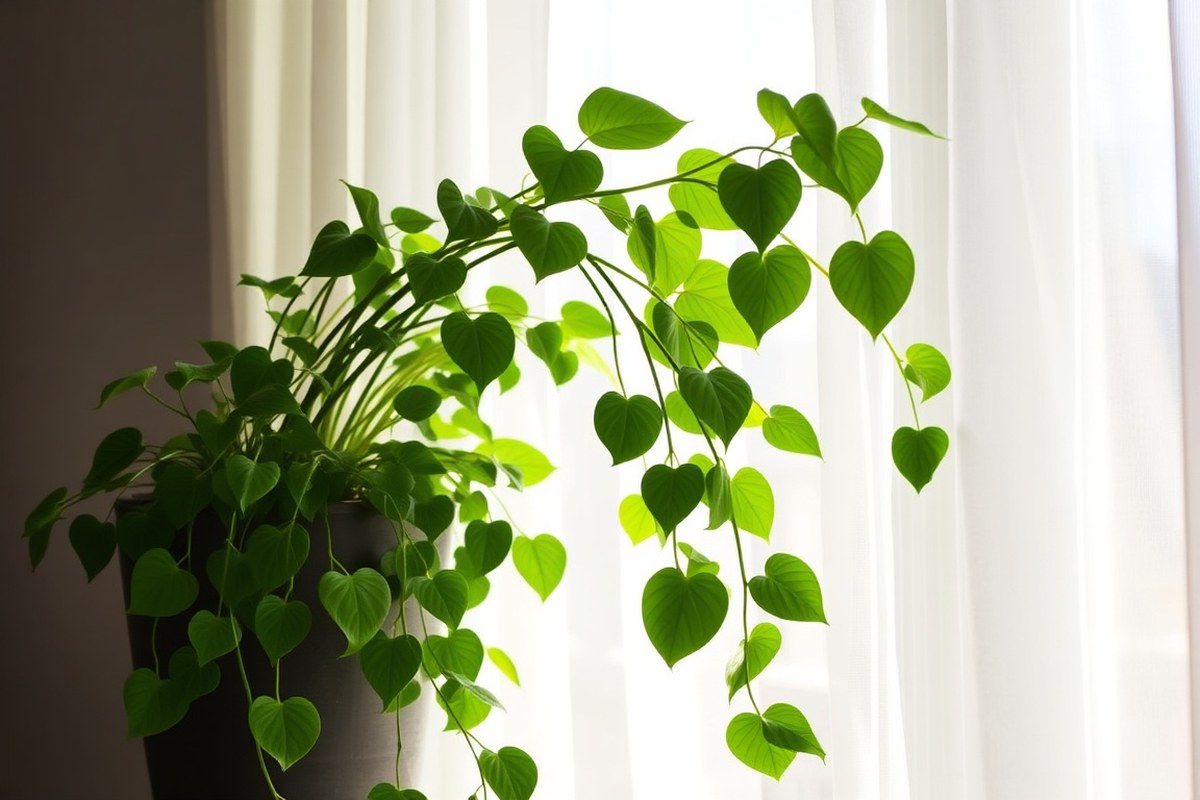
Do Pothos Need Sunlight? What Type & How Much for Healthy Growth
Pothos need sunlight to grow well, but mostly indirect sunlight. They do best with bright, indirect light instead of direct sun. Direct sunlight can damage their leaves and cause burn spots.
Place your pothos near a window where it gets bright, indirect light. Avoid spots with harsh afternoon sun for more than a few hours. About 6 to 8 hours of indirect sunlight daily works well.
Keep your pothos within a few feet of the window. If it’s 6 to 8 feet away, the plant may weaken and stretch.
Leaves might look dull because it’s not getting enough light. Moving it closer to indirect light can help it recover quickly.
Avoid placing pothos in deep shade, as growth slows and leaves may yellow. Rotate the pot every week to keep all sides evenly lit. Supplemental fluorescent light can work if natural light is limited indoors.
Key Takeaways
- Provide pothos 6 to 8 hours of bright, indirect light daily for best growth.
- Place your pothos 2 to 6 feet from south or west windows. This distance keeps it safe from harsh direct sun rays. It avoids leaf burn while still getting light.
- Move your pothos closer if it sits more than 8 feet away from natural light.
- Avoid more than 3 to 4 hours of direct morning sunlight to prevent leaf burn.
- Place pothos 1 to 3 feet from an east window for a good daily light dose.
- Watch for yellowing or scorched leaves, signs of too much direct sunlight.
Do Pothos Plants Need Sunlight to Thrive?
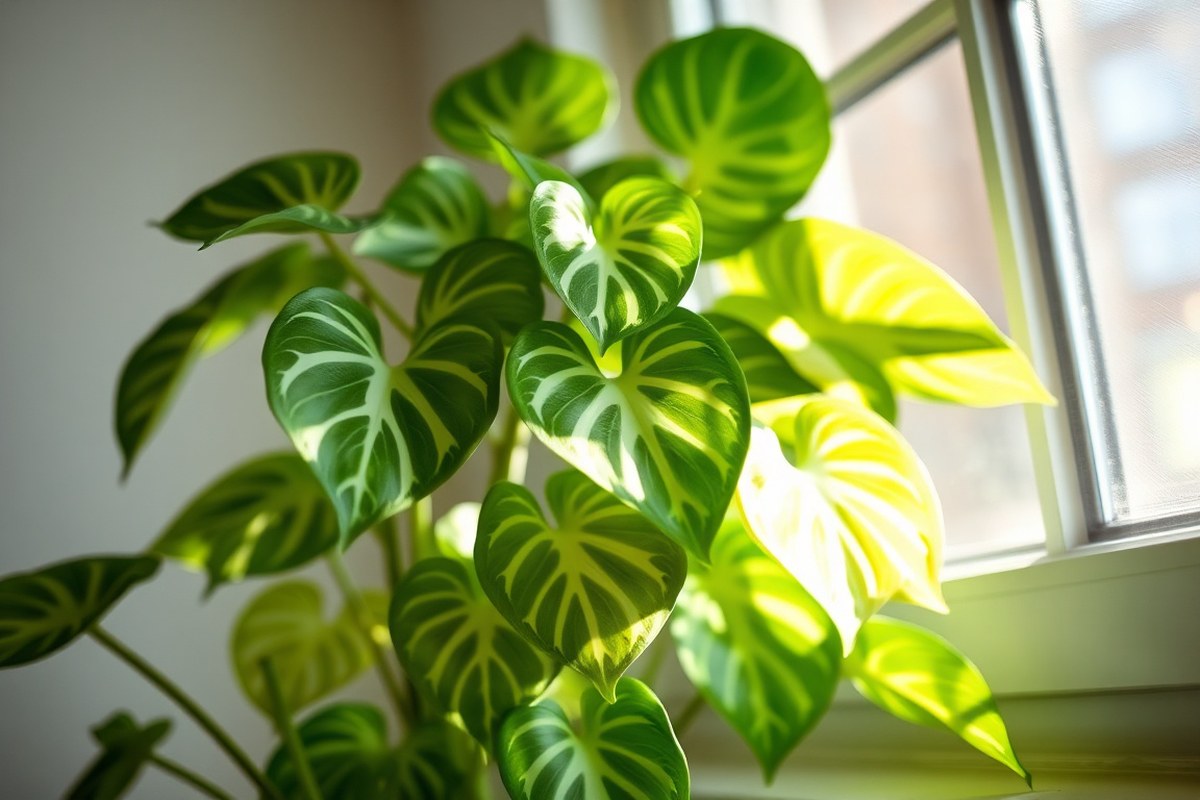
Pothos plants don’t need sunlight just to survive, but light affects their growth. Without enough light, they will live but grow slowly and produce smaller leaves.
This means sunlight doesn’t keep them alive. But it helps them grow well and stay healthy.
Pothos that get no natural light grow very slowly. Sometimes, growth may even stop. They need some natural light to thrive.
You might notice fewer leaves and vines that stretch without much new growth. In rooms far from windows or blocked by buildings, pothos survive but don’t thrive. So they need something more than complete darkness.
Indirect light is both sufficient and preferred for pothos. Pothos in bright, indirect light get 10 to 12 hours of sunlight. This helps them grow fully.
Their leaves turn larger and more vibrant. Direct sunlight can burn leaves. So filtered or shaded light is the safest way to keep your pothos happy indoors.
How Much Sunlight Does a Pothos Need Each Day?
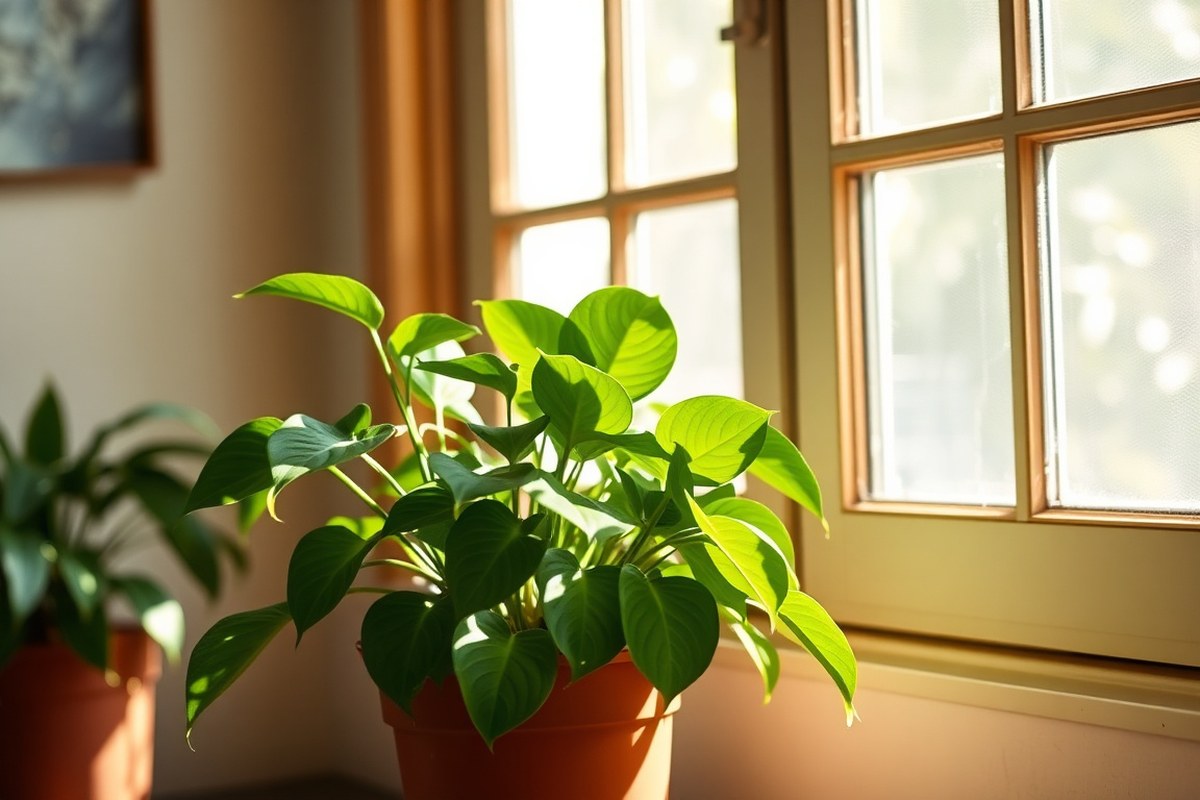
Pothos plants grow best with about 12 hours of bright, indirect sunlight each day. This amount gives them enough energy for healthy leaves and steady growth without stressing the plant.
You don’t need to provide all sunlight hours at once. Splitting those 12 hours into smaller periods works well.
Place your pothos where it gets indirect light in the morning or afternoon. A spot near a window with filtered sun for a few hours is ideal. Avoid letting direct sun hit the leaves too long.
Keep the light bright but avoid direct sun for more than 3 or 4 hours. Morning light works best for your pothos.
This helps prevent leaf damage and keeps it healthy. Avoid long stretches of direct sun that cause leaf burn.
Lighting needs can change with the seasons. During spring and summer, pothos plants need more light to support active growth. In fall and winter, give your pothos about 6 to 8 hours of indirect light a day.
The plant grows slower during these seasons. So, it needs less light than in summer. Adjust your plant’s location or artificial light use accordingly.
Start giving mature pothos 4 to 6 hours of bright, indirect light each day. Less light slows growth and can make the leaves lose their variegation.
Watch for small, widely spaced leaves; this means it needs more light. Move it closer to a window or use a grow light to boost lighting.
Keep your pothos at least 5 feet away from direct sunlight windows to prevent scorching leaves.
Understanding Bright Indirect Light and Window Directions
Bright indirect light means your pothos gets plenty of light without direct rays hitting the leaves. You can spot bright indirect light in a well-lit room.
Look near a window with no sunbeam touching your plant directly. Different window directions offer various levels of this light, so placement really matters.
Characteristics of Bright Indirect Light Indoors
Bright indirect light creates soft, even illumination. Your pothos will cast a soft, diffuse shadow.
This shadow isn’t sharp, showing it’s not in direct sun. This kind of light helps the plant grow fast and keeps its leaves healthy and full.
Identify bright indirect light by checking near windows with curtains or frosted glass. These filter the light rays that reach your plant.
A spot a few feet away from a sunny window can also work. Avoid harsh sun, which can turn pothos leaves yellow or scorched.
Best Window Directions for Pothos and Their Light Profiles
East-facing windows suit pothos well because they provide gentle morning sun. This light is bright enough but not harsh.
South and west windows give stronger light and some direct sun. So you need to keep the pothos at a safe distance.
North windows usually offer lower but steady indirect light. Place your pothos close to these windows to make the most of the available light.
A few feet away from strong south or west windows works well. This spot gives bright light without burning the leaves.
Different window directions offer different light types. Place your pothos based on the window to get the best light.
| Window Direction | Typical Light | Practical Placement |
|---|---|---|
| North | Lower to moderate indirect light | Close to the window |
| East | Moderate to bright indirect light | Within 1 to 3 ft of the window |
| West | Bright indirect to stronger direct exposure | 2 to 6 ft, use sheer curtain if needed |
| South | Bright to very bright; direct sun possible | 2 to 6 ft, filter or increase distance |
Placement varies because light intensity changes with window direction and time of day. Pothos grows best 1 to 6 feet from windows.
The exact spot depends on how strong the sun is. Adjust locations if you see leaf scorch or slow growth.
Recommended Distances from Each Window Type
Avoid putting your pothos right against south or west windows. The afternoon sun can burn the leaves there.
A good start is about 2 to 6 feet away from bright south or west windows. For east windows, stay closer, within 1 to 3 feet, to catch the mild morning rays.
Near north-facing windows, place your plant within a couple of feet since light is milder there. The farther your pothos is from a window, the less light it gets.
This slows growth and makes leaves sparse. Test spots by checking for diffuse shadows.
A pothos 2 feet from a bright window gets much more light. One 10 feet away receives considerably less.
Move plants gradually to new spots to avoid shock and sun damage. Watch how your pothos reacts and adjust accordingly.
Can Pothos Tolerate Direct Sunlight? How Much Is Too Much?
Pothos plants do not like direct sunlight. Too much strong sun can burn their leaves and cause damage. The risk is highest during intense afternoon sun, which is hot and harsh.
You might see leaf scorch as brown or crispy patches on the foliage. Yellow or bleached areas between the veins also show sun damage. Sometimes, the leaf edges will curl or dry out.
You can let your pothos get some gentle direct light, but only carefully. East-facing windows are best since the morning sun is milder and shorter. A sheer curtain helps protect it from strong rays.
- Start with 15 to 30 minutes of direct morning sun daily
- Watch leaves closely for discoloration or curling
- Move the plant further from the window if damage appears
- Never place pothos in hot afternoon sun without a filter
- Use sheer curtains or blinds to soften direct rays
- Gradually increase direct light exposure over days or weeks
Avoid moving your pothos from low light to bright direct sun suddenly. That stress can cause serious leaf burn. The best approach is a slow adjustment, letting the plant build tolerance.
Direct sunlight also heats the root area and can dry soil quickly. Water tends to evaporate faster, so check soil moisture more often. Your pothos will thrive with mostly indirect light each day.
Keep sun filtered and limited to a little. This helps leaves stay healthy and attractive.
How to Use Grow Lights for Pothos in Low or No Natural Light
Grow lights work well to help pothos grow when natural light is low or absent. Choose a full-spectrum LED light and place it 12 to 24 inches away from your plant. Run the light about 10 hours daily.
This mimics sunlight. It helps your pothos grow healthy.
Selecting the Right Full-Spectrum Grow Light
Full-spectrum LED grow lights simulate the sunlight that pothos needs for photosynthesis. These lights show all colors plants need. They help the plant grow evenly.
They keep leaf color vibrant. LED lights use less energy than fluorescents or incandescents.
They also produce less heat. This saves power and protects plants.
Pick a light made for indoor plants. Choose one near 5,500 to 6,500 kelvin. This matches natural sunlight.
This range is closest to natural daylight and promotes strong growth. You can find LED grow lights for $20 to $50. Look online or at your garden store.
Positioning and Distance Guidelines
Place the light 12 to 24 inches above or beside your pothos. This gives the right light coverage.
This distance provides enough light without overheating or burning the leaves. Adjust the height if you see signs of too much or too little light.
The light should shine evenly over all parts of the plant. Move the light closer if leaves fall or yellow at the bottom. This means the plant needs more light.
Raise the fixture if leaves curl, brown, or get crispy edges. This lowers light intensity for the plant.
Establishing a Daily Light Schedule and Duration
Pothos perform best with 10 to 12 hours of light daily from grow lights. This length mimics typical daylight hours and supports the plant’s natural growth cycle.
Use a timer to keep lighting steady every day. This avoids guessing when to switch the light on or off.
Start with 10 hours of light and watch your plant closely. Increase light to 12 hours if growth slows or leaves look dull.
Your pothos needs more energy then. Avoid exceeding 14 hours daily, as too much artificial light can stress the plant.
Signs Your Pothos Needs More or Less Artificial Light
Leggy stems and slow growth mean your pothos needs more light. Variegated leaves may fade and turn solid green without enough light. Adding or increasing grow light duration can restore vibrant leaf colors and improve health.
On the other hand, leaves with brown edges, curling tips, or bleached patches show excessive light. Move your grow light farther away or reduce daily light time to fix this. Adjusting light levels helps keep your pothos fuller and stronger over time.
- Select a full-spectrum LED grow light with 5,500, 6,500 kelvin color temperature.
- Place the light 12 to 24 inches above or beside your pothos, pointing at the leaves.
- Set a daily light period between 10 and 12 hours, using a timer to maintain it.
- Check your pothos weekly for signs of leggy growth or leaf discoloration.
- Adjust light distance or duration if leaves fade, brown, or the plant grows unevenly.
- Keep the environment temperature around 65, 85°F to support healthy growth.
- Clean the light surface and your pothos leaves monthly to keep light absorption efficient.
Do not place the grow light too close. Overheating can damage leaves quickly.
Signs Your Pothos Is Getting Too Much or Too Little Light
Leaves shrinking or spacing out along the stem means your pothos is getting too little light. The newest leaves appear smaller.
Long stems with few leaves show they’re stretching toward any light. A plant like this tends to grow slowly or look weak and droopy.
Too much light causes other problems. Leaves turn pale or yellow, often with dry, crispy edges from sun exposure.
Direct sunlight creates burnt spots or bleached patches that linger long after the light is gone. Pothos prefers bright, indirect light to avoid these issues.
Check and adjust your pothos light situation using this simple checklist:
- Small, widely spaced leaves? Move plant closer to a bright window.
- Leggy stems with few leaves? Add a grow light or rotate the plant weekly.
- Yellowing or pale leaves with dry edges? Shift it away from direct sun.
- Brown, burnt spots on leaves? Place it in filtered or indirect light.
- Drooping or weak leaves? Confirm it’s not underwatered, then adjust light.
To fix low light, try placing pothos within 3 to 6 feet of a bright window. Use a 6500K LED grow light for 8 to 12 hours daily. Use this when natural light is weak.
This helps your pothos grow better indoors. If the light is too strong, move your plant. Choose a spot without direct sun.
You can also use sheer curtains to soften the light. Monitor your plant weekly for changes after moving it.
Pay attention to seasonal light changes too. Shorter winter days mean less light reaches your plant.
So it may need supplemental grow light or a brighter spot during those months. Watch how the leaves react after changes and adjust accordingly.
Light Requirements for Different Pothos Varieties
Different pothos varieties need different light amounts to keep their leaves healthy. Variegated types require more light because their pale parts have less chlorophyll for photosynthesis. Green pothos tolerate lower light better since their whole leaf can absorb light.
Variegated pothos tend to lose their pattern in dim light. This happens because the plant produces more green tissue in low light, reducing variegation. Solid green types do well with less light.
They don’t need bright spots. They are easier to care for indoors.
| Pothos Variety | Variegation Level | Light Tolerance | Best Light for Pattern |
|---|---|---|---|
| Jade Pothos | None (solid green) | High (tolerates low light) | Indirect medium to low light |
| Golden Pothos | Moderate variegation | Moderate (adaptable) | Bright indirect light to maintain variegation |
| Marble Queen | High variegation | Low (requires bright light) | Bright indirect light to keep contrast |
| Neon Pothos | Low to moderate variegation | Moderate | Bright indirect light |
| Manjula Pothos | High variegation | Low (needs more light) | Bright indirect light |
Adjust your pothos placement based on the variety to keep leaves colorful and healthy. Variegated pothos need bright indirect light daily to maintain their look. Solid green types like Jade pothos suit spots that get less light without losing health.
In rooms with low natural light, pick green or lightly variegated pothos. Bright indirect light is the safest bet for heavily variegated ones. Watch variegated types for greener leaves.
They show they need more light. Adjust your spot to brighter areas.
Seasonal Changes and Their Effects on Pothos Light Needs
Shorter winter days mean less natural light reaches your pothos. This drop in light can slow growth and cause leaves to yellow or drop.
Winters often make usual spots less bright. So it’s smart to adjust your pothos’s lighting or location.
Moving your pothos closer to brighter windows helps it get more usable daylight in winter. East or south-facing windows often provide better light during shorter days. When natural light isn’t enough, use a grow light indoors.
- Shift your pothos closer to the window during fall and winter.
- Use a violet-blue grow light (400 to 520 nm) for best color spectrum.
- Keep the grow light on 10 to 12 hours daily to mimic natural daylight.
- Adjust watering since increased light dries soil faster, check every 7-14 days.
- Avoid sudden location changes; transition slowly to prevent shock.
- Healthy new growth shows your lighting is probably enough.
Under-lighting in winter can weaken your pothos, making it vulnerable to pests or diseases. Poor light also causes leggy, sparse leaves that ruin the plant’s look. Using grow lights or repositioning helps keep your pothos lush and healthy through colder months.
Don’t count on natural winter light alone. Add a grow light if growth stops. If the plant looks dull, a grow light helps too.
Best Indoor Locations for Pothos by Room Type and Practical Tips
Pothos plants do well in spots with bright, indirect light and steady humidity. They also adapt to medium or low light but grow best with brighter filtered lighting. Position them so they avoid direct sun and extreme temperature swings for healthier leaves.
Ideal Living Room Spots for Pothos
Facing east or west windows provide filtered light without intense sun, making them great for pothos. Placing your plant a few feet back from the window helps avoid leaf burn. Try hanging baskets or shelves near windows with good light.
Don’t put them too close. This lets enough light reach your pothos.
South-facing windows often get direct sun, which can scorch pothos leaves. Use sheer curtains to soften direct sunlight.
Or move the plant sideways and a bit away from the window. Bright rooms with consistent temperature around 65°F to 75°F suit pothos well.
Best Kitchen and Bathroom Locations
Kitchens and bathrooms can offer the right mix of humidity and indirect light pothos enjoy. Put your pothos near a bright window or countertop. Let filtered light reach the plant.
This helps it grow well. Bathrooms with bright windows benefit pothos with extra moisture from showers, helping it thrive.
Keep pothos out of drafts near vents or fans, as sudden temperature drops stress the plant. The usual 60% to 80% humidity found in these rooms supports leaf health. Keep your plant away from direct sunlight through glass.
This light can make leaves yellow or brown. Avoid those spots.
Office and Low-Light Room Tips
Offices with fluorescent lights and a bright window nearby are excellent for pothos. It tolerates these lower natural light setups, maintaining a neat look without much fuss. Just give the plant 6 to 8 hours of indirect light daily for steady growth.
Place your pothos at least 3 feet from windows that face north or shaded areas. So it gets enough filtered light.
For dimmer office corners, choose solid-colored varieties, like Neon pothos, that handle lower light better. Rotate your plant every few weeks to keep growth even on all sides.
Adjusting Placement for Temperature and Humidity
Check that your pothos stays within 60°F to 85°F. Avoid spots near heating or cooling units that cause hot or cold drafts. Sudden temperature swings stunt growth and cause leaf drop.
Use a small humidity tray or room humidifier when indoor air dips below 40%. Pothos prefers 60% to 80% humidity, which prevents leaf drying and browning.
Bathrooms and kitchens naturally offer this. But living rooms and offices may need extra moisture.
Keep an eye on leaf condition. Limp or crispy leaves often signal dryness or temp stress. Shift the plant’s location or boost humidity if you spot these signs.
Here’s a quick reference table for pothos room placement based on light, humidity, and temperature:
| Room | Light Level | Humidity Range | Temperature Range (°F) | Tips |
|---|---|---|---|---|
| Living Room | Bright indirect (east, west window) | 40%, 60% | 65, 75 | Place near window, avoid direct sun, use sheer curtain |
| Kitchen | Medium to bright indirect | 50%, 80% | 65, 80 | Keep on counter or shelf near window; avoid drafts |
| Bathroom | Bright indirect (near window) | 60%, 80% | 70, 85 | Ideal for humidity; avoid direct sun; rotate plant |
| Office | Low to bright indirect | 40%, 60% | 65, 75 | Use near window or bright artificial light; rotate regularly |
| Dim Rooms | Low indirect (north window or shaded corner) | 40%, 60% | 65, 75 | Choose solid-colored varieties; supplement with grow light |
This table helps you pick locations that match pothos’s needs. Adjust humidity or temperature where you can. Good placements keep leaves full, shiny, and green without spots or curling.
Step-by-Step Action Plan for Providing the Right Sunlight to Your Pothos
Use this plan to find the best light spot and adjust as your pothos grows. Watch your plant’s leaves to check if it’s happy.
- Day 1: Place your pothos near a north- or east-facing window. Look for bright indirect light here.
- Week 1: Observe your pothos daily. If leaves start yellowing or fading, move it farther from the window.
- Week 2: If your spot is dim, add a grow light for 12-14 hours a day. Use a timer for consistency.
- Week 3: Rotate your pothos once a week. This helps even light exposure and balanced growth.
- After 1 Month: Check for healthy green leaves and new growth. Adjust light or distance if you see brown leaf edges or slow growth.
- Seasonal Check: When seasons change, reassess light. Move your pothos closer to windows in winter.
- Ongoing: Trim any yellow or dry leaves. This encourages new growth in the right light.
Frequently Asked Questions
Can Pothos Survive in Artificial Light Without Sunlight?
Yes, pothos can live with artificial light. The light must be bright.
It should stay on for several hours each day. Use LED or fluorescent grow lights placed close to the plant for best growth.
Is It Better to Rotate My Pothos for Sunlight Exposure?
Yes, rotating your pothos weekly ensures even light exposure on all sides. This helps the plant grow balanced and avoids one-sided leaf growth.
Should I Clean My Pothos Leaves to Improve Sunlight Absorption?
Yes, wiping leaves gently with a damp cloth removes dust and improves light absorption. Dust blocks light and reduces photosynthesis efficiency.
Why Do Some Pothos Leaves Turn Yellow Even with Sunlight?
Yellow leaves can indicate overwatering or too much direct sunlight. Check watering habits and move the plant to indirect light if needed.
Can Pothos Adapt to Low Light over Time?
Pothos can adapt but growth slows and leaves may lose variegation. Avoid placing the plant too far from a light source to keep it healthy.
Does the Type of Pot Affect Pothos Light Needs?
Yes, darker pots can absorb light and slightly reduce heat around roots. Consider light-colored or reflective pots to maximize indirect light near windows.
Wrapping Up
Your pothos needs bright, indirect light to stay healthy, not harsh direct sun. Start with a good spot and watch how the leaves respond. Adjust light to keep your plant thriving and growing strong.