How Much Light Does Pothos Need: A Complete Guide That Really Works
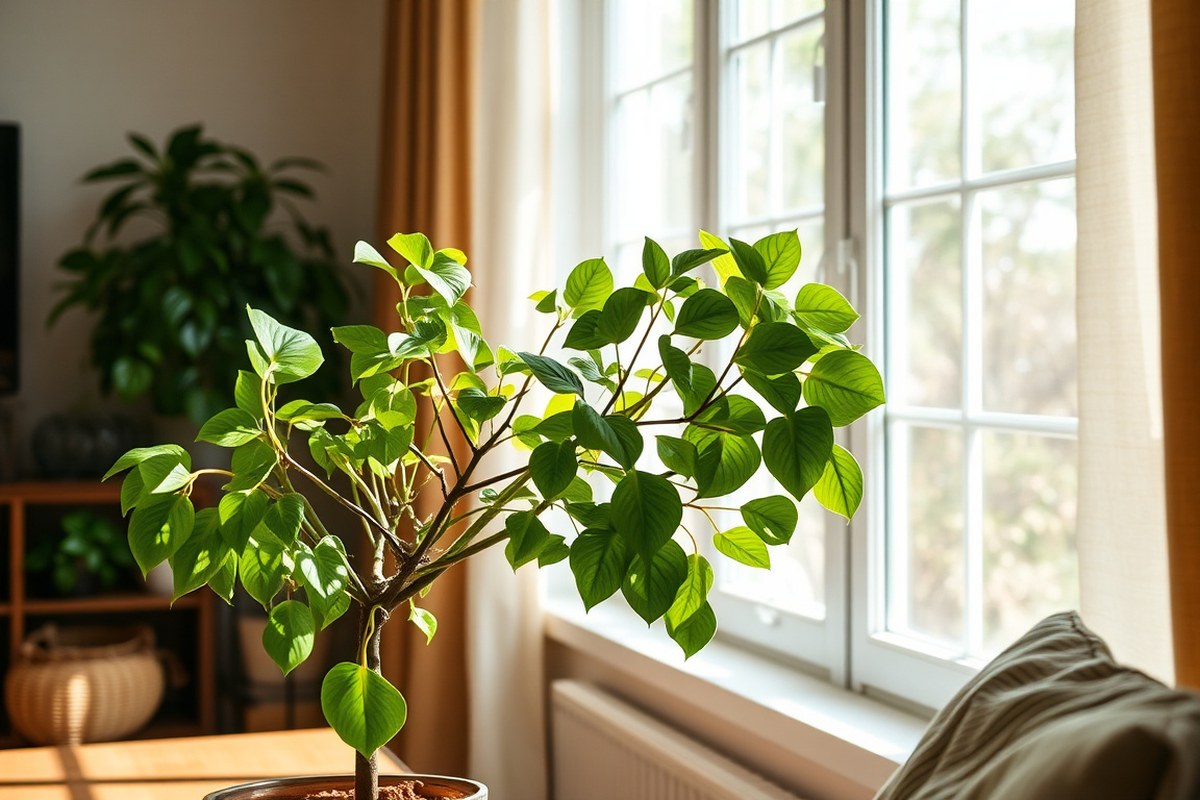
How much light does pothos need depends on its location and your goals. Pothos thrive in bright, indirect light for about 4 to 6 hours daily. This light level helps them grow strong leaves without burns or stretching out.
Start by placing your pothos near an east-facing window where morning sun gently warms it. Avoid putting it directly in south or west sunlight. Use a shade cloth to soften the rays.
Watch for leaves turning yellow or pale. This usually means too much sun or too little light.
You can grow pothos in low light. But it grows slower and loses some of its variegation.
Your spot is darker; reduce watering since the plant uses less water. Bright, indirect light also helps you water correctly and keeps your pothos healthy.
Key Takeaways
- Pothos needs 4, 6 hours of bright, indirect light daily to thrive.
- Place pothos within 6 feet of an east-facing window for best light.
- Avoid direct south or west sunlight without shade to prevent burns.
- Yellowing leaves may signal too much light or overwatering.
- Low light slows growth and reduces leaf variegation.
- Water less often if pothos is in a low-light spot.
How Much Light Does a Pothos Actually Need?
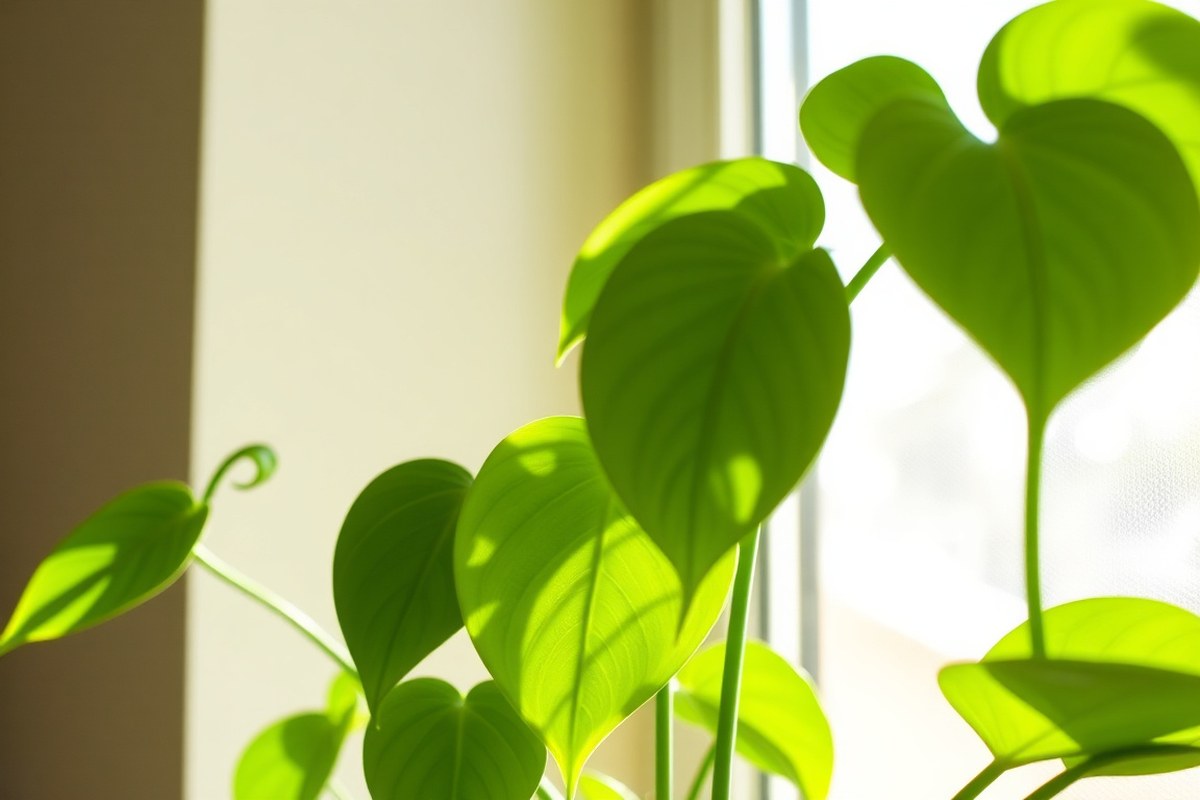
Pothos plants need about 6 to 8 hours of bright light daily. They do best in indirect light when outside. Avoid direct sunlight to protect their leaves.
Indoors, they need around 4 to 6 hours of similar light intensity for good growth. The ideal light intensity falls between 465 and 2,000 foot-candles, which equals 5,000 to 21,500 lux.
Here is a simple comparison of foot-candle and lux light levels for pothos care:
| Light Intensity | Foot-Candles | Lux | Effect on Pothos |
|---|---|---|---|
| Low Light | Below 300 | Below 3,200 | Slow growth, may lose variegation |
| Moderate | 465 to 1,000 | 5,000 to 10,000 | Steady growth, healthy leaves |
| Bright Indirect | 1,000 to 2,000 | 10,000 to 21,500 | Best growth, strong variegation |
Your pothos only needs 4 to 6 hours of bright indoor light. Those hours don’t have to come all at once. They can add up in shorter periods.
You can break the light exposure into intervals across the day. For example, give your pothos 2 to 3 hours of light in the morning. Then provide another 2 to 3 hours later in the afternoon.
This routine supports healthy growth. This mimics natural daylight patterns and helps the plant manage its photosynthesis efficiently.
Under grow lights, many pothos owners run the light 12 to 14 hours daily using timers. This provides consistent exposure without stressing the plant. Outdoors, aim for 6 to 8 hours of bright indirect light, avoiding harsh midday sun.
Put your pothos where it gets morning sun or filtered light. Light can come through trees or curtains. This helps avoid harsh direct sunlight.
Your pothos may need more light if new leaves are small and spread out. Try increasing light time, brightness, or move it closer to a window. Use a light meter or smartphone app to track light levels.
This helps compare your light to the right foot-candle range. These tools are easy and affordable. Tracking light levels shows if your pothos gets enough light hours.
You can tell if you need to provide more light. This keeps your plant healthy.
How Window Direction Affects Pothos Light Exposure
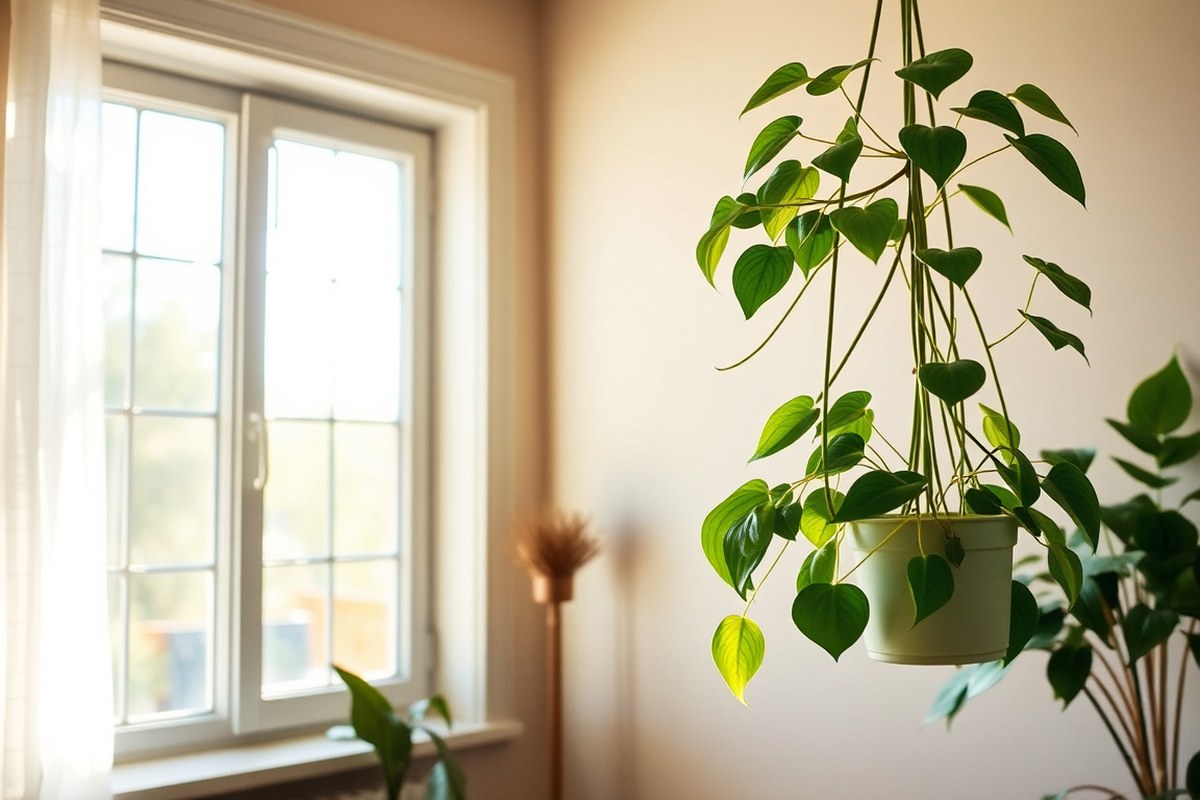
Window direction has a big impact on the type and amount of light your pothos receives. East- and north-facing windows give moderate or low indirect light. This light suits pothos plants well if they are close to the window.
South- and west-facing windows often deliver much stronger light, with direct sun possible in the afternoon. This means you may need to adjust your pothos’s distance from these windows, especially in summer.
Moving your pothos farther from intense direct sunlight helps prevent leaf burn and bleaching. During winter, when sunlight is weaker, south and west windows become very valuable.
In colder months, you may need to move pothos closer to windows. This helps it get enough light for good growth.
| Window Direction | Typical Light Exposure | Practical Placement for Pothos |
|---|---|---|
| North | Lower to moderate indirect light | Close to the window (within 1-3 ft) |
| East | Moderate to bright indirect light, gentle morning sun (~6 hours) | Close to the window (1-3 ft), move back if pale or dry spots appear |
| West | Bright indirect to stronger direct afternoon sun | 2-6 ft from window; use sheer curtains if sun is harsh |
| South | Bright to very bright, direct sun possible mostly in afternoon | 3-6 ft away; filter or move back to avoid scorching leaves |
Knowing sunlight shifts with seasons helps you adjust your pothos’s spot. In summer, east, south, and west windows offer plenty of light.
But keep the plant a few feet back to avoid harsh afternoon sun burn. In winter, placing your pothos closer to south or west windows gives it much-needed brighter light.
Distance from the window is key for protecting leaves. Every foot back cuts light intensity noticeably. Try to stay about 3 feet from a south or west window.
This keeps light bright but shaded enough to stop scorching. East windows safely allow pothos very close, since morning sun is mild.
Watch your pothos leaves in summer near south or west windows. Move it back if leaves bleach or get crispy edges.
How Far from the Window Should I Place My Pothos?
Place your pothos about 2 to 4 feet from a south or west window. East-facing windows allow pots closer because the light is gentler. This distance keeps the light bright but avoids damage from direct sun.
How Window Direction Changes Distance
South and west windows get strong afternoon sun. Keep your pothos 3 to 4 feet back to avoid leaf scorch.
East windows have soft morning light. So you can put the plant closer, within 1 to 2 feet.
North-facing windows provide the lowest light. So place pothos as close as possible, ideally within 1 foot. This ensures the plant still gets enough light without stressing it.
Measuring Light at Your Pothos Leaves
You can check light levels using a simple hand test or a light meter. Hold your hand at leaf height and watch the shadow. A clear, distinct shadow means bright light, while a fuzzy shadow shows lower light.
For more exact data, use an affordable light meter or smartphone app. Aim for 1,000 to 3,000 foot-candles around your leaves for optimal growth. Adjust placement based on readings.
Adjusting Placement Throughout the Year
Light changes with the seasons, so move your pothos accordingly. In winter, bring it closer to the window as sunlight weakens. In summer, move it farther back to avoid direct sun damage.
Indoor obstructions like curtains or trees also affect light. Check shadows and meter readings each season to keep light levels steady.
Practical Placement Tips by Window Type
Use these rules to position your pothos without damage:
- South or west windows: place 3, 4 feet away from direct sun
- East window: place 1, 2 feet close for gentle morning light
- North window: keep within 1 foot, as light is low
- Avoid placing right on the windowsill behind direct sun
- Use sheer curtains to filter harsh afternoon rays
- Rearrange pot seasonally for best light
- Check leaf shadows or light meter monthly
Following these steps reduces risk of leaf burn and dull growth. Your pothos will get the bright indirect light it needs without harm.
Can Pothos Tolerate Direct Sunlight and for How Long?
Pothos can handle some direct sunlight, but only for a short time. Early morning sun or late afternoon rays are usually gentle enough for 2 to 3 hours. Too much direct sun, especially in the afternoon, will burn the leaves quickly.
Sunburn on pothos leaves shows as brown or bleached spots and crispy edges. Heat stress may cause yellowing or wilting too. Leaves pressed against a hot windowpane often look damaged first.
You can soften strong sunlight indoors by moving your pothos away from the glass. Another easy fix is using sheer curtains or a shade cloth to filter light. These options reduce harsh rays without cutting brightness drastically.
- Do introduce direct sun gradually over 7 to 14 days.
- Do place your pothos where it gets soft morning or late afternoon light.
- Do use sheer curtains or shade cloth to filter strong sun.
- Don’t leave your pothos in afternoon sun for more than 2 to 3 hours.
- Don’t press leaves against hot window panes.
- Don’t suddenly expose a low-light pothos to harsh direct sunlight.
If your plant was in low light, add sun slowly to avoid shock. Move it closer to the window bit by bit, watching for sunburn signs. Sheer curtains cost around $10 to $30 and can be clipped to your window frame easily.
Filtered sunlight helps keep leaves clear of spot damage while still boosting growth. Bright indirect light is still best. But a little soft sun can help variegated pothos keep its bold colors.
Watch the leaves daily if you try direct sun. Adjust fast if you see yellow or bleached patches.
Signs Your Pothos Is Getting Too Little or Too Much Light
Your pothos shows signs when the light isn’t right. Too little light makes vines stretch out. They look leggy.
The plant tries to reach for light. Leaves may become smaller and lose their vibrant variegation.
Too much light, especially direct sun, causes leaf edges or tips to turn brown and crispy. The leaves might get bleached, turning pale or yellowish. You may even see brown spots appearing on the foliage.
Checking your pothos regularly helps you catch these signs early. Keep your plant within 12 inches of bright light. Use indirect light for best growth.
This helps your plant stay healthy. Spots or fading usually mean it’s either too bright or too dark.
- Leggy, stretched stems and faded leaf variegation mean too little light
- Small leaves and slow growth also point to insufficient light
- Brown, crispy leaf tips and edges suggest excessive light or sun damage
- Bleached or pale leaves typically mean too much direct sunlight
- Yellowing from light stress can indicate overexposure, not just watering issues
Move your pothos close to a bright window, about 12 inches away. Use a grow light if natural light is too weak or far from the window. Move it farther or use sheer curtains if light is too strong.
Even if your room looks bright, plants may not get enough light. Light quality matters as much as brightness. Check your plant’s leaves for signs of low light.
Adjusting light usually shows results in 2 to 4 weeks. You’ll notice new leaves with better size and color.
Avoid stressing your pothos by changing light levels suddenly. Instead, shift it gradually over a few days.
Using Artificial Light to Supplement Pothos Growth
You can use artificial light to keep your pothos healthy indoors when natural light is limited. Full-spectrum LED or fluorescent grow lights work best. Position the light 12 to 24 inches above your plant.
Run it for 12 to 14 hours a day. This helps your pothos grow steadily.
Best Light Types for Pothos Growth
Full-spectrum LED grow lights provide the right light wavelength for pothos. They use less electricity and stay cooler than fluorescent bulbs. Fluorescent lights also work well, especially T5 tubes designed for plants.
LED lights usually cost more upfront but last much longer, about 25,000 hours. Fluorescent bulbs cost less but burn out sooner, around 10,000 hours. Both types create enough light intensity for pothos growth indoors.
Recommended Light Duration and Timing
Run your grow light 12 to 14 hours each day to mimic natural daylight. This duration helps your pothos photosynthesize without stressing it. Don’t leave lights on all night.
Pothos needs darkness to rest. This rest time helps it grow properly.
Use a timer to turn the light on and off consistently. This keeps your plant’s internal clock steady and promotes healthy development. Place your pothos in a spot where it receives either natural or artificial light daily.
Placement and Distance Guidelines
Position your grow light roughly 12 to 24 inches above the pothos to provide enough brightness. Closer than 12 inches, the plant risks leaf burn or overheating. Further than 24 inches, the light weakens and growth slows.
Adjust the height based on the light’s strength and your plant’s response. Variegated pothos need brighter light to keep their color.
So lean closer to 12 inches. Keep the light steady and avoid moving your plant too much.
Follow these steps to set up your pothos grow light correctly and see healthy growth:
- Choose a full-spectrum LED or fluorescent grow light suitable for indoor plants.
- Mount the light 12 to 24 inches above your pothos vines for optimal coverage.
- Plug the light into a timer set to 12 to 14 hours of daily light.
- Place your pothos where it can receive this light consistently every day.
- Check your plant weekly for signs of too much light, like browning leaves.
- Adjust the light height or timing if your pothos looks leggy or faded.
- Turn off the artificial light completely at night to allow plant rest.
How Lighting Influences Pothos Growth, Variegation, and Watering
Light affects pothos in several clear ways. Low light causes smaller leaves because the plant conserves energy by reducing leaf size.
Variegated pothos lose their patterns in dim light since less chlorophyll is needed. So the white or yellow parts fade to green.
Bright, indirect light encourages pothos to keep its leaf size and variegation vibrant. For example, Marble Queen and Snow Queen pothos need stronger light to maintain their pattern.
Without enough light, they look dull and mostly green. Jade pothos, with no variegation, does better in low light but also grows slower.
Watering frequency changes with light levels. Pothos in bright spots usually need watering every 7 to 10 days. In low light, water every 10 days.
You can wait up to 14 days. The plant uses water more slowly then. Checking the soil moisture before watering is helpful to avoid overwatering.
Growth speed can tell you if lighting is right. Your pothos is in good light if many average leaves develop.
Slow growth or long gaps between leaves means you should try brighter light. Moving your pothos closer to the window or adding artificial light helps it fill out faster.
Varying light levels change how your pothos performs. Neon pothos loses its bright chartreuse color in low light, turning olive-green instead.
Golden pothos also fades its gold splashes but tolerates shade better. Your pothos needs more light if vines grow leggy with wide leaf gaps.
To improve variegation and leaf size, place your pothos where it gets bright, indirect sunlight. Even a few hours of morning or late afternoon light can make a difference.
Avoid direct midday sun, which can burn leaves. Use a grow light on a timer for 10 to 12 hours daily if natural light is poor.
Light affects leaf size, color, and watering frequency. Bright indirect light keeps pothos colorful and growing well. Dim light means smaller leaves, less variegation, slower growth, and less frequent watering.
Check leaf size and color often. Watch for leggy vines. Adjust care to keep your pothos happy.
How to Acclimate Your Pothos to Higher Light Safely
How to Acclimate Your Pothos to Higher Light Safely
You need to move your pothos to brighter spots slowly. Sudden bright light causes leaf scorch or faded color. A 7-10 day gradual shift helps the plant adjust without stress.
Starting Indoors in Low Light
Begin with your pothos in a low light spot, ideally about 50 foot-candles. This is enough to keep it alive but not growing fast. It helps your plant stay calm before you increase light.
Place it near an east-facing window or a shaded spot with indirect light. Keep it out of any direct sun that hits in the afternoon. This gentle start stops leaves from burning.
Incrementally Increasing Exposure
Add bright indirect light step by step over about one week. Each step lasts two days so the plant can grow used to the change. Keep it away from harsh afternoon sunlight that causes quick scorching.
Here’s a simple 7-day schedule to follow:
- Move pothos to a spot with 75 foot-candles for 2 days.
- Increase to an area with 100 foot-candles, 2 days.
- Move closer to a window with 125 foot-candles, 2 days.
- Shift to your bright indirect light spot with 150 foot-candles or more, 1-3 days.
These steps let your pothos build tolerance and keep leaf variegation sharp. Avoid quick jumps in light, which cause leaf bleaching.
Monitoring and Adjusting Pacing
Watch new leaf growth closely during the move. Healthy signs are leaves unfolding fully and colors staying rich. Pale, yellowed, or bleached leaves mean you need to slow down.
If you spot leaf scorch or fading, take your pothos back to slightly dimmer light for a few days. Then try again more slowly. Each plant’s tolerance varies, so stay flexible.
Regularly check your pothos daily during this period. Adjust light exposure speed based on these signs to keep it healthy.
Never rush bright light exposure; sudden changes cause leaf burn and stress.
Common Lighting Mistakes and How to Fix Them
Beginners often place pothos too far from the window. This means the leaves get less than 100 foot-candles of light. This low light slows growth.
It also makes the plant stretch out. Use a phone light meter app to check light levels.
Or move your pothos 12 to 18 inches from the window. This gives the best brightness.
Too much direct sunlight is another common mistake. Pothos leaves burn easily in full sun, causing yellow or brown patches.
Move the plant a few feet back or use sheer curtains to soften the light. Avoid windows facing west or south without some shade during peak afternoon hours.
Some assume any bright room light is enough, but light quality matters. A north-facing room might seem bright at first. But it only provides 50 to 80 foot-candles of light.
That is just enough for survival, not good growth. To get more light, move your pothos near east or west windows.
Another idea is using a LED grow light. Keep it on about 12 to 14 hours daily.
- Don’t judge by room brightness, measure light at leaf level
- Keep pothos at least one foot from windows with direct sun
- Move plants closer to windows in fall and winter
- Use sheer curtains or blinds to reduce harsh light
- Supplement with 12, 14 hours of artificial grow light if needed
- Gradually increase light over 3 to 5 days for adjustment
- Watch for leaf yellowing or stretching as light signals
Signs of too little light include sparse leaves and dull variegation. If you see this, move your pothos closer to better light. Natural light nearby helps the most.
Rotate the pot weekly to keep all sides healthy. Too much light can burn leaves. Trim off any damaged leaves.
Shift your plant farther from the light source to prevent more burns. Don’t worry; healthy growth usually returns in a few weeks.
Adjusting light is a low-cost fix but requires watching your plant’s response. Add a small LED grow light costing $20 to $40 if window options are limited.
Proper light keeps pothos compact, bright, and vibrant for years with minimal fuss. You only need to occasionally rethink light placement with seasonal changes to keep your plant happy.
Step-by-Step Action Plan for Pothos Light Care
Follow this plan to give your pothos the right light and watch it grow healthy. Adjust as you see the plant’s response.
- Day 1: Place your pothos near a north or east window. Look for bright, indirect light spots without direct sun.
- Week 1: Check leaves daily for signs of too much light, like yellowing or crispy edges. Move it away if you see damage.
- Week 2: Check if the plant looks dark green and leggy. Move it closer to a brighter window to help it. Notice if leaf color improves.
- Week 3: Introduce artificial grow light for 6-8 hours daily if your home lacks natural light. Look for more new leaf growth.
- Week 4: Start giving your pothos sunlight in the early morning or late afternoon. Limit sun exposure to 15 or 30 minutes slowly. Watch closely for leaf burns.
- After 6 weeks: Adjust watering based on light. More light means more water; less light means watering less often. Check soil moisture weekly.
- Ongoing: Rotate your pothos every week so all sides get even light. This keeps growth balanced and healthy.
Frequently Asked Questions
Can a Pothos Survive in a Completely Dark Room?
No, a pothos cannot survive without any light. It needs at least very low ambient light to live.
How Do Seasonal Light Changes Affect Pothos Growth Indoors?
Seasonal light changes can slow growth in winter. You may need to supplement with artificial light.
Does Pothos Need More Water with More Light Exposure?
Yes, more light means more water needed. Light increases evaporation and plant growth demand.
Can the Type of Light Bulb Affect Pothos Health?
Yes, full spectrum or grow lights help pothos more than regular bulbs. They mimic natural sunlight better.
Is It Bad to Rotate a Pothos Plant Under a Light?
No, rotating the plant helps even light exposure. It promotes balanced growth and prevents leaning.
How Long Do Pothos Leaves Take to Show Light Stress?
Leaves can show stress in a few days from too much light. You may see yellowing or scorched spots.
Wrapping Up
Pothos needs bright, indirect light but can tolerate some shade. The right spot lets it grow lush without burning leaves. Try moving your plant near a window today and watch for changes this week.