Do Worms Have Cells? A Complete Guide to Their Cellular Structure
Do worms have cells or are they single-celled creatures? Worms are made of many cells, not just one. Common earthworms have over 1,000 cells in their body.
These include nerve cells. Nerve cells make up about one-third of the worm’s body.
Each type of worm has a different number of cells. Some microscopic worms have fewer cells but still many more than one. These cells work together to help worms move and heal from injuries.
Worm cells form tissues that perform specific tasks like digestion and movement. They constantly divide to replace old or damaged cells, which helps worms survive harsh conditions. Understanding cellular functions explains how worms respond to their environment.
Their cells also carry DNA, organizing genetic information that controls their functions. This cellular setup shows worms are complex animals, not simple blobs. The study of their cells reveals insights into basic animal biology and development.
Key Takeaways
- Earthworms usually have at least 1,000 cells in their bodies.
- About one-third of an earthworm’s cells are nerve cells.
- Microscopic worms like C. Elegans have under 1,000 cells total.
- Worm cells contain DNA that controls how they develop and function.
- Worm cells support movement and allow them to regenerate damaged parts.
- Different worm species vary greatly in their number and type of cells.
Do Worms Have Cells or Are They Single-Celled?
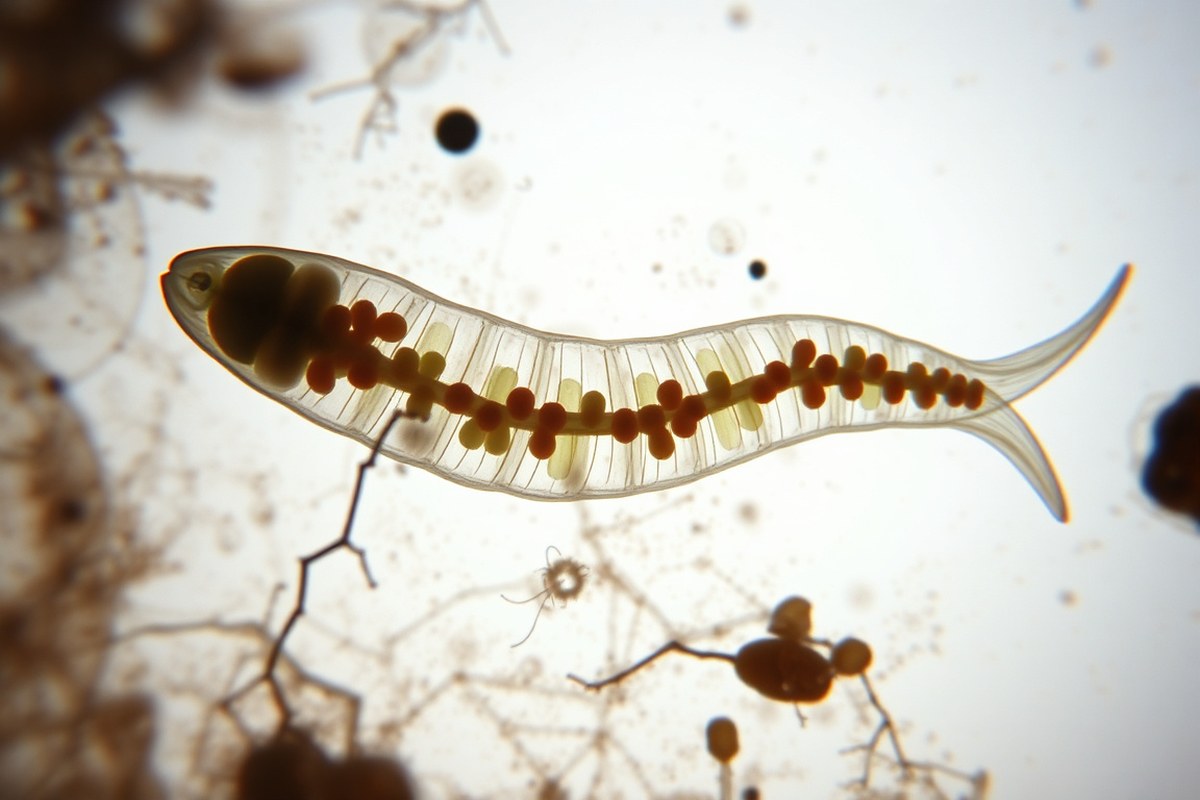
Worms are multicellular organisms, meaning they consist of many cells working together. They are not single-celled like bacteria or some microscopic organisms. For example, earthworms have at least 1,000 cells, with a large portion dedicated to nerve functions.
Each worm’s body contains specialized cells organized into tissues and organs. These cells build muscles, skin, and nerves in worms. They help worms move and sense their environment.
These structures are key for worm survival. This complexity is impossible in single-celled life forms because they perform all functions within one cell.
Recent studies tracked glowing particles inside worm cells. They showed the cytoplasm is crowded and divided into parts. This compartmentalization is clear from the experiments.
This differs significantly from single-celled yeast or mammalian cells grown in culture, which are less crowded. Such organization helps cells coordinate within the worm’s body, supporting its activities and regeneration.
How Many Cells Are in Common Worm Species?
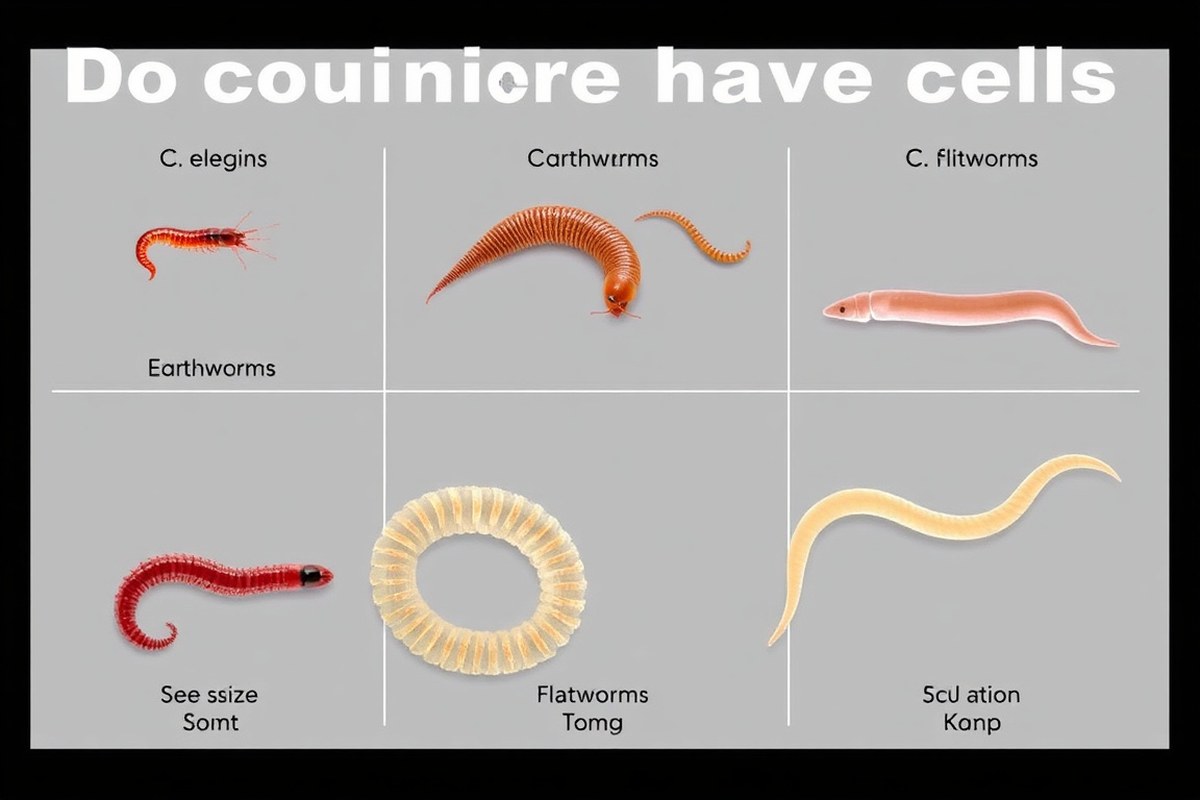
Common worm species differ greatly in the number of cells they have. The tiny worm Caenorhabditis elegans has fewer than 1,100 cells. Earthworms have many more cells, depending on size, age, and health.
Cell Count in C. Elegans
C. Elegans is a model organism in biology because its cell count is known exactly. Hermaphrodite C. Elegans have 959 somatic cells. Males have slightly more, about 1,031 cells, due to 81 extra neurons in their tails.
This precision comes from decades of careful cell counting by scientists. The worm’s simple body and fixed number of cells at maturity make it easy to study. The number stays stable unless the worm is growing or healing.
Cell Count in Earthworms and Segmented Worms
Earthworms are segmented worms with far more cells than C. Elegans. The cell number varies with their size and age. Bigger, older earthworms have millions of cells.
Segmented worms include earthworms, leeches, and marine worms. Their cell numbers depend on species and conditions like food supply. A worm’s health keeps its cells functioning well.
Here is a rough comparison of cell counts:
| Worm Species | Typical Cell Count | Notes |
|---|---|---|
| C. Elegans (Hermaphrodite) | 959 cells | Fixed count, well-studied model |
| C. Elegans (Male) | 1,031 cells | Includes 81 extra neurons in tail |
| Earthworm (average size) | Millions of cells | Varies by size, age, health |
| Leech | Millions of cells | Segmented worm, depends on species |
| Flatworms | Variable, often millions | Depends on species and size |
Knowing these differences helps when studying worm biology or doing experiments. Cell counts affect how worms grow and heal.
Do not cut worms in half expecting new worms to grow. It causes severe harm.
Differences in Flatworm Cell Numbers
Flatworms show wider variation in cell numbers than roundworms or segmented worms. Some flatworms have millions of cells while others have fewer. Their cell count depends heavily on species and body size.
Flatworms can regrow lost parts, showing many of their cells are “pluripotent.” This ability varies among species and affects how the number of cells changes.
Unlike C. Elegans, flatworm cell counts are not fixed but can increase during regeneration. The ability to regrow tissue links directly to pluripotent cells and total cell number.
What Types of Cells Make Up a Worm’s Body?
Worms have several specialized cell types that work together to keep them alive. Their bodies have nerve cells to sense things. They also have muscle cells to help them move.
Epithelial cells protect the body, and germ cells handle reproduction. Some worms also have blood cells, which carry oxygen using red hemoglobin.
Nerve and Muscle Cells in Worms
Worms have nerve cells that help them sense their environment. These nerve cells form clusters called cerebral ganglia, which act somewhat like a simple brain. They allow the worm to respond to touch, light, and other stimuli.
Muscle cells in worms are arranged in layers around the body. These cells contract to let the worm crawl and twist through soil or water. The muscles work with nerve signals to produce smooth, controlled movements.
Skin and Epidermal Cells
The outer layer of a worm’s body is made of epithelial cells. These cells make a skin that protects the worm.
This skin stops damage and keeps the worm from drying out. The skin cells also help the worm absorb oxygen directly from the air or water.
Under the skin, special regenerative cells called neoblasts exist in some worms, like planarians. These cells can divide to replace damaged or lost cells.
This helps the worm heal and sometimes regrow body parts. Neoblasts can turn into different cell types needed for repair.
Germ and Blood-Related Cells
Worms have germ cells responsible for creating eggs or sperm. These cells support reproduction and the next generation of worms. They develop inside the worm’s body, usually near the reproductive organs.
Many worms also have blood cells containing hemoglobin. Because hemoglobin contains iron, worm blood is usually red, similar to human blood. These blood cells flow through vessels to deliver oxygen, supporting the worm’s body functions.
How Do Worm Cells Support Regeneration and Movement?
Worms rely on special cells called neoblasts for regeneration. These cells are the only ones in planarians able to divide and replace damaged tissue. Radiation can remove all stem cells in a worm.
Then, one neoblast can grow many new neoblasts. This single cell can rebuild the entire worm.
Neoblasts divide asymmetrically. One cell stays a stem cell. The other cell becomes a specialized cell.
This ability lets the worm restore organs like eyes or intestines. Once cells fully develop, they cannot divide again. So neoblasts are critical for healing and growth.
Muscular cells help worms move by contracting and relaxing their body segments. These cells work like tiny motors that pull the worm forward or bend its body. Muscles and nerve cells work together in worms.
This helps them crawl, burrow, or swim. The motion depends on the worm species.
Not all worm cells can regenerate or change their function. Most body cells are fixed and serve specific roles. Only neoblasts can divide and make other cells.
They help worms regenerate and replace cells. These stem-like cells keep worms healthy.
How Is DNA Organized and Expressed in Worm Cells?
Worm cells contain DNA organized into chromosomes, much like other animals. Their DNA carries all the genetic instructions for growth, function, and reproduction. Caenorhabditis elegans is a common research worm.
It has about 97 million base pairs in its genome. Humans have over three billion base pairs in comparison.
Scientists favor C. Elegans for research because its cells are transparent, making it easy to see internal processes. Its smaller, simpler genome helps researchers study basic genetic functions without the complexity of larger organisms. This worm is a model to study genes.
It helps us learn how genes control development. It also shows gene roles in disease.
Studying worm cells helps scientists understand human biology by revealing shared genetic and molecular mechanisms. For example, researchers can insert new DNA sequences into C. Elegans to observe how these changes affect cell behavior. This method takes only a few weeks.
It needs special lab equipment to work. It gives clear insights into development and gene function.
Work carefully with worm DNA in labs, as contamination or damage can alter experimental results.
How Do Cellular Structures Differ Between Worm Types?
Flatworms, roundworms, and segmented worms show clear differences in their cellular structures and anatomy. Flatworms and roundworms lack blood, while segmented worms have it. This difference changes how their cells manage oxygen and nutrients.
Flatworms have simple, flat bodies made up of cells that function mostly for absorption and movement. Their cells lack complex blood systems.
Roundworms have tube-like bodies with a protective outer layer and some muscles inside. Segmented worms, like earthworms, have body segments filled with specialized cells and blood that carries oxygen.
The table below highlights key cellular and anatomical differences between these worm types:
| Feature | Flatworms | Roundworms (Nematodes) | Segmented Worms (Annelids) |
|---|---|---|---|
| Body Structure | Flat, unsegmented | Cylindrical, unsegmented | Segmented with grooves |
| Blood Presence | Absent | Absent | Present with hemoglobin or chlorocruorin |
| Oxygen-Carrying Molecule | None, oxygen diffuses through skin | None, oxygen diffuses through skin | Hemoglobin or chlorocruorin |
| Muscle Cells | Simple muscle cells, mainly for gliding | Longitudinal muscles | Longitudinal and circular muscles |
| Cell Specialization | Limited specialization | Basic specialization in cuticle and muscle cells | High specialization in body segments and organs |
| Typical Habitat | Freshwater, marine, or moist land | Primarily soil | Mostly soil and aquatic environments |
Earthworms belong to the segmented worms group and have many cell types specialized for different functions. They have blood cells carrying oxygen, unlike flatworms and roundworms. Their muscle cells allow complex movements using both circular and longitudinal layers.
The differences in cells between worm types affect their abilities and habitats. Flatworms rely on cells that absorb oxygen directly through the skin.
Roundworms’ cells support a tougher outer layer for protection, using fewer cell types than segmented worms. Segmented worms have advanced cells that support blood flow and coordination across body segments.
How Do Scientists Study Worm Cells and Internal Compartments?
Scientists study worm cells using methods like fluorescent tagging, advanced microscopy, and genetic analysis. These tools let them track cell behavior in live worms and observe internal parts clearly. The combination of these methods reveals details about cell division, movement, and gene activity.
Fluorescent Tagging and Microscopy
Researchers use fluorescent tags to label specific proteins or structures in worm cells. This makes cells glow under certain light.
So scientists can see cell shapes and actions. For example, they tag ribosomes to watch how proteins move inside cells.
LED lights with high intensity and short exposure times help capture clear images quickly. Scientists take time-lapse photos, tracking cells as they divide and move in living C. Elegans worms. This process needs microscopes made for the job.
They have high numerical apertures. This helps them focus on individual cells in real time.
The tagging process involves genetically modifying worms to produce fluorescent proteins naturally. This usually takes a few weeks and requires precise lab conditions to maintain worm health. When done right, the result shows bright, distinct cell patterns without harming the worm.
Tracking Intracellular Particle Movement
Microscopic tracking techniques follow particles moving inside worm cells to understand cell organization. Scientists record how molecules like ribosomes shift and how protein complexes affect mobility. They compare this movement between normal worms and mutants to learn what controls particle flow.
Using particle tracking involves filming cells with high-resolution microscopes and then analyzing shifts frame by frame. Software helps measure particle speed and direction to map how internal compartments behave. Accurate tracking depends on steady imaging and clear fluorescent signals.
This method reveals that worm cells use two systems to control particle motion inside. One system acts like packing peanuts.
Another involves protein complexes holding parts in place. Disruptions in these systems show differences in cell health and function.
Genome Sequencing and Connectome Mapping
Sequencing the entire genome of C. Elegans allows researchers to tag and study genes related to cell biology. Knowing the full DNA sequence helps identify which genes control cell division and movement. This genetic map has been key to understanding worm development at the cellular level.
The connectome shows how neurons connect in the worm’s body, serving as a wiring diagram. Mapping these connections helps study how cells communicate during movement and healing. Getting this map took years and intense imaging and data analysis.
These tools help bridge the gap between looking at whole worms and inspecting single cells. They provide a full picture of how cells work together inside the living worm. This layered approach is essential for advancing knowledge in worm cell biology.
What Limits Worm Cell Regeneration and How Does It Vary?
Worms vary greatly in their ability to regenerate cells. Planarians are special because they fix damaged tissues with stem cells. These stem cells are called neoblasts.
They help repair the body quickly and well. These cells can become many different cell types.
This ability is called pluripotency. It helps planarians replace body parts easily.
Neoblasts continuously divide, but about half the time, their daughter cells are not identical. One stays a stem cell, while the other begins specializing. This selective differentiation supports regeneration by balancing stem cell renewal with new tissue growth.
Other worms have fewer pluripotent stem cells than planarians. They mostly use limited stem cells or mature cells. These cells help them fix damage, but less well.
Their regeneration is often slower and less complete. For example, earthworms can regrow segments. But it might take several weeks depending on the damage and species.
Regeneration speed depends on the worm’s biology and environment. Planarians can regenerate lost parts in as few as seven days in ideal conditions. Other worms may need weeks to heal damage.
Sometimes they cannot fully restore tissues. This happens if they lack the right stem cells.
Handle worms carefully after injury; stress and poor water quality slow their cellular repair.
Worm regeneration depends on how many stem cells they have. It also depends on how well cells can change into new types. These limits affect how much repair they can do.
If a worm has few pluripotent cells or signaling problems, regeneration stops or makes bad tissue. This means that even planarians won’t heal perfectly after excessive damage.
Worms without many neoblasts rely on special cells to help. These cells can divide and undo their specialization, but this is less efficient. These species show more variation in healing times, linked to cell type availability and environmental factors.
How to Explore Worm Cells on Your Own
Use these steps to get hands-on with worm cells and learn more about their biology. Each step builds your understanding and helps you see how worms live and move.
- Day 1: Find common worm species like earthworms in soil or a garden. Look for small, active worms about 3 to 4 inches long.
- Day 3: Use a hand lens or basic microscope to observe worm skin and movement. Notice how segments contract and expand smoothly.
- Week 1: Read simple lab guides on worm anatomy. Learn to identify cell types. Focus on muscle and skin cells. Look for clear descriptions and pictures.
- Week 2: Collect a small water sample from the worm habitat. Use a microscope to look at cells or debris. Check for cell shapes and internal parts.
- Week 3: Research basic staining techniques that highlight worm cells. Try staining a prepared sample for clearer views of nuclei or muscles.
- Week 4: Observe worm regeneration by carefully cutting a worm segment and watching healing over days. Record any new tissue growth or movement return.
- After 1 Month: Compare your observations with videos or scientific images of worms’ cellular structures. Note any differences or surprises in cell organization.
Frequently Asked Questions
Do Worms Have Cells?
Yes, worms are made of many cells, not just one. Their bodies consist of various cell types that work together to keep them alive and moving.
Are Worm Cells Similar to Human Cells?
Worm cells share many features with human cells, including DNA and organelles. They also have special stem cells called neoblasts that aid in regeneration, unlike most human cells.
How Do Worm Cells Handle Crowding Inside?
Worm cells have crowded cytoplasm, more than human or yeast cells. This crowding affects how molecules move and work inside those cells.
Do All Worms Have the Same Amount of Cells?
No, the number of cells varies by worm species and size. Earthworms have about 1,000 cells, while microscopic worms have fewer and simpler cells.
Can Worm Cells Repair Themselves?
Worm cells can regenerate due to special stem cells named neoblasts. These cells help worms regrow lost body parts, unlike most other animals.
Do Worm Cells Have Specialized Roles?
Worm body cells have different jobs. Nerve cells help with sensing.
Muscle cells let worms move. These roles vary between worm types and their lifestyles.
The Bottom Line
Worms definitely have many cells working together to keep them alive and active. Their varied cells support movement, repair, and life functions. Try a simple microscope view to see cell details firsthand and deepen your understanding.