Do Pothos Need a Lot of Light? Complete Care Guide for Healthy Growth
Do pothos need a lot of light? Not really, but they do need enough.
Pothos thrive best in bright, indirect light for about 4 to 6 hours each day. This light level helps them grow strong and healthy without burning their leaves.
Too much direct sun can scorch their leaves. So avoid placing them in harsh sunlight.
On the other hand, too little light can slow their growth and cause weak stems. Start by placing your pothos near an east-facing window for gentle morning light.
Keep an eye on the plant’s condition after moving it. If the leaves look pale or the stems stretch, it might need more light. Adjust placement gradually to find the right balance for your pothos.
Key Takeaways
- Pothos grow well with 4 to 6 hours of bright, indirect light daily.
- Avoid direct afternoon sunlight to prevent leaf burn.
- East-facing windows usually provide ideal light for pothos.
- Watch for pale leaves or leggy growth; these signs need more light.
- Move pothos closer to a window if it is more than 6 feet away.
- Use sheer curtains to soften strong light for your pothos.
Do Pothos Need a Lot of Light to Thrive?
Pothos plants do not need a lot of light to survive. They thrive with bright, indirect light for about 10 to 12 hours a day. Put your pothos near an east-facing window.
It gets the best light there. Filtered sunlight spots also work well for them.
Bright, indirect light usually means around 1,000 foot-candles (about 10,000 lux). Pothos can grow in low light levels. This means 50 to 250 foot-candles (500 to 2,700 lux).
But its growth will slow down. A pothos in a room with just a north window might survive.
It won’t grow fast or look full. It does okay but slows down.
You can think of a pothos’s light needs in two parts: survival and optimal growth. Survival requires at least 4 to 6 hours of indirect light, even if it’s low intensity.
For healthy, fuller growth, aim for 10 to 12 hours of bright indirect light. Too much direct sun can scorch leaves, so softer light is ideal.
In low light, pothos leaves stay smaller and the plant grows slower. It often loses some of its variegation too. When you see longer stems and fewer leaves, your plant likely needs more light.
You can add a full-spectrum LED light about 20 to 25 inches above. This helps if natural light is low. It gives the plant more light.
Most pothos owners find several hours of bright indoor light better than all-day dim conditions. Pothos can survive shady corners but won’t show their best colors or growth there. In winter, your pothos might get less than 10 hours of light.
This usually slows growth but won’t hurt the plant long-term. The plant adjusts.
How Window Direction Impacts Pothos Light Exposure
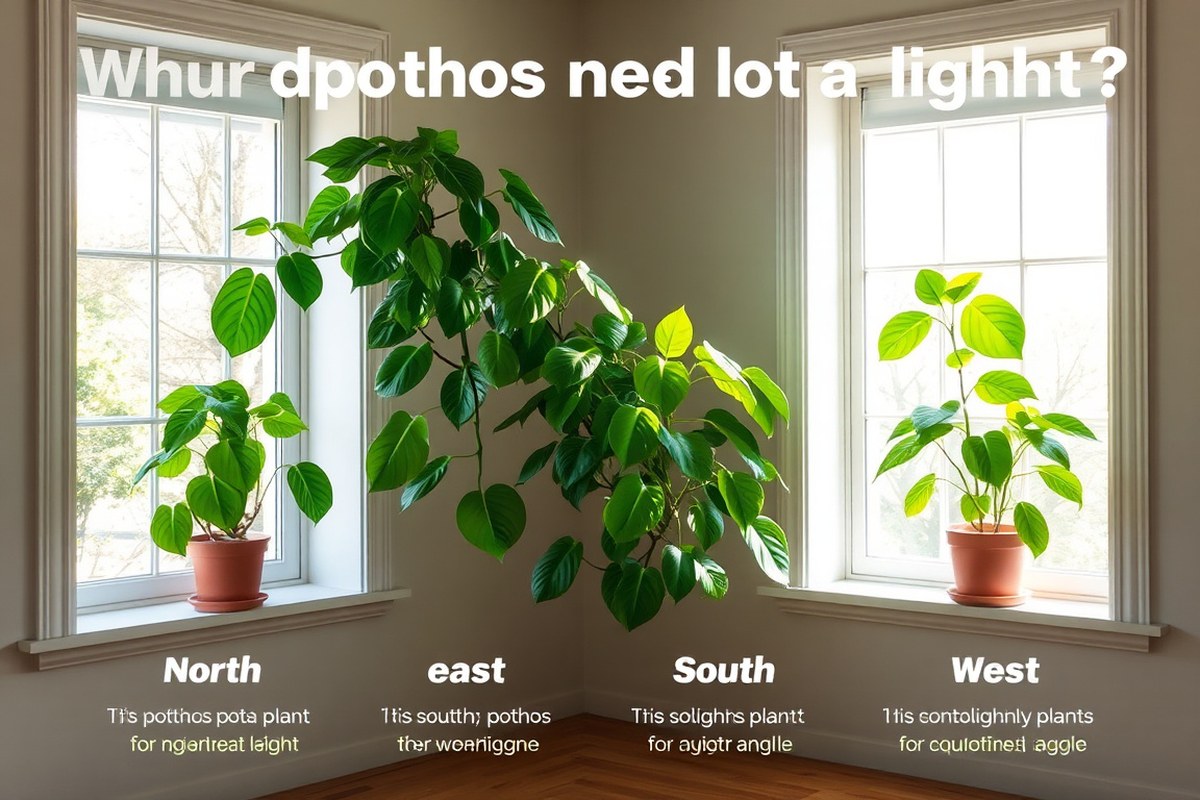
Pothos do well in many indoor light situations. But window direction changes light intensity a lot.
Knowing how your windows face helps you pick the best spot for your pothos. This table shows typical light levels and placement tips by window direction.
| Window Direction | Typical Light | Practical Placement |
|---|---|---|
| North | Lower to moderate indirect light | Close to the window for steady survival |
| East | Moderate to bright indirect light with gentle morning sun | Right near the window or a few feet back |
| West | Bright indirect to some strong direct afternoon sun | Keep 2 to 4 feet back or use a sheer curtain |
| South | Bright to very bright light, direct sun possible | Place 3 feet or more back; filter direct sun |
East-facing windows are often the easiest for pothos. They get gentle morning sun without harsh heat.
Move your plant a few feet back if leaves look pale or dry. Keep it in bright, indirect light though.
South and west windows send strong afternoon sun that can scorch pothos leaves. Keep the plant at least 3 feet from the glass. You can also use a translucent curtain.
This softens the light. Don’t put pothos too close to sunny windows in hot months. This helps prevent leaf bleaching.
Tip: Slowly give your pothos more light when moving to a brighter spot. This avoids shock.
North windows give low light. This slows growth and reduces leaf size and color.
Put the pothos right up against the window if that’s your only choice. It won’t thrive fully, but it will survive.
Changing your pothos’ spot may mean moving it a few feet. Or try using a thin curtain. Watch leaves for too much sun like browning.
Also watch for too little sun like smaller leaves. Adjustments like these keep your pothos healthy and growing steadily wherever you live.
Recognizing If Your Pothos Gets Too Much or Too Little Light
How to Spot Too Little Light on Your Pothos
A pothos plant with too little light often shows slow growth or no growth at all. Leaves may turn yellow, develop brown tips, or drop prematurely.
The plant might stretch its vines to find more light. This makes it look leggy and uneven.
Your pothos is more than 6 to 8 feet from a window. Check for these signs.
Variegated pothos leaves can fade and lose their bright patterns under dim light. Supplementing with artificial light or moving your plant closer to a window can help.
Recognizing Too Much Light Damage
Too much light, especially direct sunlight over three hours daily, can scorch pothos leaves. Sunburn shows as pale, bleached spots on leaves.
They might dry out or curl. Yellow or brown edges often mean light stress and heat above 90 ºF (32ºC).
Growth may slow down or stop when a pothos suffers from too much light. Check the spots on leaves carefully for crisp edges or excessive dryness.
Move the plant to softer light to stop damage. New leaves will grow healthy.
Steps to Check and Adjust Your Pothos’ Light
- Look for slow growth, leaf yellowing, or browning tips if you suspect too little light.
- Inspect for pale, sunburned spots or crispy leaf edges signaling too much light.
- Measure the light level near your pothos with a light meter to get a baseline.
- Move your plant closer (within 6 feet) to a window with indirect light if too dim.
- Shift the plant away from direct sunlight if you see signs of burning.
- Rotate your pothos occasionally to ensure even light distribution.
- Consider adding an LED grow light for consistent lighting in low-natural-light areas.
Checking your pothos carefully every week helps you catch light issues early. Measure light if you are unsure.
Ideal light is 300 to 800 foot-candles. Adjust placement and lighting to fit these levels for best results.
When to Move Your Pothos to a Better Spot
Move your pothos if growth stops or leaves look bad after weeks. A dim corner or a spot with harsh direct sunlight both call for relocation.
Choose a spot with bright, indirect light. Use LED grow lights if needed.
Keep watch for new leaves after moving. Bright green, healthy leaves often mean you found a good spot.
Variegation on new leaves means light is getting better. Keep your plant away from heating or cooling vents, as temperature stress can worsen light damage.
How to Use Artificial Light for Pothos Successfully
You can grow pothos well using artificial light, especially if natural light is weak or unavailable. Use full-spectrum LED or fluorescent grow lights placed 6 to 24 inches above the plant. Running artificial lights 12 to 14 hours a day helps your pothos grow.
This light duration gives the plant enough energy. Your pothos will stay healthy with this routine.
Types of Grow Lights Suitable for Pothos
LED grow lights are popular because they use less electricity and last longer. These full-spectrum LEDs mimic natural sunlight, helping your pothos photosynthesize well. Fluorescent lights also work but generally use more power and produce more heat.
Both lighting types provide the 10,000 to 20,000 lux your pothos needs. LED lights suit windowless rooms or spots with weak natural light. Choose a grow light designed for foliage plants to keep leaves healthy and variegated.
Optimal Distance and Positioning
Keep the grow light about 6 to 12 inches above your pothos for best results. Use fluorescent lighting about 12 to 24 inches away from your pothos.
Place the light so it shines evenly on the whole plant. This way, no leaves get burned.
Adjust the distance if new leaves grow small or sparse. Moving the light closer increases intensity while moving it away reduces stress on your plant. Keep cords safe to prevent accidents near your plant setup.
Recommended Light Duration and Timers
Run grow lights 12 to 14 hours every day to mimic sunlight cycles and support photosynthesis. Turn lights off at night to give your pothos a resting period, which helps its growth. Using a timer simplifies this daily schedule and avoids burning out the plant.
Reduce light time slightly in late fall and winter if your pothos shows signs of stress. Watch for changes in growth.
Longer or shorter lighting may be needed if your pothos grows too slowly or looks pale. Consistency in lighting hours aids steady growth.
Follow these steps to set up artificial lighting for your pothos:
- Choose a full-spectrum LED or fluorescent grow light suitable for houseplants.
- Keep LED lights 6 to 12 inches above pothos leaves. For fluorescents, set them 12 to 24 inches away.
- Fix the light fixture above your plant to shine on all leaves.
- Use a timer to keep lights on for 12 to 14 hours daily. Then, give your pothos a break at night.
- Observe new growth weekly to check for healthy size and spacing.
- Adjust the light’s distance or duration if new leaves are small or widely spaced.
- Keep cords tidy and dry to avoid hazards around your plant area.
How Light Affects Different Pothos Varieties
Green pothos varieties handle low light better than variegated ones. Variegated types like Marble Queen or Golden Pothos need more light. They usually prefer bright but indirect light to keep their patterns.
Too little light can cause the colors to fade. They lose variegation and turn mostly green if light is too dim.
Light also affects leaf size and color vibrancy. Pothos in low light produce smaller leaves and less vivid patterns.
Bright light, but not direct sun, encourages larger leaves and clear variegation. Solid green types like Jade don’t have this issue as much.
| Variety | Type of Variegation | Ideal Light Level | Low Light Tolerance |
|---|---|---|---|
| Jade Pothos | Solid green | Low to medium indirect light (around 50-150 foot-candles) | High |
| Golden Pothos | Moderate variegation | Medium to bright indirect light (around 150-300 foot-candles) | Medium |
| Marble Queen | Heavily variegated | Bright indirect light (above 150 foot-candles) | Low |
| Pearls and Jade | Heavily variegated | Bright indirect light | Low |
| Neon Pothos | Non-traditional, bright solid color | Bright indirect light | Medium |
Place variegated pothos closer to east or north-facing windows to provide enough indirect light. Green types do well in shaded spots or farther from a window. Watch leaves for fading variegation or pale color, they signal low light.
Too little light on variegated pothos turns leaves mostly green and reduces their pretty patterns.
Variegated types do well in strong indirect light between 150 and 300 foot-candles. This range helps keep their colors vibrant. Lower or higher light can affect how they grow.
You can measure this with a basic light meter or smartphone app. Bright light helps keep leaf patterns sharp and encourages quicker growth.
Low light works for green varieties, but they’ll grow slower and have smaller leaves. They also tolerate some lower light situations below 50 foot-candles. Avoid direct afternoon sun on any pothos to prevent leaf burn.
Adjusting Pothos Light Exposure Throughout the Seasons
Seasonal Changes in Daylight for Pothos
Daylight gets shorter and less intense in fall and winter. Your pothos will slow growth because it receives less light. Winter light can drop below the 5,000 lux low end your plant needs daily.
Shorter days mean the plant must get closer to its light source. It also needs longer exposure hours to thrive. These changes make a big difference by late October or early November.
Moving Your Pothos Closer to Light
Shift your pothos closer to a window during fall when days shorten. Aim for a bright window, like southern exposure, that gives more light. Keep it at least 12 inches away to avoid leaf burn.
Clean your windows and remove dust or screens blocking sunlight. Dust can reduce light by up to 30%, which matters in weaker winter sun. Check and move your plant every 1 to 2 months as daylight changes.
Using Grow Lights in Fall and Winter
Grow lights help when natural light drops. Set up a full-spectrum LED or cool-white fluorescent light. Keep it about 12 to 24 inches above or beside your pothos.
Run the light for 12 to 14 hours daily with some daylight. Use 16 to 18 hours if your house gets very little or no natural light. Put the light on a timer to keep the schedule consistent.
Seasonal Light Adjustment Checklist
Prepare to adjust your plant care with this simple outline. Track daylight changes and update your plant’s position or lighting setup. Follow these actions between September and March.
- September: Begin monitoring daylight hours and window brightness.
- October: Clean windows and check light intensity near your pothos.
- November: Move pothos closer to sunnier windows, keep 12 inches gap.
- December-January: Add grow lights if natural light falls below 5,000 lux.
- February-March: Gradually reduce artificial light as days lengthen.
Use a light meter app or check shadows to estimate light level. Adjustments will keep your pothos healthy through changing seasons.
Signs You Need to Adjust Lighting
Watch for slower growth, smaller leaves, or leggy stems in fall and winter. These signs mean your pothos needs more light or longer exposure. Also, yellowing leaves can indicate low light or overexposure.
By tracking daylight and following the checklist, you can nip these issues early. Your pothos will bounce back with proper seasonal light care and stay green year-round.
Common Lighting Mistakes and How to Fix Them
Pothos often suffer from light mistakes like overexposure and underexposure. People often put pothos where the room looks bright to them. But it is actually too dim for the plant.
This mistake can harm your pothos. Overexposure to direct sunlight causes sunburned leaves, which appear yellow, pale, or white. Underexposed plants stay pale and grow smaller new leaves each time.
Recovering a sunburned pothos means moving it away from direct sun immediately. Pick a place with steady bright indirect light. A good example is near a window with a sheer curtain.
This keeps light strong but soft. Trim sun-damaged leaves using clean scissors to help the plant focus on healthy growth. Keep the plant hydrated but avoid overwatering during recovery.
- Overexposure signs: yellow or white leaves and scorched edges
- Underexposure signs: small, pale new leaves and slow growth
- Fix overexposure by moving to bright indirect light areas
- Fix low light problems by moving your pothos closer to the window. Aim for about 5 to 6 feet away from it. That gives more light without direct sun.
- Use sheer curtains to soften harsh sunlight on the plant
- Prune damaged leaves to encourage new growth
- Maintain consistent watering but avoid excess moisture
To prevent lighting mistakes, measure actual light using a light meter or smartphone app. Aim for about 50 foot-candles minimum; less slows growth. Keep your pothos about 3 to 6 feet from a window.
This spot gives bright light but not direct sun. It helps the plant grow well.
Avoid spots with unpredictable direct sun, especially during midday hours. Rotate the plant occasionally for even light exposure so leaves don’t pale on one side.
Using artificial grow lights? Make sure the lamp delivers moderate, indirect light for about 12 to 14 hours daily. Keep bulbs at least 12 inches away to prevent burning.
Check your plant weekly for signs of stress. Adjust distance or duration as needed. A well-lit pothos looks lush, with rich green and variegated leaves growing steadily.
Best Placement Tips for Pothos in Different Rooms
Living rooms usually have larger windows with varied light. Place your pothos about 3 to 6 feet from an east or north-facing window.
This distance ensures bright, indirect light without the risk of burning leaves. Windows with sheer curtains help soften stronger light coming from south or west exposures.
Bathrooms tend to have smaller windows. Most bathrooms offer lower light levels and higher humidity, which pothos enjoy. Place the plant 2 to 4 feet from the light source.
Use a north or east-facing window or bright artificial light. The humidity in bathrooms can help the pothos grow, even if the light is moderate.
Choose spots where the plant leans slightly toward the light but avoids harsh rays. Bright indirect light means sunlight should not hit the leaves directly.
Filtered light from curtains or placement behind furniture or corners next to windows works well. Avoid direct sunlight that shines on your pothos for more than an hour.
- Near east or north windows in living rooms, keep pothos 3 to 6 feet away.
- Bathrooms benefit from 2 to 4 feet distance from smaller windows or light sources.
- Use sheer curtains or place plants behind furniture for softer light.
- In rooms with strong south or west light, move the pothos further back.
- Natural light is scarce. Use bright white artificial bulbs to help.
- Watch for leaves leaning sharply toward windows, move the plant closer if needed.
Too close to a south-facing window, pothos leaves can scorch quickly. Adjust placement if you see yellowing or browning.
Rooms with limited windows need extra thought. Place your pothos near any available light source, including glass doors. Rotate the plant once a week for even growth.
One side gets more light than the other. Use a measuring tape to find the right distance from the window. This small step really helps.
Step-by-Step Action Plan for Pothos Light Care
Follow this simple plan to give your pothos the right light and see it grow healthy. Watch your plant closely for signs it’s happy or needs adjustment.
- Day 1: Set your pothos close to a north or east window with soft light. Look for bright but filtered sunlight without direct sun hitting the leaves.
- Week 1: Observe leaf color and growth. Pale or scorched leaves mean the pothos needs less direct light. Shift it away from the window or use a sheer curtain as a shield.
- Week 2: Try rotating your pothos every few days to keep all sides getting light evenly. This helps bushy, balanced growth.
- Month 1: Add a fluorescent or LED grow light if natural light is weak. Keep it on 12-14 hours daily and at least 12 inches from leaves.
- After 6 Weeks: Check for new leaf size and color. Slow growth or yellowing leaves show your plant needs more light. Gradually place it in a brighter spot to avoid shock.
- Seasonal Setup: Adjust the pothos’s location in fall and winter to catch more light. In summer, protect from harsh direct afternoon sun.
- Ongoing: Avoid common mistakes like sudden moves into direct sun or dim corners. Keep light consistent to reduce stress.
Frequently Asked Questions
How Many Hours of Light Does a Young Pothos Need Daily?
Young pothos plants need about 12 to 14 hours of bright, indirect light daily. This helps them grow strong and develop good leaf color in early stages.
Can Low Light Affect Pothos Leaf Variegation?
Yes, low light can reduce leaf variegation and make leaves more green. Provide brighter indirect light to keep variegation vibrant on your pothos.
Is It Okay to Rotate Pothos for Even Light?
Yes, rotating your pothos weekly helps all sides get light evenly. This prevents leaning or uneven growth and keeps the plant balanced.
Will Pothos Grow Under Fluorescent Office Lights?
Pothos can grow slowly under fluorescent lights. They prefer 10 to 12 hours of bright, indirect light each day.
This light helps them thrive better. Use supplemental lighting for better growth.
How Does Winter Light Change Pothos Care?
Winter light changes with shorter days and weaker sunlight intensity. You may need to move your pothos closer to the window or add artificial light.
Does Direct Midday Sun Damage Pothos Leaves?
Direct midday sun often causes leaf burn and yellowing on pothos leaves. Keep the plant in bright, indirect light to avoid damage.
Key Points to Remember
Pothos plants do best in moderate, indirect light and adapt well indoors. Start with gentle window light and adjust as you watch your plant’s signals. Picking a good spot today can keep your pothos healthy for years.