What Is Organic Matter? A Complete Guide to Soil Health and Benefits
What is organic matter? It means all the plant and animal materials in soil. This includes leaves, roots, microbes, and tiny creatures that have died and started to decay.
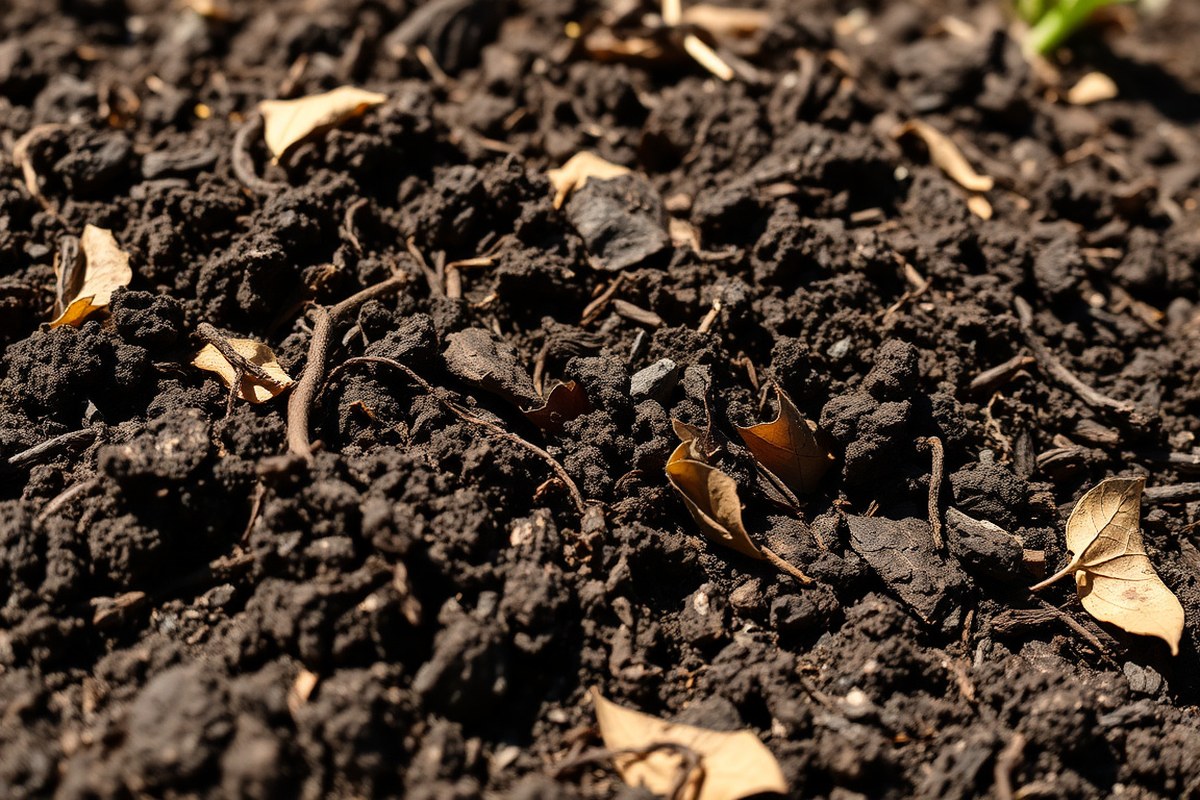
Organic matter looks dark and crumbly when healthy. It helps soil hold water and nutrients.
Soil organic matter contains carbon and nutrients like nitrogen and phosphorus. It feeds beneficial microbes and glues soil particles together.
This improves soil structure, making it easier for roots to grow and water to soak in. You can boost organic matter by adding compost or cover crops regularly.
Watch how your soil changes over time. Adding organic material slowly raises its organic content.
Avoid over-tilling, because it breaks down organic matter faster and can harm soil life. Begin by adding basic organic matter to your soil.
Key Takeaways
- Organic matter is decayed plant and animal material in soil.
- It helps soil hold water, nutrients, and supports healthy microbes.
- Dark, crumbly soil usually indicates good organic matter content.
- Add compost, mulch, or cover crops to increase organic matter.
- Avoid frequent tilling to protect organic matter and soil life.
- Organic matter improves soil structure for better root growth.
What Exactly Is Organic Matter in Soil?
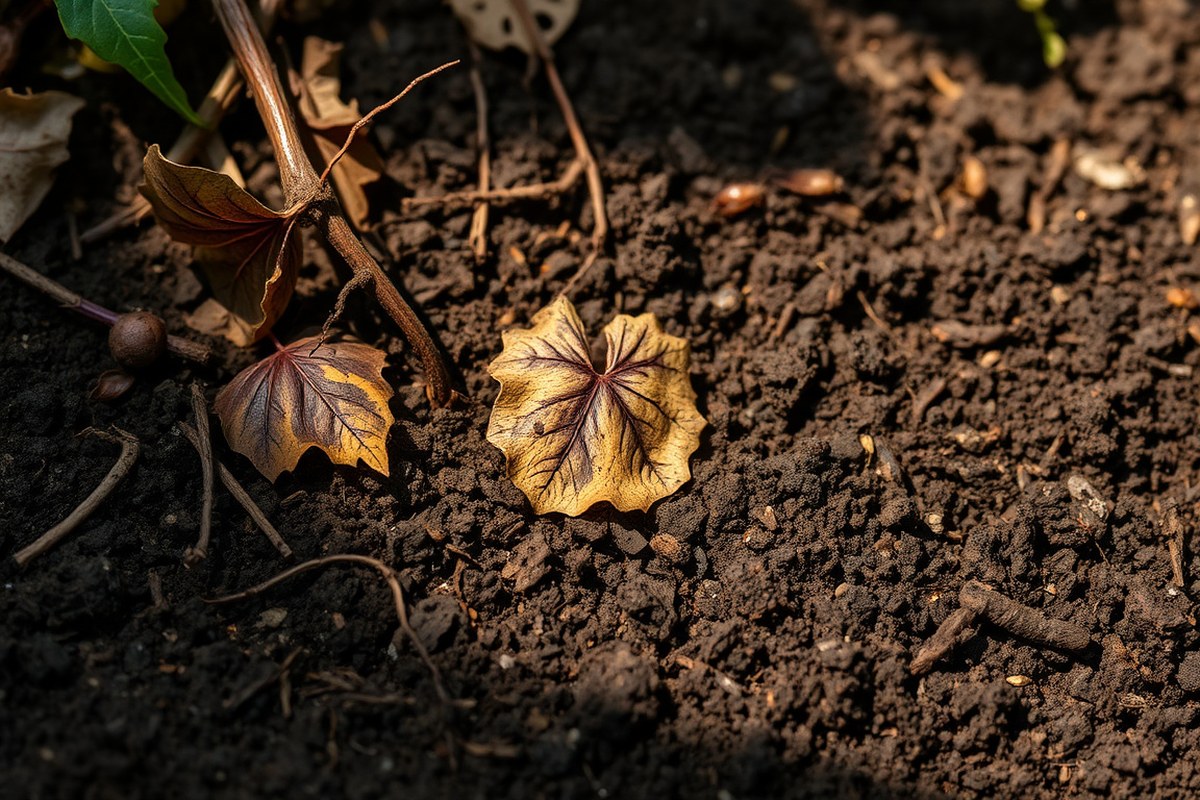
Organic matter in soil includes materials from living or once-living organisms. It comes from plants, animals, microbes, and their waste products as they decay. This matter turns into soil organic matter when it breaks down and loses its original shape.
Unlike minerals, organic matter contains carbon bonded to hydrogen, which makes it different. Minerals form from non-living sources and do not decay. Organic matter changes over time.
Minerals include sand, silt, and clay. They form soil’s non-living part.
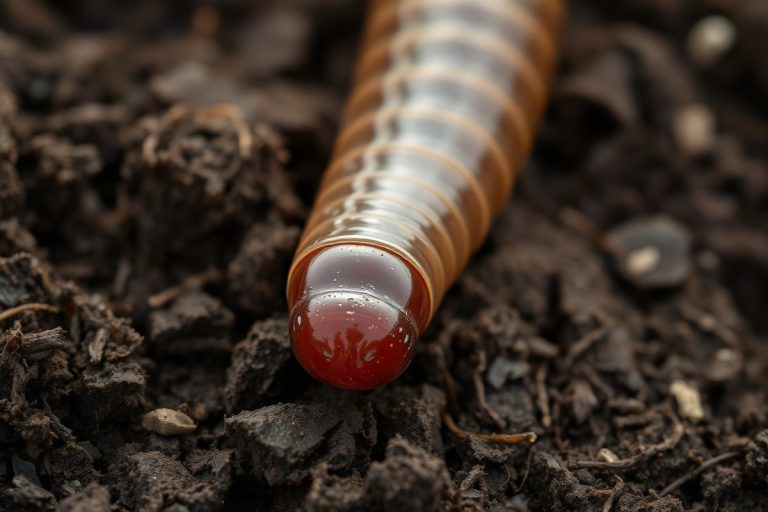
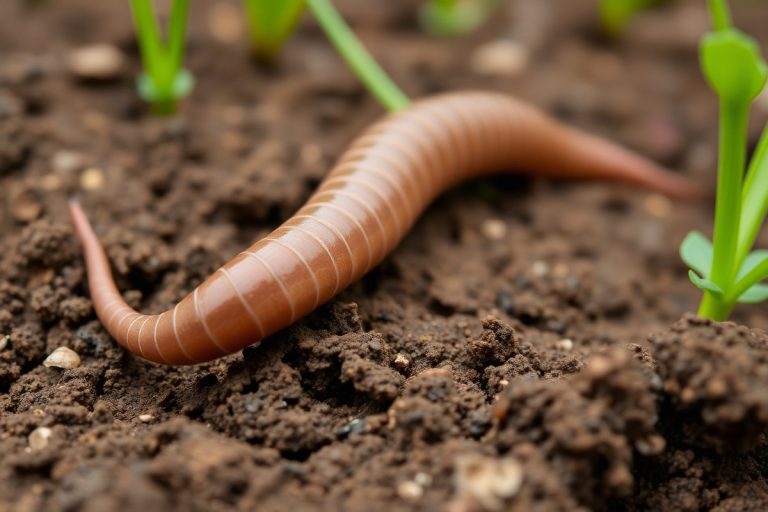
Living organisms like microbes and earthworms are about 15% of soil organic matter. This living fraction feeds soil creatures and helps recycle nutrients.
The rest is non-living organic matter. It includes partly decomposed materials and stable organic matter attached to clay.
Soil organic matter improves soil by holding particles together and increasing water retention. It supports soil life by providing food and shelter underground.
This changing soil part is very different from minerals. Minerals mainly shape texture and drainage and do not supply nutrients.
You can find organic matter as plant debris, animal remains, and microbial bodies within soil. As organic residues break down, they release nutrients plants can use. Slow decay and interaction with minerals keep carbon stored in the soil longer.
What Are the Main Types of Organic Matter?
What Are the Main Types of Organic Matter?
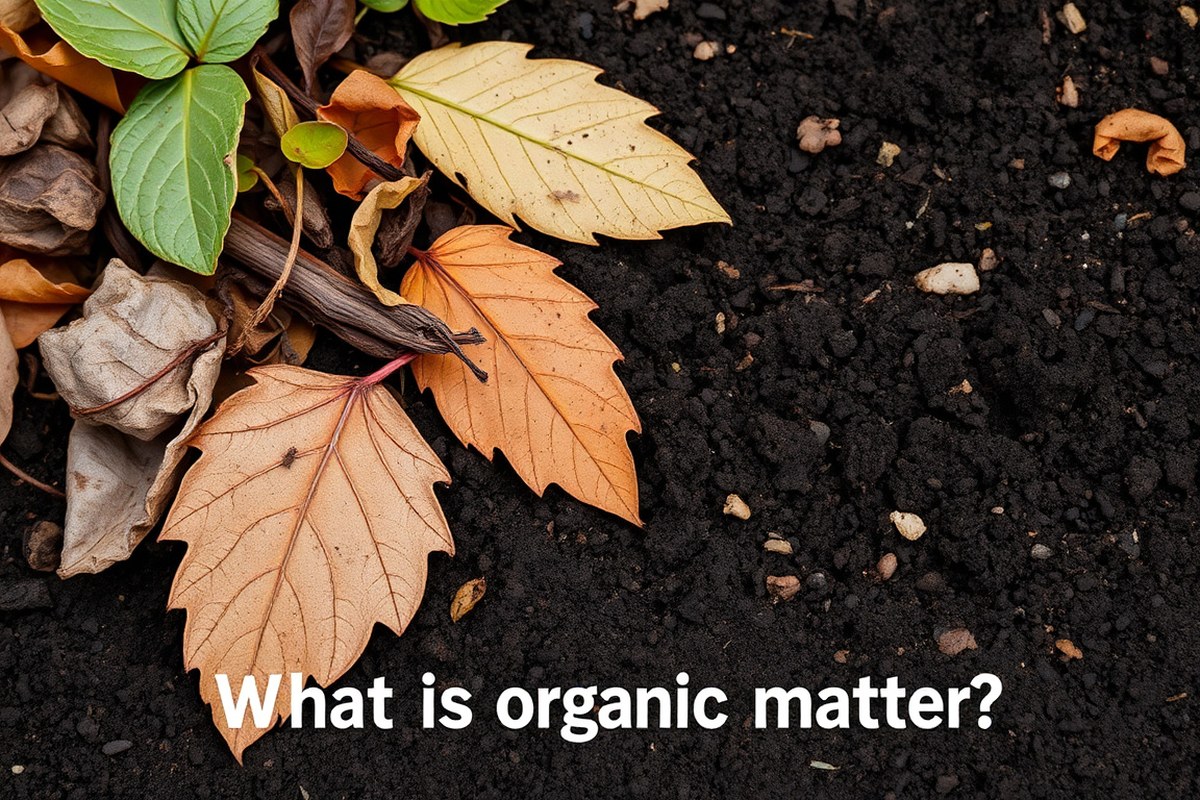
Organic matter in soil includes fresh plant and animal residues, well-decomposed material, and living soil organisms. These components form a continuum from recently dead material to stable substances resistant to decay. Each type plays a role in soil health and nutrient cycles.
Fresh Organic Residues
Fresh organic residues come from plant litter, dead roots, and animal remains recently added to soil. These materials are rich in nutrients but also provide food for soil microbes. They break down rapidly, fueling biological activity.
This material has a high carbon-to-nitrogen ratio. It comes from sources like straw or wood chips.
These materials are common in gardening and farming. That can cause microbes to temporarily use soil nitrogen, reducing availability for plants.
- Leaves, stems, and other plant litter
- Dead roots and root exudates
- Animal scraps and manure
- Partially decomposed residues
- Microbial remains in early decay stages
Avoid adding too much high carbon residue at once. It can lock up nitrogen temporarily.
Gardening or farming should add fresh residues in balanced amounts. This ensures continuous feeding of microbes without starving plants.
Stable Humus and Humic Substances
Humus is organic matter that has fully decomposed into stable, complex molecules. This material resists quick breakdown, lasting for years in the soil. It binds tightly to clay particles, improving soil structure and water retention.
Besides resisting decay, humus slowly releases nutrients, making it a steady nutrient source over time. It forms from the chemical and physical transformation of fresh residues by microbes.
- Highly decomposed organic compounds
- Organically-bound nutrients
- Complex molecules that resist decay
- Material tightly linked to soil minerals
- Acts as long-term nutrient reservoir
Adding organic residues regularly and allowing time for decomposition helps build humus. Soils rich in humus show better fertility and water-holding capacity.
Living Microbes and Faunal Biomass
Living organisms may account for 1 to 5 percent of the total soil organic matter. This includes bacteria, fungi, earthworms, and other tiny creatures. They use fresh residues for food and contribute organic compounds through their waste and bodies.
These organisms drive the decomposition process, recycling nutrients back into the soil. They also secrete substances that improve soil aggregation and stabilize organic matter.
- Bacteria and fungi populations
- Earthworms and soil insects
- Microbial biomass and secretions
- Dead microbial cells and byproducts
- Organisms that cycle nutrients
Disturbing the soil too much kills beneficial microbes and reduces organic matter stability.
Healthy soil should support vibrant microbial communities. Avoid excessive tillage and use organic amendments to maintain living biomass.
How Does Organic Matter Improve Soil Health?
Organic matter improves soil structure by helping tiny soil particles stick together. This creates stable aggregates that resist compaction and allow air and water to move freely. With better structure, roots can grow easier, reducing problems like crusting and erosion.
The humus in organic matter acts like a sponge, holding water in the soil’s pores. This helps soil keep moisture longer during dry spells and improves water infiltration when it rains. Soils low in organic matter drain faster and can leave plants thirsty between watering.
Organic matter breaks down slowly. It releases nutrients plants can use. These include nitrogen, phosphorus, and sulfur.
Soil microbes digest the organic material, converting it into these readily available nutrients. This natural supply reduces the need for chemical fertilizers. But it can take weeks or months to fully release nutrients, depending on temperature and moisture.
Many helpful soil organisms rely on organic matter as a food source. Microbes, fungi, and earthworms thrive in soils rich in organic materials.
Their activity breaks down organic matter further, improves soil aeration, and helps cycle nutrients. Without enough organic matter, microbial life declines, lowering soil fertility.
Chemically, organic matter has a high cation exchange capacity. It holds onto useful nutrients like calcium and magnesium. Potassium stays too.
This stops them from washing away. This nutrient retention protects soil fertility and keeps nutrients available for plant roots. Soils with low organic matter tend to lose nutrients more quickly.
Adding organic matter takes effort but pays off in healthier, more resilient soil. Compost, cover crops, or mulch help increase it over time. Avoid digging soil too often or when it’s wet.
Wet soil breaks the soil’s clumps. This lowers organic matter benefits. Ideally, maintain a steady input to keep soil fertile and well-structured.
How Long Does Organic Matter Last in Soil?
Organic matter breaks down in stages that usually take from weeks to years. Fresh residues like leaves and roots start decomposing fast, within a few weeks. Microbes eat these materials for energy.
They release nutrients and heat. This process is like burning wood but much slower.
Next comes the formation of more complex compounds. Microbial activity transforms simpler materials into stable substances called humus.
Humus can last from decades to centuries, resisting further breakdown. It also turns soil dark brown or black and improves soil’s texture and nutrient-holding ability.
Temperature, moisture, and soil type affect how fast organic matter breaks down. Warm and moist soils speed up microbial activity, so organic matter decays quicker. Cold or dry soils slow decomposition, helping organic matter last longer.
Clay soils protect organic matter by holding it in aggregates. Sandy soils expose it to air and microbes.
Soil organic matter splits into two main parts: active and stable. Active organic matter includes newly added plant and animal residues and microbial cells.
It decomposes quickly, usually within a year or two, supplying nutrients for plants. Stable organic matter, mostly humus, breaks down very slowly and adds long-lasting benefits.
Disrupting soil by tilling can speed up organic matter loss. Tillage breaks soil clumps, exposing protected organic matter to microbes and oxygen, which speeds decomposition. That means less stable organic matter remains over time.
Farmers often reduce tillage to keep organic matter in soil. They leave plants or residues on the soil surface. This helps keep the soil covered.
The right balance of organic matter, usually 3% to 6%, keeps soil healthy and productive. Managing moisture and temperature helps control how fast organic matter breaks down. Adding organic materials regularly.
Avoiding too much disturbance, lets stable organic matter build up. This means better soil that holds nutrients, stays loose, and supports healthy plants.
How Is Organic Matter Measured and Monitored?
Soil organic matter is usually measured by looking at its carbon content. Soil organic carbon is part of organic matter but not the same thing.
You can measure soil organic matter directly. Or measure soil organic carbon and estimate organic matter from that.
The two most common lab methods are dry combustion and loss on ignition (LOI). Dry combustion burns a soil sample at over 1000ºF in an oxygen atmosphere. This method measures carbon directly and can also measure nitrogen.
The method is very accurate. It can give wrong results in soils with carbonates. Those soils, like calcareous soils, react during burning.
LOI involves burning the soil at about 500ºC (932ºF). It measures the weight loss, which represents the burnt organic matter. This is a simpler method and doesn’t need advanced machines.
But it doesn’t separate carbon from other parts of organic matter. So, it can overestimate organic matter in some soils.
| Method | Measures | Details | Strengths | Disadvantages |
|---|---|---|---|---|
| Dry Combustion | Soil organic carbon | Combusted in O₂ at >1000ºF; CO₂ measured directly | Direct carbon measure; can also measure nitrogen; automated | Carbonates in soil can interfere; needs special equipment |
| Loss on Ignition (LOI) | Organic matter | Sample combusted at ~932ºF; measures weight loss | Simple equipment; bulk analysis possible | Does not distinguish carbon from other material; less precise |
| Heat Treatment | Indirect organic carbon | Soil heated at 500ºC; carbonates may decompose | Simple; bulk processing possible | Some soil carbon resists at this temperature; less accurate |
| Acid Treatment | Removes carbonates before analysis | Uses HCl or sulfurous acid to acidify | Improves accuracy for carbonate soils | Can reduce equipment life; requires special procedures |
Regular testing depends on your soil management goals. Testing every 2 to 3 years is common for monitoring changes in organic matter.
More frequent tests may be needed if you apply organic amendments often. Testing helps track if your soil is gaining or losing organic matter.
Many gardeners and farmers use simple test kits or send samples to labs. Lab results will usually report total soil organic carbon or organic matter.
You can convert soil organic carbon to organic matter by multiplying by about 1.72. This helps standardize results across methods.
Always label your soil samples carefully. Store them in a cool place. This prevents changes in organic matter before testing.
How Does Organic Matter Link to Nutrient and Carbon Cycles?
Soil organic matter stores nitrogen, phosphorus, and sulfur essential for plants. Microbes break down the organic matter to release these nutrients slowly. This process is called mineralization.
It frees nutrients gradually. Plants get steady growth this way.
Organic matter also plays a big role in the carbon cycle. It stores a lot of carbon in the soil. This carbon can last for decades or centuries.
About 20 to 40 percent of this carbon returns to the air. The speed depends on microbes breaking it down.
The way organic matter stores and releases nutrients affects soil greenhouse gas emissions. When microbes decompose organic material, they release gases like carbon dioxide and, sometimes, nitrous oxide. Managing soil to keep organic matter stable can reduce these emissions and improve soil health.
What Practical Steps Increase Soil Organic Matter?
Increasing soil organic matter means adding plant material and reducing soil disturbance. You can grow cover crops, add compost, manage crop leftovers, and cut back on tilling. These steps build soil health by feeding microbes and protecting the soil surface.
Using Cover Crops and Crop Rotations
Plant cover crops like clover, rye, or sunn hemp after harvesting. These plants add biomass, which turns into organic matter in the soil. This helps improve soil health for your next crop.
These plants protect the soil from erosion and limit weed growth during off-seasons. Legumes like sunn hemp also boost nitrogen levels, which feeds soil life and plants.
Studies show cover crops increase soil organic carbon 20 to 30 percent in upper layers. Changing cover crop types yearly balances nutrients and supports diverse soil organisms. Allow plants to bloom before cutting or rolling them for natural decomposition on-site.
Adding Compost and Organic Amendments
Add compost made from kitchen scraps, yard waste, or manure to your soil. Compost provides stable organic matter that improves soil quality. Using compost regularly helps build soil fertility.
Compost feeds microbes and improves soil structure better than raw residues. Spread ½ to 1 inch of compost evenly over your garden or fields once a year.
This amount improves soil organic matter without overwhelming plants. Apply it at a consistent thickness for best results.
Good composting needs air, moisture, and time. Turn piles every 1 to 2 weeks to keep microbes active and prevent bad odours. Properly finished compost looks dark and crumbly and smells earthy, with no visible food bits.
- Collect diverse materials: kitchen scraps, leaves, grass clippings
- Keep compost moist, like a wrung-out sponge
- Turn the pile regularly to add oxygen
- Avoid adding diseased plants or pet waste
- Let compost cure for 3 to 6 months before use
- Test pH and nutrient levels if possible
Avoid applying fresh manure or compost with weed seeds directly to crops. Wait until the material is fully composted to protect your plants.
Minimizing Soil Disturbance
Reducing how much you till preserves soil organic matter by preventing its breakdown. No-till or reduced tillage keeps fungal networks and soil microbes intact. This method also lowers erosion and helps soil hold water better.
Try using specialized equipment that plants seeds directly through crop residue. It saves time, fuel, and soil health in the long run. Avoid frequent deep plowing, it accelerates organic matter loss and compacts the soil underneath.
Managing Crop Residues and Mulches
After harvest, leave crop residues like stalks and leaves on the soil surface. They slowly break down and add organic carbon. Mulching with straw or leaves also keeps soil moist and cool, helping microbes survive.
Mix residues lightly into the top 1 or 2 inches of soil when possible. This speeds up decomposition but avoids disturbing soil structure too much. It helps organic material break down faster.
Grow green manures, plants meant to be tilled back in at peak growth. These add extra organic matter to your soil. Incorporate them before they flower for best nutrient return.
- Cut residues into small pieces to quicken decomposition
- Cover organic matter to protect it from heavy rain
- Rotate mulching materials to vary nutrient inputs
- Use mower clippings as mulch if weed-free
- Avoid burning residues as it loses carbon to the air
How Does Organic Matter Vary by Soil Type and Environment?
Organic matter levels differ widely in soils depending on climate, vegetation, and land use. Desert soils tend to have low organic matter.
Prairie and agricultural soils show more variation. Peatlands stand out for their extremely high organic matter and carbon storage.
Organic Matter in Arid and Sandy Soils
Sandy desert soils usually hold 2 to 3% organic matter by weight. These soils work well at low levels. The dry climate slows plant growth.
It also limits organic inputs. Organic matter decomposes quickly if irrigation or moisture increases. So additions must be steady to maintain soil health.
Managing desert soils often focuses on minimizing disturbance and protecting soil cover. Avoiding over-tilling helps preserve organic matter and reduces erosion risks. Organic amendments like compost need to be added regularly, especially when growing crops or gardening.
Prairie and Fertile Agricultural Soils
Prairie soils often exceed 7 to 10% organic matter, thanks to rich vegetation and moist conditions. Typical agricultural soils range from 1 to 6%, depending on farming practices and soil type. Intensive ploughing or burning lowers organic matter and increases erosion risks.
Maintaining organic matter in agricultural fields requires cover cropping, reduced tillage, and adding organic amendments. These methods preserve organic carbon and sustain soil fertility. Many farms aim for at least 3% organic matter to support crop health and yield.
Peatlands and Carbon Storage Significance
Peat soils hold immense organic matter, often far exceeding other types. Carbon builds up in frozen peat soils at a rate of 18 to 31 grams per square meter each year. Peatlands act as important carbon sinks but are vulnerable to climate change and thawing.
These unique soils need careful management to prevent rapid organic matter loss. Avoid draining or disturbing peatlands to retain their carbon storage. Restoration through re-wetting drained peat areas can help rebuild organic matter levels and slow carbon release.
| Soil Type | Organic Matter Range (%) | Key Factors |
|---|---|---|
| Desert sandy soils | 2, 3% | Low moisture, slow organic inputs |
| Agricultural soils | 1, 6% | Farming practices, tillage, crop type |
| Prairie soils | 7, 10%+ | Dense vegetation, moist climate |
| Peatlands (permafrost) | Very high (not % but carbon accumulation 18-31 g/m²/yr) | Water saturation, cold climate, anaerobic |
Adapting Practices to Soil and Climate
Adjust soil management based on the local soil type and climate. In dry soils, focus on adding organic material regularly and limiting disturbance. In wetter or fertile soils, reduce tillage and keep vegetation to maintain organic matter.
For peatlands, avoid draining or exposing the soil to air. Restoring moisture levels by blocking drainage channels helps keep organic matter stable. Farmers and gardeners should test soil organic matter to track changes and adapt their practices accordingly.
Adding organic matter in small, regular doses suits sandy soils better than large, infrequent applications.
Step-by-Step Action Plan to Build Organic Matter in Your Soil
Start improving your soil’s organic matter today with these clear steps. Each helps you track progress and keeps your soil healthy.
- Before planting: Add compost or well-rotted manure to your soil. Check soil texture feels crumbly and dark for good organic matter presence.
- Week 1: Plant cover crops like clover or rye. After a few weeks, notice green cover protecting bare soil from erosion.
- Month 1: Mulch around plants with straw, leaves, or grass clippings. Look for less soil drying and signs of earthworms returning.
- Monthly: Test soil organic carbon periodically using a reliable soil test kit. Watch for small increases in organic matter levels.
- Seasonal: Rotate crops and reduce tillage where possible. Check for healthier plant growth and fewer weeds as signs of better soil structure.
- Yearly: Reassess your soil with a professional soil test. Changes in soil color and higher moisture retention show improved organic matter.
Frequently Asked Questions
What Is the Difference Between Organic Matter and Humus?
Organic matter is all decayed plant and animal material in soil. Humus is stable, fully decomposed organic matter that lasts longer and improves soil structure.
How Does Organic Matter Affect Soil Water Retention?
Organic matter holds water like a sponge, keeping soil moist longer. This helps plants survive dry spells and reduces watering frequency.
Can Organic Matter Reduce Soil Erosion?
Yes, it improves soil aggregation and stability, reducing erosion risks. Healthier soil clumps resist wind and water removal better.
Is Organic Matter the Same as Compost?
Compost is decomposed organic material added to soil, boosting organic matter levels. Organic matter includes compost but also existing decayed material in soil.
Does Organic Matter Impact Soil Temperature?
Organic matter buffers soil temperature swings by insulating the soil. This protects roots from extreme heat or cold.
Can Too Much Organic Matter Harm Soil?
Excessive organic matter can cause nutrient imbalances or poor drainage. Balanced levels (3-6%) are best for crop growth.
The Bottom Line
Organic matter is key to richer, healthier soil that supports plants well. Try one small change now, like adding mulch or planting cover crops. You’ll start seeing your soil come alive and improve over time.