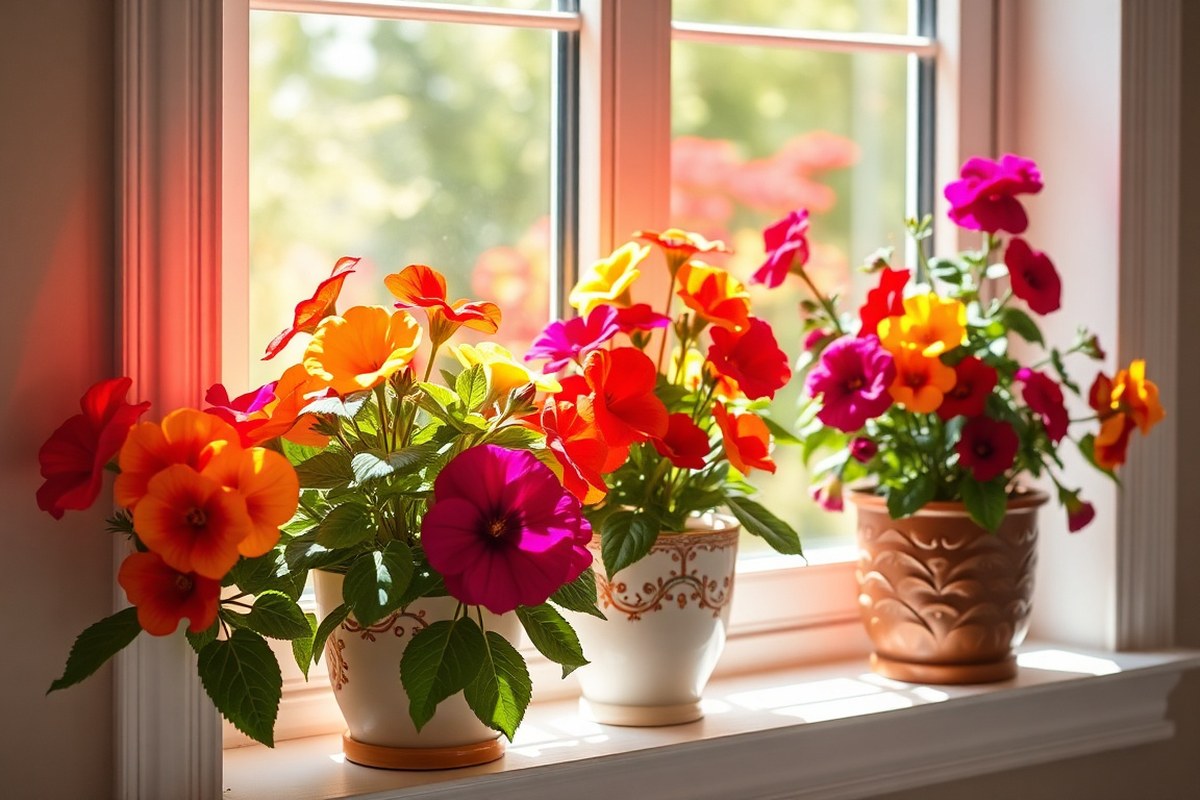
Can Petunias Grow Indoors? Complete Care Guide for Blooming Success
Can petunias grow indoors? Yes, they can thrive inside with the right care. They need strong light, regular watering, and good temperature control to bloom well.
Petunias require at least six hours of sunlight daily to grow healthy. Natural sun might be limited. Using grow lights helps bloom year round.
Pick a spot with bright, indirect light. Or place a light 4 to 6 inches above plants. Rotate pots weekly to keep growth even.
Keep indoor temperatures steady between 65 and 70 degrees Fahrenheit. Avoid cold drafts or hot spots to prevent stress on your petunias.
Water them regularly and ensure proper drainage. Avoid waterlogging to prevent root rot.
Fertilize petunias every two weeks with a balanced, water-soluble fertilizer. Deadhead spent blooms to encourage more flowers. With these steps, your petunias can bloom indoors for up to three years.
Key Takeaways
- Provide at least 6 hours of direct sunlight or use grow lights daily.
- Maintain indoor temperatures between 65°F and 70°F for best growth.
- Place grow lights 4 to 6 inches above plants for 12 to 16 hours.
- Water petunias regularly but ensure containers drain well to avoid root rot.
- Keep humidity between 40% and 70% to prevent leaf problems and stress.
- Choose a bright location away from cold drafts and heat sources.
Can Petunias Successfully Grow and Bloom Indoors?
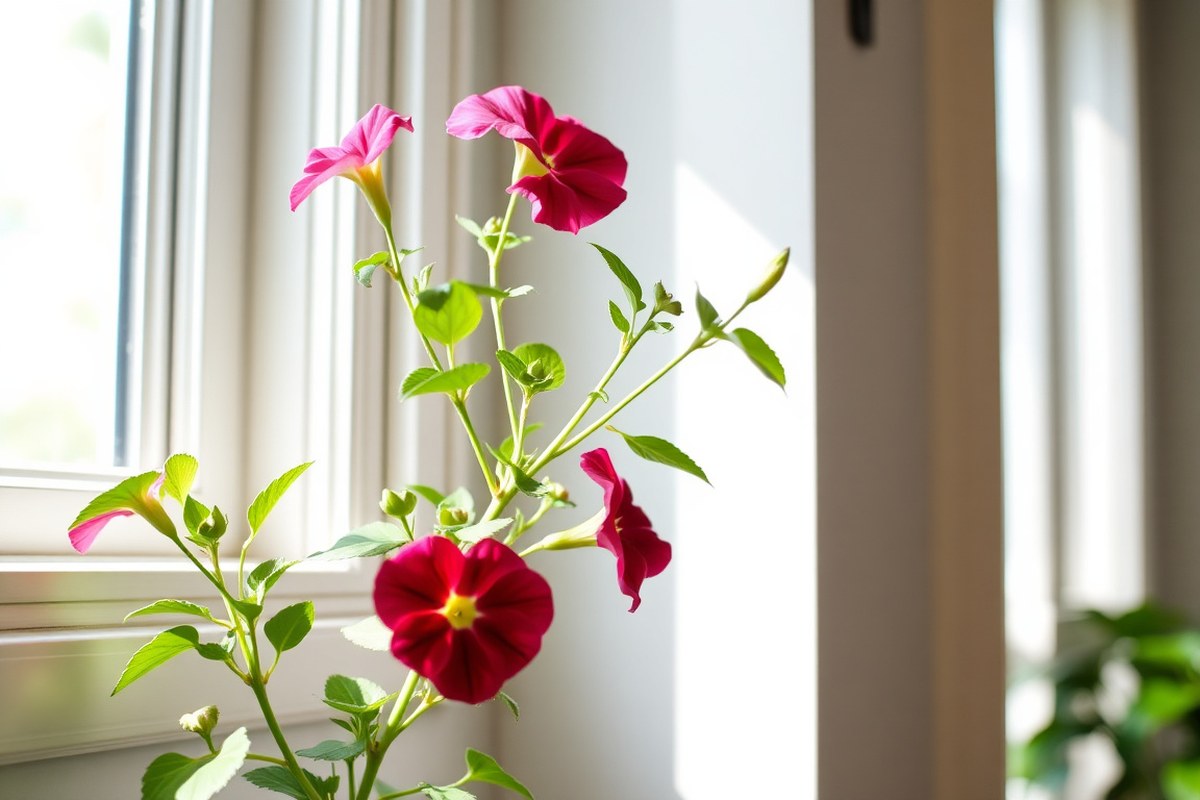
Petunias can successfully grow indoors if you recreate their natural environment. They like temperatures between 65°F and 75°F, which is normal room temperature. Keeping this range steady helps petunias stay healthy and bloom often.
With proper care, indoor petunias can live for two to three years. That means you can enjoy their bright colors through multiple seasons. They don’t just survive but can bloom year-round when they get enough light and warmth consistently.
Petunias need at least six hours of strong light daily. This helps them bloom all year indoors. Without enough light, they won’t flower well.
Without it, they tend to stretch out thin and drop flowers. Using grow lights during winter helps provide enough light when natural sun is limited.
Air circulation matters for your petunias because stagnant air can lead to damp leaves and disease. You can improve airflow by placing a small fan nearby or opening a window occasionally. This helps keep the plants dry and makes them stronger.
Choosing the Best Petunia Varieties for Indoor Growing
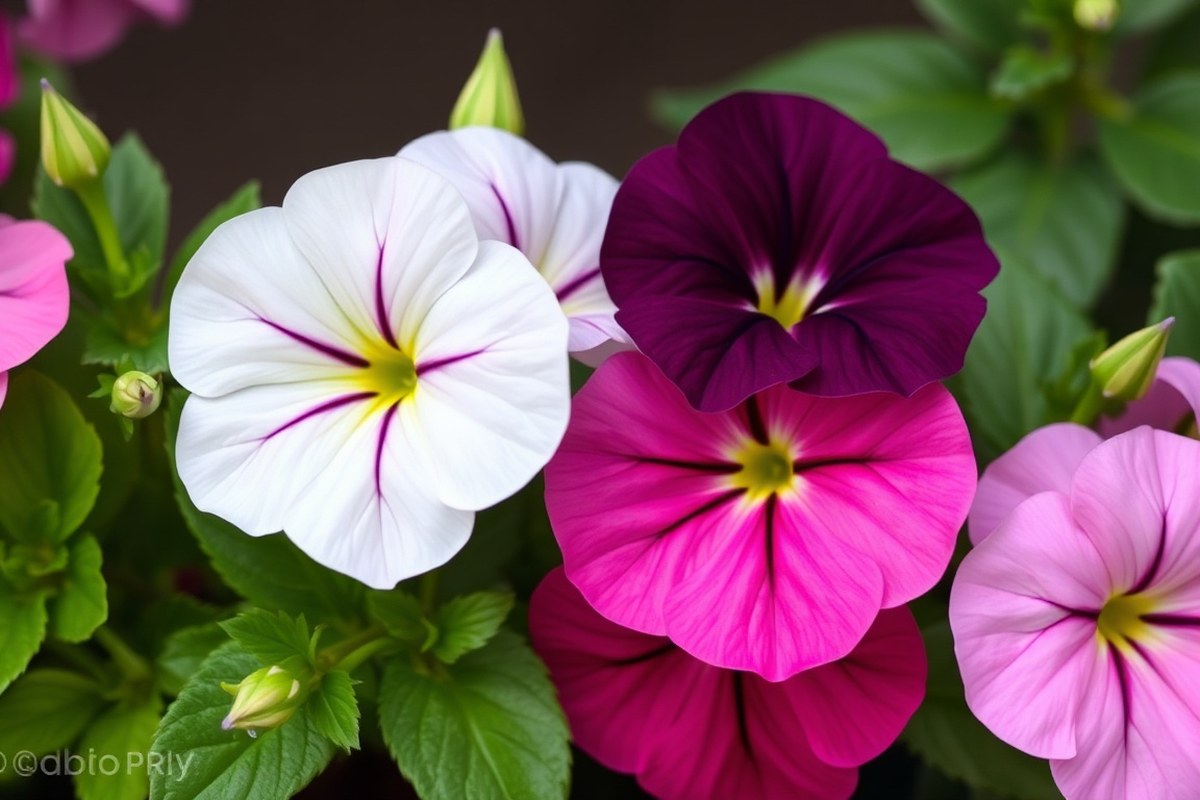
Compact petunia varieties suit indoor growing best because they take up less space. They also handle lower airflow better than sprawling types. Gardeners often pick “mounded” or “surfinia” types.
These grow well in pots with good light. They like warmth to thrive indoors.
Indoor petunias need more attention than outdoor ones. They need steady warmth around 65 to 75°F. At least 5 to 6 hours of sunlight or grow light is required daily. Outdoor plants get natural humidity and wind.
Indoor plants sometimes face dry air and stillness. This can cause weak stems or leaf problems.
| Variety Type | Growth Habit | Space Needed | Daily Light Needed | Care Level Indoor |
|---|---|---|---|---|
| Mounded | Compact, bushy | Small to medium pots (6, 8 in) | 5, 6+ hours direct sun/grow light | Moderate |
| Trailing (Surfinia) | Vining, cascades over pots | Hanging baskets or wide pots | 5, 6+ hours direct sun/grow light | Moderate to high (needs pruning) |
| Grandiflora | Larger flowers, moderate bush | Medium pots (8, 10 in) | 5, 6+ hours sun/grow light | Higher (needs more water and fertilizer) |
For smaller spaces, mounded types fit well pots on windowsills or shelves. Trailing petunias in hanging baskets add a nice touch.
They need more pruning and space than others. Grandiflora types show big flowers but demand more regular watering and feeding indoors.
Indoor petunias do best in well-draining soil to avoid soggy roots. They need slightly cooler nights, so keeping temps near 65°F helps bloom longevity.
Watch soil closely; let the top 1, 2 inches dry before watering again. This prevents root rot and keeps the plant healthy indoors.
Use a full-spectrum grow light if your indoor light is less than 5 hours daily. Petunias need it to bloom well.
Providing Optimal Light for Indoor Petunias
Indoor petunias need bright, direct light for 6 to 8 hours daily. When natural sunlight is limited, place grow lights close to plants. Proper lighting prevents leggy, weak growth and keeps blooms healthy.
How Much Natural Sunlight Is Needed
Petunias thrive with at least 6 hours of direct sunlight each day. A south-facing window works best for winter light, giving the strongest sun.
East- or west-facing windows offer less intense light. So you may need to supplement with grow lights.
Reduced sunlight causes petunias to grow weak and leggy. Homes with limited natural light usually see slower flowering in petunias. Moving plants closer to a bright window helps but might not be enough in darker months.
Choosing and Positioning Grow Lights
Full-spectrum LED grow lights mimic natural sunlight and support healthy petunia growth. Position lights 4 to 6 inches above the plants to avoid stretching. Lights too far away won’t provide enough intensity, causing weak stems.
Choose a reliable LED grow light designed for flowering plants. Products like the VIPARSPECTRA P1500 are popular for indoor gardening. Position the light source to cover all petunias evenly without shadows.
Daily Light Duration and Distance Guidelines
Run grow lights for 12 to 16 hours daily to match long summer days. Keep the light timer consistent but extend hours on cloudy days indoors. Total daily light should stay between 6 and 8 hours of quality illumination.
Adjust grow light height as your plants grow to maintain 4 to 6 inches of distance. This prevents legginess by keeping them compact and strong. Check for signs of stretching and move the lights closer if plants lean or become spindly.
Selecting Soil, Containers, and Starting Seeds Indoors
Petunias can start indoors with the right soil, containers, and timing. Use a light, well-draining seed-starting mix in pots with drainage holes. Starting seeds this way boosts their chance to grow strong.
They can then move outdoors or keep growing indoors. This approach helps the seedlings develop well before transplanting.
Choosing Well-Draining Potting Mix
Pick a potting mix made for container gardens with excellent drainage. Well-draining mixes prevent root rot, a common problem for indoor petunias. Avoid garden soil or heavy topsoil because they trap moisture and can suffocate roots.
Good mixes use peat-based blends with 20 to 30% perlite. Another option is coconut coir mixed with compost and perlite. These combinations provide the right balance of moisture and drainage.
These hold moisture but let excess water drain away quickly. For dryer indoor air, a coconut coir blend with compost helps keep the soil moist enough.
Selecting the Right Container Size and Type
Choose pots with drainage holes to stop water pooling at the bottom. Flats or seed trays work well for starting seeds. Once seedlings grow, transfer them to pots at least 3 inches wide.
For best growth, use pots 4 inches wide per plant. This space lets roots spread and supports healthy development.
Repot petunias in spring into pots about 1 inch wider than the current one. Use fresh, well-draining potting soil each time to supply nutrients and avoid soil compaction. Clay or plastic pots are fine as long as drainage is good.
Seed-Starting Steps with Timing and Temperature
Start petunia seeds indoors 8 to 10 weeks before the last frost date. Use a light seed-starting mix rather than heavier potting soil.
Keep the mix moist but not soggy. Keep the temperature around 70 degrees Fahrenheit.
Follow these steps for best results:
- Fill seed trays or small pots with a damp seed-starting mix.
- Press seeds gently on the surface using your finger. Do not cover seeds; they need light to germinate.
- Cover trays with clear plastic or a humidity dome to keep moisture in.
- Place trays in a warm spot around 70°F with indirect light.
- Check soil daily and mist or water lightly to keep moist but not wet.
- Remove cover when seeds sprout, usually in 7 to 14 days.
- Move seedlings under a grow light or near a bright window. Keep temps around 65 to 75°F.
- Thin seedlings to one strong plant per pot when they have 2 sets of leaves.
Watering, Temperature, and Humidity Needs for Healthy Growth
Water indoor petunias when the top 1 to 2 inches of soil are dry. This usually means watering about once a week.
But it depends on your home’s temperature and humidity. Use room-temperature water and avoid wetting the leaves to prevent diseases.
Keep soil moisture steady but not soggy. Too much water causes root rot. Your petunias will wilt or turn yellow.
This happens even when the soil feels wet. Drainage holes and a well-draining soil mix help prevent this problem by letting excess water escape.
Petunias thrive in temperatures between 60 and 75 degrees Fahrenheit (16 to 24 Celsius). Keep your plant away from drafts, heaters, or air conditioners that cause sudden temperature changes. Consistency in temperature makes petunias grow and bloom better indoors.
Humidity levels between 40% and 70% are ideal. Dry air below 40% causes faster water loss. Above 70% with poor airflow can trigger leaf spots.
Use a small humidifier to increase moisture. You can also put the pot on pebbles and water. This works well in dry winter months.
Use a digital thermometer and hygrometer to track temperature and humidity near your petunia. This helps you adjust care and avoid stress for the plant.
To keep petunias healthy, check soil moisture with your finger before watering. Check one inch below the soil surface.
If it feels dry, water your petunias. Adjust watering frequency seasonally and as the plant grows to avoid drying out or overwatering.
Indoor heating can dry out the air quickly in colder months. A humidifier is a good choice to add moisture if you spot leaf browning or drooping. Make sure fresh air can flow around your plants.
This helps lower excess humidity on the leaves. Good air stops problems from forming.
Fertilizing and Pruning Indoor Petunias for Vigorous Blooms
Feed your indoor petunias every two to three weeks during active growth. Use a balanced liquid fertilizer like 10-10-10 or 5-10-5 for best results. When buds begin to show, change to a bloom-boosting fertilizer.
Use one with more phosphorus. This helps flowers keep growing.
Reduce feeding in cooler months or if growth slows to avoid over-fertilizing. Too much fertilizer can burn roots or cause leggy, weak plants. Always mix fertilizer at half the recommended strength to be safe indoors.
Pruning helps your petunias stay bushy and vibrant inside. Use sharp, clean pruning shears to cut the plant back to about 4 inches tall. This encourages fresh growth and more blooms throughout the season.
- Deadhead spent flowers regularly to prevent seed set and promote new blooms.
- Remove faded petals promptly to avoid rot and keep leaves healthy.
- Avoid cutting more than one-third of the plant at a time to reduce stress.
- Turn your pot a quarter turn every few days to keep growth even.
- Prune leggy stems back early to encourage branching and fullness.
Deadheading is key inside, as faded blooms left on the plant reduce flower production. Sharp pruning and careful feeding combine to keep your petunias blooming nonstop. This way, your indoor garden stays colorful and lively without needing outdoor help.
Troubleshooting Common Indoor Petunia Problems and Solutions
Indoor petunias can face pests, diseases, leaf discoloration, and growth challenges. Knowing how to spot and treat these helps keep your plants healthy. Here’s how to handle common problems and keep petunias blooming well inside.
Recognizing Pests and Diseases
Spider mites, aphids, and whiteflies often attack indoor petunias. Look for tiny webs, sticky residue, or small moving dots on leaves. Rinse leaves with water to treat infestations.
Use insecticidal soap every 5 to 7 days. Keep doing this until all pests are gone.
Powdery mildew and gray mold can affect petunias in humid, poorly ventilated spaces. The leaves get white powdery spots or fuzzy gray patches.
Remove affected leaves and improve air movement by using a fan or opening windows. Avoid overhead watering to keep foliage dry.
Symptoms of Watering and Nutrient Issues
Yellow leaves often mean overwatering or nutrient deficiency. Check that soil drains well and only water when the top inch is dry.
Feed your plant every 2 weeks with balanced liquid fertilizer. It helps replace lost nutrients during growth.
Premature flower drop can happen from inconsistent watering or sudden temperature dips. Keep soil evenly moist and maintain indoor temperatures between 60°F and 75°F. Avoid placing petunias near cold drafts or heating vents.
How to Fix Legginess and Sparse Blooming
Leggy growth occurs when petunias don’t get enough light. Move your plant closer to a bright south, west, or east-facing window.
Use a grow light for 10 to 12 hours each day. It helps keep growth compact and boosts flowering.
Prune leggy stems regularly by pinching back about one-third of the plant. This promotes branching and more blooms. Fertilize lightly to avoid excess leaf growth at the cost of flowers.
Air Quality and Humidity Concerns
Dry indoor air below 40% humidity can stress petunias. Raise humidity by grouping plants together or using a room humidifier. Misting leaves occasionally helps but won’t replace steady humidity.
Poor air quality from tobacco smoke or heavy cooking fumes irritates petunia leaves and slows growth. Keep plants away from these sources and ensure good room ventilation. Clean leaves gently with a damp cloth to remove dust regularly.
Extending Growth: Overwintering and Propagating Petunias Indoors
Petunias can be kept indoors through the winter but usually don’t bloom well again. Most gardeners replace them each spring to enjoy fresh flowers. Still, overwintering helps you save a plant and try to extend its life.
To keep petunias alive in colder months, provide enough light and steady temperatures. Use a grow light for 10 to 12 hours every day. Natural sunlight is weaker in winter.
That is why extra light helps. Keep your room between 65 and 70 degrees Fahrenheit, as petunias don’t like colder spots.
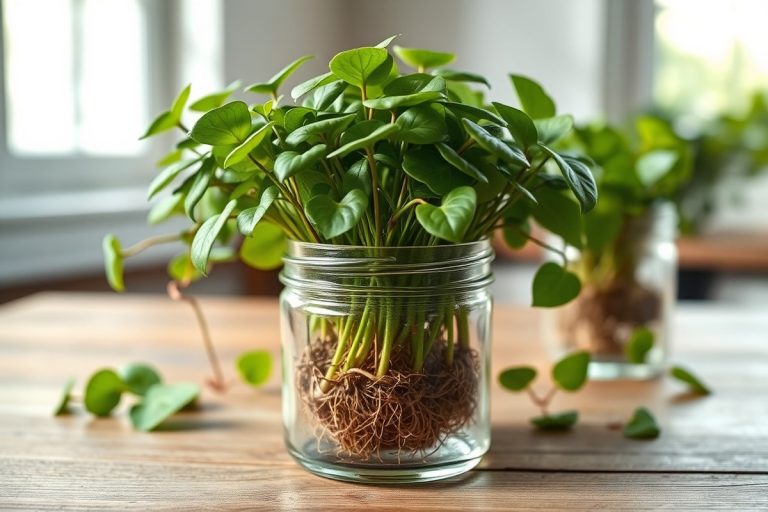
You can also propagate petunias by taking cuttings to grow new plants. This helps you extend blooming and keeps healthier plants year round. Starting cuttings indoors in spring or fall means you avoid buying new ones often.
Follow these steps to overwinter and propagate your petunias at home.
- Trim the petunia branches back by one-third to one-half to reduce stress on the plant.
- Bring your petunia inside before the first frost. Put it near a sunny window. Or use a grow light.
- Water sparingly to keep soil slightly moist but not soggy.
- Keep the room temperature steady between 65 and 70 degrees Fahrenheit to avoid shock.
- For propagation, snip 3 to 4-inch cuttings from healthy stems just below a leaf node.
- Remove the lower leaves of each cutting, leaving 2 or 3 at the top.
- Place cuttings in a clean container with moist potting mix or vermiculite.
- Keep cuttings in indirect light. Keep humidity high by covering them with a clear plastic bag or dome.
Check for rootbound petunias and repot if needed to avoid stunted growth.
Follow these steps to help your petunias survive indoors through winter. You may see fewer blooms but will keep the plants ready for spring. Propagation lets you start fresh plants while using your healthy indoor garden.
Step-by-Step Action Plan for Growing Petunias Indoors
Follow these steps to get your indoor petunias growing strong and blooming beautifully. Each phase tells you what to do and how to check your progress.
- Before you start: Choose a smaller petunia variety suitable for indoors, like ‘Wave’ or ‘Surfinia’. Check you have a sunny window with at least 6 hours of light.
- Day 1: Plant seeds or seedlings in well-draining, peat-based potting soil inside containers with drainage holes. Ensure the soil feels moist, not soggy.
- Week 1: Put your pots near the sunniest window you have. Water them lightly. Only water when the top inch of soil feels dry. Look for new shoots to confirm growth.
- Weeks 2-4: Feed with a balanced liquid fertilizer every two weeks. Watch for steady leaf development and small buds starting to form.
- Month 2: Prune leggy stems to encourage bushier growth. Healthy new side shoots indicate the pruning worked.
- Month 3 and beyond: Keep watering consistently, maintain bright light, and remove dead flowers weekly. Your petunia should bloom indoors for months.
- Once blooms fade: Take cuttings from healthy stems to root and grow new plants. New roots and leaves show successful propagation.
Frequently Asked Questions
Can Petunias Bloom Indoors Year-Round?
Yes, with grow lights and proper care, petunias can bloom all year indoors. Use strong supplemental lighting in winter to mimic sunlight.
How Long Do Indoor Petunias Typically Live?
Indoor petunias usually live for 2 to 3 years with good conditions. Regular pruning and feeding help extend their life.
Can I Keep Petunias Indoors During Winter?
You can keep petunias indoors to survive winter with enough light and warmth. Keep temperatures steady between 65 and 70 degrees Fahrenheit.
Do Petunias Need Direct Sunlight Indoors?
Yes, petunias need at least 5 to 6 hours of direct sun or strong grow lights. Without enough light, they won’t thrive or bloom well.
Are Petunias Toxic to Pets Indoors?
Petunias are generally non-toxic to cats and dogs but monitor pets around plants. Avoid using harmful pesticides on indoor petunias.
Can I Propagate Petunias from Cuttings Indoors?
Yes, petunias root well from cuttings inside with proper humidity and warmth. Use clean tools and keep cuttings in bright, indirect light.
Final Thoughts
Petunias can thrive and bloom indoors with the right care and light. Start by picking the right spot with enough sun and good soil. Give your plants regular water and feed to enjoy their flowers year-round.