Do Earthworms Lay Eggs? A Complete Guide to Their Reproduction Cycle
Do earthworms lay eggs or give live birth? They do lay eggs, not live young.
The eggs develop inside protective cocoons hidden deep in moist soil. This method helps shield the developing worms from drying out or predators.
Earthworm eggs need a damp environment with soil temperatures between 14°C and 26°C. That warmth and moisture trigger the eggs to grow and hatch properly. If the ground is too cold or dry, eggs won’t develop well.
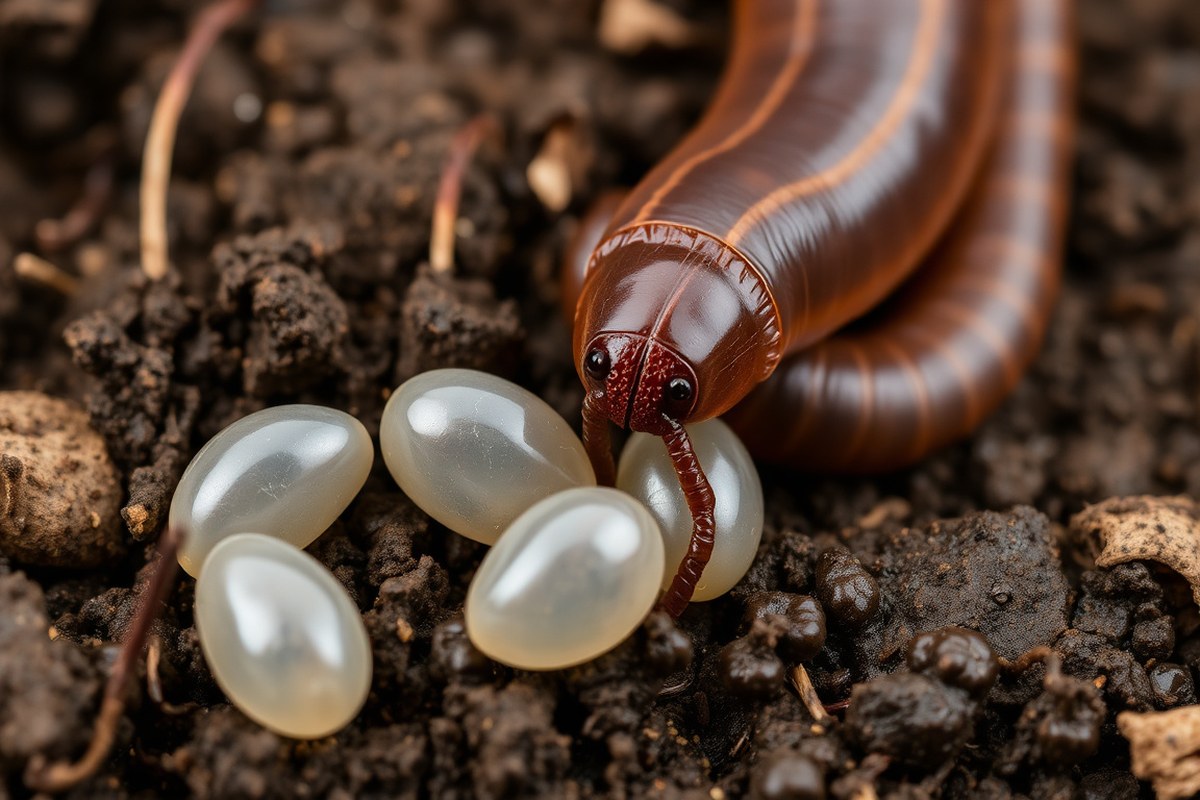
After mating, earthworms produce cocoons containing the eggs. These cocoons look like tiny lemon shapes and can hold from one to twenty embryos. The cocoon’s mucus also feeds the growing worm embryos until they hatch.
Knowing how earthworms lay eggs gives you a clue on how to foster their population. Keeping soil moist and warm encourages earthworms to reproduce well in your garden.
Key Takeaways
- Earthworms lay eggs inside small lemon-shaped cocoons underground.
- Soil temperature should be between 14°C and 26°C for egg development.
- The mucus in cocoons provides food for growing worm embryos.
- Proper moisture in soil helps eggs develop and hatch successfully.
- Cocoons can hold one to twenty embryos, varying by species.
- Eggs take about 3 weeks to develop inside a cocoon before hatching.
Do Earthworms Lay Eggs or Give Live Birth?
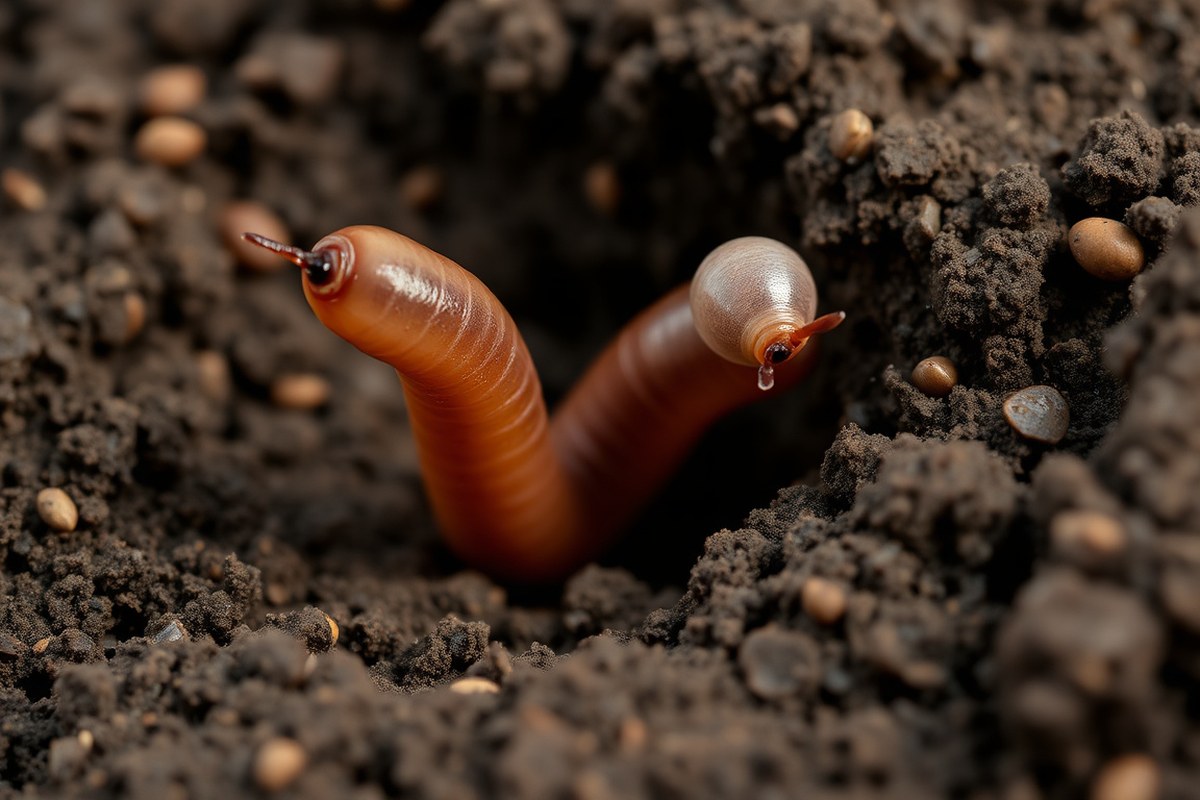
Earthworms do not give live birth. Instead, they lay eggs inside small protective structures called cocoons.
These cocoons rest in moist soil. The soil temperature stays between 57°F and 79°F. This range is perfect for eggs to develop.
The eggs are not like the hard, traditional eggs laid by birds or reptiles. Inside the luminescent white cocoon, the earthworm’s eggs develop safely and hatch into baby worms. This setup protects them until they are ready to emerge.
After two worms mate, they exchange sperm and later produce multiple cocoons containing eggs. These cocoons drop off the worm’s head and stay buried in the soil. Earthworms can lay several cocoons over a month, usually between 6 and 14, depending on conditions.
How Earthworm Reproduction Works: Hermaphrodites and Mating
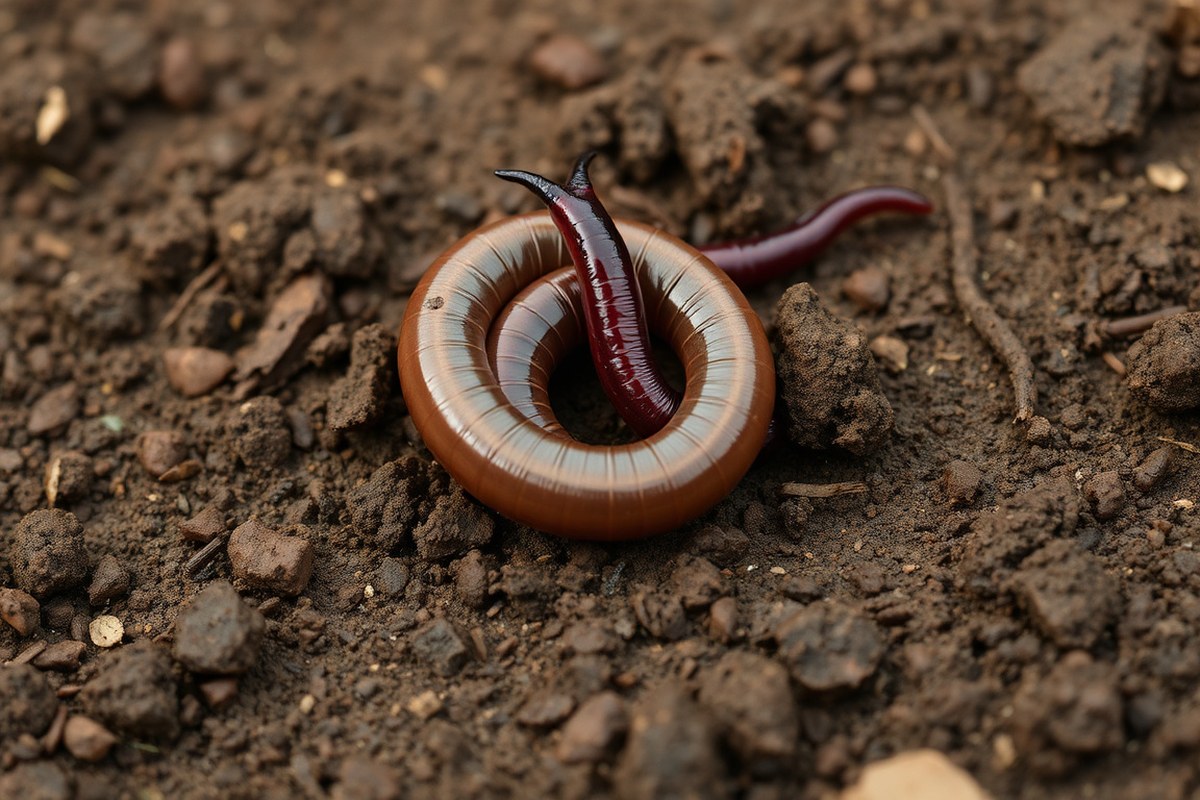
Earthworms are hermaphrodites, having both male and female organs. They need to mate and exchange sperm to reproduce. After mating, each worm prepares to fertilize and lay eggs.
Hermaphroditic Reproductive Organs Explained
Each earthworm has both testes and ovaries inside its body. Their male organs produce sperm, while the female organs provide eggs. The clitellum, a thick band on their body, helps during reproduction.
Though they have both sets of organs, earthworms cannot self-fertilize. They depend on a partner to exchange sperm for fertilization.
The Copulation Process Between Two Worms
During mating, two earthworms line up head to tail, facing opposite directions. They connect ventrally and stay joined for several hours. This position allows the exchange of sperm between their male pores.
Once sperm exchange finishes, the worms separate to start the next stage. Each worm uses the sperm from its partner later to fertilize its own eggs.
Sperm Exchange and Storage Mechanism
Earthworms store the received sperm in special sacs called seminal receptacles. The eggs come from female pores near the clitellum region. When ready, the clitellar glands produce a sticky substance.
It forms a ring around the worm’s body. This ring helps with reproduction.
This ring slides forward, picking up eggs and sperm as it moves off the worm. Inside this ring, the eggs get fertilized. The ring then seals into a cocoon containing the fertilized eggs.
Here are the steps earthworms follow to exchange and store sperm and prepare for egg fertilization:
- Align their bodies in opposite directions, ventrally connected.
- Exchange sperm via their male pores during copulation.
- Separate after sperm exchange completes.
- Store received sperm in seminal receptacles inside the body.
- Secrete a gelatinous layer from clitellar glands forming a ring.
- Slide the ring forward, collecting eggs and stored sperm.
- Seal the ring into a cocoon where fertilization happens.
Keep your worm bin moist but not wet. Dry or flooded soil can stop mating. It also affects cocoon formation.
What Are Worm Cocoons and How Do They Contain Eggs?
Worm cocoons look like tiny, lemon-shaped capsules. They range from yellow to brown and measure about 0.8 millimeters to 1 centimeter in size. Compared to a grain of rice, they’re quite small but hold important contents.
Each cocoon contains one to twenty worm eggs, depending on the species. Common composting worms usually have about one to five eggs inside each cocoon. On average, you’ll find around three eggs ready to develop inside.
The cocoon acts as a tough, protective case for the developing embryos. It shields the eggs from harsh conditions that would harm adult worms. The cocoon’s material keeps the embryos safe and nourished until they mature.
When the earthworm deposits eggs and sperm inside the cocoon, it seals both ends tightly. This sealing keeps out predators, dirt, and moisture changes. The cocoon’s walls harden and darken as the embryos grow inside.
Inside, the eggs may enter a state called diapause to survive bad conditions. This pause helps them wait out cold, drought, or low oxygen. After 2 to 11 weeks, the baby worms hatch inside the amber-colored shell.
Only about half of the embryos usually survive to hatch. Despite this, a worm population can still grow quickly. Worms shed multiple cocoons monthly, producing dozens of young that emerge once their protective cases open.
How Often Do Earthworms Lay Eggs and How Many?
Earthworms lay eggs inside small cocoons at varying rates depending on their species. Most adult worms produce cocoons every week or two under good conditions. The number of eggs in each cocoon also changes by species.
Egg Laying Frequency by Species
Red wigglers (Eisenia fetida) can lay cocoons every 7 to 10 days. Some species lay cocoons less often, stretching the interval to two or three weeks. The frequency depends on temperature, moisture, and worm maturity.
Wild earthworms usually reproduce more slowly than composting worms. Their cycles tend to last several weeks between cocoons. Faster egg laying happens only if the environment supports their growth and health.
Average Cocoon Size and Egg Count
Earthworm cocoons look like tiny, soft capsules. Some are as small as a pinhead and white or yellowish. Species differ in the number of eggs inside each cocoon.
Most cocoons contain one to several eggs. The cord from where worms secrete cocoons affects its size and capacity. Composting worms tend to have fewer eggs per cocoon but produce many cocoons quickly.
Monthly Egg Production Estimates
The number of cocoons a worm makes each month varies by species. Red wigglers can lay 3 to 4 cocoons every month under ideal conditions. Each cocoon typically holds 1 to 5 eggs.
Some worm populations can double in three to six months from these egg-laying rates. Slow-laying species produce fewer cocoons, so the monthly egg count is lower. Good soil and warm temperatures help maximize production.
Below is a table showing estimated cocoon frequency and eggs per cocoon by common species:
| Species | Cocoon Frequency | Eggs per Cocoon |
|---|---|---|
| Eisenia fetida (Red Wiggler) | Every 7 to 10 days | 1 to 5 |
| Generic Compost Worm | Every 10 to 14 days | 2 to 4 |
| Wild Earthworm Species | Every 14 to 21 days | 1 to 3 |
These numbers give a rough range on egg production. Expect lower totals if your worm bed is too cold or dry. Keeping worms in warm, damp soil helps maintain fast laying rates and steady cocoon production.
Timeline of Egg Development and Hatching Process
Earthworm eggs are laid inside a hard cocoon that protects them. The cocoon starts off bright golden yellow and stays that color throughout incubation. The eggs inside look transparent but are well covered by the cocoon’s shell.
The incubation lasts about three to four weeks under good conditions. The best soil temperature for hatching is between 24°C and 26°C. Cooler soil slows development. Warmer soil speeds it up but still should stay below 30°C to avoid harm.
Inside the cocoon, the fertilized eggs develop and change color from whitish to a deeper yellow. This happens over the three weeks before hatching. The cocoon shields eggs from drying out and predators during this fragile time.
Once the baby worms hatch, they appear translucent white and are very small. It takes roughly two to three months for these juveniles to mature enough to reproduce. During this time, they burrow through soil and eat organic matter to grow.
A single cocoon may hatch anywhere from two to twenty baby worms. More eggs usually mean longer incubation or slightly slower development. These variations depend on temperature, moisture, and soil conditions.
Keep the soil moist but not waterlogged. Dry cocoons won’t hatch properly and could be lost.
Environmental Conditions That Affect Egg Laying and Hatching
Earthworms lay eggs best when soil temperature stays between 55 and 77 degrees Fahrenheit. Cooler or hotter soil slows development or stops egg laying. Keep your garden spot shaded in summer to avoid overheating.
Near 70 degrees is the best temperature for worm cocoons. They hatch within a few weeks at this warmth. Keep the environment steady.
Moisture is critical for worm egg survival. Soil should feel like a wrung-out sponge, not soggy or dry. Too little moisture causes cocoons to go dormant and delay hatching.
Too much water can drown them. Water your worm bin or garden soil lightly when dry.
This keeps conditions cozy for baby worms. Avoid overwatering to keep balance.
Soil pH also affects worm cocoons. Earthworms prefer neutral to slightly acidic soil, roughly between pH 6.0 and 7.0. Soil that is too acidic or too alkaline slows cocoon growth.
Cocoon development may even stop in bad pH conditions. Testing soil pH with a kit costs under $10 at garden centers. Add lime slowly over weeks to raise soil pH.
Use sulfur slowly to lower pH. Wait weeks before expecting better worm reproduction.
When checking your worm habitat, look closely every few days. Dry cocoons or hard soil mean moisture is too low. Increase soil moisture little by little to help worms.
Keep soil damp but not soggy. When temperatures drop below 55 degrees, protect worms from cold.
Move the bin indoors or wrap it to keep warm. These quick fixes can prevent cocoons from entering long dormancy and speed up hatching.
Good worm reproduction means many new small cocoons appear. Tiny worms show up between 2 to 11 weeks later. Check regularly for signs.
Dormant cocoons stay intact but won’t change for months. Change environment as suggested to encourage baby worms.
Watch soil gently or use a magnifier to see new worms. Look for more baby worms over time.
What Baby Worms Look Like and How Quickly They Mature
Newly hatched baby worms look almost translucent with a whitish tint. They lack the clitellum that adult worms have and are very small. Within hours, these baby worms start developing hemoglobin, turning pink or red.
Baby worms look like tiny adults, just without the clitellum and smaller size. They feed on organic matter, tiny microorganisms, algae, fungi, and bacteria in soil. This diet helps them grow quickly as they start their life underground.
Young earthworms mature sexually in 2 to 3 months. They need temperatures between 59°F and 77°F. Ideal conditions range from 15°C to 25°C for best growth.
This range speeds up their development and reproduction rate. Cooler or warmer soil can slow their growth and delay maturity.
Common Worm Reproduction Misconceptions and Facts
Worms do not lay eggs like birds, nor do they give live birth. Each worm is both male and female, carrying reproductive organs of both sexes. This confuses many people about how worms reproduce.
Myth: Worms Give Live Birth
Worms do not give birth to live young; they reproduce by laying eggs. People might think worms have babies inside them because of their shape. But worms produce small capsules called cocoons that hold fertilized eggs.
The cocoons develop outside the worm’s body, and baby worms hatch from them. These capsules protect the eggs until they are ready to emerge. This process is very different from giving birth to live offspring.
Misconception About Worm Gender
Many believe worms are either male or female, but earthworms are hermaphrodites. That means they have both male and female reproductive organs. Each worm can produce sperm and eggs.
During mating, two worms exchange sperm to fertilize each other’s eggs. This creates genetic variety and helps them survive in different environments. There are no separate “male” or “female” worms living alone.
- Worms have both male and female sex organs in one body.
- They exchange sperm during mating with another worm.
- Fertilization happens internally before eggs are laid.
- Eggs are encased in cocoons rather than being loose.
- No single-gender worm reproduces by itself in nature.
- Hermaphroditism helps increase chances of reproduction.
This unique reproductive system ensures worms can mate with any mature partner. It also explains why you never see separate male or female worms.
Fact: Worms Lay Fertilized Cocoons
Earthworms produce tiny cocoons that contain fertilized eggs. The worm secretes this cocoon from cells near its head after mating. It slides forward, collecting the eggs and sperm inside the cocoon.
The cocoons are about 2 to 3 millimeters long and feel sticky at first. After being laid in the soil, they harden to protect the eggs inside. Baby worms hatch from these cocoons days or weeks later.
Keep soil moist and rich in organic matter to help cocoons survive and hatch properly.
Step-by-Step Action Plan for Watching Earthworm Egg Laying
Use this plan to spot earthworm eggs and help your worm composting thrive. Each step helps you see if your worms are laying eggs well.
- Before you start: Set up a moist worm bin with plenty of bedding and food. Healthy worms need this to start mating.
- Week 1: Check for worm activity and pairs mating. Look for them joined at the middle for about an hour.
- Week 2: Search for small, lemon-shaped worm cocoons in the bedding. Finding cocoons means eggs have been laid.
- Week 4: Keep the bedding moist and around 55, 77°F. Proper moisture and temperature keep eggs healthy and growing.
- Week 6: Look inside cocoons with a magnifier to spot tiny developing worms. This tells you the eggs are developing.
- Week 8: Watch for baby worms emerging from the cocoons. They are tiny and pale at first.
- After two months: Continue feeding worms and maintain moisture. Growing baby worms need good conditions to mature.
Frequently Asked Questions
Can Earthworms Lay Eggs Without Mating?
No, earthworms need to mate to fertilize eggs inside their cocoons. This ensures genetic diversity and a healthier population.
How Deep Do Earthworms Bury Their Egg Cocoons?
They bury cocoons a few inches deep in moist, loose soil. This protects eggs from predators and drying out.
Can Earthworms Lay Eggs in Compost Piles?
Yes, earthworms lay eggs in moist compost with the right temperature range. Compost provides food and safe conditions for cocoons.
Do All Earthworm Species Lay the Same Number of Eggs?
No, egg numbers vary by species and environment. Factors like soil quality also affect how many eggs are produced.
What Happens If Earthworm Cocoons Dry Out?
Drying usually kills the eggs inside cocoons. Cocoons need moisture and warmth to successfully hatch baby worms.
Can Earthworm Eggs Survive Cold Winters?
Most eggs can’t survive freezing, so worms lay eggs in warmer seasons. Some species have adaptations but generally prefer mild conditions.
Key Points to Remember
Earthworms do lay eggs inside cocoons, not live young. These eggs hatch in days to weeks with good moisture and warmth. Check your worm bin soon to spot new cocoons and get your worm family growing strong.