How to Figure Out How Much Mulch You Need: Simple Steps and Practical Tips
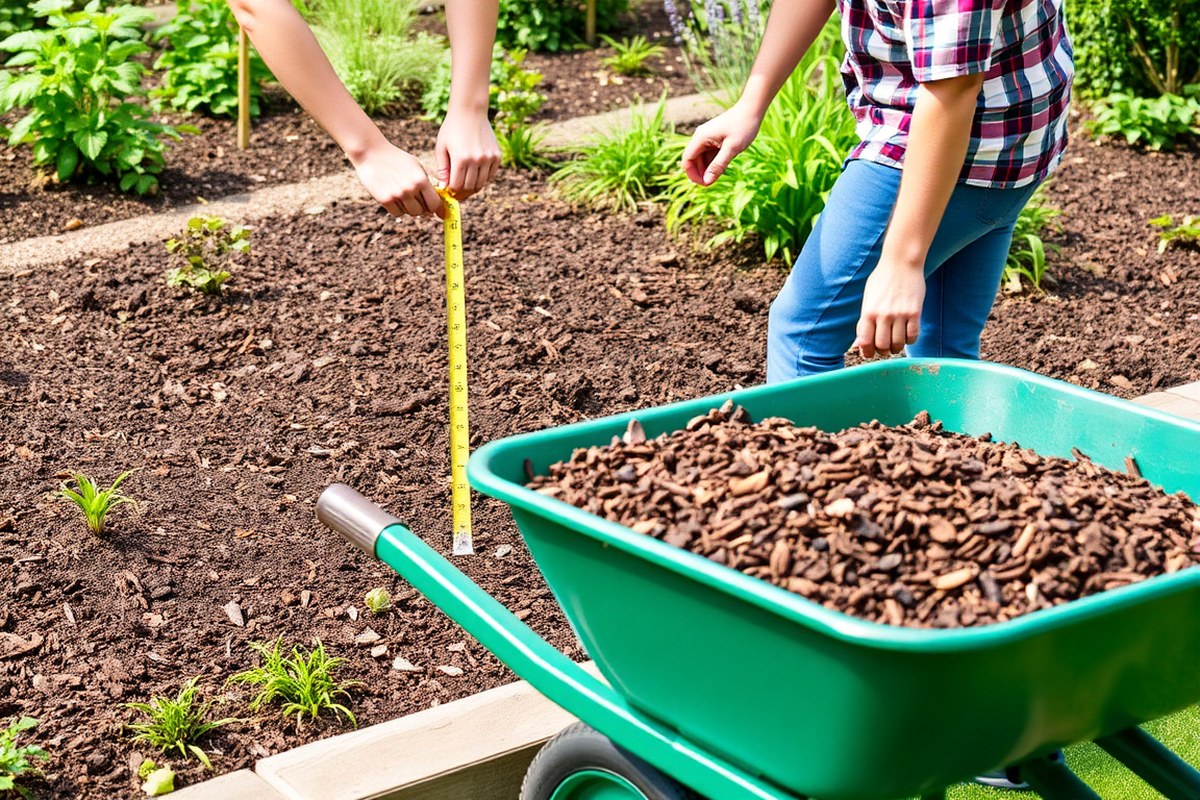
Figuring out how much mulch you need doesn’t have to be hard. First, measure your garden beds in feet, then decide how deep the mulch should be. A good rule is 2 inches for decorative mulch, which keeps plants healthy and controls weeds.
Measure the length and width. Multiply them to get square feet. Convert mulch depth to feet, then multiply to find cubic feet needed.
Divide the total cubic feet by 27 to get cubic yards, the standard bulk mulch measurement. Remember, bagged mulch comes in smaller units, so check bag sizes before buying.
Keep mulch a few inches away from plant stems or tree trunks to avoid rot. Also, plan for some extra mulch to cover settling and waste during spreading. This way, you’ll get the right amount without overbuying or running out.
Key Takeaways
- Measure garden beds in feet to get accurate length and width.
- Use 2 inches depth for decorative mulch to maintain moisture and block weeds.
- Calculate mulch volume as length × width × depth in feet, then convert to cubic yards.
- Check mulch bag sizes when buying bagged mulch for better quantity estimates.
- Leave a 2-3 inch gap between mulch and stems. For tree trunks, keep mulch 3-4 inches away. This stops moisture from harming the plants.
- Order extra mulch to allow for settling, waste, and uneven spreading.
How to Calculate the Exact Mulch Amount You Need
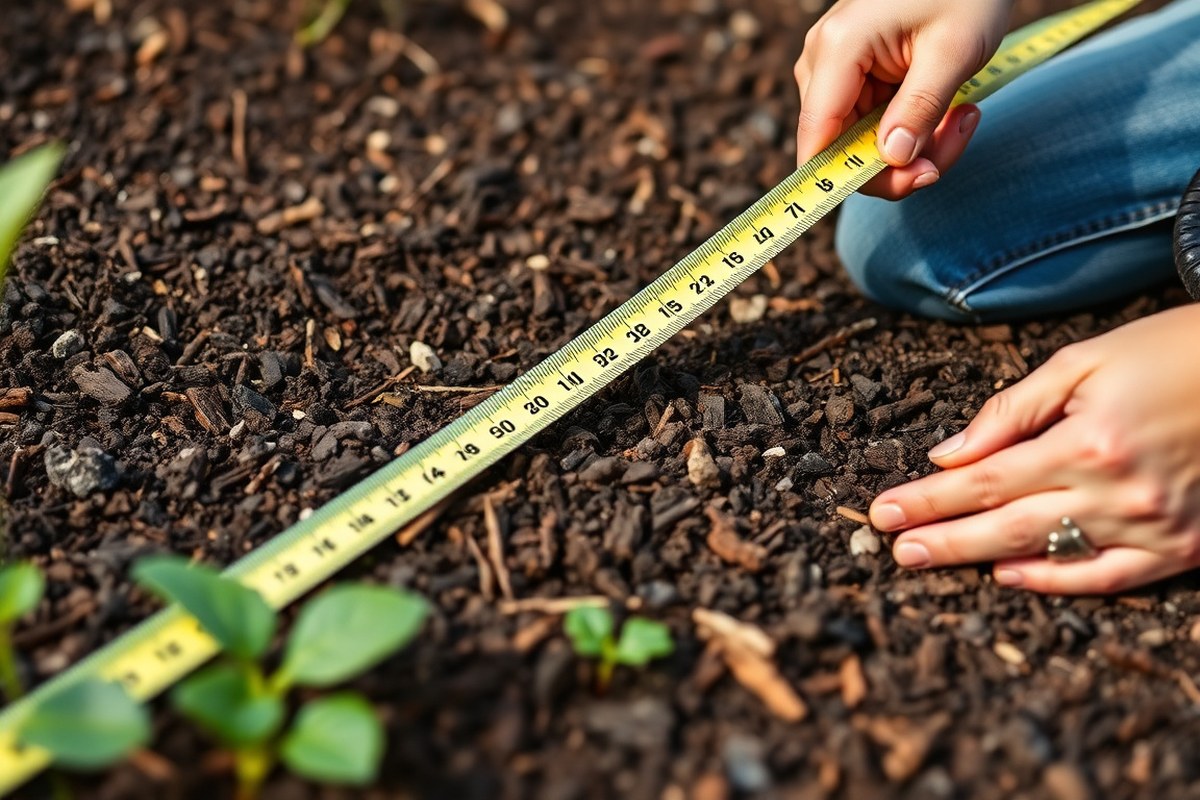
To know how much mulch you need, measure the garden bed. Measure the length in feet first. Then measure the width in feet.
Pick the mulch depth you want, usually 2 to 3 inches for most plants. The depth decides how thick your mulch layer will be and how much volume you need.
Next, convert your mulch depth from inches to feet. Divide the depth in inches by 12. This step helps you calculate volume in cubic feet, the usual measure for mulch.
- Measure the garden bed length and width in feet using a tape measure.
- Decide the mulch depth you want in inches, commonly 2 or 3 inches.
- Convert the mulch depth from inches to feet. Divide the number of inches by 12. For example, 3 inches ÷ 12 = 0.25 feet.25 feet).
- Calculate the bed’s area in square feet by multiplying length by width (e.g., 20 ft × 10 ft = 200 ft²).
- Find the mulch volume by multiplying area by depth in feet (200 ft² × 0.25 ft = 50 cubic feet).
- Convert cubic feet to cubic yards if buying bulk mulch. Divide the cubic feet by 27. For example, 50 ft³ ÷ 27 ≈ 1.85 yards.85 cubic yards).
- Determine how many bags of mulch to buy. Divide total cubic feet by the bag size. For 2 ft³ bags, 50 ft³ ÷ 2 = 25 bags.
For example, a 200-square-foot bed with 3 inches of mulch needs 50 cubic feet. This equals about 1.85 cubic yards or 25 bags of 2 cubic feet each. You can use this formula for rectangular beds, adjusting length and width as needed.
Mulch depth matters because too thin won’t suppress weeds well. Too thick could harm plants.
Most garden beds do well with a 2-3 inch depth. Adjust your depth in the formula if you want more or less mulch.
This method works for any bed shape once you get the area right. Use a calculator or tape measure for odd shapes and add lengths or widths carefully. Always check that you multiply by the right depth in feet for volume accuracy.
Measuring Mulch for Different Garden Bed Shapes
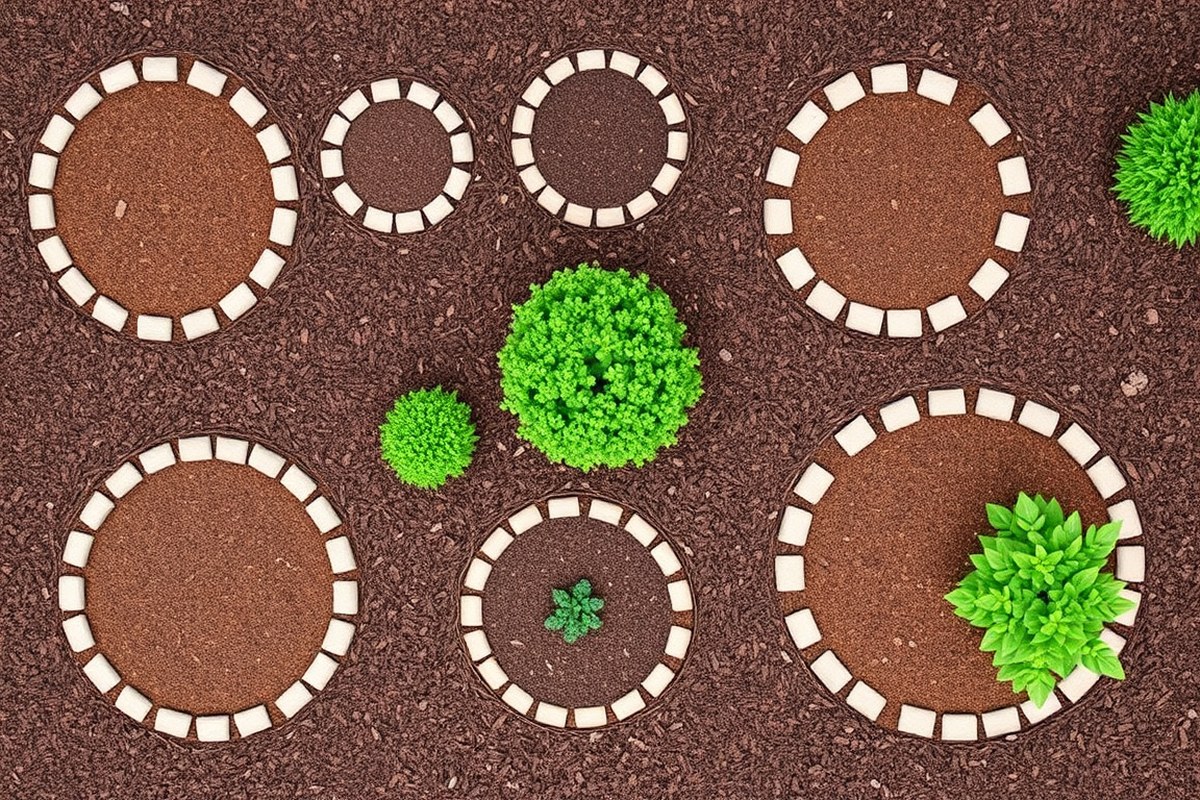
Measuring mulch for your garden beds starts with figuring out the surface area. You multiply length by width for rectangles or use specific formulas for circles and triangles. For odd shapes, break them into smaller, simple parts, then add their areas.
Calculating Area for Rectangular and Square Beds
Rectangular and square beds are the simplest shapes to measure. Multiply the length of the bed by its width to get the area in square feet. For example, a 20-foot by 10-foot bed is 200 square feet.
Once you have that, multiply by the desired mulch depth (in feet) to get the volume. Keep depth at 2-3 inches for most beds, which equals 0.167 to 0.25 feet. This volume tells you how many cubic feet or cubic yards of mulch you need.
Formulas for Circular and Annular Beds
To find the area of a circular bed, use the formula π × radius squared. Your circle’s radius is 6 feet. So its area is 3.14 × 6².14 × 36 = about 113 square feet.
Find the bigger circle’s area first. Then subtract the smaller circle’s area inside it.
This gives you the ring-shaped bed’s area. This gives you the area between the two circles.
Multiply your final area by your mulch depth in feet for the volume.
Approximating Irregular and Triangular Beds
Break irregular beds into smaller shapes like rectangles, triangles, and circles. Measure each shape separately. Add all these areas for the total bed size.
Triangles use the formula (base × height) ÷ 2. For example, a triangle with a 10-foot base and 6-foot height equals 30 square feet.
Break the curved edge into small straight parts. Or, draw a rectangle around it. Then subtract the empty corner spaces from the rectangle’s area.
Using simple shapes helps you avoid errors and get a close estimate for mulch volume. Follow these steps to calculate mulch volume for any bed shape:
- Measure length and width for rectangles; radius for circles.
- Divide irregular beds into rectangles, triangles, or circles.
- Calculate each shape’s area using the correct formula.
- Add all areas together for the total surface coverage.
- Decide on mulch depth (2-3 inches typical for beds).
- Convert mulch depth from inches to feet (divide by 12).
- Multiply total area by mulch depth (in feet) for volume.
- Convert volume to cubic yards if ordering bulk mulch (27 cubic feet = 1 cubic yard).
Keep mulch a few inches away from stems and trunks. This stops moisture from causing damage. Don’t let mulch touch stems closer than 2-3 inches or trunks closer than 3-4 inches.
Choosing Between Bulk and Bagged Mulch: Calculation and Cost Comparison
Choosing bulk or bagged mulch depends on how much you need and your budget. Bags are easier to handle, but bulk mulch usually costs less per cubic yard.
Both options require different calculations for how much to buy. So it helps to understand those differences.
Calculating Bags Needed from Cubic Yards
Bulk mulch is measured in cubic yards. Bagged mulch comes in bags of varying sizes. One cubic yard holds 27 cubic feet.
Know this to find bag count. Use it to compare mulch bag sizes easily. Bags holding 2 cubic feet each equal about 13 bags per yard.5 bags make one cubic yard.
For bags measuring 3 cubic feet, you’ll need 9 bags per cubic yard. Smaller bags, like 1.5 or 1 cubic foot sizes, require more bags to equal one cubic yard. Knowing this helps you convert cubic yards into exact bag counts.
| Cubic Yards | 2 cu. Ft. Bags | 1.5 cu. Ft. Bags | 1 cu. Ft. Bags |
|---|---|---|---|
| 1 yard | 13.5 bags | 18 bags | 27 bags |
| 2 yards | 27 bags | 36 bags | 54 bags |
| 3 yards | 40.5 bags | 54 bags | 81 bags |
| 4 yards | 54 bags | 72 bags | 108 bags |
Use multiplication to calculate bags for any yard quantity. Multiply the cubic yards by the bags per yard based on bag size. For example, 1.5 yards of 2 cu.
Ft. Bags means 1.5 × 13.5 = 20.25 bags.
Cost and Convenience Comparison
Bulk mulch usually costs $60.75 to $108.00 per cubic yard, much cheaper than buying bags for the same volume. Bags are more convenient for small projects or places without truck access for bulk delivery.
Bulk mulch requires a driveway or a tarp for delivery. You must spread it quickly to avoid breakdown.
Bags let you buy only what you need without extra storage or waste. But cost more per cubic foot.
Carrying bags is manageable for small gardens. Bulk mulch can save you $100 to $250 if you need 4 cubic yards or more. Think about physical effort and storage when choosing between the two.
When to Choose Bulk over Bags
Pick bulk mulch if you need more than 3 cubic yards and have easy delivery access. It’s best for large beds or landscaping projects where cost savings matter most.
Bulk mulch comes in different types. Forestry mulch naturally breaks down in 12 to 18 months.
Choose bagged mulch for smaller spaces or if you prefer neat, consistent material. Bags are also good for spot treatments or partial top-ups since you can buy exact amounts. Avoid bulk if you can’t unload the delivery or store the extra mulch safely.
Measure your beds to find mulch needed. Then compare prices and convenience. Use this quick checklist to help.
- Do you need over 3 yards? Bulk is cheaper if yes.
- Is truck delivery easy? Bulk requires delivery space.
- Need precise or small amounts? Bags are better.
- Want consistent, clean mulch? Bags offer more control.
- Plan short-term use? Bulk mulch breaks down faster.
How Mulch Depth and Type Affect Quantity Needed
New garden beds need a deeper mulch layer than refreshes. Apply 2 to 3 inches of mulch for new beds to hold moisture and block weeds. For refreshing existing mulch, 1 to 2 inches is enough since some mulch remains underneath.
The type of mulch affects how much volume you need to cover a bed. Organic mulches like shredded hardwood or pine needles settle less. So you can stick close to the recommended depth.
Organics can lose 10 to 40 percent volume as they break down. Fine materials like straw often lose 40 percent. This happens because they compress over time.
Inorganic mulches such as rubber or engineered wood fiber require deeper layers. They don’t decompose, so their depth stays consistent over time. Use 6 to 9 inches of mulch on playgrounds and paths.
These mulches help prevent soil compaction. They also cushion the ground for safety.
Particle size changes the depth needed, too. Finer mulches like dyed cedar compact more tightly. With dyed mulch, keep depth at 2 to 2.5 inches to avoid water running off.
Coarser mulch like bark nuggets or wood chips takes more space. It needs a thicker layer to keep a neat look. This extra depth helps it stay put.
Match your mulch type and depth to your plants’ needs. Choose based on the purpose and type of plant. This helps mulch work better for you.
For vegetable beds, use 1 to 2 inches of shredded leaves or straw. This mulch breaks down quickly and adds nutrients. It’s easy to spread and maintain.
Shrubs and perennials do better with 2 to 3 inches of hardwood or pine needle mulch. This type lasts longer and helps keep soil moist. It also stabilizes soil temperature.
Trees and large shrubs need 3 to 4 inches of coarse wood chips or bark nuggets. This thicker layer protects roots and conserves moisture. It also reduces weeds around big plants.
These protect root zones without suffocating roots. You might add just 1 or 2 more inches here to compensate for low settling. But don’t pile mulch directly against tree trunks.
Checking mulch depth regularly helps you know when to add more. Mulch thinner than 2 inches should be topped up in garden beds. Adding mulch maintains soil moisture and keeps weeds down.
Check mulch thickness regularly for best results. Keep in mind settling varies by mulch type. Using the right depth for your mulch reduces waste and ensures healthy plants.
Adjusting Mulch Amount for Settling, Waste, and Plant Clearance
Plan on adding 5 to 10 percent more mulch to your total amount. This extra covers settling and waste from spreading. For example, if you calculate 2 cubic yards, order about 2.1 to 2.2 yards to be safe.
Keep mulch a few inches away from tree trunks and plant stems. Leave a 3 to 6 inch gap around tree bases. Keep 3 to 4 inches clear around smaller plants.
This helps prevent problems like rot or pests. This stop prevents bark rot, disease, and pest damage by avoiding moisture against the plant.
Spreading mulch evenly is tricky. Some of it ends up wasted or in uneven piles. Expect some spillage, especially on windy or uneven spots.
Always round up your mulch amount by 5 to 10 percent. This avoids running out while covering all bare spots. You get full coverage without gaps.
Check mulch depth after spreading to ensure just 2 to 4 inches cover the soil. Too thick near trunks causes problems with oxygen and water flow. Add 1 to 2 inches more mulch when you refresh beds.
This replaces mulch that settled or decomposed. It keeps beds looking full and healthy.
Never pile mulch against tree trunks. Leave a 3- to 6-inch gap to protect the bark from moisture and pests.
Calculating Mulch for Annual Refresh and Partial Top-Ups
To refresh mulch, first measure how much has settled. Add just enough to bring it back to your desired depth.
Typically, you’ll add about 1 to 1.5 inches annually. This simple process saves money and keeps beds healthy without over-applying mulch.
Measuring Settled Mulch Depth
Use a ruler or tape measure to find how deep the mulch is now. Check several spots across your garden bed to get a good average. Look for areas where mulch is thinnest because those often need topping up first.
Take note if mulch has compacted or thinned out due to weather or gardening activities. Measure from the soil surface straight up to the mulch’s top layer. The goal is to see how much mulch remains before adding more.
Calculating Additional Mulch Volume Needed
Find out your mulch’s current depth. Subtract this from the ideal 2-inch depth for yearly refreshes.
Add only enough to bring the total back to about 2 inches. This avoids wasting mulch and ensures good weed control and moisture retention.
Follow these steps to calculate the volume you’ll need:
- Measure the length and width of the bed in feet.
- Record the average mulch depth in inches from your ruler check.
- Decide on the target depth, usually 2 inches for a refresh.
- Subtract the current depth from the target depth (for example, 2 inches minus 0.5 inches).
- Multiply the bed’s length by width to get square feet.
- Convert the needed depth from inches to feet by dividing by 12.
- Multiply the square feet by the depth in feet to get cubic feet needed.
- Order mulch in cubic feet based on this calculation.
This method generally uses about 40% less mulch annually than re-mulching fresh. You only replace what has settled or decomposed.
Scheduling Regular Mulch Refreshes
Refresh mulch once every year, usually in spring or fall. This timing fits well with planting cycles and weather changes. Avoid piling mulch too thickly, which can harm plants or attract pests.
Top-dressing amounts should restore thinning, not start new layers. Keep mulch around 1 to 2 inches thick on vegetable beds and flower borders. For trees, 3 to 4 inches is best when starting but just refresh as needed afterward.
Special Considerations for Sloped Beds and Winter Mulching
Sloped beds need more mulch than flat areas because gravity pulls mulch downhill. You should increase your usual volume by 15% to 20% to cover slopes well. Use shredded hardwood or bark mulch instead of large nuggets.
Shredded mulch locks together better. It resists being washed away by rain.
Applying 3 inches of shredded hardwood mulch works best on slopes. Thicker layers will block water from reaching roots and could harm your plants.
Slopes steeper than 15% may lose some mulch during heavy rain. So plan for extra mulch as a buffer.
Spread mulch evenly on steep areas. Rake it firmly into the soil. This helps keep mulch from washing away.
Avoid piles or thick spots that slide easily. You can also use landscape fabric under your mulch to reduce erosion and hold it steady.
Winter mulching slows soil temperature changes and protects roots. You can mulch any time soil is not frozen hard.
It does not require extra mulch volume compared to other seasons. However, apply it before the ground freezes to lock in warmth and moisture.
Bagged mulch suits small winter projects like flower beds or garden edges. Large or steep beds benefit from bulk shredded hardwood mulch. It is cheaper and better for winter weather.
Applying mulch too thick in winter risks smothering plants and trapping moisture. So stick to about 3 inches.
On slopes, add a 15% waste buffer rather than the typical 10%. Mulch settles more in these areas and some washes away.
Tracking mulch volume helps you avoid running out. It prevents extra delivery costs and saves time.
Tools, Charts, and Formulas to Simplify Mulch Calculations
Finding the right mulch amount is easier with tools like calculators and charts. A quick formula to remember is Length × Width × Depth ÷ 27.
This gives you the cubic yards needed because mulch is sold by the cubic yard. 1 cubic yard equals 27 cubic feet.
Online mulch calculators save time by doing this math for you. CalculatorSoup.com has a handy Mulch Calculator. Enter your garden bed’s length and width.
Then add the mulch depth you want. It instantly shows how many cubic yards you need without any guesswork.
Conversion charts help you quickly match your area with mulch quantities. Below is a simple table. It shows mulch amounts for typical garden beds.
The depth used is 3 inches. These figures assume a rectangular shape. But you can adjust with the online calculator for curves or irregular shapes.
| Bed Size (Feet) | Mulch Depth (Inches) | Mulch Volume (Cubic Yards) |
|---|---|---|
| 10 x 10 | 3 | 0.93 |
| 15 x 15 | 3 | 2.08 |
| 20 x 20 | 3 | 3.70 |
| 5 x 25 | 3 | 1.16 |
| 12 x 18 | 3 | 1.92 |
To calculate manually, multiply length, width, and depth (in feet), then divide by 27. Convert the mulch depth from inches to feet first by dividing by 12.
For example, 3 inches equals 0.25 feet. This formula gives volume in cubic yards, which is standard for mulch orders.
A practical tip: mulch weighs between 400 and 500 pounds per cubic yard when dry. Rain-soaked mulch can weigh up to 800 pounds.
So allow for heavier loads if ordering bulk delivery. Using bags is simpler but costs more per volume than bulk mulch.
Double-check if the mulch is wet or dry before purchase. Weight differences affect handling and price.
Using these quick formulas, charts, and online tools can save you time and money. They help avoid ordering too much or too little mulch. You’ll achieve the right coverage to protect plants and keep your garden tidy without waste.
Step-by-Step Action Plan for Calculating and Applying Mulch
Use this plan to get the right amount of mulch and apply it properly. Each step helps you check your progress.
- Before you start: Measure your garden bed length and width in feet. Multiply to find square footage.
- Day 1: Decide on mulch depth, usually 2 to 3 inches. Mark your choice to guide quantity calculation.
- Day 2: Calculate mulch volume by multiplying area by depth in feet (depth ÷ 12). Convert to cubic yards for bulk mulch.
- Day 3: Compare prices of bulk vs bagged mulch. Choose based on cost, convenience, and delivery options.
- Day 4: Add 10% extra mulch to account for settling and waste. Buy a little more to avoid shortages.
- Day 5: Apply mulch evenly, keeping it 2 to 3 inches away from plant stems. Check coverage visually.
- After 4 weeks: Inspect mulch depth and condition. Top up any thin spots for consistent protection.
- Before winter: Add extra mulch on slopes or bare soil. This prevents erosion and protects from cold damage.
Frequently Asked Questions
What’s the Best Way to Estimate Mulch for Irregular Shapes?
Divide the irregular shape into simple shapes like rectangles and triangles. Measure each area one at a time. Calculate the mulch needed there.
Add all the amounts for the total mulch required. This breaks a complicated shape down into easier parts.
How Can I Adjust Mulch Amounts for Rough or Uneven Ground?
Increase your mulch quantity by about 10% to cover dips and bumps. Mulch settles into low spots, so adding extra helps maintain an even layer. It’s better to have a little leftover than a patchy bed.
How Often Should Mulch Be Replenished in Garden Beds?
Replenish mulch when its depth drops below 2 inches or every year. Mulch breaks down and compresses, losing its effectiveness over time. Doing regular top-ups keeps beds neat and protects plants well.
Does the Time of Year Affect How Much Mulch I Should Order?
Yes, mulching after the first hard freeze helps protect roots through winter. You might want a thicker layer then, about 3-4 inches, for insulation. Ordering a bit extra than usual covers this seasonal need.
How Can I Estimate Mulch Needs When Mixing Types of Mulch?
Calculate each mulch type separately by area and depth, then sum totals. Different mulches have varied densities and decay rates, affecting coverage. Measuring separately avoids under- or overestimating materials.
What’s a Quick Way to Check If My Mulch Order Is Enough?
Compare your calculated volume to bags or bulk yardage using simple charts. Charts often show square footage coverage per cubic yard or bag size. Keeping these handy makes ordering easier and avoids last-minute shortages.
Final Thoughts
Knowing exactly how much mulch to buy saves time and money. Double-check your measurements before ordering. Now, grab your tape measure and start sizing up your garden bed.