How to Grow an Herb Garden Indoors: A Complete Beginner’s Guide
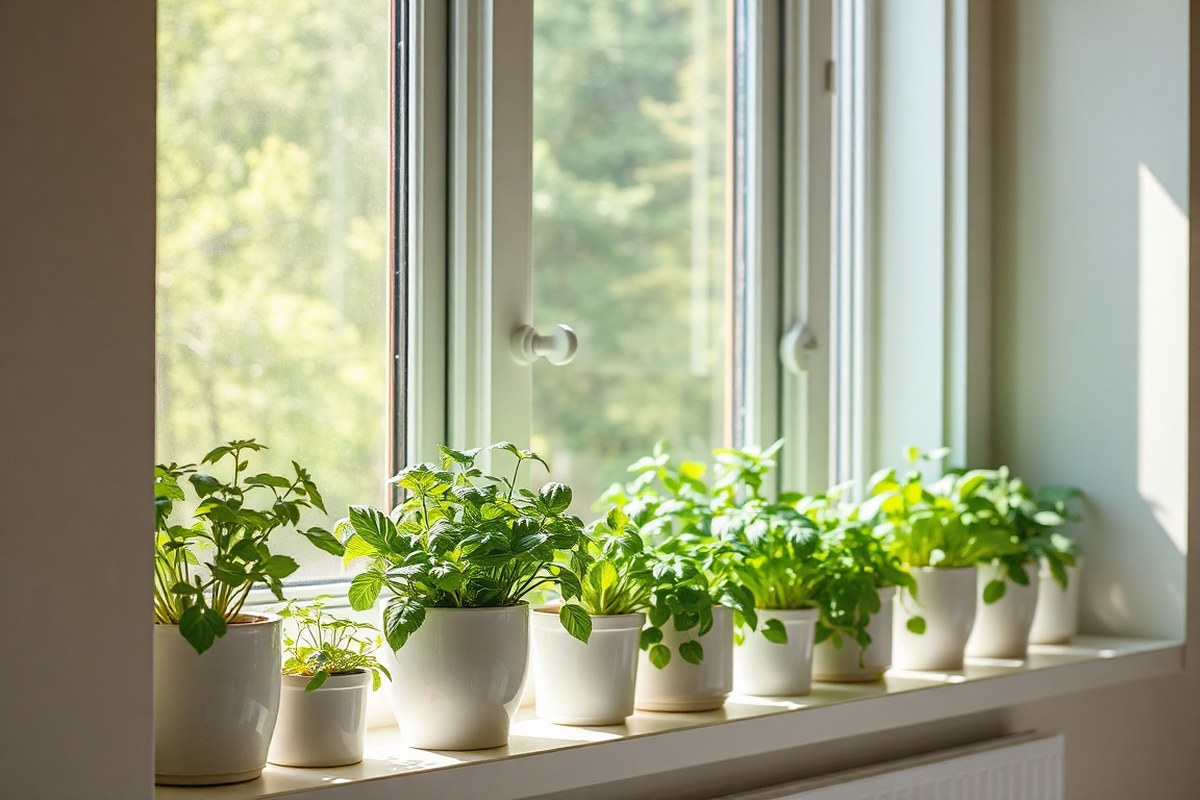
Growing an herb garden indoors is easier than you might think. Start with a sunny spot or use a strong grow light.
Choose containers that drain well. Water your herbs regularly to keep the soil moist.
Pick pots that are 6 to 12 inches deep to fit the roots of your herbs. Make sure the containers have drainage holes to avoid root rot. Place your garden near a window with good sunlight or use grow lights for 12 to 16 hours daily.
Keep the room temperature between 65 and 75 degrees Fahrenheit to help herbs grow strong. Watch for leggy plants, which means they need more light or pruning. Small adjustments like these keep your indoor herbs healthy and thriving.
Key Takeaways
- Choose containers 6 to 12 inches deep with drainage holes for healthy roots.
- Herbs generally require 6 to 8 hours of bright light each day. Adequate light helps them stay healthy and strong. Make sure they get enough natural or artificial light.
- Use LED grow lights 6 to 12 inches above herbs for 12-16 hours if needed.
- Keep indoor temperatures between 65 and 75 degrees Fahrenheit for best growth.
- Start with easy herbs like basil, mint, or parsley for faster success.
- Water herbs when the soil surface feels dry to avoid overwatering.
How to Start an Indoor Herb Garden Step-by-Step
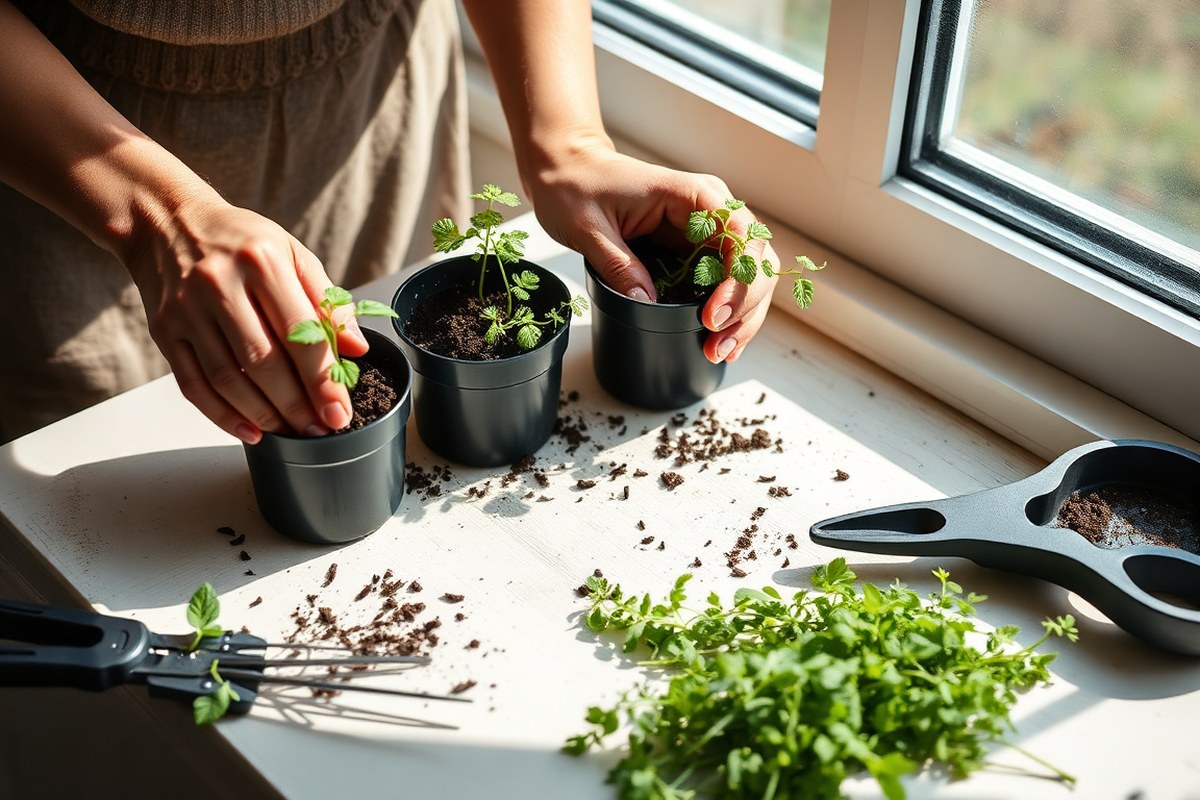
You want to start by picking seeds or young plants that suit your indoor setup. Seedlings, also called starts, are easier and faster for beginners. Choose herbs like basil, parsley, or chives, which grow well inside and don’t need special care.
Next, pick the right container and soil. Containers need drainage holes to avoid water buildup.
Use light potting mix made for herbs or vegetables. These soils drain well but hold enough moisture for roots.
Planting properly means giving your herbs room to grow. Seeds should go about twice as deep as their size.
Place the starts so their roots are just covered by soil. Avoid packing soil too tight because roots need air.
- Choose your herbs based on how much space and light you have. Start with easy herbs like basil or mint.
- Get containers with drainage holes, about 4 to 6 inches deep for most herbs. Small containers dry out fast; bigger ones keep moisture longer.
- Use a good potting mix designed for indoor plants or vegetables. Avoid garden soil, which can be too dense or carry pests.
- Fill containers loosely with potting mix. Leave 1 inch at the top. This stops soil from spilling when you water.
- Plant seeds at a depth twice their size. Spread them evenly, then cover lightly with soil.
- Place starts by digging a hole slightly bigger than the root ball. Set the plant in, then fill around gently with soil.
- Water gently to moisten soil without flooding. The soil should be damp but not soggy after planting.
- Set your herb garden in a bright spot or near a grow light. Rotate containers every few days to keep growth even.
Good results show steady leaf growth and vibrant color within a couple weeks. Seedlings may not sprout or plants might wilt fast. Soil could be too wet or too dry.
Pick the right container and soil from the start. This prevents problems. It keeps your herbs healthy in their first weeks.
Best Herbs to Grow Indoors and Their Light Preferences
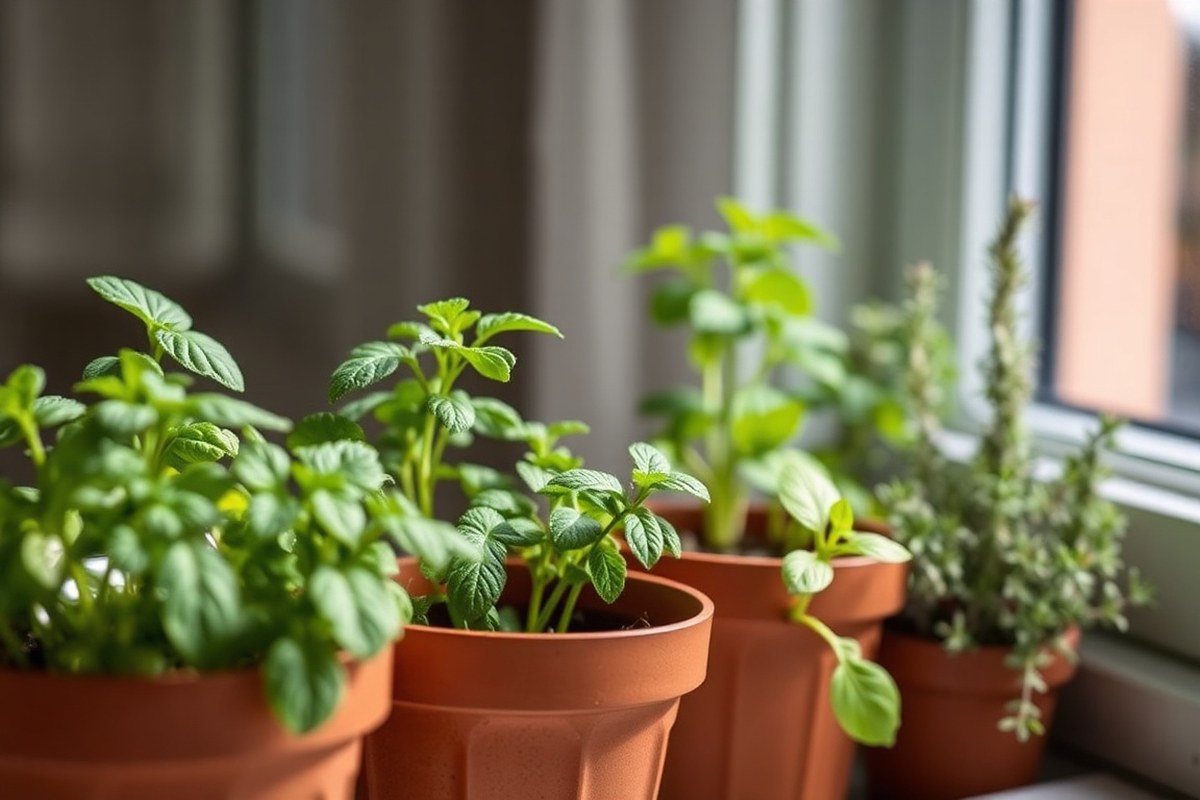
Many herbs grow well indoors if you match their light needs to your space. Some herbs need strong sunlight while others tolerate lower light. Picking the right ones helps you avoid wasting time and gives tasty results without extra effort.
Top Culinary Herbs for Indoors
Basil, mint, parsley, chives, and thyme are great choices for indoor herb gardens. They handle indoor light well and bounce back from common care slip-ups. These herbs grow fast, so you see results quickly and can harvest often.
Most of these herbs prefer 6 to 8 hours of bright, direct sunlight. Basil and thyme especially thrive near a sunny south-facing window. Mint and parsley can handle less sun.
They still need some daily light. Aim for a few hours of sunlight each day.
Low Light Herb Options
Some herbs tolerate partial shade and lower light better than others. Mint and parsley do well in spots that get about 4 to 6 hours of sunlight. These herbs are good if your available light isn’t very strong.
Most herbs still need some light to grow tasty leaves. You can use a grow light if natural light is limited. Set the grow light 6 to 12 inches above your plants for best results.
Place low-light herbs near east or west windows to catch morning or afternoon light.
Herbs Requiring Bright, Direct Sun
Herbs like basil, cilantro, and dill do best with 6 to 8 hours of direct light. They need strong sun to produce flavorful leaves and keep from getting leggy. Bright light also helps them grow quickly and stay healthy.
Lack enough window light? Use a grow light to help your plants.
This keeps your plants vigorous and ready for frequent harvests. Keep grow lights close, about 6 to 12 inches above the plants.
| Herb | Light Needs | Ease of Care |
|---|---|---|
| Basil | 6 to 8 hours direct sunlight | Easy; grows fast, tolerates small mistakes |
| Mint | 4 to 6 hours partial sun | Very easy; grows vigorously, good for beginners |
| Parsley | 4 to 6 hours partial sun | Easy; tolerates lower light, regular watering |
| Chives | 6 to 8 hours direct sunlight | Easy; fast germination, strong growth |
| Thyme | 6 to 8 hours direct sunlight | Easy; drought-tolerant, slow growth |
| Cilantro | 6 to 8 hours direct sunlight | Easy; quick growing, sensitive to overwatering |
Matching herbs to your available light helps you stay confident in growing success. Choose easy herbs like basil or mint for low light spots. Use bright light herbs near sunny windows for the best flavor harvests.
How Much Light Indoor Herbs Need and Grow Light Usage
Indoor herbs need at least 6 to 8 hours of light daily. When natural light is limited, use LED grow lights for 12 to 16 hours each day. Position your lights about 6 to 12 inches above the herbs to ensure good growth.
Recommended Light Duration for Different Herbs
Most herbs thrive with 12 to 16 hours of light if relying on grow lights. Parsley, basil, and thyme do well closer to 12 hours. More light helps herbs like oregano and rosemary grow stronger indoors.
With natural sunlight, 6 to 8 hours from a bright window usually suffice. South-facing windows provide the best light. Herbs may stretch or slow growth if they get less than 6 hours daily.
Choosing and Using Grow Lights
LED grow lights are the best choice for indoor herbs. They use less energy and produce less heat than other bulbs. Look for full-spectrum LEDs that mimic natural sunlight.
Prices vary, but a good LED grow light can cost between $30 to $70. Many models include adjustable brightness settings and timers for convenience. Avoid fluorescent lights, they don’t deliver the right spectrum efficiently.
Use timers to automate 12 to 16 hours of light daily. This keeps your herbs on a steady schedule without guesswork. Timers cost around $10 to $20 and can save you time and hassle.
Placement and Timing Guidelines for Grow Lights
Keep grow lights 6 to 12 inches above your herb leaves. Adjust this height as the plants grow to maintain the right distance. Closer light prevents legginess and encourages healthy leaf growth.
Turn your grow lights on for 12 to 14 hours a day to replace natural light. Avoid overexposing plants by sticking to this timing. Too much light can cause leaf damage and stress.
- Set a timer for consistent light duration daily
- Position the light directly above the herbs for even coverage
- Move the light closer or farther to prevent leaf burn
- Check plants weekly for signs of too little or too much light
- Use reflective surfaces to maximize light around your herbs
- Turn lights off at night to allow herbs to rest
Using these tips, you can grow healthy herbs indoors all year. Keep the light steady and close, and your plants will respond with vibrant growth.
Choosing Appropriate Containers and Soil for Indoor Herbs
Choose pots with drainage holes to keep herbs from sitting in water. Pots that are 6 to 8 inches wide suit vigorous growers like basil and mint well. Smaller herbs, such as thyme or chives, do fine in containers about 4 inches wide.
Clay pots made of terra cotta work nicely indoors because they breathe. The porous material wicks away moisture, which helps prevent root rot.
Plastic and ceramic pots also work if they have good drainage holes. Avoid using heavy garden soil since it holds too much water and can suffocate roots.
Use a soil mix designed for indoor herbs or plants. Look for blends containing peat moss, perlite, and vermiculite. These ingredients hold moisture but let excess water drain away.
When moving herbs from store pots, pick a bigger container. Choose one about 2 inches larger. This gives roots room to grow.
Avoid pots that are too large, or soil will stay soggy longer, risking root rot. Repot herbs in fresh soil to refresh nutrients and improve drainage. Pick a container size that fits the herb’s needs.
Roots should spread but not drown. Avoid soil that stays too wet.
Proper Watering and Drainage Practices for Indoor Herbs
Herbs indoors need about 1 inch of water each week. Check the soil before watering by sticking your finger about an inch deep.
Your herbs need water when the soil feels dry to touch. Overwatering causes root rot, so avoid wetting the leaves.
Drainage is key to keeping herbs healthy. Always use pots with drainage holes to stop water from pooling.
Pour out leftover water from saucers within 30 minutes of watering. This stops roots from sitting in water too long.
Signs your herbs need water include drooping leaves and dry soil. Wilted leaves can also mean too much water, so check the soil carefully.
Adjust watering based on the plant’s size and home humidity. Smaller pots dry out faster and need watering more often.
- Use pots with drainage holes only; avoid sealed containers.
- Water the soil directly, not the leaves, to prevent rot.
- Test soil moisture weekly, especially if indoor conditions vary.
- Empty saucers 30 minutes after watering to avoid standing water.
- Adjust watering frequency for small versus large pots.
- Watch leaf appearance to spot watering issues early.
- Use a watering can with a narrow spout for control.
Don’t let pots sit in water for more than 15 minutes to avoid root rot.
Water herbs slowly until you see runoff from drainage holes. This means the soil is evenly moist.
Too much water can drown roots, so stop when water drains out. Let soil dry slightly between waterings for the best growth.
Ideal Temperature, Humidity, and Placement for Indoor Herbs
Indoor herbs thrive in temperatures between 65 and 75 degrees Fahrenheit. This range keeps them growing steadily without stress. Avoid putting herbs near vents or drafty windows.
Sudden temperature changes can slow their growth. They might also drop leaves because of this.
Humidity also plays a big role in herb health. Aim to keep humidity around 40 to 60 percent. Homes with dry winter air often fall below this, which can dry out herbs quickly.
You can raise moisture by putting herb pots close together. Another way is to place pots on trays with pebbles and water. Misting with a hand sprayer a few times a week helps too.
Choosing the right spot indoors matters a lot. Most herbs do best in a south-facing window where light and temperature stay consistent. East or west windows work too if the sun peaks without overheating the plants.
Avoid north-facing windows, which usually don’t provide enough warmth or light. Space near windows can be tight.
Try a small fan to move air and stop dampness. This also helps keep the temperature steady.
Watch how your herbs react where you place them. Leaves that yellow or edges that brown can signal heat stress or dry air. Adjust the location or add humidity by misting or pebble trays.
Using heat in winter can dry out the air. Watch for dryness closely to protect your herbs. Dry air means you’ll need to boost humidity more often.
Fertilizing Indoor Herbs: When and What to Use
Indoor herbs do need fertilizer to stay healthy and productive. Since they grow in pots with limited soil, nutrients run out faster than in garden soil. Feeding your herbs provides essential nutrients they cannot get from soil alone.
You should fertilize your indoor herbs about every 4 to 6 weeks during their growing season. This keeps them from getting weak or slow-growing.
Avoid fertilizing in winter when herbs grow slower and need less food. Overfertilizing can burn roots or cause leggy growth, so stick to the schedule.
Choose a water-soluble fertilizer with equal parts N, P, and K. Use mixes like 10-10-10 or 20-20-20. These keep your herb garden balanced and healthy.
Liquid fertilizers work best for indoor herbs because you can mix them with water. You only need to use half the recommended strength on the label to avoid overfeeding.
- Use a fertilizer labeled safe for edible plants
- Dilute the fertilizer to half strength before applying
- Apply every 4 to 6 weeks during spring and summer
- Skip fertilizing in fall and winter
- Feed herbs right after watering to avoid root burn
Organic fertilizers like fish emulsion or seaweed extract work well too. They feed the plants gently and improve soil health.
These options typically cost around $10 to $20 for a small bottle, lasting several months. Always follow the label instructions for safe use indoors.
Healthy indoor herbs have bright green leaves, steady growth, and a strong aroma. Leaves turning yellow or slow growth often signal a need for feeding. Check your plants’ nutrient levels to help them recover.
Yellow leaves can also mean overfertilizing. So check your schedule and strength if you see this.
Maintaining Indoor Herbs: Pruning, Harvesting, and Preventing Leggy Growth
Pruning, harvesting, and preventing leggy growth help your indoor herbs stay strong and productive. Cutting herbs back right encourages bushier plants.
Harvesting the right way keeps them healthy. Managing leggy growth prevents weak stems and uneven plants over time.
Proper Pruning Techniques
Use clean, sharp garden shears or kitchen scissors for pruning. Cut just above a leaf node where the leaves join the stem. This spot encourages new growth to sprout, making your herb fuller.
Prune regularly by pinching or cutting the top 1 to 2 inches. Do this once the plant reaches 6 inches tall. This helps the plant grow bushier and healthier.
Avoid removing more than a third of the plant at once to reduce stress. Pruning early and often keeps herbs growing densely.
- Always use sharp, clean tools to avoid infections.
- Cut above leaf nodes to promote new shoots.
- Do not remove more than 30% of the plant at once.
- Pinch tips of young plants to encourage branching.
- Remove any dead or yellow leaves promptly.
- Prune weekly or every two weeks depending on growth speed.
- Rotate plants 90 degrees weekly for even growth.
Pruning stops herbs from becoming leggy and weak. It also improves airflow between branches, which lowers disease risk.
Harvesting Without Stressing Plants
Wait until the herb has several leaf sets before the first harvest. Snip 2 to 4 inch stems just below a leaf node to take cuttings safely. This method helps your plant heal faster and regrow quickly.
Harvest no more than one-third of the herb at a time. This practice maintains enough leaves for photosynthesis and overall health. Frequent light harvests work better than heavy cutting and prevent shock.
Use sharp scissors to avoid crushing stems. Harvest in the morning after the dew dries for best flavor and moisture retention. Regular harvesting can stimulate continuous leaf production all season.
Always make clean cuts; tearing stems can slow the plant’s recovery.
Correcting and Preventing Leggy Growth
Leggy growth happens when herbs stretch for light, causing thin weak stems. It usually means your plants need more light or a better location. Rotate plants regularly to prevent leaning toward a single light source.
Raise your light source if plants lean or grow tall with few leaves. Move plants closer to the light if needed. This keeps them strong and full.
Maintain 2 to 3 inches of spacing between herbs to improve airflow around plants. Crowding can make herbs weak and prone to fungal issues.
Pruning back tall, leggy stems also helps redirect the plant’s energy. Pinch back or trim long stems to encourage side shoots and thicker foliage. Adding a balanced fertilizer can support recovery but avoid overfeeding, which stresses plants.
Troubleshooting Common Herb Problems Indoors
Common pests in indoor herb gardens are aphids, spider mites, and whiteflies. These insects suck the sap from plants and leave sticky stuff behind. Catching them early helps you stop them from spreading and saves your herbs.
To control pests, wipe leaves with a damp cloth or spray them with water regularly. Use insecticidal soap or neem oil if bugs persist.
Spray every 5 to 7 days for two to three weeks until pests disappear. Always test a small leaf area first to check for plant sensitivity.
Overwatering is one of the top issues with indoor herbs. Symptoms include yellowing leaves and soggy soil.
Underwatering shows as wilting or brown leaf edges. Proper drainage and consistent checking prevent these problems.
Here’s a simple checklist to troubleshoot your indoor herb garden:
- Check leaves for tiny bugs or sticky residue regularly.
- Water when the top 1 inch of soil feels dry to the touch.
- Make sure pots have drainage holes to avoid water buildup.
- Use a spray bottle to mist leaves if humidity is low.
- Keep herbs away from cold drafts and heating vents.
- Remove dead or yellowing leaves to prevent fungal growth.
- Use natural pest control products like neem oil as a last resort.
Common diseases include powdery mildew and root rot. Powdery mildew looks like white powder on leaves.
Root rot causes slimy roots and stunted growth. Good airflow and careful watering stop these diseases.
To treat powdery mildew, wipe the leaves with a wet cloth. You can also spray a solution made from 1 tablespoon baking soda mixed in 1 quart water. This helps clear the mildew without harsh chemicals.
Remove affected leaves to keep disease from spreading. For root rot, reduce watering and repot plants using fresh, well-draining soil. Always discard old soil to avoid re-infection.
Step-by-Step Action Plan to Start Your Indoor Herb Garden
Follow this plan to get your indoor herb garden growing well from the start. Each step has a timing and what to check for success.
- Day 1: Choose your herbs and containers based on available light. Check leaves for healthy color after a week.
- Day 2: Fill containers with quality potting soil and plant your herb seeds or seedlings. Soil should stay moist but not soggy.
- Days 3-7: Place herbs in a sunny spot or under grow lights for 6-8 hours daily. Watch for new leaf growth within 1-2 weeks.
- Week 2: Water herbs when the top inch of soil dries. Ensure excess water drains well to avoid root rot.
- Week 3: Start a light feeding schedule using a balanced, water-soluble fertilizer once every two weeks. Look for steady growth and vibrant leaves.
- Week 4 and beyond: Prune leggy stems and harvest leaves regularly to encourage bushier plants. Herbs will be ready to use when you have several full leaves per stem.
Frequently Asked Questions
What Indoor Herbs Grow Fastest for Quick Harvests?
Mint, chives, and cilantro typically grow faster indoors. These herbs let you enjoy fresh leaves sooner than slower-growing ones.
Can I Use Kitchen Scraps to Start an Indoor Herb Garden?
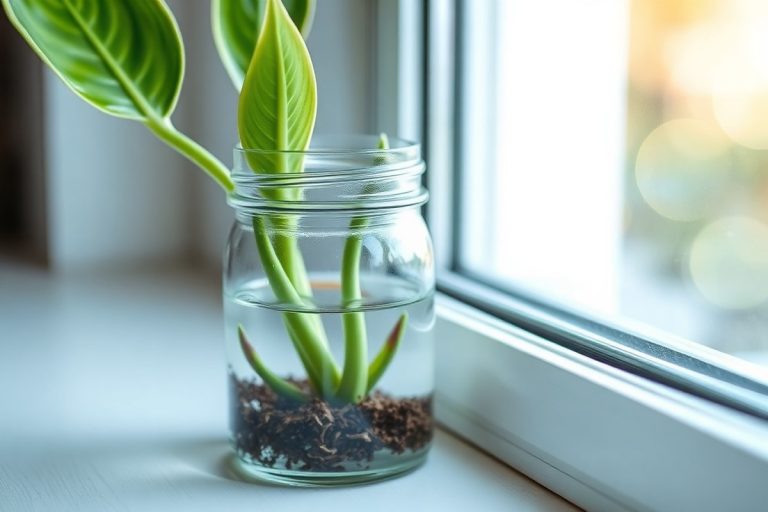
Yes, you can root some scraps like basil or mint in water. It’s a simple way to grow plants without buying seeds or seedlings.
Is It Better to Grow Herbs from Seeds or Seedlings Indoors?
Seedlings often give a head start and are easier for beginners. Seeds take more time but offer more variety options and satisfaction.
How Do I Prevent Mold or Fungus in My Indoor Herb Garden?
Avoid overwatering and ensure good airflow near your plants. Mold thrives in damp, stagnant air, so ventilation helps keep your herbs healthy.
Can I Grow Herbs Indoors Year-Round Without Natural Sunlight?
Yes, with the right grow light positioned 6-12 inches above the plants. This mimics sunlight and supports year-round growth indoors.
How Often Should I Rotate My Indoor Herb Plants?
Rotate plants every few days to ensure even light exposure. This prevents them from leaning toward one side and promotes balanced growth.
Before You Go
Growing herbs indoors takes some practice but pays off with fresh flavors at your fingertips. Keep watching your plants closely for signs of health. Start by choosing your first herb to grow at home.
Find the best spot inside for your herb today. Make sure it gets enough light and space.