What Does a Wheat Plant Look Like? A Complete Guide to Wheat Appearance
What does a wheat plant look like? The plant grows tall, usually between 2 to 3 feet high.
It has long, smooth leaves that reach about 12 inches. The wheat head holds seeds, measuring 2 to 5 inches long.
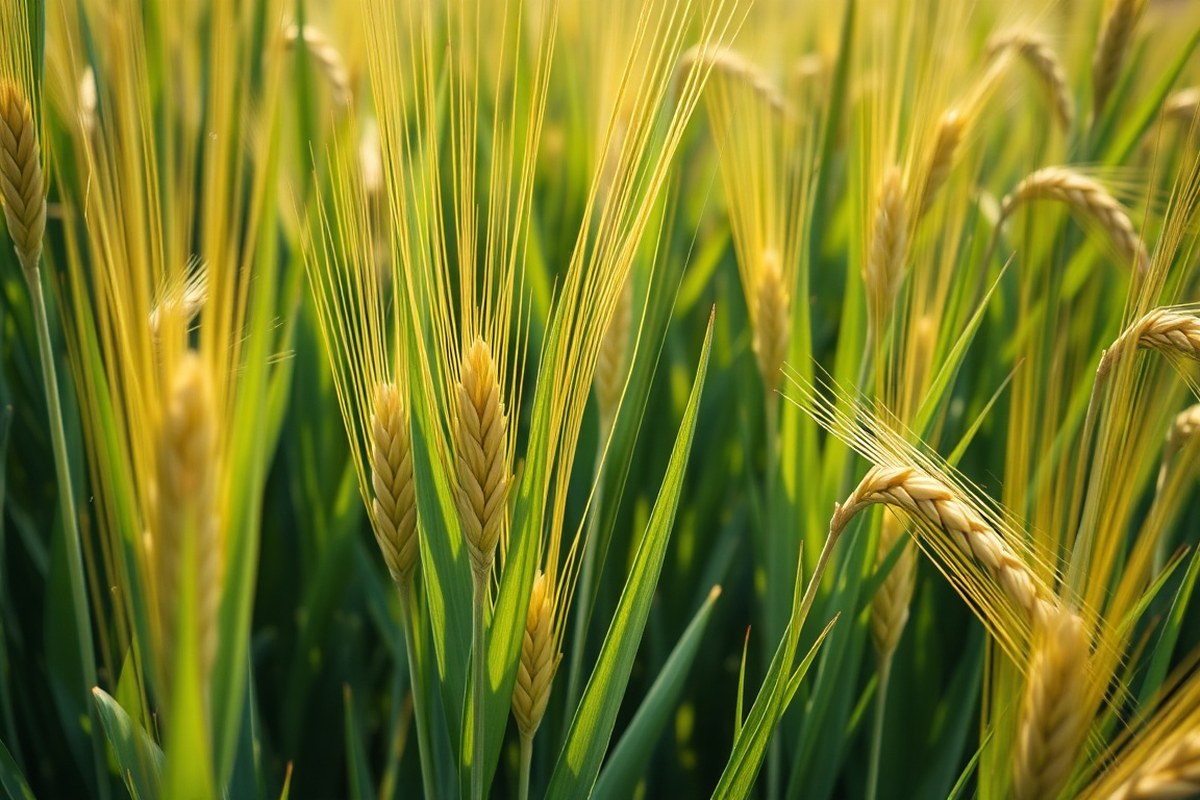
The wheat plant’s color changes from green during growth to golden when ripe. The plant’s shape and size depend on its variety and growing conditions. Most wheat plants grow well in cool climates with temperatures between 50 and 75°F.
Start by spotting the tall stalks and narrow leaves in the field. Watch for the dense seed heads on top, which are easy to recognize. Knowing the plant’s thickness and height helps identify wheat among similar grains.
Key Takeaways
- Wheat plants mostly grow 2 to 3 feet tall with long narrow leaves.
- The seed heads are 2 to 5 inches long and packed with yellow seeds.
- Wheat leaves are smooth, flat, and can be up to 12 inches long.
- Wheat plants turn golden when ripe and ready for harvest.
- Cool temperatures between 50 and 75°F suit wheat growth best.
- Height and seed head size vary by wheat variety and climate.
What Are the Main Physical Features of a Wheat Plant?
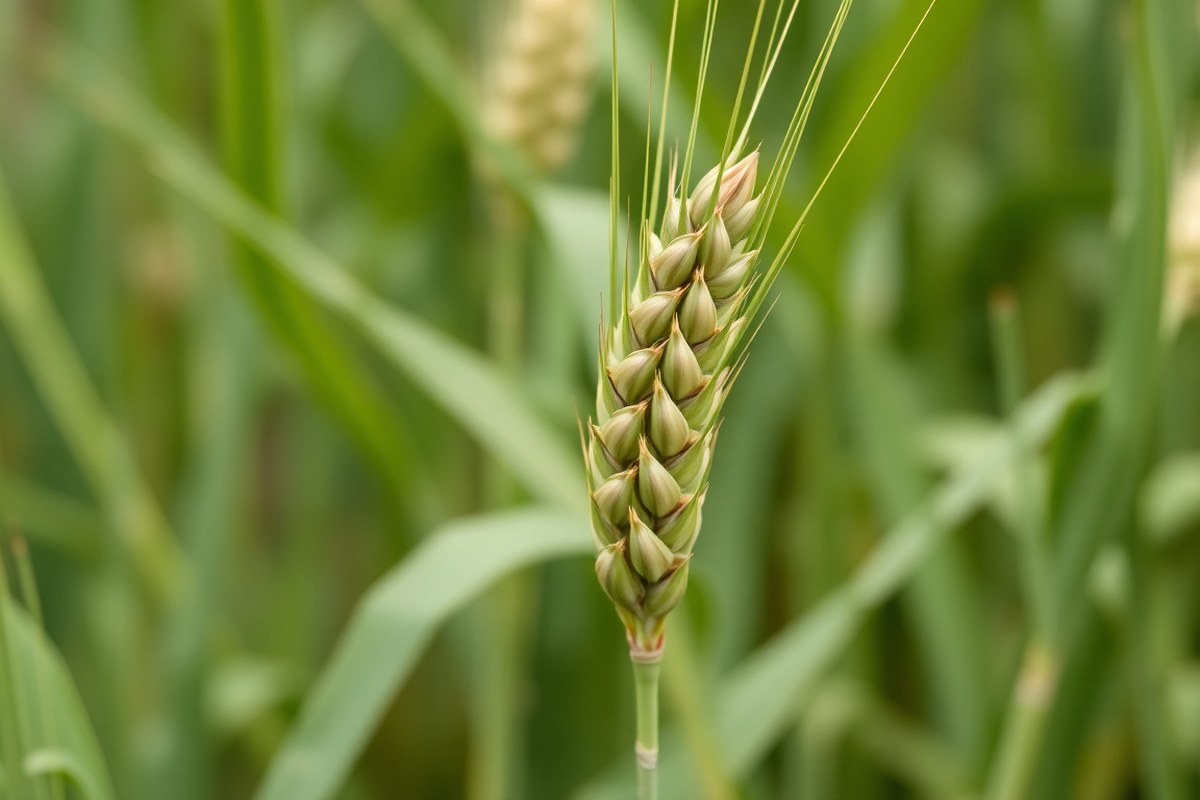
A wheat plant typically grows up to about 1.2 meters tall. It has a long, slender stem that supports its structure and helps it stand upright. The plant usually grows multiple stems, called tillers, emerging from the main stem.
The leaves are long, narrow, and flat. They grow up to 12 inches long. Their width reaches about half an inch.
They grow alternately along the stem, with one leaf per node on each side. These leaves are thin and smooth, adapted for efficient sunlight capture.
Young wheat plants have a bright neon green color. This shows as they start to grow. They begin photosynthesis and rooting at this stage.
As they grow taller and develop more leaves, the color deepens to a rich emerald green. When the head begins to emerge, the plant’s color shifts to pale or yellow-green. Finally, mature wheat changes to a golden amber or straw brown, signaling ripening and drying.
How Does a Wheat Plant Grow and Change over Its Life Cycle?
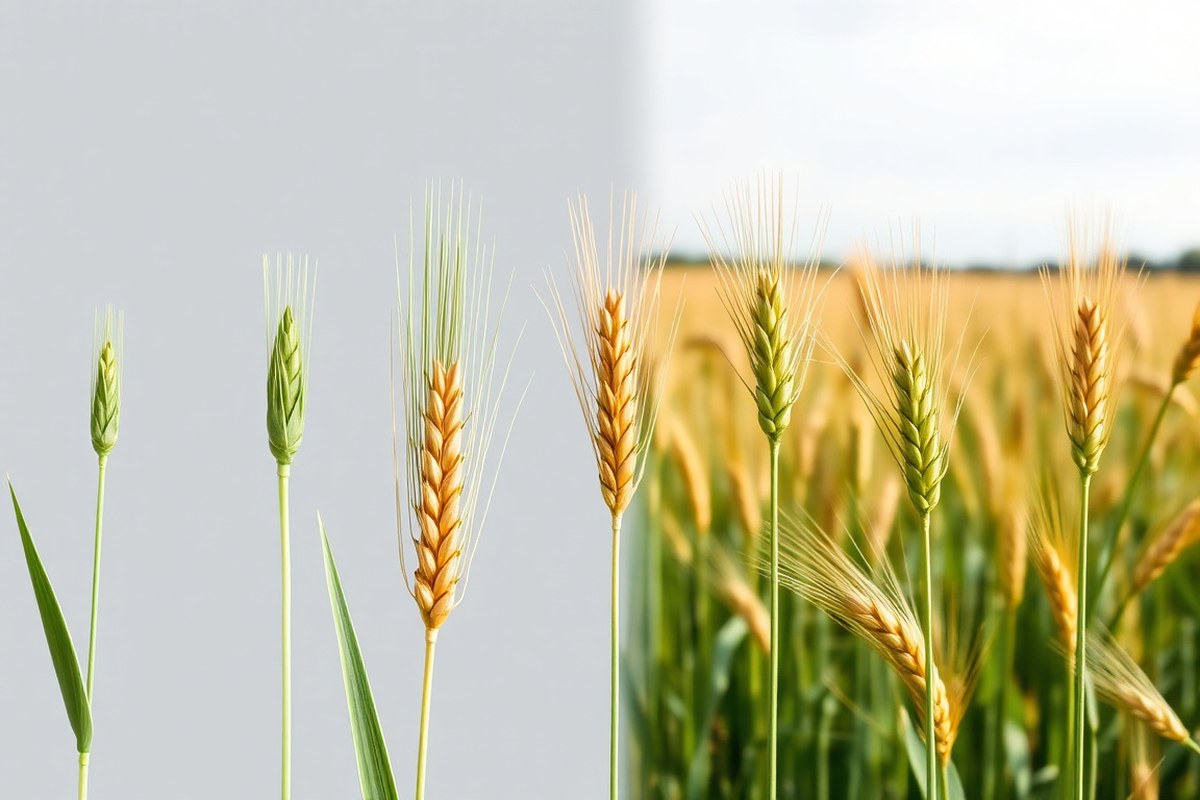
The wheat plant grows through clear stages over several months. Its shape and color change during this time. These changes occur within four to eight months.
The plant starts as a small seedling. It grows leaves and a stem.
Then it forms the wheat head. Each stage shows distinct timing and visual changes that help you track its growth.
Seedling and Early Growth Stage
The wheat seed first sprouts a thin seedling. This seedling has short, narrow leaves. Germination begins the plant’s growth.
These early leaves spread out flat and look bright green, signaling healthy growth. This stage lasts about two to three weeks after planting, depending on soil warmth and moisture.
During early growth, the roots develop seminal roots to anchor the seedling and absorb nutrients. The plant relies on stored seed energy to get started before the roots become strong. The leaves appearing at this stage are small compared to later ones.
Vegetative and Stem Elongation Stage
As time passes, the wheat plant adds leaves along the stem. These leaves grow in two rows called flag leaves.
The stem thickens and reaches full height before the wheat head forms. Leaf color darkens as chlorophyll increases.
The crown roots develop now, giving the plant long-term support and improving nutrient uptake. Stem elongation happens quickly, usually in about three to five weeks after the seedling stage ends. The plant looks taller and denser as it prepares for flowering.
Heading and Flowering Stage
The wheat head becomes visible as the stem’s top part elongates and forms a tight spike. This happens roughly seven to nine weeks after planting, depending on the variety and weather. The wheat spike initially appears green and tight before the seeds start forming inside.
Flowering follows the spike appearance and is key because it leads to seed development. The flag leaves stay important for catching sunlight to feed the growing grains. The plant color begins to shift from green to a yellowish hue during this time.
Watch the weather closely at heading and flowering. Temperatures above 95°F can harm seed development.
Ripening and Harvest Stage
After flowering, the wheat head fills with grains that mature over several weeks. You’ll see the plant turn from green to golden yellow as it dries out. This color change signals that the wheat is ready for harvest.
The stem becomes more brittle. The wheat head droops slightly under the weight of mature seeds. Harvest happens four to eight months after planting.
The timing varies with wheat type and weather. Farmers watch these factors to pick the right time. Proper moisture and sunlight are important throughout to reach this stage successfully.
What Are the Distinct Parts of a Wheat Plant to Look For?
The wheat plant has several distinct parts you can use to identify it clearly. Key features include leaf blade and sheath. Stem and nodes matter too.
Also note ligules, auricles, and the wheat head structure. Each part has its own shape and texture that helps separate wheat from other grasses.
Leaf Blade and Sheath Features
The leaf blade is flat, narrow, and typically 6 to 12 inches long. It has a blue-green color that stands out in the field among other plants. Below the blade, the leaf sheath tightly wraps around the stem, providing support and protection.
This sheath looks like a smooth covering around the stem’s base. It holds the stem upright while allowing some flexibility to sway in the wind. The leaf blade’s length and color can help you spot wheat early in its growth.
Stem and Node Characteristics
The wheat stem is hollow, round, and pale green, often called the culm or straw. It feels smooth to the touch and breaks into sections by solid swollen joints called nodes. These nodes space evenly along the stem and help keep the plant sturdy.
The nodes are thicker and noticeable compared to the hollow internode sections between them. They offer points where leaves grow and where the stem can bend without snapping. This balance helps wheat survive strong winds or heavy rains.
Ligule and Auricle Identification
The ligule is at the leaf blade and sheath meeting point. It looks like a thin, papery flap. You can easily spot it there.
This membrane is 1 to 2 millimeters long. It goes around the stem.
It sits just above where the blade connects. Its delicate texture works as a barrier against dirt and pests.
Auricles sit just below the ligule. They are short, hairy claws that wrap the stem tightly.
Wheat has these hook-shaped structures. Spotting auricles and the thin ligule confirms it’s wheat.
Anatomy of the Wheat Head
The wheat head is a tight cluster of spikelets. They stand straight up at the plant’s top. People call it a spike too.
These spikelets are arranged along a central stem called the rachis. Each spikelet contains multiple grains which mature into the wheat kernels we harvest.
Wheat’s spike looks finger-like and compact, with each spikelet closely packed. The head sticks out above the highest leaves. This makes it easy to see.
It appears when wheat shows grain formation. This structure is critical for identifying wheat before harvest.
How Can You Identify Different Wheat Varieties by Appearance?
You can spot common wheat varieties by looking at their seed color, shape, and hardness. Soft red, hard red, and durum wheat show clear differences in kernels and plant features.
Winter and spring wheat also vary in leaf color and planting time. Awns, the bristle-like hairs, may or may not appear depending on the variety.
Soft Red and Hard Red Wheat
Soft red wheat has a reddish brown kernel that looks plumper and feels softer. It grows mostly in eastern and mid-south states.
Hard red wheat is medium-sized with a reddish-brown, hard kernel. It dominates the central and southern Plains.
Soft red is mainly used for cakes and pastries due to its lower protein. Hard red wheat suits bread flour because of its stronger gluten. These visual and use differences help farmers choose wheat for specific markets.
Durum and Hard White Wheat
Durum wheat stands out by its large, amber-colored kernels that feel very hard. It grows in dry regions like North Dakota and Montana. Hard white wheat has pale tan, hard kernels and prefers places like Kansas and California.
Durum wheat forms plump, round grains often used for pasta and couscous. Hard white kernels are more oval and lighter in color than hard red wheat. These traits make durum and hard white easy to tell apart in the field.
| Class | Kernel Appearance | Typical Growing Region |
|---|---|---|
| Hard red winter | Reddish brown, hard, medium size | Central and southern Plains |
| Soft red winter | Reddish brown, softer, plumper | Eastern and mid south states |
| Hard red spring | Dark reddish, hard, glassy | Northern Plains |
| Hard white | Pale tan, hard | Kansas, Colorado, California |
| Soft white | Cream colored, soft | Pacific Northwest |
| Durum | Large, amber, very hard | North Dakota, Montana, desert Southwest |
This table compares the main wheat classes by kernel look and where they grow. Knowing this helps you identify wheat fields quickly. Regional climate and soil often determine which wheat class will thrive.
Spring vs. Winter Wheat Features
Winter wheat tends to have thicker, darker leaves and grows in fall. You will usually harvest it in the early summer.
Spring wheat starts growing late winter or spring and matures quicker. It often has lighter, softer leaves.
Winter wheat’s longer growing season helps it develop cold resistance. Spring wheat often shows a more upright growth form. These growth differences affect when and how you spot the plant in a field.
Awned vs. Awnless Wheat Types
Many wheat types have long awns, which are needle-like hairs on the heads. They make the plant’s top look fuzzy or shimmering in sunlight. Some varieties, however, have very short or no awns, producing smooth heads.
Awned wheat fields appear fuzzy from a distance. So spotting them helps identify the variety.
Awnless wheat tends to look cleaner and less hairy. This feature can change with seeds, so don’t rely only on awns.
What Does the Wheat Head (Spike) Look Like and How Is It Structured?
The wheat head, or spike, grows straight up. It usually measures 2 to 5 inches long. It has a tight, narrow shape rather than spreading out loosely.
The structure is strong to hold heavy grain. It swells as it ripens through the season.
Each wheat head contains many spikelets, which are small clusters arranged along the central stem. Spikelets hold the grains or kernels inside. You see them as small segments packed tightly together.
Each holds several florets, the tiny flower parts. These florets turn into kernels.
Awns are fine bristles that sometimes stick out from the spikelets. Not all wheat heads have awns.
But when present, they are shorter than barley awns and never droop heavily. They might look like tiny needles poking outward, adding some rough texture to the spike.
Kernel count depends on how many spikelets the head has. It also depends on how many florets mature in each spikelet. Typically, a single wheat head carries 20 to 50 kernels.
These kernels are the seeds harvested for food or feed. Their size also varies, with durum wheat producing larger kernels than common wheat.
Examine wheat heads closely before harvest. Heavy grain heads tend to droop slightly under kernel weight, which helps signal maturity.
How Does the Root System of a Wheat Plant Develop?
The wheat plant develops a fibrous root system rather than a single taproot. It grows many thin roots near the soil surface. These roots also spread deeper into the ground.
They help the plant absorb water and nutrients. These roots provide support and allow the plant to absorb water and nutrients.
At first, seminal roots emerge from the seed soon after germination. These roots anchor the plant and absorb the initial moisture and nutrients. Nodal roots grow later from lower stem nodes.
They expand the root network widely. This also helps keep the plant stable in soil.
Seminal and nodal roots share similar structures in deeper soil layers. Both types work together to gather resources efficiently. Roots can reach 1 to 2 meters deep.
Depth depends on soil texture and moisture. Dry or heavy soil limits how deep roots grow.
Deeper roots reach water in dry conditions, helping the plant survive. Heavy, compacted soil stops roots from growing deep. This limits the plant’s nutrient intake.
Roots need loose soil to spread properly. Proper soil preparation before planting can encourage healthy root development.
Choosing the right wheat variety also affects root growth. Winter wheat tends to grow well in warmer climates and produces many small seeds. This variety’s root system works effectively to support growth in those conditions.
Healthy wheat roots look like a dense network of thin white or light brown strands. Weak roots look sparse and brown in color. This often shows disease or poor soil health.
Healthy roots are thick and white or light colored. Regular soil testing and appropriate fertilization help keep roots strong.
How to Distinguish Wheat from Similar Grains Like Barley, Rye, and Oats?
Wheat often gets confused with barley, rye, or oats in fields. You can tell them apart by looking closely at their leaves, auricles, and awns. These small details help you avoid common mix-ups during identification.
Wheat leaves are flat and smooth with short, hairy auricles that wrap around the stem. Barley has longer, sharper awns on its seed heads. Its auricles don’t hold as tightly.
Rye looks like wheat but its leaves twist clockwise. Its auricles are less hairy. Oats differ more because their leaves twist counterclockwise and they lack hairy auricles.
| Feature | Wheat | Barley | Rye | Oats |
|---|---|---|---|---|
| Leaf Blade Twist | Clockwise | Clockwise | Clockwise | Counterclockwise |
| Auricles | Short, hairy, clasping | Non-clasping, smooth | Less hairy, weak clasp | Absent or very small |
| Awns | Present, moderate length | Long and sharp | Variable, shorter awns | None or very short |
| Seed Head Shape | Compact and cylindrical | Narrow, elongated | Loose and elongated | Open, loose cluster |
It helps to examine the plant close-up in daylight to spot these traits. Check the auricles by gently pulling back a leaf blade from the stem.
Wheat’s short, hairy auricles will grab the stem noticeably. Barley might feel smoother, and oats will not clasp the stem at all.
Size and shape of awns also give clues. Barley awns tend to be the longest, making the seed head look bristly. Rye’s awns can be shorter or even absent, often with a looser seed head shape.
Oats stand out with their open clusters. So they rarely get confused once you see them directly.
What Are the Key Visual Signs to Identify Wheat in Fields Accurately?
Check the wheat plant’s leaves and stem closely to identify it well. Wheat leaves are long and slender, usually between 6 and 12 inches.
They have a flat surface with a smooth or slightly hairy feel. The stem is hollow except at the nodes where leaves attach.
Look at the collar area, where the leaf meets the stem. Wheat has short, hairy auricles that partly wrap around the stem. These small parts hold the leaf tightly to the stem.
You can see them easily with a hand lens or close look. They make identifying the plant easier. Just below the auricles, there is the ligule.
It’s a thin membrane or small fringe of hairs. This feature helps tell wheat apart from other grasses.
Color can be another clue when checking wheat plants. The leaves usually show a uniform green shade in the growing season. Sometimes the leaf edges may have a lighter, whitish tint.
In late growth stages, the stem and leaves can turn yellowish or golden before harvest. The best time to check these parts is mid to late spring.
Wheat is tall then but not fully grown. This stage shows the features clearly.
- Confirm leaves are narrow and flat, around 6 to 12 inches long
- Look for short hairy auricles clasping the stem at the leaf base
- Check for a clear, thin ligule or fringe of hairs above the auricles
- Observe leaf color for a uniform green with possible lighter edges
- Inspect in mid to late spring for easiest reliable ID
Checking these features helps avoid confusing wheat with barley or rye. Barley, for example, has long, rough auricles, and rye leaves often feel rougher.
Early identification saves time and reduces errors, especially before lodging occurs. Wheat can tip over after storms, making visual ID much harder later on.
Always use a hand lens when examining auricles and ligules. These parts are tiny but key for accurate wheat ID.
Plant lodging usually happens during storms after the wheat grows tall. That event pulls the roots from the soil and bends the plant over. Spotting wheat before lodging helps you trust your ID and plan for harvest.
Look for leaf and stem signs at the right growth stage. Doing this gives you the most accurate identification. Timing is key here.
Step-by-Step Action Plan to Identify Wheat in the Field
Follow these steps to spot and recognize wheat plants correctly during their growth cycle.
- Early Growth: Look for narrow, flat leaves with parallel veins. This confirms wheat has sprouted.
- Tillering Stage: Check for multiple shoots coming from one base. If you see them, wheat is spreading.
- Stem Elongation: Find tall, hollow stems with nodes showing. This indicates wheat is growing upward.
- Heading Stage: Spot the wheat head emerging from the sheath. The head should have tightly packed spikelets.
- Flowering Phase: Notice the spreading awns on the spike. They help confirm wheat over barley or rye.
- Grain Filling: Look for plump kernels filling the spikelets. This shows wheat grains are developing.
- Maturity: Check if the color changes golden brown and stems dry out. This means the wheat is ready to harvest.
- Field Identification: Compare plant height, leaf width, and spike shape. Use these visual clues to distinguish wheat from similar grains.
Frequently Asked Questions
How Tall Does a Wheat Plant Usually Grow?
Wheat plants typically grow up to 1.2 meters tall. This height helps the plant catch enough sunlight for photosynthesis.
What Color Changes Occur in Wheat as It Matures?
As wheat matures, its color shifts from green to golden brown. This signals the plant is ready for harvest.
What Do Wheat Flowers Look Like During Blooming?
Wheat flowers are small and not very showy. They produce the grain kernels you harvest later.
How Thick Are the Stems of a Wheat Plant?
Wheat stems are slender and cylindrical, similar to grass blades. They support the wheat head during growth.
What Texture Do Wheat Leaves Have?
Wheat leaves are narrow, long, and have a smooth but slightly rough texture. Their appearance is like grass blades.
Can Wheat Roots Be Seen Above the Soil?
Usually, wheat roots stay below ground to absorb water and nutrients. You won’t see them unless the soil is disturbed.
The Bottom Line
Wheat plants have unique features you can spot throughout growth. Watch for narrow leaves, hollow stems, and spiked heads. Now, head outside and identify wheat using these clear visual signs.