What Is the Animal Classification of a Worm? A Complete Guide to Worm Taxonomy
What is the animal classification of a worm? Worms belong to several groups, but many fall under the phylum Annelida.
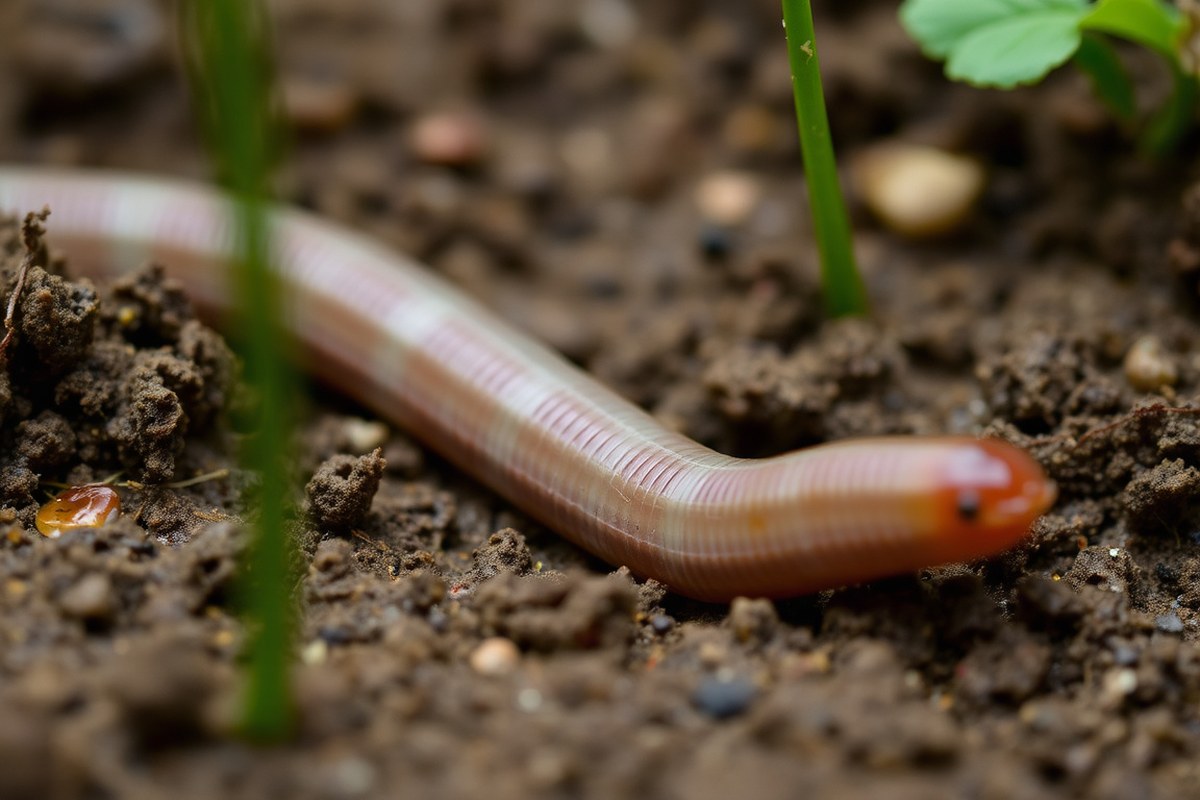
This group is known for segmented worms like earthworms. These animals have soft, elongated bodies divided into ring-like segments.
Earthworms are a common example of animals in kingdom Animalia. They belong to the class Clitellata and to different families within it. Scientists classify them this way to show how species relate.
Their classification reflects their distinct traits such as segmented bodies and moist skin. Worms often confuse people because they look different from many familiar animals.
These groups include roundworms and flatworms, which vary in shape and lifestyle. Knowing this helps you understand worms’ place in the animal kingdom better.
Key Takeaways
- Most common worms are part of the Annelida phylum with segmented bodies.
- Earthworms belong to class Clitellata within Annelida and have moist, soft skin.
- Worms outside Annelida include flatworms and roundworms from other phyla.
- Worms’ segmented bodies help identify them scientifically and differentiate types.
- Earthworms can belong to one of 16 different families under Clitellata class.
- Animal classification of worms reflects their body structure and lifestyles.
What Is the Animal Classification of a Worm?
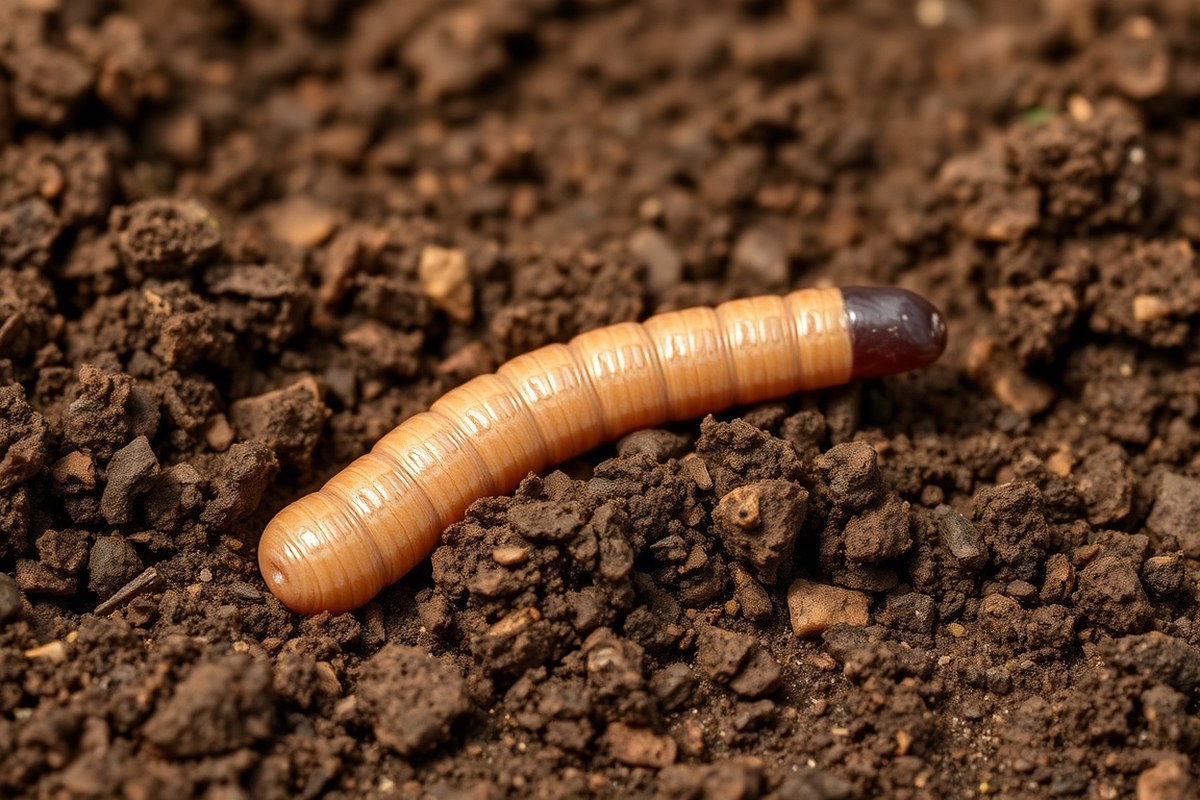
Worms are definitely classified as animals. Worms meet key biological rules that define animals. They are multicellular and have cells without walls.
They get energy by eating organic material. Worms can move and react to their environment.
They reproduce sexually or without sex. This fits them into the animal kingdom.
All worms are in Kingdom Animalia. This kingdom has creatures with complex cells. They can move at some life stage.
Worms belong to several phyla in this kingdom. These include Annelida, with segmented worms like earthworms.
Also Nematoda, roundworms, and Platyhelminthes, flatworms. Each group shares the basic animal features but differs in body design and organization.
The term “worm” is a broad label rather than a strict scientific category. It includes many kinds of animals that look worm-like but come from different biological groups. Worms in animal classification are different species.
They share basic animal traits and long, thin shapes. This is why they are grouped together.
How Are Worms Classified Within Animal Phyla?
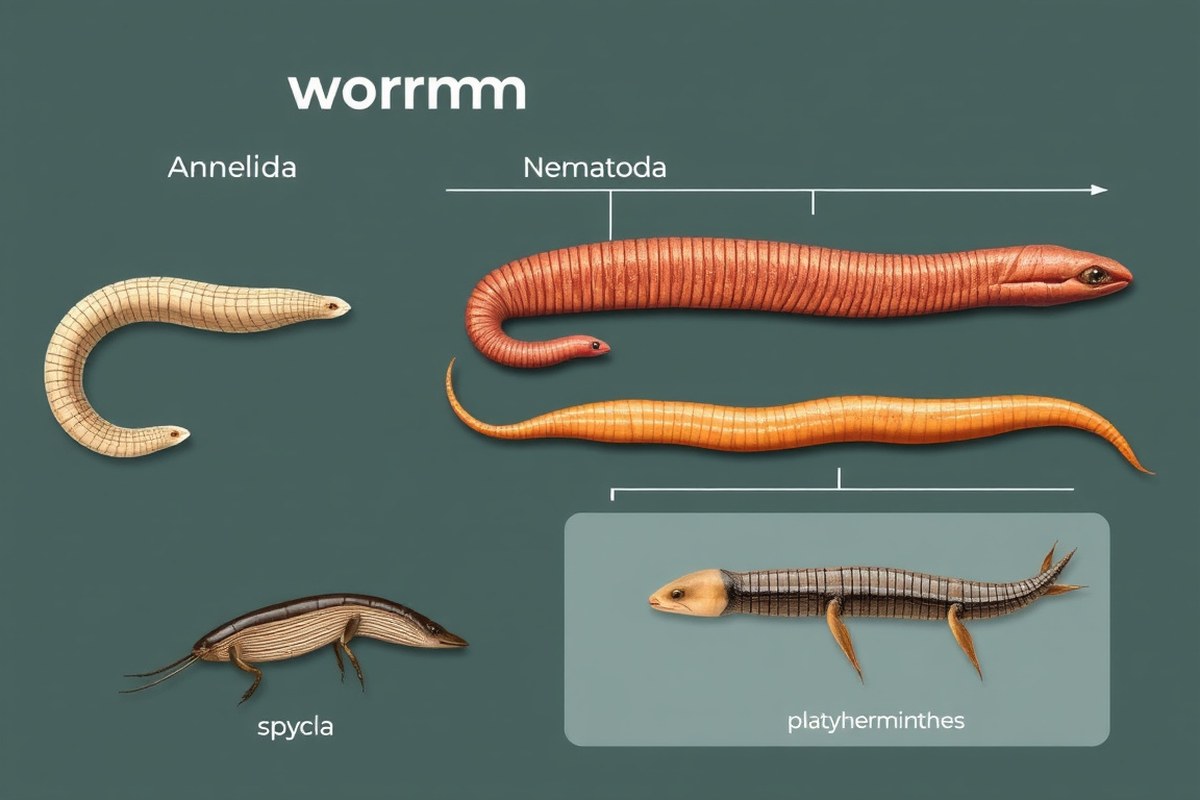
Animals called worms are not all from one group. Instead, they belong to several phyla that share similar body shapes but differ inside. The main phyla containing worm species are Annelida, Nematoda, and Platyhelminthes.
Knowing these groups helps you identify types of worms. It also shows their roles in nature. This makes it easier to understand worms.
Annelids are segmented worms. You can tell by their body shape divided into ring-like segments. Examples include earthworms and leeches.
Nematodes, or roundworms, don’t have segments. Their bodies are smooth and cylindrical instead.
Flatworms belong to Platyhelminthes, and these have flattened, soft bodies without segments. Some flatworms are free-living, but many live as parasites inside other animals.
Not all worms are segmented, which is a key point. Segmentation helps annelids move and groove through soil or water more efficiently. Nematodes and flatworms move differently because they lack segments.
Each phylum also differs in where species live and how they survive. This explains why scientists classify worms into separate groups.
| Phylum | Body Type | Segmentation | Examples | Habitat |
|---|---|---|---|---|
| Annelida | Segmented, cylindrical | Yes | Earthworm, leech | Soil, freshwater, marine |
| Nematoda | Round, smooth | No | Roundworms | Soil, freshwater, marine, parasites |
| Platyhelminthes | Flat, soft | No | Flatworms, tapeworms | Freshwater, marine, hosts (parasites) |
| Nemertea | Ribbon-shaped | No | Ribbon worms | Marine environments |
| Chaetognatha | Transparent, slender | No | Arrow worms | Marine, predatory |
Worm classification usually starts with body shape and segmentation. You look at whether the worm’s body is divided into rings and where it lives. Segments help some worms burrow or swim.
Unsegmented worms may be smoother and parasitic. These different traits guide scientists and educators on naming and studying worm species.
Be cautious handling parasitic worms. They can carry diseases and need special care to study safely.
What Are the Characteristics of Segmented Worms (Annelids)?
Segmented worms, or annelids, have distinct tube-shaped bodies split into repeating segments. These segments help with movement and flexibility. Earthworms and leeches are common examples of segmented worms.
Body Segmentation and Setae
Annelids show clear body segmentation, meaning their bodies are divided into many rings. Each segment often has tiny bristles called setae. These setae grip surfaces, giving the worms traction to move in soil or water.
The setae also help annelids anchor themselves when they crawl or burrow. Without these bristles, the worm would slip backward instead of moving forward. The skin of annelids produces mucus, which makes their slimy surface glide easily through tight spaces.
Common Species Within Annelids
Earthworms are the most familiar annelids, living mostly underground in soil. They play a big role in improving soil by aerating it and breaking down organic matter. Leeches are another well-known group, some of them are freshwater and feed by biting other animals.
Hammerhead worms are less common and have a carnivorous diet. They can consume other earthworms and even produce toxins harmful to predators. Jumping worms are known for their energetic movements and can be more aggressive when disturbed.
Movement and Habitat
Segmented worms move by contracting and relaxing muscles in each body segment. This helps them inch forward or backward through their environment. Their slimy skin reduces friction and works with setae to grip surfaces for smooth movement.
Most annelids live in soil or freshwater. Earthworms usually stay underground to avoid predators and help maintain soil health. Leeches prefer aquatic habitats where they attach to hosts or hide in vegetation.
How Are Earthworms Scientifically Classified from Kingdom to Family?
Earthworms belong to a specific group within the animal kingdom. They belong to a hierarchy starting at kingdom and going to family. The genus Lumbricus includes many common types of earthworms.
These worms are ones you often find in soil. This classification helps you understand their relations to other animals and each other.
Kingdom to Phylum Classification
Earthworms are animals, so they belong to the kingdom Animalia. Their body structure places them in the phylum Annelida, which includes segmented worms. This phylum separates them from flatworms and roundworms, which look different and have other body systems.
Phylum Annelida includes worms with bodies divided into segments. Earthworms fit here because each segment has repeated organs and bristles for movement. This segmentation also supports their burrowing lifestyle in soil.
Classes and Orders of Earthworms
The class for earthworms is Clitellata. They get this name from their clitellum, a band that helps in reproduction. This class includes other worms with the same reproductive structure.
Earthworms mainly fall into two orders: Haplotaxida and Lumbriculida. Haplotaxida contains most common earthworms, while Lumbriculida includes freshwater relatives. Recognizing these orders shows how earthworms adapt to different habitats.
Common Families and Genera
Earthworms belong to about 16 different families. This variety reflects their physical and habitat differences, like size and soil preference. Families group earthworms sharing closer ancestry and traits.
The genus Lumbricus is the most familiar. It refers to many typical earthworms found in your garden.
These worms also appear in compost piles around your home. For example, Lumbricus terrestris is a well-known species that plays a big role in turning soil.
| Taxonomic Rank | Example Name |
|---|---|
| Kingdom | Animalia |
| Phylum | Annelida |
| Class | Clitellata |
| Order | Haplotaxida |
| Family | Lumbricidae |
| Genus | Lumbricus |
This table shows the basic classification from kingdom to genus for a common earthworm. You can use this to identify any earthworm by tracking the ranks step by step.
Each level narrows down the group. So you get more specific about the worm type.
What Are Other Major Types of Worms Outside of Earthworms?
Tapeworms are not annelids. They belong to a class called Cestoda, which is part of the flatworms. Flatworms have soft, flattened bodies without segments, unlike earthworms which are segmented annelids.
Helminths is a term commonly used for parasitic worms. It includes certain flatworms like tapeworms, as well as roundworms.
These parasitic worms often live inside animals or humans. They feed off their hosts and sometimes cause health problems.
Roundworms are part of a different phylum named Nematoda. They have long, smooth, unsegmented bodies that taper at both ends. Unlike flatworms and annelids, roundworms have a complete digestive system with two openings.
Flatworms include parasites like tapeworms, which attach themselves inside intestines. Helminths cover a broader group of parasitic worms, including both flatworms and roundworms. They differ in shape, lifestyle, and how they feed or reproduce.
Roundworms live in many environments, from soil to water to animal hosts. These worms can cause diseases in both humans and animals.
Knowing their classification helps with treatment and control. Their simple body plan and tough outer layer let them survive tough conditions.
Knowing these worm groups helps identify which worms are harmless and which might cause damage. For example, earthworms improve soil health.
But helminths often require treatment when found in humans. This classification guides how scientists and doctors approach worms in nature and medicine.
Always wash hands after gardening or handling soil to avoid accidental exposure to parasitic worms.
What Is the Evolutionary History of Worms?
Worm-like animals first appeared more than 500 million years ago during the Cambrian period. Early fossils show simple, soft-bodied creatures with elongated shapes. These early forms laid the groundwork for the many worm groups we see today.
Worms evolved differently in various animal phyla, including Annelida, Nematoda, and Platyhelminthes. Each group adapted unique features like segmented bodies or protective outer layers. This helped worms survive in different environments, from oceans to soil.
Fossil evidence for worms is rare because soft bodies don’t preserve well. Still, some Cambrian fossils, like those from the Burgess Shale, reveal worm-like creatures. These finds give clues about their ancient structures and lifestyles.
Worm evolution reached a key milestone with annelid segmentation. Segmentation allowed better movement and specialization of body parts. Later, nematodes evolved a tough outer covering that helped them live in harsh conditions.
Worms also diversified by adapting their feeding methods, from scavenging to parasitic habits. This variety helped worms spread worldwide and into many ecosystems. Their evolutionary changes shaped their role in nature and their interactions with other animals.
How Do Worms Reproduce and What Is Their Typical Lifespan?
Worms reproduce mainly by sexual means and live from a few months up to several years. They are hermaphrodites but need a partner to exchange sperm. Lifespan and reproductive cycles vary widely among different worm types.
Sexual and Asexual Reproduction Methods
Most worms are hermaphrodites, meaning each has male and female organs. They still require another worm to mate and swap sperm. This ensures genetic diversity, which strengthens their populations.
Some flatworms reproduce asexually by splitting or budding. This method creates clones but happens less often in common worm groups like earthworms. Asexual reproduction helps in rapid population growth under favorable conditions.
Development and Eggs
Worm reproduction starts with mating and exchange of sperm between partners. After fertilization, eggs develop inside cocoons, which the worm produces. Gestation inside these cocoons takes around 2 to 4 weeks before hatching.
Worm young resemble small adults and don’t go through larval stages like insects do. This direct development means their basic form stays the same from juvenile to adult. Typical lifecycle stages include:
- Mate and exchange sperm with partner
- Produce fertilized eggs inside a protective cocoon
- Eggs develop for 2 to 4 weeks in the cocoon
- Juvenile worms hatch and grow into adults
- Adults repeat the cycle by finding a mate
Average Lifespan and Factors Influencing It
Earthworms usually live 4 to 8 years in nature. Many die younger because of predators.
Marine and freshwater worms often have shorter lifespans, sometimes only months long. Predators include fish, birds, and mammals that eat invertebrates.
Living conditions also affect lifespan. Soil quality, temperature, moisture, and ease of finding mates all play roles. Worms living in harsh or disturbed environments usually have shorter lifespans than those in stable habitats.
What Are Common Misconceptions About Worm Classification?
The word worm doesn’t represent a formal animal classification. It’s a common term for many elongated, soft-bodied animals without legs. Worms belong to different groups, like annelids or flatworms, which are not always closely related.
Many people ask if all worms are related. The answer is no.
For example, earthworms are annelids, while tapeworms belong to flatworms, a completely separate group. This shows worms include a mix of distinct animal types with different origins.
People often mix up worms with other animals like insects or amphibians. This confusion may come from creatures like caecilians, which look wormlike but are amphibians. Knowing an animal’s true features helps avoid mistakes in identifying worms.
Parasite worms, called helminths, sometimes confuse people. Not all worms are parasites, but all helminths are worms.
Helminths include roundworms and flatworms that live inside other animals. Calling all worms parasites is incorrect and leads to misunderstandings.
To tell worm types apart, check their body structure and lifestyle. Segmented bodies usually mean annelids, such as earthworms. Flat, ribbon-like bodies often mean flatworms.
Roundworms have unsegmented, cylindrical bodies. This simple check clears up many myths.
Worm names vary by region and type. For example, the jumping worm is also called the Georgia jumper or crazy worm. These names don’t change its scientific classification but can cause confusion about which worm it is.
When identifying worms, focus on body shape and habitat, not just common names.
Step-by-Step Plan to Explore Worm Classification
Follow these steps to deepen your understanding of worm classification and diversity.
- Day 1: Read about the main phyla that include worms to see their differences.
- Day 3: Study segmented worms like earthworms, focusing on their body parts and movement.
- Week 1: Compare earthworm classification from kingdom down to family using a chart or diagram.
- Week 2: Explore other worm types such as flatworms and roundworms to spot key traits.
- Week 3: Research worm evolution to understand how they adapted over millions of years.
- Week 4: Learn about worm reproduction and lifespan to get a full lifecycle picture.
- After Week 4: Identify common classification mistakes you hear and check facts to correct them.
Frequently Asked Questions
Are Worms Considered Animals or Something Else?
Worms are animals because they belong to the Animal Kingdom. They have animal traits like movement and complexity, unlike plants or fungi.
What Makes Segmented Worms Different from Other Worms?
Segmented worms have body sections called segments. This sets them apart from flatworms or roundworms, which lack these divisions.
Can Worms Live Out of Water or Soil?
Most worms live in moist environments like soil or water. They need moisture for breathing through their skin.
Do All Worms Have the Same Lifespan?
Worm lifespans vary by species but mostly range 4 to 8 years. Environment and species traits influence how long they live.
Are Worms Related to Insects or Amphibians?
Worms are not insects or amphibians. They form their own groups within animals, like annelids and nematodes.
Is the Alaskan Bull Worm from SpongeBob a Real Worm?
The Alaskan bull worm is a fictional creature from SpongeBob SquarePants. No real worm matches its size or features.
Before You Go
The animal classification of worms shows they belong to multiple groups, not one set. Start by picking one worm type to study in detail. This approach helps you see their diversity and place in nature clearly.