What Does a Pepper Plant Look Like? A Complete Visual Guide for Gardeners
What does a pepper plant look like? At different stages, the plant changes quite a bit. Early on, seedlings are tiny with simple leaves.
But mature plants grow bushy or vine-like with fuller foliage. You’ll notice sturdy stems, bright flowers, and eventually colorful peppers hanging off the branches.
Most bell pepper plants reach about 3 to 4 feet tall with a compact, bushy shape. Vine-like peppers can climb higher, sometimes up to 6 feet or more.
The leaves usually show clear shapes after one week or two. This helps you spot the pepper variety early on.
Watch for small white flowers that should bloom once your plant is strong. Flower drop is normal in extreme temperatures or sudden light changes. So don’t worry too much at first.
Make sure your peppers get 6 hours of sun daily. They can get up to 8 hours for better growth. This helps produce more fruit.
Key Takeaways
- Seedlings start small with simple, rounded leaves before true leaves develop.
- Mature pepper plants grow bushy or as tall vines, depending on the variety.
- Bell peppers are usually 3 to 4 feet tall with compact branches.
- True leaves reveal plant variety by shape and size after 1, 2 weeks.
- Peppers need 6, 8 hours of direct sunlight daily for best growth.
- Flower drop often happens during temperature extremes or drought and is normal.
What Does a Pepper Plant Look Like at Different Growth Stages?
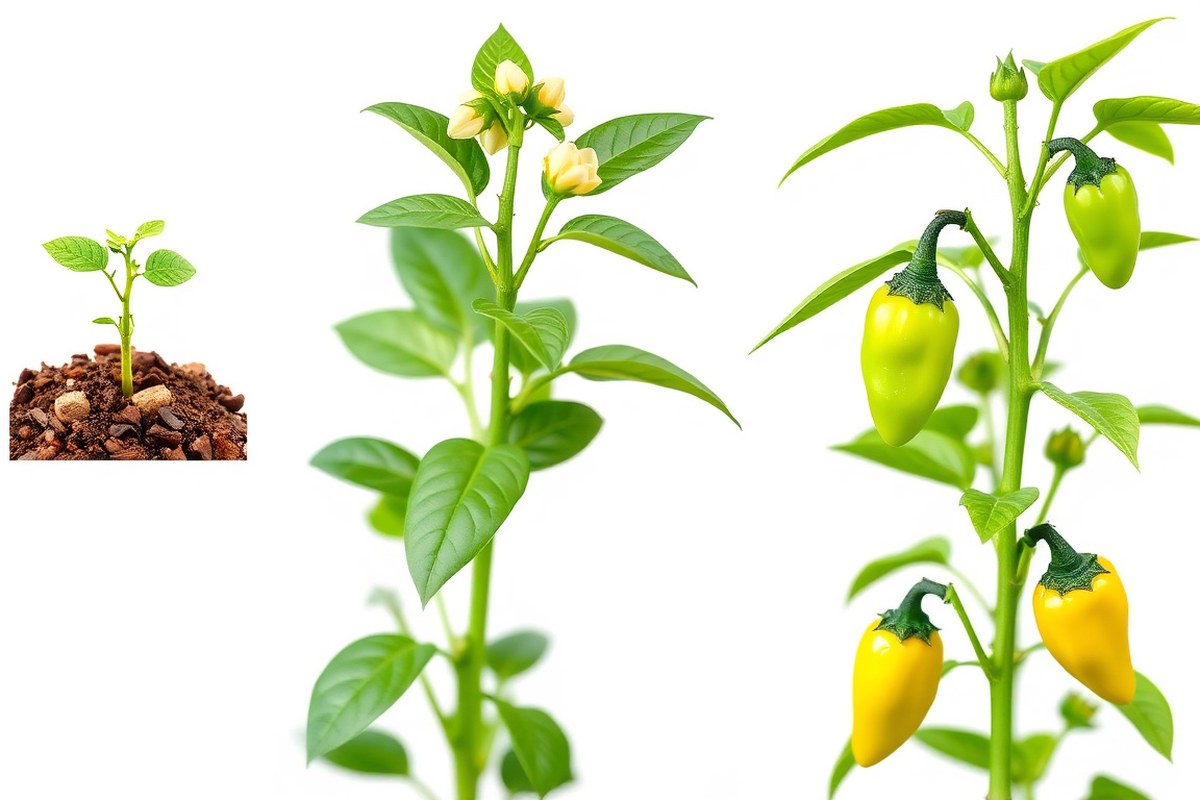
Pepper plants start as tiny seedlings with two smooth, oval seed leaves called cotyledons. These first leaves don’t look like typical pepper leaves. True leaves appear around 5 to 10 days later, marking a visible change.
They look longer and have the shape of pepper leaves. This helps you identify the plant at this stage.
In the following weeks, the seedling grows taller and fuller. The stem gets sturdier and light green. The plant usually grows 6 to 12 inches tall in the first month.
This depends on good temperature and moisture. After transplanting outside, growth slows for one or two weeks. Then the plant grows quickly again.
When the plant is 6 to 8 weeks old, small flowers show up. These flowers appear at the leaf joints. Flower buds begin as tiny green bumps before opening.
These will eventually develop into fruit if pollinated. Tiny peppers appear 2 to 3 weeks after the flowers bloom. They start as small green shapes and grow.
- Seedlings have two round cotyledon leaves for about 1 week
- True leaves appear within 5 to 10 days, shaped like standard pepper leaves
- Plant grows to 6, 12 inches in 3, 4 weeks after sprouting
- Stems turn more strong and light green to support growth
- Flowers bloom at 6, 8 weeks; look for small white blossoms
- First fruits develop 2, 3 weeks after flowering
- Fully grown plants reach about 3 feet tall and bushy
After about 3 months, most bell pepper plants are ready to produce full-sized fruit. Mature plants look bushy with strong branches. You’ll see green leaves and colorful peppers.
The stem base often hardens slightly to support the fruit weight. Healthy plants stand up straight without drooping or yellow leaves. This shows you’re meeting water and light needs.
How to Identify Pepper Leaves: Shape, Size, and Texture Variations
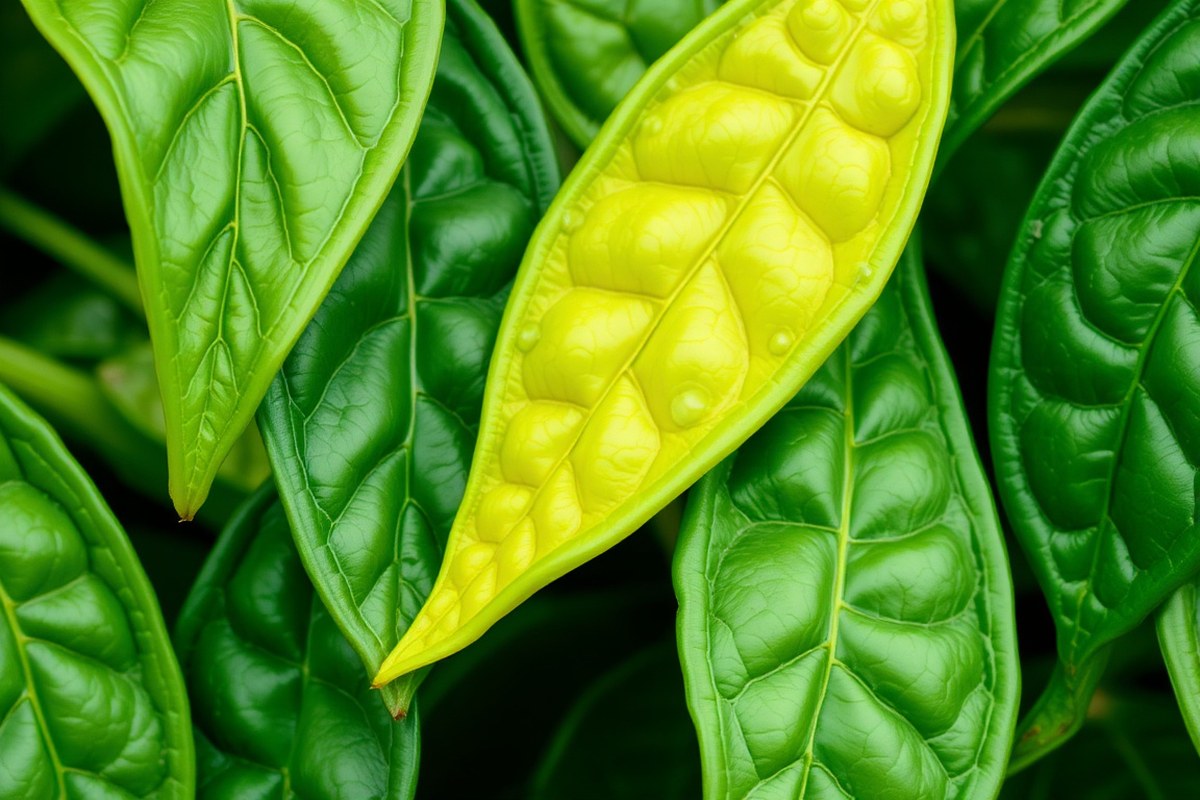
Pepper plant leaves come in many shapes. Bell peppers have broad, round leaves. Jalapeños have narrow, pointed ones.
Ornamental peppers show small ovate leaves. Leaf size also changes by type. Sweet peppers usually have bigger, denser leaves.
These leaves can grow several inches long. Hot varieties like habaneros show slender, glossy leaves, sometimes drooping, which can indicate their delicate nature.
Texture also helps differentiate pepper types. Bell pepper leaves feel smooth and waxy. Jalapeño leaves have a matte finish and curl slightly at the edges.
Ornamental peppers often have leathery or waxy leaves with possible purple tones, clustering tightly. These texture differences can hint at the plant’s variety and even its health status.
Healthy leaves typically have a vibrant green color without spots or yellowing, signaling good nutrient levels. Look for curling, discoloration, or wilting. These signs show stress from pests or sun.
Nutrient problems can also cause this. Leaves turning pale or rough means check soil and watering.
Poor care can stunt growth or cut fruit. Keep soil healthy and water right.
You can spot ornamental peppers by their smaller, more uniform leaves and tighter leaf clusters. Their leaves often have a harder texture than edible types, which helps with identification. These plants often have clear, symmetrical leaves.
This shows compared to irregular edible pepper leaves. Symmetry helps these leaves stand out.
Look closely at leaf edges and texture to spot stress early, before it harms fruit production.
Check leaf size to ID your pepper plant. Bell pepper leaves are often 4 to 6 inches long. Use size for easy comparison.
Jalapeños are 2 to 4 inches. Ornamental leaves tend to be smaller, around 1 to 2 inches. Note the shape and feel by gently touching.
Smooth and waxy means bell pepper, thin and glossy points to habanero. This hands-on check only takes a minute but saves you from misidentifying your plants.
Another tip: observe leaf orientation. Jalapeño leaves usually stand upright. Banana pepper leaves appear longer and curved with a soft matte texture.
These subtle differences offer clues to the pepper type growing in your garden. Correctly identifying leaves lets you spot problems and adjust care, improving your harvest too.
Visual Characteristics of Pepper Plant Stems and Branching Patterns
Pepper plant stems vary in color from bright green to deep purple or even reddish tones. Some stems look smooth and shiny, while others have a rough or hairy texture.
More than 40% of commercial pepper varieties have tiny hairs called trichomes, which protect the plant. So hairy stems are normal, not a sign of pests or disease.
Most bushy pepper plants, like bell peppers, grow between 2 and 3 feet tall. These plants have thick, firm stems that snap rather than bend. Hot pepper plants often grow taller than other peppers.
They usually reach 4 to 6 feet in height. Their stems are green, slender, and flexible. You can recognize a pepper’s growth by its stems.
Bushy peppers have many side branches very close. The pattern of branches shows the growth habit. Vine-like peppers spread wider with fewer, longer branches.
Checking stem health is simple. A healthy pepper stem feels firm and snaps cleanly when bent. Avoid stems that look shriveled, soft, or discolored, they may have rot or insect damage.
For example, bell pepper stems are sturdy and woody near the base, showing strength. Vining hot peppers often have slimmer stems that stay flexible to support climbing or sprawling growth.
Flower Appearance and Fruiting: When and How Peppers Bloom
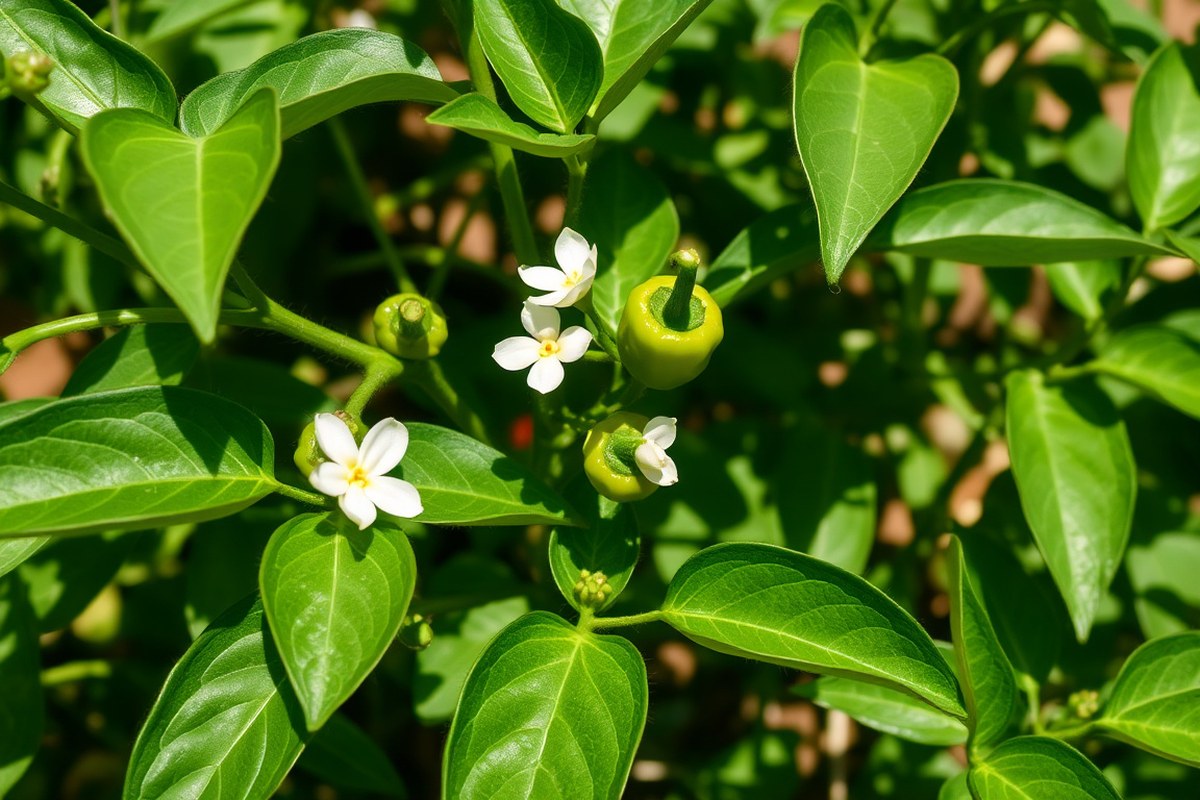
Pepper flowers are small, star-shaped, and usually white. They grow singly or in small clusters where the branches meet the main stem.
These flowers contain both male and female parts. So they can fertilize themselves to produce fruit.
Typical Flower Colors by Pepper Type
Most pepper flowers have five white petals that form a shallow cup shape. Some varieties show light purple or pink shades, especially ornamental peppers. These color differences can help identify specific types or cultivars.
White flowers are common for bell and hot peppers alike. Varieties like purple peppers sometimes have lavender petals. This makes it easier to tell them apart when you check your plants.
Flower Cluster Patterns and Location
Peppers usually produce flowers at branch junctions along the main stem. Hot peppers tend to grow flowers in smaller, tighter clusters. Bell peppers often have flowers that appear singly or in pairs.
Flower cluster size and arrangement can hint at the pepper type. For example, habaneros flower in small tight groups. You might notice that branching forks often carry these clusters, creating a Y-shaped pattern.
- Flowers form at branch junctions near the stem.
- Hot peppers often have clusters of 3 to 5 flowers.
- Bell peppers usually have solitary or paired flowers.
- Flowers contain both male and female parts.
- Self-pollination is common but bumblebees improve fruit set.
- Flower drop happens naturally under stress or extreme temps.
Though the flowers can self-pollinate, insect visits can increase fruit yield. Normal flower drop does not always mean something is wrong. It often happens if temperatures drop below 55°F or climb above 90°F.
Flower to Fruit Development Timeline
Peppers generally start flowering after 6 to 8 weeks of growth. During early outdoor stages, removing first flowers helps the plant focus on leaves. After flowers mature, small green fruits begin to form within one to two weeks.
Healthy flowers have yellow anthers and a growing ovary beneath the petals. The ovary should swell within 7 days. Otherwise, pollination may have failed.
Keep plants warm and well-watered. Give them at least 6 hours of sunlight daily. This helps good fruit to set.
How to Visually Distinguish Major Pepper Varieties
The major pepper varieties differ in leaf shape, plant size, and fruit form. Bell peppers grow bushy with broad leaves.
Chili and habanero plants look slimmer with narrower leaves. Ornamental peppers catch the eye with colorful fruits and compact size.
Bell Pepper Visual Traits
Bell pepper plants have broad, roundish leaves wider than those of hot peppers. Their growth is bushy and compact, usually reaching 18 to 24 inches tall. Fruits are large, blocky, and often green, red, or yellow when ripe.
Leaves tend to have smooth edges and a waxy surface, helping you spot them early on. Bell peppers’ fruit shape is square or three-sided, unlike most other peppers.
Hot Chili and Habanero Differences
Hot chili pepper plants grow taller and more upright than bell peppers. Their leaves are narrower, more elongated, sometimes with slight pointed tips. Fruit shape and color vary widely but generally look slender or tapered.
Habanero plants are smaller and bushier than typical chili plants. Their leaves are smooth-edged but often rounder than jalapeños or other chilis. Habanero fruits are wrinkly, lantern-like, and bright orange or red when ripe.
Ornamental Pepper Characteristics
Ornamental peppers remain smaller overall, rarely taller than 12 to 18 inches. Leaves are thin, usually pointed, and less broad than bell peppers. Their fruits are often tiny, bright, and multicolored, growing in clusters.
Fruits on ornamental plants change color during the season. They often shift from green to red, purple, or yellow. They’re grown mainly for looks rather than eating due to intense heat or bitterness.
| Variety | Leaf Shape | Plant Size | Fruit Appearance |
|---|---|---|---|
| Bell Pepper | Broad, round, smooth edges | 18-24 inches tall, bushy | Large, blocky, green/red/yellow |
| Jalapeño | Narrow, pointed tips | 24-36 inches tall, upright | Medium, smooth, green to red |
| Habanero | Rounder, smooth-edged | 12-24 inches, bushy | Wrinkled, lantern-shaped, orange/red |
| Banana Pepper | Medium, slightly pointed | 18-24 inches tall | Long, curved, pale yellow |
| Ornamental Pepper | Thin, pointed | 12-18 inches, compact | Small, colorful, clustered |
You can use leaf shape and plant height together to tell pepper types apart easily. Look for broad leaves and blocky fruits to identify bell peppers fast.
For hotter varieties, see if the plant grows taller or bushier. Also, note the shape and texture of the fruit.
Check fruit clusters on ornamental peppers; that’s a quick giveaway from edible types.
Common Visual Mistakes When Identifying Pepper Plants
Flower drop isn’t always a failure. Pepper plants often shed some flowers when stressed or adjusting to new conditions.
They still produce fruit later. So don’t panic after seeing a few flowers fall off.
Hairy stems usually don’t mean disease in pepper plants. Peppers have slightly hairy or smooth, angular stems, unlike tomatoes, which have round, very hairy stems. Check leaf shape and stem texture carefully before suspecting pests or problems.
Yellow or curled leaves can mean different things. Pale green leaves often happen with hot pepper types and aren’t always bad.
Curling leaf edges that feel dry or brittle could show sunburn or too much heat. Uniform yellowing or soft, crumbling leaves usually signal serious issues.
Dormant plants keep firm, bendable stems and may grow a few leaves slowly. They respond to more light or warmth in 10 to 14 days. Dead or dying plants have blackened, mushy stems near soil.
Their leaves might crumble when you touch them. These signs show plant health problems.
You can tell stress from normal growth by watching these signs:
- Irregular leaf drop during heat or dry spells is normal.
- Hard, pliable stems mean the plant is still alive, even if slow.
- Yellowing only on leaf edges or sunlit sides suggests sunscald.
- Blackened stems or completely dried leaves mean severe disease.
- Small, occasional flower loss is common during early growth.
- Visible new buds or shoots show recovery or good health.
Look for dry, papery patches or white scars on upper leaves to spot sunburn. Check stems near the base for rot or fungal infection when squishy.
When unsure, try gently squeezing stems and leaves. Firmness usually means the plant has a chance to bounce back.
Check the plant’s smell too. Crushing a leaf gives a spicy scent that confirms it’s a pepper plant.
This helps avoid confusing peppers with tomato plants, which smell different and have fuzzy leaves. Identifying plants accurately lets you give the right care and avoid wasting time or resources.
Environmental Effects on Pepper Plant Appearance
Pepper plants need at least 6 to 8 hours of direct sunlight daily. More sun makes leaves darker green and stems thicker. Lack of light leads to pale, thin stems and smaller leaves, which weakens the plant.
Temperature changes affect how pepper plants look. They grow best in daytime temps between 70°F and 85°F. If it gets hotter than 90°F, leaves may curl and flowers drop. Cold nights below 55°F slow growth and can turn leaves yellow or cause them to wilt.
Soil also changes a plant’s shape and color. Peppers like slightly acidic to neutral soil, pH 6.0 to 7.0. Too acidic soil can cause leaf discoloration and stunted growth.
Heavy, wet soil makes roots weak and leaves limp. Well-draining soil helps roots stay healthy and keeps leaves firm.
The season impacts pepper plant traits too. Spring and summer bring lush green leaves and lots of flowers.
In fall, leaves may look duller, and flowers decrease as the plant prepares for cooler days. Indoor plants often have thicker, softer leaves from gentler light and warmth.
Growing peppers in pots indoors or outdoors shows visual differences. Indoor plants get gentler light, so leaves stay softer and stems don’t get woody. Outdoor plants, exposed to full sun and wind, have tougher leaves and stronger stems.
The room inside also matters. Near a sunny window, pepper leaves stay bright and firm.
Watching leaf and stem color helps you spot plant stress early. Blue-green leaves or brown stems mean too much sun or heat stress.
Pale or yellow leaves signal low light or cold stress. Dropped flowers or curled leaves tell you the plant is uneasy with its environment.
To keep pepper plants looking their best, pick a sunny spot with well-draining soil. Aim for daytime temps between 70°F and 85°F and avoid sudden cold snaps.
Water moderately, letting soil dry slightly between watering. These steps help leaves stay dark green, stems strong, and flowers plentiful for good fruit production.
Practical Steps to Observe and Identify Your Pepper Plant
Start by using the right tools to examine leaves, stems, and flowers closely. Look when flowers or young fruit first appear, usually a few weeks after planting. Keep notes or photos to compare features over time for easier identification later.
Tools for Detailed Observation
A simple magnifying glass can show leaf veins and tiny hairs that help identify pepper varieties. A ruler or tape measure helps record leaf size and stem thickness accurately. Using gloves protects your hands from irritation if you handle spicy pepper leaves or stems.
Good lighting is key. Use a bright LED flashlight or inspect plants outdoors in direct morning sunlight for clear visibility. These tools cost from $5 to $20 and last through many seasons.
Pick healthy leaves or flowers for a close look. Use a phone camera or magnifier.
This helps you see clear details. Avoid damaging plant parts by handling gently.
Timing Your Visual Inspections
Check flowers or young fruits early morning. Do it after the dew has dried.
Avoid checking during the heat peak. This avoids plant stress and shows vibrant colors and fresh details.
Start inspecting about 3 to 5 weeks after planting once true leaves form. They will have shapes that match specific pepper types. Check your plant every 3 to 5 days during blooming and fruit set for changes.
Take notes right after watering or in slow growth times. This helps stop mix-ups with stress signs. Stress looks like curled leaves or color changes.
Recording and Comparing Plant Features
Use a notebook or smartphone app for logging. Record leaf shape, color, size, and stem details.
Add details about flower shape and immature fruits. This makes spotting patterns easier later.
Follow steps to stay organized:
- Pick 3 to 5 representative leaves and measure length and width.
- Note leaf edge shapes: smooth, wavy, or serrated.
- Record stem color and thickness at the base and tip.
- Describe flowers: petal number, color, and any markings.
- Photograph from various angles with a reference object like a coin.
- Log date and growth stage each time you record.
Refer to these notes when comparing plants or asking for help identifying varieties. Look for consistent traits across days to avoid misidentifications due to temporary stress.
Write down or take photos in good light to avoid missing small but key features.
Using AI and Apps for Identification
Apps like PlantSnap or PictureThis let you upload photos for pepper ID suggestions. Take multiple photos: close-up of leaves, flowers, and a full plant shot for best accuracy.
Use app results as a starting point, then compare traits with your notes. Apps can confuse different pepper species if photos are blurry or incomplete.
Sometimes uploading images to online gardening forums or social media groups gets expert feedback. Include your recorded features and location for better advice.
Step-by-Step Action Plan to Identify and Care for Your Pepper Plant
Follow these steps to confidently identify your pepper plant at each stage. You will also learn how to check if it’s healthy and thriving.
- Before Planting: Choose pepper seeds from a specific variety. Confirm seed packets show leaf, stem, and fruit pictures.
- Week 1: Watch for tiny seed leaves that are round and smooth. They should appear within 7 days; this confirms germination.
- Week 2: Check the first true leaves. They look pointed and are larger than seed leaves. Healthy ones are green and firm.
- Week 4: Observe stem thickness and branching. Strong stems are green and firm, with visible nodes where branches grow.
- Week 6 to 8: Identify flowers on your plant. They are small, white or yellowish, and appear near leaf joints.
- Week 8+: Look for fruit development. Peppers start small and green; color changes by variety happen in days or weeks.
- Ongoing: Compare your plant’s features with reference photos for your pepper variety. Note any leaf shape or stem differences.
- When Issues Arise: If leaves wilt or change color unusually, check soil moisture and sun exposure. Adjust care to correct these signs.
Frequently Asked Questions
How Tall Do Pepper Plants Typically Grow?
Pepper plants usually grow between 1 and 3 feet tall. Their height varies based on variety and growing conditions like sunlight and soil.
Can Pepper Plants Grow Indoors Successfully?
Yes, pepper plants can grow indoors with enough light and warmth. Use grow lights if natural light is limited for best results.
What Do Pepper Plant Roots Look Like Underground?
Pepper roots are thin and fibrous, spreading out around the plant base. They don’t grow very deep but need loose soil to expand.
How Often Do Pepper Plants Shed Their Leaves?
Pepper plants shed old leaves regularly but not all at once. This helps them focus energy on new growth and fruit production.
Do Pepper Plants Have a Particular Smell I Can Use to Identify Them?
Pepper plants have a mild, slightly spicy smell when crushed. This scent comes from the leaves and can help with identification.
What Does a Healthy Pepper Plant Look Like Compared to an Unhealthy One?
A healthy pepper plant has vibrant green leaves and firm stems. Yellowing leaves or wilting usually signal stress or disease.
Key Points to Remember
Knowing what your pepper plant looks like helps you care for it properly. Start by tracking leaf and stem changes closely. This habit guides you to healthy peppers faster.