Can Blueberry Plants Be Grown in Pots? A Complete Guide with Care Tips
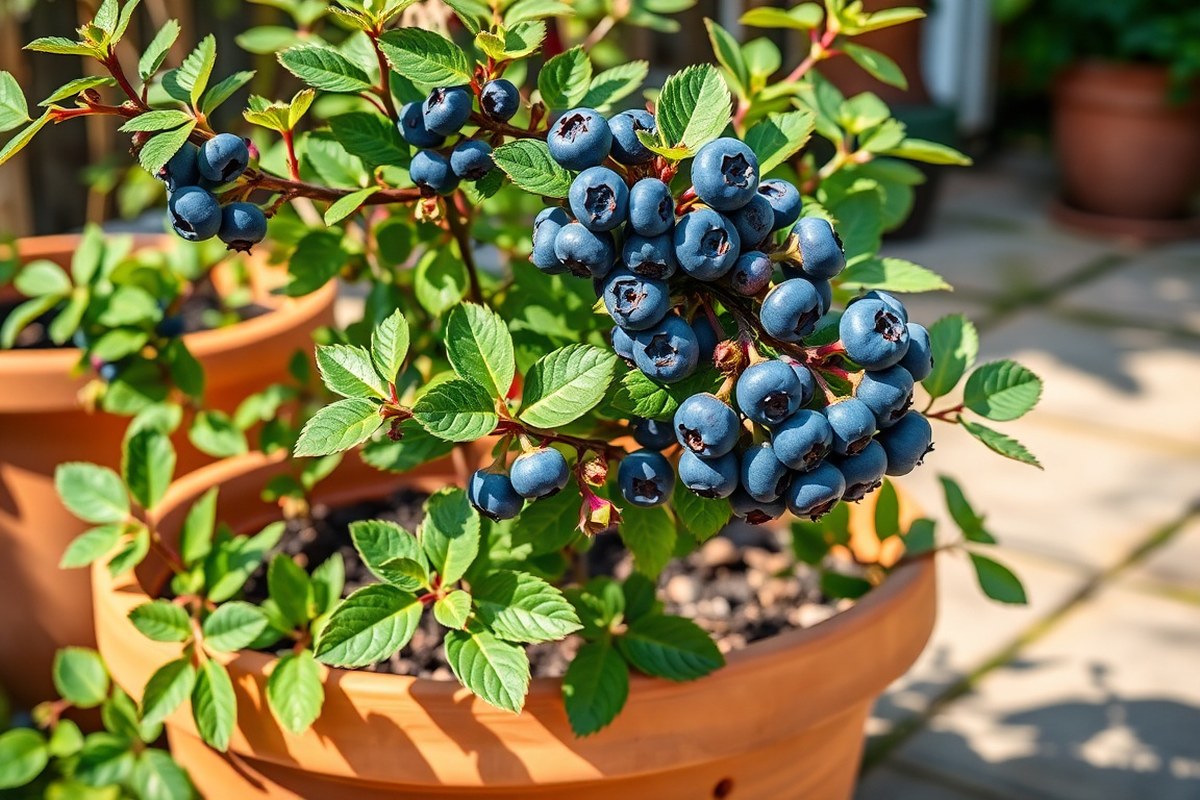
Can blueberry plants be grown in pots? Yes, they can thrive when you pick the right container and soil.
Using a large pot helps support healthy root growth and fruit production. Smaller pots can stunt growth and reduce berry yields.
Blueberries grow best in pots with soil pH ranging from 4.5 to 5.5. Place the container where it receives 6 to 8 hours of sunlight each day. Keep watering consistent but make sure the soil isn’t waterlogged to protect the roots.
Choosing dwarf varieties like Top Hat helps keep the plant manageable in smaller spaces. For larger kinds, use at least a 24-inch-wide and deep container. Also, prepare for winter by protecting your potted blueberry from freezing temperatures.
Key Takeaways
- Use a pot at least 16 to 20 inches wide for young blueberry plants.
- Repot into a 24-inch container for mature plants to allow root growth.
- Maintain soil pH around 4.5 to 5.5 using an acidic potting mix.
- Place pots where blueberries get 6 to 8 hours of sunlight daily.
- Water blueberry pots evenly to keep soil moist but not waterlogged.
- Choose dwarf varieties like Top Hat for smaller containers and patios.
Can Blueberry Plants Thrive in Pots?
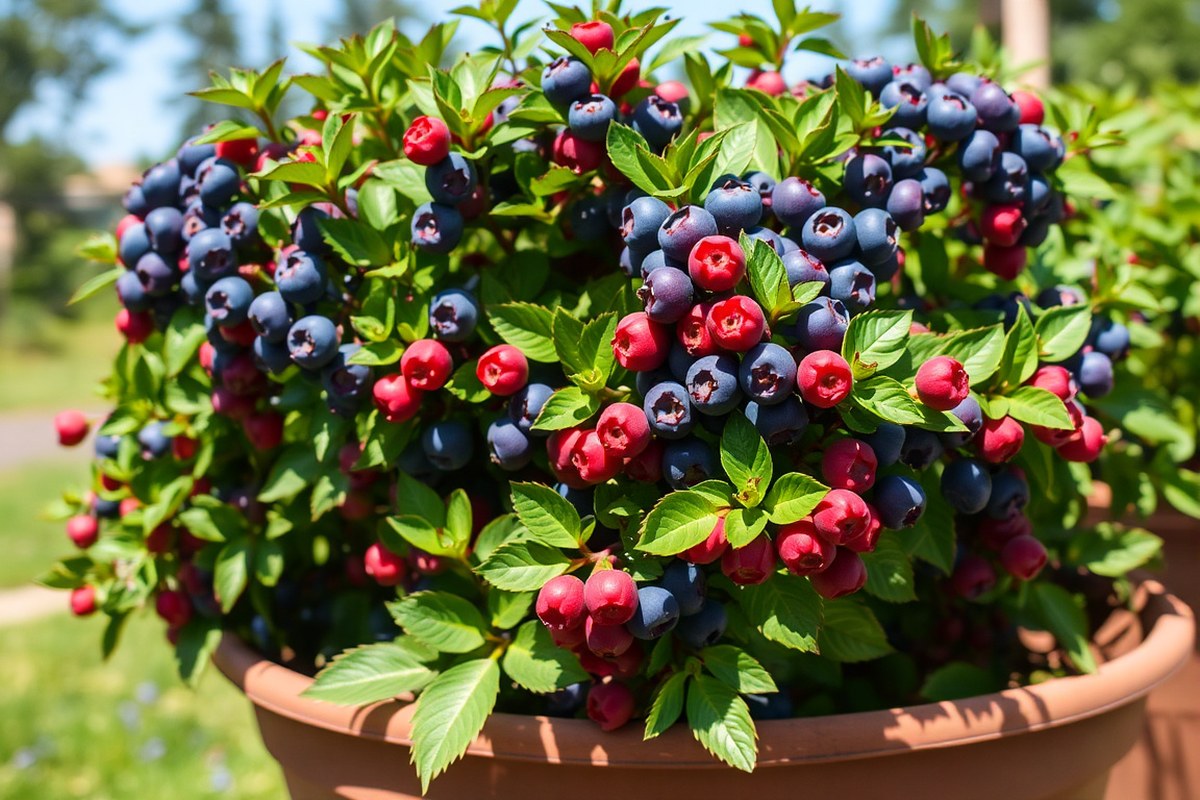
Growing blueberry plants in pots works if you care for them properly. Choose a container that measures at least 24 inches deep and between 24 to 30 inches wide. This size allows enough room for roots to spread and supports strong plant growth.
Pot-grown blueberries enjoy flexible placement, which is ideal if garden space is limited. However, containers dry out faster than ground soil, so consistent watering is essential. Using acid-forming fertilizer maintains suitable soil conditions and encourages fruit production.
Potted blueberry roots freeze more easily in winter than ground roots. You need to protect the roots to keep the plant healthy. Cover the pot or move it to a sheltered spot during cold months.
Adding insulation around pots or moving them to a sheltered spot can prevent cold damage. Container plants may outgrow their pots after a few years.
You will need to repot them to give roots more space. This is the main tradeoff to expect with potted blueberries.
Which Blueberry Varieties Are Best for Container Growing?
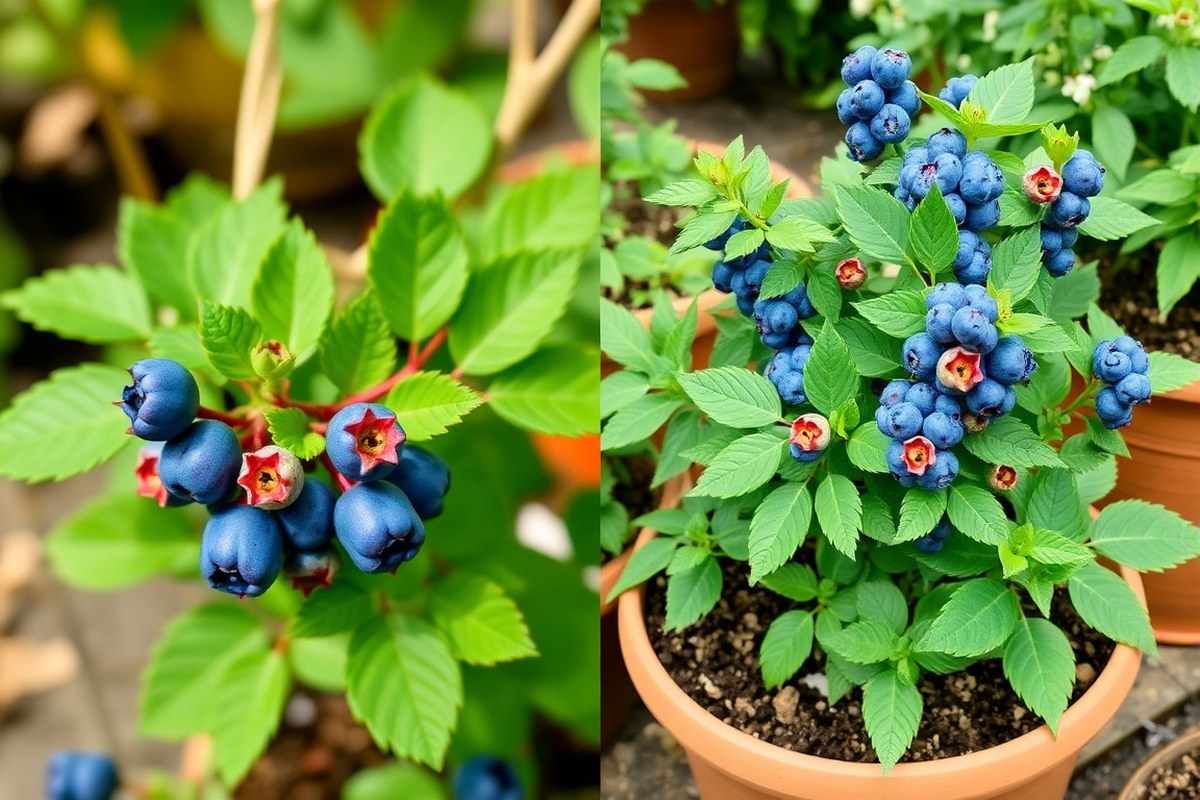
Not all blueberry varieties fit well in pots. Smaller, compact types suit container growing best.
Highbush varieties stay smaller and often perform better in colder zones. Rabbiteye types get taller and need bigger pots or ground planting in warmer areas.
The USDA hardiness zone for your area narrows your choices. A container plant should be hardy one to two zones colder than your zone. This extra tolerance helps it survive winter.
Low-chill varieties do well in warm places. High-chill types need cold winters to thrive.
Compact varieties with lower chill hours work better for containers. They suit places with mild winters or fewer outdoor cold days.
| Variety | Approximate Height (ft) | USDA Hardiness Zones | Chill Hours Required |
|---|---|---|---|
| Top Hat | 1-2 | 3, 7 | 800-1,000 (low) |
| Patriot | 3-4 | 3, 7 | 800-1,000 (moderate) |
| Legacy | 3-4 | 3, 7 | 800-1,000 (moderate) |
| Rabbiteye | 6-10 | 7, 9 | Less than 800 (low) |
| Jewel (Rabbiteye) | 6-8 | 7, 9 | Less than 800 (low) |
Patriot is a good semi-dwarf choice for pots. It tolerates slightly heavier soil than others. For small spaces or balconies, Top Hat stays very compact under 2 feet tall.
Legacy and Patriot suit colder climates and keep manageable sizes around 3 to 4 feet. Rabbiteye types grow well in large pots only. Use them if you live in zones 7 to 9.
Don’t plant a variety rated for your zone. Choose one rated colder by at least one zone.
Keep pot size in mind. A single blueberry bush needs a pot 16 to 20 inches wide. The pot should be 12 to 18 inches deep.
The right size means roots stay healthy and your bush grows well for several years. Use a container at least 18 to 24 inches wide if you want bigger varieties.
How to Choose and Prepare the Right Container
Blueberry plants need a wide, deep pot with good drainage and the right material. Young plants thrive in smaller containers.
Mature plants require larger ones to grow healthy roots. Choosing the right pot type and size helps keep moisture balanced and prevents root issues.
Recommended Pot Sizes by Plant Stage
Young blueberry plants like pots 12 to 16 inches wide and deep. These sizes give roots enough space to grow strong. Keep the pot size consistent while the plant is young.
This size lets roots spread without overwhelming you with a heavy pot. When your blueberry plant gets bigger, buy a bigger pot.
It should be at least 24 inches wide and deep. This gives roots enough room to spread out.
One plant per pot works best, giving roots enough room to spread out. A very large pot, about 30 inches in diameter or bigger, can hold two plants. Using containers saves space and looks nice.
Check that soil stays acidic and drains well. This stops roots from fighting for nutrients.
Best Pot Materials for Blueberries
Clay or terracotta pots hold moisture well but also allow air to reach the roots. They dry out faster in hot weather, so watering is more frequent. Plastic pots retain moisture longer but can overheat roots if left in direct sun too long.
Fiberglass or resin pots balance moisture retention and airflow well. They’re lighter than clay and don’t dry out too quickly. Consider the location and ease of moving the pot when picking the material.
- Clay/terracotta: good airflow, dries faster, heavier
- Plastic: retains moisture longer, lighter, may overheat roots
- Fiberglass/resin: balances moisture and air, lightweight, durable
- Wood (cedar or redwood): natural insulation, may break down over years
- Ensure material is food-safe and won’t leach chemicals
Look for pots that fit your space and climate to keep blueberry roots happy.
Drainage Requirements and Setup
Drainage holes are essential to keep soil from staying soggy and causing root rot. Pots must have several holes on the bottom. Use a smaller pot with drainage inside a decorative container without holes.
This helps prevent water buildup. It protects the plant’s roots from rotting.
Place a layer of gravel or broken pottery pieces at the bottom to improve drainage. Avoid simple saucers that trap water.
Improve the pot slightly with feet or blocks to let excess water escape. These steps keep roots oxygenated and healthy.
What Soil and pH Conditions Are Essential for Potted Blueberries?
Blueberries thrive in soil with a pH between 4.5 and 5.5. The soil must drain well while retaining some moisture. Use a potting mix made for acid-loving plants or create a custom blend yourself.
For DIY soil, mix equal parts peat moss, pine bark, and regular potting soil. Peat moss lowers pH and holds moisture.
Pine bark improves drainage and helps keep the soil acidic. Using this mix gives your plant the right conditions to thrive.
Checking and adjusting your soil’s pH is easy with a store-bought soil test kit. Keeping the right acidity in the soil is very important.
Blueberries struggle when the pH level goes above 5. Check soil pH to keep your plants healthy.5.
- Get a soil pH test kit. You can find these at garden centers for about $10 to $15.
- Collect a small soil sample. Take soil from your pot after mixing to get accurate results.
- Follow the test instructions. This usually means adding soil to a test tube and mixing with a solution.
- Read the pH level. Look for a value between 4.5 and 5.5 for healthy blueberries.
- Add amendments if needed. Use elemental sulfur or aluminum sulfate to lower pH if it’s too high. Start with one tablespoon per gallon of soil and retest after 2 weeks.
- Mix amendments well into the soil. Avoid just sprinkling on top to prevent uneven pH.
- Repeat testing every few months. This keeps soil acidity in the right range as blueberries use up nutrients.
- Top with acidic mulch. Add pine needles or bark chips yearly to keep moisture and acidity steady.
Replacing a third of the potting soil every two or three years helps maintain acidity. Avoid letting soil dry out or use garden soil. That can raise pH and cause root problems.
Using self-watering containers can keep moisture even, which blueberries like. Remember to keep your soil acidic along with good drainage to keep your potted blueberries happy.
Sunlight, Watering, and Fertilizing for Container Blueberries
Blueberries in pots need about 6 to 8 hours of sunlight daily. Position your container where it gets morning or afternoon sun, avoiding harsh midday rays. You can move the pot as the seasons change to keep sunlight steady.
Water potted blueberries thoroughly, keeping the soil moist but not soggy. During hot weather, this often means watering once a day. Water the plant until you see drainage from the pot’s holes.
This usually takes about 1 to 2 quarts of water. Make sure the water drains well.
Check the soil moisture by feeling the top inch. Your plant needs water when the soil feels dry.
Avoid letting the soil dry out completely, since blueberries suffer quickly from water stress. On cooler days, you can water every 2 to 3 days instead.
Use acidifying fertilizers to keep the soil pH between 4.5 and 5.5, which blueberries prefer. Urea-based fertilizers work well when pH is below 5.0, as they are gentler than ammonium sulfate. Apply fertilizer every 4 to 6 weeks during the growing season for best fruit production.
Slow-release or liquid fertilizers made for acid-loving plants are ideal. Follow the package instructions closely, as over-fertilizing can harm growth.
Stop feeding the plant in late fall when it goes dormant. This avoids new growth that could freeze.
Keep your blueberry container’s soil evenly moist and avoid letting it dry out completely between waterings.
Repotting and Pruning Blueberry Plants in Containers
Blueberry plants in pots need repotting every 2 to 3 years to stay healthy. Pruning also keeps them productive by removing old or weak branches. Timing and technique matter to get the best growth and fruit.
When to Repot Your Blueberry Plant
Repot your blueberry when roots fill the pot or the soil dries out quickly. This usually happens every 2 or 3 years. Spring is the best time, just before new growth begins.
Waiting longer can stunt growth and reduce fruit production. Repotting in early spring helps the plant recover fast after being moved.
Choosing the Next Pot Size
Move your blueberry to a pot that is 2 inches bigger in diameter. You can also use a pot up to 4 inches wider. Choose a size between 2 and 4 inches bigger than the old pot.
For example, if your pot is 10 inches wide, choose a 12 or 14-inch pot. This gives roots room to spread without too much extra soil.
Too large a pot can hold excess water and cause root rot. A pot with good drainage holes is important, no matter the size.
Pruning Techniques for Container Growth
Prune container blueberries in late winter to early spring before buds swell. Remove weak, old, or crowded branches to give room for new shoots. This keeps the plant healthy and encourages better fruiting.
Cut dead or damaged stems down to the base. Thin out about one-third of older wood each year. This maintains structure and air flow inside the shrub.
Follow these steps to repot your blueberry plant safely:
- Choose a healthy day in early spring for repotting.
- Water the plant a day before to reduce stress.
- Carefully remove the plant from its pot without breaking roots.
- Loosen the root ball gently and trim any dead or circling roots.
- Fill the new pot with acidic, well-draining soil suited for blueberries.
- Set the plant in the new pot at the same soil depth as before.
- Fill around roots with soil and press lightly to remove air pockets.
- Water thoroughly and place the pot in a sheltered, bright spot for recovery.
How to Protect Potted Blueberries in Winter
Yes, potted blueberry plants can survive outdoor winters if you protect their roots well. Roots freeze more easily in pots, so insulation and shelter matter a lot. Tailoring protection depends on your local USDA zone.
Assessing Your USDA Hardiness Zone
Knowing your USDA zone helps decide how much winter care your blueberry needs. For example, blueberries hardy to zone 4 survive Minnesota winters in the ground.
For pots, pick varieties rated one or two zones colder. This helps them handle colder temperatures outside your area.
Zones 6 and colder require more protection since roots freeze faster outside soil. Low chill varieties suit warmer zones like 9 or higher better.
Living in zone 3 or 4 means choosing hardy types. You also need extra insulation in winter.
Insulating Pots and Roots
Roots need insulation because pots don’t hold heat like soil in the ground. Without protection, roots can freeze and damage the plant. Wrap pots with bubble wrap, burlap, or foam sleeves to slow heat loss.
Adding mulch on top of your pot’s soil creates extra warmth. Place straw, pine needles, or shredded leaves over the soil layer. The soil itself acts as a natural insulator and keeps roots from sudden temperature swings.
- Wrap the pot with insulating material like bubble wrap or foam
- Cover the soil surface with mulch such as straw or pine needles
- Group pots together to reduce wind exposure and share heat
- Improve pots slightly to avoid cold ground contact and moisture build-up
- Water plants well before the first freeze to protect roots
Grouping pots shields them from wind chill and keeps soil temperatures steadier. Avoid letting soil dry out completely, since dry roots are more vulnerable. These simple steps limit root freeze risks and keep plants healthy through winter.
Indoor and Outdoor Overwintering Options
In zones 6 or colder, moving pots to a sheltered spot is key. A cold, unheated garage or porch near your house can protect roots from harsh wind. In Minnesota zone 4b, many gardeners store blueberries indoors when dormant.
Keep potted blueberries dormant by stopping fertilization and reducing water. Ensure the chosen indoor spot stays cool but above freezing (around 32, 40°F). Avoid warm, heated rooms that might shock plants out of dormancy.
For milder climates, leaving the plant outside with good insulation may suffice. Winter protection depends on your zone and plant hardiness. Extra shelter and insulation protect roots from freezing.
This helps plants grow better in spring. It’s better to add a bit too much than too little.
Common Mistakes and Troubleshooting Potted Blueberry Plants
| Problem | Symptom | Fix |
|---|---|---|
| Overwatering | Yellow leaves, wilting, soggy soil | Let soil dry slightly; water only when top inch feels dry |
| Underwatering | Dry, brittle leaves; leaf drop; soil pulling away from pot edges | Water deeply until it drains out; check soil moisture daily |
| Planting too deep | Stem softness, rot near soil line | Plant root crown just below soil surface, not buried |
| Incorrect soil pH | Pale leaves, slow growth | Use acidic fertilizer; aim for pH 4.5 to 5.5 |
| Nutrient deficiency | Leaf yellowing, poor fruit production | Apply acidic fertilizer regularly, follow product’s NPK label |
| Pests | Chewed leaves, visible insects | Inspect plants often; remove bugs by hand or use safe insecticidal soap |
Water troubles are the top issue with blueberry plants in pots. The soil dries out quicker in pots than in the ground. Check moisture daily.
Water only when the top inch feels dry. Avoid watering if soil is still moist. Avoid letting water sit in the pot base to stop root rot.
Planting depth is also critical. The root crown must sit just below soil surface.
Planting too deep causes stem rot and kills young plants. Checking the planting depth right after potting saves problems later.
Water blueberries only when the soil surface feels dry. Avoid watering on a fixed schedule. Check soil before watering.
You can tell plants need care when leaves turn yellow, wilt, or drop suddenly. These signs often point to watering or nutrient problems. Using a well-balanced acidic fertilizer helps keep the soil pH between 4.5 and 5.5, the range blueberries need to absorb nutrients well.
Watch soil acidity in pots to keep plants healthy. Use acid-loving nutrients like ammonium sulfate. Try fertilizers made for blueberries.
Poor leaf color or slow growth means adjust your fertilizer. Increase or change nutrients to improve plant health. Pest checks should be routine, as insects can harm container plants quickly.
Step-by-Step Action Plan for Growing Blueberries in Pots
Follow these steps to start your container blueberry garden and keep it healthy. Check your plant’s progress as you go.
- Before you start: Pick a dwarf or compact blueberry plant. Use a pot that’s at least 18 inches wide. This size supports good root growth and fruit production.
- Week 1: Fill your container with acidic soil mixed with peat moss or pine bark. Test pH to ensure it stays between 4.5 and 5.5 for best results.
- Week 2: Plant your blueberry, burying roots but not stem. Water immediately until soil feels moist but not soggy.
- Month 1: Place the pot in full sun, at least 6 hours daily. Check soil moisture every 2 to 3 days and water when the top inch feels dry.
- Month 2: Begin feeding with an acid-loving plant fertilizer, following label amounts. Watch for healthy new leaf growth to confirm proper feeding.
- After 6 months: Prune any dead or thin branches to improve air circulation. This helps prevent diseases and encourages better fruit yield.
- Seasonal: Keep your pot safe in winter. Move it to a sheltered spot or wrap the container. Avoid freezing roots while allowing cold dormancy.
Frequently Asked Questions
Can Blueberry Plants Be Grown in Pots?
Yes, blueberry plants grow well in pots if you choose the right size container. They need good drainage and acidic soil to thrive.
What Size Pot Is Best for Growing Blueberries?
A mature blueberry plant needs a pot at least 24 inches deep and 24-30 inches wide. This size supports root growth.
How Often Should I Water Blueberry Plants in Pots?
Water your potted blueberry plant regularly to keep the soil moist but not soggy. Overwatering can cause root problems.
Can I Grow Large Blueberry Varieties in Containers?
Yes, many regular blueberry varieties do well in large pots around 24 inches in diameter. They need enough space for roots.
Do Blueberry Plants Need Special Soil in Pots?
Blueberries need acidic, well-draining soil with a pH around 4.5 to 5.5. Use peat moss or acidic potting mix for best results.
How Do I Protect Potted Blueberries from Winter Cold?
Insulate the pot and move it to a sheltered spot to protect roots from freezing. Container roots freeze easier than ground roots.
Wrapping Up
Growing blueberries in pots takes attention but pays off with fresh fruit. Watch your plant’s needs closely year-round. Start today by picking the right variety and container for your space.