What Cypress Means: Trees and Testing Explained with Key Comparisons
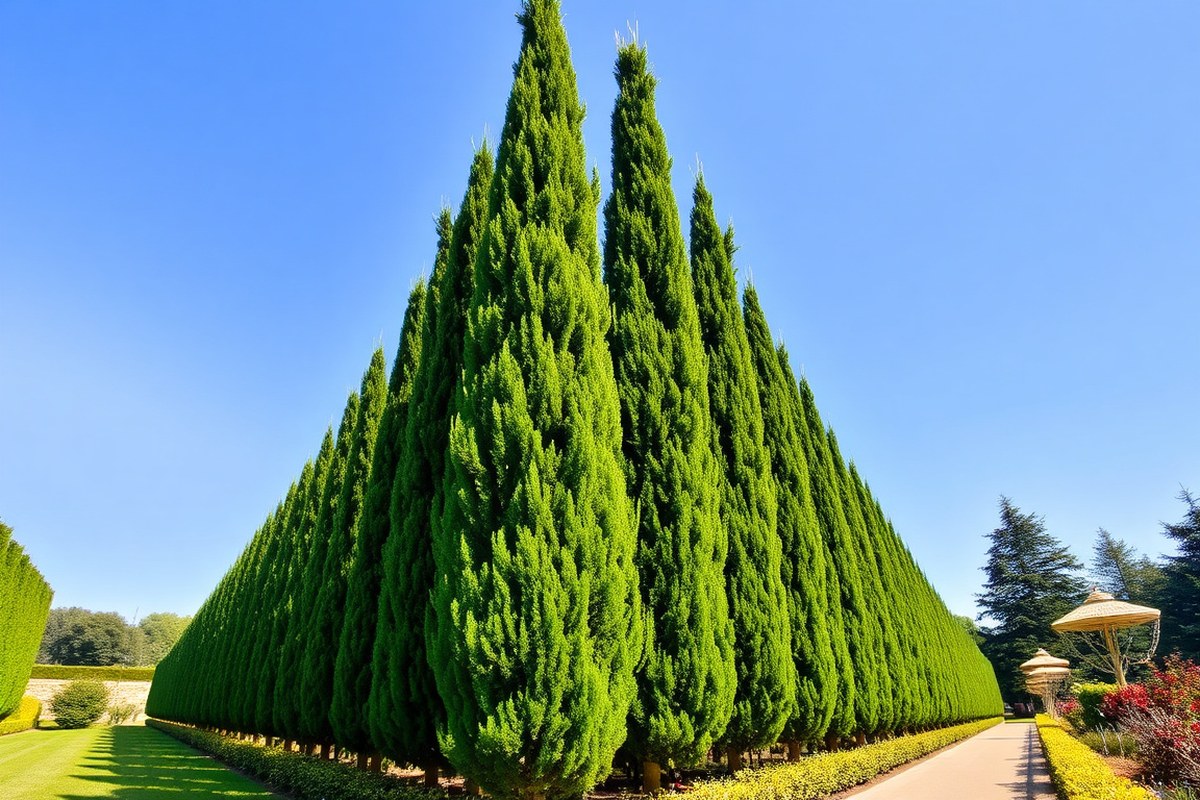
Cypress can refer to a type of tree or a software testing tool. Cypress trees vary from small shrubs to tall trees up to 150 feet.
The testing tool is a framework that helps web developers automate their code tests. Developers use it to save significant time and effort.
Cypress trees grow in diverse environments, including swamps and poor soils. They serve many purposes like lumber, mulch, or landscaping.
The testing framework uses built-in commands that cover about 90% of common coding needs. It also supports major web browsers for cross-browser testing.
Which cypress matters depends on your goal. Select a tree suited for your climate and yard size.
Learn key Cypress commands and practice to build fast, reliable tests. This boosts your code’s quality and efficiency.
Key Takeaways
- Cypress trees include more than 20 species, ranging from small shrubs to tall giants.
- The Leyland Cypress grows fast, reaching 50 feet in just 15 years.
- Plant cypress trees 6 feet from walls to protect building foundations.
- About 47% of cypress trees are processed into mulch rather than lumber.
- Cypress testing uses built-in commands covering 90% of common test scripts.
- Cypress 4.0 supports Firefox (beta) and Microsoft Edge for cross-browser tests.
What Is Cypress? Defining the Tree and the Testing Tool
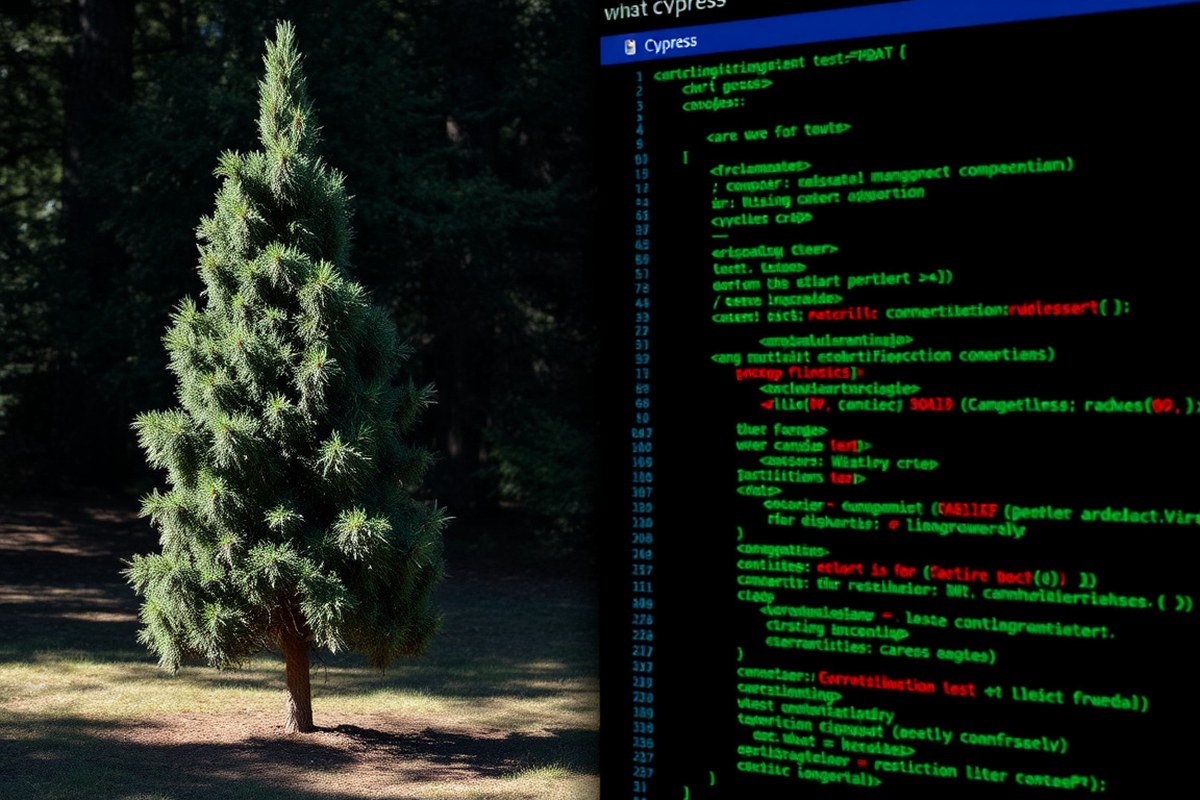
Cypress refers to two very different things depending on the context. In botany, it is a genus of trees known as Cupressus, with about 22 species worldwide. These trees can grow tall, reaching 60 to 100 feet.
They thrive in many climates. You often find them in swamps or on rocky hills.
As a tree, cypress is recognized for its scale-like leaves and hardy nature. It has survived over 65 million years, making it one of the oldest tree species. Gardeners and landscapers often confuse it with similar trees like false cedars due to similar foliage.
In software and technology, Cypress is a modern automated testing framework. It is open-source and uses JavaScript to test web applications from start to finish. Developers like Cypress for its ability to run tests directly inside a browser, speeding up debugging.
The testing tool Cypress is often chosen for end-to-end testing of modern web apps. It works differently from older tools like Selenium. Cypress focuses on smoother developer experience.
It also gives faster feedback. Teams use it to catch bugs early by writing tests in familiar JavaScript.
Despite sharing the same name, the tree and the testing tool have no direct relationship. The name overlap can cause confusion for those new to either field. Think of Cypress the tree as growing in nature.
Cypress the software lives in the world of code. They share a name but are very different.
Understanding which Cypress you mean depends on your conversation. When talking landscaping or gardening, it means the stately evergreen tree. In coding, Cypress means a testing tool developers depend on.
It helps check how web apps perform. You use it to find bugs early.
Key Cypress Tree Types and How to Identify Them
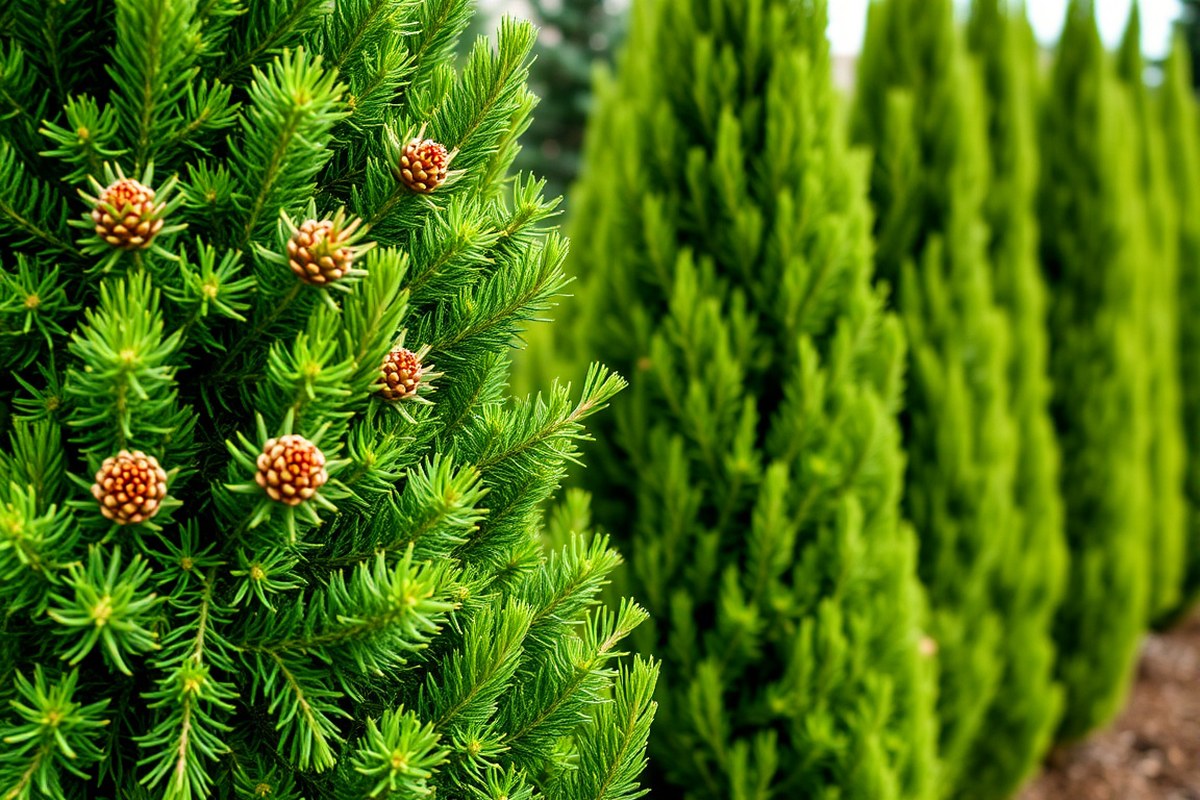
Cypress trees come in different species that you can spot by their leaves, bark, and shape. Common types include Italian, Leyland, Arizona, and Chinese Weeping cypress.
Knowing these helps you pick the right tree for your garden. It also helps you identify one in the wild.
Italian Cypress Characteristics
Italian cypress trees are tall and very narrow, often called “pencil cypress.” Their dark green, scale-like leaves grow close to the branches.
They have smooth, gray bark that becomes slightly furrowed as they age. These trees are native to the Mediterranean region and thrive in dry, hot climates.
Italian cypress is popular in landscaping because it grows straight up. This feature makes it great for borders or tight spaces.
They tolerate full sun and require little water once established. The shape and color make them distinctive in formal gardens and Mediterranean-style yards.
Leyland Cypress Growth and Uses
Leyland cypress grows fast, adding 2 to 4 feet annually in its first years. It has bluish-green, scale-like leaves and dense foliage.
The bark is reddish-brown and fibrous, peeling off in strips. Native to the U.S., it’s widely used in landscaping as a privacy screen or windbreak.
It adapts well to poor soils and can grow in full sun or partial shade. Leyland cypress is a go-to for quick green barriers in yards or commercial landscapes. The fast growth means you see results in a few years, unlike slower trees.
Other Notable Cypress Species
Arizona cypress features bluish-gray leaves that are scale-like but sharper in texture. Its bark is reddish and peels in thin strips. This species is native to the southwestern US and Mexico, preferring dry, rocky soils.
Chinese Weeping cypress is known for its drooping branches covered in fine, feathery leaves. The bark is grayish-brown and rough, creating a weeping appearance. This tree stands out in gardens for its elegant, graceful look.
Bald cypress is unique as a deciduous conifer. It has needle-like leaves that fall annually and gray, fibrous bark.
You’ll find it native to wet areas like swamps in the southern US. It can handle wet soil conditions better than other cypresses.
Below is a comparison table to help you spot key differences between popular cypress species.
| Species | Leaf Type | Bark Description | Native Region | Common Landscaping Use |
|---|---|---|---|---|
| Italian Cypress | Dark green, scale-like | Smooth to slightly furrowed, gray | Mediterranean | Formal borders, narrow spaces |
| Leyland Cypress | Bluish-green, scale-like | Reddish-brown, fibrous, strips | U.S. (hybrid) | Privacy screens, fast growth |
| Arizona Cypress | Bluish-gray, sharp scale-like | Reddish, peeling thin strips | Southwestern U.S. And Mexico | Drought-resistant landscapes |
| Chinese Weeping Cypress | Feathery, drooping | Grayish-brown, rough | China | Ornamental, elegant gardens |
| Bald Cypress | Needle-like, falls annually | Gray, fibrous | Southern U.S. Swamps | Wet soil areas, water gardens |
Each species has unique leaves, bark, and growth habits that make identification easier. Use these traits side by side for the best chance at recognizing your cypress tree type.
Check leaves closely: scale-like vs needle-like leaves help separate many cypress species quickly.
What Are the Uses and Properties of Cypress Wood?
Cypress wood is valued for its stability and moderate strength. Its Janka hardness rating is 510 lbf. This makes it softer than many hardwoods.
Still, it’s durable enough for outdoor use. Cypress resists rot well, thanks to natural oils in the wood. So it stands up to moisture and insects better than many other woods.
Because of these qualities, cypress is used for outdoor furniture like garden chairs and patio tables. People also use it for shed benches and other projects exposed to weather. Cypress resists rot and has moderate hardness.
This makes it good for outdoor work. It fits where durability matters but not extreme hardness.
Cost-wise, cypress falls on the lower end compared to many domestic hardwoods. Most hardwoods cost between $5 and $15 per board foot. Cypress is usually more affordable because it grows slower.
It’s also widely available. However, price changes based on location and supply. Choosing cypress can save money while still offering reliable outdoor performance.
Here is a table. It compares key wood traits and costs. It shows cypress versus common domestic hardwoods.
| Wood Type | Janka Hardness (lbf) | Rot Resistance | Typical Cost ($/board foot) | Common Uses |
|---|---|---|---|---|
| Cypress | 510 | High (naturally rot-resistant) | Lower (below $5-$10) | Outdoor furniture, shed benches, patio tables |
| Oak | 1290 | Moderate | $6-$12 | Furniture, flooring, cabinetry |
| Maple | 1450 | Low | $7-$15 | Indoor furniture, cabinetry |
| Cherry | 950 | Low | $8-$14 | Fine furniture, trim |
Cypress wood has lower hardness. This means it can dent or scratch easier. Oak or maple hold up better.
Still, its moisture resistance adds value not found in many hardwoods. For projects expecting rain or ground contact, cypress performs better over time. It’s also easier to work with and weights less than harder woods.
Using cypress wood involves planning for its softer surface, especially if your project sees heavy use. Finishing with outdoor sealants can help improve wear resistance. Cypress costs less and lasts naturally long.
It’s a solid pick for good lifespan. You don’t pay premium hardwood prices.
How Does Cypress Testing Work? Core Features and Workflow
Cypress testing works by running your tests directly inside a real browser. It uses a special setup to run your app and test together. Both run in the same event loop.
This helps tests run smoothly and quickly. This setup helps avoid timing issues and makes test results fast and consistent.
Installing and Setting Up Cypress
Start by installing Cypress with npm, which is how you manage JavaScript packages. Installation takes just minutes and requires Node.js installed on your computer. Once installed, setting up the basic folder structure helps keep your tests organized.
The setup steps are:
- Open your project folder in a terminal or command prompt.
- Run
Npm install cypress --save-devto add Cypress as a development dependency. - Wait for the installation to finish, usually within a minute.
- Create a folder called
Cypress/e2e/to hold your test specification files. - Open Cypress with
Npx cypress opento launch the interactive test runner. - Explore the example tests Cypress provides to understand its suite layout.
Writing Your First Test Script
Test scripts use Cypress commands like Cy.visit() to load pages and Cy.get() to select page elements. Writing tests involves chaining these commands to simulate user actions and verify outcomes. Here’s a simple test example that visits a webpage, types a query, and checks the results:
Describe(‘Search Test’, () => { it(‘must find results on search’, () => { cy.visit(‘https://example.com’) cy.get(‘input[name=”q”]’).type(‘cypress{enter}’) cy.get(‘.results’).should(‘contain’, ‘cypress’) }) })
This script opens the site and types in the search box. Then it presses enter. Finally, it checks that the results include the search word.
Running Tests and Viewing Results
Cypress offers two main ways to run tests: an interactive mode and a headless mode. The interactive runner shows each command executing live next to your application in a browser window.
You run tests interactively by typing Npx cypress open, then clicking your test file. Use Npx cypress run for automated continuous integration.
It runs tests without showing a browser window. Test results appear in the terminal.
Watch test commands execute in real-time to spot failures quickly. Cypress’s same run loop design ensures tests don’t flake or fail randomly. Common commands you’ll use:
Cy.visit(url)– loads web pagesCy.get(selector)– finds page elements.type(text)– simulates typing.click()– clicks buttons or links.should(assertion)– asserts expected conditions
Advantages and Limitations of Using Cypress for Testing
Cypress offers faster test execution because it runs directly inside the browser. This lets you see live actions and get instant feedback during tests. Automatic waiting and retrying assertions reduce flaky tests and simplify scripts.
Its built-in tools help debug failures with visual snapshots and detailed logs. Cypress also detects accessibility issues automatically while tests run, saving time on manual checks. These benefits speed up continuous integration and delivery cycles.
- Fast test execution inside the browser
- Automatic waiting and retrying assertions
- Built-in debugging with snapshots and logs
- Automatic accessibility violation detection
- Simple setup with clear, readable test scripts
- Limited support for browsers like IE and Safari
- Not suitable for native mobile app testing
On the downside, Cypress only supports modern browsers like Chrome, Firefox, and Edge. It misses older browsers, Safari, and Internet Explorer, limiting cross-browser testing scope. You may still need tools like Selenium or HeadSpin for broad coverage.
Scalability can challenge Cypress in large projects. Running tests in parallel on cloud services, like TestMu AI, helps speed up results.
Also, Cypress requires caution with asynchronous JavaScript or complex page loads. Avoid hardcoded waits and rely on built-in automatic waiting instead.
Don’t use fixed sleep timers in Cypress tests. Trust its retry and wait features to prevent flaky results.
Common problems include selecting dynamic elements and timing issues. Use Cypress commands like Cy.get() with clear selectors and chain assertions to keep tests stable.
When tests fail intermittently, rerun them with Cypress Cloud to capture full test execution details. That makes debugging faster and easier.
Comparing Cypress Testing with Selenium: Which to Choose?
Cypress and Selenium differ significantly in how they run tests. Cypress runs inside the browser and controls events at the network and DOM level.
Selenium uses a WebDriver that communicates with the browser externally. This makes Cypress faster but limits its browser support and test scenarios.
Selenium supports many languages like Java, Python, Ruby, and C#. Cypress only supports JavaScript and TypeScript.
For browser support, Cypress works with Chrome, Firefox (beta), Edge, and Electron by default. Selenium covers all major browsers including Safari and Internet Explorer.
| Feature | Cypress | Selenium |
|---|---|---|
| Architecture | Runs inside browser, controls app directly | Uses WebDriver for external control |
| Languages Supported | JavaScript, TypeScript | Java, Python, C#, Ruby, others |
| Browser Support | Chrome, Edge, Firefox (beta), Electron | Chrome, Firefox, Edge, Safari, IE |
| Setup Complexity | Quick setup with built-in test runner | Requires drivers, more configuration |
| Speed | Fast, real-time reloads and debugging | Generally slower, external communication |
| Use Case | Modern web apps, fast feedback loops | Cross-browser, multiplatform testing |
Cypress is best if you work mostly in JavaScript. It tests modern web apps on Chrome or Edge.
Its fast feedback loop speeds up development. Choose Selenium if you need broader language options or to test on Safari or Internet Explorer.
For large projects requiring parallel tests across many browsers, Selenium remains the practical choice. Its support for native mobile app testing through Appium also makes it suitable for mobile scenarios. Cypress lacks native mobile and multi-tab support.
Install Cypress’s npm package to try a simple test. Next, open the test runner in your browser.
For Selenium, you should install language-specific WebDriver bindings and browser drivers. Test speed and setup depend on your project’s scale and browser needs.
How to Plant and Care for Cypress Trees Successfully
Planting and caring for cypress trees requires picking the right site, proper watering, and regular pruning. These trees grow best in soils that drain well. They also need enough space to grow healthy roots.
Space helps branches develop properly. Following clear steps helps your cypress thrive for years to come.
Preparing the Planting Site
Choose a site that gets full sun to part shade and has soil with good drainage. Cypress trees adapt to many soil types.
Avoid areas where water pools after rain. Standing water can harm their growth.
Digging the hole correctly helps the tree settle well. Dig a hole wider than the root ball.
The hole should not be deeper than the root ball. This stops roots from suffocating.
- Pick a location that gets at least 6 hours of sunlight daily.
- Test soil drainage by digging a hole about 12 inches deep.
- Fill the hole with water and see if it drains within 24 hours.
- Dig a planting hole twice as wide as the root ball but just as deep.
- Loosen soil around the hole’s edges to encourage root spread.
- Remove the cypress from its container carefully, keeping roots intact.
- Put the tree in the hole carefully. Make sure the top of the root ball stays level with the ground.
- Fill in with soil and firmly press it down to eliminate air pockets.
Watering and Fertilizing Guidelines
Water young cypress trees regularly to keep the soil moist but not soggy. Established trees need less frequent watering, except during dry spells.
A slow-release fertilizer with balanced nitrogen, phosphorus, and potassium supports steady growth. Apply in early spring for the best effect. Mulching around the base retains soil moisture and protects roots from temperature swings.
Pruning and Spacing Best Practices
Plant cypress trees at least 10 to 15 feet apart. This gives each tree room to grow fully. Crowded trees have weaker branches and slower growth.
Prune annually during late winter or early spring to remove dead branches and shape the tree. Avoid heavy pruning to keep the natural form. Regular pruning improves air circulation and sunlight reach, reducing disease risks and encouraging strong growth.
Popular Cypress Essential Oils and Medicinal Uses
Cypress essential oil is commonly used for its muscle pain relief and calming effects. It contains antimicrobial properties that help reduce bacteria and inflammation. These qualities make it a popular choice in skincare and wellness routines.
People often use a few drops of cypress oil. They dilute it in carrier oil. It goes on sore muscles or joints.
Its astringent properties can tighten skin and reduce excess oil, benefiting oily and acne-prone skin types. You can also add it to diffusers for a refreshing and soothing aroma that promotes relaxation.
Always dilute cypress oil with a carrier oil. Use jojoba or almond oil about 2% to 5%. This helps keep it safe for skin.
Avoid using it near sensitive areas like eyes and mouth. Pregnant or breastfeeding women should consult a healthcare professional before using essential oils.
Cypress oil mixes well with lavender, eucalyptus, or peppermint. These blends boost its therapeutic effects. You can try different combinations.
Store the oil in a cool, dark place to preserve its potency. A 10 ml bottle of cypress oil costs about $10 to $20. The price depends on its quality and source.
Test cypress oil on a small skin patch first. This checks for allergic reactions before applying more. Always do this safety step.
Step-by-Step Action Plan for Using Cypress Tree and Testing Tool
Follow this plan to start growing cypress trees and testing with Cypress effectively. Take clear steps and check your progress as you go.
- Before you start: Choose the right cypress species for your climate and soil. Success looks like healthy young trees suited to your land.
- Week 1: Set up Cypress testing on your project by installing it via npm. Confirm setup with a successful test run on a sample app.
- Week 2: Plant your cypress tree saplings in well-drained soil with enough sunlight. You’ll know it worked if the saplings do not wilt or droop.
- Week 3: Begin writing simple end-to-end Cypress tests focusing on critical user flows. Check if tests run smoothly without errors to confirm.
- Month 1: Water and mulch your cypress trees to keep them moist but not soggy. Watch for steady growth as a sign of good care.
- Month 2: Add authentication or API tests in your Cypress suite for more coverage. Success means tests detect issues early in development.
- Ongoing: Prune your cypress trees yearly to maintain shape and remove dead branches. The tree should stay healthy and well-shaped.
- Ongoing: Update Cypress regularly and review test results to catch bugs fast. Reliable passing tests show you have stable code.
Frequently Asked Questions
What Makes Leyland Cypress a Good Choice for Fast Privacy Hedges?
Leyland Cypress grows 2 to 4 feet per year, reaching 20 feet quickly. It handles poor soil well.
It also adapts to different light levels. This makes it great for quick, tall privacy screens.
Does Cypress Wood Resist Insects Better Than Other Softwoods?
Cypress wood contains natural oils that help repel some insects and resist decay. This makes the wood durable for outdoor projects. But in very wet or buggy areas, treated wood may still be needed.
Can Cypress Testing Run Automated Tests on Mobile Browsers?
Cypress mainly supports desktop browsers but can be run on mobile browsers through browser emulation. True native mobile testing requires other tools designed for mobile platforms.
How Long Does It Usually Take to Install Cypress Testing in a New Project?
Installing Cypress Testing takes about 10 minutes using npm or yarn package managers. After setup, you can write your first test with its easy-to-understand commands.
Why Is Cypress Considered Easier for Beginners Than Selenium?
Cypress uses inbuilt commands for 90% of coding, which are simple to learn. Its interface shows test runs visually, helping new users understand what happens during tests.
Are Cypress Trees Evergreen or Deciduous?
Most cypress trees are evergreen, keeping their needles all year. This makes them great for year-round privacy and windbreaks in gardens and landscapes.
Final Thoughts
Cypress has practical uses whether you are a gardener or a developer. Start by choosing your focus, either on trees or testing tools. Dive in with small steps and build your skills as you go.