How Much Does a Bag of Mulch Weigh: A Complete Guide to Types, Sizes & Transport
How much does a bag of mulch weigh? It depends on the type and moisture.
Most dry mulch bags weigh between 20 and 40 pounds. But some can be heavier.
Organic mulch soaks up water, making wet bags weigh over 50 pounds. A 2 cubic foot wood mulch bag usually weighs 20 to 40 pounds dry but can increase after rain. Rubber and mineral mulches often start near 40 pounds dry.
Knowing the weight helps you plan transport and avoid injuries. Use tools or teamwork for heavy bags. Always check bag size and moisture to prevent surprises when loading your vehicle.
Weight affects how many bags you can carry in one trip. Multiply the weight if you buy several bags, so plan carefully. Store bags off the ground to keep them drier and lighter.
Key Takeaways
- Dry wood mulch bags typically weigh between 20 and 40 pounds.
- Organic mulches can gain weight when wet, sometimes doubling.
- Light mulches like straw usually weigh 11 to 25 pounds per bag.
- Rubber mulch bags are heavier, around 35 to 90 pounds depending on size.
- Check the bag’s cubic feet to estimate weight better and coverage.
- Plan your vehicle loading based on mulch weight to avoid overloading.
How Much Does a Standard Bag of Mulch Weigh?
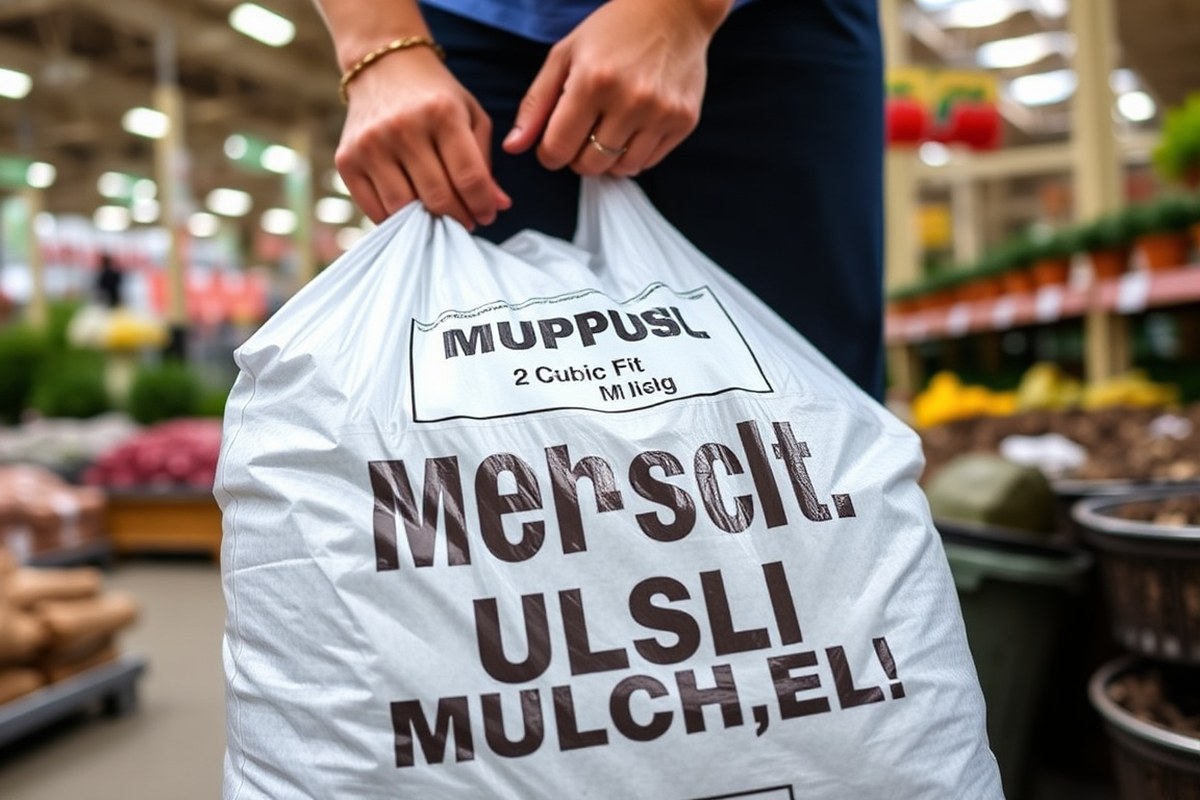
A standard bag of mulch usually weighs between 20 and 40 pounds when dry. Most common bags hold 2 cubic feet of mulch. Shredded hardwood mulch weighs about 22 pounds per bag.
Pine bark nuggets come in bigger 3 cubic foot bags. Each bag weighs about 24 pounds. It’s lighter per cubic foot than hardwood.
Smaller bags, like a 1 cubic foot size, weigh about half as much. A 1 cubic foot bag of compost mulch can weigh 35 to 44 pounds. Denser materials pack more weight into less space.
Rubber mulch bags usually hold 2 cubic feet. They can weigh up to 32 pounds dry. This is heavier than wood mulch.
Straw mulch is among the lightest options. A 2 cubic foot bag weighs 11 to 20 pounds. On the heavier side, rubber mulch bags can approach 90 pounds for the same volume.
Hardwood and pine bark mulch weigh between 20 to 25 pounds. This is normal for a 2 cubic foot dry bag.
These differences come from the mulch material and density. Hardwood mulch, being dense and shredded, weighs more per bag than the fluffier pine bark nuggets.
Rubber mulch weighs more because it’s denser and doesn’t absorb moisture. Straw mulch generally weighs less due to its light and airy texture.
How Mulch Type and Moisture Affect Bag Weight
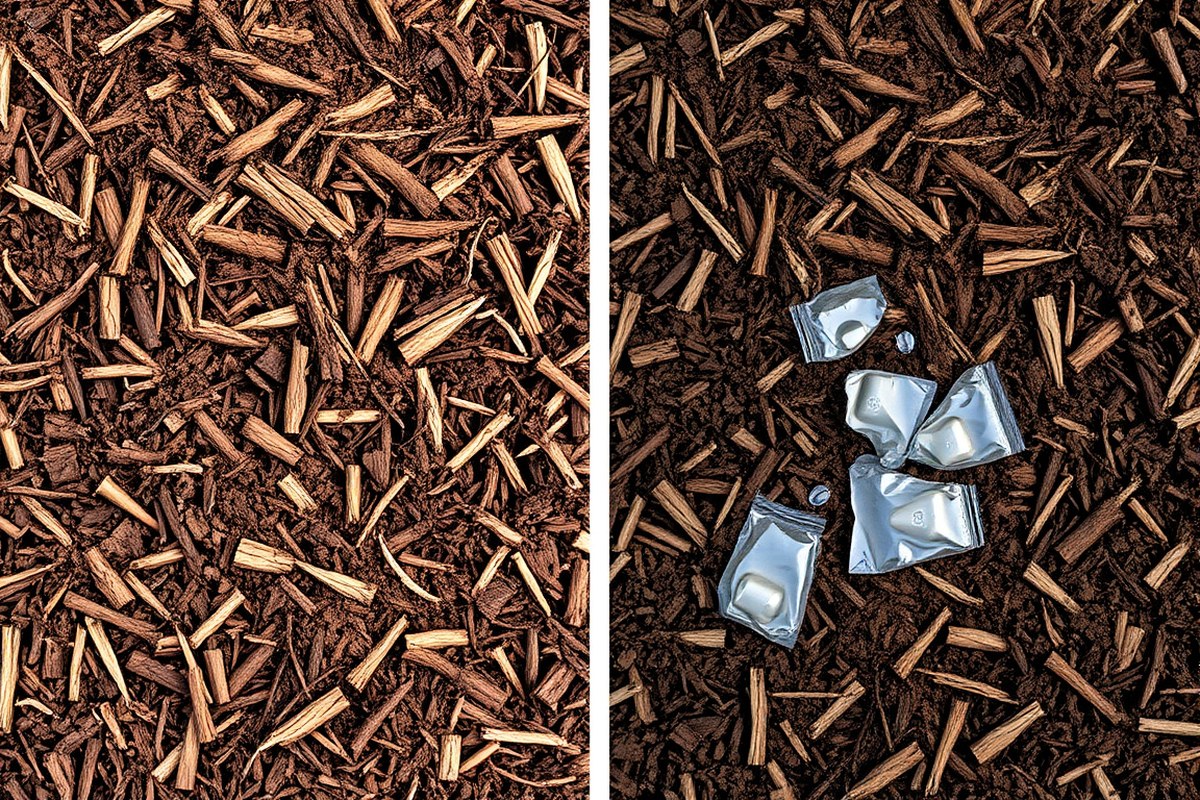
Mulch weight changes a lot with moisture because organic materials soak up water. Wood mulch can double its weight when soaked after rain or long outdoor storage. This makes a bag that normally weighs 20 pounds jump well over 40 pounds when wet.
Organic mulches like shredded wood absorb water easily. This causes more weight variation than rubber or stone mulches.
Rubber mulch stays about the same weight because it doesn’t absorb water. So a bag will have less fluctuation.
You can tell mulch is wet if the bag feels heavier. It also looks darker and sticks together in clumps. These signs show the mulch has absorbed moisture.
Wet mulch also feels cooler and sometimes smells earthier compared to dry mulch. These signs help you estimate if mulch has gained water weight before lifting or loading it.
| Mulch Product | Dry Weight | Wet Weight |
|---|---|---|
| Timberline Wood Mulch (2 cu ft) | 21, 38 lbs. | 40, 75 lbs. |
| Vigoro Premium Wood Mulch (2 cu ft) | 34 lbs. | 45, 68 lbs. |
| Vigoro Premium Rubber Mulch (.8 cu ft) | 40 lbs. | N/A |
| Vigoro Premium Rubber Mulch (1.5 cu ft) | 85 lbs. | N/A |
| Vigoro Decorative Stone Red Lava (.5 cu ft) | 18 lbs. | N/A |
The dry-to-wet weight ratio for wood mulch is about 2:1. This means a wet mulch bag weighs twice as much as dry. Expect much heavier bags if the mulch is wet.
In contrast, rubber mulch and stone mulches usually have no significant weight change from moisture. They are more stable choices when you want consistent weight.
Always check mulch for rain exposure when buying or picking it up. Humid storage can also make mulch wet. Look for moisture signs on the bag before buying.
That moisture adds weight and could affect how much you can safely carry in one trip. A wet 2-cubic-foot bag of wood mulch can weigh about 70 pounds.
Dry mulch this size usually weighs near 20 pounds. Wet mulch packs a lot more water weight.
Always lift mulch bags carefully and test the weight first. Wet bags can be twice as heavy as dry ones.
Common Mulch Bag Sizes and Their Coverage
Mulch bags come in common sizes that vary in volume and weight. Each size covers different yard areas depending on the depth you apply. Knowing this helps you buy the right amount without guesswork.
Standard Bag Sizes Explained
Mulch bags are mostly sold in volumes between 0.8 and 2 cubic feet. The smallest typical bag is about 0.8 cubic feet, often rubber mulch, and weighs more per volume.
Standard wood mulch bags usually come in 1.5 and 2 cubic feet sizes. Larger bags hold more volume but also vary in weight by mulch type and moisture level.
Larger bags do not always mean heavier weight. For example, a 2 cubic foot wood mulch bag weighs roughly 40 pounds dry.
Rubber mulch at 0.8 cubic feet can weigh 35 pounds or more. Dry wood mulch bags offer lighter weight with more volume than rubber mulch bags.
Mulch Coverage by Depth and Area
Coverage depends on how deep you spread mulch. Most gardeners apply mulch 2 to 3 inches deep.
Thickness keeps soil moist and controls weeds properly. So it affects how many bags you need.
To estimate coverage, convert square footage and depth to cubic feet. A 1-inch depth equals 0.083 feet.
Multiply your bed’s square footage by this number for volume. Then divide by bag cubic feet to get bags needed.
For example, a 35-square-foot bed at 2 inches deep requires about 5.8 cubic feet of mulch. A 2 cubic foot bag covers roughly 34 to 70 square feet depending on depth.
| Bag Volume (cu ft) | Approximate Weight (lbs) | Coverage Area (sq ft) at 1 inch depth | Coverage Area (sq ft) at 2 inch depth | Coverage Area (sq ft) at 3 inch depth |
|---|---|---|---|---|
| 0.8 (Rubber) | 35 | 10 | 5 | 3.3 |
| 1.0 (Wood) | 20 | 12 | 6 | 4 |
| 1.5 (Wood) | 30 | 18 | 9 | 6 |
| 2.0 (Wood) | 40 | 24 | 12 | 8 |
Keep in mind the coverage shrinks as you increase depth. Deeper mulch needs more volume and bags. This table offers rough coverage counts for common mulch bags at popular depths.
Weight vs Volume: What Matters Most?
You pay for mulch volume, not weight, but weight affects handling and transport. Wet mulch bags weigh more because of water content. This adds extra pounds but doesn’t add coverage.
Volume tells you how much ground the mulch covers. Weight guides you on lifting and moving. A 2 cubic foot wood mulch bag weighs about 40 pounds dry.
If wet, that same bag can weigh up to 70 pounds. Weight can vary a lot but coverage stays based on volume.
Large bags mean more mulch volume but not always heavier bags. Rubber mulch weighs more per bag than wood mulch in smaller volumes. Choose bag size based on your space, how far you carry bags, and bed coverage needs.
How to Calculate Total Mulch Weight for Your Project
Begin by measuring the area and setting the depth for your mulch. Then, convert these numbers into volume and find how many bags you need. Finally, adjust for the type of mulch and its moisture to get an accurate total weight.
Measure Area and Determine Desired Depth
First, measure the length and width of the area where you’ll spread the mulch. Multiply these two numbers to find the square footage. Choose mulch depth around 2 to 3 inches based on plant needs.
This helps protect soil and supports plant health. Adjust depth depending on what your garden requires.
Say you have a flower bed 10 feet by 5 feet. That gives you 50 square feet of area. Using 3 inches of mulch helps keep weeds down and holds moisture.
Convert Volume to Number of Bags
To find how much mulch you need, multiply area by depth. Use square feet for area and inches for depth. This gives you the volume in cubic feet.
Then, divide the cubic feet by the volume covered by one bag. This provides your estimated bag count.
For instance, multiply 50 square feet by 3 inches. This equals 150 cubic feet-inches. Divide by 12 (to convert to cubic feet), giving 12.5 cubic feet required.
One mulch bag covers 2 cubic feet of area. Divide your total cubic feet needed by 2.
This number shows how many bags to buy.5 by 2 to get roughly 6.25 bags. Always round up to cover extra spots or compaction.
- Measure length and width of the project area in feet.
- Multiply length by width to get total square feet.
- Choose the mulch depth in inches you want.
- Multiply square footage by depth in inches.
- Divide the result by 12 to convert to cubic feet.
- Determine how many cubic feet one bag covers (usually 2 cu ft).
- Divide total cubic feet by the bag coverage volume.
- Round up to ensure full coverage and account for settling.
Adjust for Mulch Type and Moisture Content
Mulch materials differ in dry weight by type. Wood mulch usually weighs between 500 and 700 pounds per cubic yard. Heavier mulch like rock or rubber varies, so check details before purchase.
Wet mulch can weigh almost twice as much as dry mulch. Moisture raises bag weight and how many bags you can safely carry or load. Plan accordingly to avoid overloading your vehicle or yourself.
After finding how many bags you need, multiply that number by estimated bag weight. Use 15 to 50 pounds per bag depending on moisture and type.
For hardwood mulch, use about 30 pounds per bag dry. But expect more if it’s wet.
Can Your Vehicle Safely Haul Mulch Bags?
Your vehicle’s payload limit is the total weight it can safely carry. This includes the mulch bags, passengers, and any gear in the truck bed or car trunk.
Most half-ton pickup trucks have payload ratings between 1,000 and 2,000 pounds. Typical cars handle far less, often under 1,000 pounds.
Each mulch bag’s weight depends on type and moisture. For example, straw mulch might weigh 20 pounds per bag. Rubber mulch bags can be close to 88 pounds.
You need to add the weights first. This shows how many bags you can haul. Don’t overload your vehicle.
| Vehicle Type | Approximate Payload Limit | Mulch Bag Weight Range | Estimated Max Bags (Dry Weight) |
|---|---|---|---|
| Half-ton Pickup Truck | 1,000 – 2,000 lbs | 20 – 88 lbs | 11 – 50 bags |
| Standard Car or SUV | 500 – 1,000 lbs | 20 – 88 lbs | 6 – 25 bags |
Heavier or wet mulch bags will reduce these numbers. Wet bags weigh about 10 pounds more each. This can push your vehicle over its limit.
Watch your load carefully. Projects with more than 20 bags need multiple trips.
Delivery can help avoid strain and many runs. Plan ahead for heavy loads.
- Check your vehicle’s manual for exact payload limits.
- Weigh the mulch bags if possible, especially if wet.
- Load heavy bags over the rear axle or truck bed center.
- Distribute weight evenly to avoid handling issues.
- Avoid stacking bags too high, which risks shifting.
- Use delivery for large orders to save time and effort.
Loading mulch bags heavier than your payload limit risks vehicle damage and unsafe driving conditions.
Choosing delivery often makes sense if your project needs many bags. Deliveries reduce your trips and fuel use. Plus, bulk loads stay dry and you avoid cleaning mulch residue from your vehicle.
Small orders and light mulch types may still be fine for hauling yourself. But always check your limits first.
Pallet Sizes, Weight, and What to Expect at Pickup
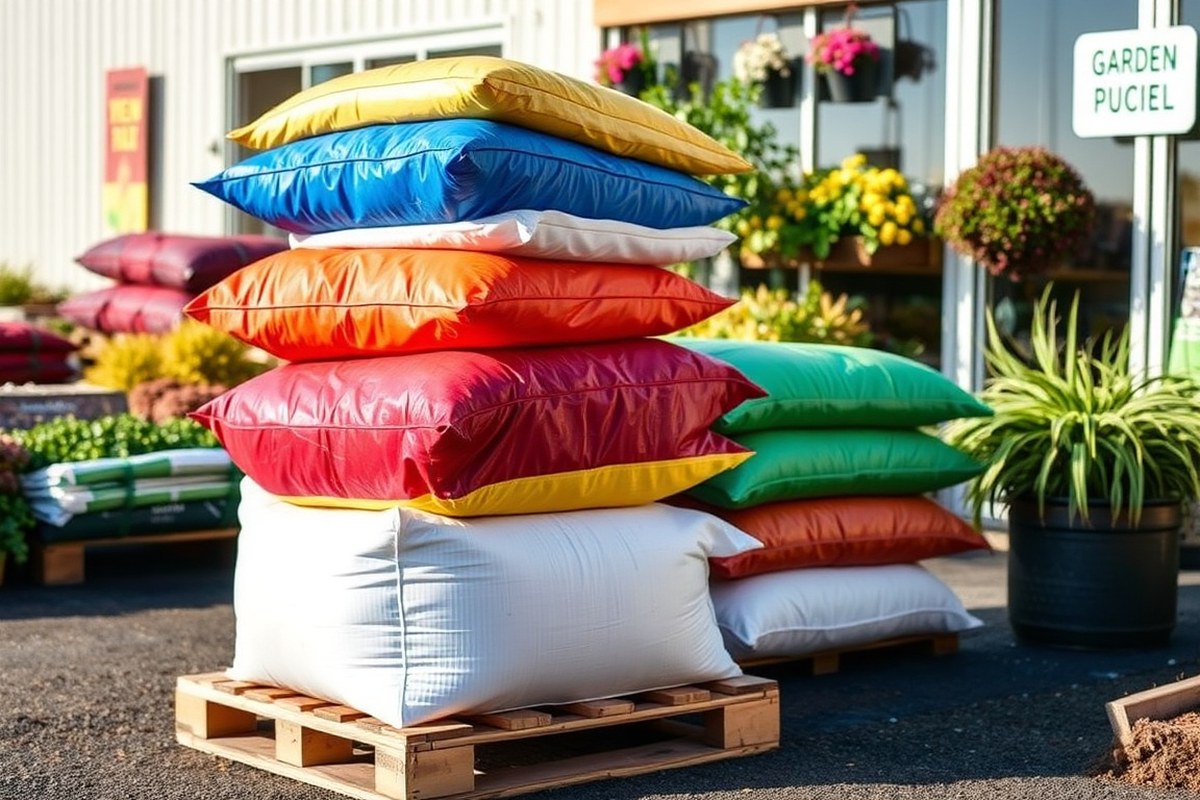
Most standard mulch pallets hold about 40 bags. Each bag usually contains 2 cubic feet of mulch. That makes hauling and storage easier when you know the total weight beforehand.
Mulch type makes a big difference in pallet weight. Organic mulches like wood chips weigh less than rock mulches. Moisture can add some weight but less so with rocks.
| Mulch Type | Bags per Pallet | Weight per Bag (lbs) | Total Pallet Weight (lbs) |
|---|---|---|---|
| Hardwood Mulch | 40 | 40 | 1,600 |
| Pine Bark Mulch | 40 | 35 | 1,400 |
| Lava Rock | 33 | 50 | 1,650 |
| Marble Rock | 27 | 60 | 1,620 |
| Cypress Mulch | 40 | 40 | 1,600 |
Heavier pallets need more care when picking up. Check your vehicle’s weight limit before loading. Use equipment or help to lift pallets safely and avoid injury.
Rock mulch pallets hold fewer bags because of their weight. They can weigh over 1,600 pounds total. Organic mulches usually stay under 1,600 pounds per full pallet.
Tips for Handling and Lifting Heavy Mulch Bags Safely
Heavy mulch bags can weigh 40 pounds or more, especially when wet. Lifting them the wrong way can cause back strain or injury. Use your legs to lift, not your back, to protect your spine.
Start by standing close to the bag with your feet shoulder-width apart. Squat down by bending your knees, keep your back straight, and grab the bag firmly. Lift slowly, straightening your legs while keeping the bag close to your body.
- Wear a back brace belt for extra support and comfort.
- Put on work gloves to avoid blisters and improve grip.
- Ask for help when lifting bags heavier than 40 pounds.
- Use a wheelbarrow or garden cart to move multiple bags at once.
- Take breaks to prevent muscle fatigue and stay hydrated.
A back brace and gloves usually cost between $8 and $15. These small investments reduce injury risk and make handling easier.
For very heavy bags, use a helper to save your back. A dolly also helps move bags faster and easier.
Dragging bags across rough ground or twisting while holding a bag can strain muscles. Move slowly and plan your path before lifting. Avoid sudden jerks or overreaching to keep your balance and control.
Using a wheelbarrow is handy if you have many bags. Load the bags one at a time, then push the wheelbarrow with your arms and legs. Keep the load balanced to avoid tipping and injury.
Comparing Bagged vs Bulk Mulch: Weight and Cost Insights
Bulk mulch offers more volume for less weight per unit cost than bagged mulch. Bags are easier to handle but cost more and suit smaller projects. Your choice depends on how much mulch you need.
It also depends on how you plan to move it around. Both matter for deciding the right option.
Weight Differences Between Bulk and Bagged Mulch
One cubic yard of bulk mulch weighs about the same as 13.5 two-cubic-foot bags. A 2 cubic foot bag weighs roughly 88 pounds.
So 13.5 bags total nearly 1,188 pounds. Bulk mulch is often delivered loose, so its weight stays consistent.
Bulk mulch fills 27 cubic feet per cubic yard. It covers about 108 square feet at 3 inches deep. This helps you estimate how much you need.
Bags are measured in cubic feet that stack up but include packaging, which adds slight bulk. Carrying bags means lifting 44 to 88 pounds each. Bulk mulch typically requires a wheelbarrow or truck.
Cost Comparison per Cubic Yard and Bag
Bulk mulch costs between $25 and $45 per cubic yard. Delivery fees typically add another $75 to $120. Factor both into your total cost.
One cubic yard covers more area than bags of the same volume. It is also cheaper to have a yard delivered.
Buying bulk saves you money overall. Bagged mulch costs about $55 per cubic yard when buying many smaller bags.
The break-even point for cost is around 1.5 cubic yards of mulch, or roughly 20 bags, which runs about $100. Above that, bulk mulch saves money, especially for larger areas. Smaller projects often find bags more convenient despite the higher cost per cubic foot.
| Type | Volume | Weight | Price Per Unit | Coverage (3″ Depth) | Delivery Fee |
|---|---|---|---|---|---|
| Bagged Mulch | 2 cubic feet per bag | 88 lbs per bag | ~$4 per bag (~$55/cu yd) | 8 square feet per bag | None |
| Bulk Mulch | 27 cubic feet per yard | ~1,188 lbs per cubic yard | $25 to $45 per cubic yard | 108 square feet per cubic yard | $75 to $120 flat fee |
You pay more per volume with bags due to packaging and handling effort. Bulk mulch comes at a lower price point but needs space and tools for unloading. Costs vary by supplier and delivery location.
When to Choose Bulk over Bagged Mulch
Pick bulk mulch if your garden needs are over 1.5 cubic yards or you want to cover large areas. It’s more cost-effective for big jobs and saves you trips to the store. You’ll need a place to store it until use.
Bagged mulch fits small projects or spots hard to reach with a truck. It’s ready to go right from the store and easy to carry in small loads. Choose bags when you want less fuss and no delivery.
Store bulk mulch on a tarp or hard surface to avoid moisture absorption and mess.
Step-by-Step Action Plan for Mulch Weight and Transport
Use this plan to handle your mulch shopping and moving without surprises. Follow each step to keep your project on track and your vehicle safe.
- Before buying: Measure the area to mulch. Write down square feet to figure out how many bags you need.
- Right after measuring: Choose the type of mulch based on your plant needs and local climate. Check bag weight labels for typical moisture levels.
- Day of purchase: Count how many bags fit in your vehicle safely. Use weight info to avoid overloading.
- During pickup: Ask if the mulch is on pallets and confirm total pallet weight. Plan help or equipment for lifting heavy bags.
- At loading: Stack bags evenly and low in the vehicle. Secure them tight to stop shifting while driving.
- Once home: Spread mulch in sections to avoid carrying too many heavy bags at once.
- After mulching: Store any leftover bags in a dry spot. Check bag weight before moving again.
Frequently Asked Questions
What Is the Average Weight of a 2 Cubic Foot Bag of Mulch?
A 2 cubic foot bag of dry wood mulch usually weighs between 20 and 40 pounds. The type of mulch and moisture level change the weight. A wet bag feels heavier than a dry one.
Can Mulch Bags Get Heavier After Rain?
Yes, mulch bags can weigh much more if they get soaked by rain. Organic mulch absorbs water, making a wet bag almost twice as heavy.
How Much Does a Bag of Rubber Mulch Weigh?
Rubber mulch bags usually weigh between 35 and 45 pounds for a 2 cubic foot size. They’re heavier than wood mulch but lighter than some wet organic mulches.
Do Bigger Bags of Mulch Weigh Proportionally More?
Larger bags weigh more, but not always exactly proportional. A 2.5 cubic foot bag of straw mulch weighs about 50 pounds, covering 500 square feet.
How Does Mulch Type Affect Coverage with Weight?
Heavier mulch types usually cover less area per pound. Lighter wood mulch covers more ground per bag.
Dense rubber mulch or wet mulch doesn’t spread as far. The same weight covers less area in these mulch types.
Can Mulch Bag Weight Affect How Many Bags Fit in a Vehicle?
Yes, weight limits can restrict how many bags you carry safely. Knowing the bag weight helps prevent overloading your vehicle and ensures safer hauling.
Key Points to Remember
A mulch bag usually weighs between 20 and 50 pounds, affected by type and moisture. Knowing this helps you plan coverage, transport, and safety. Start by measuring your planting area today to estimate how much mulch you need.