How Many Bags of Mulch Come on a Pallet: A Complete Guide to Sizes, Weights & Coverage
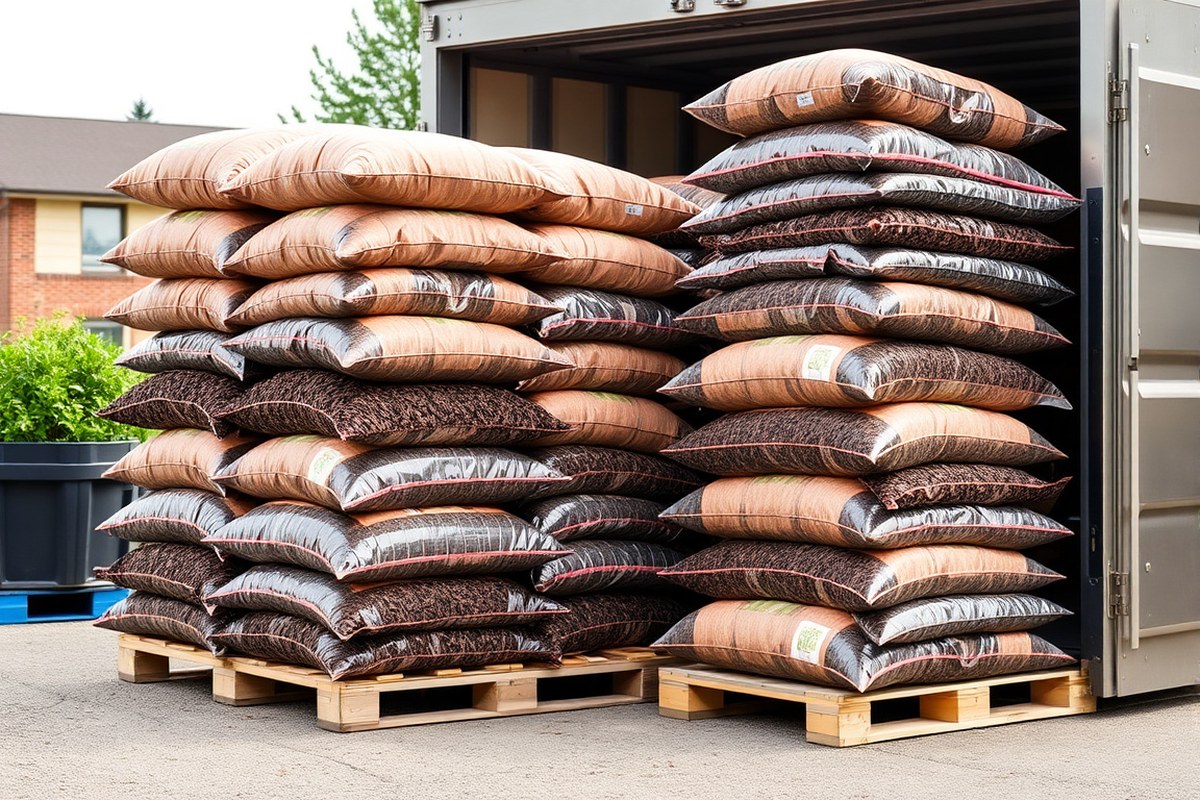
How many bags of mulch come on a pallet depends on bag size. Typically, a standard pallet holds about 70 bags of 2 cubic feet each. That means you get roughly 140 cubic feet of mulch per pallet.
This amount generally covers around 560 square feet at a 3-inch depth. Keep in mind, different mulch types and bag sizes change these numbers. Checking the bag size before ordering saves surprises when your mulch pallet arrives.
Also, pallets come in a standard size of 48 by 40 inches, fitting most truck beds. You should decide the layer thickness you’ll use first to estimate how many pallets you need. Sticking to 2 to 3 inches deep works well for most garden beds.
Key Takeaways
- A standard mulch pallet usually contains 70 bags of 2 cubic feet each.
- One pallet covers about 560 square feet at a 3-inch depth.
- Mulch bag size and type cause variations in bags per pallet.
- Most pallets measure 48 by 40 inches, fitting typical delivery trucks.
- Plan mulch depth between 2 and 3 inches for best results.
- Check your mulch bag size and weight before ordering pallets.
How Many Bags of Mulch Fit on a Standard Pallet?
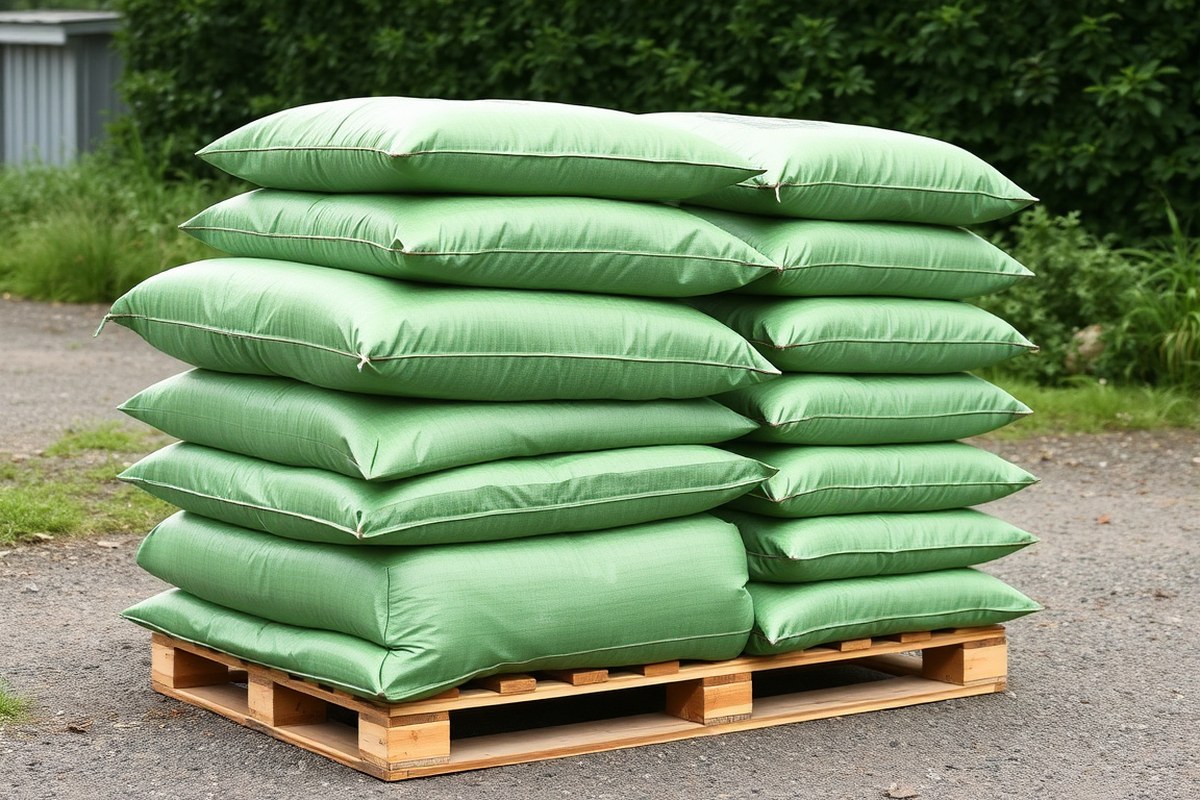
The usual number of mulch bags depends on bag size. The mulch type also matters. This decides how many bags fit on a pallet.
Standard 2 cubic-foot bags usually come in groups from 50 to 70. Big retailers typically sell this amount on a pallet. This count depends on the store.
You might find 65 to 70 bags per pallet of wood mulch. Rubber mulch bags tend to be fewer due to weight.
Bag size is the biggest factor. Smaller 1.5 cubic-foot bags can fit 60 to 80 bags on a pallet. Larger 3 cubic-foot bags usually max out around 40 to 50.
More smaller bags mean more bags on the pallet. But total cubic footage may be the same or less. This changes how much area the mulch covers.
Retailers generally use standard pallets about 4 by 4 feet. These pallets have limits for weight and size that shape how bags stack. For example, a pallet with 70 two-cubic-foot bags holds 140 cubic feet of mulch, about 5.2 cubic yards, covering about 560 square feet at 3 inches deep.
Here’s a quick comparison: 1.Five cubic-foot bags fit about 60 to 70 per pallet. That equals 90 to 105 cubic feet in total. The bag size affects total mulch volume.
Two-cubic-foot bags range from 50 up to 70 bags for 100 to 140 cubic feet. The 3-cubic-foot bags fill pallets with 40 to 45 bags, offering 120 to 135 cubic feet.
Always verify bag counts with your supplier before ordering. Bag counts can change with mulch type and packaging method. Check product specs for bag size and bags per pallet.
This avoids surprises with delivery and cost. Always verify details before buying mulch.
Weight Differences Among Mulch Pallets and Their Impact
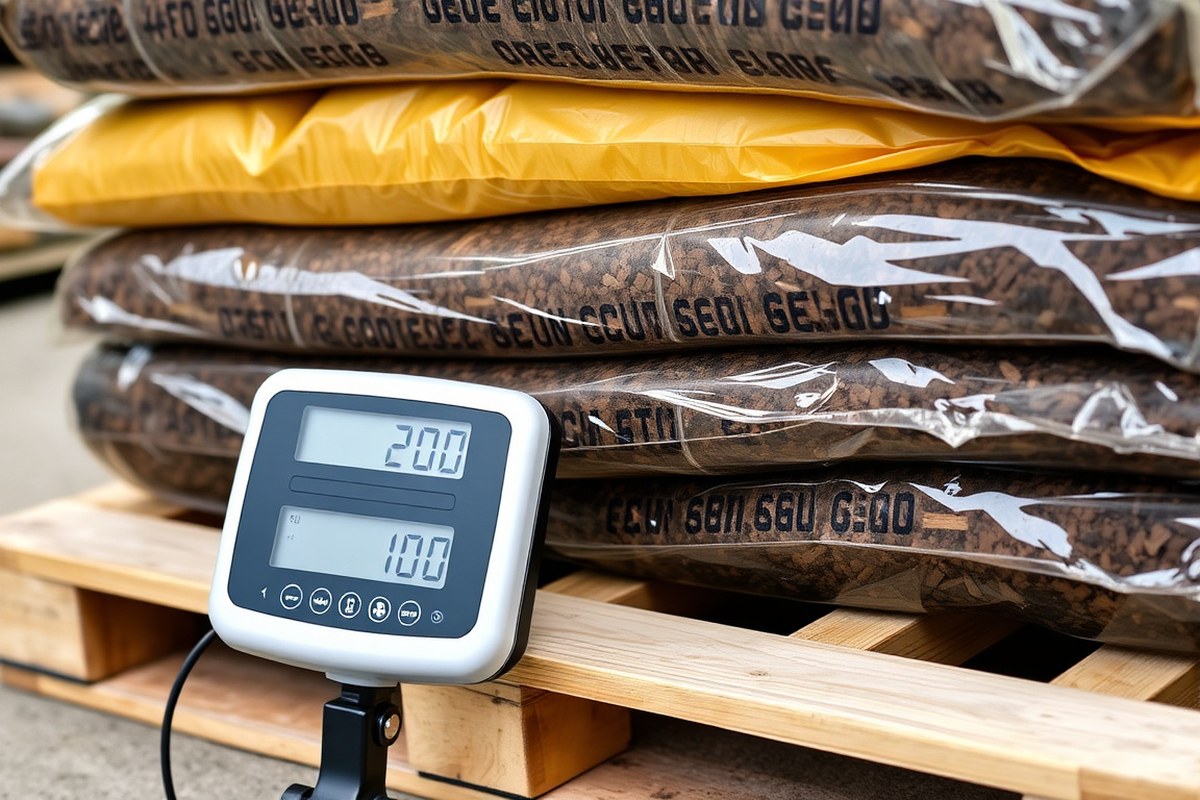
The weight of a mulch pallet varies by type and bag size. It also changes with moisture content. These factors make the weight different each time.
Wood mulch pallets usually carry 50 to 70 bags, each about 2 to 3 cubic feet. A typical wood mulch pallet weighs 2,100 to 2,800 pounds.
Rain or humidity affects how heavy it gets. Bags can soak up water and add weight.
Rubber mulch bags weigh much more. For example, a pallet holding fifty 0.8 cubic foot bags of rubber mulch can weigh about 2,040 pounds. Each rubber mulch bag can weigh about 40 pounds.
This is twice or more than some wood mulch bags. Rubber mulch is heavier per bag. The extra weight impacts how much trucks or forklifts can carry.
Overloading risks damage or unsafe handling. Weight limits matter for transport safety.
Moisture changes weight significantly. Wood mulch bags dry out and weigh less. But after wet weather, they can absorb water and get much heavier.
Wet mulch bags can grow from 30 to 35 or 40 pounds. Rain soaking increases the weight significantly. This adds a lot to the total pallet weight.
When pallets get heavier by hundreds of pounds, they may exceed transport limits. Extra weight can require special handling during delivery. Avoiding overload is important.
Here is a quick comparison of mulch weights by type and bag size. Hardwood mulch usually comes in 2 cubic foot bags, weighing about 40 pounds each. Cedar mulch bags of the same size weigh less, close to 25 pounds each.
Rubber mulch bags are smaller at 0.8 cubic feet but still weigh about 20 pounds per bag. Straw mulch varies more in weight and moisture. But a full pallet may reach 2,700 pounds.
Pallets must follow weight limits to avoid damage during transport and unloading. A standard pallet deck measures 48 by 40 inches. But it often weighs 30 to 50 pounds on its own.
Trucks have payload limits that suppliers consider when stacking bags. Suppliers balance bag count and weight carefully to get full volume.
They avoid risking safety or breaking pallets. This keeps shipping reliable and safe.
Always check mulch pallets for wet bags after it rains. Wet mulch can add heavy weight quickly. Handling pallets when wet can be unsafe, so watch out.
Calculating How Much Area One Pallet of Mulch Covers
One pallet of mulch has fifty 2-cubic-foot bags. They cover about 800 square feet at 3 inches deep. Mulch depth changes coverage because deeper layers use more material per square foot.
You can measure your area in simple steps. Knowing bag volume helps plan mulch needed perfectly.
Understanding Bag Volume and Coverage
Mulch bags come in different volumes, such as 2, 3, or 4 cubic feet. Each bag size changes how many square feet it covers. This depends on the depth you apply.
For example, a 2-cubic-foot bag covers 8 square feet at 3 inches. At 1 inch deep, it covers 24 square feet.
Coverage shrinks as you add thickness. A deeper layer means mulch covers fewer square feet per bag.
Knowing this helps you avoid ordering too much mulch. It also stops you from getting too little.
Calculating Total Cubic Feet per Pallet
Most pallets hold about 50 bags of 2 cubic feet. That adds up to 100 cubic feet of mulch.
Some pallets may carry 45 bags of 3 cubic feet, or 54 bags of 2.8 cubic feet. Multiply the number of bags by bag volume to find total cubic feet on a pallet.
For instance, 50 bags × 2 cubic feet equals 100 cubic feet. That’s enough to spread over several hundred square feet if you measure depth accurately. Expressing mulch volume in cubic feet also helps convert to cubic yards for larger projects.
Using Depth to Convert Volume into Coverage Area
Mulch depth matters because thicker layers fill more space per square foot. To find how much area one pallet covers, divide total cubic feet by depth in feet.
For 3 inches (0.25 feet), divide 100 cubic feet by 0.25 to get 400 square feet per pallet. This looks low at first, but check the math carefully with a formula.
Generally, a 3-inch layer means 1 cubic yard covers about 324 square feet. To get total square footage, divide cubic feet by 27 for yards.
Then multiply by the mulch coverage per yard. Depth changes this a lot: 2 inches covers more ground while 4 inches less.
Good mulch coverage starts with measuring your planting area. Use a tape measure to find length and width. Multiply these numbers for square footage.
Break an irregular shape into rectangles. Add those rectangle totals for the full area.
Follow these steps to estimate coverage easily:
- Measure length and width of your landscape area in feet.
- Multiply these to get total square footage.
- Decide your mulch depth: 2 inches, 3 inches, or another thickness.
- Convert depth inches to feet (divide by 12).
- Multiply total square feet by depth in feet to get cubic feet needed.
- Divide cubic feet needed by volume per bag to find bag count.
- Divide total bag count by the number of bags on a pallet for pallets needed.
Types of Mulch and Their Pallet Bag Configurations
Mulch types vary a lot in bag size, weight, and how many go on a pallet. Wood mulch bags hold 1.5 to 2 cubic feet each.
Rubber mulch comes in smaller bags and weighs almost double per pallet compared to straw mulch. Straw mulch bags are lighter but take more space due to low density.
Wood mulch pallets often have 70 bags of 2 cubic feet or 80 bags of 1.5 cubic feet. Rubber mulch pallets weigh around 4,500 to 4,750 pounds but hold fewer bags. Straw mulch pallets weigh between 2,500 and 2,750 pounds.
They usually hold about 50 bags. The material is less dense than others.
| Mulch Type | Bag Volume (cu ft) | Bags per Pallet | Pallet Weight (lbs) |
|---|---|---|---|
| Wood Mulch | 2 | 70 | Varies (usually 2,000, 3,000) |
| Wood Mulch | 1.5 | 80 | Varies |
| Rubber Mulch | Smaller bags | Fewer (around 50) | 4,500, 4,750 |
| Straw Mulch | Varies | About 50 | 2,500, 2,750 |
| Gravel-filled Bags | Varies | 20, 22 | High due to gravel weight |
The volume and weight show you why rubber mulch pallets feel heavy but have fewer bags. Straw mulch feels lighter but covers less ground per bag. Wood mulch offers middle ground with more bags that cover space well.
Denser mulch piles tightly, making pallets heavier and more compact. Loose straw takes more room and weighs less.
Pick your mulch based on what your project needs and how much you can handle. Rubber mulch lasts long but costs more to move. Wood mulch works well for gardens and landscape beds.
Straw is best for lighter jobs or areas that need quick coverage. Knowing the weight helps if you handle pallets yourself or hire delivery.
Practical Tips for Ordering and Receiving Mulch Pallets Safely
Ordering and receiving mulch pallets safely starts with good planning. You need a clear delivery area, help for unloading, and proper storage space. Taking these steps prevents damage, reduces injury risk, and keeps mulch fresh.
Preparing the Delivery Site
Choose a firm, flat spot near your planting area or driveway to set the pallet. Make sure there’s easy access for the delivery truck without blocking neighbors or disrupting traffic. Clear obstacles like low branches or garden tools that could get in the way.
Measure the space before delivery. Pallets typically measure 48 by 40 inches and can weigh up to 2,000 pounds. When your driveway or yard soil feels soft, place plywood or boards first.
This gives a stable base for the pallet. It helps stop sinking and damage.
Safely Unloading Mulch Bags
Handling bags of mulch requires care because each bag weighs around 30 to 40 pounds. Use gloves to protect your hands and wear sturdy shoes to prevent slips. Avoid lifting bags alone if possible, using a partner or a dolly can help.
Ask the delivery driver to place the pallet where you prepared the space. Unload one row at a time to keep the stack stable. Break down the pallet slowly and watch out for splinters.
Be careful with broken boards. Never stand under a load that could fall.
Keep your back straight and lift with your knees when handling heavy mulch bags.
Proper Storage Methods for Mulch Pallets
Store mulch pallets in a shaded, dry area to prevent bags from degrading. Plastic bags can tear.
Wet mulch may lose quality or begin decomposing too fast. Improve pallets on blocks or wood to keep them off damp ground.
Put a tarp loosely over the pallet to keep off rain and sun. Don’t seal it airtight. Airtight covers trap moisture and cause mold.
Use the mulch within 4 to 6 weeks of delivery for best results. Check the bags periodically for moisture and pests.
- Confirm your delivery date and arrange a backup contact.
- Clear and measure the intended pallet location.
- Prepare sturdy walkways free of tripping hazards.
- Coordinate with helpers or prepare equipment like a hand truck.
- Request driver to set the pallet in the exact spot you marked.
- Unload mulch bags carefully, working row by row.
- Stack bags securely, avoiding leaning or overhanging rows.
- Store the pallet off the ground and protect it from elements.
When to Choose Pallet Delivery Versus Bulk Mulch
For small projects under 3 cubic yards, bagged mulch costs more. Pallet delivery prices are higher per yard than bulk. You pay extra for the convenience of smaller amounts.
Bags typically run $4.50 to $6 each, adding up to $225, $300 per pallet. Bulk mulch prices range from $35 to $55 per cubic yard. So 3.7 yards cost $130 to $200 before delivery.
Delivery fees for pallets range from $75 to $125. This cost is a bit higher than bulk delivery. Bulk mulch deliveries typically cost between $65 and $110.
Pallets require a forklift or pallet jack to move. Bulk mulch needs a wheelbarrow and pitchfork for handling. You should consider this extra labor when choosing.
Cleanup differs as well. Bagged mulch results in about 50 thick plastic bags to handle. Bulk delivery leaves mulch dumped directly, meaning less waste but potentially more mess to spread.
Pallets usually need a deposit of $15 to $25. This deposit adds to your initial cost. You get this money back when you return the pallet.
Projects over 3 to 4 cubic yards often benefit from bulk delivery. It reduces labor by avoiding handling around 70 bags, speeding up your work. Bulk mulch is often cheaper and faster to get.
It works best if you have space to dump it. You can spread bulk mulch quickly and easily.
Use this rule to decide: less than 3 yards means pallet bags. They keep your work area cleaner and need less effort. The higher cost might be worth it for easy handling.
If you need more than 4 yards, bulk mulch is cheaper. It also saves time unless your site blocks big trucks. Large deliveries work best with open truck access.
Cost-wise, pallet bags total roughly $315 to $425 including delivery and deposit. Bulk mulch for 3.7 yards usually falls between $195 and $310 delivered.
You’ll spend less money overall on bulk. But consider if you’re ready to handle heavier manual spreading and rake cleanup afterward.
Factors That Affect Bag Count and Pallet Weight Variations
Moisture changes are a big reason the weight of mulch bags varies. Wet mulch weighs more than dry because water adds extra weight. If bags sit outside during rain or on humid days, their weight can increase beyond the listed amount.
Suppliers use pallets of different sizes and stack bags in varied ways. Some pack bags tightly in rows.
Others space them a bit to prevent damage. This shifts the total bag count and the pallet’s overall size.
Damaged or leaking bags cause safety risks during unloading and transport. Broken bags can spill mulch, losing volume and creating slippery patches. These spills also reduce the count of usable bags on the pallet.
- Bag volume and material type affect pallet size and weight.
- Moisture from weather can add 10 to 20% more weight to bags.
- Different pallet dimensions and stacking heights change bag counts.
- Broken or leaking bags reduce usable mulch and create slip hazards.
- Loose packaging may allow bags to shift during moves, causing damage.
- Some suppliers include the pallet weight, others list mulch only.
To check your mulch delivery, inspect the pallet right away. Look for broken bags or leaks, especially near the bottom.
Use gloves to feel if bags are wetter than expected. Compare the visible bag count to your order.
Grab a tape measure and check the pallet’s length and width. Note if the stack looks uneven or bags are bulging.
Take photos if you spot damage for easier returns or claims. Acting fast helps ensure you get the volume and quality you paid for.
Planning Your Mulch Project: How Many Pallets Do You Need?
Calculate your mulch needs by measuring your landscape area and applying the mulch depth you want. Then convert that into bags using coverage per bag. Finally, figure out how many pallets you need.
Count how many bags fit on each pallet. Use this to calculate the total pallets required.
Measuring Your Landscape Area
First, measure the length and width of your garden beds or other areas to mulch. Multiply these numbers to get the square footage. For irregular shapes, break the area into rectangles or circles, then add the smaller areas.
Measure in feet for easy calculations. Write down the total square footage to use when figuring how much mulch covers it.
Using Coverage to Estimate Bag Needs
Decide how deep you want the mulch layer. A 3-inch depth is common and stops weeds effectively. Using a shallower or thicker layer changes how many bags you need.
One 2-cubic-foot bag usually covers 8 to 10 square feet at 3 inches deep. Use this to estimate bags needed. Multiply total square feet by desired depth in feet, then divide by cubic feet per bag.
- Convert desired mulch depth from inches to feet (divide inches by 12).
- Multiply your area in square feet by this depth in feet.
- Divide the cubic feet needed by the size of the mulch bag (commonly 2 cu ft).
- Round up the number of bags to avoid shortage.
Buy extra mulch bags to allow for settling and future topping off.
Converting Bag Needs to Pallets Required
A standard pallet usually holds about 70 bags, each with 2 cubic feet of mulch. That is roughly 140 cubic feet per pallet. Compare your total bag count with 70 to find how many pallets you need.
Planning for a 10% to 15% buffer is smart to cover minor miscalculations or future touch-ups. Add at least one full extra pallet if your project is near a pallet multiple.
| Area (sq ft) | 3-inch Depth (Bags) | 3-inch Depth (Pallets) | 4-inch Depth (Bags) | 4-inch Depth (Pallets) |
|---|---|---|---|---|
| 500 | 21 | 0.3 | 28 | 0.4 |
| 1,000 | 42 | 0.6 | 56 | 0.8 |
| 2,000 | 85 | 1.2 | 113 | 1.6 |
| 3,000 | 128 | 1.8 | 170 | 2.4 |
Step-by-Step Action Plan for Ordering Mulch Pallets
Follow these steps to get the right number of mulch bags and avoid surprises. Check each step as you go to keep your project on track.
- Before You Order: Measure your garden beds or mulching area accurately in square feet. This helps calculate how many bags or pallets you need.
- Day 1: Decide on the mulch type that fits your garden style and soil needs. Knowing the type helps plan how many bags are on each pallet.
- Day 2: Contact your mulch supplier to confirm pallet bag counts and exact weights. This avoids surprises during delivery.
- Day 3: Calculate how many pallets cover your total area based on the supplier info. Prepare to order that number plus one extra for safety.
- Day 4: Choose delivery or pickup. Opt for delivery if you can’t handle pallet weight or have tight timing.
- Delivery Day: Check the pallets for damage and correct bag counts right when they arrive. Report any issues immediately.
- After Delivery: Store mulch bags in a shaded, dry spot. This prevents moisture build-up and bag damage.
- After Mulching: Spread mulch evenly and check coverage. This step shows if your calculations worked.
Frequently Asked Questions
How Many Bags of Mulch Come on a Pallet?
A typical pallet holds between 55 and 70 bags of mulch. The exact number depends on bag size and mulch type.
What Size Bags of Mulch Fit on a Standard Pallet?
Standard pallets often carry 2-cubic-foot bags for hardwood mulch. Other types might have slightly different bag sizes or counts.
Does Mulch Type Affect How Many Bags Fit on a Pallet?
Yes, hardwood and rubber mulch bags differ in size and weight. Rubber mulch pallets usually have fewer but heavier bags.
How Much Does a Full Pallet of Mulch Weigh?
A pallet with 65 bags of hardwood mulch weighs around 1,950 pounds. Rubber mulch pallets can weigh over 2,000 pounds.
Can Wet Mulch Bags Hold Fewer Bags per Pallet?
Yes, wet mulch is heavier, so pallets hold fewer bags. Too many wet bags may break the pallet during delivery.
What Area Does One Pallet of Mulch Cover?
One pallet has 70 bags of mulch. Each bag holds 2 cubic feet.
This covers around 560 square feet at 3 inches thick. Adjust for different depths.
The Bottom Line
Most mulch pallets hold between 40 and 60 bags, covering around 1,320 to 1,980 square feet. Know your bed size and ask your supplier for pallet specifics before ordering. Start by measuring your yard to decide how many pallets you’ll really need.