How Does Plants Eat: How They Make Food & Absorb Nutrients Explained
How does plants eat without mouths or stomachs? Plants don’t eat like animals do.
They make their food inside their leaves using sunlight, water, and air. This process is called photosynthesis.
Plants soak up water through their roots and absorb carbon dioxide from the air. Chlorophyll in leaves captures light energy. It helps turn these ingredients into glucose.
Glucose is a kind of sugar. It provides energy for growth and repair.
Besides water and carbon dioxide, plants need nutrients from the soil. These nutrients, like nitrogen and phosphorus, are absorbed by roots. They support important functions such as leaf development and flower production.
To keep plants healthy, give them adequate light, water, and nutrient-rich soil. Avoid overwatering since it can drown roots and reduce oxygen. Good care ensures plants make enough food through photosynthesis daily.
Key Takeaways
- Plants create food through photosynthesis using sunlight, water, and carbon dioxide.
- Chlorophyll in leaves captures light to help produce glucose inside the plant.
- Water enters plants mainly through roots, carrying minerals essential for nutrition.
- Ensuring good soil pH around 6.0, 7.0 helps plants absorb nutrients effectively.
- Light quality impacts photosynthesis; plants absorb mainly blue and red wavelengths.
- Glucose made by plants fuels their growth and helps build cell structures.
How Do Plants ‘Eat’ Without Mouths or Stomachs?
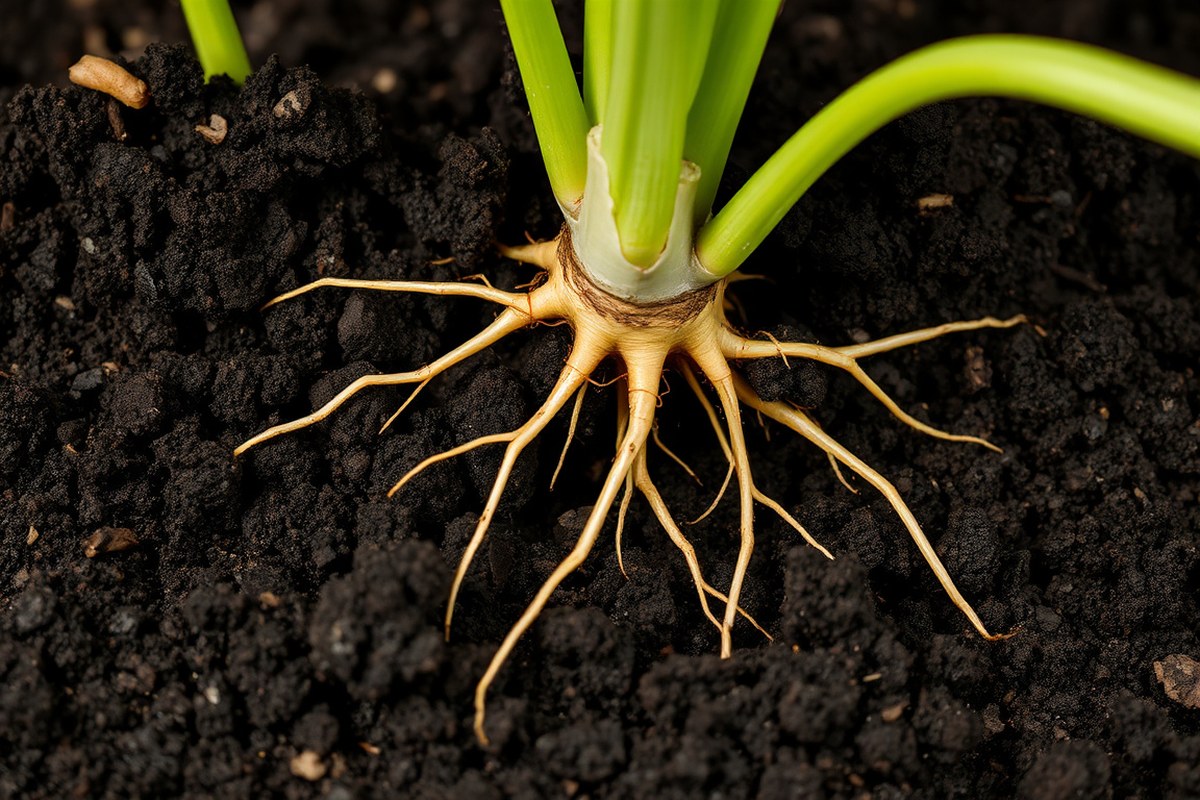
Plants don’t have mouths or stomachs, so they don’t eat like animals. Instead, they get water and minerals from the soil through their roots. These roots spread into the soil, soaking up the nutrients plants need to grow.
Roots absorb water by tiny hair-like cells called root hairs. These hairs increase the surface area and help pull water and dissolved minerals into the plant. The water carries minerals like nitrogen, phosphorus, and potassium from the soil to the plant’s cells.
Leaves capture carbon dioxide from the air and sunlight for energy. The plant uses this energy with water and minerals from the roots to make sugar molecules. Sugars store energy the plant uses to grow and repair itself.
The soil must have nutrients available in a form roots can absorb. Some minerals stick to soil particles, so they stay close to roots.
Healthy soil with microbes helps keep nutrients easy to reach. But plants also absorb nutrients directly without help.
Plants send water and nutrients up from the roots through the stem. This process supports leaves to do photosynthesis, turning those raw materials into food. That’s how plants “eat” without a mouth or stomach, they make their own food inside.
The deeper and wider roots grow, the more water and nutrients the plant can absorb. Without roots reaching enough minerals, plants may look weak or grow slowly. Fertilizers can add extra nutrition if soil lacks important minerals, supporting strong, healthy plants.
What Is Photosynthesis and How Do Plants Produce Food?
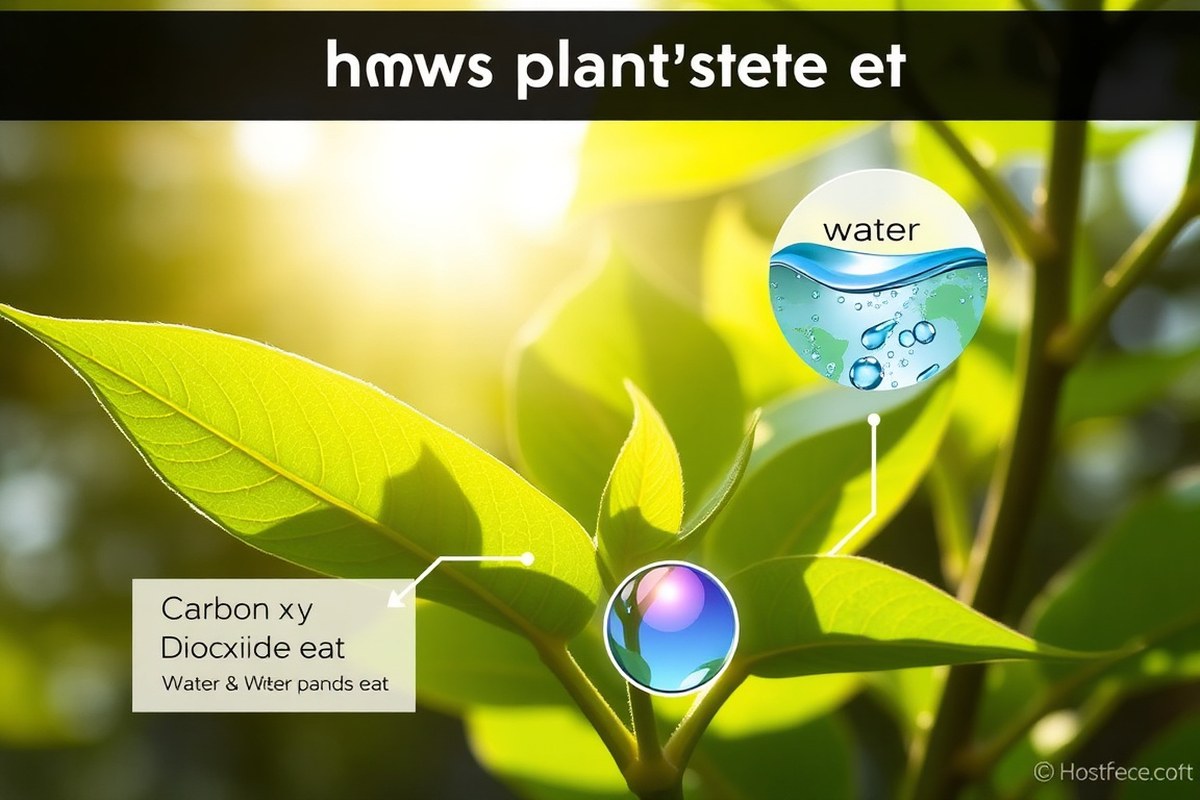
Photosynthesis is how plants make their own food using sunlight, water, and carbon dioxide. Plants convert these raw materials into glucose, a sugar that fuels their growth. Oxygen is also released in the process.
Light Absorption by Chlorophyll
Chlorophyll is the green pigment in leaves that captures sunlight. It mainly absorbs blue and red light, which provides the energy for photosynthesis. This absorption powers a chemical reaction inside the plant cells.
Carotenoids help protect plants by absorbing extra light and preventing damage. These pigments add yellow and orange colors in some plants, especially in autumn. Together, chlorophyll and carotenoids balance the energy plants use.
Water and Carbon Dioxide Intake
Plants take water from the soil through their roots. About 50% of a plant’s volume is water, which travels upward to the leaves. At the same time, plants absorb carbon dioxide from the air through tiny pores called stomata.
Water splits into oxygen and hydrogen inside the plant. Oxygen gets released into the air as a byproduct, while hydrogen helps form glucose. Carbon dioxide supplies the carbon that plants need to build their food.
Chemical Reactions to Make Glucose
The plant uses sunlight to power a chemical reaction with water and carbon dioxide. This reaction makes glucose, a sugar that stores energy for the plant. Oxygen gets released as a useful byproduct of this process.
Here are the main steps plants follow to produce their food:
- Absorb sunlight through chlorophyll in the leaves.
- Take water from the soil through the roots.
- Draw carbon dioxide from the air through stomata.
- Split water molecules into oxygen and hydrogen using light energy.
- Combine hydrogen with carbon dioxide to form glucose.
- Release oxygen gas back into the atmosphere.
- Use glucose for growth, energy, and development.
Without enough sunlight, photosynthesis slows or stops, so keep plants in bright spots.
What Essential Nutrients Do Plants Need to Grow?
Plants need a set of essential nutrients to grow strong and healthy. They require macronutrients in large amounts and micronutrients in smaller amounts. These nutrients support everything from photosynthesis to cell structure and energy transfer.
Macronutrients: N, P, K and Their Roles
The three main nutrients in fertilizers are nitrogen (N), phosphorus (P), and potassium (K). Nitrogen helps build leaves and stems by supporting photosynthesis.
Phosphorus encourages root growth and flower development. Potassium strengthens the plant’s overall health and improves disease resistance.
Plants take nitrogen mainly as nitrate or ammonium ions. Phosphorus comes mostly as phosphate, and potassium as potassium ions. Balancing these nutrients is key to avoid growth issues or poor yields.
Secondary Nutrients and Trace Elements
Plants also need calcium, magnesium, and sulfur as secondary nutrients. These elements strengthen cell walls, assist chlorophyll, and activate some enzymes. Micronutrients such as iron, zinc, copper, manganese, boron, molybdenum, chlorine, and nickel aid many chemical processes in plants.
Micronutrients are needed in tiny amounts by plants. Lack of them can stunt growth.
Deficiency may also cause problems with leaves. You often find these trace elements included in specialized or complete fertilizers.
Here is a table showing key nutrients, how plants use them, and common deficiency signs:
| Nutrient | Function | Deficiency Signs |
|---|---|---|
| Nitrogen (N) | Supports leaf and stem growth; important for photosynthesis | Yellowing leaves, slow growth, older leaves affected first |
| Phosphorus (P) | Promotes root and flower development; energy transfer | Dark green or purple leaves, weak roots |
| Potassium (K) | Improves strength, disease resistance, and water regulation | Leaf edges yellow or brown, weak stems |
| Calcium (Ca) | Builds cell walls; helps root growth | Distorted or dying young leaves |
| Magnesium (Mg) | Central part of chlorophyll molecules | Yellowing between leaf veins, older leaves affected |
| Iron (Fe) | Needed for chlorophyll synthesis and respiration | Yellow leaves with green veins (interveinal chlorosis) |
Knowing these functions helps you spot nutrient problems early. You can fix deficiencies with soil amendments or fertilizers.
This helps keep plants healthy as they grow. Adjustments depend on the growth stage and soil tests.
Common Deficiency Symptoms
When plants lack nitrogen, their older leaves turn yellow first. You might also notice slower growth and weak stems. Potassium deficiency causes leaf edges to turn brown or yellow, making plants less resistant to stress.
Phosphorus shortage often shows as dark green or purple leaves and poor root systems. Micronutrient shortages cause more specific problems like leaf spots, distorted growth, or interveinal chlorosis. These signs let you know what kind of nutrient the plant is missing.
How Do Soil and Microbes Help Plants Get Nutrients?
Soil quality and pH influence how well plants absorb nutrients. Microorganisms in the soil transform nutrients into forms plants can use. Together, they make a healthy system that helps plants grow strong.
How Soil pH Affects Nutrient Availability
Soil pH controls which nutrients dissolve in the soil water. Most plants grow best in soil with a pH between 6.0 and 7.0. Outside this range, important nutrients like phosphorus and iron can become less available.
When soil is too acidic or alkaline, plants show nutrient deficiency signs. You can test your soil pH with a simple kit from garden centers.
Fixing soil pH needs time. Use lime to raise pH or sulfur to lower it.
The Role of Soil Microbes in Nutrient Absorption
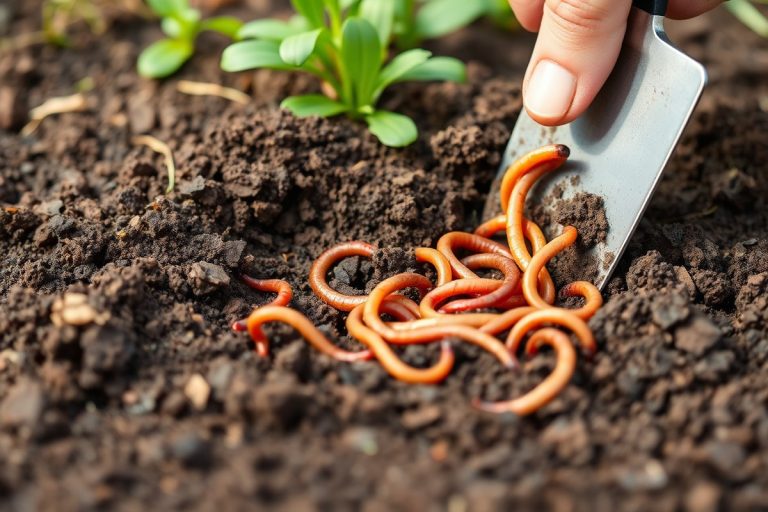
The rhizosphere, the area around plant roots, teems with bacteria and fungi. These microbes help break down organic matter into nutrients plants can absorb. They also produce enzymes that free nitrogen and other minerals from the soil.
Microbes trade nutrients for root sugars, creating a mutually helpful cycle. The more active your soil’s microbes, the better nutrients reach your plants. This natural process reduces the need for chemical fertilizers.
Improving Soil Quality for Better Nutrition
Adding organic matter like compost improves soil structure and nutrient content. It feeds microbes and holds moisture, making nutrients easier for roots to reach. Spread a layer of compost once or twice a year around your plants for best results.
Looser, well-draining soil lets roots grow deeper and access more nutrients. Avoid compacting soil by working when it’s too wet or too dry. You can also mix sand or perlite into heavy clay soil to improve drainage.
How to Support Microbial Life in Your Garden
Avoid overusing chemical fertilizers and pesticides as they can harm beneficial microbes. Use organic fertilizers and mulches to feed soil life instead. Rotate crops and add cover crops to keep microbes busy year-round.
Keep soil temperature between 50 and 70 degrees Fahrenheit to maintain microbial activity. Mulching helps regulate soil temperature and moisture, creating a better environment for microbes. Healthy microbial communities make nutrient supply steady and reliable.
When to Adjust Soil and Microbe Support
Test your soil regularly, ideally every 2 to 3 years. Yellowing leaves or stunted growth can mean pH or nutrient problems. Remember, results improve slowly; it may take a full growing season to see changes.
Some plants, like pitcher plants, rely more on microbes to break down their food. Gardens with sensitive or exotic plants may need special soil mixes and microbe treatments. Each garden is different, so tailor your soil care to the plants you grow.
What Happens to Glucose and How Plants Use Their Food?
After plants make glucose through photosynthesis, they use it in several ways. First, plants convert glucose into energy by breaking it down in their cells. This energy powers growth, repairs damage, and helps the plant stay healthy.
Plants don’t use all the glucose right away. They store the extra glucose as starch in roots, stems, and leaves. Starch is a backup food for plants.
Plants use it when sunlight is low. They also use it during the night.
Glucose also serves as building material. Plants use it to make cellulose, which strengthens cell walls and supports plant structure. Without enough glucose, plants cannot grow tall or develop strong stems.
Transporting glucose and other nutrients happens through the plant’s vascular system. The phloem carries sugars from leaves, where glucose is made, to other parts needing food. This movement supports roots, growing shoots, and developing fruits.
The xylem transports water and dissolved minerals from roots to leaves. This water is essential for photosynthesis and other chemical reactions inside the plant. Both systems work continuously to keep the plant healthy and growing.
Keep plants healthy by ensuring they get enough sunlight. Less light reduces glucose production and weakens growth.
Can Plants Survive Without Fertilizer? What Do Gardeners Need to Know?
Plants do not need fertilizer to survive because they mainly get nutrients from the soil. Soil contains essential minerals and organic matter that roots absorb to support growth. Fertilizer helps when soil lacks certain nutrients or after heavy use depletes the natural supply.
Plant “food” means the sugars plants make during photosynthesis, not what you add to the soil. Fertilizer provides the nutrients that help plants make that food, like nitrogen, phosphorus, and potassium.
The biggest misunderstanding is thinking fertilizer feeds plants directly. But it really improves soil conditions.
Knowing when to fertilize depends on your soil and plant needs. You can test your soil’s nutrient levels through local extension services or with home kits. Avoid over-fertilizing, which can harm plants and pollute nearby water.
- Test soil nutrient levels before adding fertilizer
- Choose fertilizer based on your plant type and soil test
- Apply fertilizer during active growth periods
- Follow package instructions for amounts and frequency
- Water plants after fertilizing to help nutrient absorption
- Use compost or organic matter to enrich soil naturally
- Watch for signs of nutrient deficiency or excess, like yellow leaves
Maintaining healthy soil with organic matter supports plant health without relying solely on fertilizer. Compost, peat, or natural amendments boost the soil’s ability to hold nutrients and water. Fertilizer is a tool, not a replacement for good soil care.
Gardeners play an important role by protecting soil quality and using fertilizer responsibly. Balancing natural nutrients and added fertilizer keeps plants strong while avoiding environmental damage. You can help plants thrive with the right mix of soil care and targeted feeding.
How Do Carnivorous Plants Obtain Nutrients Differently?
Carnivorous plants get nutrients by trapping and digesting insects or small animals. They use special adaptations like sticky leaves, pitfall traps, or snap traps. For example, a Venus flytrap snaps shut quickly when trigger hairs are touched.
These plants don’t eat animals like typical carnivores. Instead, they absorb nutrients from their prey after digestion. Enzymes break down the trapped insects, releasing nitrogen and other elements the plants need.
Most plants get nitrogen from the soil. But carnivorous plants often grow in poor, nutrient-poor places. These plants rely on insects for nutrients.
They get what soil can’t provide. This helps them survive where other plants struggle.
Pitcher plants have deep, slippery cups filled with digestive fluid. Insects fall in and drown, then break down in the fluid. Sundews use sticky hairs to trap prey and slowly digest it over days.
These traps usually work best in warm, humid conditions that keep the fluid active. When it’s too cold or dry, digestion slows.
The plant then loses nutrients. Gardeners who grow carnivorous plants should mimic these conditions for the best results.
Large species of carnivorous plants can catch small fish, birds, or mice. But most focus on insects. These plants digest animals for extra nutrients.
They get nitrogen, phosphorus, and minerals. These minerals often don’t come from their environment.
What Are Common Myths and Mistakes About How Plants Eat?
Some people think plants eat just like animals, chewing food or swallowing nutrients. In reality, plants absorb water and minerals through their roots and make food using sunlight.
Another common myth is that plants need constant fertilizer. Too much fertilizer can harm them by burning roots or causing nutrient imbalances.
Plants control nutrient uptake by regulating the root cells’ absorption channels. They can slow down or stop taking in certain minerals if those become too abundant.
This natural control helps plants avoid toxicity and sustain healthy growth. You should rely on soil tests to know what nutrients are lacking.
When adding fertilizer, match it to what your soil lacks. Do not exceed the recommended amounts. Follow this simple decision rule.
Apply fertilizer during the plant’s active growth phase, usually spring or early summer. Over-fertilizing wastes money and pollutants, and it may stunt plant development.
Avoid guessing how much fertilizer to use; always test your soil first. Over-applying fertilizer damages plants and pollutes water supplies.
Not all plants want the same fertilizer type or frequency. For example, leafy greens need more nitrogen, while flowering plants require phosphorus and potassium.
Adjust your feed accordingly to prevent missed nutrition or overfeeding. Watch for symptoms like yellow leaves or weak stems as signs of nutrient issues.
Micronutrients like iron and zinc are important but needed in tiny amounts. Missing them can slow photosynthesis or protein formation.
Still, adding these without evidence of deficiency risks toxicity. That’s why understanding specific plant needs matters more than blanket feeding.
Step-by-Step Action Plan to Feed Your Plants Right
Follow these simple steps to help your plants get the nutrients they need. You’ll see healthier leaves and stronger growth soon.
- Before planting: Test your soil with a kit to check nutrient levels. Healthy soil has balanced nutrients.
- Day 1: Mix compost or organic matter into the soil. Look for crumbly, dark soil that holds moisture well.
- Week 1: Water your plants deeply but avoid overwatering. Soil should be moist, not soggy or dry.
- Week 3: Apply a balanced fertilizer if plants show yellowing leaves or slow growth. Follow package instructions carefully.
- Month 1: Mulch around your plants to keep soil cool and retain nutrients. Mulch looks fresh and helps reduce weeds.
- Month 2 and beyond: Look at your plant’s leaves often. Watch for pale or curled leaves. These signs may mean your plant lacks nutrients. Adjust care as needed.
- After 3 months: Consider adding beneficial microbes or mycorrhizal inoculants to your soil. Plants often grow stronger and greener.
- Ongoing: Keep your plants in a spot with good sunlight for photosynthesis. Leaves should appear vibrant and healthy.
Frequently Asked Questions
How Do Plants Absorb Water If They Don’t Have Mouths?
Plants use their roots to suck water from soil like tiny straws. This water travels up their stems to leaves where photosynthesis happens.
Do Plants Use Sunlight Only for Food or Also for Growth?
Sunlight helps plants make food and also powers growth processes. It energizes photosynthesis, producing glucose that plants use to build tissues and store energy.
Why Do Some Plants Eat Insects Instead of Just Making Food?
Some plants live in poor soil and trap insects for nutrients like nitrogen. These extra nutrients help them grow where regular plants struggle.
Is It True Plants Can Get Nutrients from the Air Alone?
Plants mainly get carbon dioxide from the air, but nutrients come from soil. They absorb minerals through roots since air lacks essential elements like nitrogen and phosphorus.
How Do Plant Roots Know Where to Find Nutrients in Soil?
Roots grow toward areas rich in nutrients using chemical signals in soil. They spread out and branch to maximize absorption of water and minerals.
Can Plants Run Out of Energy If They Don’t Get Enough Sunlight?
Yes, without sunlight, plants can’t photosynthesize and lose stored energy. That makes them weak or die unless they store enough food beforehand.
Wrapping Up
Plants don’t eat like animals, but they do get food in smart ways. You can support them by keeping soil healthy and light strong. Start with simple care steps, and your plants will thank you with great growth.