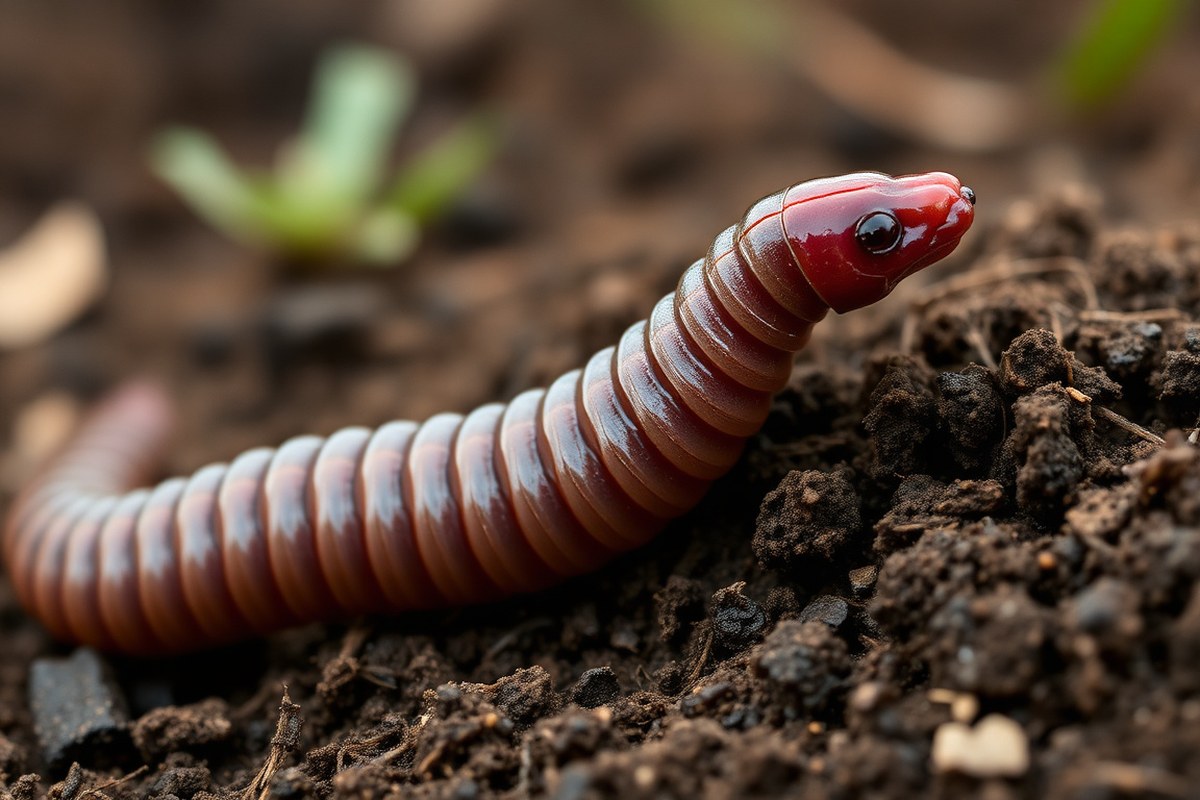
How Many Hearts Do Worms Have? A Complete Guide with Species Comparison
How many hearts do worms have? The answer depends on the worm species and how you count their hearts. Most earthworms have five pairs of aortic arches, which act like hearts to pump blood.
You can say they have five hearts or ten hearts. It depends on how you look at it. Both answers are correct.
Some marine worms can have as many as 15 hearts. Other worm types might not have any true hearts at all.
This variety happens because worms evolved different ways to move blood through their bodies. Knowing this helps you understand why worm hearts look and work so differently from human hearts.
Counting worm hearts isn’t as simple as it first seems. Watch the worm type to count hearts correctly. Know what counts as a heart first.
This helps you get the right number. This way, you won’t be confused by the numbers you see in books or online.
Key Takeaways
- Earthworms have five pairs of aortic arches, acting like hearts.
- Some worms have up to 15 hearts; others may have none.
- Worm hearts are different from human hearts in structure and function.
- Counting worm hearts depends on how you define a “heart.”
- Worm species vary widely in heart number, from zero to fifteen.
- Worm hearts pump blood to support breathing and nutrient transport.
How Many Hearts Do Worms Actually Have?
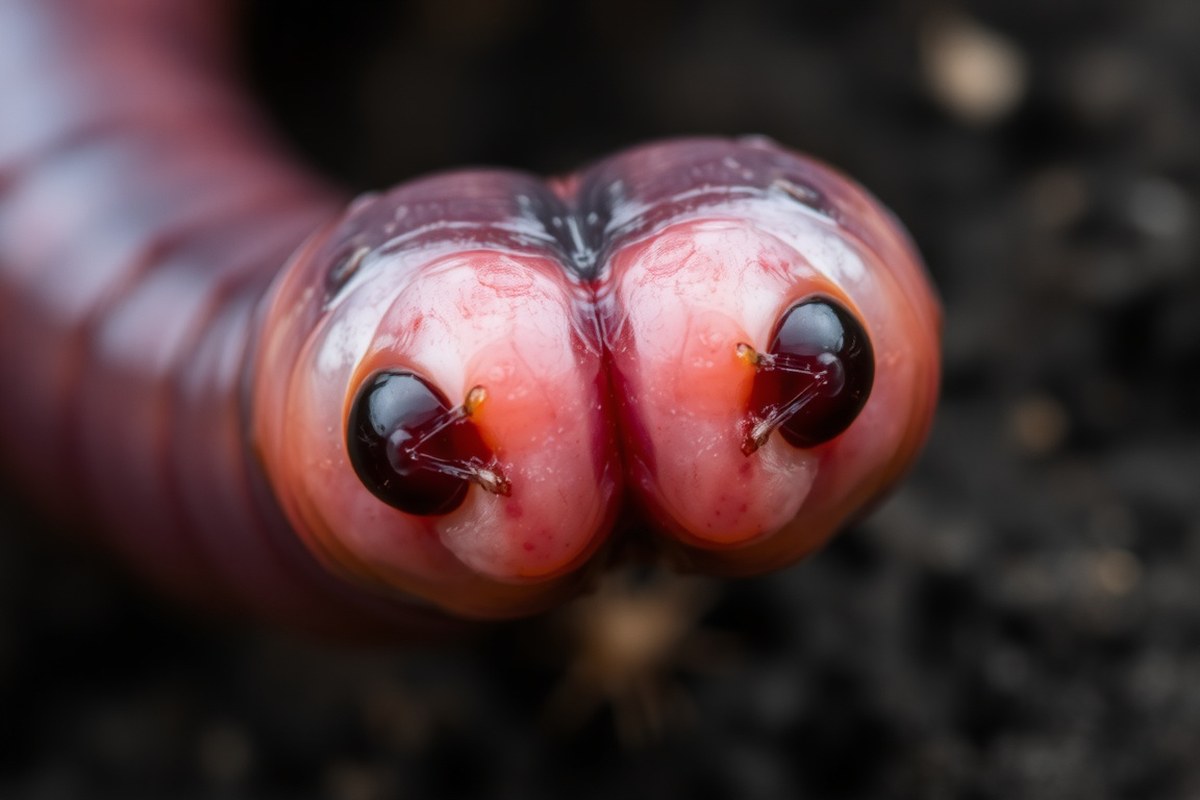
Worms have between zero and ten hearts, depending on what counts as a heart. Earthworms usually show five pairs of aortic arches, which some call hearts. That makes 10 single arch-like hearts if you count each pair separately.
The question “how many hearts?” depends on your definition. Worm hearts aren’t like human hearts.
Their hearts, called aortic arches, are simpler and single-chambered. So they are often called pseudohearts.
These pseudohearts pump blood, but they don’t have multiple chambers like vertebrate hearts. For example, earthworms in the Lumbricus genus have five pairs of these arches.
Other worm species may have fewer. Some marine worms have up to 15 hearts, showing how much this varies by species.
What Makes a Worm’s Hearts Different from Human Hearts?
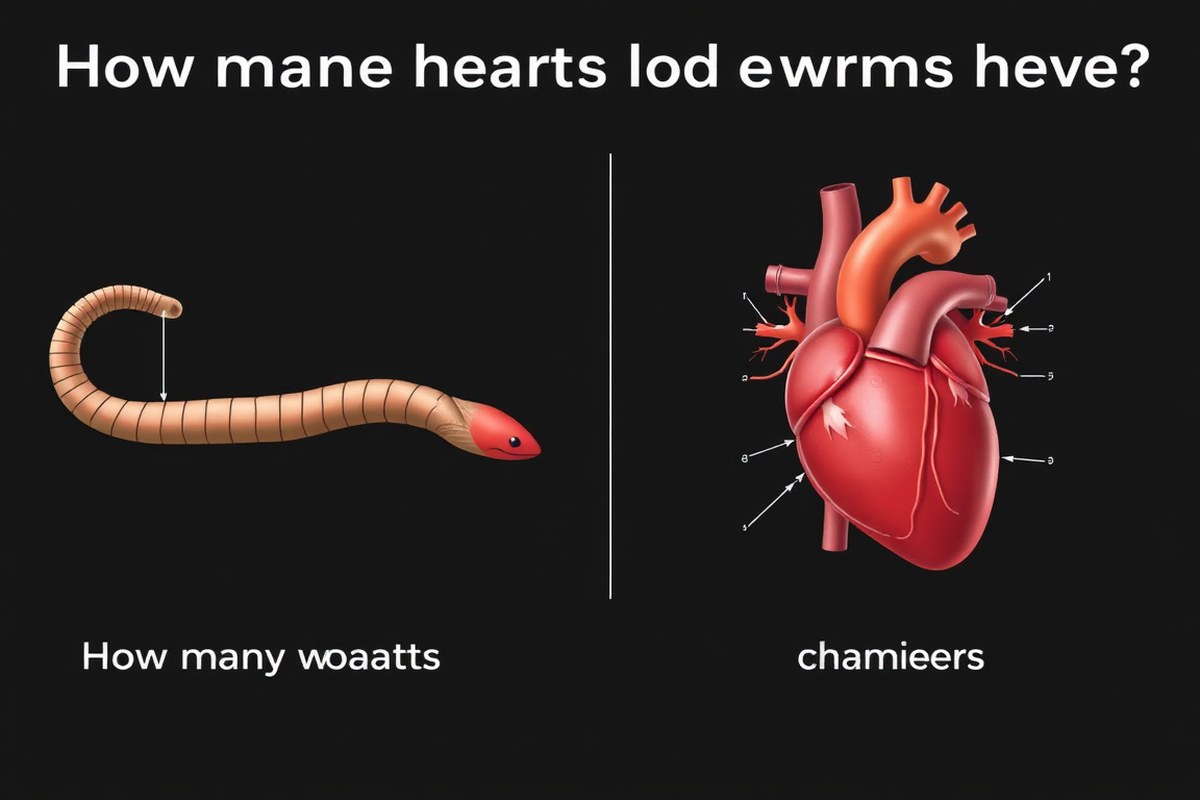
Worms don’t have hearts like humans. Instead, they have five pairs of aortic arches. These arches pump blood but lack multiple chambers like a human heart.
Structure of Worm Aortic Arches
Each worm aortic arch is a single, muscular tube. These arches wrap around the esophagus near the worm’s head. They contract to move blood, acting like simple hearts.
Unlike human hearts with four chambers, worm arches have none. They don’t separate oxygen-rich and oxygen-poor blood inside. This structure fits the worm’s simpler needs.
Worm Hearts vs. Human Heart Chambers
Human hearts have four chambers: two atria and two ventricles. These chambers manage blood flow and oxygenation efficiently. Worm hearts have just one chamber in each aortic arch.
This means worm hearts cannot separate blood types. They only pump blood in a loop. This suits worms because their blood oxygen demands are lower than humans.
Lack of Pericardium and Heart Tissues
Human hearts sit inside the pericardium, a protective, fluid-filled sac. This sac cushions and prevents infections. Worm aortic arches lack a pericardium or similar tissue.
Instead, their simple circulatory system relies on the worm’s moist skin and body fluids. Their hearts work without the complex extra tissues human hearts need to protect them.
Why Worm Hearts Work Differently
Worms breathe through their skin, not lungs. This lowers how much oxygen their blood needs to carry. The simple, single-chambered aortic arches pump blood just enough to support this.
Humans have more active metabolisms, needing efficient blood oxygenation through a multi-chamber heart. Worm hearts reflect their slower pace and smaller oxygen needs.
Don’t assume worm hearts function like human hearts. Their simpler structure meets their unique body demands.
How Worm Hearts Function in Circulating Blood
How Blood Moves Inside the Worm’s Body
The worm’s closed circulatory system keeps blood inside vessels. Unlike open systems, blood never leaks into body spaces. This setup ensures blood moves directly to tissues and organs.
The aortic arches act as the main pumps, moving blood through the vessels. They squeeze the blood forward, keeping it flowing constantly. This lets oxygen and nutrients reach all parts of the worm.
The Role of Multiple Hearts in Pumping Blood
Worms have five pairs of aortic arches, sometimes called hearts. Each pair contracts and relaxes in turn, pushing blood along. Having many pump sites helps keep blood pressure steady.
These “hearts” do not work exactly like human hearts because they lack valves. Still, their rhythmic contractions provide enough force to circulate blood effectively. Multiple pumps spread out the workload across the worm’s long body.
The Path Blood Follows Through Vessels
Blood moves from the aortic arches into the dorsal vessel. This vessel runs along the worm’s back.
From there, it travels to smaller vessels that reach every body segment. Then, blood returns through the ventral vessel running underneath.
This cycle keeps blood traveling in a closed loop. The dorsal vessel carries blood forward, while the ventral vessel brings it back. This arrangement allows constant nutrient and oxygen delivery to tissues.
How Worm Hearts Coordinate Pumping
The worm’s multiple hearts contract in a coordinated but slightly independent fashion. Each aortic arch pumps blood in sequence, creating smooth flow. They don’t beat all at once but follow a rhythm that keeps blood moving evenly.
This coordination prevents gaps or backflow in circulation. Having several pumps instead of one means blood pressure doesn’t drop in longer worm segments. The system supports the worm’s active movement underground.
Why This System Works for the Worm
This closed system and many hearts help supply the worm’s long body effectively. Without multiple pumps, blood would struggle to reach distant segments. This design suits the worm’s shape and lifestyle.
Continuous blood flow also supports the worm’s respiration through its skin. After oxygen enters, the hearts move blood carrying it to cells. This allows the worm to survive in soil without lungs or gills.
How Many Hearts Different Worm Species Have
Worm species vary in how many hearts they have. Some have no hearts. Others may have up to 15 hearts total.
Earthworms typically have five pairs of hearts. But marine and composting worms may show variation. This diversity reflects their size, habitat, and circulatory needs.
Earthworms and Their Five Pairs of Hearts
Most common earthworms have five pairs of heart-like organs called aortic arches. These arches pump blood throughout their segmented bodies. Each pair contracts and relaxes to keep blood moving steadily.
These five pairs may be counted as ten individual hearts depending on perspective. Their number offers redundancy, so if one fails, others still function. Earthworms are simple creatures, but their hearts work together well to circulate blood.
Marine Worms with Up to 15 Hearts
Many marine worms, such as polychaetes, have more heart-like structures than earthworms. Some species can have up to 15 hearts to support their active lifestyles in water. These extra hearts help move blood quickly through longer or more complex bodies.
Marine worm hearts vary in size and function to match their environment. They need strong circulation to supply oxygen and nutrients in cold, oxygen-poor water. Heart number usually increases with worm size in marine species.
Composting Worm Varieties and Their Hearts
Composting worms like the red wiggler usually have five pairs of hearts. This is the common number in earthworms.
These hearts help pump blood to process organic waste efficiently. Unlike some larger earthworms, their hearts remain relatively uniform across species.
Red wigglers consume large amounts of organic material daily. Their heart count plays a role in maintaining high metabolism and waste breakdown rates. They must keep circulation steady for survival in dense soil environments.
Special Cases: Worms with Fewer or No Hearts
Some parasitic or tiny worms may have no true hearts. Instead, they rely on body movement and diffusion to circulate fluids. This suits species living in hosts or small spaces where a heart is unnecessary.
The number of hearts changes depending on the worm’s environment and size. Simple worms with slower metabolisms often need fewer or no hearts. This reduction keeps them energy-efficient in resource-poor settings.
The following table shows a comparison of heart counts in different worm species:
| Worm Species | Number of Hearts | Habitat |
|---|---|---|
| Common Earthworm (Lumbricus terrestris) | 5 pairs (10 total) | Soil, terrestrial |
| Red Wiggler (Eisenia fetida) | 5 pairs | Composting organic matter |
| Marine Polychaete Worms | Up to 15 hearts | Marine, ocean floor |
| Parasitic Flatworms | 0 hearts | Inside host organisms |
| Small Tubifex Worms | Few or no hearts | Freshwater sediments |
This table reflects how heart number suits each worm’s lifestyle. Worms with more active or larger bodies have more hearts. Smaller or parasitic worms survive without true hearts by using other circulation methods.
Why Worms Have Multiple Hearts: Evolution and Advantages
Worms have multiple hearts because their long, segmented bodies need more stable blood circulation. Each heart pumps blood in different body sections, keeping oxygen and nutrients moving even underground. This setup helps them survive harsh, low-oxygen environments.
Having several hearts benefits worms in dark, moist soil where oxygen is scarce. Multiple hearts maintain steady blood flow, supporting their metabolism when they inch through dirt. It also helps them move their segmented bodies efficiently without relying on one weak pump.
Multiple hearts give worms a backup system. When one heart slows, the others keep blood flowing in worms.
This is important because worms rely on oxygen transport for energy to crawl and digest nutrients. Their multiple hearts make this energy supply more reliable during underground life.
Keep worms in a cool, moist spot away from sunlight. This helps their hearts work right. It also keeps them healthy.
Can Worm Hearts Regenerate? How Recovery Works
Worm hearts can regenerate, which helps them survive injuries well. Unlike human hearts, worm hearts are part of their body segments. They are part of the circulatory system.
Worm hearts can regrow if they get damaged. Earthworms like Lumbricus terrestris can regrow large body parts.
This includes their multiple hearts. Their ability to regenerate is quite strong.
The regeneration process usually takes several weeks. New heart tissue starts to grow about three to four weeks after injury. It slowly restores the worm’s blood flow.
The process helps the worm survive. This slow but steady growth allows worms to maintain essential blood flow while healing continues. Full recovery can sometimes take up to five weeks.
It depends on how bad the damage is. More damage means longer healing time.
Not all worm species regenerate hearts equally fast or completely. Some annelids regrow hearts more quickly than others, influenced by factors like species, age, and environment. Nightcrawlers generally show good regenerative ability.
Smaller or less active species may heal slower. Temperature and available nutrients also affect how well hearts recover.
Regeneration works by cells near the injury dividing and transforming to rebuild heart tissue. This biological process uses energy and resources the worm has stored. The worm’s heart regrowth can stop if the worm is weak or stressed.
This delay or failure risks the worm’s survival. Stress and health affect regeneration too. With enough time and proper conditions, most worms heal well.
They regain enough heart function to live normally. Good health helps regrow the heart.
How Worm Hearts Support Breathing and Nutrient Transport
Worm hearts pump hemolymph, which carries oxygen absorbed through the skin. Unlike animals with lungs, worms breathe by letting oxygen pass directly through their moist skin layers.
This gas exchange happens as oxygen moves from the outside air into the hemolymph. Carbon dioxide moves out.
The hearts work with the circulatory system to keep hemolymph flowing. This flow delivers oxygen from the skin to cells throughout the worm’s body. Without this constant movement, tissues would not get the oxygen they need to survive.
At the same time, hemolymph transports nutrients absorbed from the soil and wastes from cells. Worms take in nutrients as they move through their environment. The hearts ensure these nutrients reach every part of the body, supporting growth and repair.
Waste products also travel through hemolymph to special excretory cells. These cells then move waste to the skin, where it passes out of the worm’s body. This process helps the worm stay healthy and keep its skin moist.
Oxygen enters the earthworm’s skin and blood flows with it. The heart pumps hemolymph carrying oxygen throughout the body. This fluid delivers oxygen and nutrients to cells.
Waste enters the hemolymph to be carried away. Excretory cells move waste to the skin.
Then, waste leaves the body through the skin. This cycle repeats continuously to keep the worm alive and active.
Common Myths About Worm Hearts Debunked
Some people say worms don’t have hearts at all. That’s not true. Worms have several heart-like structures called aortic arches that pump blood.
Others claim worms have 10 separate hearts or 5 pairs of hearts. This is close but not exact.
Worms usually have 5 pairs of these muscular rings. But they are not hearts like ours.
Many assume worm hearts work just like human hearts. They don’t.
Worm “hearts” come from basic muscle tissue, not the specialized cardiac muscle cells humans have. That changes how they pump blood.
- Myth: Worms have no hearts, Fact: Worms have multiple aortic arches that act like hearts.
- Myth: Worms have 10 hearts like humans. Fact: They have 5 pairs of muscular rings, not full hearts. These rings act like simple hearts to move blood.
- Myth: Worm hearts are like human hearts, Fact: Worm hearts have simpler muscle, not cardiac muscle.
- Myth: Worm hearts work like humans’ hearts by pumping blood. Fact: Worm hearts pump blood using rhythmic squeezes. This method is different from how human hearts work.
- Myth: All worms have the same number of hearts. Fact: The number of hearts can change depending on the worm species. Different worms may have different heart counts.
The key to telling myths from facts is knowing what “heart” means in worms. Look for repeated muscular rings called aortic arches, not a single organ. They pump blood but don’t look or work like human hearts.
Worm hearts don’t have separate chambers or valves like human hearts do. Instead, they squeeze in a simple way to move blood around. This simple design works well for worms since they are small and have low blood pressure.
Remember, worm aortic arches aren’t hearts in the usual sense. So expecting human heart function leads to confusion.
Understanding these differences helps if you study worm anatomy or biology. Worm hearts are handmade for their simple bodies and unique needs. Worm hearts don’t work like human hearts.
They pump blood in a simple, less effective way. Don’t mix up their role with human hearts’ function.
Simple Steps to Explore Worm Hearts Today
Getting hands-on helps you understand how worms’ hearts work. Follow these steps to see their hearts in action and learn more.
- Before you start: Gather a microscope, a few earthworms, and a shallow dish with water. Clear view means you’ll spot the hearts easier.
- Day 1: Place one worm gently in the dish of water. Watch for movement around the heart area. You should see gentle pulsations.
- Day 2: Use the microscope to focus on the worm’s front. Look for the five pairs of aortic arches. These are the hearts.
- Day 3: Sketch or photograph what you see. Compare with diagrams online to spot each heart clearly.
- Week 1: Research worm species differences. Find out which worms have more or fewer hearts. Note what you learn.
- After 2 weeks: Try observing how movement changes blood flow near the hearts. Faster worm movements can speed heartbeat.
- After 1 month: Share your findings with friends or classmates. Explaining what you found helps solidify your understanding.
Frequently Asked Questions
How Many Hearts Do Common Earthworms Have?
Most earthworms have five pairs of aortic arches that act like hearts. You can say they have five or ten hearts.
It depends on counting each pair or single arch. Both ways are correct.
Why Do Some Marine Worms Have More Hearts Than Earthworms?
Marine worms can have up to 15 hearts, unlike earthworms with fewer. This helps them survive in water, where they need more circulation support.
Are Worm Hearts True Hearts Like in Humans or Different?
Worm hearts are single-chambered structures, unlike multi-chambered human hearts. They are called pseudohearts because they pump blood differently.
Can Worms Survive If They Lose One or More of Their Hearts?
Worms can survive some damage because they have multiple hearts in series. Losing one may not be fatal if others keep blood flowing.
Do All Worms Have the Same Number of Hearts?
No, heart number varies by worm species, some have two, others five or more. Lumbricus worms typically have five, but Tubiflex only has two.
How Does Having Multiple Hearts Help Worms Breathe and Eat?
Multiple hearts pump blood to carry oxygen and nutrients efficiently through worms’ long bodies. This supports their breathing through skin and food digestion.
Key Points to Remember
Worms have multiple hearts that work together to pump blood. Seeing their hearts beat gives real insight into how they survive. Try observing a worm today to connect with this amazing biology firsthand.