Do Money Trees Need Direct Sunlight? What Actually Works for Healthy Growth
Do money trees need direct sunlight to grow well? No, they actually do better with bright, indirect sunlight.
Direct sunlight can scorch their leaves and cause stress. They prefer light that is filtered or bounced off walls for most of the day.
A good rule is to give them 6 to 8 hours of indirect light daily. Watch for leaves with brown spots or bleached white areas. These signs show the plant is getting too much sun.
Protect your money tree by moving it to a less bright spot. Start by placing your money tree near an east or north-facing window where light is gentle.
Too little light slows growth and dulls leaves. But too much direct sun burns the plant.
It’s better to err on the side of less direct sun. Keep an eye on how your plant reacts and adjust its spot accordingly.
Key Takeaways
- Money trees grow best with 6 to 8 hours of indirect light. Bright but filtered sunlight helps them stay healthy and strong. Keep them away from direct sun that can harm their leaves.
- Avoid placing money trees in south-facing windows with direct sun exposure.
- Look for bleached or brown leaf spots as signs of sun damage.
- East or north-facing windows provide gentle, suitable light most days.
- Too little light causes slow growth and dull, droopy leaves.
- Move your money tree gradually to brighter spots to avoid shock.
Do Money Trees Need Direct Sunlight to Thrive?
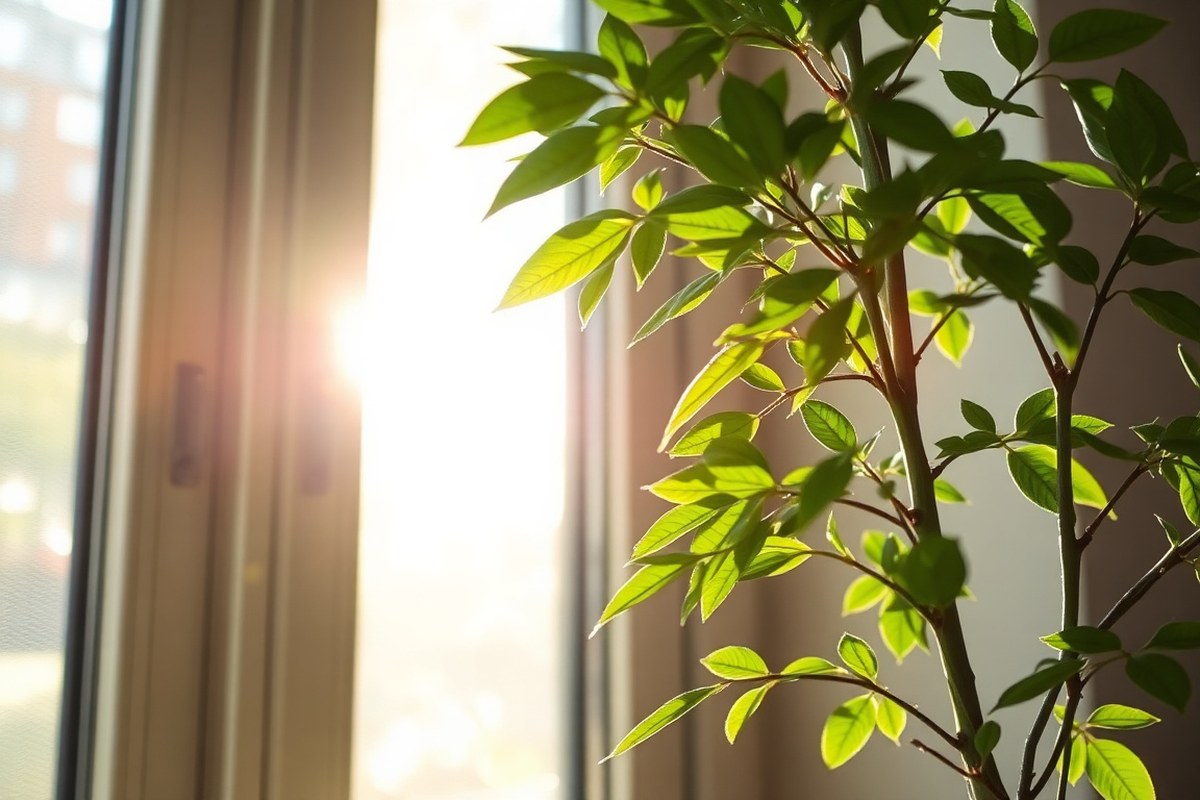
Money trees grow best in bright light that doesn’t hit them directly. Direct sunlight can burn their leaves fast and harm the plant. Indirect light keeps them healthy and safe from leaf damage.
These plants naturally grow beneath forest canopies in Central America. There, the light is soft and scattered, rarely exceeding 2,500 foot-candles. This diffused light helps them grow well without the harshness of direct sun rays.
Let your money tree have about an hour of soft sun each day. This gentle sunlight helps the plant without causing harm. Avoid longer sun exposure to keep leaves healthy.
Morning sun through an east-facing window works best. Your money tree needs some space from strong afternoon sun.
Move it a few feet back or use curtains to soften light. This protects leaves from burning in intense sun.
Bright indirect light for 6 to 8 hours each day gives the best growth results. Too much direct sun raises light intensity above 1,000 foot-candles, increasing the risk of leaf burn. It also dries out soil faster, which stresses the plant.
Gradually introducing your money tree to any direct sunlight helps prevent shock. Start with short exposure times and watch your plant closely. Pale or crispy leaf edges mean it’s getting too much sun and need more shade.
Ideal Light Conditions for Money Trees Indoors
Your money tree does best in bright, indirect light. This means it needs about 6 to 8 hours of filtered sunlight daily. The intensity should allow you to read a book comfortably without artificial light.
Direct sunlight can burn its leaves, so avoid placing it in harsh sun. Artificial grow lights can replace natural light, helping your plant thrive when sunlight is limited. Use them for 12 to 14 hours daily to mimic a long summer day.
| Type of Light | Light Intensity (lux) | Typical Location/Placement |
|---|---|---|
| Full Sun (Direct) | 32,000, 100,000 | Sunlit window 3 to 4 hours |
| Partial Sun (Indirect) | 10,000, 25,000 | North or east-facing window with no direct sun |
| Medium Light | 500, 1,000 | 5 feet from a bright window, no direct sun |
| Partially Shaded (Low) | 100, 500 | North or east window, shaded spots |
| Completely Shaded (Little) | <100 | Indoor corners, away from windows |
Position grow lights about 12 to 18 inches above the tree’s top. This distance delivers enough light without overheating leaves. Keep lights on for 12 to 14 hours, then switch off to mimic a day-night cycle.
Bright, indirect light helps your money tree grow healthy leaves and strong stems. You can place it near an east-facing window about 3 feet back. This spot gives enough light without strong rays that could scorch the leaves.
Keep direct sunlight away from your money tree to prevent leaf burn and stress.
Signs Your Money Tree Is Getting Too Much or Too Little Light
Too much light can quickly harm your money tree. Leaves may look scorched with dry, brown patches or crispy edges. The plant might droop or lose its bright green color, showing signs of sunburn or stress.
Low light causes different troubles. Your money tree’s leaves could become pale or yellow. They may start drooping or falling off.
Growth slows down, and the whole plant looks weak and unhappy. Moving it to a better-lit spot usually helps.
- Sunburn symptoms: brown or whitish spots on leaves, crispy edges, wilting leaves, faded green color
- Low light can cause pale or yellow leaves. You may see droopy or dropping leaves. New growth might be very slow or stop entirely.
- For sunburn, move the tree away from direct sunlight immediately
- To fix low light, move the tree closer to an east or west-facing window
- Use a sheer curtain to filter bright light if sunburn occurs
- Check leaves weekly for changes after moving your plant
Relocating your money tree makes a big difference. Spot leaf scorch? Move your money tree to shade immediately.
Use indirect light or filtered sunlight to protect the plant. A sheer curtain works well and costs less than $10.
For low light, placing the plant near a bright window helps. East- or west-facing windows avoid harsh midday sun. Natural light is low.
Use a grow light 12 to 14 hours daily. This keeps your tree healthy without burning.
How to Safely Acclimate Money Trees to Direct Sunlight
Money trees need time to adjust to direct sunlight to avoid shock and leaf burn. Gradually increasing sun exposure over days helps the plant build tolerance. Watching for stress signs guides how fast to proceed.
Step 1: Introduce Brief Morning Sunlight
The gentlest sun for money trees comes from an east-facing window before 8:30 a.m. It lasts under 1.5 hours and usually needs no acclimation. For other windows, start with even less sunlight, about 30 minutes.
This limited exposure helps your money tree adapt without getting burned. Avoid sudden jumps in sun time to keep leaves safe.
Step 2: Increase Duration and Intensity Gradually
Over 10 to 14 days, slowly extend direct sun from 30 minutes to 2 hours. This works well near south-facing windows with sheer curtains. Extend the time by 10 to 15 minutes every few days, watching the leaves daily.
When moving outside to dappled shade, stretch acclimation to 21 days. For full outdoor sun, give your plant 4 weeks or more. Limit sun exposure to before 8 a.m. Only.
This helps the plant adjust safely.m. Only. Gradual exposure lets the leaves adjust to stronger light levels.
Step 3: Maintain and Monitor for Stress
Keep a daily eye on your money tree’s leaves and growth during acclimation. Check for brown tips, scorched patches, leaning, or leaf drop. These signs mean reduce sun time or add a sheer curtain.
Keep watering normal and avoid fertilizing more during acclimation. After 2 weeks, check if the plant looks healthy.
You can keep the same sun time or slowly increase it. Slowing down increases success and prevents damage.
- Place your money tree near an east-facing window for 30 minutes daily.
- Every 3 days, add 10-15 minutes of sun exposure if no stress appears.
- Observe leaves each day for burn signs or drooping.
- Leaf burn means the plant gets too much sun. Cut back on sun exposure right away.
- Once 2 hours of direct sunlight is reached safely, maintain this level.
- For outdoor acclimation, start in dappled shade under 60% shade cover.
- Increase outdoor sun time slowly over 3 to 4 weeks.
- After 2 weeks without stress, consider minor sun time increases.
Best Window Placements and Light Orientations for Money Trees
Windows facing east or west provide the best light for money trees. They get bright, indirect light in the morning or late afternoon. This helps avoid the scorching rays of midday sun many plants struggle with.
South-facing windows deliver strong direct sunlight, often too harsh for these trees. You can keep a money tree here.
But place it three to five feet away from the window. Use a sheer curtain or a blind to filter the sun’s rays.
| Window Direction | Light Quality | Filtering Option | Placement Tip |
|---|---|---|---|
| East | Bright, indirect morning light | Usually none needed | Close to window is fine |
| West | Afternoon light, can be strong | Sheer curtain or blind recommended | Near window or a few feet back |
| South | Intense midday sun, high risk | Sheer curtain essential | Three to five feet back plus filter |
| North | Low natural light | Not recommended for this plant | Better off elsewhere |
Light intensity differs by region and season. In the south, strong summer sun demands more filtering.
Using sheer curtains costs $10 to $30 and lets sunlight soften without blocking it entirely. A simple roller blind works too.
Put the tree a few feet away from a sunny window. This stops harsh direct rays. The tree then gets softer, gentler light.
This also reduces the risk of browning leaves or leaf drop. Avoid dark corners or deeper rooms with no sunlight.
Watch for leaf edges turning brown; it signals too much direct sun exposure.
Adjusting Watering and Fertilizer Based on Light Levels
More light means your money tree uses water faster. When it gets bright indirect light, water it every 7 to 10 days. In lower light, watering every 10 to 14 days usually works better.
Always check the top inch of soil first. When the soil feels dry, go ahead and water your tree.
Fertilizer needs also change with light levels. Your money tree grows more quickly in brighter light. So feed it once a month during spring and summer.
Use a balanced liquid fertilizer diluted to half strength to avoid root burn. Cut back fertilizing in fall and winter when light and growth slow down.
Overwatering shows as yellowing or spotted leaves, often linked to less light. Underwatering causes droopy, dry leaves and slow growth. Your tree needs less water in low light.
Water less often to avoid too much moisture in its trunk. In brighter spots, dry soil between watering prevents root rot.
Money trees store water in their thick trunks. So avoid watering schedules based only on a calendar. Use the soil dryness test combined with how bright your light is.
Change how you water and feed your tree with the seasons. Also, watch your room’s light. These steps keep your tree healthy.
Using Artificial Grow Lights as a Supplement or Alternative
Using artificial grow lights can help your money tree get enough light indoors. The best option is LED full-spectrum lights that mimic natural light. Place the light right and set a timer to keep your plant’s light cycle consistent.
Types of Grow Lights Suitable for Money Trees
Full-spectrum LED grow lights suit money trees best. They mimic the filtered, natural light these plants prefer. Avoid fluorescent tubes because they often lack the right light spectrum and intensity.
LED bulbs come with different power levels and sizes. A 10 to 20-watt LED light suits a single money tree.
This works well in a low-light room. Some bulbs offer adjustable features to change the light temperature and intensity.
- Full-spectrum LED lights for natural, balanced light
- Compact bulb-style LEDs for small spaces or single plants
- Adjustable brightness and color temperature options
- Avoid fluorescent tubes because of weak light spectrum
- Look for energy-efficient and long-lasting bulbs
- Choose waterproof or moisture-resistant lights if near humid spots
Recommended Duration and Distance
Keep LED grow lights 12 to 24 inches above the plant’s top leaves. Too close can burn the leaves, while too far reduces light exposure. Adjust the height if the plant shows signs of stretching or leaf damage.
Provide 12 to 14 hours of light each day. This schedule mimics natural day length and supports healthy growth. Your light is less bright, so increase the exposure time.
Using Timers for Consistent Lighting
Set a timer to automate your light’s on and off cycle. This helps keep your money tree on a steady day/night rhythm.
Pick a timer that lets you give 12 to 14 hours of light. Then, set 10 to 12 hours of darkness.
A basic plug-in timer is simple to use. Plug your grow light into the timer and program it to turn on between 8 a.m. And 8 p.m., for example. Consistent timing avoids stressing your plant with irregular light exposure.
Seasonal Changes and Their Impact on Money Tree Light Needs
Light changes a lot with the seasons. In spring and summer, days are longer and light is stronger. This means your money tree will grow faster and drink more water.
In fall and winter, light gets weaker and shorter. Your money tree will slow down and need less water.
Move it closer to bright windows in winter. This helps it get enough light without burning its leaves.
Temperature shifts with the seasons, too. Money trees like 65 to 80 degrees Fahrenheit.
In winter, keep them away from cold drafts or heaters. Your home air might be dry, so use a spray bottle or humidifier.
Summer heat can dry out the soil quickly. Check water by sticking your finger in the soil about an inch deep.
When soil feels dry to touch, go ahead and water the plant. In winter, water less often, usually every 2 to 3 weeks.
Feeding your money tree changes with light and growth, too. Use a balanced liquid fertilizer once a month during the growing season. Stop feeding in fall and winter since the plant rests then.
Tracking light intensity helps you spot problems early. Try a smartphone light meter app or observe how quickly shadows fade. Mornings and late afternoons provide gentler light, better for summer care.
Keep your money tree away from heating vents in winter. Dry air stresses its leaves.
How to Recover a Money Tree After Sun Damage
To recover a money tree after sun damage, start by spotting signs early. Then prune away burned leaves carefully. Finally, change the plant’s environment to speed healing and prevent more damage.
Identify and Assess Damage
The first sign of sun stress is brown, dry leaf spots. These patches show the leaves are getting damaged. Watch your money tree for these changes closely.
These patches usually appear on leaves directly facing the sunlight. Yellowing edges or leaves curling up also indicate sun damage.
Check the leaves regularly for these symptoms, especially if the plant sits near a bright window. Early detection prevents worsening damage and leaf drop, which wastes the plant’s energy.
Prune Affected Leaves Safely
Remove only the leaves with visible damage to help the plant focus on healthy growth. Use clean, sharp scissors or pruning shears to avoid spreading disease. It’s best to cut just above the damaged leaf stem’s base.
This method keeps your plant looking neat and healthy. Always use clean tools to avoid infection or disease.
Prune your money tree once or twice each year in spring. Early summer also works to match the plant’s growth pattern.
Pruning at these times encourages strong, healthy growth. Avoid heavy pruning too often, since money trees don’t need frequent trimming.
Adjust Environment and Support Recovery
Move the money tree to a spot with indirect sunlight for at least two weeks. Bright, filtered light helps damaged leaves recover without further burning. Keep room temperatures between 65 and 75°F to avoid stress.
Dry air makes damage worse, so boost humidity around your plant. Put a humidifier nearby or a water tray under the pot. Water moderately, allowing the top inch of soil to dry before watering again.
- Inspect leaves daily for brown spots, yellow edges, or curling.
- Use clean pruning shears to cut off affected leaves near the stem base.
- Shift the plant away from direct sunlight to a bright, shaded spot.
- Keep room temperatures steady around 70°F without drafts or heat spikes.
- Boost humidity with a humidifier or water tray to around 50% or more.
- Water only when soil is mostly dry to avoid overwatering stress.
- Wait two to four weeks before gradually reintroducing brighter light.
- Check for new healthy growth as a sign the plant is recovering.
Step-by-Step Action Plan for Light Care of Your Money Tree
This plan helps you keep your money tree healthy with the right light and care.
- Day 1: Place your money tree near a bright window with indirect sunlight. Watch for leaf color and firmness for signs of comfort.
- Week 1: Check the leaves each day. Watch for browning or yellowing. These signs show too much or too little light.
- Week 2: Rotate your plant weekly to ensure even light exposure and balanced growth.
- Week 3: Start by moving your plant outside for 1 hour in the morning. Increase sun exposure slowly over two weeks.
- Month 1: Adjust your watering based on how much light your plant gets. More light generally means more water needed.
- Month 2: Use a balanced liquid fertilizer every 4-6 weeks. Only feed if your money tree is actively growing.
- Ongoing: Use a grow light when indoor light is less than 6 hours daily. Light should be indirect sunlight.
Frequently Asked Questions
Can a Money Tree Survive in Low-Light Areas?
Yes, money trees can survive in low light but grow slower. They prefer brighter indirect light for best health and appearance.
Does Direct Sunlight Change the Color of Money Tree Leaves?
Too much direct sunlight can cause leaf scorch and fading. Leaves may turn brown or yellow near the edges.
Is It Safe to Place a Money Tree Outside in the Sun?
Money trees can handle some outdoor morning sun if acclimated. Avoid harsh afternoon sun that can burn leaves quickly.
How Often Should I Rotate My Money Tree in Relation to the Light?
Rotate your money tree every few weeks to get even light exposure. This helps prevent lopsided growth and keeps leaves healthy.
Can Window Glass Block Harmful Rays from Direct Sunlight?
Yes, window glass reduces UV rays but doesn’t fully block intense sun. Use curtains for softer, indirect light to protect leaves.
What Effect Does Artificial Light Have on Money Tree Growth?
Artificial light can support growth if natural light is weak. Use full-spectrum grow lights 6, 8 hours daily but keep them at a distance.
Wrapping Up
Money trees don’t need direct sunlight but do best in bright, indirect light. Watch your plant’s leaves to find the right balance. Try adjusting your plant’s spot based on how the light changes through the year.
One Comment