What Vegetables to Plant Together: A Complete Companion Planting Guide
Knowing what vegetables to plant together helps your garden grow stronger. Some plants support each other’s growth or help keep pests away. Planting corn, beans, and squash together boosts yields and uses space efficiently.
Start by choosing pairs that fit your garden’s space and sunlight. Watch spacing clues carefully; tomatoes need room, while beans can climb nearby corn stalks. Avoid mixing plants that compete for the same nutrients or attract the same pests.
Plant companions based on their nutrient needs and pest resistance. For example, marigolds planted near tomatoes can act as natural pest repellents. Timing matters too, such as planting okra once the night stays above 55°F to ensure healthy growth.
Use vertical space by growing peas or cucumbers on trellises near bushy plants. Rotate crops each season to keep soil healthy and reduce pest buildup. Combining these strategies boosts your vegetable garden’s health and productivity.
Key Takeaways
- Plant corn, beans, and squash together using the Three Sisters method.
- Space lettuces 15 inches apart to interplant okra successfully.
- Keep plant roots 12-18 inches apart to avoid resource competition.
- Add marigolds near potatoes to boost yields by supporting microflora.
- Let herbs and flowers bloom to attract more pollinators to vegetables.
- Pull weak plants after 10-14 days if leaves stay smaller than normal.
What Vegetables Grow Best Together for Mutual Benefit?
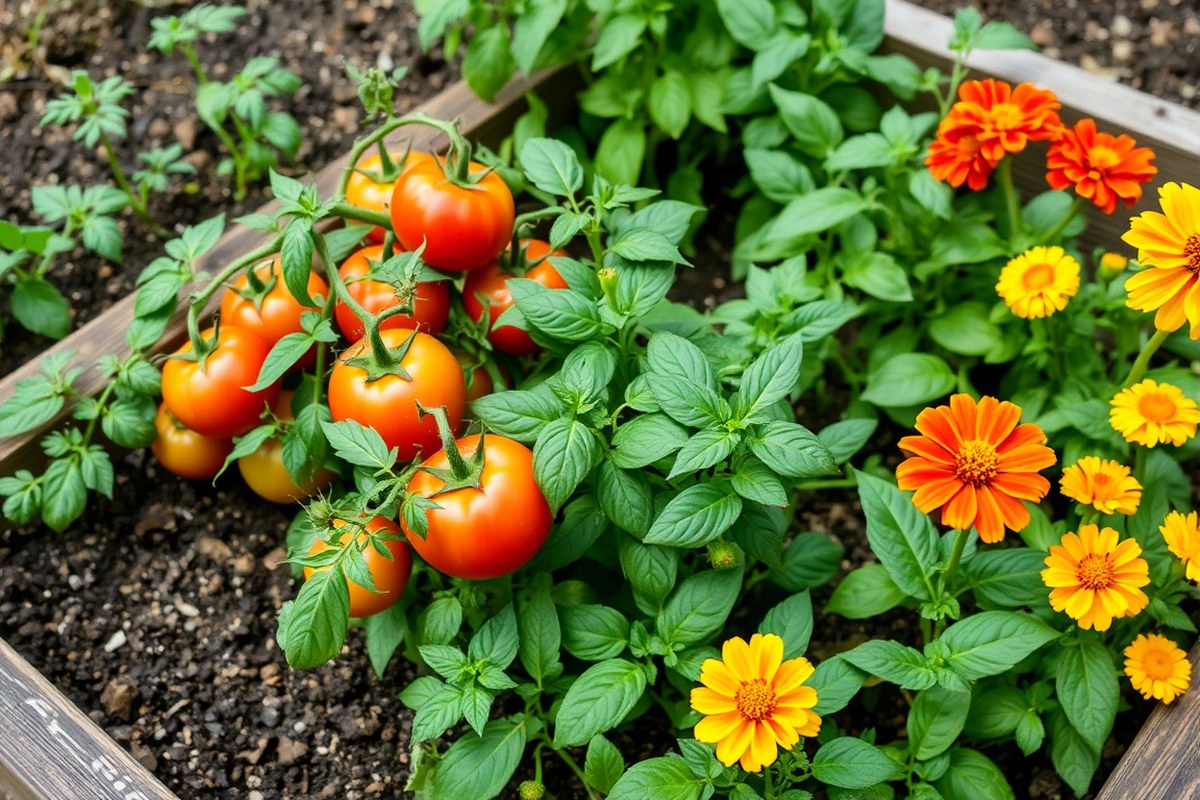
Planting certain vegetables together helps them grow better and keep pests away. Tomatoes thrive next to basil, which repels bugs and even improves tomato flavor. Peppers do well with onions nearby, as these onions deter many pests common to peppers.
Root vegetables like carrots, parsnips, and radishes don’t compete underground. They grow safely next to cucumbers without issues.
Plant leafy greens such as lettuce in the shade of taller plants. Tomatoes or beans make good shade to protect them from strong sun.
- Tomatoes and basil: pest control and flavor boost
- Peppers and onions: natural pest deterrent
- Beans and carrots: soil nutrient benefits
- Pole beans and corn: beans fix nitrogen and climb corn stalks
- Cucumbers and lettuce: lettuce provides shade and ground cover
- Root vegetables near cucumbers: no root competition
Beans and carrots pair well because beans add nitrogen to the soil. Carrots grow in different soil layers, so they don’t compete.
Pole beans climb corn stalks, saving space and creating natural support. Mixing fast-growing greens in wide spaces among taller vegetables uses your garden area well.
Avoid planting vegetables that share pests, like corn and tomatoes together. Also, putting potatoes near tomatoes can spread blight between them. Proper pairing protects plants from disease and pests, improving overall garden health without chemicals.
Which Vegetables Should You Avoid Planting Together?
Some vegetables should not grow close because they harm each other. Plants might compete for nutrients, water, or sunlight, or release chemicals that stop neighbors from growing. Knowing which pairs to avoid saves you wasted effort and poor harvests.
Plants that compete for the same resources often stunt each other’s growth. For example, tomatoes and brassicas both need lots of nutrients. So plant them apart to prevent poor yields.
Onions stop beans and peas from growing well. Beans and peas add nitrogen to soil. Onions block these legumes from getting nitrogen they need.
| Competition Type | Impact | Examples |
|---|---|---|
| Nutrient Competition | Rapid soil nutrient depletion | Heavy feeders planted together (tomatoes + brassicas) |
| Water Competition | Reduced moisture availability | Plants with similar root depths (sunflowers + potatoes) |
| Light Competition | Reduced sunlight exposure | Tall plants shading sun-loving crops (corn + tomatoes) |
| Chemical Interference | Growth inhibition | Allelopathic plant interactions (fennel near most vegetables) |
Sunflowers and potatoes both need lots of water and nitrogen. So avoid planting them near each other.
Fennel releases chemicals that block other plants’ growth, so put it on its own. Also, tall plants like corn will shade tomatoes, cutting sunlight drastically and slowing growth.
Avoid pairing potatoes and zucchini because they both spread wide and compete for space. Parsley and carrots can’t share either, as they interfere with root growth. These bad matches cause slow growth and reduce harvest quality.
Watch for plants with different root depths and growth heights to reduce competition.
Leafy greens like spinach and lettuce have specific plants they don’t like nearby. Spinach grows poorly near potatoes.
Lettuce should avoid the cabbage family to prevent growth issues. Following these rules helps prevent weak plants and pest problems.
How Do Nutrient Needs Influence Companion Planting Choices?
Vegetable nutrient needs shape how you pick companion plants. Some plants use a lot of nutrients, especially nitrogen. Others help add nitrogen back to the soil.
Nitrogen fixers like beans and peas pull nitrogen from the air. They store it in the soil through their roots. This helps improve soil health for other plants.
Heavy feeders such as cauliflower, corn, and cabbage drain soil nutrients quickly. Pairing these with nitrogen fixers can keep the soil fertile longer without adding extra fertilizer. For example, beans planted near heavy feeders supply nitrogen to the soil as they grow.
Spacing is also important to avoid nutrient competition. Give nutrient-heavy plants at least 12 to 18 inches apart.
Allow nitrogen fixers enough room (often around 6 to 12 inches) to spread their roots. Overcrowding leads to plants fighting for nutrients and water.
The following table shows common heavy feeders and nitrogen fixers for your vegetable garden:
| Plant Type | Examples | Nutrient Role |
|---|---|---|
| Heavy Feeders | Cauliflower, Corn, Cabbage, Potatoes, Zucchini | Consume high nitrogen & nutrients quickly |
| Nitrogen Fixers | Beans, Peas, Lentils | Add nitrogen to soil via root nodules |
| Light Feeders | Beets, Carrots, Radishes | Use fewer nutrients, less competition |
For example, avoid planting potatoes and zucchini close because both use lots of nutrients fast. Plant beans near heavy nitrogen feeders to balance nutrient use naturally. You can also add light feeders like beets to fill space without robbing the others.
Follow this rule for nutrient balance: mix nitrogen fixers with heavy feeders. Then plant light feeders around them for best results.
This works even in small beds or containers if you keep roots from crowding. It helps soil stay healthy and improves overall plant growth.
How to Use Companion Planting to Improve Pest Control Naturally?
Planting certain vegetables together helps control pests naturally. Some plants repel insects, while others attract helpful bugs that eat pests. This lowers damage and cuts down on chemical use.
Plants That Repel Common Pests
Onions are great at repelling aphids and keep these pests away from nearby vegetables. Nasturtiums act as a trap crop, luring aphids to their leaves and protecting other plants. Dill reduces cabbage worm attacks on brassicas like broccoli and cauliflower.
Marigolds also help keep aphids and beetles from damaging cucumbers. Basil repels pests and boosts the flavor of tomatoes planted nearby. These plants can improve your garden’s health without extra sprays.
Attracting Beneficial Insects with Flowers
Flowers like alyssum, dill, and buckwheat attract ladybugs, lacewings, and parasitic wasps. These insects prey on aphids and beetles, reducing pest populations. Plant them close to your vegetables for the best effects.
Tansy planted along garden edges brings many useful insects. It also repels pests at the same time. This helps keep your garden healthier.
Even small blooms on herbs like basil and dill play a big role. Pollinators also visit these flowers, helping your vegetables produce more fruits and seeds.
Creating Pest-Disruptive Plant Groupings
Mix plants with different jobs near each other to cut pest buildup. For example, add scent disruptors like onions about 12 to 18 inches from crop rows.
This delays pests settling on your main vegetables. Use trap crops such as nasturtiums on bed edges to concentrate pests away from your harvest.
Ground covers like low-growing herbs reduce soil splash and cool the roots, cutting fungus problems. Shade helpers planted west of heat-sensitive crops reduce midday wilting. Planning your bed so plants support one another leads to stronger pest control without chemicals.
Follow these steps to set up pest-disruptive plant groups:
- Choose vegetables prone to specific pests in your area.
- Add repellent plants like onions or marigolds near vulnerable crops.
- Set trap crops, such as nasturtiums, on the garden edge or outer rows.
- Include flowers like alyssum or buckwheat to attract predatory insects.
- Plant scent disruptors within 18 inches of main crops to confuse pests.
- Use ground cover plants beneath taller vegetables to reduce soil splash.
- Add shade helpers on the western or southern edges for heat stress protection.
- Watch plant health and pest activity weekly to adjust layout as needed.
What Are the Classic Companion Planting Systems and Their Benefits?
The Three Sisters system plants corn, beans, and squash together. Indigenous groups like the Iroquois and Cherokee have used this for over 1,000 years. Corn grows tall, acting as a natural pole for beans to climb.
Beans fix nitrogen in the soil. This benefits the corn and squash by supplying needed nutrients. Squash spreads low on the ground, shading soil and stopping weeds from growing.
To try this, make a mound 12 inches high. The mound should be 18 inches wide. Plant it in late spring.
Place corn seeds in the center, four or five per mound. When the corn reaches 4 to 6 inches tall, plant beans around it. Finally, scatter squash seeds near the mound base.
This system saves space and boosts yield by making plants help each other. Corn roots dig deep, loosening soil and helping shallower roots like beans. Squash leaves also trap moisture, which reduces the need to water frequently.
Other companion planting traditions exist beyond the Three Sisters. For instance, some gardeners plant onions near carrots to discourage carrot root fly. You can also grow basil near tomatoes to improve their growth and taste.
Avoid planting beans before corn in cold soil. Wait till the corn stalks are sturdy enough for support.
How to Plan Garden Layout Combining Companion Vegetables Effectively?
Start designing your garden layout by grouping companion vegetables based on their needs. Keep 12 inches between groups for good airflow and healthy growth. Combine several companion strategies in one bed to make the most of space and benefits.
Mapping Plant Groups and Spacing
Separate your garden into groups by plant function. Group nitrogen fixers, pest repellents, and heavy feeders. This helps organize your planting plan clearly.
Leave about 12 inches between these groups to avoid crowding. This spacing helps roots and leaves grow without competing for nutrients and sunlight.
Sketch your bed layout before planting. Use a free bed planner tool online. It shows the right spacing for your vegetables.
This makes planting easier and more accurate. Mark out areas for each group clearly to keep plants organized and healthy.
Ensuring Airflow and Light Access
Good airflow reduces plant diseases. Leave at least 12 inches between plant groups. Space herbs like basil 12 to 18 inches from tomatoes.
This gives plants enough room to grow well. This keeps air flowing and lets each plant get enough light.
Plant tall crops like corn or trellised beans on the north side. This avoids shading smaller plants. It keeps sunlight available for all your plants.
This placement prevents them from shading shorter plants. It also improves sunlight exposure and air circulation throughout the bed.
Combining Companions for Layered Planting
You can mix companion plants in the same bed by layering vertically and horizontally. Use vines or tall plants for the upper layer. Plant low-growing herbs or root crops below.
Combine pest-repelling plants with vegetables that need help growing. Just keep in mind the spacing and airflow rules still apply. This layering saves space and improve the garden ecosystem.
Follow these steps for practical garden layout planning:
- List your vegetables and companion species based on plant roles.
- Measure your garden bed and draw a scaled map on paper or use a digital planner.
- Group plants by companion roles, ensuring at least 12 inches between groups.
- Place taller plants on the north or west side of the bed to avoid shading.
- Set herbs 12 to 18 inches away from tall, dense plants to maintain airflow.
- Plan vertical layers by combining climbing plants with ground-level companions.
- Check spacing on your sketch to avoid overcrowding and allow room for growth.
- Adjust plant numbers to match the space and prevent competition.
What Flowering Plants and Herbs Best Complement Vegetable Companions?
Adding flowers and herbs that attract pollinators helps your vegetables grow. It can boost your garden’s yield by about 30 percent. Pollinators like bees are key for better crops.
Bees, butterflies, and hummingbirds improve pollination, which helps crops set fruit and seeds better. Letting herbs flower or planting easy-to-grow flowers nearby invites these helpful visitors.
Some herbs also keep pests away or improve soil quality. Plant basil near tomatoes to help keep some bugs away. Chives planted by carrots can lower aphid numbers.
These herbs help protect your plants naturally. Herbs improve flavor and help create a healthy garden ecosystem when mixed with vegetables.
- Marigolds attract pollinators and can deter nematodes.
- Basil helps repel flies and mosquitoes near tomatoes.
- Lavender draws bees and repels moths and fleas.
- Calendula supports pollinators and attracts beneficial predatory insects.
- Chives reduce aphids and improve soil when planted near carrots.
- Sweet alyssum attracts hoverflies, which control aphids.
- Dill flowers attract lacewings, beneficial for pest control.
Plant flowers and herbs throughout vegetable beds, not just on the edges. You can also mix them in containers to save space and add beauty.
Make sure flowers have full sun if your vegetables need it. Choose herbs that fit your soil type.
For best results, start seeds of flowers and herbs a couple weeks before your vegetables. This gives pollinators time to discover your garden as the veggies bloom.
Avoid crowding plants too close. Spacing of 6 to 12 inches is good for most companion herbs and flowers.
Gardeners using container setups can grow herbs, vegetables, and flowers together. This method saves space and still attracts pollinators and beneficial insects nearby. Just use a quality potting mix, water regularly, and rotate plants to keep soil healthy.
When and How Do Seasonal Factors Affect Companion Planting Success?
Plant companion vegetables in spring after the last frost date. Soil temperatures should be between 50 and 70 degrees Fahrenheit for most warm-season crops. Cold-tolerant plants like broccoli or onions go in early.
The soil should be 40 to 50 degrees. They handle cooler ground better than other veggies.
Warm temperatures speed up plant growth but can stress cool-season vegetables. Start cool-season companions like lettuce or peas 2 to 3 weeks before frost risk ends. Follow with warm-season companions such as tomatoes or peppers once nights stay above 50 degrees.
Watch companion plant growth rates when thinning or transplanting. Remove weaker seedlings within two weeks of emergence to avoid crowding. Transplant plants when roots fill the seed trays.
This usually happens 4 to 6 weeks after sowing indoors. Watch the roots closely for the right time.
Success depends on timing your companions’ needs so they don’t outgrow each other. For example, quick-growing radishes pair well with slower beans if radishes finish first. Delay sowing fast growers too late, or they shade companions or exhaust soil nutrients.
Thin seedlings promptly to reduce competition and improve airflow around companions.
Soil warming is important. Waiting too long can shorten your growing season. Early planting risks frost damage.
So check your regional frost dates with local extension services. Use row covers for some frost protection if needed.
Plant companions with overlapping harvest times carefully. Remove or harvest a plant that matures too early. This makes room for other plants to grow well.
It helps all companions do better together. Adjust planting intervals by up to two weeks based on your local climate and seasonal changes.
Match planting schedules to each vegetable’s needs. Consider temperature and growth patterns for best results. This keeps your companion plants healthy and balanced.
Use your local frost dates and soil tests as guides. Timing companion plants keeps your garden balanced, healthy, and productive.
How to Identify and Fix Common Companion Planting Problems?
Companion planting can backfire if plants compete for space, nutrients, or attract pests. You may see droopy leaves, slow growth, or spreading damage. Catching these signs early lets you adjust your planting for better results.
Identifying Competition and Growth Issues
Plants crowded too close often droop in the afternoon or have thin stems. This usually happens after 5 to 7 dry days when water and nutrients run low. Small new leaves and slow growth in the middle of the season occur.
These signs hint at nutrient crowding in your garden soil. Watch your plants closely for these symptoms.
Too many plants in one spot cause root competition and poor nutrient uptake. Planting tomatoes next to corn can cause problems. They compete for sunlight.
They also fight over soil nutrients and both starve. Watch for uneven or patchy germination, which may mean chemical inhibition from nearby plants.
Recognizing Pest and Disease Patterns
Damage moving quickly from one plant to another shows pests or disease. This usually happens within 3 to 7 days after the first signs appear. When two companion plants share a pest pathway, insects or pathogens spread faster.
Look for holes, wilting, spots, or sticky residue on leaves. These may start on one crop but reach neighbors if no barriers or buffers exist. A cluster of damaged plants in a row often points to shared pest problems between companions.
Practical Fixes for Common Companion Errors
Start by spacing plants further apart when you see drooping stems or slow growth. Removing one of the competing crops may be needed if space is tight. For nutrient crowding, thinning rows helps give surviving plants more access to resources.
Pests spread fast when crops are close. Separate those crops or plant a non-host between them. This creates a buffer zone to slow pests.
Patchy germination calls for replanning with non-inhibiting companions in different areas. Adjust watering slightly to avoid dry spells that worsen competition symptoms.
- Increase spacing between plants by at least 4 to 6 inches
- Thin seedlings early to reduce root competition
- Use marigolds or herbs as pest barriers in rows
- Remove or relocate weak or heavily damaged plants
- Rotate crops yearly to prevent soil chemical buildup
- Water consistently to avoid stress during dry spells
Check your garden weekly for new signs of trouble. Adjust your plan if problems persist by switching companions or reshaping rows. Keeping an eye on plant health ensures your companion planting works well across the season.
Step-by-Step Action Plan for Companion Planting Success
Get started with companion planting by following these simple steps. Each one helps your garden grow better and stay healthier.
- Before planting: Choose vegetables that benefit each other in the same bed. Look for good matches like tomatoes with basil or carrots with onions.
- Week 1: Start planning your garden layout with classic companion planting. Use the Three Sisters system: corn, beans, and squash. These plants grow well together and help each other. Check the spacing to allow good air flow.
- Week 2: Add flowering plants and herbs near vegetables to attract helpful pollinators and repel pests. Marigolds and nasturtiums are great examples.
- Week 3: Monitor your plants for signs of nutrient shortages or pest damage. Yellowing leaves or holes are red flags.
- Week 4: Adjust watering and fertilizing to balance nutrient needs. Use compost and mulch to keep soil healthy and moisture steady.
- Month 2: Rotate crops in your next planting to prevent soil depletion and avoid pest build-up. Change locations for families like nightshades and brassicas.
- Ongoing: Keep a garden journal to track which companion pairs worked well. Note any problems and fix them early.
Frequently Asked Questions
Can You Grow Tomatoes and Potatoes Together?
It’s best not to plant tomatoes and potatoes together. They often get the same pests and diseases.
Blight spreads fast and can harm both crops. This can seriously hurt your garden plants.
Is It Okay to Plant Corn Near Beans?
Yes, corn and beans are great companions. Beans add nitrogen to the soil.
This helps corn grow stronger. Corn gives beans support to climb on.
How Close Can You Plant Carrots and Radishes Side by Side?
Plant carrots and radishes in alternating rows fairly close together. Radishes grow fast and harvest early, giving carrots room to mature without competition.
Should Onions Be Planted with Strawberries?
Onions can be planted near strawberries to help repel pests like aphids. But keep some space so onion bulbs get enough sun and air circulation.
Can You Plant Cucumbers and Sunflowers Together?
Yes, cucumbers and sunflowers work well together. Tall sunflowers give shade and support for cucumbers.
Cucumbers like filtered sunlight on hot days. This helps them grow better.
Do Zucchini and Potatoes Compete If Planted Nearby?
Zucchini and potatoes both need lots of space and nutrients. Planting them too close leads to competition, which can reduce overall growth and yield.
Wrapping Up
Planting vegetables together can boost growth and reduce pests naturally. Start small with easy pairs and build your garden’s health over time. Try planting tomatoes with basil this season to see a fresh benefit firsthand.