How Much Sun Does a Spider Plant Need? A Complete Guide for Healthy Growth
How much sun does a spider plant need to thrive? Aim for about 6 to 8 hours of bright, indirect sunlight daily. That’s the sweet spot for spider plants to grow well.
It avoids leaf burn and too much stress. This balance helps the plant thrive indoors.
Direct sunlight can harm spider plants if it lasts longer than 4 to 6 hours. Avoid placing your spider plant in harsh southern windows.
Intense afternoon sun can harm it quickly. Choose a softer light spot instead.
Start with a spot that has filtered light. Pick a room filled with natural brightness. This helps your spider plant grow healthier.
Check your plant’s leaves for damage signs. Browning tips or faded colors mean move it. Adjust its location to fix this problem.
Key Takeaways
- Place your spider plant where it receives 6 to 8 hours of bright indirect sunlight daily.
- Avoid direct sunlight for more than 4 to 6 hours to prevent leaf burn.
- West-facing windows with sheer curtains work well if you diffuse the light.
- Move the plant 2 to 4 feet away from bright glass to reduce intense light exposure.
- Check your plant’s leaves for pale or yellowing stripes, a sign of too much light.
- Use LED grow lights for 12 hours daily when natural light is insufficient.
How Much Sunlight Does a Spider Plant Need Daily?
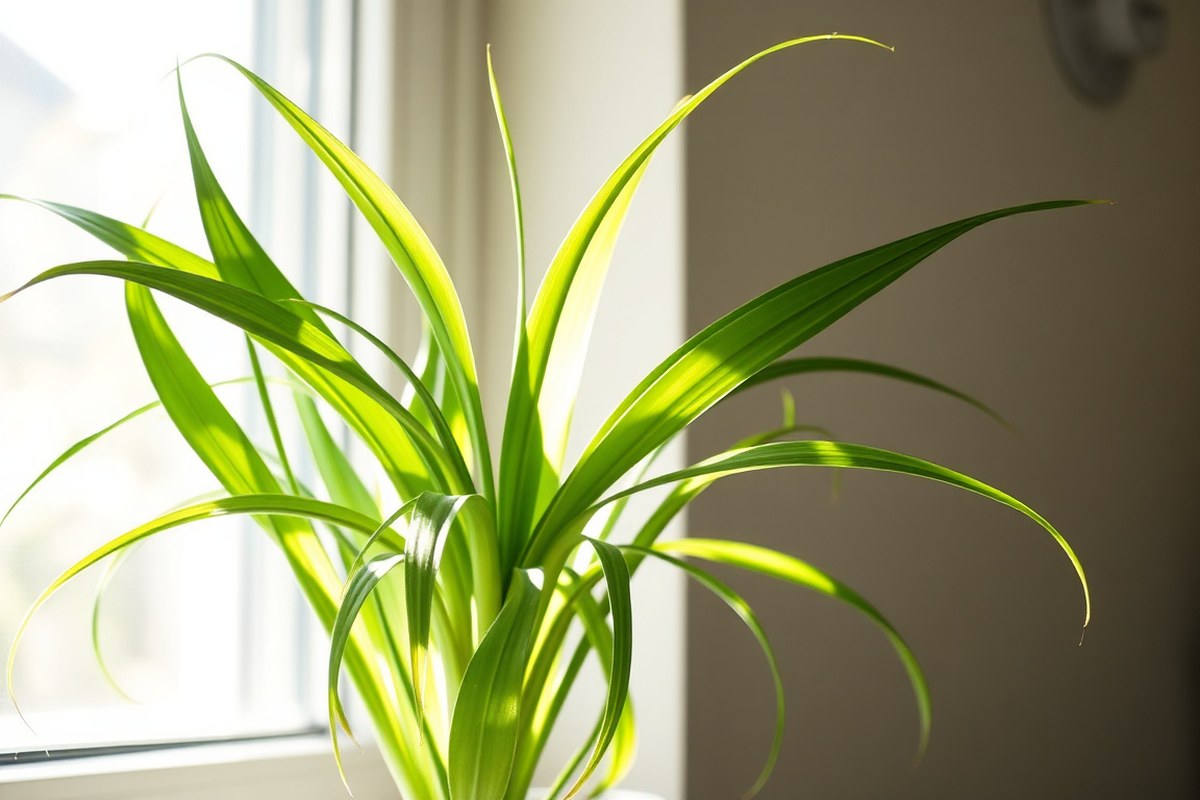
Your spider plant needs about 4 to 8 hours of bright, indirect light every day. This amount of light helps it grow well and keeps its leaves vibrant.
Too little light can make the plant grow slowly and lose its leaf color. Too much direct sunlight, especially in the afternoon, can burn the leaves and cause brown tips.
Bright indirect light means the plant gets plenty of daylight. But no harsh rays from the sun hitting it directly. East-facing windows give gentle morning sun.
They offer filtered light the rest of the day. This light suits spider plants well. You can put spider plants near west-facing windows.
Use sheer curtains to block strong afternoon sun. This keeps the plants safe. Morning sun for one or two hours is fine.
It helps the plant make more baby spider plants. Sunlight encourages growth.
Your spider plant might survive with less light. It will grow more slowly in dimmer spaces. Low light slows its growth rate.
The leaves may become all green, losing the nice white stripes on variegated types. Use a full-spectrum LED grow light for 8 to 10 hours daily. This helps when sunlight is low.
It supports healthy plant growth. Keep the light about 12 to 18 inches away from the plant to avoid overheating.
Adjust the hours if you see leaf burn or very slow growth. Following these guidelines helps your spider plant stay lush with healthy leaves and plenty of plantlets.
What Are the Best Window Directions for Spider Plants?
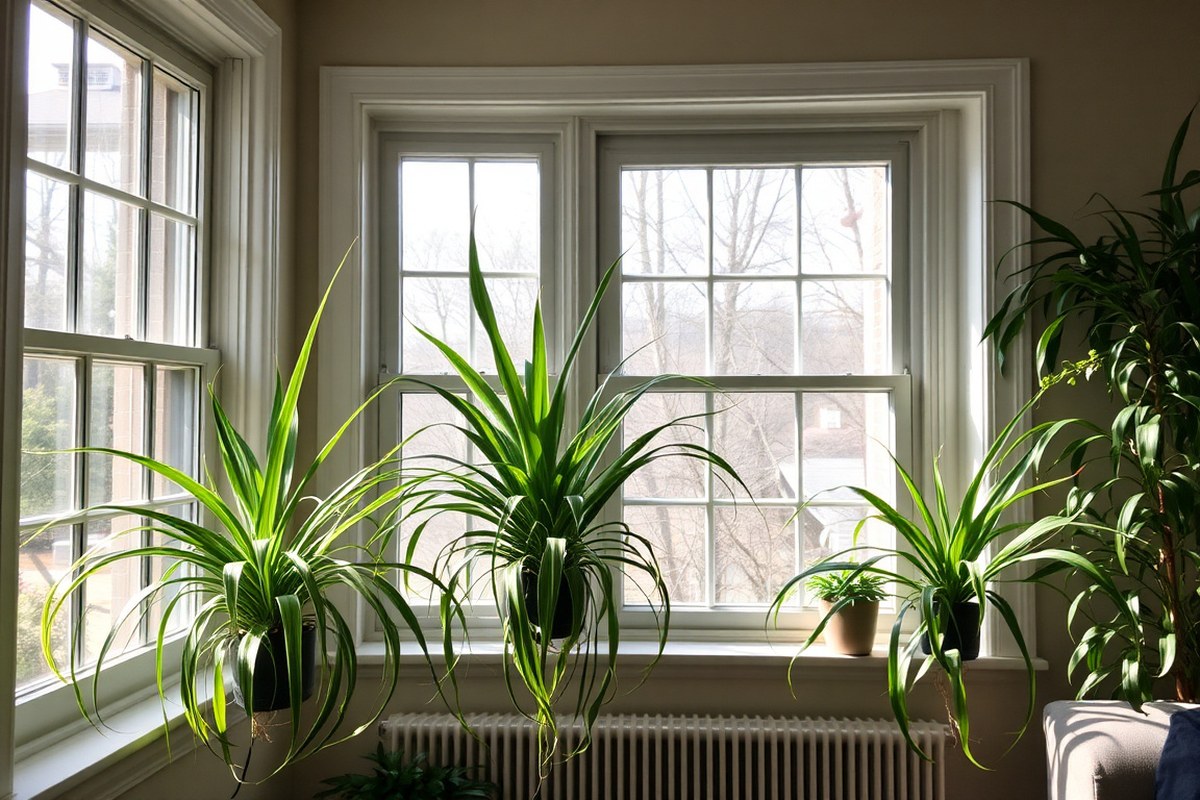
The direction your window faces changes how much light your spider plant gets. An east-facing window offers gentle morning sun and indirect light later, which suits spider plants well. South-facing windows give the brightest light but can harm leaves without some protection.
Place your spider plant a few feet away from the window. Use a south or west-facing window to avoid leaf burn. This distance helps protect the leaves from harsh sunlight.
West-facing windows give softer light most of the day. But their afternoon sun can be strong in summer.
North-facing windows have dim light. So adding a grow light often helps if plant growth slows.
| Window Direction | What to Expect | Recommendation |
|---|---|---|
| East-facing | Gentle morning sun, indirect rest of day | Ideal, usually needs no filtering |
| West-facing | Soft light most of day, stronger afternoon light | Good, watch intense summer afternoons |
| South-facing | Brightest, most direct exposure | Filter harsh direct rays or move farther back |
| North-facing | Consistently dim, no direct sun | Add a grow light if growth slows |
Try placing your spider plant 5 to 6 feet from the glass. This is for when it sits near a south-facing window. It reduces the chance of sun damage.
Adding a sheer curtain helps reduce harsh sun that can scorch leaves. Near a west-facing window, give your plant indirect light in the morning.
The afternoon rays should be diffused or indirect. This helps keep your spider plant safe.
One trick is to rotate your plant regularly. This ensures even growth and stops the plant from leaning toward the light. Make sure your spider plant gets light on all sides.
It will look fuller and healthier this way. This also stops sun damage on one side.
Brown leaf edges after afternoon sun show your plant needs more shade. Move it farther from the window to fix it. This helps prevent leaf burn.
Signs Your Spider Plant Is Getting Too Much or Too Little Light
Spider plants signal their lighting needs through clear leaf and growth signs. Brown, crispy leaves usually mean too much sun.
Pale, stretched leaves or slow growth hint at not enough light. You can watch these details closely to adjust the plant’s place.
Leaf Discoloration Patterns Explained
Brown tips and bleached stripes on leaves show direct sun damage. Leave the plant out of intense sun for more than 30 minutes.
Doing so may cause the leaves to scorch. Also, leaves curling inward with a stiff feel may suffer UV-B stress, often behind old windows.
Look for these leaf color changes to decide if light is right:
- Yellow or bleached patches mean too much direct sun.
- Pale green or faded leaves suggest too little light.
- Brown, crispy edges point to sun scorching.
- Leaves losing white stripes and turning solid green show low light.
- White stripe turning pale yellow means excessive light exposure.
Prune the damaged tips and move the plant at least three feet away from direct sunlight. It takes about 2 to 3 weeks for healthy new growth after correcting the light.
Growth Changes and Plantlet Production
Spider plants with poor light grow slowly and produce fewer plantlets. Thin, small, or underwhelming new leaves often mean low brightness levels. A droopy leaf posture usually indicates insufficient light for vitality and growth.
In bright indirect light, plants develop fuller foliage and more offshoots. Too much direct sun stops plantlets from forming properly and burns the leaf edges. Move your plant according to leaf size and plantlets.
Watch it for two weeks. See if it gets better.
How to Differentiate Light Stress from Watering Issues
Spider plant leaves can show stress signs from both lighting and watering problems. Check these before deciding what to fix:
- Brown tips alone often mean water quality or humidity issues, not light.
- Pale and droopy leaves can be due to underwatering or low light.
- Yellow from the leaf base usually points to overwatering or root problems.
- Bleached white leaf areas almost always come from too much sun exposure.
- Solid green leaves with lost stripes often mean the plant needs more light.
Feel the soil to check moisture and watch if watering matches leaf condition. This helps you avoid changing the plant’s light when watering is the true problem.
How to Acclimate Spider Plants to Brighter Light Safely
You need to increase your spider plant’s light slowly to avoid shock or leaf burn. A good plan is to add about one hour of indirect light daily.
Do this over 5 to 7 days for best results. This gradual step helps the plant adjust without damage.
Initial Placement for Starting Light Level
Begin with your plant in a spot that gets low to moderate indirect light. Keep it out of direct sunlight, especially away from midday or afternoon rays. A location near an east-facing window works well as a soft start.
Check the brightness around 1000 to 3000 lux at the plant’s leaves. This mimics a gentle indoor light environment that won’t shock the plant. Artificial grow lights can work well for your spider plant.
Set them to 8 to 10 hours daily. This helps simulate natural conditions.
Daily Increments of Additional Light Exposure
Increase the plant’s time in brighter indirect light by one hour each day. For example, start with 4 hours of light.
Next day, increase to 5 hours by opening blinds or moving the plant. Continue this pace for about a week.
Keep the light indirect and filtered; direct sun should be avoided or blocked. This slow increase lets the plant build energy without burning its leaves. Most spider plants thrive best around 10,000 to 20,000 lux.
- Start near a shaded east or north window
- Add one hour of light exposure daily
- Use sheer curtains to filter bright sun rays
- Avoid south windows with direct afternoon sun
- Use grow lights at 10 to 14 hours if natural light is low
- Place the plant 1 to 3 feet from bright windows for best light
- Move gradually and consistently to prevent shock
This plan balances light needs without putting the plant in immediate stress. Many spider plants show better leaf color and growth after proper acclimation.
Adjusting Steps Based on Leaf Condition
Watch the leaves daily for signs of distress like browning or yellowing. These changes mean the light is too strong.
Cut back to the last safe bright light time if leaf burn appears. Then, increase light more slowly.
Healthy spider leaves stay green with no scorched patches when the light is right. Keep a journal of how many hours you increase daily and note any damage. Adjustments allow your plant to reach the perfect brightness safely.
Using Artificial Grow Lights for Spider Plants: What Works Best
Grow lights can replace natural sunlight if your spider plant gets too little light. Bright LED grow lights work best for spider plants. They give the right light colors.
They stay cool and don’t get hot. Place the light 12 to 18 inches above your plant to avoid leaf damage or stretching.
Run the grow light for 12 to 14 hours daily to simulate natural indirect sunlight. Move the light farther if the leaves look burned. Bring it closer if the leaves stretch out.
Adjust the distance to keep your plant healthy. Hanging spider plants get extra benefit from lights placed above them.
| Placement | How It Works | Best Use |
|---|---|---|
| East window | Gentle morning sun and bright indirect light | Easy spot for strong growth |
| North window | Soft, lower light in many homes | Good if window is large and unobstructed |
| West window | Bright, hotter afternoon sun | Use if filtered by sheer curtain or set back |
| South window | Very bright, often direct sun | Keep a few feet back or behind sheer curtain |
| Dim interior corner | Low usable light, even if facing window | Add grow light to support better color and growth |
Spider plants thrive best in bright, indirect light. Grow lights fill in if sunlight is weak or windows are blocked. Using a light for 12 hours each day supports healthy green stripes and firm leaves.
Keep grow lights on a timer to avoid overexposure, which can stress the plant.
How Light Affects Spider Plant Growth and Plantlet Production
Spider plants need enough light to grow well and produce babies, also called plantlets. Low light keeps the plant alive, but it slows down growth. The leaves may turn a darker green, and the plantlets might hardly form.
Bright, indirect light encourages a fuller plant with arching leaves. It also helps keep the leaf variegation sharp and colorful. Without enough light, the white stripes on the leaves fade, and the plant looks less lively.
Light intensity affects how many plantlets your spider plant makes. You need bright light for 8 to 12 hours daily. This helps more babies grow on stolons.
Keep the light steady for best results. When light is too weak, the plant focuses on basic survival instead of making new plantlets.
Too much direct sunlight can harm the leaves, causing brown spots and crispy edges. That happens because the chlorophyll can’t handle the heat and strong light. Put the plant near a window with filtered or indirect light.
Full sun is not as good. Indirect light keeps the plant healthier.
In low-light spots, growth slows down. You’ll notice fewer new leaves and little or no baby production.
A common sign is that leaves look all green and lose the bright variegation. Moving the plant to a spot with bright, indirect light usually brings back strong growth.
Spider plants also respond to the length of daily light. Longer exposure to moderate, indirect light increases their energy for growth and babies. Daylight under six hours might not be enough for your plant.
It can survive but won’t grow well. Try to give it more light. It’s helpful to rotate the plant occasionally so every side gets enough light.
Dull leaf color or fewer babies means light is low. Move the plant closer to a bright window. Avoid direct sunlight on the leaves.
Using sheer curtains to soften the light works well, especially during summer. Use fluorescent or LED grow lights for 12 hours daily if needed.
Keep the plant close to the light. Artificial light helps when natural light is low.
Seasonal and Temperature Considerations for Spider Plant Light Exposure
Spider plants need adjustments in light based on seasons and temperature. Cooler months bring less sunlight, so watch your plant closely. Keep temperatures between 55°F and 80°F for healthy growth when managing light changes.
Seasonal Daylight Variation Effects
Daylight hours drop in fall and winter, reducing natural light indoors. Your spider plant may get less than six hours of bright artificial or indirect sunlight daily. This can slow growth and make leaves paler or leggy.
During spring and summer, the light increases, causing faster growth and more plantlets. You may need to move your spider plant further from direct windows to prevent leaf burn. Regularly rotate the pot for even light exposure.
Ideal Temperature Range and Its Relation to Light
Spider plants thrive between 55°F and 80°F temperature range. Temperatures below 50°F slow growth and can make the plant more sensitive to light changes. Above 80°F, the plant may dry out faster and need more frequent watering.
Keeping room temperature steady helps your spider plant adapt to shifts in light availability. Avoid putting the plant near cold drafts.
Heat sources can also stress it. Those cause brown tips on the leaves.
Winter Light Supplementation Tips
Supplement with a full-spectrum LED grow light if natural light drops below six hours daily. Keep the grow light 12 inches above the plant. This covers leaves evenly.
It won’t burn the leaves this way. Use a timer to give 12 to 14 hours of light each day during winter.
Here’s a quick winter light checklist to follow:
- Choose a full-spectrum LED grow light suited for indoor plants
- Position the light 10 to 14 inches above the spider plant
- Set the light to stay on 12 to 14 hours daily
- Keep the temperature between 60°F and 75°F while using the light
- Rotate the plant weekly for even light distribution
- Watch for brown tips as a sign of stress or too much light
Using grow lights helps spider plants stay healthy in winter. Without enough light, they become stretched and weak, which lowers their overall health.
Practical Tips to Prevent Sun Damage and Optimize Spider Plant Placement
Spider plants don’t like more than 4 to 6 hours of harsh sun. Keep them away from direct sunlight during that time. They do better in brighter, indirect light.
Too much direct sun can cause tan, white, or crispy spots on leaves. Use sheer curtains or blinds to protect your plant from strong sun.
These let light in but soften its strength. This helps the plant get light without harm.
Place the plant a few feet away from a window with bright, indirect light. South or west-facing windows deliver intense afternoon sun and often need filtering or a set-back spot. East-facing windows give gentle morning light, making them perfect for spider plants without extra shading.
Rotating your plant every week or two helps light reach all sides. Move your plant a few inches away if leaves get damaged. This small change can prevent further sunburn on the leaves.
It keeps the plant safer from harsh light. Watch your plant’s leaves after you change its light exposure.
This helps you spot sun stress early. Catching problems fast helps keep your plant healthy.
- Use light curtains or blinds to reduce direct sunlight intensity.
- Place spider plants 1 to 3 feet away from south and west windows.
- Give east-facing windows preference when possible for gentle morning rays.
- Rotate the plant 90 degrees every 7 to 14 days for even growth.
- Move the plant back 6 to 12 inches if leaves show sun damage.
Keep direct sun under 6 hours daily to avoid leaf burn and stress.
Filtering harsh sunlight costs little beyond buying affordable sheer curtains or using existing blinds. The plant will look healthier and avoid sunburn.
Too much direct light can cause permanent scarring or slow growth. So don’t wait until damage appears to adjust placement or cover windows.
Step-by-Step Action Plan for Spider Plant Sunlight
Follow these simple steps to give your spider plant the right light. Watch for healthy leaves and steady growth as signs you’re doing well.
- Day 1: Place your spider plant near an east or north-facing window. Check that the light feels bright but indirect.
- Week 1: Monitor the leaf color and growth. Look for firm, vibrant green leaves without browning tips.
- Week 2: Check if the leaf tips look pale or scorched. Move the plant a little away from direct sun if so.
- After 3 weeks: Watch for slow growth or drooping dark green leaves. Move the plant closer to the light source if you see this.
- Month 1: Start feeding your plant once a month with balanced fertilizer for better plantlet production.
- Seasonal change: During winter, supplement natural light with a fluorescent grow light for 10-12 hours daily.
- Ongoing: Rotate the plant weekly to keep it growing evenly and prevent leaning toward the window.
Frequently Asked Questions
Can Spider Plants Survive in Low Light?
Yes, spider plants can survive in low light but grow slower. Low light makes leaves smaller and reduces plantlets.
Does Spider Plant Need Direct Morning Sun?
Spider plants can handle gentle morning sun briefly. Morning sun is less intense and less likely to burn leaves.
Should Spider Plants Get Sun Every Day?
Spider plants do best with about 6-8 hours of indirect sunlight daily. Regular light keeps their leaves bright and healthy.
Can Spider Plants Grow Under Fluorescent Lights?
Yes, spider plants grow well under fluorescent lights. Use them if natural light is scarce indoors.
Is It Okay for Spider Plants to Get Some Afternoon Sun?
A little afternoon sun is okay if diffused through curtains. Avoid more than 4-6 hours of direct afternoon sun.
How Does Seasonal Change Affect Spider Plant Light Needs?
Spider plants need less intense light in summer to avoid burns. In winter, more light helps them stay healthy.
Final Thoughts
Spider plants thrive with bright, indirect light for most of the day. Watch your plant’s leaves to catch light issues early. Move your spider plant as soon as you notice changes to keep it lively and healthy.