How Much Fertilizer per Acre: A Complete Guide with Clear Calculation Steps
Knowing how much fertilizer per acre to use depends on your crop’s needs and soil condition. A quick way to find the right amount starts with soil test results.
Use those results along with nutrient recommendations to apply the correct fertilizer amount. This helps avoid wasting fertilizer and keeps your crops healthy.
Look at the pounds of nitrogen, phosphorus, and potassium your soil needs. Then, calculate how much fertilizer to apply based on its nutrient content. For example, if your soil needs 80 pounds of nitrogen per acre and your fertilizer contains 13% nitrogen, divide 80 by 0.13 to find how much to apply.
This simple math gives you the total fertilizer pounds to spread per acre. Getting these numbers right saves money and protects the environment.
Every crop and fertilizer blend will differ. So you must adjust the amount each time.
Key Takeaways
- Use soil test results to determine nutrient needs before applying fertilizer.
- Divide nutrient pounds needed by fertilizer nutrient percentage to get application rate.
- A fertilizer labeled 13-13-13 has 13% nitrogen, phosphorus, and potassium each.
- For nitrogen needs, dividing pounds required by the N percentage gives fertilizer amount.
- Adjust fertilizer rates for your specific crop and yield goals.
- Apply fertilizer evenly for better nutrient uptake and cost efficiency.
How to Calculate Fertilizer Amounts per Acre
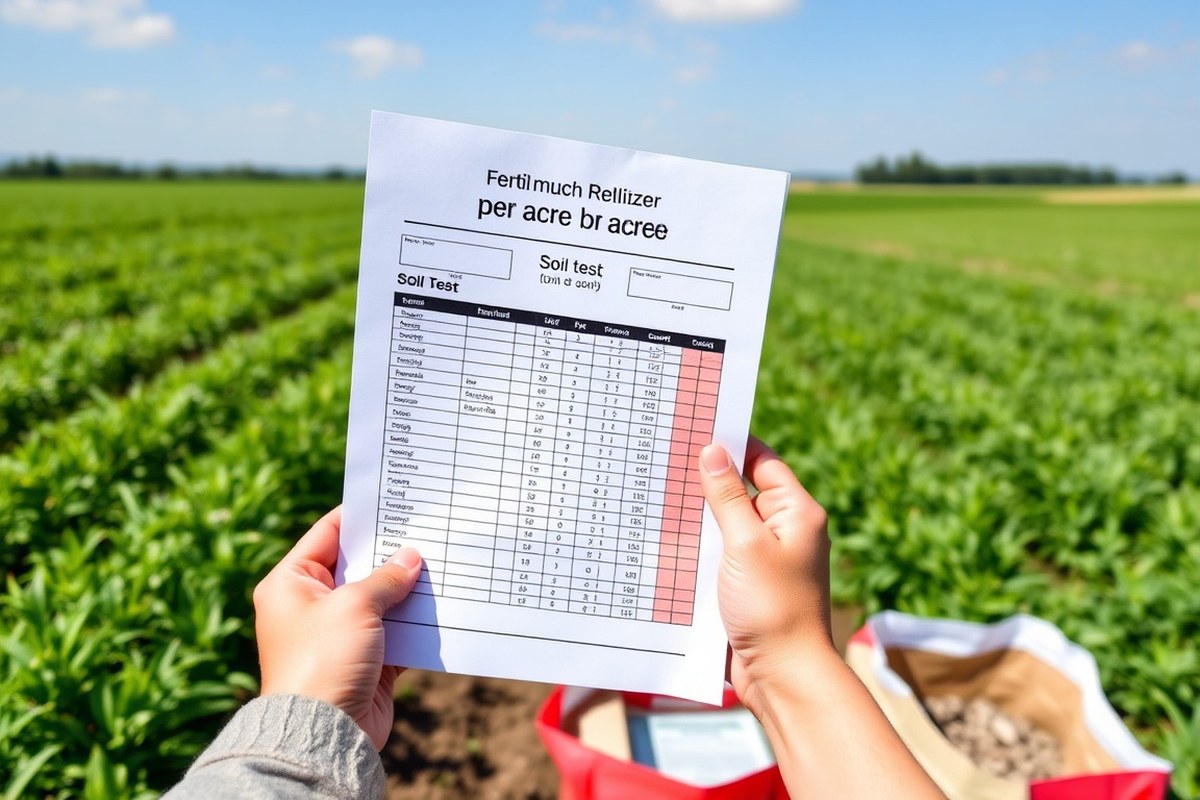
Calculating the right fertilizer amount per acre starts with knowing your crop’s nutrient needs. You figure out nutrient needs in pounds per acre. Then, use bag numbers to find fertilizer pounds.
This matches the nutrient needs with fertilizer amounts. The label shows nitrogen, phosphorus, and potassium percentages.
These amounts are for each 100 pounds of fertilizer. You learn how much nutrient each hundred pounds gives.
Use this step-by-step method to figure out fertilizer weight per acre. It accounts for soil test results, nutrient targets, and fertilizer percentages.
- Identify the pounds needed per acre for each nutrient from your soil test or crop recommendation. For example, 80 pounds of nitrogen per acre.
- Find the nutrient percentage on your fertilizer bag. Twenty percent nitrogen means 20 pounds per 100 pounds. This tells you how nitrogen is measured. Use this to match your fertilizer needs.
- Divide the pounds of nutrient needed by the decimal form of the nutrient percentage. For 80 pounds nitrogen with 20% fertilizer: 80 ÷ 0.20 = 400 pounds fertilizer.
- Calculate each nutrient amount (N, P2O5, K2O) separately. Use your soil recommendations and target rates. This helps you apply the right fertilizer amount.
- Choose fertilizer products that meet or exceed nutrient needs without causing over-application.
- Calculate the total fertilizer needed for your acreage using the formula:
Fertilizer Required = (Nutrient Requirement ÷ Nutrient Content %) × 100
This gives the fertilizer weight in pounds per acre.
Your soil test needs 80 pounds of P2O5. The fertilizer contains 30% phosphorus.
Divide 80 by 0.30 to find fertilizer pounds.30 = 267 pounds of fertilizer per acre. This ensures you supply exactly what the crop needs without wasting product.
Remember, if you’re working with smaller areas, convert acres to square feet by multiplying by 43,560. Then apply the fertilizer amount per 1,000 sq ft accordingly. Always subtract any nutrients your soil already provides to avoid excess application.
Typical Fertilizer Needs for Common Crops and Lawns
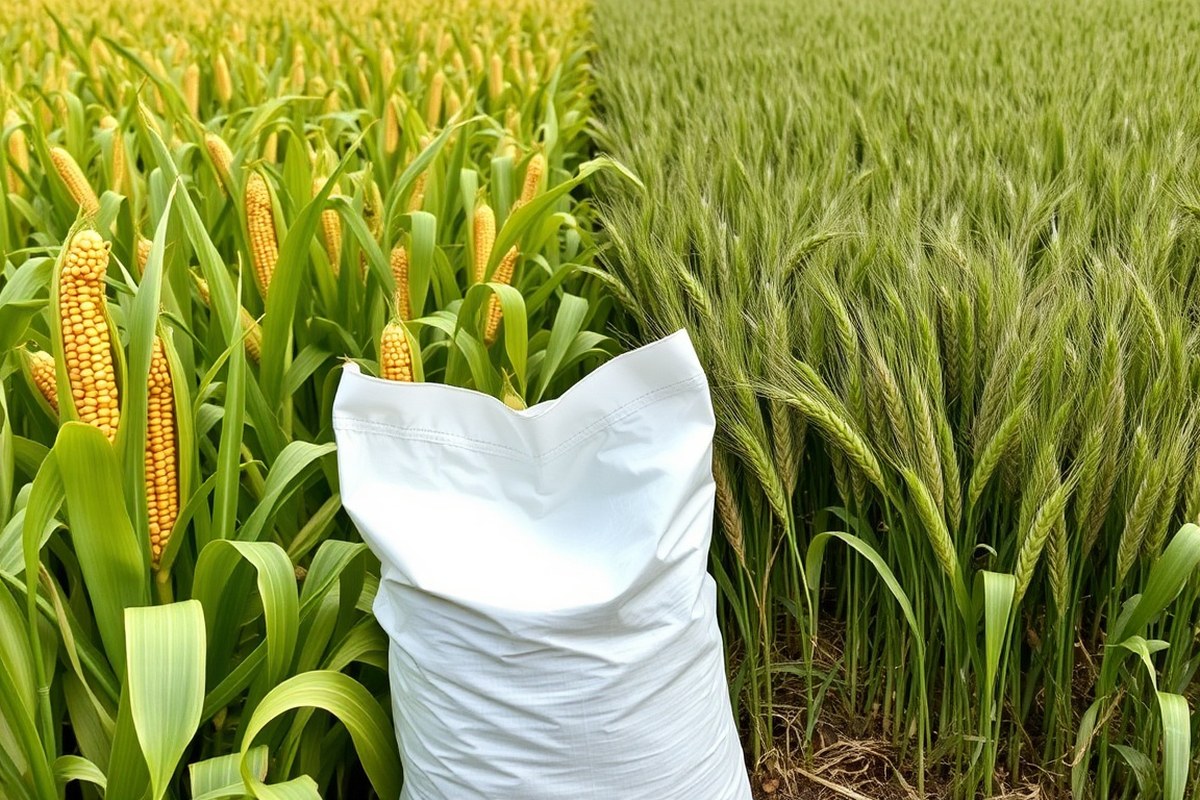
Fertilizer needs vary greatly between crops and lawns because each uses nutrients differently. Nitrogen, phosphorus, and potassium are the main nutrients you need to supply per acre. Nitrogen supports growth, phosphorus helps roots, and potassium increases overall plant health.
For example, corn requires more nitrogen and potassium as yield goals rise. High-yield corn yields about 180 bushels per acre. It often needs 200 pounds of nitrogen per acre.
You also need 50 to 80 pounds of phosphorus and 40 to 60 pounds of potassium. Wheat generally uses less nitrogen, about 60 to 80 pounds.
It also needs lower amounts of phosphorus and potassium. Lawns typically need about 43.5 pounds of nitrogen per acre annually, split into two to four feedings.
| Crop | Nitrogen (lbs/acre) | Phosphorus (lbs/acre) | Potassium (lbs/acre) |
|---|---|---|---|
| Wheat | 60-80 | 30-40 | 20-30 |
| Maize (Corn) | 80-100 | 35-50 | 30-40 |
| Sugarcane | 120-150 | 50-60 | 60-80 |
| Tomato | 100-120 | 50-60 | 80-100 |
| Established Lawns (annual) | 43.5 (N only) | Varies | Varies |
Phosphorus and potassium rates matter more in high-yield crops and soil-deficient fields. Phosphorus often ranges from 30 to 60 pounds per acre for many crops. Potassium can reach 80 or more pounds per acre in potatoes and tomatoes.
Many gardeners use balanced fertilizers like 10-10-10 or 13-13-13. They adjust the doses to hit each nutrient’s target.
Your crop type and expected yield will change fertilizer amounts. Soybeans need much less nitrogen because they fix it themselves. They still require phosphorus and potassium for good growth.
Lawns need nitrogen regularly but far less phosphorus and potassium, unless soil tests show deficiencies. Splitting the total nitrogen into multiple feedings keeps grass consistently green and healthy.
Keep in mind that overapplying nitrogen can harm your crop or lawn. So match fertilizer amounts closely to crop needs and soil tests.
How Soil Testing Influences Fertilizer Application Rates
Soil testing helps you figure out exactly what nutrients your soil needs. It shows how much nitrogen, phosphorus, and potassium are already present. Knowing these amounts helps you avoid buying extra fertilizer you don’t need.
Before fertilizing, collect a soil sample from several spots in your field. Send this mix to a lab for analysis, which usually costs $15 to $30. The lab results give nutrient levels and pH information.
This helps you decide what fertilizer to apply. It also tells you how much fertilizer you need.
For example, if your crop needs 160 kilograms of nitrogen per hectare. The soil test shows 60 kilograms is already in the soil. You only buy fertilizer for the other 100 kilograms needed.
This saves money and avoids over-fertilizing. This approach can cut fertilizer costs by 15 to 30 percent without hurting your crop yield.
Ignoring soil tests often means guessing fertilizer needs. This leads to overapplication, wasting money and risking nutrient runoff into waterways. Applying more fertilizer than plants can absorb also harms soil health over time.
Soil tests also help you interpret soil nutrient credits correctly. When soil supplies some phosphorus, reduce fertilizer amounts. Adjust the phosphorus fertilizer to match the soil’s supply.
This prevents waste and buildup in the soil. Precision matters for applying fertilizer correctly per acre.
It keeps the field productive over time. Balanced nutrients avoid problems and grow healthier crops.
Regular soil testing every one to three years lets you track changes in soil fertility. This way, you adjust fertilizer rates year by year, avoiding buildup or depletion of nutrients. Consistent testing supports efficient use of your fertilizer budget and better crop growth.
Choosing the Right Fertilizer Products for Your Acreage
Choosing your fertilizer means picking a product matching your crop’s nutrient needs. The N-P-K numbers guide this choice by showing nutrient percentages. You decide between straight fertilizers or blends based on these numbers and your field’s specific requirements.
Decoding N-P-K Fertilizer Labels
The numbers on fertilizer bags, like 10-10-10 or 13-13-13, show nutrient ratios. The first number is nitrogen (N), the second phosphorus (P₂O₅), and the third potassium (K₂O). For example, a 13-13-13 bag contains 13% nitrogen, 13% phosphorus, and 13% potassium by weight.
This labeling helps you calculate how much fertilizer to apply. You need 50 pounds of nitrogen per acre to apply 500 pounds of 10-10-10 fertilizer.
This provides exactly 50 pounds of nitrogen (50 ÷ 0.10 = 500). Always check these numbers before buying bags or blending fertilizers.
Differences Among Common Fertilizer Blends
Straight fertilizers contain one main nutrient, like urea for nitrogen or MOP for potassium. Blends mix nutrients in fixed ratios such as 8-8-8 or 13-13-13. Your choice depends on soil tests and crop needs.
Your lawn might need more nitrogen than potassium or phosphorus. Using straight urea (34-0-0) can work better than a balanced mix in this case.
The cost and supply of fertilizer strongly influence what you select. To supply 80 pounds of each nutrient per acre, apply 800 pounds of 10-10-10 or 471 pounds of 17-17-17 fertilizer. Check the price per pound and nutrient amount to find the best option for your land.
| Fertilizer Blend | N-P-K Percentage | Pounds Needed for 80 lbs N-P-K per Acre |
|---|---|---|
| 10-10-10 | 10% N, 10% P₂O₅, 10% K₂O | 800 lbs |
| 13-13-13 | 13% N, 13% P₂O₅, 13% K₂O | 615 lbs |
| 17-17-17 | 17% N, 17% P₂O₅, 17% K₂O | 471 lbs |
| 8-8-8 | 8% N, 8% P₂O₅, 8% K₂O | 1000 lbs |
This table shows how much each blend weighs to supply equal nutrients. Pick based on how easily you handle bulk fertilizer and costs. A 50-pound bag of 13-13-13 fertilizer contains 13% nutrients by weight.
That means it actually has much less than 50 pounds of nutrients. Keep this in mind when measuring amounts.
Organic and Specialty Fertilizer Considerations
Organic fertilizers release nutrients slower and vary in nutrient content. You often apply larger amounts because nutrient percentages are lower than synthetic fertilizers. Calculating exact fertilizer rates can be confusing.
Labels may show nutrients in different forms or as totals, not what plants can use. This affects how much you should apply.
Use soil tests to guide organic fertilizer quantities. Think about your long-term soil health goals. Organic fertilizers improve soil structure but take more time to work.
Plan accordingly for best results. For quick nutrient boosts, synthetic fertilizers with clear N-P-K percentages offer precision.
Adjusting Fertilizer Rates for Split Applications and Efficiency
Split fertilizer application means applying nutrients in two or more stages. This method usually cuts the total fertilizer needed by 10-15%. It improves nutrient use by matching supply with plant demand better than one heavy dose.
Timing Split Fertilizer Applications
Start with a portion of fertilizer at planting to support early growth. Then apply the rest during a sidedress phase when plants reach key growth stages.
Corn usually gets some nitrogen at planting. The rest goes on at V6 to V8 leaf stages. This timing matches the crop’s nutrient needs and promotes better uptake.
Calculating Adjusted Rates for Split Applications
Figure the total fertilizer needed for the entire season. Divide it into portions for each application. Follow these steps to calculate your split application rates:
- Determine your crop’s total nitrogen need per acre from soil tests or guides.
- Choose the fertilizer product and note its nutrient concentration.
- Calculate total fertilizer amount: Nutrient needed ÷ nutrient fraction in product.
- Decide split ratios, typically 40%-60% split for planting and sidedress.
- Multiply total fertilizer by each portion to get the amounts per application.
- Apply the first portion at planting or preplant times.
- Delay the second fertilizer dose until the crop growth stage that needs it most.
Don’t apply all fertilizer at once; splitting reduces losses from leaching and runoff.
Benefits and Efficiency Gains
Splitting fertilizer saves money by cutting waste. It delivers nutrients when plants absorb them best.
This approach improves overall nutrient use efficiency by about 10-15%. It also lessens the chance of environmental harm from excess fertilizer.
For example, splitting 120, 150 kg of urea per acre for wheat ensures steady nitrogen supply. It maximizes crop uptake and reduces nutrient loss to soil or water.
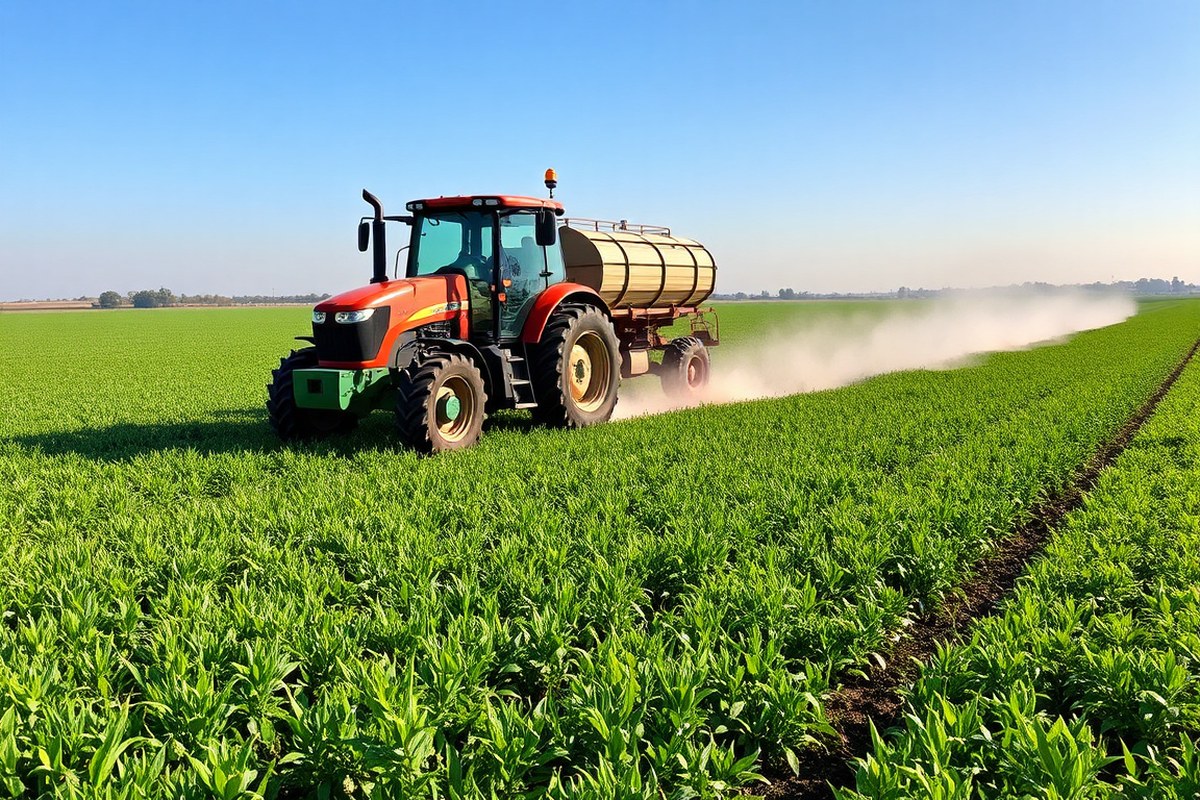
Calibrating Fertilizer Spreaders for Accurate Application
Calibrating your fertilizer spreader ensures you apply the right amount per acre. It helps prevent over- or under-fertilizing, saving money and protecting crops. Testing and adjusting your equipment regularly keeps application rates accurate and consistent.
Tools Needed for Calibrating Spreaders
You need just a few basic tools for calibration. A scale that measures pounds accurately is important for weighing fertilizer. Also, prepare a container or bucket to catch fertilizer during tests.
Using a stopwatch or timer helps track how long you spread fertilizer. Measuring tape or marked flags are useful for measuring test distances. Make sure to have your fertilizer of choice handy for setting and testing.
Step-By-Step Calibration Process
Follow these steps to test and adjust your spreader for correct rates. Start by choosing a test area that’s flat and safe, then collect your tools and fertilizer. Run the spreader over a set distance while catching material in a container.
- Fill your spreader with about 5 pounds of fertilizer.
- Mark a measured test distance, such as 100 feet, in an open area.
- Start the spreader and walk the test distance at your normal pace.
- Catch all fertilizer dropped during the walk in your container.
- Weigh the fertilizer collected using your scale.
- Compare the weight to your target application rate per foot.
- Adjust spreader settings if the weight is too high or too low.
- Repeat the test until the measured rate matches your target.
Common Calibration Mistakes to Avoid
Not calibrating at all is a major cause of uneven spread and wasted fertilizer. Skipping tests before changing fertilizer types or spreading speeds also causes errors. Using a rough estimate instead of measuring material accurately leads to off rates.
Walking inconsistently during tests or testing on uneven ground skews results. Changing settings too quickly without testing can cause overcompensation. Avoid spreading heavy fertilizer with a setting made for light products without recalibration.
Avoiding Common Fertilizer Calculation and Application Mistakes
Applying too much or too little fertilizer wastes money and harms crops. Many growers confuse nutrient forms like phosphorus (P) and phosphate (P₂O₅), leading to wrong amounts.
Labels often list nutrients as elemental or oxide forms. So you must convert correctly before applying.
Not testing your soil is another big mistake. Soil tests show existing nutrient levels, helping you avoid over- or under-fertilizing. Neglecting tests risks nutrient buildup or deficiencies that hurt yields and increase costs.
Spreader settings also cause errors. If you set the rate too high, you risk burning plants or wasting fertilizer. Too low a setting means poor growth and weaker plants.
Regularly calibrate your spreader using bag weight and coverage area. Check settings each time you refill the hopper or switch products.
- Read the fertilizer label carefully and note nutrient forms
- Use a multiplier to convert P₂O₅ to elemental P (use 0.44)
- Get a current soil test before every planting season
- Calibrate spreaders by measuring material applied on a test strip
- Use consistent units when calculating rates (pounds per acre)
- Adjust spreader settings when switching between fertilizers
Applying too much fertilizer can harm the environment, pollute water, and damage plants. Too little slows growth and reduces profits. Soybeans don’t usually need nitrogen because they fix it themselves.
So applying nitrogen here adds cost but little benefit. Use soil tests plus crop knowledge to fine-tune amounts.
Double-check all your calculations and settings before you start spreading. This saves time and prevents costly mistakes.
Keeping clear notes on product type, application date, and soil results helps next season go smoother. Small steps here pay off in healthy crops and better yields.
Safety and Environmental Considerations When Fertilizing an Acre
Wear gloves, eye protection, and a mask when handling fertilizer. Fertilizer dust and chemicals can irritate skin, eyes, and lungs. Use old clothes you don’t mind staining, and wash them separately from other laundry.
To avoid nutrient runoff, never apply fertilizer before heavy rain. Stay off frozen or saturated ground to prevent spreading fertilizers into nearby streams. Applying the right amount per acre ensures plants use most nutrients, reducing waste and pollution.
Follow local regulations on timing and fertilizer types to protect waterways. Many places require buffer zones along rivers and lakes to limit fertilizer contact. Best practices like split applications keep nutrients in the soil longer, lowering risks to the environment.
- Wear gloves, goggles, and a dust mask when spreading fertilizer
- Apply only the recommended fertilizer rate for your soil and crop
- Avoid spreading fertilizer before heavy rain or on frozen ground
- Keep fertilizer at least 50 feet from water bodies and wells
- Use slow-release or stabilized fertilizers to minimize leaching
- Calibrate equipment to avoid over-application and uneven spread
Cost-wise, safety gear usually runs under $20 at garden stores. Lost crops and pollution fines can cost much more.
Good results mean healthy plants. No yellow leaves or runoff nearby.
Check weather forecasts and soil moisture before you apply fertilizer to reduce runoff risks.
Repeat safety and environmental checks each time you fertilize. Doing so helps protect your land and neighbors over time. Change how you handle fertilizer based on the type you use.
Watch the weather too. This helps keep your plants safe and the area clean.
Your Step-by-Step Fertilizer Plan for Each Acre
Follow these steps to get your fertilizer amounts right. You will see better crop or lawn results quickly. Use this guide for clear, fast results.
- Before planting: Test your soil to find nutrient levels. Use results to pick the right fertilizer mix.
- One week before planting: Use soil test data to find fertilizer needs. Then calculate the right amount per acre. Make sure it matches your crop’s needs. Write down the numbers.
- Day of application: Calibrate your spreader by running a small test patch. Check if the actual fertilizer matches your target weight.
- Day of application: Apply fertilizer evenly across your acre following your calculations. Watch for any skipped spots or clumps.
- Two weeks after application: Walk through your field or lawn. Look for strong growth and healthy green color as signs fertilizer worked.
- During growing season: Consider split applications if crops need more nutrients later. Adjust your amounts based on weather or plant stress.
- After harvest: Test soil again to see nutrient change. Use this info to plan next year’s fertilizer rates better.
Frequently Asked Questions
How Do Weather Conditions Affect Fertilizer Amounts per Acre?
Rain and wind can wash away or dilute fertilizer, changing amounts per acre. Apply fertilizer when the weather is calm and dry.
This cuts loss from wind or rain. Plants take up nutrients better in these conditions.
Can Organic Fertilizers Be Used to Meet Per-Acre Nutrient Needs?
Yes, but organic fertilizers usually contain lower nutrient levels per pound than synthetic ones. You must apply more organic fertilizer per acre to meet crop nutrient demands.
What Impact Do Crop Rotations Have on Fertilizer Rates per Acre?
Crop rotations can change nutrient needs per acre by altering soil nutrient balance. Legumes fix nitrogen, so you may reduce nitrogen fertilizer on following crops.
How Do You Adjust Fertilizer per Acre for Irrigation Type?
Irrigation affects nutrient availability and leaching risks per acre. Drip irrigation requires less fertilizer than flood irrigation because nutrients reach roots more efficiently.
Does Soil Texture Influence How Much Fertilizer to Apply per Acre?
Yes, sandy soils lose nutrients faster, needing more frequent or higher fertilizer rates per acre. Clay soils retain nutrients better but can cause slow nutrient release, so apply carefully.
What Are Signs That You’ve Applied Too Much Fertilizer per Acre?
Excess fertilizer causes burned leaves, poor plant health, or excessive growth prone to pests. Watch for yellowing or browning around leaves after application to avoid over-fertilizing.
Before You Go
You can control fertilizer amounts with clear steps and soil testing. Getting this right saves money and protects the environment. Start by testing a small soil sample from your acre today.