How Many Cu Ft in a Yard of Mulch – a Complete Guide to Accurate Coverage and Costs
Wondering how many cu ft in a yard of mulch? A cubic yard holds exactly 27 cubic feet of mulch. This is a fixed measurement since one yard equals three feet in length, width, and height.
Knowing this helps you calculate how much mulch you need for your garden. Measure your area and decide on the desired depth in inches to get correct coverage. For example, 27 cubic feet covers about 108 square feet at 3 inches deep.
Keep in mind mulch type and moisture can slightly change its weight but not volume. Dry hardwood mulch weighs around 400 to 500 pounds per cubic yard. Planning helps avoid ordering too much or too little mulch.
Key Takeaways
- One cubic yard of mulch holds exactly 27 cubic feet of material.
- Measure your garden’s length and width to find total area in square feet.
- Choose mulch depth between 2 to 3 inches for proper coverage.
- A cubic yard of mulch covers roughly 108 square feet at 3 inches deep.
- Mulch weight varies with type and moisture but volume stays 27 cubic feet.
- Calculate cubic yards by multiplying length, width, and depth then dividing by 324.
Exactly How Many Cubic Feet Are in a Yard of Mulch
One cubic yard of mulch measures exactly 27 cubic feet in volume. This total comes from multiplying length, width, and height.
Each side is 3 feet. So 3 × 3 × 3 equals 27 cubic feet.
This conversion matters because mulch often comes in bulk yards or in bags. Bags usually list volume in cubic feet, while bulk comes by the yard. This helps you understand how much you’re buying.
Knowing 1 cubic yard equals 27 cubic feet helps you compare prices easily. You can figure out how many bags or how much bulk you need.
This stops you from ordering too much or too little. For example, bags that hold 2 cubic feet each require about 13.5 bags to make a full cubic yard.
The type of mulch does not change its cubic yard volume. One cubic yard is always 27 cubic feet. Some mulches, like rubber mulch, get laid thinner than wood chips.
The volume of one yard stays the same no matter the mulch type. This means you use the same math for any product you buy. Calculations are simple and consistent every time.
How Many Bags of Mulch Make Up One Cubic Yard
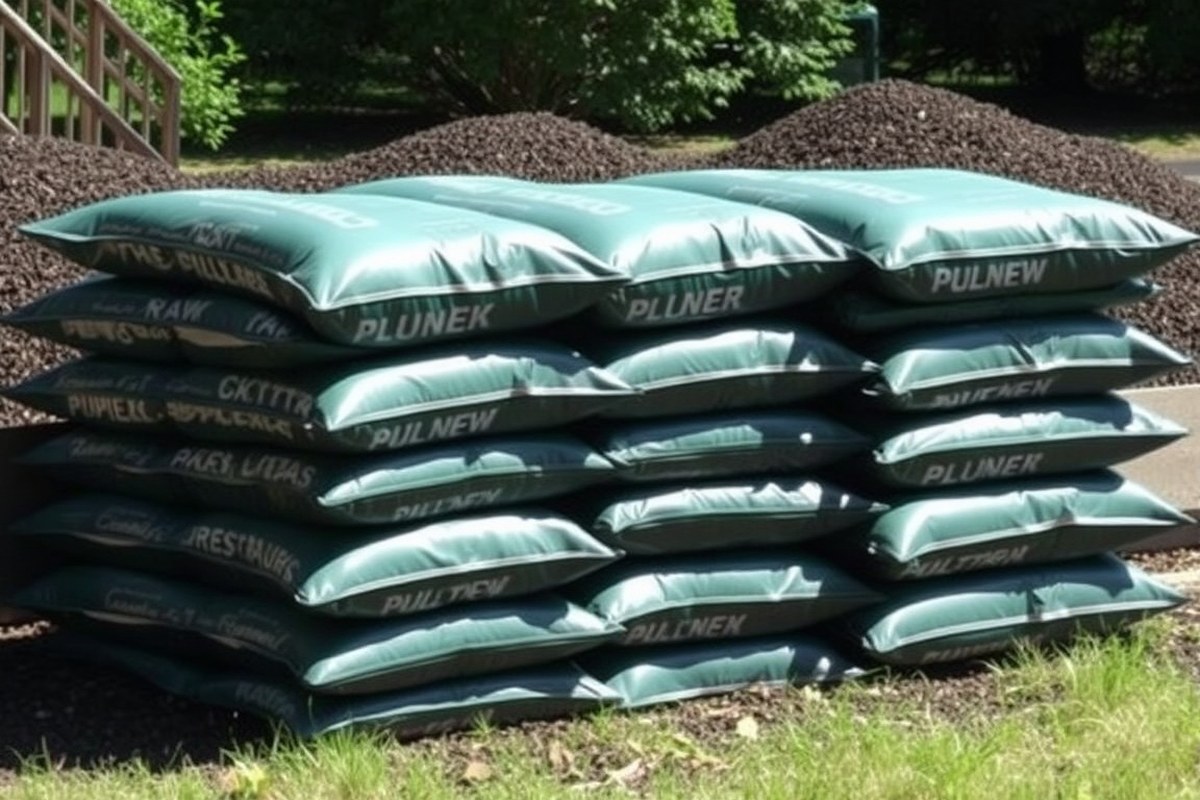
One cubic yard measures 27 cubic feet. To find how many bags you need, divide 27 by the bag size in cubic feet. For example, 14 bags of 2 cubic feet roughly equal one cubic yard.
Standard Bag Sizes and Volumes
Mulch bags commonly come in 1.5, 2, and 3 cubic feet sizes. The 2-cubic-foot bag is the most popular and often found in big-box stores. Smaller projects may use 1.5 cubic feet bags for easier handling.
Larger 3-cubic-foot bags reduce the number of bags needed. The choice depends on your project’s size and your ability to carry and spread each bag.
| Mulch Bag Size (cu ft) | Bags in 1 Cubic Yard | Total Cubic Feet |
|---|---|---|
| 1.5 | 18 | 27 |
| 2 | 13.5 (round up: 14) | 27 |
| 2.5 | 10.8 (round up: 11) | 27 |
| 3 | 9 | 27 |
These numbers mean you need fewer bags with larger sizes. Using 3-cubic-foot bags cuts the bag count by about a third compared to 2-cubic-foot bags. However, larger bags can be heavier and harder to manage.
Bags-To-Yard Conversion Formulas
To find how many bags you need, divide 27 by the bag size in cubic feet. For a 2-cubic-foot bag: 27 ÷ 2 = 13.5 bags. Round up the result to avoid running short.
Knowing your cubic yard amount, multiply that number by 27 to convert to cubic feet. Then divide cubic feet by bag size for the bag count. This two-step math works for any yard or bag size.
Buy at least one extra bag to cover measurement errors or settling.
Worked Example: Bags Needed for 2 Yards
Suppose your project calls for 2 cubic yards of mulch. That equals 2 × 27 = 54 cubic feet. Now divide 54 by the bag size.
For 1.5 cubic-foot bags: 54 ÷ 1.5 = 36 bags. For 2 cubic-foot bags: 54 ÷ 2 = 27 bags. For 3 cubic-foot bags: 54 ÷ 3 = 18 bags.
Choose bag sizes based on how many bags you want to carry and store. Using 18 large bags might be easier than hauling 36 small ones for some people.
Coverage Area of One Yard of Mulch at Different Depths
One cubic yard of mulch covers different ground areas depending on how thickly you spread it. At 2 inches deep, a yard covers about 162 square feet. Expect coverage to drop to 108 or 81 square feet at 3 or 4 inches.
Typical Mulch Depths and Uses
Choosing the right mulch depth depends on what you’re planting. For flower beds, 2 to 3 inches works well to control weeds and hold moisture. Trees and shrubs usually benefit from about 3 inches of mulch around their base.
Spreading mulch too thin means weeds might grow through. Too thick, and it can suffocate plants or cause rot. Stick to recommended depths to keep plants healthy and soil moist.
Coverage Area Formula Explained
To calculate area one yard covers, divide 324 by mulch depth. Do this in inches. That gives you square feet covered at that thickness.
At 3 inches deep, divide 324 by 3. That gives 108 square feet coverage.
To figure out the amount of mulch needed, multiply the bed’s square footage by the depth (in inches). Next, divide the product by 324. This calculation gives the total cubic yards required.
Example Calculations for Common Bed Sizes
For 200 square feet at 3 inches deep, multiply and divide for 1.85 cubic yards. Round up to 2 yards for full coverage.
At 2 inches depth, 1 cubic yard covers 162 square feet. So more mulch is needed.
A 20 by 10 feet bed at 3 inches deep needs about 2 cubic yards. A 100 square foot bed at 2 inches depth requires just over half a cubic yard. Here’s how coverage breaks down at different depths for 1 to 3 yards:
| Depth (inches) | Coverage for 1 yard (sq ft) | Coverage for 2 yards (sq ft) | Coverage for 3 yards (sq ft) |
|---|---|---|---|
| 1 | 324 | 648 | 972 |
| 1.5 | 216 | 432 | 648 |
| 2 | 162 | 324 | 486 |
| 2.5 | 130 | 259 | 389 |
| 3 | 108 | 216 | 324 |
| 4 | 81 | 162 | 243 |
Use this table to estimate how much mulch you need. Pick your desired thickness, then find the coverage per yard. Multiply to find total coverage for larger quantities.
Calculating Mulch Quantities for Irregular Garden Shapes
Estimating mulch for irregular beds means measuring your garden area carefully. You calculate the surface area first, then multiply by the mulch depth. Accurate measurements prevent ordering too much or too little mulch.
Measuring Rectangular and Square Beds
Start by measuring the length and width of your bed in feet. Multiply these two numbers to get the area in square feet. This is the easiest shape to handle when calculating mulch volume.
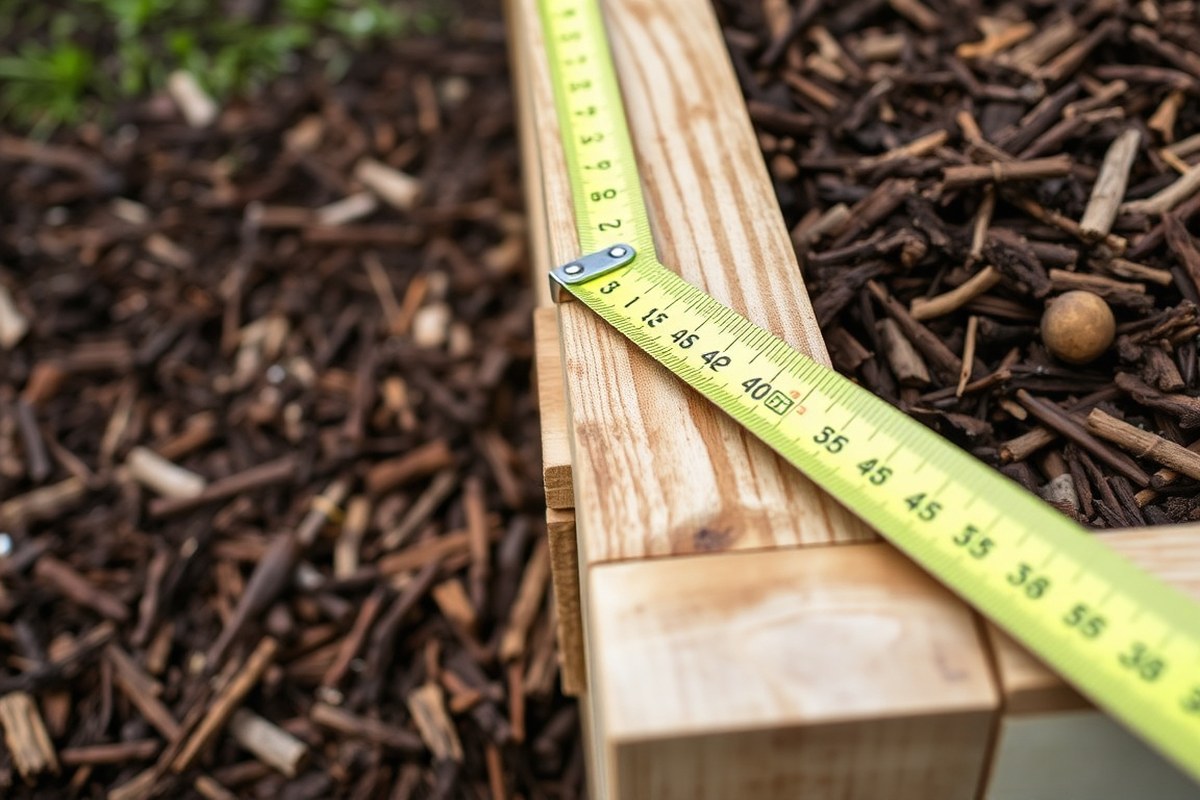
Use a tape measure to get the bed dimensions, rounding to the nearest inch. Multiply area by the mulch depth in feet to find the cubic feet needed. To convert inches depth to feet, divide by 12.
Calculating Circular Bed Areas
Measure the radius of your circular bed from the center to the edge in feet. To find the area, square the radius and multiply by Pi (about 3.14). This area gives you the surface to cover with mulch.
Multiply the area by the mulch depth (in feet) to find the cubic feet volume. For example, a 5-foot radius bed with 3 inches (0.25 feet) of mulch needs about 19.6 cubic feet of mulch (3.14 × 5² × 0.25).
Dealing with Triangular and Irregular Shapes
Break irregular beds into simple shapes like rectangles, triangles, or circles. Measure each shape’s dimensions separately and calculate the area for each. Add all areas together for the total bed size.
Multiply the total area by mulch depth (in feet) to get volume in cubic feet. Divide by 27 if you want the total in cubic yards for mulch orders. Follow these steps to measure and calculate mulch for irregular beds:
- Sketch the bed outline on paper and divide it into simple shapes.
- Measure each dimension in feet, noting length, width, and radius.
- Calculate area for rectangles (length × width), circles (3.14 × radius²), and triangles (0.5 × base × height).
- Add areas of all shapes for total surface area in square feet.
- Decide mulch depth in inches, then convert to feet by dividing by 12.
- Multiply total area by mulch depth (in feet) for cubic feet volume.
- Convert cubic feet to cubic yards by dividing by 27 if needed for ordering.
- Round results up slightly to allow for settling and spreading variations.
How Mulch Type and Moisture Affect Volume and Weight
Mulch weight goes up when it’s wet because water adds mass without changing volume. Dry hardwood or bark mulch usually weighs between 400 and 600 pounds per cubic yard. When wet, that weight jumps to around 800 to 1,000 pounds or more per cubic yard.
Rubber mulch is much heavier. It weighs 800 to 1,200 pounds per cubic yard.
Its weight stays more stable. It doesn’t absorb water like wood does.
Volume stays mostly the same across mulch types, but coverage can differ. Wood and bark mulch settle with time, reducing thickness slightly after spreading. Coarse mulches like wood chips need a thicker layer.
Use about 3 to 4 inches. They don’t pack tightly. Fine shredded hardwood mulch works well at 2 to 3 inches deep.
It compacts less. You get more coverage per yard.
Rubber mulch doesn’t settle or break down. So the layer thickness stays consistent over time.
These factors affect how much mulch you should order. Wet mulch weighs more. This affects transport costs.
It also limits how much your truck can carry safely. Wood mulch may settle. You might need extra volume.
This helps keep the same coverage. Rubber mulch requires less volume because it stays thick but will weigh more. So check your truck’s payload limit before ordering bulk.
Always ask your supplier about moisture content. Also ask about the mulch type. This avoids surprises in weight and coverage.
Check the mulch moisture before buying bulk to avoid exceeding your truck’s weight limit.
Common Mistakes in Mulch Ordering and How to Avoid Them
Ordering mulch can easily lead to too much or too little material. Too little mulch means you’ll need to reorder quickly, which can cost more in delivery fees. Over-ordering wastes money and space in your yard.
Mulch often settles after delivery, shrinking by 5 to 10 percent in a few weeks. This means the layer will get thinner than you planned. Adding 10 to 15 percent extra mulch helps cover settling loss.
This extra mulch accounts for settling and compaction. Order this amount with your mulch purchase.
Applying mulch too deeply brings risks you might not expect. A thick layer, over 4 inches, can cause water to pool and suffocate plant roots. It also invites pests and can lead to rot issues, especially near tree trunks.
Keep mulch 3 to 6 inches away from tree bases. Spread mulch no thicker than 3 to 4 inches. This prevents problems for your trees.
- Order 10-15% more mulch than your calculated need to allow for settling
- Don’t install mulch layers thicker than 4 inches to avoid root damage
- Leave 3-6 inches of bare soil around tree trunks to prevent rot
- Avoid spreading new mulch directly on top of old mulch layers
- Confirm delivery fees and choose pick-up if you want to save costs
- Measure your area carefully and adjust for irregular garden shapes
- Spread mulch evenly and avoid piles that cause water pooling
Following these tips helps your mulch last longer and protects your plants. Thin layers dry out quickly, while thick ones can trap moisture. Mixing up your application can cost time and money, so plan carefully before ordering.
Deciding Between Bulk and Bagged Mulch Purchases
Buying bulk mulch usually costs less per cubic foot than bagged mulch. Bulk works better if your project needs more than 2 cubic yards. For smaller jobs, bagged mulch saves the hassle of delivery, storage, and heavy lifting.
Bulk mulch requires a truck delivery since you can’t haul it in most cars. Delivery fees vary but expect to pay extra for the dump truck ride.
You need space at home to store the full cubic yard. Don’t buy it unless you can spread it right away.
Project size helps pick the best option. For big gardens or multiple flower beds, bulk mulch is cheaper and faster to spread. For one small bed or container plants, bags are easier to buy and use.
| Purchase Method | Volume per Unit | Approximate Bags per Cubic Yard | Notes |
|---|---|---|---|
| Bagged Mulch (Standard) | 2 cubic feet | 13.5 bags | Easy for small projects, more expensive per cu ft |
| Bagged Mulch (Large) | 3 cubic feet | 9 bags | Less bags to handle, still pricey |
| Bagged Mulch (Premium Shrink) | 1.5 cubic feet | 18 bags | Small bags, higher cost, good for tight spaces |
| Bulk Mulch | 1 cubic yard (27 cubic feet) | , | Cost-effective for larger projects, delivery required |
Think about your available space and how easy it is to handle. Check your budget and how fast you want to finish.
Bulk mulch may save money but demands a bigger upfront space and organizing delivery. Bagged mulch is portable and convenient, especially if you shop in smaller amounts.
Drivers need proper licenses and trucks for bulk trips. Some homeowners choose bulk mulch delivery to avoid carrying dozens of bags. When ordering bulk, confirm delivery fees and space for the pile.
Plan how soon you’ll spread the mulch. It can dry out or blow away if left too long.
Practical Tips for Measuring, Ordering, and Spreading Mulch
Start by measuring the length and width of each planting bed with a tape measure. Multiply those numbers to get the square footage.
Measure irregular areas by breaking them into rectangles or circles and adding their areas. Accurate measurements prevent ordering too much or too little mulch and save you money.
Order mulch based on the area size and your desired depth. A 3-inch mulch layer is common. But lighter top-ups at 1 to 1.5 inches use one-third to half less mulch.
Bulk mulch suits larger areas better. It spreads faster and usually costs less per cubic foot than bags.
- Mark bed edges clearly before spreading mulch.
- Use a garden rake with a wide head to spread mulch evenly.
- Work in small sections, adding mulch gradually for a consistent layer.
- Keep piles fluffy by gently breaking clumps with your rake.
- Check depth frequently with a measuring stick or ruler.
- Wear gloves to protect your hands from sharp wood chips.
- Water the mulch lightly after spreading to settle it in place.
Maintaining an even thickness is key to long-lasting mulch benefits. Rake the mulch out flat, aiming for that 3-inch depth, not too thin or thick.
Uneven layers can expose soil or suffocate plants. Check depth every few feet using a stick or ruler to stay consistent.
Always measure twice before ordering mulch to avoid costly mistakes.
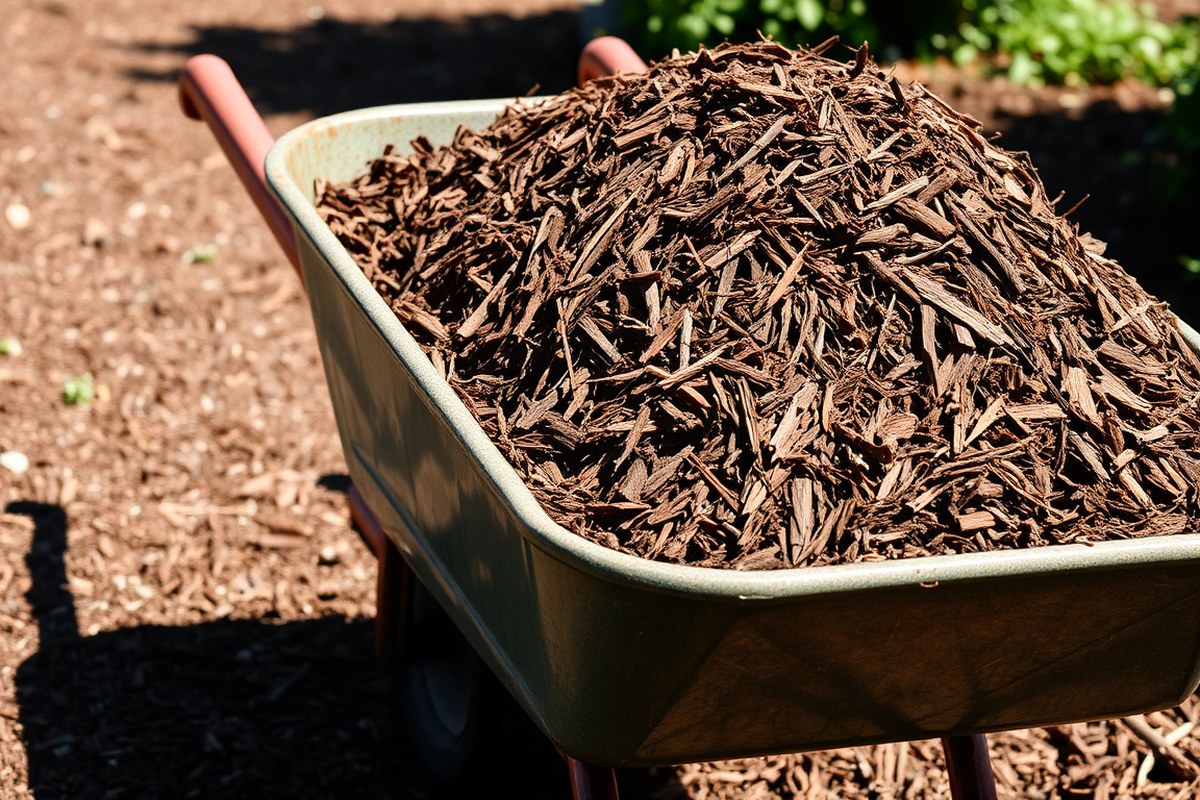
Tackling mulch work in the morning or late afternoon keeps you cooler and more comfortable. Using a wheelbarrow helps move bulk mulch quickly around your yard. Taking breaks to check progress prevents over- or under-application.
Step-by-Step Action Plan for Ordering and Using Mulch
Follow these steps to order the right amount of mulch and spread it properly. Each step helps you avoid common mistakes and get the best results.
- Before you start: Measure your garden bed area accurately in feet. Multiply length by width to get square footage.
- Day 1: Decide on mulch depth based on plant needs, usually 2 to 3 inches. This affects how much mulch you need.
- Day 2: Divide your total cubic feet by 27 to find cubic yards. One cubic yard equals 27 cubic feet. This gives you the amount of mulch needed. Round up to avoid shortage.
- Day 3: Choose bulk or bagged mulch based on your storage space and ease of spreading. Bulk is cheaper for large areas.
- Day 4: Order mulch factoring in moisture and compaction. Wet or compacted mulch takes up less space. Expect a bit less volume when buying.
- Day 5: When mulch arrives, check the actual volume or bags against your order. Adjust future orders if volume seems off.
- Day 6: Spread mulch evenly with a rake to the desired depth you chose. Avoid piling mulch against plant stems to prevent rot.
- After 2 weeks: Check your mulch depth after two weeks. Add more if it has settled or washed away. Keep an eye after rains.
Frequently Asked Questions
How Many 2 Cu Ft Bags of Mulch Are in 1 Yard?
One cubic yard contains about 13.5 bags of 2 cubic feet mulch. You usually round up to 14 bags to be safe when ordering.
What Is the 3-3-3 Rule for Mulch?
The 3-3-3 rule means applying mulch 3 inches deep, 3 feet away from trunks. It helps prevent moisture buildup and bark rot on your plants.
How Much Will 1 Yard of Mulch Cover?
One yard of mulch covers around 108 square feet at 3 inches deep. You can adjust coverage for different depths and garden shapes.
How Many 3 Cu Ft Bags of Mulch Are in a Yard?
There are about 9 bags of 3 cubic feet mulch in one cubic yard. Bag size affects how many you need, so check before buying.
How Many Cu Ft in a Yard of Mulch?
One cubic yard equals 27 cubic feet of mulch total. This is standard for all mulch types, whether bagged or bulk.
Can I Store Leftover Mulch for Next Season?
Yes, but store it in a dry, ventilated place to avoid mold. Leftover mulch can clump if it gets wet or packed.
Wrapping Up
You now know that one cubic yard equals 27 cubic feet of mulch. Use this to estimate how much mulch your garden needs. Next, measure your garden space and make your mulch order with confidence.