How Much Perlite to Add to Soil: A Complete Guide with Ratios and Tips
Wondering how much perlite to add to soil? A good rule is 10 to 20 percent perlite by volume.
That means mixing one part perlite with five to nine parts soil. This range helps improve soil aeration and prevents root rot without overdoing it.
Different soils need different amounts. Clay soil needs more, between 25 and 50 percent perlite.
Sandy soil benefits from less, about 10 to 20 percent. Adding perlite loosens compacted soil and boosts drainage.
If you want really great drainage, such as for succulents or cacti, use up to 50 percent perlite. Start mixing carefully in small batches to avoid clumps. Properly mixed perlite lets air flow and water drain well around roots.
Too much perlite can dry out soil and reduce nutrients. Always adjust based on the plant’s needs and your soil type. Mixing perlite evenly into soil ensures consistent texture and performance.
Key Takeaways
- Add 10% to 20% perlite for general potting soil mixes.
- Use 25% to 50% perlite in clay soils to improve drainage.
- Mix 10% to 20% perlite into sandy soils to retain moisture better.
- For cacti and succulents, use up to 50% perlite for fast drainage.
- Always buy 100% pure perlite, not blends or soilless mixes.
- Mix perlite thoroughly with soil to avoid uneven aeration.
How Much Perlite to Add to Soil by Type and Plant
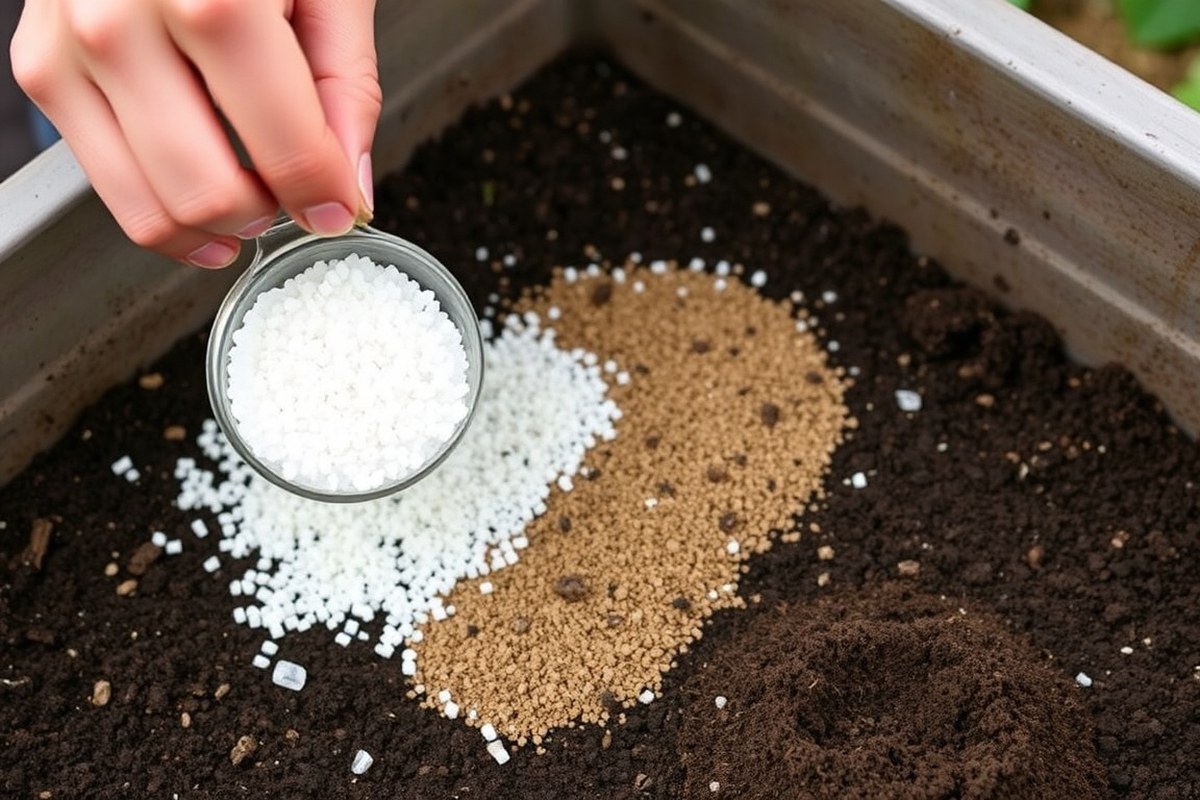
The amount of perlite you add depends on your soil type and plant needs. Clay soil often needs 25, 50% perlite to improve drainage and prevent compaction.
Sandy soil only requires about 10, 20% since it already drains well. Loamy soil benefits from roughly 10% to keep balance.
Different plants have different drainage needs, so the perlite ratio changes. Succulents and cacti want 50, 70% perlite for fast draining, dry soil. Most houseplants prefer 20, 30% for steady moisture without sogginess.
Ferns or peace lilies need less perlite, about 10 to 20%. This amount keeps some moisture in the soil. It also helps avoid root rot issues.
| Plant or Soil Type | Perlite Amount (By Volume) | Ratio (Perlite:Soil) |
|---|---|---|
| Clay Soil | 25, 50% | 1:2 (1 part perlite to 2 parts soil) |
| Sandy Soil | 10, 20% | 1:4 to 1:5 |
| Loamy Soil | 10, 20% | Approximately 1:5 to 1:10 |
| Succulents and Cacti | 50, 70% | 1:1 to 2:1 (perlite to soil) |
| Most Houseplants | 20, 30% | 1:3 to 1:4 |
| Ferns and Peace Lilies | 10, 20% | 1:4 to 1:5 |
Add 20 to 30% perlite for tropical plants like pothos or monstera. This helps balance air and moisture in the soil. It keeps roots healthy without drying out.
Snake plants and ZZ plants need more, about 30, 50%, because they prefer drier soil conditions. Use a bit more perlite in propagation or seedling mixes.
This extra aeration helps roots grow strong. Good air flow prevents soggy soil problems.
Using the right ratio helps prevent issues like slow drainage or root rot. Too much perlite can make it hard for plants to get nutrients. It might also cause water to drain too quickly.
Keep perlite amounts balanced for healthy growth. Stick to the listed ranges based on your soil and plant type for the best growth.
How to Calculate Perlite Amounts for Your Pot or Garden Bed
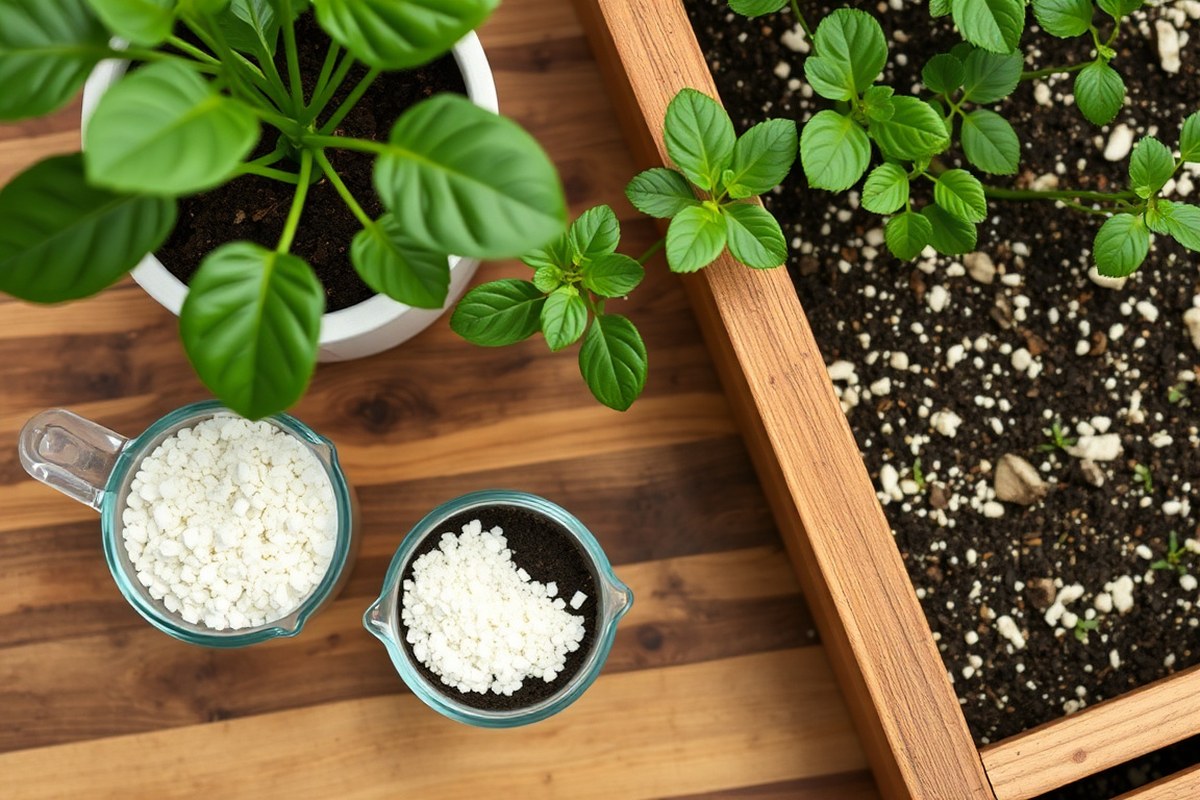
How much perlite to add depends on pot or garden size. It also depends on the mix ratio you want. Use the amount that fits your needs best.
Calculate perlite by volume, aiming for 10% to 30% of your total soil volume. Use clear steps to measure soil and convert mix ratios into real amounts for accurate results.
Measuring Soil and Perlite Volumes
Start by finding your pot or bed volume in cubic feet or gallons. For garden beds, multiply length, width, and depth in feet to get cubic feet. For pots, convert gallons to cubic feet by dividing gallons by 7.48, since 1 cubic foot equals 7.48 gallons.
Choose the perlite percentage based on what your plants need most. For most houseplants, use 20% to 30% perlite by volume. Garden beds mix in 10% to 20% perlite in the top soil layer.
- Measure your pot or bed dimensions (length, width, depth for beds).
- Calculate volume: for beds use ft × ft × ft. For pots convert gallons to cubic feet.
- Pick your target perlite percentage (10% to 30% is common).
- Multiply total volume by the perlite percentage (expressed as a decimal).
- The result is the volume of perlite to add in cubic feet or gallons.
- Mix perlite thoroughly with soil using a bucket or tray.
Tip: Amend only the top 6 to 12 inches in raised beds. This prevents wasting perlite deeper in the soil.
Converting Parts to Percentages
Gardening recipes often list soil and perlite in parts rather than percentages. To find percentage by volume, add all parts in your mix. Then divide the perlite parts by this total.
Multiply by 100 if you want percent. Multiply the result by 100 for the percentage.
For example, mixing 1 part perlite with 3 parts soil equals 1 ÷ (1+3) = 0.25 or 25% perlite. This matches the common recommendation for container mixes. Use the final volume after mixing, not just the soil volume, for more accurate ratios.
You can mix perlite into fresh potting soil or existing soil. You can add perlite to existing soil, but volume is tricky. The soil’s looseness makes measuring volume a bit of guesswork.
Example Calculation for a Common 5-gallon Pot
A 5-gallon pot holds about 0.67 cubic feet of soil (5 ÷ 7.48 = 0.67). For 25% perlite by volume, multiply 0.67 by 0.25. This equals about 0.17 cubic feet of perlite needed.
Convert 0.17 cubic feet back to gallons by multiplying by 7.48. You get roughly 1.3 gallons of perlite. So, mix 1.3 gallons of perlite with 3.7 gallons of potting soil to fill the pot.
Use a measuring scoop or cup to add perlite gradually. Mix well in a bucket or tray before placing soil in the pot. This ensures good drainage without losing moisture retention.
Which Perlite Grade Works Best for Different Soils and Plants
Perlite comes in fine, medium, and coarse sizes that suit different soil types and plant needs. The particle size affects how well the soil ventilates and drains. You can pick the right grade based on your plant’s watering habits and soil texture.
Fine Perlite for Seedlings and Cuttings
Fine perlite has small particles about 1/8 to 3/8 inch wide. It holds more water than larger grades but still improves airflow around tiny roots. Use fine perlite for seed starting mixes or rooting cuttings.
It keeps the soil moist without drowning young roots. This helps seedlings grow strong and healthy.
This size helps seedlings get just enough air and moisture. It avoids compacting, which can suffocate small plants. You can mix fine perlite close to a 1:1 ratio with seed-starting soil for best results.
Medium Grade for General Potting Mixes
Medium perlite is about 1/2 inch in size. It is the go-to choice for most houseplants. You can use it in container mixes.
It balances drainage and moisture well, keeping soil from drying out too fast or staying soggy. This grade fits most indoor gardening needs.
Mix medium perlite with potting soil at a ratio of 1 to 3. Use 1 part perlite to 3 parts soil. This blend improves drainage and aeration.
This mix works well for blends you use routinely. It keeps roots lively by making sure water doesn’t pool and air flows freely.
Coarse Perlite for Heavy Outdoor Soils
Coarse perlite has particles roughly 1 inch wide. It creates big air pockets in the soil. The soil drains water quickly.
This works well for dense garden beds and clay soils. Use it to break up compacted or waterlogged soil.
This improves root health by allowing better air and water flow. It helps your plants grow better.
Add coarse perlite at 10% to 20% volume. Apply it to the top 6 to 12 inches of soil. This improves soil structure and drainage.
This ratio loosens the soil enough so roots get oxygen and excess water drains out. It’s too big for seed-starting mixes but excellent for heavy soils outdoors.
The table below shows the different perlite sizes and what they do:
| Type of Perlite | Grade | Granule Size | Behavior | Best for |
|---|---|---|---|---|
| Fine | #1 | 1/8 inch | Small particles, holds relatively more water | Seed starting, cuttings |
| Medium | #3 | 1/2 inch | Balanced size for drainage and aeration | Most houseplant mixes, general potting |
| Coarse | #4 | 1 inch | Large particles, drains water fastest | Succulents, cacti, heavy outdoor soils |
Choosing the right perlite grade helps your plants get the water and air they need. Fine particles keep seedlings moist but safe from rot.
Medium suits most indoor pots by balancing moisture and air. Use coarse perlite in outdoor beds with compacted soil to speed drainage and prevent root issues.
Practical Steps to Mix Perlite Evenly into Soil
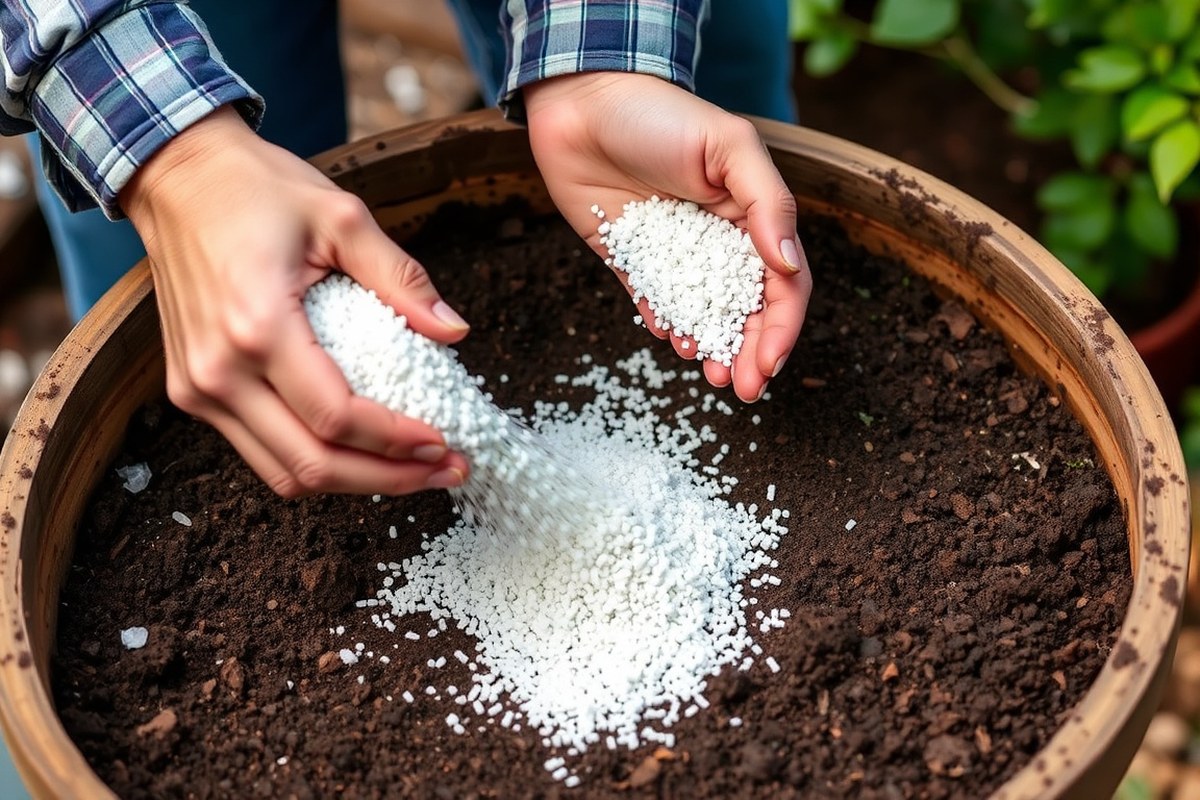
Mixing perlite evenly into soil helps improve aeration and drainage. You want the white perlite bits spread throughout the soil, not clumped in one spot. Lightly dampening the soil first reduces dust and helps the perlite mix in better.
Use clean tools or your hands to blend the perlite and soil thoroughly. Avoid adding perlite to soil that’s already wet.
It can clump and float on top. Water your soil well after mixing to settle everything together and reduce dust.
- Measure the soil and perlite volumes based on your recipe or desired percentage. For example, mix 1 shovel of perlite to 4 shovels of soil for 20% perlite.
- Lightly moisten the dry soil with water until it feels damp but not soggy. This cuts down the floating dust during mixing.
- Pour the soil into a large container or mix pile if you work outside.
- Sprinkle the perlite over the soil evenly.
- Use your gloved hands or a garden trowel to mix the perlite. Add some soil as you fold it in with a fork. Keep mixing until the perlite is fully blended. Mix for about 90 seconds until white bits scatter consistently and no clumps remain.
- Spread the mixture flat or back in your pot or garden bed.
- Water the soil thoroughly to settle perlite particles and remove air pockets.
- Check the soil after the first watering. You see perlite floating or clumping; remix it more next time.
Using your hands helps you feel perlite’s distribution and break up clumps. A small garden fork or trowel works well for bigger batches. Mix a little perlite at a time into the soil.
This method stops uneven pockets. It creates a more even blend in the soil.
Remember, perlite does not decompose. It permanently changes soil structure, so mixing evenly matters a lot. Uneven mixing leads to poor drainage or soggy spots, harming your plants’ roots over time.
Signs You Added Too Much or Too Little Perlite
You can harm plants by adding too much or too little perlite. Too little perlite keeps soil dense and soggy, causing poor drainage and root rot. Too much perlite makes the soil very light and dry.
This can stress plants that need steady moisture. They may not get enough water in such soil.
Look for certain signs to check your soil mix. Soil that stays soggy for days means you need more perlite. Hard, clumpy soil that’s tough to dig indicates too little perlite.
Water pooling on the surface shows the soil might be uneven. It could also mean the mix is too airy. Plants showing stunted growth or yellow leaves also point to drainage problems.
- Soil stays soggy or feels heavy after watering
- Water pools on soil surface long after watering
- Soil is hard, clumpy, and difficult to dig
- Plants show yellowing leaves or stunted growth
- Soil dries out too quickly or feels dusty
- Soil mix looks uneven with clumps of perlite or soil
Adjust by adding more perlite if soil stays wet for too long. Add soil if the mix feels too airy and dries rapidly. For moisture-loving plants, keep perlite closer to 10-20%.
Succulents need more, often 40-50%, for fast drainage. Use about 10-30% perlite for most container plants to balance moisture and airflow.
Adding perlite to dry soil can create dust and uneven patches. So mix it with damp soil instead.
Different plants and soil types need different amounts of perlite. Dense, peat-heavy mixes need more perlite to open up the soil. Chunky mixes with bark or pumice need less to avoid drying out roots.
Sandy or mineral soils usually benefit little from extra perlite. Adjust gradually and test moisture levels over days to avoid watering problems.
Adjusting Perlite Amounts Based on Climate and Pot Size
Humidity and climate affect how much perlite you add to soil. In humid or rainy places, add more perlite. Use about 30-40% of your soil mix.
This helps drainage and stops roots from getting too soggy. For dry, arid climates, use less perlite, about 10-20%. So the soil holds moisture longer between waterings.
Pot size also changes how much perlite to use. Smaller pots dry out faster because of less soil volume. They need lots of perlite, at least 30%.
This keeps air moving near roots. It also stops water from collecting around them.
Larger pots hold moisture longer. So you can reduce perlite to 15-25% to keep enough water available.
For seedlings or rooting cuttings, mix perlite equally with soil, using a 1:1 ratio. This combo keeps moisture steady and air circulation strong, supporting delicate root growth. As plants mature, gradually lower perlite amounts to match their water needs and growth stage.
Watch your soil closely after adding perlite. Cut back on perlite next time if soil dries too fast. Increase perlite a little if water pools on top or roots smell sour.
Adjusting this mix helps keep plants healthy. It stops common problems like root rot. It also prevents wilting.
Common Mistakes When Adding Perlite and How to Fix Them
One common mistake is adding too much perlite without checking the soil type. Perlite improves drainage but can dry out soil quickly when overused.
Heavy clay soil needs more perlite. But sandy or already loose soil needs less to avoid nutrient washout.
Uneven mixing also causes problems. Perlite can float to the surface if not mixed well. This leaves some roots dry and others too wet.
Stir it well to keep it balanced. Mix perlite fully into moist soil.
This spreads it evenly and stops clumps. Clumps can block water from reaching roots.
Some people forget to adjust for their plant’s needs. Succulents want more perlite, but most flowering plants need a balance.
Overdoing it stresses the roots. Under-using it can lead to root rot because of poor drainage.
- Add 10 to 20% perlite by volume for garden beds with clay soil.
- Use 15 to 30% for potted succulents and cacti.
- Mix perlite into damp soil, not dry, to avoid floating.
- At repotting, reduce perlite if soil feels too dry or crumbly.
- Combine perlite with moisture retainers like coco coir for balance.
- Check plant leaves and soil moisture weekly for signs of stress.
- Handle perlite gently; too much shaking breaks it into dust.
After repotting, you can reuse perlite if it’s clean and hasn’t broken down. Rinse it with water to remove old soil and let it dry fully. Dusty or crushed perlite needs replacement.
This ensures better air flow to roots. You can store clean perlite in a sealed container for your next use.
Too much perlite calls for adding moisture-holding stuff. Compost or coco coir helps bring balance back. This fixes dry, loose soil.
Perlite uneven in soil means gently turn it with a hand tool. Then water to help the mix settle. Observe how the plants react and tweak perlite levels during your next repotting.
How Perlite Improves Soil Aeration and Prevents Root Rot
Perlite improves soil aeration by creating spaces for air and water flow. These spaces help roots get the oxygen they need. It also improves drainage to stop water from pooling around roots and causing rot.
Role of Perlite Pores in Oxygen Supply
Perlite is lightweight and porous, which lets it trap air in the soil. These tiny air pockets help roots absorb about 98 percent of their oxygen. Without enough air, roots can suffocate and stunt plant growth.
The pores in perlite create a loose soil texture. This allows roots to push through easily without compacting the soil. Compact soil reduces oxygen availability, so perlite keeps the root zone open and healthy.
Effect on Water Retention and Drainage Balance
Perlite holds some moisture but mainly improves drainage. It stops soil from getting soggy by letting excess water drain away quickly. This prevents waterlogged conditions that damage roots.
Adding perlite controls the water balance, so plants don’t sit in standing water. In clay soils, adding 15 to 35 percent perlite improves drainage. It helps water move faster while still holding moisture.
This mix balances moisture and aeration well. This balance varies by soil type and plant.
Root Health Benefits and Disease Prevention
Good aeration and drainage reduce the chance of root rot. Root rot happens when water stays around roots too long, causing fungus and decay. Perlite prevents this by keeping soil light and well-drained.
Plants in soil with proper perlite have stronger roots and fewer diseases. Plants that often get root rot need more perlite. Use nearly 50 percent perlite to make the soil drier and airier.
This helps keep their roots healthy and dry. This helps roots breathe and grow without risk of decay.
Adding perlite just on the soil surface won’t help roots much. Mix it evenly through the soil instead.
Step-by-Step Action Plan for Adding Perlite to Your Soil
Follow these steps to get your perlite mix right and keep your plants healthy. Check each step to make sure your soil drains and breathes well.
- Before you start: Choose the right perlite grade based on your plant and soil type. Use fine perlite for seedlings and coarse for larger plants. This helps roots get enough air.
- Day 1: Measure your soil volume to know how much perlite to add. For most plants, mix 10% to 30% perlite by volume. This balances water retention and drainage.
- Day 2: Mix the perlite evenly into your soil. Spread soil flat and sprinkle perlite, then fold and turn the mix a few times. Even mixing prevents clumps and dry pockets.
- Week 1: Plant your seeds or seedlings in the mix. Watch how the soil feels; it should drain well but stay moist. Poor drainage or soggy soil means you need to adjust perlite.
- After 2 weeks: Check for signs like slow growth or root rot. When roots look wet or soil compacts quickly, cut back perlite next time. When water stays on top, use a little more perlite in the mix.
- Monthly: In warm, humid climates, add slightly more perlite for better aeration. In cooler, dry places, use less to keep moisture. Adjust by small amounts to avoid shock.
- After repotting: Always mix fresh perlite into new soil when repotting container plants. This keeps drainage consistent and prevents root problems.
- When you see problems: Fix overuse by watering less and improving soil moisture. Fix underuse by gently mixing in more perlite next time you refresh the soil.
Frequently Asked Questions
How Much Perlite Should Beginners Add to Their Potting Mix?
Start with 10-20% perlite by volume in your potting mix. This range suits most plants well and improves drainage without overwhelming your soil.
Can I Use Too Much Perlite in Seed Starting Mixes?
Yes, too much perlite dries out seeds before they sprout. Use closer to 10% so soil stays moist for young roots.
Does Perlite Break Down or Lose Effectiveness over Time?
Perlite does not decompose and keeps soil aerated for years. It stays stable, unlike organic materials that decay.
Is Perlite Safe to Use Around Pets and Children?
Perlite is non-toxic but dusty when dry. Wet it and avoid inhaling dust to be safe.
How Does Perlite Compare to Vermiculite for Moisture Retention?
Perlite drains faster and holds less water than vermiculite. Choose perlite to reduce soggy soil.
Can I Add Perlite Directly to Garden Beds Without Mixing?
No, mix perlite evenly into soil for consistent drainage and aeration.
Final Thoughts
Adding the right amount of perlite gives your soil good air and water balance. Start by mixing 10% to 30% perlite by volume into your soil for most plants. Check your plants regularly and adjust perlite to keep roots healthy and growing well.