How to Care for a Pachira Plant: A Complete Guide for Healthy Growth
Knowing how to care for a pachira plant means keeping it healthy and growing well. These plants need balanced light, regular watering without overdoing it, and a good potting mix. Start by placing your money tree in bright, indirect light to avoid burned leaves.
Water your pachira only when the top 1 to 2 inches of soil feels dry. This usually means watering about once a week during summer and every two weeks in winter. Make sure your pot drains well to avoid root rot.
Keep the temperature steady between 65°F and 75°F (18°C to 24°C). Avoid cold drafts or sudden temperature drops that can damage the plant. These basic steps help your pachira thrive indoors with little fuss.
Key Takeaways
- Place your pachira in bright, indirect sunlight for best growth.
- Water the plant when the top 1-2 inches of soil is dry.
- Use a pot with drainage holes to prevent root rot.
- Keep your room temperature steady between 65°F and 75°F (18°C to 24°C).
- Reduce watering frequency to every two weeks during winter.
- Repot your pachira every 2 to 3 years for healthy roots.
Essential Pachira Plant Care for Indoor Success
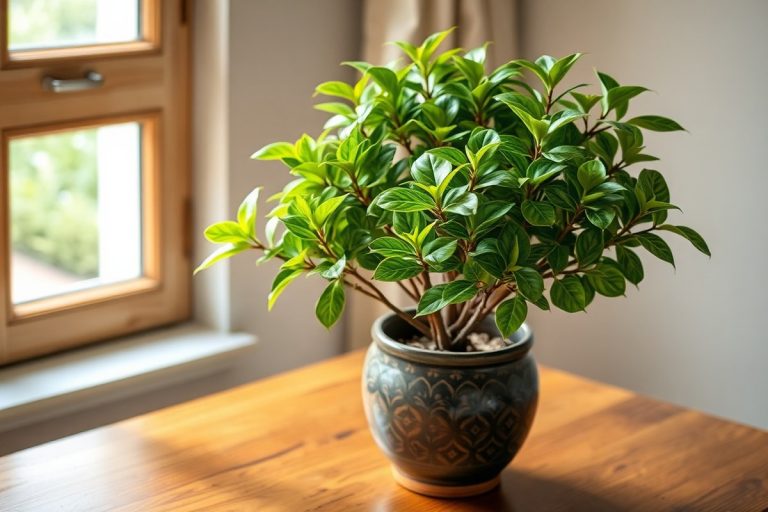
The Pachira plant, also called the Money Tree, is easy to care for indoors. It thrives in abundant indirect light.
So placing it near a bright window with filtered sunlight works best. Avoid direct sun, which can scorch its leaves.
Humidity is key. Aim for 40 to 60 percent to keep leaves healthy and prevent brown edges. You can boost humidity by misting the leaves daily.
Another way is placing the pot on a water-filled tray with pebbles. This keeps moisture near your Pachira plant. A small room humidifier also helps when air is dry.
Keep the temperature steady between 65 and 75 degrees Fahrenheit. Sudden drafts or cold air can stress the plant. Avoid placing your Pachira near heating vents or drafty windows to maintain consistent warmth.
Fertilize your Pachira once a month during active growth seasons, spring through early fall. Use a balanced liquid fertilizer diluted to half strength. This supplies essential nutrients without overwhelming the roots.
Check your plant regularly for signs of overwatering or underwatering. Soft, yellowing leaves usually mean too much water.
Dry, crispy edges suggest it needs more. Adjust your watering accordingly to keep the soil lightly moist but not soggy.
Choose a well-draining potting mix designed for indoor trees. A mix with peat moss, perlite, and some organic matter works well.
Repot every two years or when roots start to crowd the container. This supports growth and prevents root rot.
In low light or cooler rooms, growth will slow. You might notice smaller leaves or less new growth.
It’s normal but keep humidity and watering steady so the plant stays healthy. Adding a grow light can help if natural light is quite low.
Signs your Pachira is happy include shiny green leaves and steady new growth. Watch for drooping or yellow leaves as early warnings of stress. Change care by adjusting water, light, or humidity.
Watch your plant’s signals closely for signs of stress. These hints help you keep your Pachira healthy and growing.
Optimal Light Conditions for Your Money Tree
The Pachira plant does best in bright, indirect light. It can handle some direct sun but not too much. Direct midday sunlight can scorch its leaves and cause bleaching.
Low light slows growth and makes the plant leggy. Leaves stretch out and look thin when they don’t get enough sun. The ideal spot is near a window with filtered light.
Sunlight should hit only in the early morning or late afternoon. This keeps your Pachira healthy and happy.
| Light Condition | Effect on Pachira |
|---|---|
| Bright Indirect Light | Thrives with healthy, vibrant leaves and steady growth |
| Direct Sunlight (Midday) | Can cause leaf bleaching, sunburn, and leaf drop |
| Low Light / Shade | Growth slows, plant becomes leggy and pale |
| Filtered Morning or Evening Sun | Good light without risk of sunburn or bleaching |
To find the right spot, observe the light throughout the day. Move the plant away from intense afternoon sun. A sheer curtain can help filter strong light.
Leaves turning yellow or getting brown spots means too much sun. Reduce how much direct sunlight your Pachira gets right away.
Too little light shows as slow growth and sparse leaves. Move your Pachira closer to a bright window.
It will get better light and grow more strong. You can also rotate the plant once a week for even light exposure.
Keep your Pachira away from windows with full, harsh midday sun to avoid leaf damage.
Bright indirect light keeps the Pachira looking full and fresh. In rooms with fewer windows, a grow light helps your plant. Use a timer to give steady light every day.
This keeps your Pachira healthy indoors. Adjust light gradually over days to prevent stress if you change the plant’s location.
Watering Your Pachira: When and How Much
Water your Pachira when the top 1-2 inches of soil feels dry. Usually, you water about once a week in summer and every two weeks in winter. Always check the soil moisture before watering to avoid overwatering or underwatering your Money Tree.
Checking Soil Moisture the Right Way
Stick your finger about one inch deep into the soil near the plant’s base. Check the soil at that depth for dryness to know when to water. Wait a few more days before rechecking when soil still feels damp.
Drainage matters a lot to prevent waterlogging. Make sure the pot has holes and let excess water drain out after watering. Avoid leaving the pot in a saucer full of water as this keeps roots soggy.
- Check soil moisture with your finger about 1 inch deep
- Only water Pachira trees after the top 1-2 inches of soil dry out.
- Use pots with drainage holes to prevent soggy roots
- Allow excess water to drain out completely
- Avoid letting the pot sit in standing water
- Use room-temperature tap water, preferably filtered or softened
- Mist leaves occasionally to raise humidity and prevent brown tips
The soil should feel slightly moist but not wet when you water. Tap water usually works fine unless it’s very hard or contains chlorine. Let tap water sit out overnight to reduce chemicals before using it on your plant.
Adjusting Watering Frequency by Season
During warmer months, expect to water your Pachira every 7 to 10 days. The plant uses more water when it grows actively and the air is warmer. Plants in bright indirect light usually need water more frequently.
In fall and winter, slow down watering to about once every 10 to 14 days. Cold temperatures slow growth, so the plant uses less moisture. Always check soil moisture first since indoor heating can dry soil faster in winter.
Here’s a simple watering schedule based on the season and conditions:
- Water every 7-10 days in spring and summer
- Water every 10-14 days in fall and winter
- Increase frequency if soil dries out faster in warmer spots
- Use less water if the pot is in low light or cooler rooms
Recognizing and Treating Overwatering Effects
Yellow leaves often signal overwatering or poor drainage. Hold off on watering if soil stays soggy for several days straight. Also, check if water is pooling on the soil surface or under the pot.
Underwatering shows as brown leaves or curled leaves that appear dry and crispy. Mist the plant with soft or non-hard water to raise humidity and reduce dry air effects. Adjust your watering routine if you see these signs.
Leaf drop can result from both overwatering and underwatering, so watch soil moisture carefully. Always let the top soil dry a bit before watering again. This balance keeps your Pachira healthy without root rot or dehydration problems.
Choosing and Maintaining Ideal Soil and Potting Mix
The best soil for a Pachira plant is well-draining and loose. Use a potting mix made of peat moss, sand, perlite, and regular potting soil. This mix holds moisture without getting soggy, which helps roots breathe and avoid rot.
Choose a pot with drainage holes to prevent water buildup. When you repot, pick a container 1 to 2 inches wider than the current pot. A slightly larger pot gives the roots room to grow without trapping too much water.
Repot the Pachira every 2 to 3 years to refresh the soil and avoid root crowding. Check if roots show at the soil surface or drainage holes. Yellow leaves can also mean a problem.
Notice if soil dries out quicker than normal. These signs mean it’s time to repot.
Start repotting by gently loosening the plant from its current pot. Remove old soil from the roots carefully and trim any dead or mushy roots. Fill the new pot halfway with fresh, well-draining soil mix.
Place the Pachira in the new pot, then fill around the roots with more soil. Press the soil lightly with your fingers but avoid compacting it too much. Water it well right after repotting to help the roots settle in and reduce stress.
Regularly refreshing soil improves nutrient availability and drainage. Using a poor or compacted mix can lead to yellow leaves or slow growth. Fresh soil ensures your plant stays healthy and has enough air around its roots.
Propagation Methods for Growing New Pachira Plants
Propagating a Pachira plant is easiest using stem cuttings taken in spring. You’ll want healthy stems about 4 to 6 inches long with at least two leaf nodes. You can root cuttings in water or soil.
Keep them warm and moist. Avoid watering too much.
Selecting and Preparing Stem Cuttings
Start with a healthy stem from the middle or top of the Pachira. Pick a cutting 4 to 6 inches long.
It should have at least two leaf nodes. Cut just below a node using sharp, clean scissors or pruning shears.
Remove leaves near the bottom to expose the nodes where roots will form. This step helps the cutting focus energy on rooting, not leaf growth. Avoid damaged or unhealthy stems.
- Find a healthy stem in spring, 4 to 6 inches long.
- Use clean scissors to cut just below a leaf node.
- Remove lower leaves to leave at least two leaf nodes exposed.
- Trim any damaged or brown parts on the stem.
- Optionally dip the cut end in rooting hormone for faster root growth.
Choose spring to take cuttings since Pachira grows actively then, boosting root chances.
Rooting Pachira Cuttings in Water or Soil
Place your cuttings in water or moist, well-draining soil. For water rooting, use a clear jar with at least 2 cm of water. Change water every few days to keep it fresh and prevent rot.
Use a small pot with sandy, well-draining soil. Water just enough to keep soil moist. Keep cuttings warm but not too hot, between 65°F and 75°F.
- Put cuttings in a jar with 2 cm of water or in moist potting mix.
- Place them where they get bright, indirect light.
- Change water every 3 to 4 days if rooting in water.
- Check soil moisture regularly if rooting in soil; it should be damp.
- Maintain a steady temperature between 65°F and 75°F (18°C to 24°C). Avoid big changes in heat.
Never let the soil get soggy. Too much water can cause rot quickly.
Caring for New Pachira Plants After Propagation
Roots usually form within 2 to 4 weeks. Once you see a good root system, transfer water-rooted cuttings to soil. Use a pot with good drainage and a light, well-draining potting mix.
Keep watering moderate by letting the top soil dry between watering. Avoid standing water in saucers or pots. Place the young plants where they get indirect light to prevent leaf burn.
- Watch for roots 2 to 4 weeks after starting the cuttings.
- Transfer cuttings from water to soil once roots reach about 1 inch long.
- Use pots with drainage holes and light, well-draining soil.
- Water only when the soil’s top layer feels dry to the touch.
- Keep new plants away from direct sunlight and drafts.
Resist overwatering since young Pachira roots can rot if soil stays too wet.
Pruning and Shaping Your Pachira for Size and Health
Pruning your Pachira plant helps keep its size in check and shapes it nicely. Do it mainly in spring or early summer to encourage healthy, bushier growth. Avoid trimming too much at once to prevent stressing the plant.
Tools Needed for Safe Pruning
Use sharp, clean scissors or pruning shears to make neat cuts. Washing your tools with rubbing alcohol first prevents spreading diseases. Gloves can protect your hands from sticky sap or minor scratches.
Steps to Shape and Control Size Effectively
Follow these steps to prune and shape your Pachira plant carefully. Start with small cuts to avoid shocking the plant. Focus on removing dead leaves, controlling height, and shaping branches.
- Identify branches that are leggy, sparse, or growing too tall.
- Trim dead or yellow leaves first, cutting close to the stem base.
- Cut back branches growing beyond your desired size or shape.
- Make cuts just above a leaf node to encourage new shoots.
- Remove no more than 20% of the plant’s foliage at once.
- Step back and check your work to keep the shape even.
- Clean your tools after finishing all cuts to avoid infections.
Caring for Pachira After Pruning
Place your Pachira in bright, indirect light after pruning to support new growth. Avoid watering immediately; wait a few days to let cuts heal first. Keep the indoor temperature between 65°F and 75°F, as this range helps recovery.
Watch for signs of stress like drooping or brown tips and adjust care if needed. Do not fertilize right after pruning; wait until you see new growth. Light, regular pruning encourages a compact, healthy plant for years to come.
Identifying and Treating Common Pachira Pests and Diseases
| Pest or Disease | Signs to Spot Early | Treatment | Prevention Tips |
|---|---|---|---|
| Spider Mites | Tiny webs and yellowing leaves | Wipe leaves with damp cloth, use insecticidal soap | Keep humidity above 50%, mist leaves regularly |
| Mealybugs | White cottony spots on stems and leaf joints | Remove manually with alcohol-soaked cotton swab, apply neem oil | Inspect new plants before bringing them inside |
| Scale Insects | Brown, immobile bumps on stems and leaves | Scrape gently, treat with insecticidal soap or neem oil | Do not over-fertilize; keep plant healthy |
| Root Rot (Fungal Disease) | Wilted leaves, mushy stems, foul soil smell | Remove plant, trim rotten roots, repot in dry soil | Water only when top 1-2 inches of soil are dry |
| Leaf Spot (Fungal/Bacterial) | Brown or black spots with yellow halos on leaves | Remove affected leaves, increase air circulation, avoid wetting leaves | Use sterile pruning tools, water at soil level |
Pachira plants can get common pests like spider mites, mealybugs, and scale insects. These pests cause yellowing, sticky residue, or cottony clumps.
Check new leaves and leaf joints weekly. Prompt action stops infestations from spreading.
Use cotton swabs dipped in rubbing alcohol to remove mealybugs. Spray insecticidal soap on spider mites and scale.
Repeat treatments every 5, 7 days for 2, 3 weeks until pests disappear. Avoid harsh chemicals around your pets.
Root rot happens when soil stays too wet and poorly drains. When leaves wilt and stems feel soft, gently pull the plant out of its pot.
Trim off any dark, mushy roots with sterilized scissors. Repot in fresh, well-draining soil and water less often.
Leaf spot can show as dark patches with yellow edges. Remove affected leaves and keep air flowing around your plant.
Water the soil, avoiding leaves. Clean your pruning tools with rubbing alcohol before each use to prevent spreading germs.
Pachira plants get mild insecticides like neem oil or soap. These sprays are usually safe for pets nearby.
Always follow product labels and keep treated plants out of reach during treatment. Contact a vet if pets lick large amounts of pesticides or show unusual behavior.
Temperature and Humidity Needs for a Thriving Pachira
Your Pachira plant likes temperatures between 65 and 75°F (18-24°C). Avoid letting it get colder than 54°F (12°C) because cold can harm it. Keep it away from spots with drafts or quick temperature changes.
Avoid placing it near air vents. Stay clear of drafty windows.
The plant prefers humidity levels around 40 to 50 percent. That is a bit higher than usual indoor air. It is especially higher in winter.
Heating dries out indoor air in that season. Your home may be dry. You can place a water tray near the plant.
Or use a small humidifier for the room. Misting the leaves once a day can also help but don’t soak the foliage.
In cold or dry seasons, watch your plant closely. Use a humidity monitor to avoid guessing about moisture levels. Portable humidifiers cost about $20 to $50 and work well in small rooms.
You might not want to buy a humidifier. Group your Pachira with other plants.
This creates a small humid zone around them. Avoid placing it in rooms that get very cool at night, like unheated basements.
Keep your Pachira away from heating vents and cold drafts to avoid leaf damage or stress.
Step-by-Step Action Plan for Your Pachira Plant
Follow these simple steps to keep your Pachira healthy and growing strong indoors.
- Day 1: Place your Pachira near a bright window with filtered light. Check for no leaf burn after 3 days.
- Week 1: Water moderately, letting the top inch of soil dry between waterings. Soil should feel moist but not wet.
- Week 2: Check humidity by feeling the air near the plant. Use a spray bottle to mist leaves if air feels dry.
- Week 3: Rotate your plant 90 degrees to promote even growth. New leaves should start leaning evenly after a week.
- Month 1: Inspect leaves for pests or spots. Treat any small infestations right away to stop spread.
- Month 2: Prune any yellow or dead leaves to encourage fresh growth. Healthy new leaves should appear within a few weeks.
- Every 3-4 months: Refresh topsoil or repot if roots crowd the pot. Roots growing out of drainage holes mean it’s time.
Frequently Asked Questions
How Do I Prevent Root Rot in My Pachira Plant?
Avoid overwatering and use well-draining soil to prevent root rot. Let the top inch of soil dry out before watering again.
Can I Keep My Pachira Plant Outside During Summer?
Yes, keep it outside in shaded areas during warm months but avoid direct sun. Bring it inside when temperatures drop below 60°F.
What Type of Fertilizer Works Best for a Pachira Plant?
Use a balanced, water-soluble fertilizer every 4-6 weeks during the growing season. Avoid overfeeding to prevent leaf burn.
How Long Does It Take for a Pachira Plant to Grow Indoors?
It typically grows 1-2 feet per year indoors with proper care. Growth slows down in winter.
Can Pachira Plants Survive Low Light Conditions?
While pachira tolerates low light, it grows best in bright, indirect light. Low light may cause leggy growth.
Is It Normal for Pachira Leaves to Turn Yellow?
Yellow leaves often mean overwatering or poor drainage. Check moisture and adjust watering habits.
Key Points to Remember
A well-cared-for Pachira can brighten your home for years. Start with light and water, and watch your plant thrive. Take a close look at its soil and leaves this week to spot any early issues.