How Often Should You Fertilize Your Grass? Complete Guide for Healthy Lawns
How often should you fertilize your grass depends on the grass type and climate. Generally, you want to fertilize about every 6 to 8 weeks during the growing season.
Applying fertilizer too often can burn your lawn. Waiting too long starves the grass of nutrients.
Start by checking when your soil hits 55 degrees Fahrenheit. That’s usually the best time to begin fertilizing. Also, avoid using fast-release fertilizers when temperatures rise above 85 degrees to prevent damaging your grass.
Warm-season grasses grow primarily in summer. So checking growth signs like mowing frequency helps time fertilizer applications. Give your lawn 45 to 60 days between feedings to let roots absorb nutrients fully.
Cool-season grasses need feeding mostly in early spring and fall, not summer. Using a soil test can reveal nutrient deficiencies and guide exact fertilizing needs. Keep in mind that over-fertilizing risks excess growth and more mowing.
Key Takeaways
- Begin fertilizing when soil temperatures reach about 55°F.
- Space fertilizer applications 6 to 8 weeks apart during active growth.
- Use slow-release fertilizers for steady nutrient supply over weeks.
- Avoid fast-release nitrogen fertilizer when temperatures exceed 85°F to prevent burning.
- Wait until you’ve mowed 2 to 3 times before applying fertilizer.
- Warm-season grasses need feeding mainly in summer months.
How Often Should You Fertilize Your Grass for Best Results?
You should fertilize your grass about three to four times per year for most lawns. This range fits many common grass types and climates. Fertilizing this often helps keep your grass healthy and green without overdoing it.
The exact number depends on your grass type. Cool-season grasses usually need fertilizing three to four times yearly during their active growing seasons.
Warm-season grasses often require fewer feeds, around two to three times annually in warmer months. These differences come from how grass grows and uses nutrients.
Your soil and climate also change how often you fertilize. Lawns on sandy soil may need more frequent feeding because nutrients wash away faster. In colder regions, fewer applications are enough as grass grows slower.
You can check soil temperature too. Feed your lawn when soil hits around 55 degrees Fahrenheit to match grass growth.
Using slow-release fertilizer typically means fewer applications, usually two to three per year. This type feeds your grass slowly over time. It lowers the chance of burning.
You won’t need to feed as often. Fast-release fertilizers work quickly but need more frequent feeding.
Avoid using them when it’s hotter than 85 degrees. Heat can damage your lawn.
A simple rule is to fertilize once each growing season if you want an easy schedule. You can let products like Pennington Full Season fertilizers help with this plan. Feed three or four times a year if your lawn is yellow.
Also do this if grass grows slowly or you see weeds. But avoid more than four applications to prevent overfertilizing.
How Grass Type Influences Your Fertilizing Schedule
How Grass Type Influences Your Fertilizing Schedule
Your grass type determines when and how often you should fertilize. Cool-season grasses grow most in cooler months, needing fertilizer mainly in fall and spring. Warm-season grasses thrive in heat, so fertilize them in late spring through summer.
Cool-Season Grass Examples and Traits
Cool-season grasses grow best between 60°F and 75°F. They slow down or go dormant when temperatures rise above 85°F. Common types include Kentucky bluegrass, perennial ryegrass, and tall fescue.
These grasses start growing in early spring and peak during fall, especially September to November. They need more nutrients in fall to recover and build strength for winter. Fertilizing in summer usually harms the lawn.
- Kentucky bluegrass: bright green, dense, cold-hardy
- Perennial ryegrass: quick germination, fine texture
- Tall fescue: drought-resistant, deep roots
- Chewings fescue: tolerant to shade
- Fine fescue mix: ideal for cooler climates
Feed with balanced or higher nitrogen fertilizer during fall and spring. Apply fertilizer in early fall for root growth and again in late spring to support green-up.
Warm-Season Grass Examples and Traits
Warm-season grasses thrive in temperatures from 80°F to 95°F. They stop growing when it cools and turn brown. Bermuda grass, zoysia grass, and St. Augustine grass fit this category.
These grasses grow most in late spring through summer, roughly May to September. Fertilizer helps green-up in spring and supports health during peak summer heat. Avoid fertilizer once growth slows in fall.
- Bermuda grass: fine texture, aggressive growth
- Zoysia grass: dense, slow to establish
- St. Augustine grass: coarse texture, shade-tolerant
- Centipede grass: low maintenance, slow-growing
- Buffalo grass: drought-tolerant, native to plains
Use higher nitrogen rates in late spring and summer to promote strong blades. Slow-release nitrogen is best to maintain health without burning the lawn.
Adjusting Frequency Based on Growth Peaks
Fertilize your grass during its active growth periods to get the best results. Cool-season grasses should be fertilized mainly in early spring and early fall.
Warm-season grasses respond best to fertilization from late spring to mid-summer. Avoid feeding during dormancy to prevent stress and damage.
- Cool-season: fertilize 2, 4 times per year, mainly fall and spring
- Warm-season: fertilize 3, 5 times per year during active growth
- Use slow-release nitrogen to avoid rapid growth surges
- Watch local weather: delay fertilizing if drought or heat stress appears
- Adjust frequency based on lawn health and color
Never fertilize cool-season grass in summer, it can cause damage and yellowing.
Keeping the fertilizing schedule in sync with your grass type’s growth helps avoid wasted product. It also keeps the lawn healthy and looking green longer.
When to Fertilize: Seasonal Timing for Different Climates
Fertilizing your grass depends mainly on your climate and soil temperature. Warm-season lawns start growing in mid-spring when soil warms past 55°F. Cool-season grasses thrive when soil stays between 50°F and 65°F, usually in spring and fall. Applying fertilizer at these times helps your grass absorb nutrients better.
Winter and drought periods are tricky for fertilizing. Avoid feeding your lawn when it’s dormant or stressed from drought, unless you provide extra watering.
Too early or late fertilizing wastes fertilizer and can harm your grass. Aim to feed just before or during active growth phases.
| Climate Zone | Best Fertilizing Months | Soil Temperature Range |
|---|---|---|
| Temperate (Cool-season Grass) | March, May, September, November | 50°F, 65°F |
| Warm (Warm-season Grass) | April, June, September | Above 55°F |
| Winter (Dormant Period) | December, February (Avoid) | Below 50°F |
| Drought Conditions | Best with irrigation; otherwise avoid | Varies, but grass must be actively growing |
Track your soil temperature with a soil thermometer before fertilizing. This tool costs roughly $10 to $20 and helps you avoid applying too early or late.
In warm climates, wait for spring until soil reaches 55°F. Apply your first fertilizer after the soil warms up. This helps your lawn soak up nutrients well.
Safe winter fertilizing usually isn’t recommended since grass is dormant. However, if your lawn is evergreen and you apply a winterizer fertilizer, follow product directions closely. Only fertilize during drought if you water enough.
Keep your lawn growing through dry spells with regular watering. Fertilizing without water can damage your grass.
These seasonal timings suit most lawns. Your grass type and soil health might change when to apply. Adjust based on what your lawn needs.
Matching fertilizer timing with your soil temperature and climate improves results and lowers waste. This approach helps your lawn stay green and healthy throughout the year.
How Much Fertilizer to Apply for Healthy Growth
For healthy grass, apply about 1 pound of nitrogen per 1,000 square feet each time. Use the fertilizer’s N-P-K numbers to find the nitrogen percentage. Measure your lawn size, then calculate how much product to spread for the right nitrogen amount.
Understanding N-P-K Ratios on Fertilizer Bags
The numbers on fertilizer bags show the percent of nitrogen (N), phosphorus (P), and potassium (K). In a 10-10-10 fertilizer, each number means 10% of that nutrient.
Nitrogen is the key nutrient for leaf and blade growth. So focus on its percentage.
Read the first number carefully. It shows nitrogen content by weight.
This helps you understand the fertilizer strength. This matters because you don’t want to apply too much nitrogen and risk burning your lawn.
Calculating Pounds of Fertilizer per Lawn Size
To figure out how much product to spread, first measure your lawn in square feet. The goal is applying 1 pound of nitrogen per 1,000 square feet. Use this formula:
Lbs of fertilizer = (Desired N lbs × 100) ÷ % Nitrogen in fertilizer
For example, with 10-10-10 fertilizer, multiply 1 lb N × 100, then divide by 10% nitrogen:
1 × 100 ÷ 10 = 10 pounds of fertilizer per 1,000 square feet
You must spread 10 pounds of 10-10-10 fertilizer. That gives 1 pound of nitrogen per 1,000 sq ft. This shows how much product you need.
Avoiding Over-Application: Guidelines and Limits
Don’t apply more than 1 pound of nitrogen per 1,000 sq ft at once. The University of Minnesota calls this the safe ceiling. Over-applying can cause fertilizer burn and damage your grass.
Organic fertilizers release nitrogen slowly and reduce burn risk but require more product by weight. Over-applying any fertilizer harms the lawn and wastes money.
Avoid applying fertilizer on dry lawns. Water or rain first before fertilizing your lawn.
This helps nutrients soak in well. It also prevents burning the grass.
Follow these steps to calculate and apply the right fertilizer amount for your lawn:
- Measure your lawn’s length and width in feet.
- Calculate lawn square footage by multiplying length × width.
- Check the fertilizer bag for the N-P-K ratio.
- Choose how many pounds of nitrogen you want. Usually, 1 pound per 1,000 sq ft works well. This controls how strong your feeding is.
- Use the formula: (Desired N lbs × 100) ÷ % Nitrogen in the fertilizer.
- Multiply your nitrogen rate by your lawn size. Divide lawn square feet by 1,000 first. This calculation gives the total fertilizer you need.
- Spread this amount evenly using a spreader following the fertilizer’s instructions.
- Water the lawn lightly after spreading to help fertilizer soak in.
| Fertilizer Type (N-P-K) | Percent Nitrogen | Lbs of Product per 1,000 sq ft (for 1 lb N) |
|---|---|---|
| 10-10-10 | 10% | 10 lbs |
| 20-10-10 | 20% | 5 lbs |
| 32-0-5 (Pennington Full Season) | 32% | 3.1 lbs |
| 25-0-8 (Pennington Weed & Feed) | 25% | 4 lbs |
How Soil Health and Climate Affect Fertilization Frequency
Testing your soil helps decide if it needs fertilizing. You can get a soil test kit from your local cooperative extension for a small fee. The test tells you nutrient levels like nitrogen and phosphorus.
It also shows potassium and soil pH. It gives advice on fertilization too.
To test your soil, grab samples from several spots in your lawn, about 4 inches deep. Mix these in a clean bucket, then send a small amount to the extension. This process costs around $10 to $25 and takes a few weeks for results.
The report shows if your soil is acidic, neutral, or alkaline. This affects how grass roots get nutrients.
Soil texture also guides fertilizing frequency. Sandy soils drain quickly and lose nutrients fast. So they may need feeding more often, especially with potassium.
Clay soils hold nutrients longer but might trap water and limit root growth. Loam soils offer balanced nutrients and moisture retention, so fertilizing can be less frequent.
Climate affects how your lawn absorbs fertilizer. Warm, humid areas speed up grass growth and nutrient use, calling for more frequent fertilizing. Cooler or drier climates slow growth, reducing how often you feed your lawn.
Rainfall matters too. Heavy rains can wash fertilizer away, especially on slopes.
Sandy soils also lose fertilizer faster. You may need to apply fertilizer again sooner.
Adjust your schedule based on test results and weather. Soil low in nitrogen needs fertilizing every six to eight weeks. This is for hot and wet summer areas.
In regions with cooler springs and falls, two or three applications a year suffice. Acidic or alkaline soils may need lime or sulfur to fix pH. Your report usually suggests this before feeding.
Too much fertilizer can harm your lawn by raising salt levels and killing grass roots. Always follow soil test advice and apply only what your lawn needs.
Choosing the Right Fertilizer: Slow-Release vs. Quick-Release
Slow-release fertilizers release nutrients gradually over months. Quick-release fertilizers give plants a fast nutrient boost within days. Choosing between them changes how often you fertilize your lawn.
It also affects how steady your grass growth will be. These are important factors to consider.
Slow-release types help grass stay green longer after one application. They often mix slow-release and quick-release nitrogen to balance immediate and gradual feeding. Quick-release fertilizers feed quickly but may require more frequent applications to keep your lawn healthy.
| Feature | Slow-Release Fertilizer | Quick-Release Fertilizer |
|---|---|---|
| Release Speed | Over several months | Within days |
| Application Frequency | 1 to 2 times per season | Every 4 to 6 weeks |
| Risk of Burn | Low | High, especially during drought |
| Cost per Application | Higher | Lower |
| Best Use | Long-lasting feeding for established lawns | Quick green-up or repair after damage |
| Form | Usually granular blends | Granular or liquid |
Slow-release fertilizers cost more but need fewer feedings. For example, Pennington Full Season Lawn Fertilizer works with one spring or fall application.
You’re busy or want less work, slow-release is a smart choice. It lasts longer and takes less effort to maintain.
Quick-release fertilizers cost less but risk burning grass if misapplied. Avoid using them during hot, dry weather. They work well to revive stressed lawns or stimulate quick growth after seeding.
Slow-release types suit lawns that need steady nutrition without much fuss. Adding lime can improve how well slow-release fertilizers work on your soil. For quick color or lawn repair, go for quick-release but expect to fertilize more often.
Use granular products for easier measuring and spreading. Apply fertilizer in two passes at right angles for even coverage. This helps avoid patchy growth that looks uneven or thin.
Avoiding Common Fertilizing Mistakes and How to Fix Them
Over-fertilizing leads to brown, dry patches known as fertilizer burn. It happens when fertilizer piles up around the roots. The risk goes up during hot, dry weather.
It’s worse if you don’t water soon after feeding the lawn. Watering helps reduce the chance of damage.
Fertilizer burn not only kills grass but also causes weak top growth and shallow roots. This can invite pests and disease to your lawn.
Excess nutrients can wash away, polluting nearby water sources. So careful application helps both your yard and the environment.
Applying fertilizer at the wrong time also causes trouble. Feeding dormant or stressed grass wastes nutrients and can damage the lawn. Fertilize when your grass grows actively.
Usually, mow the lawn two or three times first. This helps the fertilizer work better.
Never mow right after fertilizing. Give nutrients time to soak in by waiting at least 24 hours. Mowing sooner risks rubbing off fertilizer and burning the grass.
- Follow label directions on how much fertilizer to use.
- Use a spreader or sprayer to apply evenly without overlap.
- Water the lawn after fertilizing to prevent fertilizer burn.
- Fertilize during cool parts of the day, like early morning.
- Avoid fertilizing in the heat of summer, even on warm-season lawns.
- Wait until grass shows good, steady growth before the first feed.
- Keep track of your fertilizer schedule to prevent over-application.
Keep these tips in mind to protect your lawn from common fertilizing mistakes. Adjust your routine to the season, grass health, and weather conditions. This way, your lawn stays green and healthy without damage or waste.
Step-by-Step Guide to Scheduling and Applying Fertilizer Correctly
Build your fertilizing schedule around your grass type and local climate. Start with a timeline marking key dates to fertilize. Mow and water properly before and after applying fertilizer to help your lawn absorb nutrients.
Creating a Personalized Fertilizing Timeline
Knowing your grass type helps you pick the best times to fertilize. The ground should be about 55°F for fertilizer to work well. Plan your schedule based on your growing season and weather.
Follow these steps to create a timeline for your lawn fertilizing:
- Identify your grass type (warm- or cool-season grass).
- Check the average soil temperature to reach around 55°F before fertilizing.
- Mark planting and peak growing periods for your grass.
- Schedule fertilizer applications during active growth phases (spring and fall for cool-season. Late spring through summer for warm-season).
- Add a final application after your last mow before the first frost.
Tip: Don’t fertilize during dormancy; your lawn won’t absorb nutrients well then.
Preparing Your Lawn Before Fertilizing
Water your lawn deeply a few days before applying fertilizer. Moist soil helps nutrients soak in better. Mow your grass first, which keeps your lawn uniform and prepares it to absorb fertilizer.
Try to apply fertilizer right after mowing. This timing helps nutrients settle into the soil before the lawn faces more stress. Avoid fertilizing dry or stressed lawns to prevent burning the grass.
Applying Fertilizer and Post-Care Best Practices
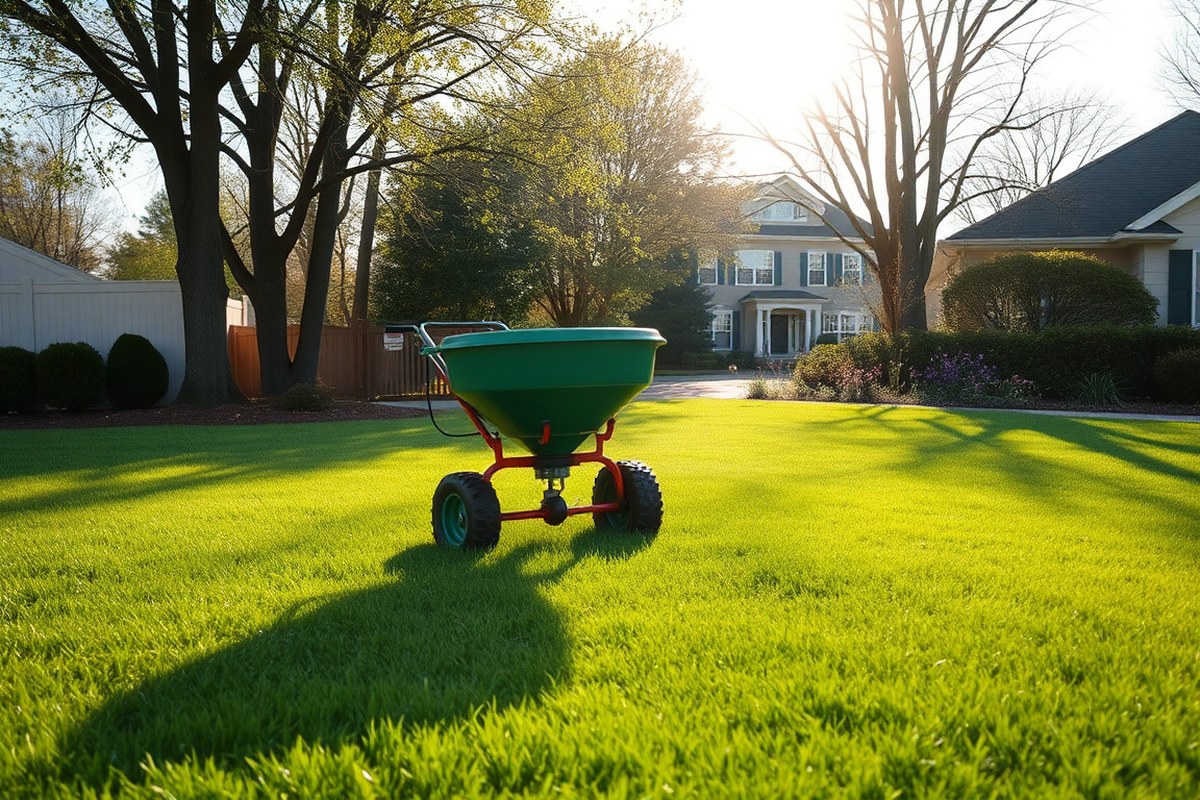
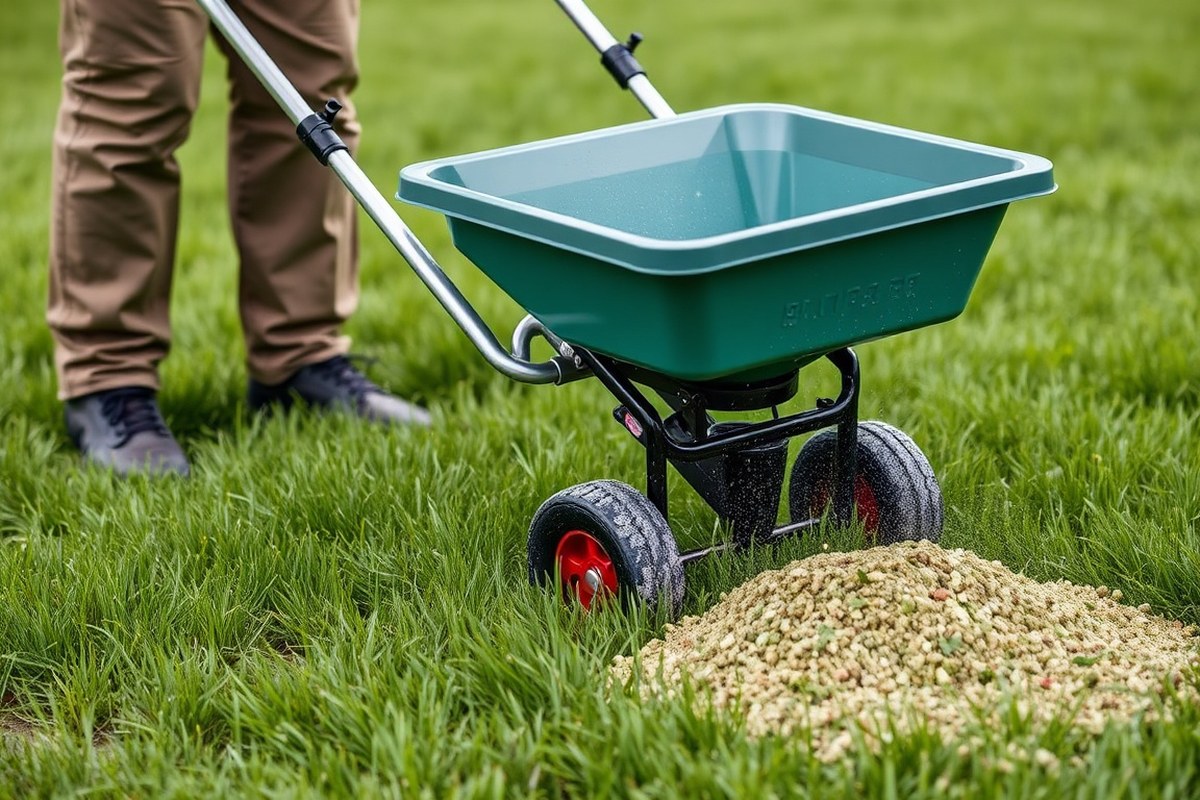
Use the right equipment to spread fertilizer evenly. A broadcast spreader or drop spreader gives good coverage without missing spots. Calibrate your spreader to apply the right amount of fertilizer per 1,000 square feet.
After fertilizing, water your lawn gently with about 0.25 to 0.5 inches of water. This settles fertilizer into the soil and starts nutrient absorption. Avoid heavy watering right after to reduce runoff and waste.
Check the weather forecast before application. Avoid fertilizing before heavy rain, which can wash away fertilizer. Stick to applying fertilizer when days are mild and soil is moist for best results.
Step-by-Step Action Plan to Fertilize Your Lawn
Follow this simple plan to fertilize your grass effectively and see steady growth. Track your lawn’s green color and thickness to measure success.
- Before the growing season: Test your soil to know nutrient needs. Healthy soil means less guesswork.
- Early spring: Apply a slow-release fertilizer if your grass is cool-season type. Check for new leaf growth in two weeks.
- Late spring: For warm-season grasses, apply fertilizer after the grass fully green ups. Lawns should look lush and thick.
- Mid-summer: Avoid fertilizing during extreme heat to prevent stress. Keep watering deeply instead.
- Early fall: Fertilize cool-season grasses again to prepare for winter. Grass should grow strongly but not too fast.
- Late fall: Use a low-nitrogen fertilizer if recommended. This helps grass store energy for winter.
- After rain or watering: Water your lawn gently to help fertilizer soak in. No runoff means nutrients reach the roots.
- Monthly check: Inspect your lawn for signs of nutrient deficiency, such as yellowing or thin patches. Adjust your schedule as needed.
Frequently Asked Questions
How Do You Know If Your Lawn Needs Fertilizing Right Now?
Check if your grass is growing slowly or looks pale green. Soil testing can also show nutrient deficiencies requiring fertilizer.
Can Fertilizing Too Often Harm My Lawn?
Yes, too much fertilizer burns grass and wastes money. Following recommended schedules avoids this risk.
Should You Water Your Lawn Immediately After Fertilizing?
Water your lawn after fertilizing to help nutrients soak into the soil. Avoid heavy watering that causes runoff.
Can You Fertilize Grass in the Fall If It’s Warm?
Fertilizing in warm fall weather can help some grass types store nutrients for winter. Avoid fertilizing if grass is dormant.
What’s the Best Way to Spread Fertilizer Evenly?
Use a spreader for even coverage and avoid clumping. Hand-spreading can cause uneven growth or burn spots.
How Do Rain and Weather Affect Applying Fertilizer?
Rain helps fertilizer soak into soil but too much causes runoff. Avoid fertilizing just before heavy rainstorms.
Key Points to Remember
Fertilizing your grass at the right times helps keep it strong and green. Start by testing your soil so you know what your lawn needs. Then pick a day soon to apply your first fertilizer and watch your lawn improve.