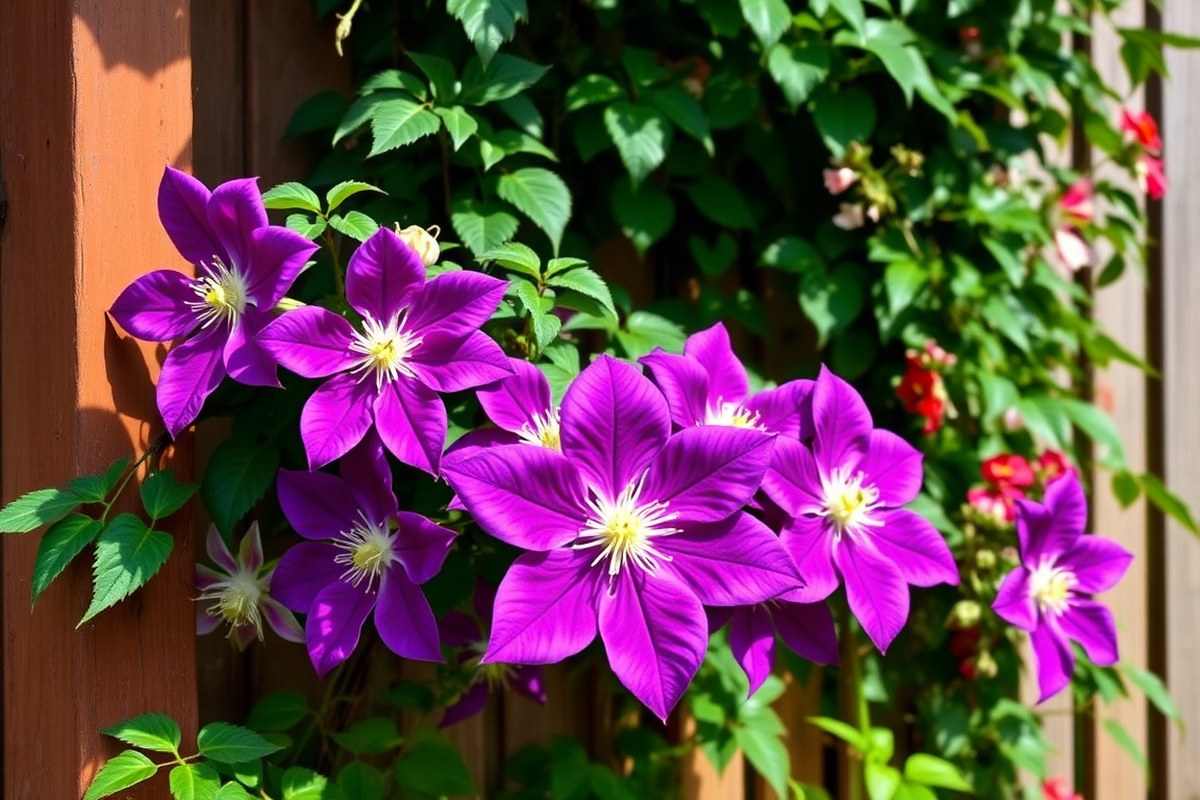
Where to Grow Clematis: A Complete Guide for Best Location and Support
Wondering where to grow clematis in your garden? Pick a spot with at least six hours of direct sunlight. Clematis thrives with good airflow and well-drained soil that stays moist but never soggy.
Plant clematis away from large trees or shrubs to avoid competition for water and light. Dig a hole wide enough for the root ball. Make it 3 to 4 inches deeper than the root ball.
This will help cover the roots well below soil level. This planting depth protects the crown and encourages healthy root growth.
Space clematis plants 2 to 3 feet apart. This gives them space to climb. It also lets them spread out naturally.
Pick support that fits your vine’s size. Use poles for small vines up to 5 feet.
This keeps the vine stable and growing well. Positioning and support are key to keeping your clematis healthy and blooming well.
Key Takeaways
- Choose a planting site that receives at least six hours of direct sunlight daily.
- Ensure good airflow around plants to reduce disease risk.
- Plant clematis root crowns 3 to 4 inches below the soil surface.
- Space multiple clematis plants 2 to 3 feet apart for room to grow.
- Keep clematis at least 4 feet away from trees or shrubs to reduce competition.
- Use poles or trellises as supports matching the vine’s mature height.
Choosing the Ideal Location for Clematis in Your Garden
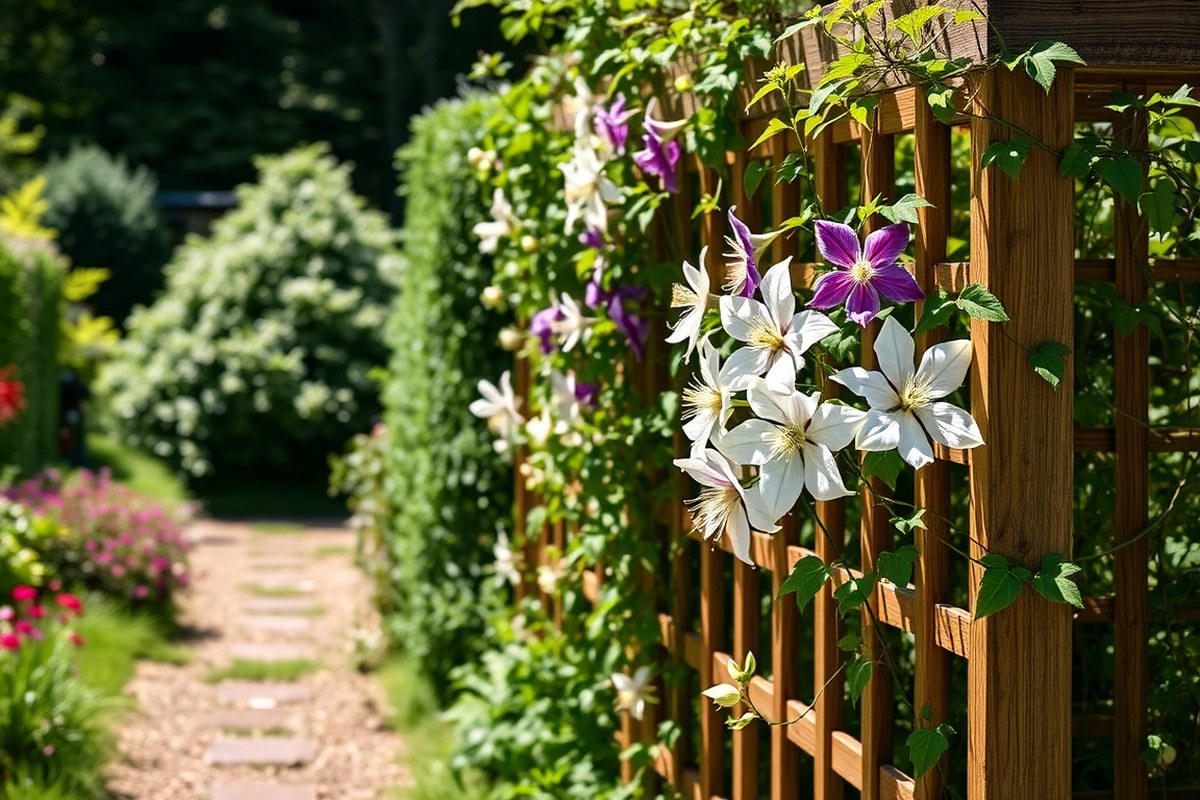
Clematis prefers a spot with at least six hours of direct sunlight daily. This amount of sun helps the vines produce the most flowers.
Planting your clematis where it gets full sun on top. But shade at the roots, supports healthy growth.
Keep your clematis away from large trees and shrubs by at least 3 feet. Trees compete for water and nutrients, which can stunt your clematis. Also, nearby trees can block sunlight or crowd the vine’s roots, so plan enough space.
Choose a support structure like a trellis, fence, or pergola for the clematis to climb. The vines need something to grow on above ground, or they’ll sprawl on the soil. Proper support also helps air flow, reducing disease risk.
- Pick a spot with 6+ hours of direct sun daily.
- Keep at least 3 feet from trees or large shrubs.
- Plant 2 to 3 feet apart if growing multiple vines.
- Ensure roots stay in a cooler, shaded area.
- Place near a fence, trellis, or pergola for climbing.
- Leave room for the vine’s mature size to avoid crowding.
In small gardens, use vertical space by planting clematis near walls or fences. This keeps the vine off the ground and makes pruning easier.
In larger yards, you can train clematis on trees if their roots aren’t competing. The key is enough sunlight and root space for both plants.
Start planting clematis in late spring once soil reaches about 50°F. This timing ensures warmer soil and better root growth. Adequate spacing and sunlight set the stage for blooms that last through summer and beyond.
Sunlight and Airflow Requirements for Healthy Clematis
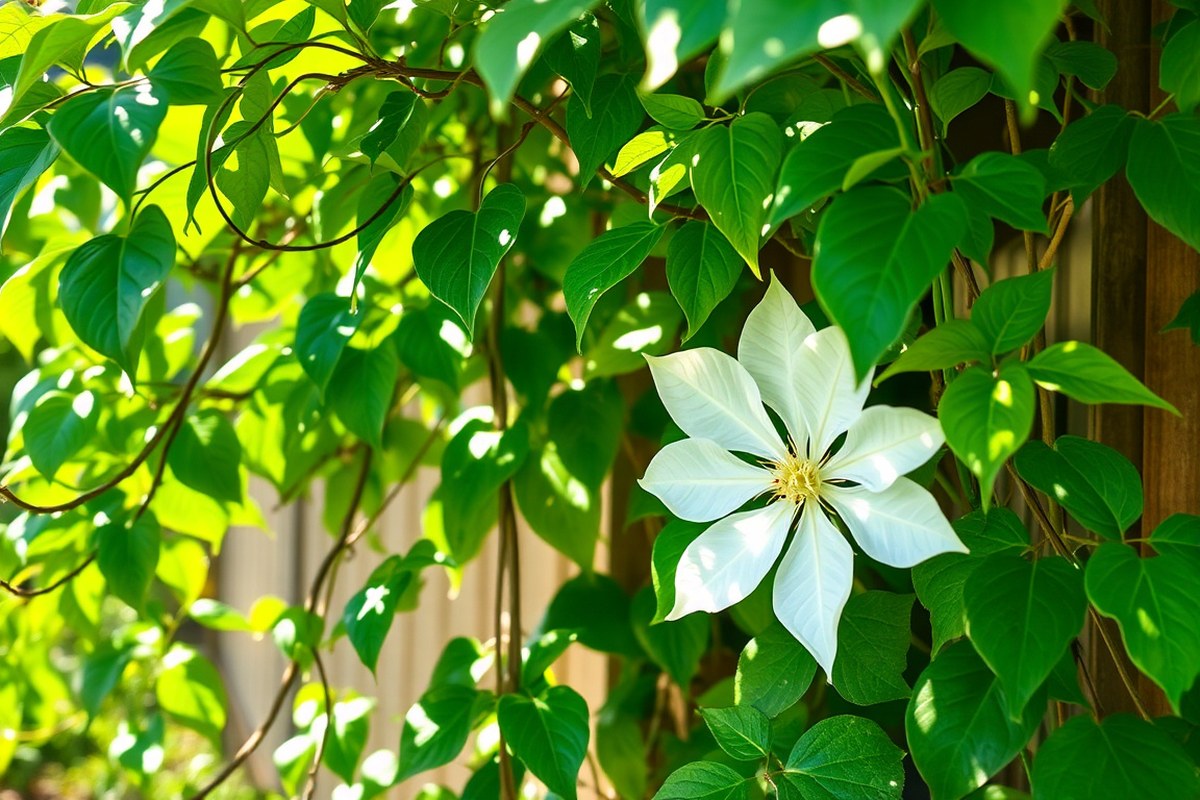
Most clematis need full sun to grow well. This means six hours of direct sunlight daily. They do best with plenty of light every day.
Their blooms are stronger and more abundant in full sun compared to partial shade. Some varieties like ‘Nelly Moser’ and Clematis alpina tolerate partial shade and still flower well. But too much shade tends to reduce bloom size and color intensity.
Clematis like their top part in sunlight and roots in shade. Plant shade-loving groundcovers or add mulch at the base. This keeps roots cool and moist.
Good airflow around clematis lowers disease risks like clematis wilt and powdery mildew. Crowded, poorly ventilated spots hold moisture longer on leaves and stems, promoting fungal problems. Plant clematis away from dense shrubs or walls.
Prune to open the center of the vine. Placing supports so vines don’t touch other plants helps too.
Never plant clematis where air barely moves. Poor airflow often leads to leaf spotting and wilt.
Clematis may not bloom well in shady, cramped spots. Poor airflow makes it harder for them to stay healthy. These conditions can weaken your plants.
Leaves turn yellow or drop sooner when overcrowded or shaded. Choose shade-tolerant clematis for spots with less than six hours of sun. Keep the vines thinned to help them grow better.
This balance improves their health. Space clematis plants 2 to 3 feet apart for good airflow.
Avoid planting them in places with high humidity. Good air movement keeps plants healthier.
Morning sun with afternoon shade suits clematis in cold or hot areas. This helps keep their color and stops sunburn. It balances light and heat well.
Mulch and companion plants reduce soil temperature, creating that shaded root environment the vine craves. Consistent watering also supports plant health in sunnier spots.
Preparing Soil and Planting Holes for Clematis Success
Clematis thrives in deep, rich, well-drained soil with a pH close to neutral, around 6.5 to 7. Prepare a hole at least 18 inches deep and twice as wide as the root ball. Mixing organic matter like compost into the soil helps provide nutrients and improves moisture retention.
Testing Soil Drainage and pH
Good drainage prevents root rot and is important for clematis health. Dig a small hole about a foot deep and fill it with water. Water should drain within 30 minutes for good soil drainage for clematis.
Use a soil test kit to check pH. Clematis prefers a pH between 6.5 and 7 for best growth.
When the soil’s pH is too low, add some lime. A high pH level can be adjusted by adding sulfur.
Mixing Soil Amendments
Enriching the soil with organic matter keeps roots moist but not waterlogged. Garden compost or well-rotted manure works well. Avoid adding too much fresh manure to prevent burning the roots.
For clay soils, loosen soil beyond the planting hole to improve airflow and drainage. Mix amendments into at least 2 feet around the hole to help roots expand easily.
Digging and Preparing the Planting Hole
Dig a hole twice as wide as the root ball. The hole should be at least 18 inches deep and wide.
This gives enough room for the roots. Loosen soil at the bottom and sides, breaking up compacted earth.
Mix one bucket of compost or manure with native soil to fill around the roots later. Avoid adding fertilizer directly to the hole without mixing, which can burn the plant.
- Clear vegetation from the planting area.
- Dig a hole about 18 inches wide and deep, twice root ball size.
- Loosen soil around and below the hole, up to 2 feet wide.
- Mix compost or well-rotted manure into the loose soil and native soil.
- Test that soil drains well before planting.
Planting Depth and Root Ball Positioning
Place the clematis so the root ball’s top is 3 to 4 inches below soil. Cover the root ball carefully with soil after setting it. This depth encourages strong root growth and prevents the plant from drying out.
After placing the plant, gently fill the hole with soil mix, firming lightly but avoid compacting. Water well to settle soil and eliminate air pockets.
Spacing and Positioning When Planting Multiple Clematis
Give clematis enough room to grow without crowding neighbors. Space most varieties 24 to 36 inches apart.
Smaller clematis can be closer, about 18 inches. Larger, vigorous vines need about 36 inches.
Keep clematis at least 4 feet away from tree or shrub bases. This distance reduces competition for water, light, and nutrients. Avoid planting aggressive groundcovers near clematis roots to prevent struggle over space.
| Clematis Type | Plant Spacing | Distance from Trees/Shrubs |
|---|---|---|
| Small varieties | 18 inches (45 cm) | 4 feet (1.2 m) |
| Average-sized varieties | 24 inches (60 cm) | 4 feet (1.2 m) |
| Large/vigorous varieties | 36 inches (90 cm) | 4 feet (1.2 m) |
Vigorous clematis, especially those growing 10 to 20 feet tall, need extra space for spreading. Give them room to climb and avoid crowding their bases with other plants. Pruning groups 2 and 3 need space for air flow.
This space lets sunlight reach the clipped growth. Good air and light help plants stay healthy.
Common mistakes are planting clematis too close together or near thick shrubs. These cause poor airflow and competition, leading to weak growth or fungal diseases. Fix this by gently transplanting overcrowded clematis or trimming nearby plants to create more space.
Choosing and Installing Supports for Clematis Vines
Clematis vines need strong, tall supports that match their growing habits. Climbing clematis do best on trellises, fences, or arbors.
Smaller or herbaceous types suit poles or stakes. Proper installation helps vines cling without damage and promotes healthy growth.
Trellises and Fence Supports
Most climbing clematis thrive on trellises or fences. These supports let vines wrap around or grab mesh easily. Ideal trellises stand 6 to 8 feet tall and 2 to 4 feet wide.
Choose sturdy materials like wood or metal that won’t wobble. Mesh or lattice spacing should be about 2 inches to let vines thread through. Attach trellises to walls with a 1-inch gap for airflow and room to climb.
Arbors and Overhead Structures
Arbors suit vigorous clematis like Clematis armandii. These vines can reach 10 to 20 feet, needing tall, wide archways or pergolas. Arbors create a thick flowering canopy above entryways or paths.
Build arbors from strong wood or metal to hold heavy vines and flowering clusters. Install mesh or wire first so vines can easily grip thick surfaces.
Poles and Stakes for Smaller Vines
Compact clematis, usually 2 to 5 feet tall, fit well on poles or stakes. Use 6-foot stakes made of bamboo or metal for best results. Poles work great in pots or small garden spots.
Plant stakes firmly, 12 inches deep so they don’t tip. Tie vines gently with soft twine every 6 inches to avoid stem damage. Herbaceous varieties also grow through nearby shrubs for light support.
Placement and Angle Recommendations
Position clematis supports where vines get full or partial sun. Space trellises or fences about 4 to 6 inches from walls for airflow. Tilting supports 45 degrees toward a wall helps vines lean and climb securely.
Set the support at least 1 to 2 feet wider than the vine’s mature spread. This prevents overcrowding and gives room for growth. Raised mesh or trellis should stick out about 1 inch from solid surfaces for grip.
Follow these steps to install a sturdy clematis support:
- Choose support type based on vine size and growth habit.
- Measure plant’s mature size to determine support height and width.
- Secure support into soil deep enough to prevent wobbling.
- Attach mesh, lattice, or wire to solid structures before planting.
- Place support 4 to 6 inches away from walls for air circulation.
- Angle supports about 45 degrees toward the wall if applicable.
- Use soft ties every 6 to 12 inches to fasten stems gently.
- Ensure no sharp edges can injure vines during growth.
| Support Type | Suitable Clematis Type | Height | Material/Notes |
|---|---|---|---|
| Trellis / Fence | Climbing, most hybrids | 6 to 8 feet | Wood or metal; 2-inch mesh spacing |
| Arbor / Pergola | Vigorous climbers (e.g. C. Armandii) | 10 to 20 feet | Strong wood or metal; mesh for grip |
| Poles / Stakes | Compact or herbaceous varieties | 2 to 5 feet | Bamboo or metal stakes; sturdy and deep set |
Use soft ties to fix clematis vines. Tight or wire ties can damage stems and slow growth.
Growing Clematis in Containers: Location and Care Differences
Clematis can grow well in containers if you pick the right pot and spot. Choose a large container at least 14 inches wide. It should be deep enough for roots to grow.
This space helps roots spread comfortably. Pick varieties that stay compact or work for pots. This avoids cramped roots and poor growth.
Container clematis need regular watering since pots dry out faster than garden soil. Check moisture daily in hot weather. Water deeply until you see it drain from the pot’s holes.
Apply a layer of pebbles on the soil surface. Or plant some low-growing summer bedding in the pot. These help shade the soil and keep roots cool.
Put containers where vines get six to eight hours of sun. Keep the root area shaded or cool to protect it. Place taller pots so their base stays shaded.
Use shrubs or other containers on the sunny side for shade. In cold zones, move pots to unheated garages or sheds. Keep temperatures between 25 and 40°F to protect roots in winter.
| Feature | Container | Ground Planting |
|---|---|---|
| Root space | Limited, needs large pot | Unlimited |
| Watering | Daily or every other day in heat | 1-2 times weekly, depends on rain |
| Soil temperature control | Needs shading or mulching | Natural insulation from soil |
| Winter care | Move indoors or protect pot | Mulch crown, plant hardy types |
| Fertilizing | Monthly with liquid feed | Seasonal slow-release fertilizer |
Check container spots for airflow to avoid fungal diseases. You want a place that’s sunny but breezy, not completely enclosed.
Keep in mind a pot will heat up and lose moisture faster than garden soil. So containers need more feeding and care.
Watering is the main extra care task. Stick your finger about 2 inches into the soil to check moisture. Water the plant if the soil feels dry.
Feed monthly with liquid fertilizer diluted to half strength. This replaces nutrients lost from frequent watering.
Avoiding Common Location and Planting Mistakes with Clematis
Picking the wrong spot is a leading cause of clematis trouble. Common mistakes are planting clematis in full shade. Another mistake is planting where the base gets hot sun without mulch.
Mulch helps keep roots cool and moist. Clematis roots prefer shade and cooler soil, while the vines like sun on top. When vines look sparse or have fewer flowers, poor site choice is often the cause.
Watch for slow growth or yellowing leaves. These signs often show that the site is too dry, too wet, or lacks air flow. Clematis do not like soggy soil next to downspouts.
Heavy clay soil that holds water is also bad. Poor drainage can harm these plants. Also, cramped spaces block airflow, increasing risk of disease and pests.
- Planting clematis too deep or too shallow.
- Choosing a spot without proper support nearby.
- Ignoring mature vine height and planting under trees.
- Allowing strong afternoon sun on roots without mulch.
- Placing clematis where water pools or soil stays soggy.
- Planting near shrubs that crowd or shade the clematis.
- Overcrowding multiple clematis without enough space for airflow.
To fix these mistakes, ensure the plant crown sits about 2 inches below soil surface. This protects against wilt and lets roots spread well. Add mulch around the base to keep soil cool and moist.
Move clematis to a sunnier spot if growth is weak and prune crowded branches. Use a strong trellis or frame to train the vine upward. When drainage is poor, improve soil with organic matter or plant in raised beds.
Signs of stress can fade within a season if you improve the site conditions. Clematis that stop blooming might need a soil test. Leaf loss could also mean nutrient issues.
Testing checks pH and soil nutrients. Poor growing conditions can slow the vine’s flowering. But healthy clematis often bounce back when given better shade, water, and air.
Avoid areas where roots bake in the sun without cover, or where water collects after rain. Choose a spot with even moisture and decent airflow to keep vines vigorous and flowering.
How Climate Zones Affect Where to Grow Clematis
Clematis grow best in USDA zones 4 to 9, with some varieties extending beyond. Your zone affects which clematis types you pick, when to plant, and how to protect them. Hot or cold climates need different site choices and care to keep clematis healthy.
USDA Zone Overview for Clematis
Clematis thrive mostly in zones 4 through 9. Some cold-hardy varieties can survive down to zone 3 with extra protection.
Evergreen clematis, like Clematis armandii, prefer warmer zones 7 to 9. Check your USDA zone before selecting a variety and planting spot.
| USDA Zone | Suitable Clematis Types | Notes |
|---|---|---|
| 3 | Very cold-hardy varieties | Needs winter protection |
| 4-9 | Most flowering and climbing clematis | Ideal outdoor growth |
| 7-9 | Evergreen types like Clematis armandii | Prefer warm climates |
Matching clematis to your zone helps avoid damage and improves blooms. Some zones outside 4-9 can work, but check the plant label closely.
Site Location Adjustments by Zone
In zones 3 and 4, give clematis morning sun. They need shade in the afternoon. This protects them from harsh heat.
This protects roots from freezing and leaves from harsh winds. In warmer zones 7 to 9, pick sites with some afternoon shade to avoid overheating.
Use mulch to keep roots cool in hot zones. In cold zones, plant near walls or fences that offer shelter from winter drafts. Always provide strong supports because vigorous clematis vines need space to climb regardless of zone.
Seasonal Timing for Planting
In zones 4 to 9, plant clematis in early spring or fall. Early spring helps growth before summer heat hits.
Fall planting lets roots settle over winter and jump-starts spring growth. Avoid winter planting in very cold zones.
Seeds need a cold period to germinate, mimicking natural conditions. For zones 3 and 4, allow for late spring planting after frost risk drops. Plan your planting around average last frost dates for your area to protect young plants.
Protection Strategies for Extreme Zones
In cold zones, add a 3 to 4 inch mulch layer. Use straw or shredded leaves for best results. Mulch helps keep roots safe from freezing.
Wrap the plant base with burlap if winters get windy or very cold. Prune damaged vines in spring once danger of deep freeze passes.
In hot zones, provide afternoon shade and water deeply during dry spells. Use shade cloth if heat regularly exceeds 85°F to avoid leaf scorch. Regularly check trellis and support stability after storms or heavy wind.
Tip: Avoid planting clematis in soggy soil as this damages roots, especially in cold, wet climates.
Step-by-Step Action Plan for Planting Clematis
Follow these steps to plant your clematis in the best spot. Each step ensures healthy growth and plenty of flowers.
- Before Planting: Pick a spot with 6 hours of sun and good airflow. Check for morning sun and afternoon shade to protect the roots.
- Day 1: Dig holes twice as wide as the root ball and loosen the soil inside. This helps roots spread and anchors the vine well.
- Day 2: Mix compost or aged manure into the soil removed from holes. This improves nutrients and soil texture for better growth.
- Day 3: Plant clematis a little deeper than it was in the pot. Cover the first set of leaves with soil. This helps the plant grow strong roots. This promotes strong root development and helps the vine survive cold.
- Week 1: Install a sturdy support near the plant. Tie the stem loosely with soft ties to avoid damage as it climbs.
- Week 2: Mulch around the base with 2, 3 inches of organic material. Keep mulch 2 inches away from stems to prevent rot.
- Month 1: Water regularly, ensuring the soil stays moist but not soggy. Check the soil with your fingers daily during dry periods.
- Ongoing: Watch for growth direction and gently train vines toward the support. Remove any crowded or damaged stems for better airflow.
Frequently Asked Questions
Can Clematis Grow Well Near Evergreen Shrubs?
Yes, clematis can grow near evergreens if the roots don’t compete. Give roots space and ensure the clematis gets enough sunlight for blooms.
Is It Okay to Plant Clematis in Windy Areas?
Clematis can survive wind but needs solid support. Choose sturdy trellises or fences to protect the vines from damage.
Can Clematis Be Planted Under Trees?
Yes, clematis can grow under trees if roots don’t compete heavily. It works best when the clematis root zone stays cool and moist.
Do Clematis Need to Be Replanted Each Year in Pots?
No, clematis planted in pots can stay year-round with proper care. Ensure pot size matches growth and repot when roots fill the container.
Is It Better to Grow Clematis on a South-Facing or North-Facing Wall?
South or west-facing walls provide more sun, leading to better blooms. North-facing walls may cause poor flowering due to limited light.
Can Clematis Grow Along Fence Tops or Only on Vertical Supports?
Clematis can grow across fence tops and vertical supports. Just train the vines carefully to cover the structure you choose.
Final Thoughts
Choosing the right place with good sun, soil, and air gives your clematis the best start. Plant it deep, provide support, and keep roots cool. Now, pick your planting spot and prepare to enjoy beautiful blooms soon.