
How Many Wheelbarrows in a Yard of Concrete: A Complete Guide with Exact Loads
One cubic yard holds about 27 cubic feet of concrete. A typical wheelbarrow carries between 2 and 3 cubic feet. That means you need around 9 to 13 wheelbarrow loads to move one yard of concrete.
The exact number depends on your wheelbarrow’s size and how full you load it. Filling it to about 80% capacity helps avoid spills and makes the load easier to handle. Overloading can make carrying difficult and unsafe.
A 2-cubic-foot wheelbarrow requires about 13 trips per yard. A 3-cubic-foot one needs around 9 trips. Knowing your wheelbarrow size will help you plan your work better and avoid extra trips or heavy loads.
Check your wheelbarrow’s capacity before starting. Carrying the right amount each trip keeps your work safer and more efficient. This helps you get the job done without unnecessary strain or delays.
Key Takeaways
- A standard wheelbarrow typically carries 2 to 3 cubic feet of concrete.
- Expect about 9 to 13 wheelbarrow loads per cubic yard with normal fill levels.
- Fill your wheelbarrow around 80% to prevent spills and reduce strain.
- Concrete weight and wheelbarrow size influence how many trips you must make.
- Measure your wheelbarrow’s actual capacity to calculate loads accurately.
- A cubic yard equals 27 cubic feet, handy for volume-to-load conversion.
How Many Wheelbarrow Loads Equal One Cubic Yard of Concrete?

The number of wheelbarrow loads depends on size and fill level. How full you fill it also matters a lot. Both affect how many trips you need.
One cubic yard equals 27 cubic feet of concrete. A standard wheelbarrow typically holds about 6 cubic feet when loaded to capacity.
Using a 6 cubic foot wheelbarrow, you would technically need 4.5 level loads to equal one cubic yard. In practice, you rarely fill the wheelbarrow completely with wet concrete due to weight and safety.
So the typical fill level is around 80% to 90%. At 85% fill, the effective volume in the wheelbarrow is about 5.1 cubic feet.
Divide 27 cubic feet by 5.1 cubic feet per load. The result is roughly 5.You will make 3 loads per cubic yard of concrete. This is for a 6 cubic foot wheelbarrow.
The fill level is about 85%. Lowering fill to 70% makes the load easier to carry.
But you will need more trips to move the concrete. This tradeoff can save your strength.
A bigger wheelbarrow, like 10 cubic feet, helps move concrete faster. You need about 3 full loads to carry one cubic yard. This means fewer trips overall.
Filling this larger wheelbarrow to 80% means each load carries 8 cubic feet. That reduces the trip count to about 3.4 trips per cubic yard.
Smaller wheelbarrows holding around 4 cubic feet require about 6.75 full loads for one cubic yard. At 85% fill, this becomes closer to 8 trips.
More trips increase worker fatigue and time. So balancing wheelbarrow size and fill level is essential.
To find how many loads you need, use this formula. Number of loads equals 27 divided by wheelbarrow capacity times fill. This gives the total wheelbarrow trips for one cubic yard.
For example, a 6 cubic foot wheelbarrow filled to 85% capacity equals 5.1 cubic feet per load. So 27 ÷ 5.1 = 5.3 loads.
Choosing the right fill level depends on the weight and ease of transport. Concrete weighs about 4000 lbs per cubic yard. So a 6 cubic foot full load weighs roughly 890 lbs.
Most people haul less to prevent injury and spills. Adjust fill based on distance and worker strength.
Understanding Wheelbarrow Sizes and Concrete Volume
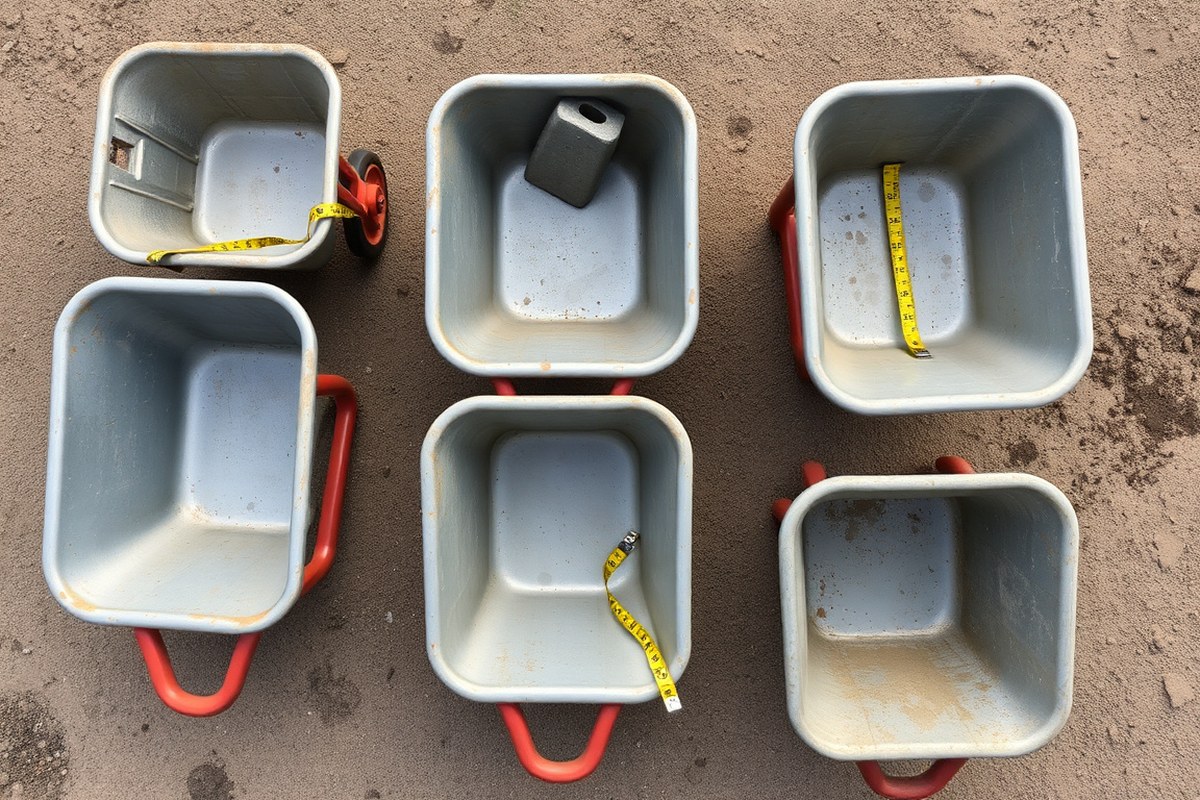
Knowing your wheelbarrow’s volume helps figure out how many loads are needed. Concrete wheelbarrows usually hold between 2 and 6 cubic feet of mix. Since a cubic yard is 27 cubic feet, divide 27 by your wheelbarrow’s size to find trips.
Measuring Length, Width, and Depth of Your Wheelbarrow
Start by measuring the inside of your wheelbarrow’s basin. Use a tape measure to find the length, width, and average depth in feet. Take the depth measurement from the bottom to the top edge, averaging if needed.
Measure carefully because a small error can affect volume calculations. Write down these numbers to use in your volume calculation. This will help you know exactly how much concrete each load holds.
Calculating Cubic Feet from Basin Dimensions
To find cubic feet, multiply your wheelbarrow’s length by width by depth. For example, 3 feet long × 2 feet wide × 1 foot deep equals 6 cubic feet.
Since you won’t fill the wheelbarrow to the very top, multiply this number by 0.75 or 0.8 to get a realistic load. Overfilling makes the load heavy and hard to carry safely.
- Measure basin length inside the edges in feet
- Measure basin width inside the edges in feet
- Measure average basin depth inside in feet
- Multiply length × width × depth for volume in cubic feet
- Multiply result by 0.75, 0.8 to get practical load volume
Don’t use the wheelbarrow’s nominal size as your real load capacity. Concrete weight and stability matter.
Comparing Common Wheelbarrow Capacities
Many wheelbarrows in concrete work range from 2 to 6 cubic feet. Small wheelbarrows hold about 3 cubic feet.
Medium ones carry roughly 5 cubic feet. Contractor-grade can fit 6 cubic feet or even more.
Here’s a quick comparison of typical wheelbarrow sizes and how many loads equal one cubic yard:
| Wheelbarrow Size | Practical Volume Load (cu ft) | Trips per Cubic Yard (27 cu ft) |
|---|---|---|
| 3 cu ft (small garden) | 2.25 | 12 |
| 4 cu ft (small contractor) | 3.2 | 8.5 |
| 5 cu ft (medium) | 4.0 | 7 |
| 6 cu ft (large contractor) | 4.8 | 5.6 |
Larger wheelbarrows mean fewer trips, but the concrete loads are heavier. Choose a size that suits your strength and the terrain you’ll cross with the load.
How Much Does a Wheelbarrow Full of Concrete Weigh?
A loaded wheelbarrow of wet concrete typically weighs between 300 and 900 pounds. The exact weight depends on the wheelbarrow’s volume and how full it is. Filling the barrow to about 75% keeps the load manageable and safer to handle.
Density of Wet Concrete and Typical Weight per Cubic Foot
Wet concrete weighs roughly 140 to 150 pounds per cubic foot. This makes it much heavier than soil or gravel per the same volume. For example, six cubic feet of wet concrete can weigh close to 900 pounds.
This density affects how much concrete you can safely carry in one trip. You shouldn’t assume a full 6 cubic foot wheelbarrow is always practical. The actual load is usually less to keep the weight down.
Recommended Maximum Wheelbarrow Load for Safety
It’s best not to fill the wheelbarrow more than 75% when carrying concrete. Overloading makes it very hard to control and increases injury risk. For a 6 cubic foot wheelbarrow, that means about 4.5 cubic feet of concrete per load.
This translates to a weight near 675 pounds. Lighter loads around 400 to 600 pounds are easier to push and reduce fatigue. Loads over 750 pounds need more strength or mechanical help.
They can cause spills or muscle strain. Take care to avoid injuries.
Adjusting Load Based on Worker Strength and Terrain
Wheelbarrow loads should vary with who’s lifting and the ground conditions. Rough terrain or slopes call for lighter loads to avoid tipping or losing control. A 3 to 4 cubic foot load can weigh 300 to 600 pounds.
This size works for most people handling concrete. Keep the load manageable.
On flat, smooth surfaces, you might carry an extra 10 to 20 percent volume safely. For less experienced laborers or long hauls, reduce loads to stay safe and efficient. Always test the weight before starting your trip and adjust as needed.
Factors That Affect the Number of Wheelbarrow Trips Needed
The type of terrain plays a big part in how many wheelbarrow trips you’ll need. Rough, uneven, or uphill ground makes it harder to push a full load. You’ll likely carry smaller, lighter loads to avoid spills and injuries, which means more trips overall.
Distance from the concrete mix to the pour site also changes your workload. Longer distances slow down each trip. So you might want to carry more concrete per trip if you can.
Carrying too much over a long or tough path tires you out fast. It also causes more spills. This makes your work slower and messier.
Wheelbarrow design affects how much concrete you can move safely and comfortably. A larger tub holds more, cutting down trips.
But you need a strong, balanced wheelbarrow to handle the weight. The handle height and wheel type make pushing easier or harder, especially on tough terrain.
For hard surfaces and short distances, using a larger wheelbarrow makes sense. You’ll save trips and finish faster. On soft or sloped ground, smaller loads work best.
Use a lighter, easy-turn wheelbarrow. This helps stop spills and keeps you safe.
For long hauls, pick a wheelbarrow with air-filled tires. Make sure it has handles that feel good in your hands. These cut down on strain and soreness.
Carry somewhat smaller loads to keep trips quick and safe. Overloading slows you down and risks injury, costing time and effort.
Before loading concrete, test how much you can push comfortably without risking spills or strain. Count on 3 to 3.The average wheelbarrow holds about 5 cubic feet of concrete. That equals roughly 8 to 9 trips for one cubic yard.
Plan your work around this to save time. Adjust your load size depending on the terrain and your stamina to keep a steady pace.
Make a quick checklist: first, check the surface conditions. Next, measure the distance to your pour site. Then size your wheelbarrow to match those conditions.
Finally, plan your team’s strength and rest breaks. This planning helps you estimate trips precisely and finish safely and on time.
Calculating Your Own Wheelbarrow Loads for Any Project
First, find your wheelbarrow’s volume in cubic feet. Next, adjust it for how full you plan to fill it. Then divide your project’s concrete volume by that adjusted number.
This gives you a clear number for trips. The numbers save time and avoid overfilling or extra trips.
Measuring Your Wheelbarrow Volume
Measure your wheelbarrow to find its volume in cubic feet. Take the length, width, and depth inside the tub. Multiply these numbers (all in feet) to get the total cubic feet capacity.
A box that is 3 feet in length, 2 feet wide, and 1 foot high holds 3 cubic feet in total volume.
This helps you match your wheelbarrow to common sizes. These sizes are usually 3 or 6 cubic feet. You can use that to guess how much concrete fits each load.
Adjusting for Safe Fill Percentage
You should not fill the wheelbarrow to the brim for safety and ease. Aim for about 75% fill if you have a 6-cubic-foot wheelbarrow, which is about 4.5 cubic feet of concrete. This volume is easier to push and less risky for spills or injury.
Use the formula: Adjusted load volume = wheelbarrow volume × fill percentage. A 4 cubic feet wheelbarrow filled to 80% holds about 3.2 cubic feet of concrete. Adjust your estimate down if the mix is heavy or the terrain slope makes pushing hard.
Dividing Total Cubic Yards by Load Volume
Convert your project’s concrete volume to cubic feet by multiplying yards by 27.
Take the total cubic feet of concrete needed. Divide it by your wheelbarrow’s adjusted volume.
The result tells you how many loads you’ll need. For example, 1 cubic yard (27 cubic feet) divided by 4.5 cubic feet per load equals 6 loads.
This method also works if your project size varies. Just update the total concrete volume to fit your specific job. Here is a step-by-step method to calculate your wheelbarrow loads:
- Measure length, width, and depth of your wheelbarrow in feet.
- Multiply these three dimensions to find total cubic feet volume.
- Choose a safe fill percentage (around 75%) and multiply your cubic feet by it.
- Calculate total concrete in cubic feet by multiplying your project’s cubic yards by 27.
- Divide total concrete cubic feet by your adjusted wheelbarrow volume.
- Round up to whole loads to avoid underestimating required trips.
- Adjust numbers if your wheelbarrow size or fill changes.
Never fill your wheelbarrow fully to avoid spills or injury during transport.
Planning and Timing Wheelbarrow Trips Efficiently
Moving a yard of concrete with wheelbarrows usually takes 30 to 60 minutes. The time depends on how far you carry the load.
It also depends on how many helpers you have. Planning well can cut down on fatigue and spills.
Start by assigning roles clearly. One person fills the wheelbarrow, another transports, and a third worker spreads or pours the concrete.
Keep trips short and paths clear to speed up the work. Load size matters too, about 3 cubic feet per load balances weight and control.
- Plan on roughly 9 trips per cubic yard using a 3 ft³ load.
- Space rest breaks every 15 to 20 minutes for workers.
- Support workers with enough tools like shovels and gloves.
- Clear and level the path to avoid tipping or spills.
- Use extra helpers or mechanical aids for longer or rough routes.
Rest breaks improve overall pace by reducing tiredness. A worker carrying too heavy or over long distances risks slower trips and accidents.
Take quick breaks to avoid back pain and muscle strain. This is key especially in hot sun or humid places.
Check the wheelbarrow’s rated capacity and don’t overload. Overfilling can cause spills and slow you down more than carrying smaller loads.
Steep slopes or soft ground require lighter loads. You may also need more helpers to share the work.
Safety Tips for Transporting Concrete by Wheelbarrow
Limit the wheelbarrow load to roughly 100 pounds for safety. Concrete weighs around 280 to 300 pounds per 2 cubic feet. Lift and push with a straight back and your legs to reduce strain.
Overloading the wheelbarrow can cause accidents like tipping or dropped loads. Spread the concrete into smaller loads if the route is uneven or long.
Multiple trips with lighter loads are safer than one or two heavy pushes. Consider getting help, using more than one wheelbarrow, or switching to a concrete buggy.
- Wear gloves to protect your hands from wet concrete burns and rough handles.
- Use sturdy work boots with good traction to prevent slips and falls.
- Wear eye protection to shield against splashes when loading concrete.
- Check the wheelbarrow tire pressure and condition before starting to avoid breakdowns.
- Take planned breaks to avoid fatigue when wheelbarrowing heavy loads.
Avoid sudden turns and keep the wheelbarrow balanced to prevent tipping. Push slowly over rough ground and watch for obstacles in the path. When dumping concrete, lower the handles carefully instead of tipping too fast.
Loading concrete in half-full wheelbarrow loads reduces injury risk while keeping work efficient. You might spend a bit more time doing this.
But it prevents serious strains and accidents that could cost days of downtime. Using proper safety gear and correct posture protects your body and keeps the job moving smoothly.
Common Mistakes When Estimating Wheelbarrow Loads and How to Fix Them
Many people guess wheelbarrow loads without checking size first. This often leads to underestimating or overestimating the load. Measuring avoids these mistakes and saves effort.
Some people follow the 10 to 12 loads per cubic yard rule. This works well for small wheelbarrows filled conservatively. It’s a simple guideline for beginners.
Others fill their wheelbarrows fuller, around 20 loads per yard. This causes big errors if you don’t adjust for the extra volume. Counting loads without noting fill level can mislead you.
Measuring errors happen when you don’t account for how high you fill the wheelbarrow. Filling too high causes spillage and extra weight that slows you down.
Filling too low wastes each trip, meaning more trips than necessary. For example, a typical 2.5-cubic-foot wheelbarrow filled about 1.5, 2 inches from the top holds 1.3 cubic feet of concrete, meaning roughly 21 loads per cubic yard.
Start by measuring your wheelbarrow’s inside size carefully. Then track the actual concrete you load each time. This method gives you accurate count and planning.
Use a checklist: 1) Measure length, width, and depth inside the tray in feet. 2) Multiply to get volume in cubic feet.
3) Estimate realistic fill height, minus about 2 inches from the rim. 4) Multiply volume by fill height ratio to get net load in cubic feet.
Suppose your wheelbarrow is 3 feet long and 2 feet wide. The depth is 1 foot, but subtract 2 inches to get 0.83 feet. Multiply 3 × 2 × 0.83 for 5 cubic feet volume.
One cubic yard equals 27 cubic feet. So about 7.25 loads fill one cubic yard. Use this volume to plan loads properly.
Check frequently for changes caused by settling concrete or uneven loads. Keep track of spillage or overfilling issues and train helpers to load consistently.
Take note of terrain and distance, which affect how much you can safely carry. Use these measures in your project plan for fewer surprises and smoother workflow.
Always check your wheelbarrow’s volume and fill level before estimating trips to avoid costly mistakes.
Step-by-Step Action Plan for Moving Concrete by Wheelbarrow
Follow these steps to move your concrete efficiently using a wheelbarrow. Track your progress to avoid delays and mistakes.
- Before you start: Measure your wheelbarrow’s volume using water or known container sizes. This ensures you know how many trips one yard will take.
- Day 1: Calculate how many full wheelbarrow loads fit one cubic yard of concrete. Use this number to plan your trips and adjust if needed.
- Day 1: Check your wheelbarrow’s weight capacity to avoid overloads. Keep loads under this to prevent injuries and damage.
- Day 2: Practice a full wheelbarrow trip while timing yourself. This helps estimate how long moving all the concrete will actually take.
- Day 3: Arrange helpers or breaks based on your time tests. Rotate roles if possible to keep everyone fresh and safe.
- On the job: Only load concrete you can carry safely. Don’t push yourself too hard. Avoid strain by limiting how much you carry at once. Uneven terrain requires lighter loads.
- End of each day: Count your wheelbarrow trips to compare against your plan. Adjust next-day loading if you’re ahead or behind schedule.
Frequently Asked Questions
How Many Wheelbarrows Are in One Cubic Yard of Concrete?
One cubic yard of concrete equals about 4.5 wheelbarrows if each holds 6 cubic feet. Larger wheelbarrows reduce the number of trips needed for the same volume.
What Size Wheelbarrow Holds the Most Concrete Efficiently?
A 10 cubic foot wheelbarrow can carry more concrete and needs fewer trips. It saves time but might be heavier and harder to manage.
Who Should Calculate Wheelbarrow Loads for Concrete?
Contractors and DIYers transporting concrete manually need to know this. It helps in planning workload and timing to avoid delays.
Can the Number of Wheelbarrows Change During a Project?
Yes, factors like wheelbarrow size, concrete slump, and how full you load affect totals. Check your tools and conditions before starting.
How Long Does It Usually Take to Move a Yard of Concrete by Wheelbarrow?
Moving one yard typically takes 30 to 60 minutes depending on distance and labor speed. Plan accordingly for your project’s timeline.
Is It Safe to Overload a Wheelbarrow with Concrete?
Overloading strains you and risks spills or injury; keep loads manageable. Balance filling quantity and your strength for safe transport.
Key Points to Remember
One cubic yard of concrete takes about six to eight wheelbarrow loads. This depends on your wheelbarrow’s size. Smaller barrows mean more trips.
Use your measurements to plan loads that avoid overloads and delays. Start by measuring your wheelbarrow’s capacity today, it’s the key to smooth concrete moving.