Are Worms Animals? Clear Answers with Life, Types & Roles Explained
Are worms animals? Yes, worms belong to the animal kingdom. They are living creatures with bodies made of multiple cells.
These cells help worms grow, reproduce, and carry out life processes. Worms can move, eat, and respond to their environment just like other animals do.
Worms have body parts and internal organs that plants and fungi do not have. They lack a backbone, grouping them as invertebrates. You can recognize worms by their soft, elongated bodies and simple features, such as no legs or eyes.
Worms play important roles in nature, like breaking down dead plants and enriching soil. Their movements help air reach roots and support healthy plants. When you handle worms, keep them moist and clean, because they are sensitive to dryness and dirt.
Key Takeaways
- Worms are animals classified as invertebrates due to lacking a backbone.
- They have multicellular bodies that grow, move, eat, and reproduce.
- Worms come in many species, some just a few inches and others very long.
- Most worms have soft, elongated bodies without legs or eyes.
- They need moist environments to survive and avoid drying out.
- Worms play important roles in soil health and nutrient cycling.
Are Worms Actually Animals?
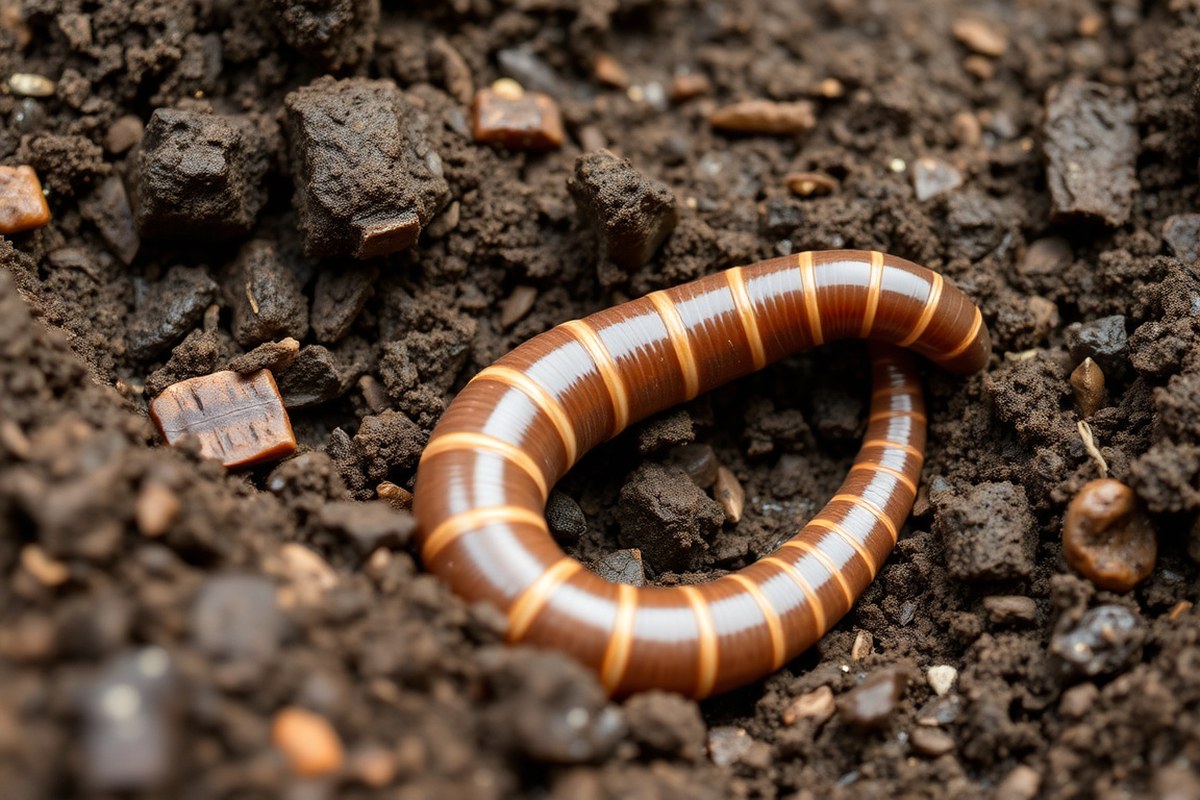
Worms are animals because they meet the core traits that define the Animal Kingdom. Animals have many cells. They move by themselves.
They eat organic material for energy and reproduce sexually or asexually. Worms fit all these criteria, which places them firmly as animals.
One clear way to tell is that worms are invertebrates, meaning they lack backbones. Most worms, including earthworms, leeches, and bristle worms, belong to the phylum Annelida. This group has bodies made of segments.
Their bodies have a right and left side that look the same. This kind of symmetry is common in animals.
Besides being multicellular and mobile, worms have specialized tissues and organs, which also meets animal standards. They digest food, circulate nutrients, and respond to stimuli, making them more than just simple creatures. These characteristics confirm worms as animals, not plants or fungi.
How Are Worms Scientifically Classified?
Worms span several taxonomic groups, showing big differences among them. The main worm phyla scientists study include Annelida, Nematoda, and Platyhelminthes. Each group has unique features that separate its members biologically and physically.
Annelids are segmented worms like earthworms and leeches. Their long bodies divide into ring-like segments called metameres. This segmentation helps their movement and organ function.
Nematodes are roundworms with smooth, unsegmented bodies. They often live in soil or as parasites.
Platyhelminthes, or flatworms, have soft, flattened bodies without segments. Many flatworms also show different body plans from annelids and nematodes.
| Phylum | Body Shape | Segmentation | Habitat | Examples |
|---|---|---|---|---|
| Annelida | Elongated, tubular | Segmented (around 100, 200 rings) | Soil, freshwater, marine | Earthworms, leeches |
| Nematoda | Long, cylindrical, smooth | Not segmented | Soil, water, parasites | Roundworms |
| Platyhelminthes | Flat, soft bodies | Not segmented | Water, inside hosts | Flatworms, tapeworms |
Knowing these differences helps avoid mistakes when identifying worms. Not all animals called worms belong in the same group.
Many so-called worms are not actual worms biologically. For example, baby insects sometimes get called worms but sit in a different animal category.
Be careful not to confuse worms with insect larvae. Some reptiles also have “worm” in their names. These animals are not real worms.
The term worm describes animals with long, soft bodies. But real worms’ classification depends on features like body shape and segmentation. You can figure out a worm’s group by checking these traits closely.
What Are the Main Types of Worms?
Worms come in several main types, each with different body shapes and lifestyles. You can spot earthworms by their ringed, segmented bodies. Flatworms and roundworms look quite different, with flat or smooth, unsegmented forms.
Segmented Annelids (Earthworms and Polychaetes)
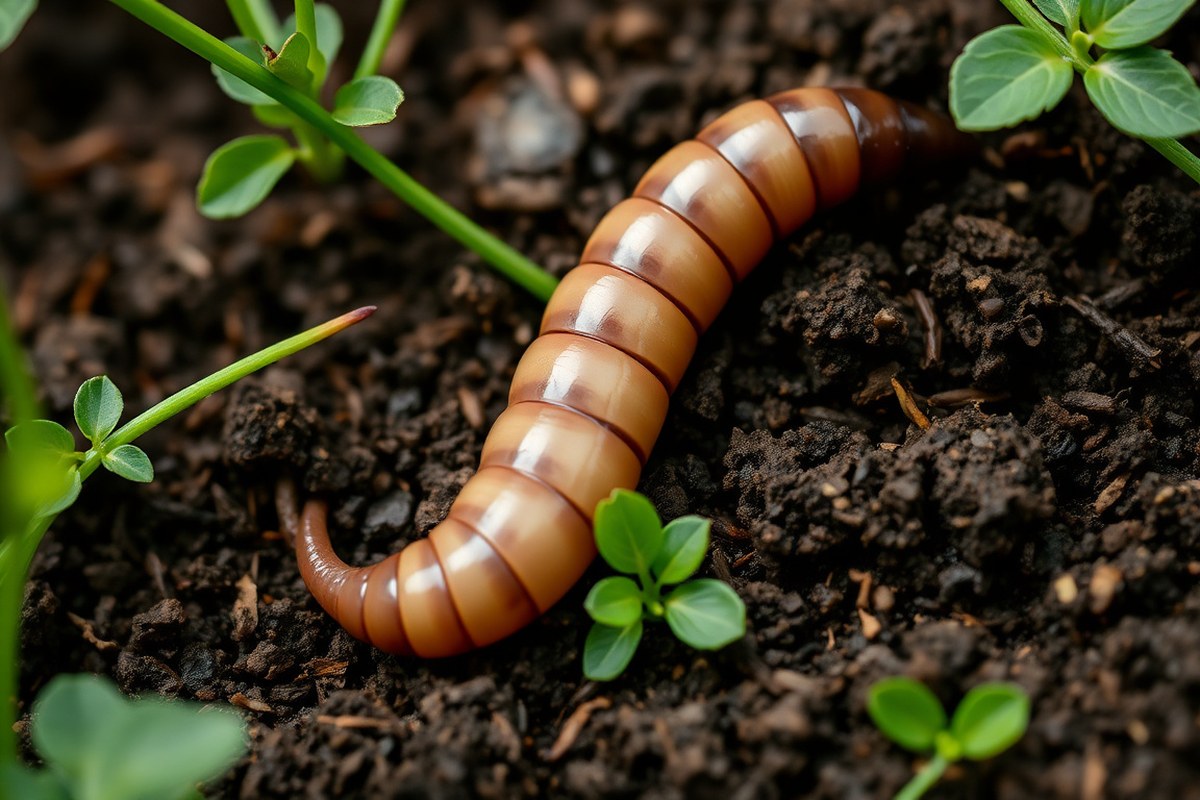
Segmented worms are part of the Annelida phylum. Their bodies are divided into many repeated rings called segments. Each segment may have tiny bristles called setae.
Setae help worms move through soil or water. They act like tiny legs for crawling.
Earthworms are the most familiar segmented worms. They breathe through their skin and have both male and female reproductive organs. Polychaetes are marine annelids that live on or under the ocean floor.
Some have feathery legs to swim. Others use these legs to breathe.
- Segmented body with visible rings
- Soft, moist skin with tiny bristles (setae)
- No legs or antennae
- Breathes through skin
- Both male and female parts in one worm
- Lives in soil, freshwater, or marine environments
- Some polychaetes have feathery appendages
These features help you distinguish segmented worms from other worm types. The African giant earthworm can grow over 6 meters long.
This shows how large some annelids can get. They can be quite surprising in size.
Unsegmented Roundworms (Nematodes)
Roundworms belong to the phylum Nematoda and do not have segmented bodies. Their bodies are smooth and cylindrical, covered by a tough outer layer called a cuticle. This outer layer protects them as they live in soil, water, or inside living hosts.
Unlike annelids, roundworms move by bending their whole body from side to side. Many are microscopic.
But some, like the vinegar eelworm, are visible to the naked eye. These worms do not have setae or visible segments.
- Smooth, cylindrical body, no rings or segments
- Tough, protective outer cuticle
- Moves by side-to-side body bending
- No bristles or legs
- Can live in soil, water, or as parasites
Spotting the difference means looking for smooth skin and lack of rings. Common roundworms are often much smaller than earthworms.
Flatworms and Parasitic Worms
Flatworms belong to the phylum Platyhelminthes and have flat, soft bodies with no segments. They often live in water or as parasites inside animals and humans. Their thin bodies allow oxygen to diffuse directly through their skin.
Common flatworms include planarians, which can regenerate lost parts, and tapeworms, which live inside hosts. Parasitic worms like flukes are also flat and can cause diseases in animals. Their bodies usually have no legs or bristles.
- Flat, thin body without segments
- No bristles or legs, very soft
- Live in water or as parasites
- Body allows oxygen absorption through skin
- Examples: planarians, tapeworms, flukes
To tell a flatworm apart, look for its broad, flat shape and absence of rings. These worms often have simple movement and distinct lifestyles as free-living or parasitic creatures.
What Physical Features Prove Worms Are Animals?
Worms share several key physical features with other animals that prove their animal status. They are multicellular, meaning their bodies consist of many specialized cells working together. Worms have tissues and organs organized in their bodies.
This is a step above simple life forms. Bacteria and single-celled organisms don’t have these.
Most worms show clear organ systems. Worms have a digestive system to break down food. They also have a nervous system to respond to things around them.
Flatworms have a central nervous system, including a brain-like cluster called ganglia. Segmented worms have nerves in each body segment.
These nerves control muscles and the skin. This setup is called a peripheral nervous system.
Worms lack lungs or gills, but they still need oxygen. Instead, they breathe through their skin. Their skin must stay moist so oxygen can pass into their bloodstream.
This kind of breathing is called cutaneous respiration. Worms live in humid soil or water.
Their skin must stay moist to let oxygen in. Dry skin would block oxygen.
Worms’ circulatory system varies by type. Some have a simple closed system with vessels moving blood, similar to other animals. This system delivers oxygen and nutrients to tissues.
Some worms rely on diffusion through body fluids. This limits their size and how active they can be.
You can spot worm traits this way: cells form tissues, they have organs like a gut and brain, and nerves with cords or ganglia. They also breathe through skin or simple circulatory systems. Worms don’t have lungs or gills.
They need moisture for breathing. This shows how their bodies suit life underground or in water.
How Do Worms Reproduce and How Long Do They Live?
Worms reproduce mainly by mating, laying eggs, and going through several development stages. Their lifespans vary widely but average four to eight years for common earthworms. Understanding their lifecycle helps you raise worms or study soil.
Worms play a big role in soil health. Knowing their stages gives you insight into their needs.
Mating and Fertilization
Earthworms are hermaphrodites, meaning each worm has both male and female parts. They mate by aligning their bodies head-to-tail, exchanging sperm during the process. Rain or moist soil often triggers mating because it makes movement easier.
Worms store sperm from their mate and then fertilize their eggs internally. This means one mating can lead to multiple batches of eggs. Mating typically lasts from a few minutes to an hour, depending on species.
Egg Laying and Development
After fertilization, the worm makes a cocoon. The cocoon slides over its body. It collects eggs and sperm inside.
The cocoon is then buried in the soil or hidden in moist places for protection. Each cocoon may contain one to a few young worms, depending on the species.
The eggs inside the cocoon develop over 2 to 4 weeks before hatching. Young worms emerge tiny but fully formed, ready to start burrowing and feeding. Warm temperatures and damp conditions speed up growth and hatching success.
- Mate in moist soil, exchanging sperm between worms.
- Store sperm internally for later egg fertilization.
- Secrete a cocoon that collects fertilized eggs.
- Bury or hide the cocoon in moist soil.
- Allow the eggs to develop inside the cocoon for weeks.
- Wait as young worms hatch and begin independent life.
Keep soil moist but not waterlogged to protect worm eggs and cocoons.
Growth and Lifespan Variations
Once hatched, young worms grow by molting their skin regularly. Feeding on soil organic matter helps them gain size. Earthworms usually reach maturity in 2 to 3 months, depending on temperature.
Common earthworms live 4 to 8 years under good conditions. Some tropical or marine worms have shorter lives, often just months. Larger worms like the bootlace worm can live longer but take more time to mature.
Stress from drought, predators, or poor soil reduces lifespan and reproduction. Worm farmers should maintain moist, rich soil to help worms live and reproduce well. Lifespan affects how fast worm populations grow and their impact on soil health.
Where Do Worms Live and What Do They Eat?
Worms live in many places, but they mostly need moist environments. Soil, leaf litter, freshwater, and marine habitats work best.
Moisture helps worms breathe through their skin since they don’t have lungs. Dry areas can harm them or force them to burrow deep underground.
Different worm species prefer specific homes. Earthworms live in garden soil or farmland, where they dig tunnels. Freshwater worms hang out in rivers and ponds.
Marine worms settle on ocean floors. Each place offers food sources suited to their needs.
- Earthworms: soil rich in organic matter, feeding on decayed leaves and plants
- Freshwater worms: algae, small dead insects, and microorganisms in water
- Marine worms: tiny animals, plankton, and organic particles in sediment
- Decomposition worms: leaf litter and compost heaps full of rotting material
- Bristle worms: coral reefs and rocky areas, eating detritus and small animals
Worms get nutrients by swallowing dirt or organic matter and digesting it inside. Their intestines absorb nutrients into their bloodstream, fueling their bodies. Anything not useful is expelled as worm castings, which return nutrients to the soil.
Worms help ecosystems by breaking down dead plants and improving soil. Their tunnels aerate soil and help water penetrate deep layers. Without worms, soils lose fertility, and plants struggle to grow healthy and strong.
How Do Worms Impact Ecosystems and Soil Health?
Worms are helpful to ecosystems in many ways. They break down dead plants and animals, turning them into nutrients plants can use. This process helps cycle nutrients and keeps soil healthy and productive.
Earthworms dig tunnels through the soil, which air and water can flow through more easily. This helps plant roots breathe and absorb water better. Without worms, soil can become compacted and less fertile.
By eating soil and organic matter, worms mix everything together. Their waste, called castings, is rich in minerals and nutrients. Farmers and gardeners often see better plant growth when worms are abundant.
Worms also support many animals as food. Birds, frogs, moles, and even some insects hunt worms regularly. These predators help keep worm populations balanced in nature.
In some cases, soil conditions or pesticides can harm worm populations. When worms disappear, soil quality often drops, leading to weaker plants and less wildlife. That’s why protecting worm habitats matters for gardens and farms.
The average lifespan of worms in the wild is about 1 to 2 years. Predators and weather changes limit their numbers naturally. Still, their role in soil remains steady because worms reproduce quickly and burrow in many places.
How to Tell Worms Apart from Similarly Named Creatures
Worms look very different from insects and other so-called worms. Their basic body shapes and structures are not the same. You can tell them apart by how their bodies are built.
Real worms keep their simple form from youth to adult. You can tell real worms apart by looking closely at legs, wings, and body parts.
Differences from Insects
Worms have long, soft, tube-like bodies with no legs or wings. Insects have segmented bodies with three main parts: head, thorax, and abdomen. They usually have six legs and sometimes wings.
Many insect larvae look like small worms at first. But insects always develop legs and body segments as they grow.
Worms never change into a creature with separate legs or antennae. This makes insects and worms easy to tell apart once you watch them for a while.
Why ‘Worm’ Is Misleading Sometimes
Some creatures carry “worm” in their name, but they aren’t true worms biologically. Glow worms and inchworms are examples of this. Glow worms are beetle larvae, and inchworms are caterpillars of moths.
Slow worms are not worms at all but legless lizards. Their bodies look long and thin, but they have scales and eyelids like reptiles. This mix-up often happens because these names focus on shape, not scientific grouping.
Key Identification Criteria
To spot a real worm, look for no legs or wings. A true worm also has no separate head parts. These signs show you it’s a real worm.
The body should be soft and segmented, but without hard shell or scales. Juvenile worms look like adults.
Check these traits in a table to spot real worms fast. It helps you tell them from animals with “worm” in their name. You can quickly see the difference this way.
| Feature | True Worm | Inchworm | Glow Worm | Slow Worm |
|---|---|---|---|---|
| Legs | No | Yes (small legs) | Yes (larvae legs) | Yes (small, reptile legs) |
| Body Segments | Soft, visible rings | Segmented with body parts | Segmented insect larvae | Long, smooth scales |
| Wings | No | No (larval stage) | No (larval stage) | No |
| Development | Juvenile looks like adult | Changes to moth | Changes to beetle | Reptile growth |
| Skin Type | Soft, moist | Soft, caterpillar-like | Harder insect larval cover | Dry, scaly skin |
This table shows if an animal called a worm fits real worms’ biology. It helps you decide what counts as a true worm.
Use it to spot the real ones fast. Watch for legs, skin type, and development to decide clearly.
Check animals over time. Watching growth helps tell worms from insect larvae.
How to Explore Worms and Their Role in Your Backyard
Get started learning more about worms and their importance today. Use this simple plan to observe, identify, and appreciate worms in your local area.
- Day 1: Find a damp, shady spot outside. Look for worms on the soil surface after rain to see them active.
- Day 3: Use a small shovel to gently dig a few inches down in garden soil. Spot worms in their natural habitat underground.
- Week 1: Compare different worms you find. Note their size, color, and movement to learn about their types.
- Week 2: Watch how worms react to light and moisture. This shows how they survive and what they avoid.
- Week 3: Read about local worm species online or in books. Match what you see to trustworthy descriptions for correct ID.
- Week 4: Try adding organic matter to a patch of soil. See how worms improve soil by breaking down waste over time.
- After 1 Month: Share your observations with a local nature group or online forum. Learn from others and ask questions.
Frequently Asked Questions
Are All Worms in the Same Animal Phylum?
No, worms belong to different phyla like Annelida and Platyhelminthes. These groups differ in body structure and complexity.
Can Worms Survive Without Soil?
Some worms can live outside soil, but most need moist, nutrient-rich soil. Soil offers protection and food for their survival and growth.
Why Are Some Worms Called Parasites?
Parasite worms live inside other animals and depend on them for food. Tapeworms are a common example that can harm their hosts.
Do Worms Have Brains or a Nervous System?
Worms have a simple nervous system but do not have a true brain. Instead, they have nerve clusters that control movements and responses.
Are All Animals Called Worms Actually Worms?
No, some animals like slow worms and inchworms are not true worms. Their names come from shape or movement but belong to other groups.
How Do Scientists Decide If a Worm Is an Animal?
Scientists check if it fits animal traits like cells, movement, and reproduction. Worms meet these biological criteria, so they are classified as animals.
Key Points to Remember
Worms are definitely animals and key players in nature. Watch them around you to see how they live and help the earth. Start by looking for worms in your garden or park today.