How Much Space Do Strawberry Plants Need a Complete Guide with Expert Spacing Tips
How much space do strawberry plants need? Generally, space them 12 to 18 inches apart within rows. The rows should be 2 to 3 feet apart for good air flow and healthy growth.
Planting too close can cause crowding, disease, and poor fruit development. Allow enough room for runners to spread and new plants to form. Proper spacing helps strawberries get enough sunlight, water, and nutrients.
In smaller gardens or containers, you can plant one strawberry per square foot. This keeps each plant about 12 inches apart, which lets them grow well. Watch carefully for overcrowding in tight spaces to prevent problems.
Adjust spacing slightly depending on the strawberry variety and your local climate. Larger strawberry plants may need more room to thrive. Good spacing also makes it easier to mulch, weed, and harvest fruit.
Key Takeaways
- Space strawberry plants 12 to 18 inches apart within rows for healthy growth.
- Keep rows 2 to 3 feet apart to improve air circulation.
- June-bearing strawberries need more room, about 18 to 24 inches between plants.
- Plant everbearing varieties in double rows with 12 inches between plants.
- Containers and square-foot gardens benefit from 12-inch plant spacing.
- Tight spacing fills your bed faster but watch for crowding and disease.
Recommended Spacing Between Strawberry Plants and Rows

Plant strawberry starts 12 to 18 inches apart along a row. Make rows 3 to 4 feet wide to let plants spread out. This space keeps air flowing well and cuts the chance of disease.
Planting 12 to 18 inches apart allows roots enough soil and nutrients. When rows are 3 to 4 feet apart, you can walk between them comfortably. This space also makes it easier to weed, water, and harvest without stepping on plants.
Space plants closer, about 8 to 10 inches, when room is tight. This helps fill your bed more quickly.
But tight spacing increases the chance of disease since air circulates less. Wider spacing helps keep plants healthy and produces bigger berries over time.
In double-row setups, plant strawberries 12 inches apart within rows. Leave 3 to 4 feet between bed centers so you still have access paths. You want to avoid crowding, which slows growth and invites pests.
Raised beds often use about 12 inches between plants and rows for easy care. This tighter spacing works well because raised soil drains better and warms faster. It also limits how much space you need while keeping airflow good enough.
Good spacing balances plant growth and gardening ease. Too close, and you risk small fruit and disease. Too far, and you waste space.
Use 12 to 18 inches between plants in the rows. Leave 3 to 4 feet between rows. This layout suits most home gardens growing strawberries.
How Spacing Differs Between Strawberry Varieties
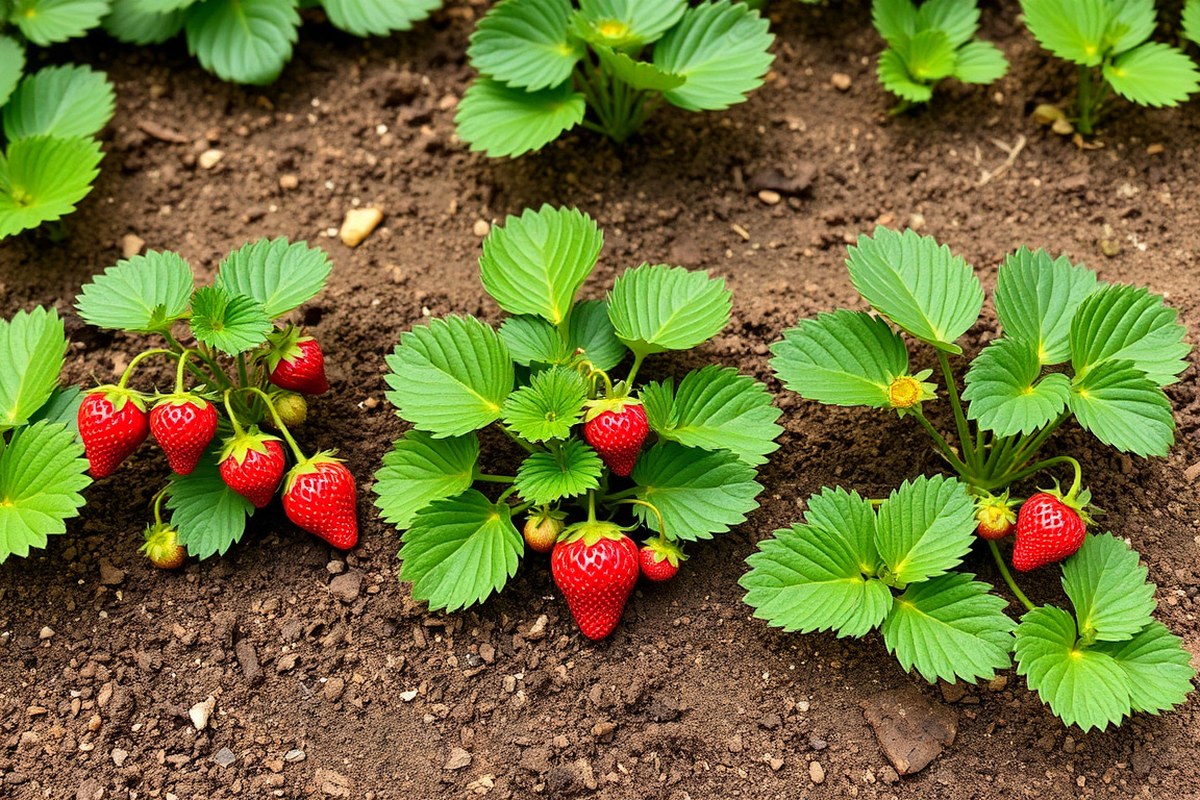
Strawberry plant spacing changes with the type of variety you choose. June-bearing plants need more space because they spread out more and produce many runners. Everbearing and day-neutral types grow steadily and can be planted closer together.
June-Bearing Spacing Needs
June-bearing strawberries grow large, vigorous clumps and send out plenty of runners. They produce one major harvest per season, so giving them room helps avoid overcrowding. Plant these strawberries about 18 inches apart to let their roots and runners spread.
In rows, leave 3 to 4 feet between each one. This wider row spacing improves airflow and makes harvesting easier. Crowded plants will compete for nutrients, which lowers fruit quantity and quality.
Everbearing and Day-Neutral Spacing
Everbearing and day-neutral strawberries have smaller, more compact growth than June-bearing types. They can be planted around 12 inches apart and spaced 3 feet between rows. These types produce fruit several times during the growing season.
The closer planting works because these plants create fewer runners. You can grow more plants in the same area without them choking each other out. It also fits well into raised beds or containers where space is limited.
Summary Table by Variety
This table shows spacing recommendations by variety and planting setup. It highlights how June-bearing plants need more space than everbearing and day-neutral types.
| Strawberry Variety | In-Row Spacing | Row Spacing | Growth Habit | Yield Pattern |
|---|---|---|---|---|
| June-Bearing | 12, 18 inches | 3, 4 feet | Large, vigorous clumps | One big harvest |
| Everbearing | 12, 15 inches | 3, 4 feet | Moderate, steady growth | 2 to 3 harvest waves |
| Day-Neutral | 12 inches | 3 feet | Compact, consistent | Continuous harvest |
Planting everbearing and day-neutral types closer together fits their smaller size and steady fruiting. June-bearers benefit from extra space to handle the runners they send out. Adjust spacing based on your bed width and how many plants you want in each row.
Thinning plants every 8 to 12 inches keeps everbearing and day-neutral strawberries healthy and productive.
Choosing Spacing Based on Planting Methods
How far apart you space strawberry plants depends on your planting method. Each setup, whether in-ground beds, raised beds, or containers, needs different spacing. Knowing the right distance helps plants grow well without crowding or wasting space.
In-Ground and Matted Row Systems
In-ground strawberry plants often use the matted row system. You space plants about 18 inches apart in rows that are 3 to 4 feet wide. This method uses runner plants to fill space between main plants.
It helps create thick rows of strawberries. These rows produce lots of berries.
Spacing is wider here to give runners room to spread. Over 1 to 2 seasons, runners take root, expanding the patch to about 24 inches wide. This suits June bearing strawberries that like spreading out naturally.
The hill system is another way. Plants go 12 to 15 inches apart in hills of 3 or 4 plants.
Rows sit 2 to 2.5 feet apart. This works well for everbearing types that don’t produce many runners.
Raised Bed Spacing Recommendations
Raised beds allow closer planting because soil conditions are usually better. Plants can be spaced 12 to 15 inches apart in standard beds. This gives balanced growth and easier harvest without excess crowding.
For better using space, intensive or square foot raised beds fit one plant per square foot. This is ideal when you want maximum yield in limited area. Deep trough-style beds keep plants 10 to 12 inches apart, focusing root growth.
| Bed Type | Recommended Spacing | Primary Benefit |
|---|---|---|
| Standard Raised Bed | 12″, 15″ | Balanced growth and easy harvest |
| Intensive/Square Foot | 1 plant per sq. Ft. | Maximum yield in small spaces |
| Deep Troughs | 10″, 12″ | Concentrated root zone |
Raised beds can require more space overall if you have many plants. Your number of strawberry plants affects how many beds you need. Planning bed size and plant numbers upfront helps avoid cramming.
Container and Pot Spacing Guidelines
Containers let you grow strawberries in tight spaces but change how you space plants. For pots, place one plant per 8-inch pot. Small pots don’t give roots much room to spread.
Larger containers like 12-inch hanging baskets can hold 3 plants. Plants stay closer than in-ground but still get enough soil and air. Container spacing prevents crowding that causes weak growth or disease.
Containers do not have row spacing like beds but still need irrigation and good soil. Close spacing means frequent watering and feeding. This method works well if you have few plants or limited ground area.
How Runners Influence Plant Spacing and Patch Development
Strawberry runners spread out from the main plant, affecting how closely you plant strawberries. These runners can take up extra space.
So plan for about 20% more room than your base spacing. Managing runners by thinning or transplanting them stops overcrowding and keeps your patch healthy.
Understanding Strawberry Runners
Runners are long, thin stems that grow horizontally from a strawberry plant. They can extend 12 inches or more, sending out baby plants that root themselves. These new plants fill in open space and help expand your strawberry patch over time.
The spread of runners depends on the strawberry variety and growing conditions. Day-neutral types tend to produce more runners during the growing season. Knowing how far runners grow helps you decide how much space to give your plants initially.
Allowing Space for Runner Growth
Your initial planting space matters because runners need room to spread out and root. Plant strawberries about 20% farther apart than the standard 8 to 10 inches. This gives runners enough space.
It helps avoid crowding. For example, plant strawberries 10 to 12 inches apart.
This spacing stops the patch from getting too dense. It leaves room for runners.
In square-foot gardening, place one strawberry plant per square foot. That way, runners have nearby empty squares to establish new plants. Leaving this extra space balances good yield with healthy airflow and less disease risk.
Thinning and Transplanting Runners
Runners should be carefully managed yearly to avoid crowding in your patch. Thin runners when they start rooting too close, about 6 to 8 weeks after planting. Transplant healthy runner plants into open spots or new beds to spread your strawberries.
Here’s how to handle runners in different spacing setups:
- Check your patch every 4 to 6 weeks during the growing season for new runners.
- Identify runners with rooted baby plants that compete for space.
- Use sharp scissors or snippers to cut runners you don’t want to keep.
- Gently dig up rooted runners if you want to transplant them elsewhere.
- Replant runners 10 to 12 inches apart in a prepared bed or containers.
- Water transplanted runners well and keep soil moist until they establish.
- Remove weak or crowded runners to improve air circulation and light for all plants.
Managing runners this way controls patch density and keeps strawberry plants vigorous. Overcrowding can cause smaller fruit and slower growth. So the effort pays off with larger berries and more consistent harvests.
Adjusting Spacing for Raised Beds and Container Growing
Raised beds give strawberry roots good soil depth without compacting. In these beds, set plants about 12 inches apart. This spacing stops roots from competing too much and helps berries grow bigger.
For rows in raised beds, plan 30 to 36 inches between rows. It lets you walk and work without hurting soil or plants.
Containers need enough soil to keep roots happy and moist. You can grow four strawberry plants in one square foot of soil. Use pots with rich soil that stays moist.
Keep watering regularly to help them grow well. Choose containers at least 12 inches deep and wide. Smaller pots will dry quickly and limit root growth.
- Use 12-inch spacing between strawberry plants in raised beds
- Leave 30 to 36 inches between rows for easy access
- Pick containers at least 12 inches deep and wide per plant
- Fit up to 4 plants per square foot in large containers
- Keep soil nutrient-rich and consistently moist in pots
Raised beds often work well in cooler zones, giving roots space and warmth. Containers suit patios or small patios where soil isn’t an option. You can plant everbearing strawberries with 12-inch spacing in these beds.
Containers need watering more often, especially in warm weather. Check soil dampness daily to avoid drying out roots.
Never crowd plants in containers; cramped roots make weak, small strawberries.
Both options need good soil and steady watering. Raised beds give roots space without worry about drainage.
Containers need holes and a catch tray to keep water flowing. This setup avoids root rot and keeps plants healthier for longer fruiting.
How Spacing Impacts Yield, Disease, and Maintenance
Spacing strawberry plants about 18 inches apart helps keep them healthy and productive. This distance lets air flow freely around each strawberry plant. That helps lower the risk of mold and fungal diseases.
Good air circulation helps leaves dry faster after rain or watering. Dryer leaves reduce places where diseases start.
Tighter spacing may seem like a way to grow more strawberries. But it often causes problems. Plants too close together compete for water, nutrients, and light.
This competition weakens the plants, leading to smaller fruit and higher vulnerability to pests or sickness. For example, crowding can encourage leaf wetness, which attracts diseases like powdery mildew and gray mold.
Proper spacing also makes it easier to control weeds and care for your plants. Space about 18 inches between strawberries and 4 feet between rows. This lets you walk comfortably to mulch and pick berries.
Mulching between plants keeps the soil moist and blocks weeds. This is very helpful if your plants are spaced closer. It saves time and protects plants from stress due to weed competition.
Striking the right balance means giving each strawberry enough room to grow strong roots and leaves. When planting, measure and mark your rows before planting to keep consistent spacing. Don’t plant more strawberries than recommended, even if space is tight.
Crowding plants usually lowers how many berries you get. In cases with limited room, consider smaller plant varieties or containers instead of tighter rows.
Good spacing improves sunlight exposure, which is important for ripening berries and boosting your total yield. Leaving the right gaps lets your plants grow fuller and stronger. Fruits will be bigger and juicier, too.
On the other hand, crowded plants often show yellowing leaves and smaller harvesting returns. Taking time to space your plants right pays off. You’ll get healthier plants, easier care, and better berries.
Maximizing Strawberry Yield in Limited Space
Planting strawberries closer than 12 inches can save space but may reduce airflow. Crowded plants risk disease and lower berry production. Still, with careful care, you can tweak spacing to boost harvest in small gardens.
Choose smaller varieties like Alpine or day-neutral types. These fit better in tight spots and produce fruit over a longer time. Let runners fill gaps to form a dense mat that spreads without needing wide rows.
- Start plants 10 to 12 inches apart, closer than usual
- Guide runners into open spaces to fill gaps gradually
- Pick compact, everbearing or day-neutral varieties for small spots
- Use raised beds or containers to control spacing tightly
- Trim runners if overcrowding begins to prevent disease
Keep soil moist and well-drained to help dense plants thrive. Watch carefully for signs of mildew or rot from poor airflow. Healthy, spaced plants produce bigger berries and fuller yields.
You can expect about 12 to 18 inches of space between plants to optimize fruit size. In tight spaces, 10 inches is okay if you manage runners well. Too little room leads to weaker plants and fewer berries, which means less harvest overall.
Common Spacing Mistakes and How to Avoid Them
One common mistake is planting strawberry plants too close. Crowding stops air flow and light, which weakens plants and invites disease.
You want at least 12 to 18 inches between plants. Too tight, and runners won’t spread properly.
Plants that look yellow, have smaller leaves, or produce fewer berries usually mean crowding. You may also spot mold or wilt from trapped moisture. Watch for patchy growth or soil that stays wet too long.
When you see crowding after planting, remove the weaker plants to thin the bed. Carefully dig around the roots to avoid harming neighbors. This opens space and helps the patch stay healthy and productive over time.
- Plant strawberries at least one foot apart. Use 18 inches if your soil is rich.
- Remove runners if space is tight, so they don’t clone too densely.
- Thin crowded areas in the first year before plants fully mature.
- Set up drip irrigation or good mulch to reduce moisture buildup in dense patches.
- Check plant health regularly and adjust by removing sick or small plants.
- Use raised beds or containers to control spacing more easily if space is limited.
- Keep in mind that 10 to 15 plants per person is enough for fresh strawberries.
Give strawberry plants room to grow; overcrowding leads to poor fruit and disease.
Fixing spacing issues takes time but stops a lot of future headaches. Thinning early helps runners develop evenly, producing more berries over the season. Keep your spacing consistent to avoid having to redo patches every year.
Step-by-Step Action Plan for Spacing Your Strawberry Plants
Follow these steps to set up your strawberry patch. Give plants enough space between each other.
Keep enough room between rows for easy care. This will help you get good fruit and avoid problems.
- Before planting: Measure your garden space carefully. Choose a strawberry variety that suits your area. Think about how much space and climate you have. Make sure you pick day-neutral or June-bearing for your goals.
- Day 1: Mark rows 18 to 24 inches apart using string or stakes. Space plants 12 to 18 inches apart within rows as per the variety you picked.
- Planting day: Plant each strawberry with roots spread out, no crowding. Check plants stand upright without touching neighbors.
- Week 2: Water plants well but avoid soaking the leaves. Check that runners aren’t tangled and trim excess runners to keep space clear.
- Month 1: Monitor for overcrowding or disease signs. Thin or remove extra plants if they start touching or look sickly.
- After harvest: Renew spacing by cutting back runners and removing weak plants. This keeps air flowing and fruit healthy.
- Each season: In raised beds or containers, space plants well. Leave at least 12 inches between each plant. This helps strawberries grow better. Replace soil yearly to reduce disease risk.
Frequently Asked Questions
How Much Space Do Strawberry Plants Need to Spread Their Roots Properly?
Strawberry plants need about 12 to 18 inches between each other to allow healthy root growth. This spacing also helps air reach the roots, reducing disease risk and supporting stronger plants.
Can Strawberry Plants Survive If They Are Planted Too Close Together?
Planting them too close leads to poor air flow and weak growth. It can cause diseases like mildew and reduce fruit size and overall yield.
How Many Strawberry Plants Fit in a Standard 4-foot Square Raised Bed?
You can fit about 9 to 12 plants in a 4-foot square bed. Space each about 12 to 15 inches apart for enough room to grow.
Is It Okay to Plant Strawberries Closer in Containers Than in Garden Beds?
Yes, but keep at least 8 to 10 inches between plants in containers. Smaller pots need tighter spacing but watch for crowding to avoid rotting.
How Far Apart Should Strawberry Runners Be Left to Root New Plants?
Space new runners about 18 to 24 inches apart to give each new plant room. Crowding runners will limit their growth and fruit production.
Does the Type of Soil Affect How Much Space Strawberry Plants Need?
Soil type impacts root growth but spacing stays mostly the same. In heavier soil, give plants a bit more room to spread roots freely.
Final Thoughts
Spacing matters a lot for healthy strawberry plants and good fruit. Start by giving each plant room to grow and don’t let runners crowd your patch. Next, watch your plants often and trim runners to keep your strawberries happy and productive.