What Does a Tomato Look Like? A Complete Visual Guide for Gardeners
What does a tomato look like? Tomato plants have bright green, compound leaves with 5 to 9 leaflets.
Each leaflet has fine hairs and slightly serrated edges. Their strong stems grow between 3 and 10 feet tall depending on the type.
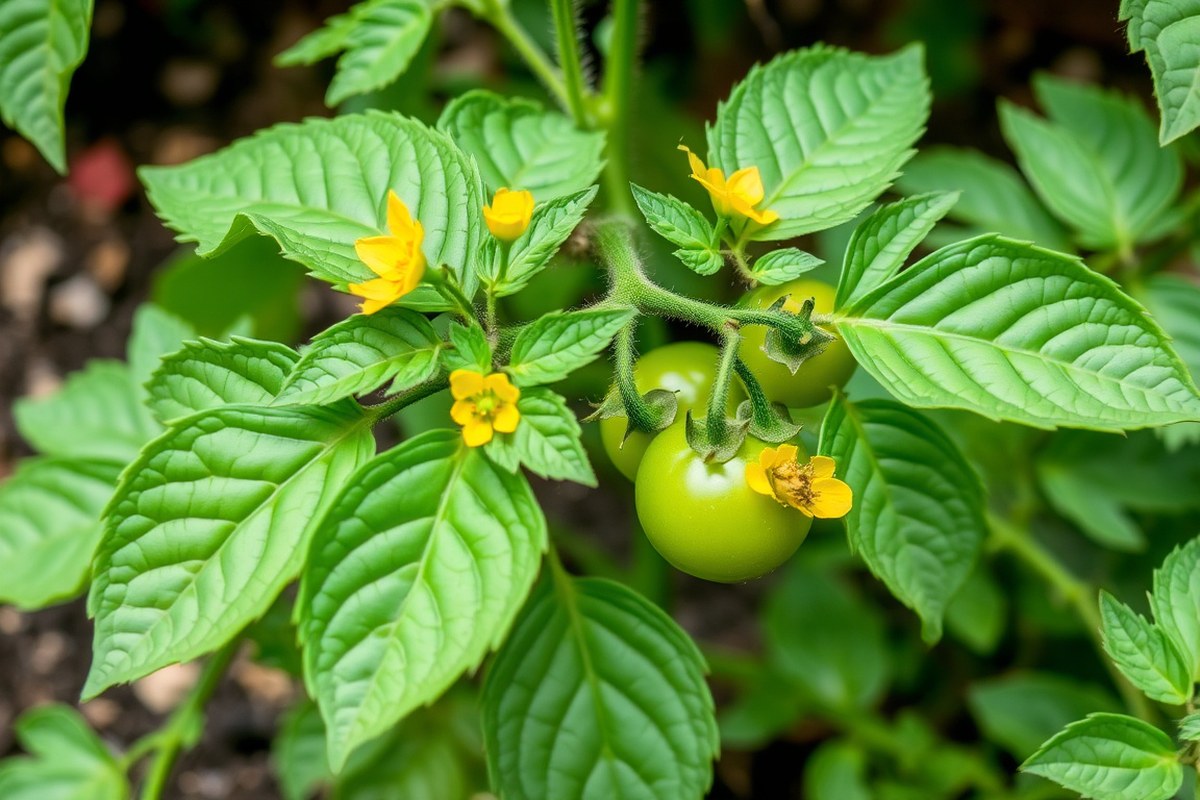
The small flowers are yellow and appear about 4 to 8 weeks after planting. These flowers usually have five petals and form clusters. Fruits start green and ripen in 45 to 90 days, showing classic red or other colors like yellow, orange, or purple.
Tomato roots are shallow, extending only 2 to 3 feet deep but spreading wide. This shallow root system means they need consistent watering near the base. Knowing these details helps you spot healthy plants and distinguish them from look-alikes.
Key Takeaways
- Tomato leaves are compound with multiple leaflets and a faint tomato scent when touched.
- Determinate tomatoes grow like a bush, reaching about 3 to 4 feet tall.
- Indeterminate tomatoes keep growing, sometimes reaching 6 to 10 feet tall or more.
- Yellow tomato flowers are small, with five to six petals about 1 to 2 cm wide.
- Tomato roots spread shallowly, only about 2 to 3 feet deep into the soil.
- Weak or thin stems may signal an unhealthy tomato plant needing more support.
What Does a Tomato Plant Look Like Overall?
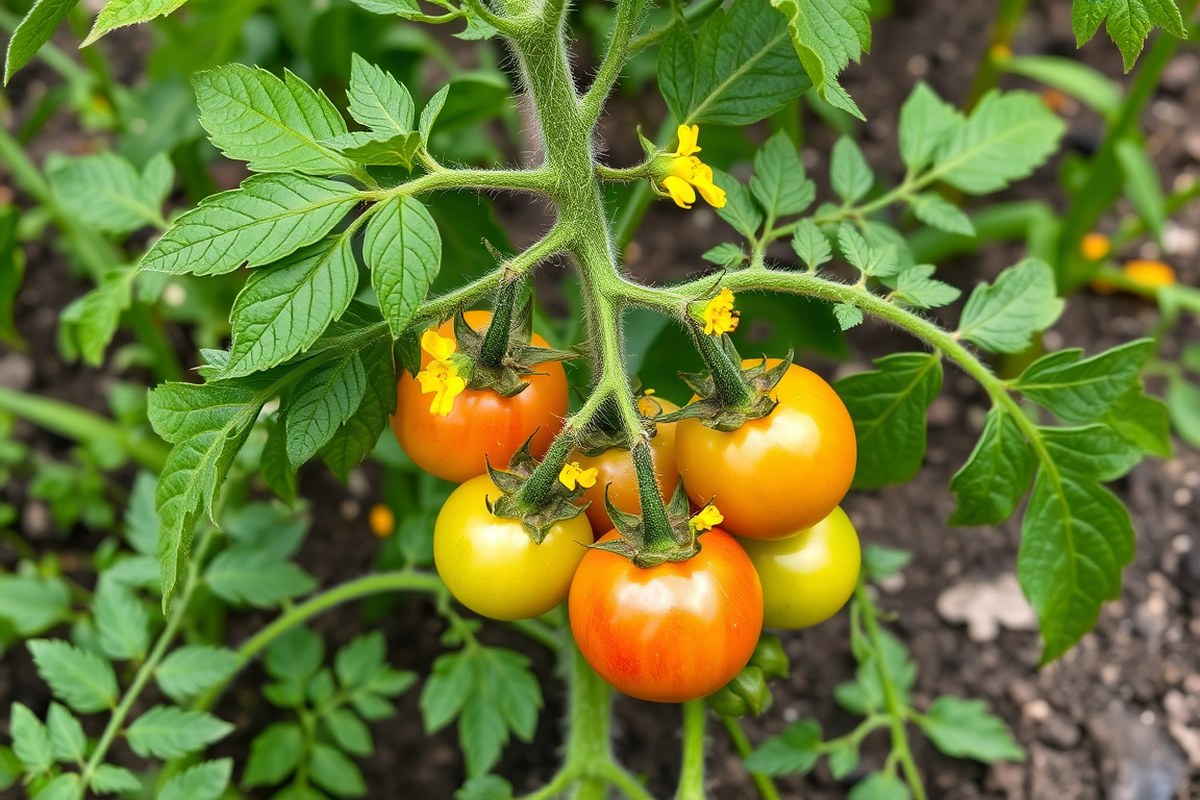
Tomato plants usually grow bushy or like vines, reaching 3 to 6 feet tall. Tomato plants come in many shapes based on the type. Some stay compact.
Others spread wide with many branches. From far off, you’ll see bright yellow flowers. Clusters of round or oblong fruits hang on branches.
The main stems are thick and sturdy. Tiny hairs cover them, making a fuzzy feel. Leaves grow one by one along the stem.
Each leaf looks feathery with many small leaflets. These dark green leaves create a dense canopy that often smells herbal when crushed.
The flowers have five soft yellow petals. They bloom on short stalks from leaf axils before turning into fruit.
Tomato fruits vary in size from tiny cherry tomatoes to large beefsteak types. Colors range widely, including red, orange, yellow, and even green, depending on the variety and ripeness.
A healthy tomato plant looks full and lively. Its stems stand up, holding leafy branches. The plant is mostly fresh green in color.
Bright yellow flowers add a pop before fruit shows. Using stakes helps keep the plant neat. Stakes stop stems from breaking under heavy fruit weight.
How Tomato Leaves and Stems Help You Identify the Plant
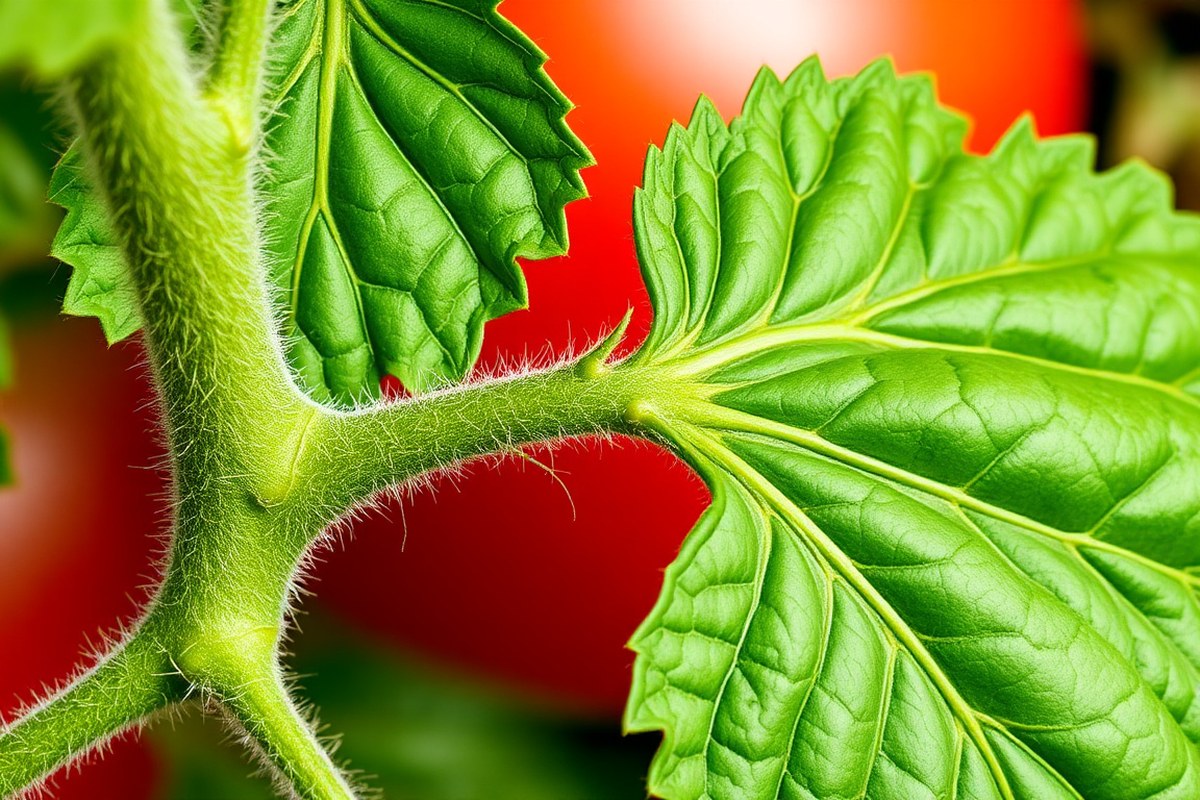
Tomato leaves are made of several smaller leaflets. You usually see 5 to 9 leaflets plus one at the tip. The leaflets are oval and may change size as the plant grows.
Tomato leaves have tiny hairs on their surface. These hairs make the leaves feel a bit fuzzy. The fuzz helps protect the leaf.
These hairs help the plant hold onto moisture and reduce water loss through transpiration. Small hairs also grow under the leaves.
They help the plant breathe by allowing gas exchange. These hairs improve the leaf’s function.
When you crush a tomato leaf between your fingers, it releases a strong, familiar smell. This scent sets tomato plants apart from many other garden plants. It’s a quick and easy way to confirm you’re dealing with tomatoes and not a look-alike.
Tomato stems are soft and flexible, usually green, and also covered in fine hairs. The stem often has tiny hairs too. These hairs give it a slightly fuzzy feel.
The fuzziness varies by tomato variety. The hairs deter some insects and help keep moisture close to the plant’s surface.
Be careful not to confuse tomato plants with deadly nightshades. Crushing the leaf and smelling the scent helps confirm the true tomato.
The tiny hairs on both leaves and stems play a important role in plant health. They reduce water loss, making tomato plants less thirsty in hot or dry conditions. Plus, they discourage some pests by making the surface less comfortable to walk on or eat.
The stem keeps the plant upright and stable. It moves water and nutrients from roots upward. This support helps the plant grow well.
When you hold a tomato stem, it usually feels soft, not woody like some other plants. This softness helps tomato plants grow quickly and flex with wind or handling during harvest.
Differences Between Determinate and Indeterminate Tomato Plants
Determinate tomato plants grow to a set height and produce fruit all at once. Indeterminate types keep growing taller and yield tomatoes continuously. Recognizing these differences helps you plan how to care for each type well.
Height and Growth Habit
Determinate tomatoes usually reach about 3 to 4 feet tall. They grow in a bushy, compact shape that stops growing after reaching their limit. Indeterminate tomatoes can grow 6 to 8 feet or even taller.
Indeterminate plants vine and sprawl, producing new growth all season. They don’t stop growing until frost kills them. Determinate plants often look like small bushes with thick stems and side branches.
Flowering and Fruit Production
Determinate tomato plants flower and fruit in a short, concentrated period. They set most fruit at once at the end of their branches, then stop producing more. This makes them good for canning or sauces because all tomatoes ripen close together.
Indeterminate varieties flower continuously and produce fruit in waves throughout the growing season. You’ll see new flowers and green tomatoes even as early fruit ripens. This means you get a steady supply of tomatoes for fresh eating.
Support and Pruning Needs
Determinate types often support themselves due to their bushy shape. You may need to stake them lightly, but heavy cages are usually not required. Minimal pruning is needed since they stop growing after a certain point.
Indeterminate tomatoes need strong staking or tall cages. They can become heavy with fruit and long vines that need support. Pruning is important in tomato plants.
Remove grow suckers and extra growth. Do this regularly to keep plants healthy and easy to manage.
Here’s a table summarizing the key differences:
| Feature | Determinate Tomato Plant | Indeterminate Tomato Plant |
|---|---|---|
| Growth Habit | Bushy, compact, self-topping | Vining, sprawling, continuous growth |
| Height | 3-4 feet (0.9, 1.2 m) | 6-8 feet or more (1.8, 2.4 m+) |
| Fruit Production | All fruit at once, then stops | Produces fruit throughout season |
| Flowering Duration | Short, concentrated | Continuous until frost |
| Support | Sometimes staking, often self-supporting | Strong staking or caging needed |
| Pruning | Minimal pruning | Regular pruning of suckers required |
Choosing between determinate and indeterminate tomatoes affects your garden layout. Determinate plants save space with their smaller size. Indeterminate plants need more room and stronger supports due to their height.
Tomato Plant Growth Stages Visual Timeline
A tomato plant changes a lot from seedling to ripening fruit. It starts small with tiny leaves. It grows fast in summer.
Flowers form in clusters and then colorful tomatoes appear. Watching these stages helps you spot problems early and know when to expect harvest.
Seedling Stage (Days 5-14)
Tomato seedlings sprout small, bright green leaves called cotyledons first. These round leaves look simple and help the plant get started with photosynthesis.
You’ll see the first true leaves by about day 10. They have a more jagged shape and resemble miniature tomato leaves.
The seedling stays compact, about 2 to 4 inches tall during this time. Its stem is thin but sturdy enough to support early growth.
You might mistake seedlings for other plants. But tomato cotyledons are wider than grass or other common weed seedlings.
Vegetative Stage (Weeks 3-6)
Growth picks up rapidly in this stage as the plant gets taller and bushier. Tomato plants can reach 12 to 24 inches by week six. Many leaves grow along the main stem.
Side shoots also develop leaves. The leaves become more pronounced with deep teeth edges and a fuzzy texture.
The stem thickens and starts to lighten from green to a reddish hue near the base. Strong roots develop underground to support quick nutrient and water uptake. You’ll notice the plant develops a fuller shape, preparing for flower production.
Flowering and Early Fruit (Weeks 7-10)
Clusters of small white or yellow flowers appear, usually on lateral branches. These flowers grow in groups, not single, and can cover large parts of the plant. Flowering signals fruit will soon form once pollination happens.
Fruits start as tiny green spheres after the flowers fade. You’ll see green buds that gradually swell. This stage lasts several weeks.
Fruit grows from pea-sized to much bigger. The fruit remains green and hard.
Fruiting and Ripening Stage
Tomato fruit takes 45 to 90 days from flowering to mature, ripe tomatoes. Fruits change from green to their final color. This can be red, orange, yellow, or purple.
The color depends on the variety. The skin smooths out, and the shape becomes rounder or oblong.
Plants grow dense with layers of green leaves, flowers, and fruits. Growth slows as the plant focuses energy on ripening fruit. You can expect harvest to last several weeks during warm mid to late summer.
Below is a timeline showing key features and size changes during tomato plant growth:
| Stage | Time Frame | Plant Height | Leaf Development | Flowering | Fruit Color |
|---|---|---|---|---|---|
| Seedling | Days 5-14 | 2-4 inches | First round cotyledons, then jagged true leaves | None | None |
| Vegetative | Weeks 3-6 | 12-24 inches | Many large, toothed leaves | None | None |
| Flowering & Early Fruit | Weeks 7-10 | 24+ inches | Fully developed leaves | White or yellow clusters | Tiny green buds |
| Fruiting & Ripening | 45-90 days from flowering | Peak size, very bushy | Full foliage | Present | Green to final color |
This timeline helps you check if your plants are on track. Delayed flowering or small leaves mean you might need more sun or fertilizer.
Ripening times vary by variety and weather. So keep an eye on fruit color to know when to pick.
What Tomato Flowers and Fruits Look Like at Different Stages
Tomato flowers are bright yellow and small, about 1 to 2 cm wide. They have five sharp petals that look like a star. These flowers grow in groups with 3 to 12 flowers opening over 3 to 5 days.
After pollination, the flower’s base starts to grow. This base, called the ovary, swells. It turns into a small green tomato.
These immature fruits are firm, often with a glossy green look before changing color. The dried flower petals stay on the fruit tip for a short time. After a while, they fall off.
Tomato fruits vary a lot in size and shape depending on the type. Cherry tomatoes are small and round or oval, measuring about half to one inch across.
Patio tomatoes tend to be a bit larger, around 1 to 2 inches wide and round. Beefsteak tomatoes are the biggest, about 4 to 6 inches, often oval or irregular in shape.
Tomatoes change color as they ripen, starting green. They turn red, yellow, orange, pink, purple, or striped. The exact color depends on the variety you are growing.
Unripe tomatoes stay green and hard. This helps you tell them from ripe ones. Ripe tomatoes are softer and brightly colored.
Watch for flower clusters that don’t form fruit. This often means poor pollination or stress.
Common Tomato Varieties and How Their Fruits Differ
Tomato fruits differ widely in size, shape, color, and texture. Recognizing these traits helps you identify common varieties at a glance. Here’s a guide to cherry, plum, beefsteak, and heirloom tomatoes.
Cherry Tomatoes
Cherry tomatoes are small and round, about one inch in diameter. They usually ripen to bright red, but some varieties turn yellow or even orange. Their thin skin and juicy texture make them perfect for snacking or salads.
These tomatoes grow in clusters and ripen evenly, which helps when harvesting them for fresh eating. Their sweetness varies but is generally higher than larger tomatoes.
Plum (Roma) Tomatoes
Plum tomatoes, often called Roma tomatoes, are oval or cylindrical. They have thicker flesh and fewer seeds than round tomatoes. Their dense texture makes them ideal for cooking and sauces.
Typical plum tomatoes measure about 2 to 3 inches long and 1.5 inches wide. They usually ripen to a deep red color.
Sometimes they turn yellow instead. These tomatoes have firmer skin than cherry tomatoes.
Beefsteak Tomatoes
Beefsteak tomatoes are the largest common type, ranging from 4 to 6 inches across. Their shape is mostly round but can be slightly flattened or irregular. Beefsteaks are known for juicy, thick flesh with many small seed pockets.
They come in red, pink, yellow, and even purple shades. Their size and color variety make them a favorite for sandwiches and slicing fresh.
Heirloom Tomatoes
Heirloom tomatoes vary strongly in size, shape, and color because they come from old, open-pollinated varieties. They can be round, ribbed, or shaped like pears. Their colors range from red to orange.
Some are green or purple too. Texture can be smooth or slightly wrinkled.
The size may be small like cherry tomatoes or as large as beefsteaks. Their unique look is often a sign of their rich flavor and traditional seed lineage. Here is a quick comparison of common tomato types:
| Tomato Variety | Typical Size | Shape | Colors | Texture |
|---|---|---|---|---|
| Cherry | About 1 inch diameter | Round | Red, yellow, orange | Thin skin, juicy |
| Plum (Roma) | 2 to 3 inches long | Oval/cylindrical | Deep red, yellow | Thick flesh, fewer seeds |
| Beefsteak | 4 to 6 inches across | Round to slightly flattened | Red, pink, yellow, purple | Juicy, thick flesh |
| Heirloom | Varies from 1 to 6 inches | Varied: round, ribbed, pear-shaped | Red, orange, green, purple | Smooth or wrinkled |
Knowing these differences helps you select the right tomato for your garden or kitchen. The size affects how you use the fruit.
The texture determines cooking methods or eating preferences. Color clues can also guide you to the variety’s taste and ripeness.
How to Tell a Tomato Plant Apart from Look-Alikes
Tomato plants have unlike leaf shapes that make them easier to spot. Their leaves are compound with 5 to 9 leaflets, each with jagged edges and deep veins. Rubbing a tomato leaf releases a strong, pungent smell most look-alikes don’t have.
Tomato stems feel hairy and slightly rough, with a green color and tiny fine hairs. This sets them apart from smoother pepper or eggplant stems. Tomato stems grow thick on mature plants.
They measure about 1 to 2 inches wide. These stems hold up heavy fruit clusters well.
Use this checklist to tell tomatoes apart from similar plants. It helps spot differences from nightshades and peppers.
- Leaves: Compound with jagged edges and many leaflets
- Leaf smell: Crush a leaf for a strong tomato scent
- Stem: Hairy, rough texture with fine green hairs
- Stem thickness: At least 1 inch wide on mature plants
- Plant height: Usually 3 to 4 feet tall when healthy
- Growth habit: Indeterminate types have sprawling growth, determinate stay bushier
Other clues include the leaf arrangement, which is alternate, not opposite like some nightshades. Tomato leaves fold upwards slightly along the veins, unlike flat leaves on peppers. Early tomato seedlings may look plain but develop unique leaf patterns quickly.
Checking these traits takes only a few minutes and works in all growth stages. The leaf scent test is a quick, reliable trick gardeners use. Your plant is probably a tomato when it matches most of this checklist.
Visual Signs of Tomato Plant Health and Common Problems
Healthy tomato plants have deep green leaves and firm, round stems. The leaves should be broad with clear serrated edges, arranged alternately along a sturdy main stem.
The plant usually has a good mix of leaves and young fruit. This shows it is growing well and healthy.
Yellowing leaves often signal stress or disease. This can happen from overwatering, poor drainage, or nutrient problems like a lack of nitrogen.
Overwatered plants may look wilted even when the soil feels wet. Their leaves turn pale green to yellow, sometimes curling at the edges.
Look for black spots on the leaves. These could mean fungal infections like early blight or Septoria leaf spot. These spots are small and round, sometimes with a yellow halo.
Stem discoloration is another warning sign. A healthy tomato stem stays green and firm. But a stem turning dark or soft may indicate disease or damage.
Another clue comes from stem and leaf color shifts. Mild purple tints on stems and veins appear in cool weather below 60°F. This is normal and not a concern.
But if leaves turn brown or develop rust-like patches, it usually means stress or nutrient deficiency. Regularly checking for these color changes helps catch problems early.
To troubleshoot, first feel the soil. Let the top inch dry before watering again. Remove yellowing or spotted leaves to stop disease spread.
Use a balanced fertilizer to correct nutrient gaps. Stem softening means you should cut the infected parts. Also, make sure plants have more air around them.
Check soil moisture before watering; soggy soil harms tomato roots and causes yellow leaves.
Step-by-Step Action Plan to Identify and Monitor Your Tomato Plant
Follow these steps to watch your tomato plant develop and spot its key features. This will help you confirm you have a tomato plant and track its health.
- Day 1-3: Look for fuzzy stems and jagged, compound leaves. These features usually mean you’re seeing a tomato plant.
- Week 1: Check for tiny yellow flowers starting to form. Their five-petal shape is a good sign of tomato plants.
- Week 3-4: Notice if small green fruits appear. They start round and smooth before growing larger.
- Weeks 5-6: Check if your plant grows bushy or tall. Bushy plants are determinate and fruit all at once. Tall plants are indeterminate and fruit over time.
- After 6 weeks: Watch the fruit as it ripens and changes color. It starts green. Later, it turns red, yellow, or other shades based on type.
- Every week: Look at leaf edges for curling or new spots. These signs show pests or plant dehydration. Check regularly.
- Harvest time: Pick tomatoes when they have full color and feel a bit soft. That’s when taste is best.
Frequently Asked Questions
What Do Tomato Roots Look Like?
Tomato roots are thin and spread shallowly, about 2-3 feet deep. They often grow in clusters that help the plant anchor and absorb water well.
How Can You Tell a Tomato Seedling from Other Seedlings?
Tomato seedlings are small, between 2-6 inches tall with a thick stem. They also have a faint tomato smell when you gently touch their leaves.
Why Do Some Tomatoes Look Different from Photos Online?
Tomato fruit color and shape vary by variety and growing conditions. Your plant might have smaller or duller fruit than glossy photos suggest.
What Makes Indeterminate Tomatoes Look Taller Than Determinate?
Indeterminate tomatoes keep growing and can reach 6 feet or more tall. Determinate kinds grow to a certain height, usually 3-4 feet, then stop.
How Does a Tomato Plant Change Through the Seasons?
Tomato plants start small and bloom in spring with flowers and green fruit. By late summer to fall, the fruit ripens and leaves can look worn.
What Does a Healthy Tomato Root System Feel Like?
Healthy tomato roots feel firm and are white or light tan inside. Rotten roots smell bad and look brown or slimy, which signals problems.
Final Thoughts
Tomato plants have distinct leaves, stems, flowers, and fruit that change as they grow. You can confidently spot them by their key features at each stage.
Start by watching your plant’s leaves and flowers this week. Use this time to learn how your plant grows.