What to Plant with Tomatoes in a Container: 8 Best Companions and Tips
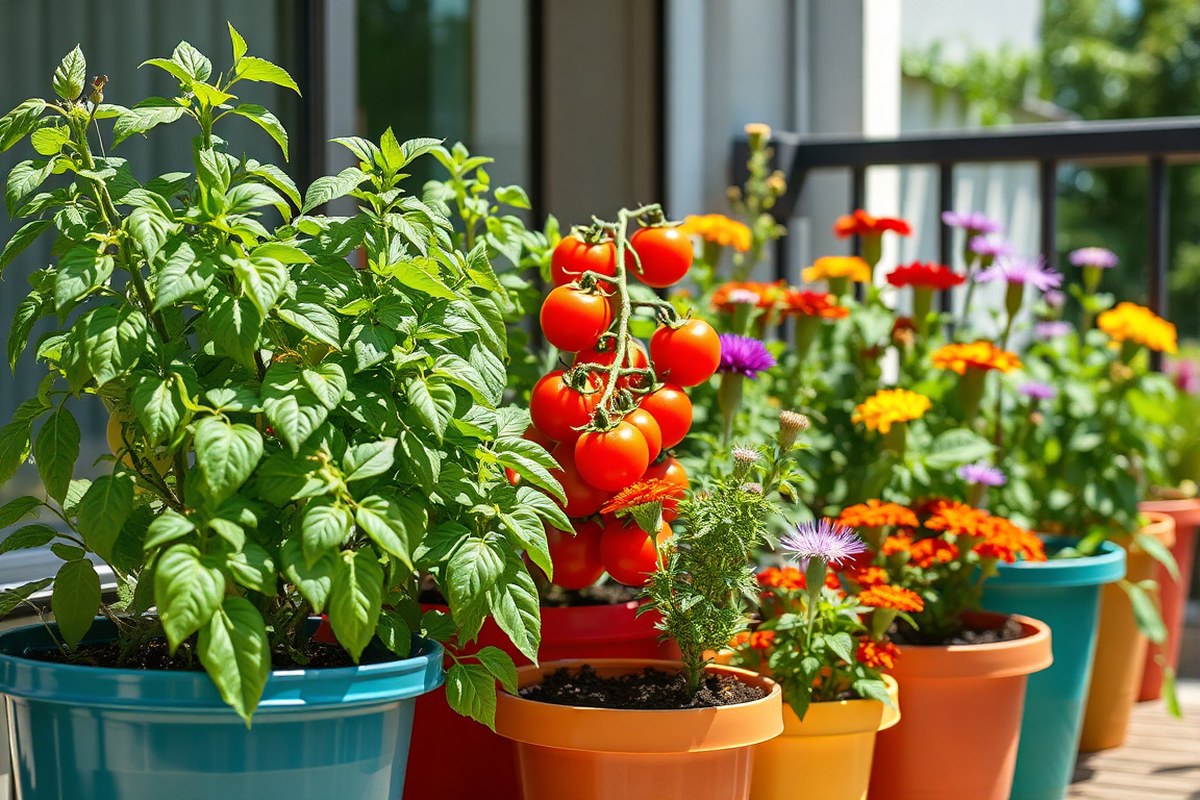
Wondering what to plant with tomatoes in a container? Growing tomatoes with the right companions can improve growth and taste. Basil, borage, and parsley work well because they attract beneficial insects and improve tomato flavor.
Start by planting companion seeds about 6 to 8 inches away from your tomato plant. This spacing helps both plants get enough light and air.
Watch out for crowding. Your container size must fit all plants comfortably to avoid competition.
Choose compact tomato varieties like Tiny Tim or Bushsteak for container growing. Both need a minimum of 6 to 8 hours of sunlight each day.
They grow well alongside herbs and flowers. Avoid planting anything that steals nutrients or blocks sunlight from your tomatoes.
Key Takeaways
- Plant basil and borage seeds 6-8 inches away from tomatoes in containers.
- Use compact tomato varieties like Tiny Tim or Bushsteak for container planting.
- Ensure your container is large enough to hold tomatoes and companion plants comfortably.
- Your container tomatoes should get direct sunlight for 6 to 8 hours a day.
- Space companion plants 2-3 inches apart in rows 4-6 inches from tomato stems.
- Avoid planting large or aggressive plants that block sunlight or compete for nutrients.
Best Companion Plants to Grow with Tomatoes in Containers
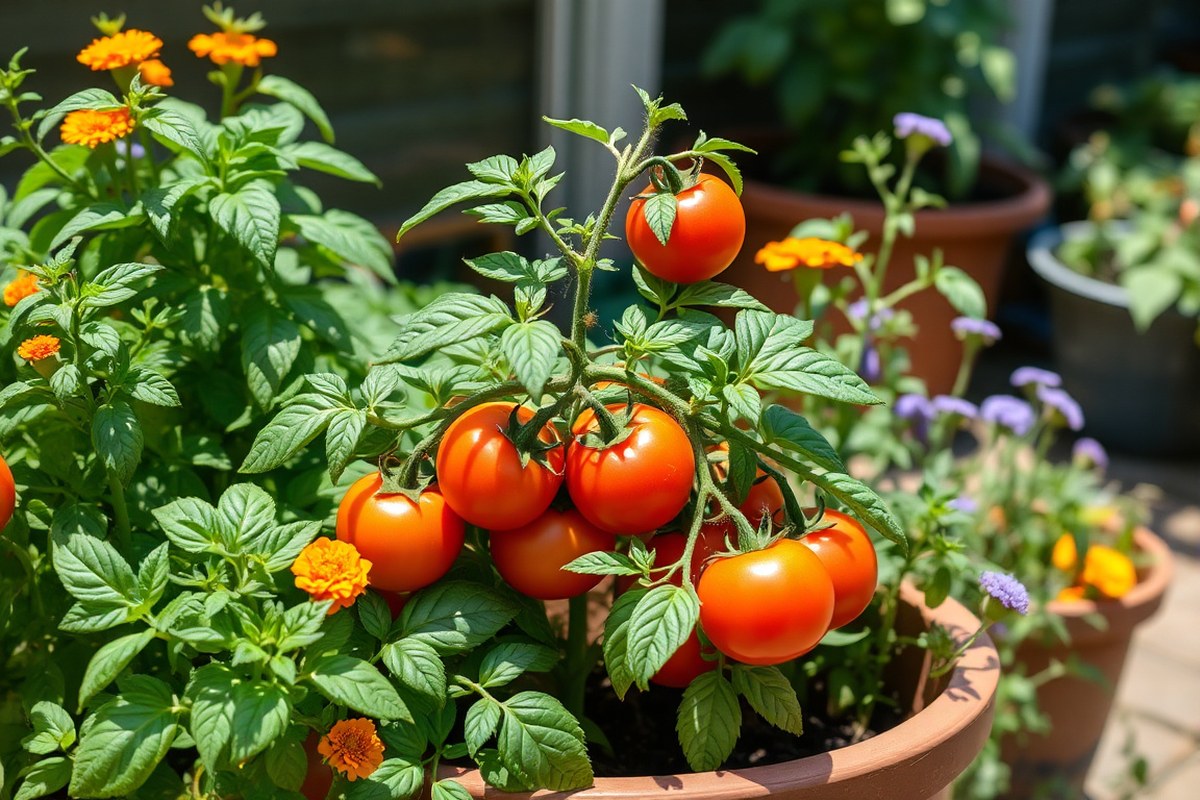
Tomatoes do well with certain companion plants that boost their health and growth. Herbs like basil and oregano fit nicely in containers with tomatoes. These herbs help improve tomato flavour and can repel pests such as aphids and whiteflies.
Vegetables including peppers and carrots also thrive alongside tomatoes in pots. Peppers share similar light and water needs. Carrots help loosen soil and improve aeration.
Flowers like marigolds and nasturtiums work well too. These flowers attract pollinators and ward off harmful insects.
- Basil – plant 6 to 8 inches away; improve flavor and repels pests.
- Oregano – low-growing herb that fits well around the tomato base.
- Peppers – share watering and sunlight needs; space 4 to 6 inches apart.
- Carrots – plant near container edges; help soil aeration.
- Marigolds – deter nematodes and harmful insects; need full sun.
- Nasturtiums – attract aphids away from tomatoes; plant along edges.
Mixing flowers, herbs, and vegetables is possible when container size allows. Use pots of 5 gallons or more to fit a tomato and companions comfortably. Remember to watch soil moisture; smaller pots dry out faster, so water often.
Proper placement matters for tomatoes. They need 6 to 8 hours of full sun. This helps get the best flavor and growth.
Choose companions based on your tomato type and container size. Cherry or dwarf tomatoes need smaller pots of around 3 to 5 gallons. So pick smaller or slower-growing companions.
Larger tomatoes require bigger containers to hold enough soil for both plants. By pairing the right plants, you help tomatoes grow healthier, taste better, and resist pests naturally.
Choosing the Right Container Size for Tomatoes and Companions
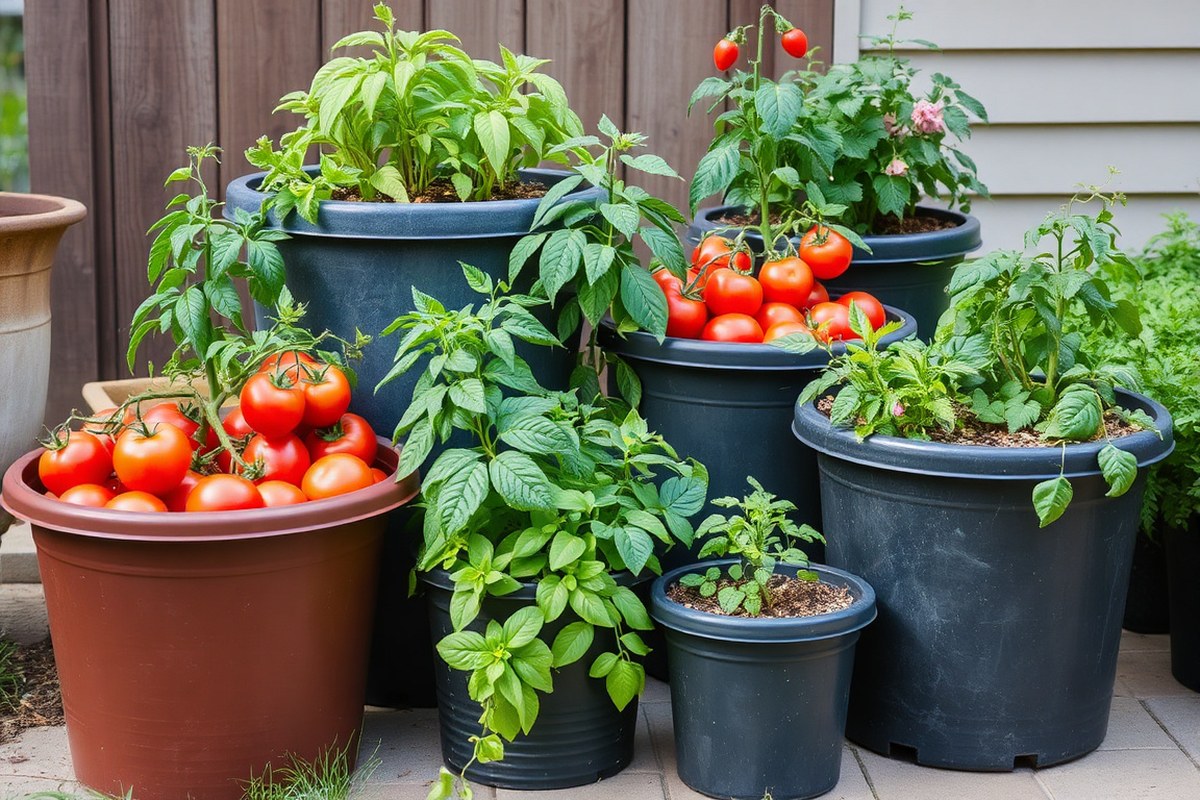
Tomatoes need enough root space and air to grow well in containers. The size of the container depends on the tomato type and the companion plants you want. Indeterminate tomatoes need bigger pots because they grow larger and have more roots than determinate types.
Determinate tomatoes usually stay smaller and finish fruiting all at once. They do fine in containers around 5 gallons. Indeterminate tomatoes need at least 10 gallons for each plant.
This size supports their larger root system. It also suits their longer growing season.
Companion plants add to the space needed. But most herbs only need 1-2 gallons each.
| Tomato Type | Container Size | Companion Plant Space | Typical Companion Plants |
|---|---|---|---|
| Determinate | 5 gallons | 1-2 gallons per small herb | Basil, chives, parsley |
| Indeterminate | 10 gallons or more | 1-2 gallons per small herb | Basil, marigold, oregano |
| Multiple plants | + 2-3 gallons per extra tomato plant | Keep 24-36 inches air space between tomato stems | Compact companions fit in gaps |
When sharing a pot, it’s best to keep at least 24 inches between tomato stems. This helps air circulate and prevents disease. Compact companions like basil or marigold fit in the spaces between tomatoes without crowding roots.
Use containers with good drainage holes to avoid root rot. A big pot holds moisture longer, so watering is easier, especially in heat. Small companions should never overpower tomato plants or steal nutrients.
Don’t put too many plants in one container. Their roots will fight for space. This can slow down their growth.
Planning Plant Arrangement and Spacing for Mixed Tomato Containers
Place the tomato plant in the container’s center. Space companions at least 4 to 6 inches from the tomato’s base. This layout avoids crowding, ensures airflow, and helps you reach each plant.
Spacing Recommendations for Tomatoes and Companions
Tomatoes need room for airflow to reduce diseases. Keep companion plants 4 to 6 inches away from the tomato stem. Smaller herbs like basil should sit 12 to 18 inches from tomatoes.
Sow smaller companion seeds like borage 6 to 8 inches from the tomato stem. Plant onions close to the stem but avoid direct contact to prevent root competition. Keeping this distance helps plants access water and nutrients.
Arranging Herbs Versus Flowers
Put taller herbs like basil near the tomato center but far enough to avoid shade. Shorter herbs or flowers like marigolds fit well near container edges. Flowers often attract pollinators and keep pests away.
Herbs like onions and garlic grow well under or near the tomato stem. They take up less vertical space. You can fit them close to your tomato plant.
Put flowering companions on the edges of your container. They get full sun there.
This stops them from crowding the tomato’s main growth area. This also helps you prune and harvest easily.
Using Container Edges Versus Center Space
Start with the tomato in the container’s center in a hole large enough for roots. Use the edges for low-growing or trailing companions like nasturtiums or herbs. This setup maximizes space and sun exposure for each plant.
Keep space between plants to maintain airflow. A 10-inch diameter, 2-gallon container suits a cherry tomato plus companions spaced around it. Air circulation reduces fungal risks and supports healthy leaf growth.
Follow these eight steps to arrange your tomato container:
- Choose a container at least 10 inches wide or 2 gallons in volume.
- Dig a central hole deep and wide enough for your tomato’s root ball.
- Plant the tomato firmly in the center hole.
- Space herb companions 12 to 18 inches from the tomato stem.
- Sow smaller companions 4 to 8 inches from the tomato base.
- Place tall herbs near but not shading the tomato plant.
- Arrange flowers and trailing plants along the container edges.
- Water gently after planting and check soil pH between 6.0 and 6.8.
Watering and Feeding Tomatoes with Companion Plants in Containers
Water your tomato container with companions when the top inch of soil feels dry. Feed the plants every two weeks with a balanced fertilizer to keep nutrients steady. Watch soil moisture closely, adjusting as temperatures and container size change.
How Often to Water Mixed Tomato Containers
Check soil moisture daily in warm weather. Stick your finger about an inch deep. Feel if the soil is dry or damp.
Water the plants when the soil feels dry there. Larger containers hold moisture longer but still may need watering every day in full sun.
Companion plants can change how fast soil dries. For example, spinach acts like a mulch, helping soil stay moist longer around tomato roots. Generally, expect to water container tomatoes and companions every one to three days during hot spells.
Choosing the Right Fertilizer for Tomato Containers
Choose a balanced fertilizer with equal nitrogen, phosphorus, and potassium. A 10-10-10 blend works well. Look for a water-soluble kind.
This supports both tomato and companion plant growth without overfeeding any species. You can buy this fertilizer at garden centers or online. Expect to pay $10 to $15 per pound.
Apply fertilizer every two weeks during growing season. Mix it with water following the package directions.
Don’t fertilize too often. Too many nutrients can damage roots and attract pests.
How to Check Soil Moisture Properly
Check soil moisture with your finger or a moisture meter. Test the container’s center and edges.
Tomatoes prefer soil that stays evenly moist but not soggy. Dry spots or overly wet soil need adjusting with watering or drainage fixes.
Look for signs plants give too. Yellow, mushy tomato leaves mean the soil might be too wet.
Wilted or dry leaves point to not enough water. Adjust your watering schedule when you see these signals.
Adjusting for Weather and Container Factors
Warmer days and wind dry out containers faster. So check moisture more often in these conditions. Morning watering helps keep leaves dry, lowering disease risk.
Clay pots leak moisture quickly. So you’ll water more often with them than plastic containers.
Companion plants with shallow roots, like herbs, may need more frequent light watering. Deep-rooted tomatoes prefer thorough watering less often. Find a balance based on your specific plant mix and container size.
Managing Pests and Diseases Using Companion Plants in Containers
Planting certain companions with tomatoes in containers helps keep pests away. Marigolds are a top choice because they repel whiteflies, aphids, and hornworms with their strong scent.
You can plant French marigolds with your tomatoes. But they need a full season to reduce nematodes in the soil.
Basil, chives, nasturtiums, and garlic also discourage common tomato pests. For example, garlic’s sharp smell confuses aphids and whiteflies.
Nasturtiums attract aphids away from tomatoes, acting as a trap crop. Combining these into your container mix builds a natural pest barrier without chemicals.
Besides pest control, companion plants may boost tomato health against diseases. Asparagus, for instance, helps fend off soil-borne pests harmful to tomatoes.
Monitoring your plants regularly is key. Check leaves for small colonies of aphids or spots from fungal issues to catch problems early.
Plant companions deeply in the container to encourage strong roots and healthy growth. Space plants away so tomatoes don’t get crowded by others. Crowding can raise humidity around plants.
This rise can increase the risk of disease. Rotate plants in your containers or replace soil yearly to avoid disease build-up in close spaces.
Watch for yellowing leaves or sticky residue, signs pests have found your tomatoes despite companion planting.
Marigolds are generally effective in container gardens. But results vary by climate and container size.
Smaller pots heat up more and dry out faster, which can stress plants and attract pests. Providing consistent water and nutrients will help your tomato and its companions thrive together.
When and How to Plant Tomatoes and Their Companions in Containers
Plant tomatoes outdoors after frost danger ends and soil warms up. You can start companion plants from seed indoors. You can also plant tomatoes and companions in one container.
Both ways work well for container gardens. Follow a steady planting timeline and method to keep both healthy and happy.
Ideal Tomato Planting Time Outdoors
Tomatoes need warm soil and air to grow well. Plant them only when nighttime temperatures stay above 50°F (10°C). This usually means waiting until two weeks after the last frost date in your area.
Starting too early causes slow growth or frost damage. Choose a sunny spot, as tomatoes need at least six hours of sun daily. Make sure the container drains well and is big enough for roots.
Starting Companion Seeds Indoors
Some companion herbs, like dill, need a head start indoors. Sow dill seeds 6 to 8 weeks before your last frost date. Use seed trays or small pots with good potting mix and keep them moist.
Transplant seedlings outdoors 8 to 10 inches from tomatoes once temperatures stay warm. Other herbs like chives can start indoors or be planted directly in the container. Follow seed packet instructions for timing.
Transplanting into Containers
Plant tomatoes and their companions carefully for best growth. You can plant transplants of tomatoes with companion plants at the same time in one container. Sow small seeds like nasturtium directly in the soil around the tomato plant.
Set up support like a trellis before planting, so you don’t disturb roots later. Plant three or four tomato seeds about half an inch deep. Do this outside after the frost has passed.
This helps your tomatoes grow strong in containers. Thin to the strongest seedling later.
Follow these steps for planting tomatoes and companions in containers:
- Fill containers with well-draining potting soil up to 1 inch below the rim.
- Dig a hole large enough for tomato roots; plant seedlings deep for strong roots.
- Place companion transplants or seeds around tomatoes based on their spacing needs.
- Water the soil lightly but thoroughly after planting to settle it around roots.
- Set up tomato supports like stakes or cages while planting.
- Position containers in full sun and keep soil evenly moist but not wet.
Plants to Avoid Planting with Tomatoes in Containers
Some plants hurt tomato growth in containers. They compete for nutrients. Others release chemicals that slow tomatoes.
Tomatoes need steady feeding, especially in containers where soil nutrients run out fast. Avoid plants that are strong nutrient thieves or interfere with tomato growth in little soil.
Fennel is a bad choice next to tomatoes. It releases substances that slow tomato seedling growth and harm root development.
This allelopathy effect is stronger in confined soil like pots. Keeping fennel away helps tomatoes grow better and produce more fruit.
Other plants take more nutrients than tomatoes can share in limited container soil. Since tomatoes are heavy feeders, these plants cut down the food tomatoes need. Such competition can reduce tomato size and yield quickly.
- Fennel, releases chemicals that stunt tomato roots
- Corn, competes heavily for nutrients and space
- Potatoes, risk shared diseases and compete for nutrients
- Broccoli and cabbage, use up nitrogen and slow tomatoes
- Peppers, share pests and compete for water and nutrients
Besides competition, some bad companions raise disease risks. Potatoes and tomatoes share blight fungus in containers, risking both plants. It’s best to choose companions that grow well without triggering disease in such tight spots.
Planting without these poor partners means better tomato health and fruit in containers. You can feed tomatoes regularly with fertilizer. But stopping nutrient thieves from the start makes a bigger difference.
Container gardeners should avoid these plants. Pick companions that don’t compete for space or food.
Common Mistakes and How to Fix Companion Planting in Containers
Overcrowding happens when you put too many tomato plants or companions in one container. This limits airflow and sunlight, reducing tomato yields. To fix this, pick a larger pot or reduce the number of plants in the container.
You can tell if your plants suffer from nutrient problems by their leaf color or growth. Yellow leaves and slow growth often signal a lack of nutrients.
Use a water-soluble fertilizer with a 5-10-5 ratio every three weeks. This keeps your tomatoes and companion plants healthy.
Too much water can also cause wilting or root rot. Check soil moisture by sticking your finger an inch deep.
It should feel moist but not soggy. Adjust watering schedules accordingly and avoid letting containers sit in standing water.
Companion plants don’t always stop pests completely. You may spot damage on leaves or fruit.
Handpick bugs or spray mild insecticidal soap to control them. Sometimes adding flowers like sunflowers attracts helpful bugs such as ladybugs to control pests naturally.
- Use pots at least 18 inches wide to prevent crowding.
- Feed your plants every three weeks with 5-10-5 fertilizer.
- Check soil moisture weekly to avoid overwatering.
- Remove yellow or damaged leaves promptly to stop disease.
- Introduce beneficial insects or companion flowers to improve pest control.
- Prune tomato suckers to increase airflow around companions.
- Limit companions to low-growing herbs and flowers for balance.
Watch for wilting or holes, not just plant health, to catch pests early. Picking the right companions helps, but don’t expect miracle pest control. Keep an eye on plants every few days; quick action prevents bigger problems.
Overcrowding reduces airflow and raises disease risk. Always space plants well in containers for best tomato growth.
Step-by-Step Action Plan for Growing Tomatoes and Companions in Containers
Follow these steps to plant tomatoes and their companions successfully in your containers. Each step helps you see if your plants are happy and growing well.
- Before planting: Pick a container at least 12 inches deep. Make sure it has good drainage. Choose companion plants like basil or marigolds. Check that the container has holes and the plants have similar water needs.
- Day 1: Fill your container with high-quality potting soil mixed with slow-release fertilizer. The soil should feel loose and drain easily without being dry.
- Week 1: Put tomato seedlings in the container’s center. Plant companions around them. Keep at least 6 inches space between each. Watch for firm roots and no drooping leaves.
- Week 2: Water deeply once the top inch of soil dries. Notice if water soaks quickly and doesn’t puddle on top.
- Week 3: Start feeding with a balanced liquid fertilizer every two weeks. Healthy dark green leaves show the plants are getting enough nutrients.
- Weeks 4-6: Look closely for pests like aphids or whiteflies. Spot pests? Add more marigolds nearby. Spray with mild insecticidal soap if needed. The plants should stay healthy without spots or holes.
- After 6 weeks: Prune lower tomato leaves to improve air flow and avoid disease. Leaves should look bright and air should move through the plants easily.
- After harvest: Clean the container and soil mix, then prepare for the next planting cycle. The container should look free of old leaves and soil should smell fresh.
Frequently Asked Questions
Can I Plant Herbs Other Than Basil with Tomatoes in Containers?
Yes, herbs like parsley and chives grow well beside tomatoes. They don’t compete much for nutrients and attract helpful insects to your container garden.
How Do I Manage Space When Planting Multiple Companions with Tomatoes in a Container?
Use small or determinate tomato varieties like “Patio V” to save space. Place companion plants at least 6 inches away to avoid crowding.
Is It Okay to Use the Same Soil for Tomatoes and Their Companion Plants in Containers?
You can use the same high-quality potting mix for all. Just make sure it drains well and has added compost to nourish every plant.
What’s the Best Sunlight Exposure for Tomatoes Mixed with Companion Plants in Containers?
Tomatoes need at least 6-8 hours of direct sunlight daily for good fruiting. Make sure companion plants also like similar light levels.
How Often Should I Water Tomato Containers with Companion Plants During Hot Weather?
Water daily in hot weather to keep soil moisture consistent but not soggy. Check the soil surface to avoid overwatering.
Can I Grow Tomatoes and Flowers Together in the Same Container?
Yes, marigolds or nasturtiums work well by repelling pests and adding color. Keep flowers small and spaced to avoid shading tomatoes.
Key Points to Remember
Choosing the right companion plants with tomatoes really helps your garden thrive. Start by planting a strong tomato variety and adding basil or marigolds nearby. Keep watching your plants closely for watering needs and pests to get the best results.